1
Packet Sniffers
Prepared By:
Amer Alhorini
Supervised By:
Dr. Lo'ai Tawalbeh
NYIT
New York Institute of Technology
2
The Network Today
3
Packet Sniffers
• A packet sniffer is a software application that uses a network adapter card
in promiscuous mode to capture all network packets. The following are the
packet sniffer features:
Packet sniffers exploit information passed in clear text. Protocols that pass
information in the clear include the following:
•Telnet
•FTP
•SNMP
•POP
Packet sniffers must be on the same collision domain.
Host A Host B
Router A Router B
4
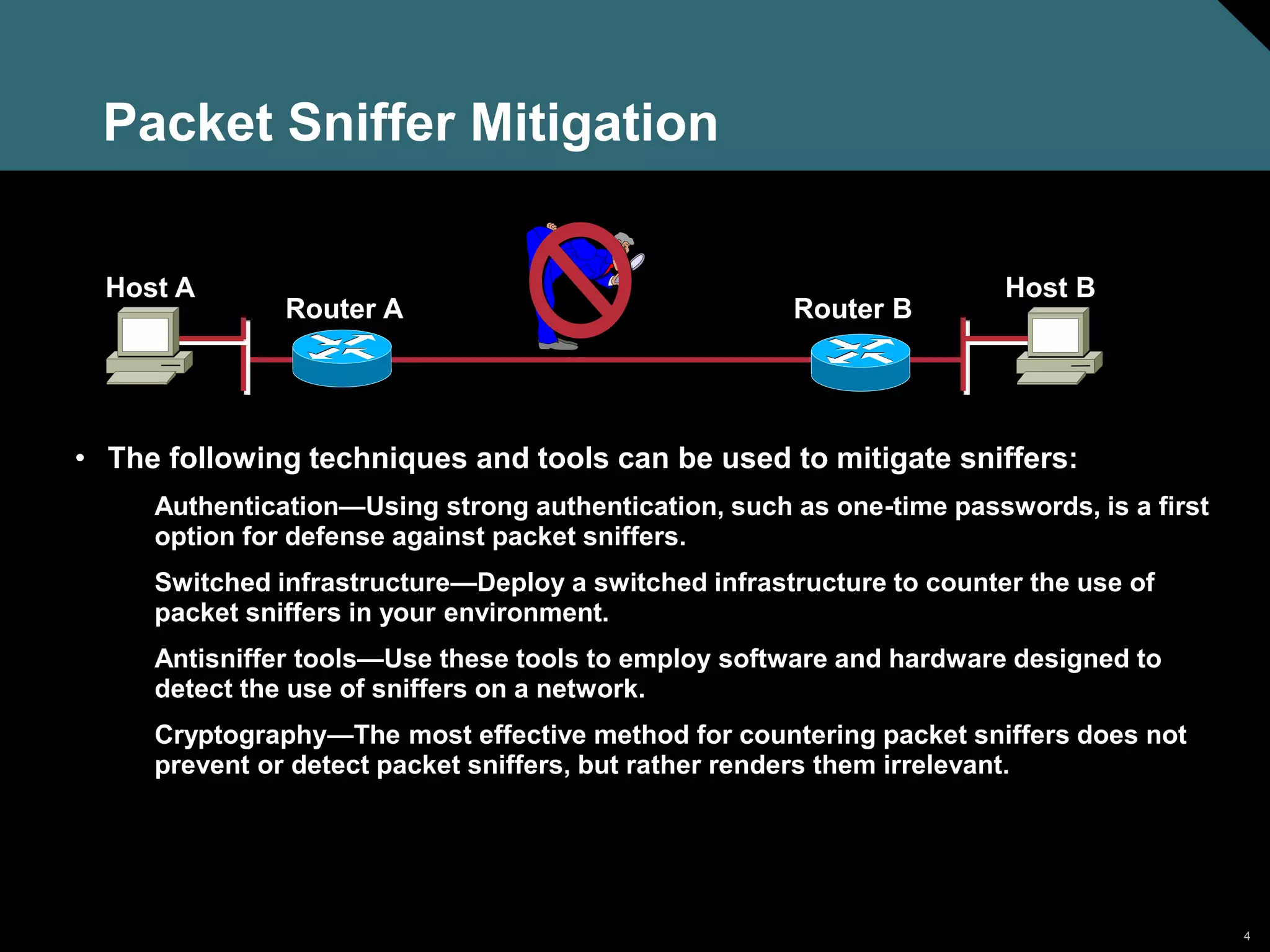
Packet Sniffer Mitigation
• The following techniques and tools can be used to mitigate sniffers:
Authentication—Using strong authentication, such as one-time passwords, is a first
option for defense against packet sniffers.
Switched infrastructure—Deploy a switched infrastructure to counter the use of
packet sniffers in your environment.
Antisniffer tools—Use these tools to employ software and hardware designed to
detect the use of sniffers on a network.
Cryptography—The most effective method for countering packet sniffers does not
prevent or detect packet sniffers, but rather renders them irrelevant.
Host A Host B
Router A Router B
5
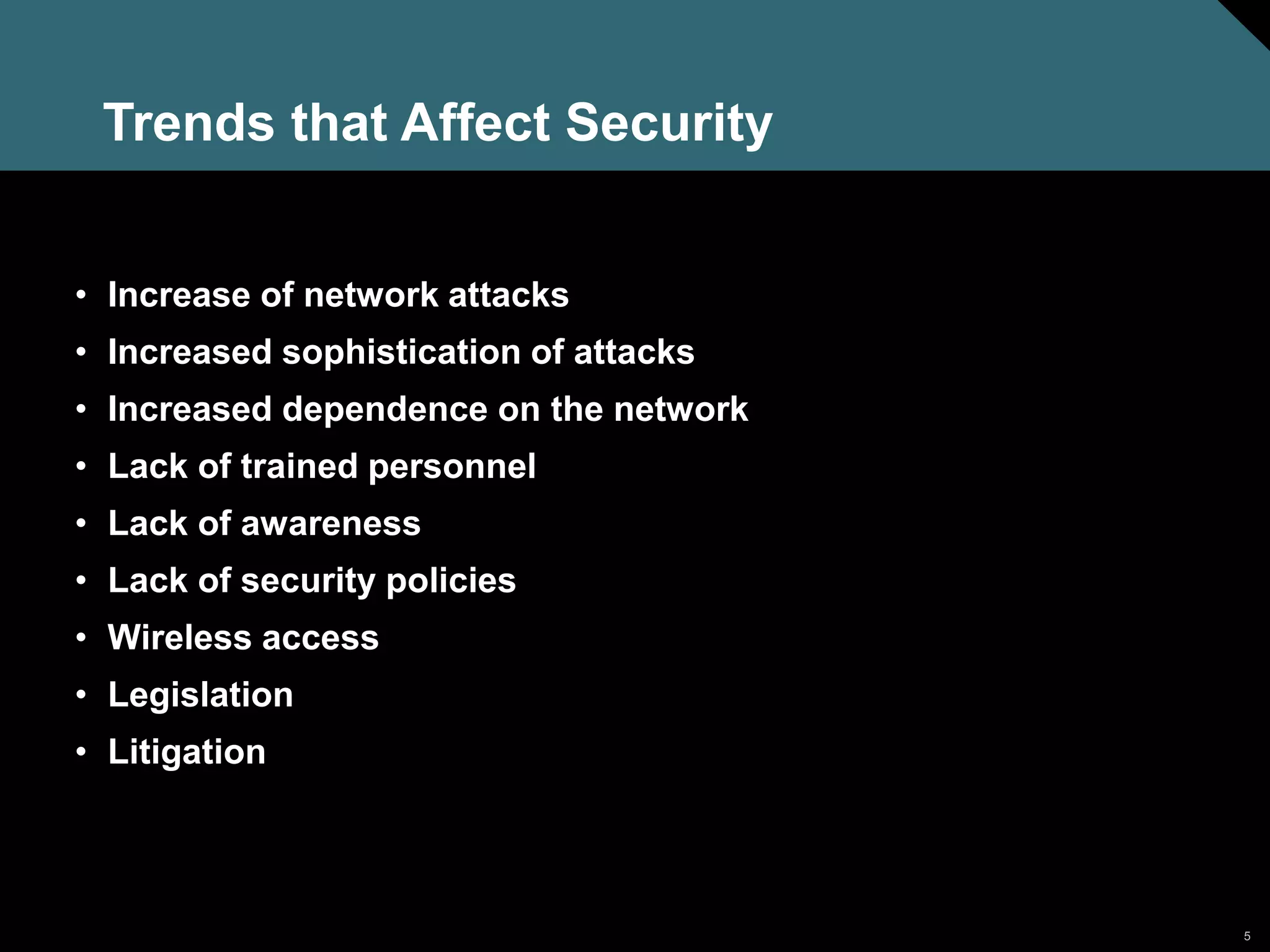
Trends that Affect Security
• Increase of network attacks
• Increased sophistication of attacks
• Increased dependence on the network
• Lack of trained personnel
• Lack of awareness
• Lack of security policies
• Wireless access
• Legislation
• Litigation
6
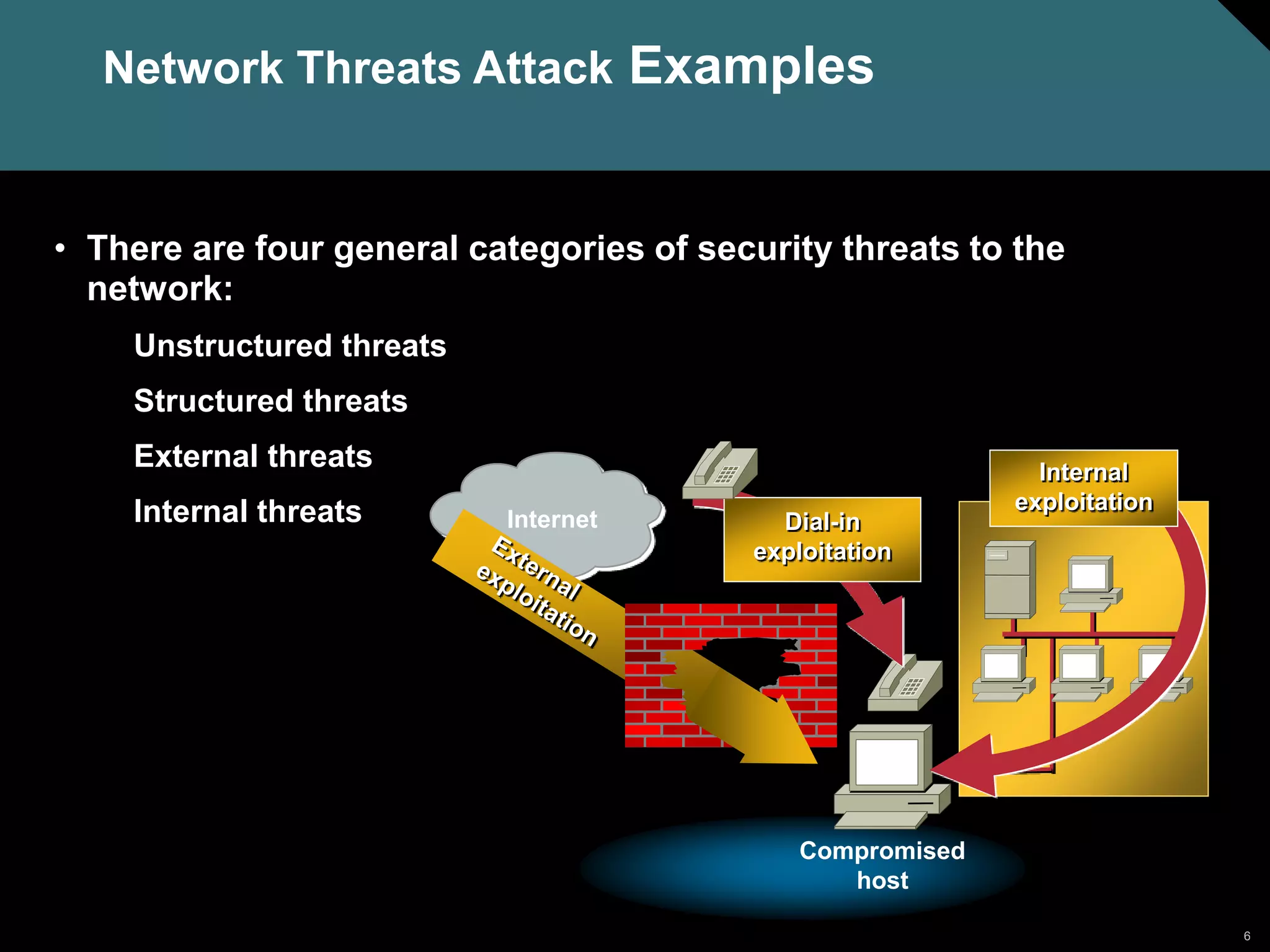
Network Threats Attack Examples
• There are four general categories of security threats to the
network:
Unstructured threats
Structured threats
External threats
Internal threats Internet
Internal
exploitation
Dial-in
exploitation
Compromised
host
7
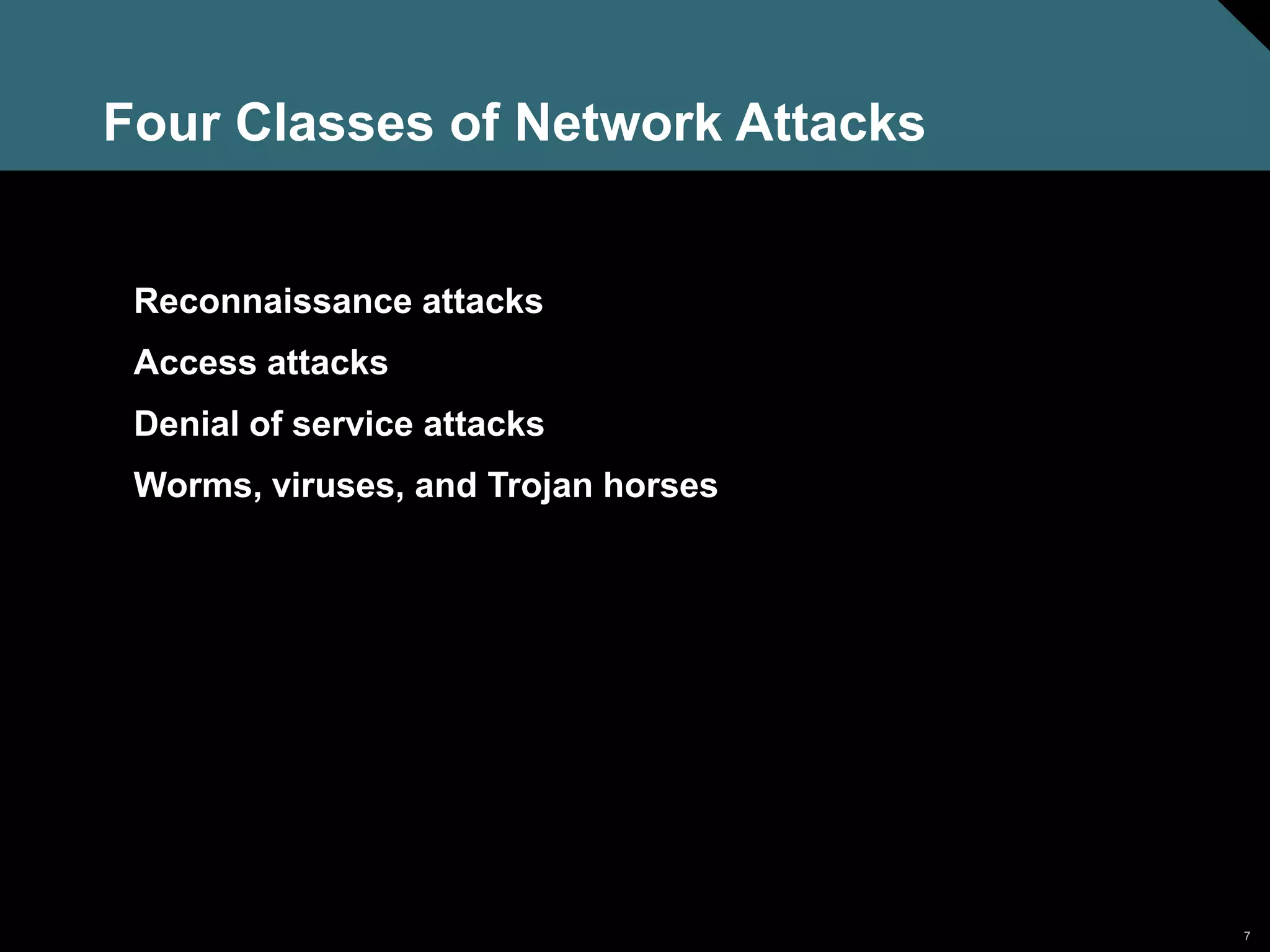
Four Classes of Network Attacks
Reconnaissance attacks
Access attacks
Denial of service attacks
Worms, viruses, and Trojan horses
8
Specific Attack Types
• All of the following can be used to compromise your system:
Packet sniffers
IP weaknesses
Password attacks
DoS or DDoS
Man-in-the-middle attacks
Application layer attacks
Trust exploitation
Port redirection
Virus
Trojan horse
Operator error
Worms
9
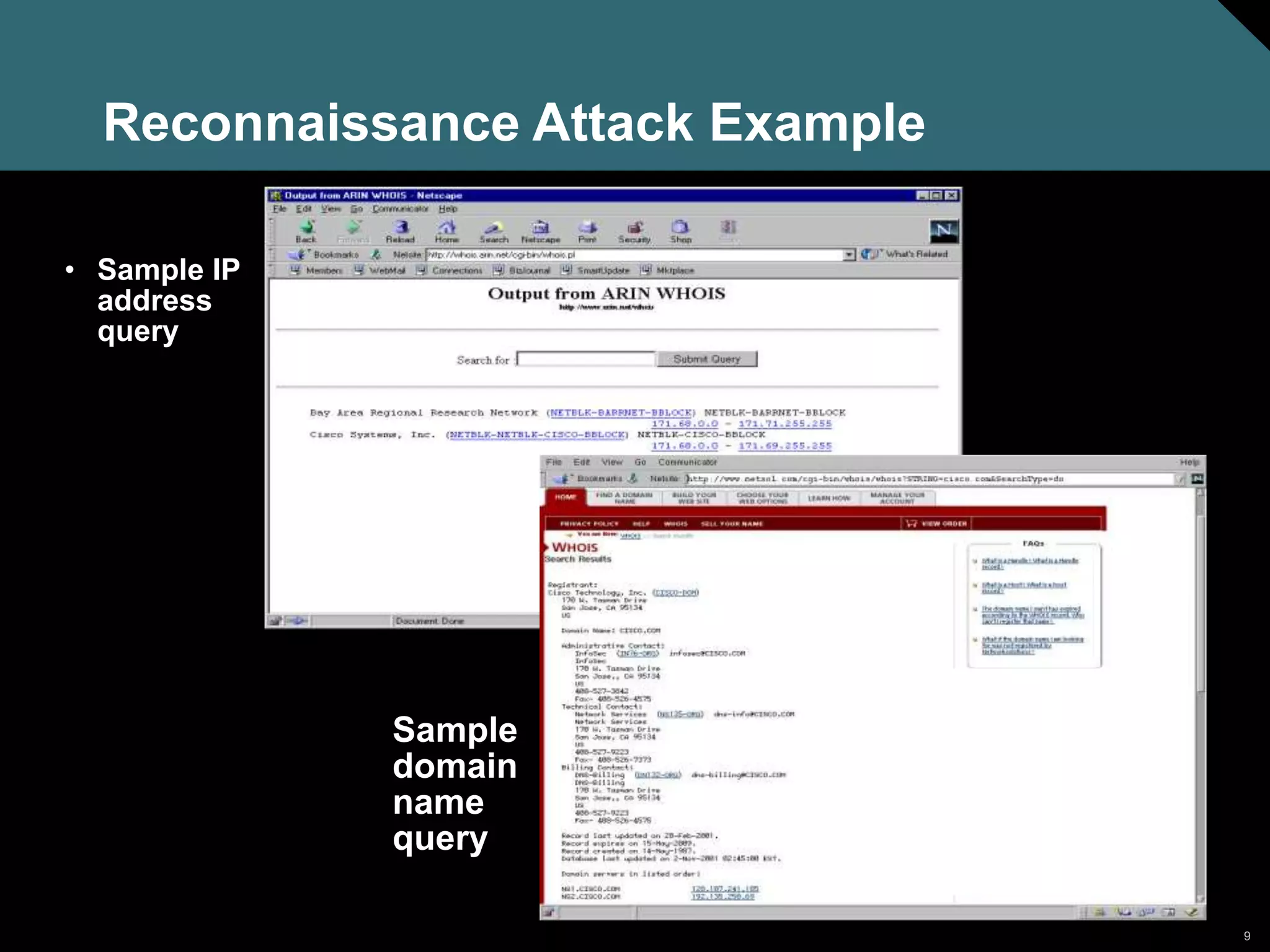
Reconnaissance Attack Example
Sample
domain
name
query
• Sample IP
address
query

sniffer.ppt

  • 1.
    1 Packet Sniffers Prepared By: AmerAlhorini Supervised By: Dr. Lo'ai Tawalbeh NYIT New York Institute of Technology
  • 2.
  • 3.
    3 Packet Sniffers • Apacket sniffer is a software application that uses a network adapter card in promiscuous mode to capture all network packets. The following are the packet sniffer features: Packet sniffers exploit information passed in clear text. Protocols that pass information in the clear include the following: •Telnet •FTP •SNMP •POP Packet sniffers must be on the same collision domain. Host A Host B Router A Router B
  • 4.
    4 Packet Sniffer Mitigation •The following techniques and tools can be used to mitigate sniffers: Authentication—Using strong authentication, such as one-time passwords, is a first option for defense against packet sniffers. Switched infrastructure—Deploy a switched infrastructure to counter the use of packet sniffers in your environment. Antisniffer tools—Use these tools to employ software and hardware designed to detect the use of sniffers on a network. Cryptography—The most effective method for countering packet sniffers does not prevent or detect packet sniffers, but rather renders them irrelevant. Host A Host B Router A Router B
  • 5.
    5 Trends that AffectSecurity • Increase of network attacks • Increased sophistication of attacks • Increased dependence on the network • Lack of trained personnel • Lack of awareness • Lack of security policies • Wireless access • Legislation • Litigation
  • 6.
    6 Network Threats AttackExamples • There are four general categories of security threats to the network: Unstructured threats Structured threats External threats Internal threats Internet Internal exploitation Dial-in exploitation Compromised host
  • 7.
    7 Four Classes ofNetwork Attacks Reconnaissance attacks Access attacks Denial of service attacks Worms, viruses, and Trojan horses
  • 8.
    8 Specific Attack Types •All of the following can be used to compromise your system: Packet sniffers IP weaknesses Password attacks DoS or DDoS Man-in-the-middle attacks Application layer attacks Trust exploitation Port redirection Virus Trojan horse Operator error Worms
  • 9.