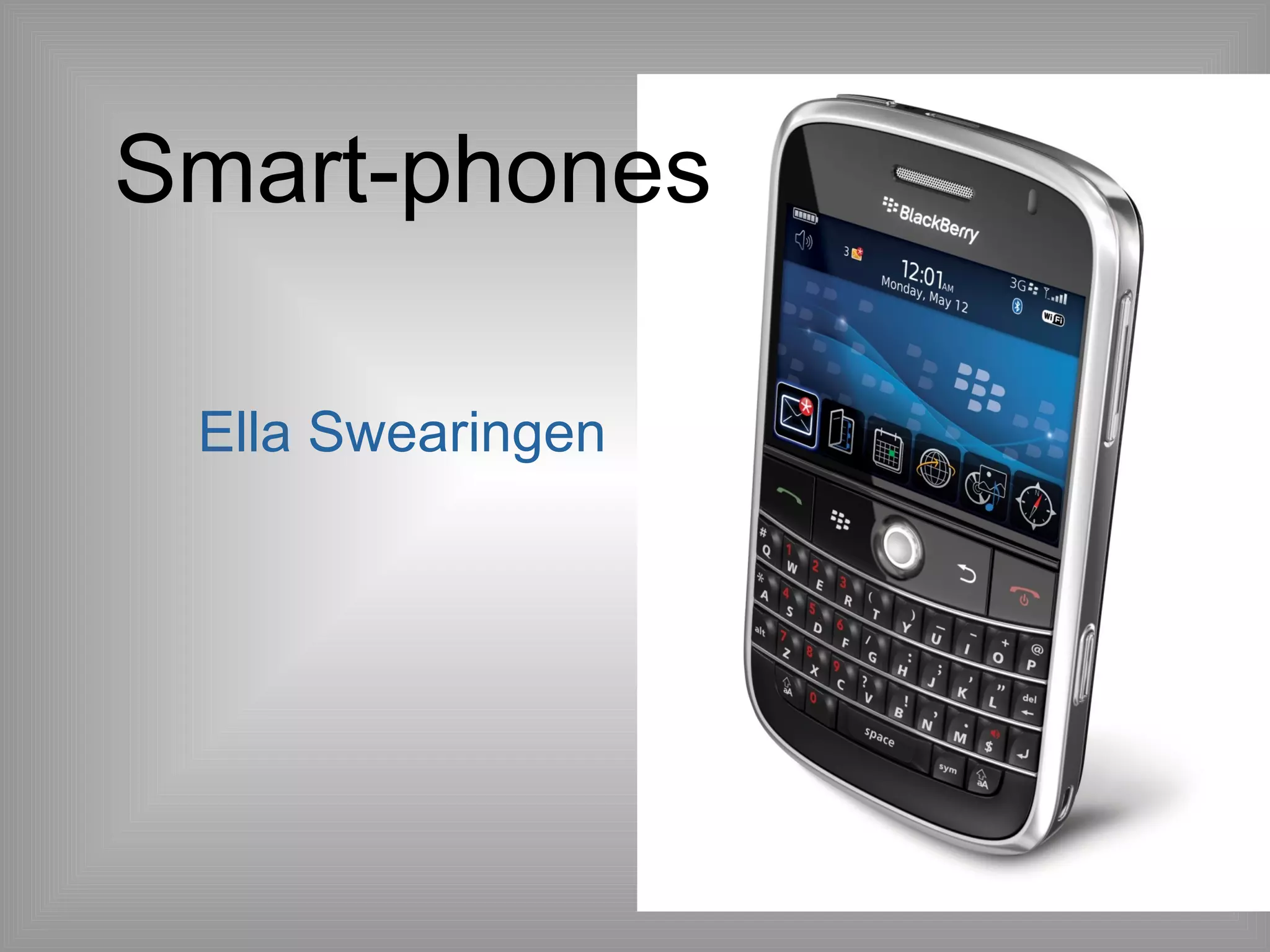
Smart-phones

 Ella Swearingen
Introduction
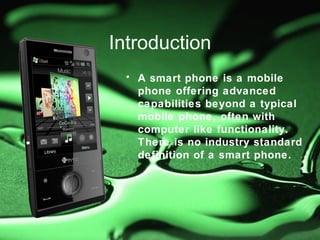
 • A smart phone is a mobile
   phone offering advanced
   capabilities beyond a typical
   mobile phone, often with
   computer like functionality.
   There is no industry standard
   definition of a smart phone.
Introduction
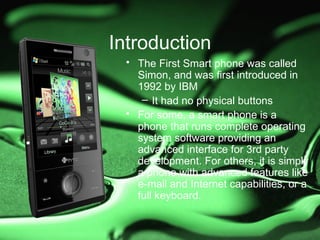
 • The First Smart phone was called
   Simon, and was first introduced in
   1992 by IBM
    – It had no physical buttons
 • For some, a smart phone is a
   phone that runs complete operating
   system software providing an
   advanced interface for 3rd party
   development. For others, it is simply
   a phone with advanced features like
   e-mail and Internet capabilities, or a
   full keyboard.
Introduction
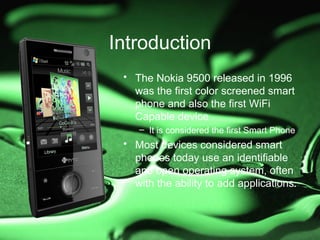
 • The Nokia 9500 released in 1996
   was the first color screened smart
   phone and also the first WiFi
   Capable device
    – It is considered the first Smart Phone
 • Most devices considered smart
   phones today use an identifiable
   and open operating system, often
   with the ability to add applications.
Criticisms

Although Smart-phones enhance our standard
  of convenience, there is now a dependence
  on them.
People have become less social because they
  can now take their internet life beyond the
  comfort of their home
Everything (I.e. email) is expected to be instant,
  and when it is not, hell breaks loose.
Criticisms

As smart phones progress there is more
  possibility for malfunctions within the devices
  software.
Extending internet into phones is one more way
  hackers can access others personal
  information.
New applications such as streaming TV on a
  smart phone takes attention away from
  important tasks such as DRIVING.
Positive Aspects
• Because of Smart phones, it is possible to
  have not only a phone, but a personal
  computer on hand at all times.
• The smart phone as brought in an era of
  safety with GPS chips so that anyone can
  find their way.
• In certain circumstances Smart phones with
  GPS can also be used to locate missing
  persons, etc.
Positive Aspects
• Smart Phones now bring Email to the
  fingertips of their users, giving them an edge
  in keeping up with the ever changing fast-
  paced world.
• Streaming TV makes it possible to never miss
  that winning touchdown in the last 20
  seconds of the game, wherever you are.
• Smart phones that double as MP3’s can
  provide entertainment during many tasks.

Smartphone project

  • 1.
  • 2.
    Introduction • Asmart phone is a mobile phone offering advanced capabilities beyond a typical mobile phone, often with computer like functionality. There is no industry standard definition of a smart phone.
  • 3.
    Introduction • TheFirst Smart phone was called Simon, and was first introduced in 1992 by IBM – It had no physical buttons • For some, a smart phone is a phone that runs complete operating system software providing an advanced interface for 3rd party development. For others, it is simply a phone with advanced features like e-mail and Internet capabilities, or a full keyboard.
  • 4.
    Introduction • TheNokia 9500 released in 1996 was the first color screened smart phone and also the first WiFi Capable device – It is considered the first Smart Phone • Most devices considered smart phones today use an identifiable and open operating system, often with the ability to add applications.
  • 5.
    Criticisms Although Smart-phones enhanceour standard of convenience, there is now a dependence on them. People have become less social because they can now take their internet life beyond the comfort of their home Everything (I.e. email) is expected to be instant, and when it is not, hell breaks loose.
  • 6.
    Criticisms As smart phonesprogress there is more possibility for malfunctions within the devices software. Extending internet into phones is one more way hackers can access others personal information. New applications such as streaming TV on a smart phone takes attention away from important tasks such as DRIVING.
  • 7.
    Positive Aspects • Becauseof Smart phones, it is possible to have not only a phone, but a personal computer on hand at all times. • The smart phone as brought in an era of safety with GPS chips so that anyone can find their way. • In certain circumstances Smart phones with GPS can also be used to locate missing persons, etc.
  • 8.
    Positive Aspects • SmartPhones now bring Email to the fingertips of their users, giving them an edge in keeping up with the ever changing fast- paced world. • Streaming TV makes it possible to never miss that winning touchdown in the last 20 seconds of the game, wherever you are. • Smart phones that double as MP3’s can provide entertainment during many tasks.