Smart	
  metering,	
  water	
  pricing	
  and	
  social	
  media	
  to	
  stimulate	
  
residential	
  water	
  efficiency:	
  opportunities	
  for	
  the	
  SmartH2O	
  
project
J.J	
  Harou,	
  P.	
  Garrone,	
  A.E.	
  Rizzoli,	
  A.	
  Maziotis,	
  A.Castelletti,	
  
P.	
  Fraternali,	
  J.	
  Novak,	
  R.	
  Wissmann-­‐Alves,	
  P.A.	
  Ceschi
WDSA	
  2014,	
  Bari,	
  Italy
The	
  project	
  concept
Understand	
  and	
  model	
  the	
  current	
  behaviour	
  of	
  water	
  
consumers	
  
Predict	
  how	
  the	
  consumer	
  behaviour	
  can	
  be	
  
influenced	
  by	
  
social	
  awareness	
  campaigns	
  	
  
dynamic	
  water	
  prices	
  
Raise	
  the	
  awareness	
  of	
  the	
  consumers	
  on	
  their	
  current	
  
habits	
  and	
  stimulate	
  them	
  to	
  reduce	
  water	
  use
An	
  overview
consumer
behaviour
changes
abstract numeric
water consumption data
translate
impacts on
individual consumer
impacts on others
and environment
SmartH20
visualize
consumption patterns,
habits and preferences
interpret
individual awareness
collective awareness
social awareness
gains
smart
meter
trigger
monitor
react
provide
display
social
network
water company
municipal
supplier
Water	
  demand	
  management
Five	
  categories	
  
reducing	
  consumption	
  by	
  technology	
  (e.g.	
  better	
  
dishwashers)	
  
water	
  pricing	
  
water	
  restrictions	
  
encouragement	
  
education
The	
  role	
  of	
  smart	
  meters
Smart	
  meters	
  can	
  measure	
  the	
  impact	
  of	
  the	
  different	
  
policies	
  
Meter	
  reading	
  feedback	
  is	
  not	
  enough	
  (Degen	
  2013)	
  
Feedback	
  must	
  be	
  accompanied	
  by	
  guidance	
  and	
  
information
The	
  	
  “social”	
  approach	
  of	
  SmartH2O
Conserving	
  water	
  by	
  raising	
  social	
  awareness	
  	
  
use	
  social	
  networks	
  to	
  provide	
  examples	
  of	
  virtuous	
  
behaviour	
  
stimulate	
  “social	
  competition”	
  
provide	
  timely	
  feedback	
  with	
  a	
  smart	
  app	
  (social	
  
game	
  /	
  games	
  with	
  a	
  purpose)
Water	
  pricing	
  in	
  SmartH2O
User	
  behaviour	
  and	
  pricing	
  policies	
  
Saving	
  water	
  by	
  dynamic	
  pricing	
  schemes	
  
pricing	
  is	
  not	
  privatizing	
  
we	
  consider	
  real-­‐time	
  tariffs	
  and	
  social	
  pricing	
  
real	
  time	
  data	
  from	
  smart	
  meters	
  can	
  be	
  used	
  to	
  modulate	
  
prices	
  
Water	
  pricing	
  in	
  SmartH2O
Typical	
  urban	
  water	
  pricing	
  schemes	
  
uniform	
  marginal	
  price	
  (UP)	
  
increasing	
  block	
  prices	
  (IBP)	
  
decreasing	
  block	
  prices	
  (DBP)	
  
All	
  of	
  above	
  plus	
  a	
  fixed	
  cost	
  for	
  water	
  service	
  
Studies	
  show	
  how	
  IBP	
  can	
  provide	
  incentives	
  to	
  save	
  
water	
  
Residential	
  water	
  denied	
  is	
  inelastic,	
  but	
  not	
  perfectly
The	
  effectiveness	
  of	
  water	
  pricing
Problem:	
  lag	
  between	
  price	
  changes	
  and	
  consumer	
  
response	
  	
  
The	
  customer	
  response	
  is	
  very	
  varied	
  
Smart	
  meters	
  can	
  shorten	
  the	
  lag?	
  
Timely	
  feedback	
  can	
  change	
  customer	
  response	
  to	
  
price	
  variations?
The	
  SmartH2O	
  approach
Assess	
  traditional	
  water	
  pricing	
  models	
  
Evaluate	
  new	
  models:	
  	
  
critical	
  peak	
  pricing	
  
differential	
  tariffs	
  based	
  on	
  use	
  
time	
  varied	
  pricing	
  
customised	
  pricing
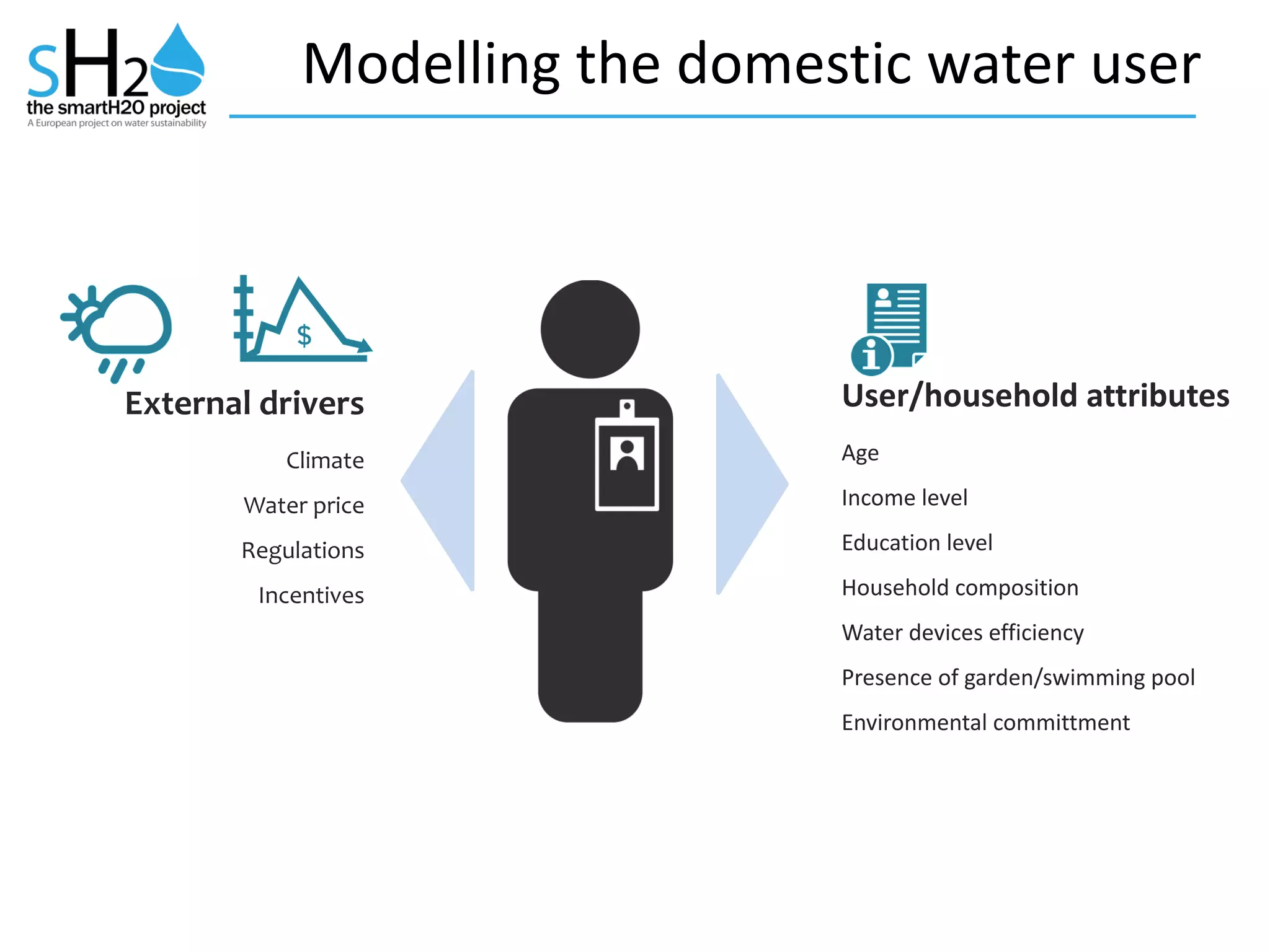
Modelling	
  the	
  domestic	
  water	
  user
User/household	
  attributes	
  
Age	
  
Income	
  level	
  
Education	
  level	
  
Household	
  composition	
  
Water	
  devices	
  efficiency	
  
Presence	
  of	
  garden/swimming	
  pool	
  
Environmental	
  committment
External	
  drivers	
  
Climate	
  
Water	
  price	
  
Regulations	
  
Incentives	
  
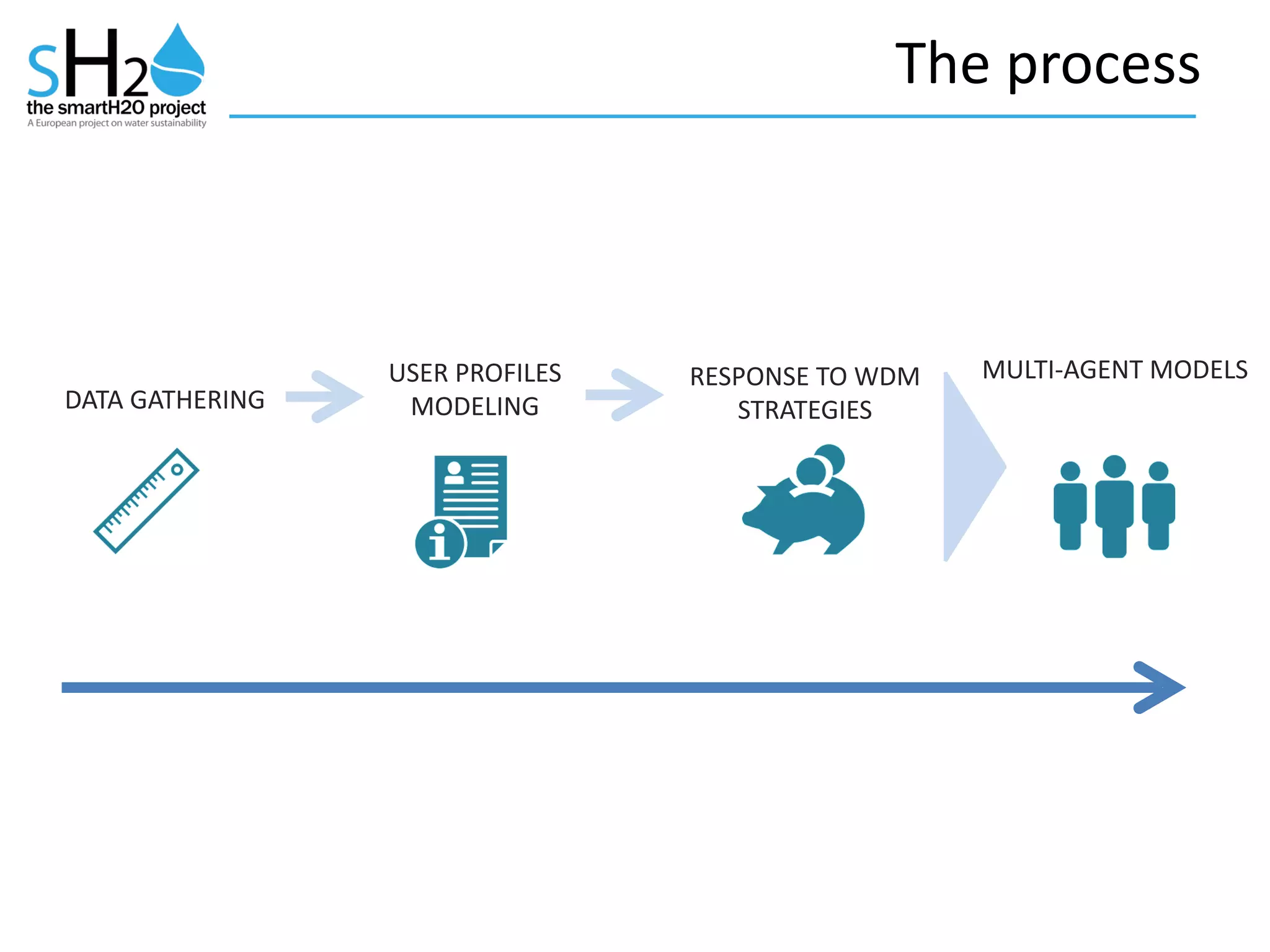
The	
  process
DATA	
  GATHERING
USER	
  PROFILES	
  
MODELING
RESPONSE	
  TO	
  WDM	
  
STRATEGIES
MULTI-­‐AGENT	
  MODELS
sH2O	
  Case	
  Studies
sH2O	
  CASE	
  STUDY_UK	
  
4000	
  meters	
  15	
  min	
  reading	
  interval	
  
5	
  districts:	
  2	
  in	
  London,	
  1	
  in	
  Reading,	
  1	
  in	
  Swindon	
  
sH2O	
  CASE	
  STUDY_Swiss	


  400	
  meters	
  will	
  be	
  installed	
  during	
  the	
  first	
  year	
  of	
  sH2O	
  
We	
  are	
  not	
  alone!
The	
  ICT	
  for	
  Water	
  Management	
  Cluster:	
  	
  a	
  group	
  of	
  
projects	
  working	
  together	
  
a	
  set	
  of	
  EU	
  funded	
  projects	
  dealing	
  with	
  the	
  impact	
  of	
  
information	
  and	
  communication	
  technologies	
  on	
  water	
  use	
  
and	
  water	
  resources	
  management.	
  	
  
These	
  projects	
  work	
  independently,	
  but	
  they	
  regularly	
  meet	
  
to	
  exchange	
  data,	
  experiences,	
  results.	
  	
  
International	
  Co-­‐operation	
  is	
  strongly	
  sought	
  after,	
  in	
  order	
  
to	
  create	
  an	
  even	
  wider	
  cluster,	
  breaking	
  the	
  EU	
  borders
Smart metering, water pricing and social media to stimulate residential water efficiency: opportunities for the SmartH2O project

Smart metering, water pricing and social media to stimulate residential water efficiency: opportunities for the SmartH2O project

  • 1.
    Smart  metering,  water  pricing  and  social  media  to  stimulate   residential  water  efficiency:  opportunities  for  the  SmartH2O   project J.J  Harou,  P.  Garrone,  A.E.  Rizzoli,  A.  Maziotis,  A.Castelletti,   P.  Fraternali,  J.  Novak,  R.  Wissmann-­‐Alves,  P.A.  Ceschi WDSA  2014,  Bari,  Italy
  • 2.
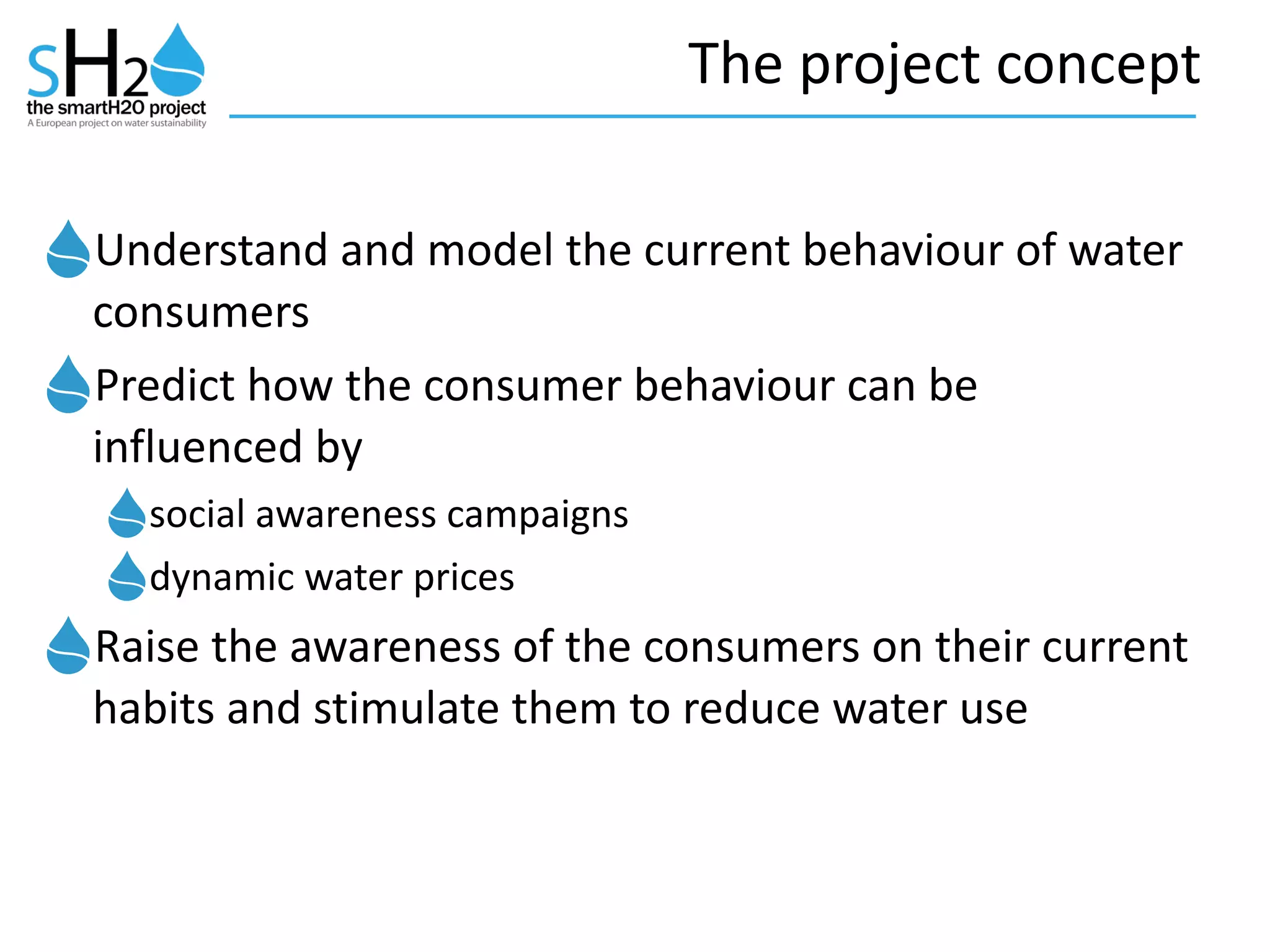
    The  project  concept Understand  and  model  the  current  behaviour  of  water   consumers   Predict  how  the  consumer  behaviour  can  be   influenced  by   social  awareness  campaigns     dynamic  water  prices   Raise  the  awareness  of  the  consumers  on  their  current   habits  and  stimulate  them  to  reduce  water  use
  • 3.
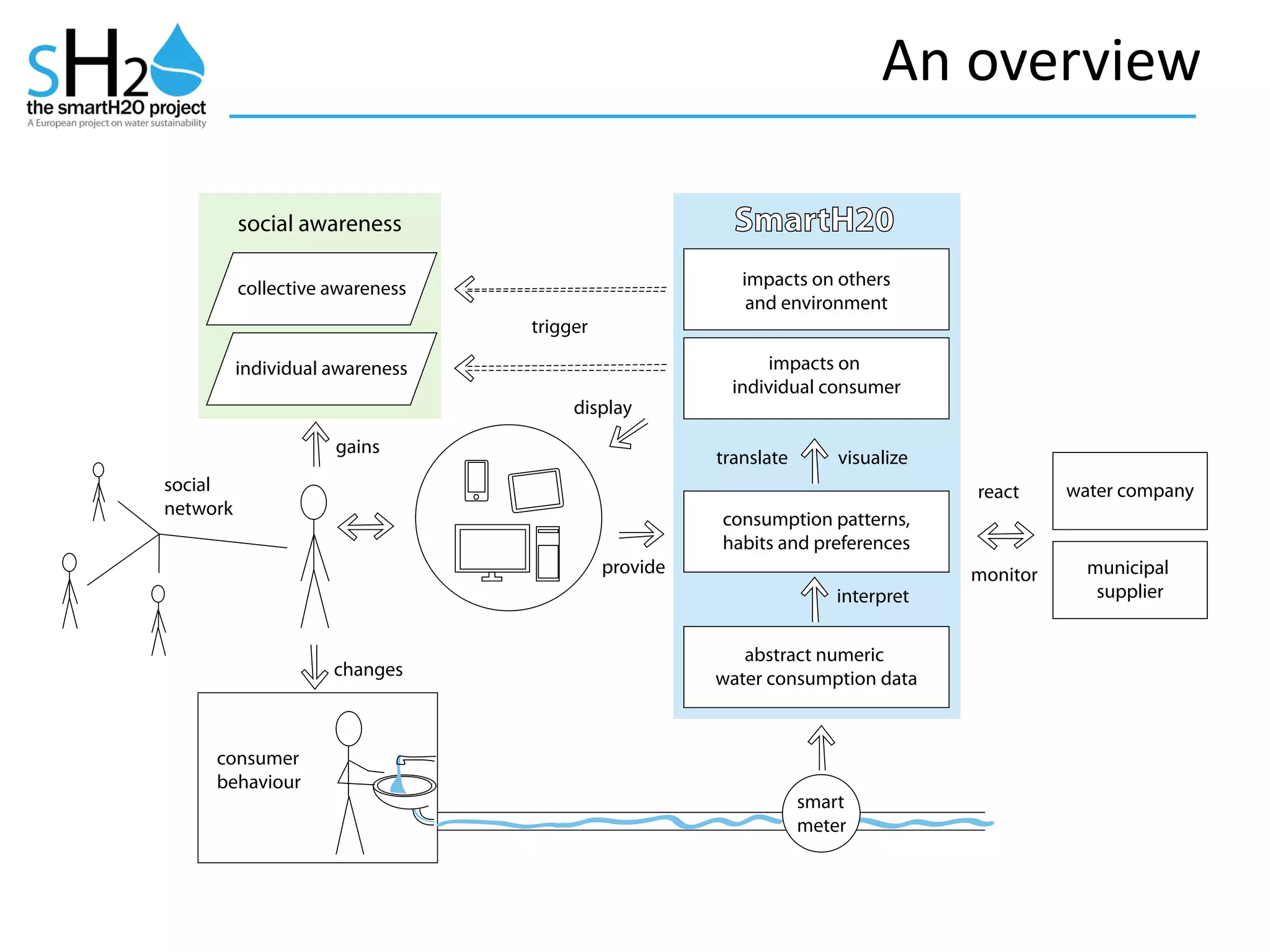
    An  overview consumer behaviour changes abstract numeric waterconsumption data translate impacts on individual consumer impacts on others and environment SmartH20 visualize consumption patterns, habits and preferences interpret individual awareness collective awareness social awareness gains smart meter trigger monitor react provide display social network water company municipal supplier
  • 4.
    Water  demand  management Five  categories   reducing  consumption  by  technology  (e.g.  better   dishwashers)   water  pricing   water  restrictions   encouragement   education
  • 5.
    The  role  of  smart  meters Smart  meters  can  measure  the  impact  of  the  different   policies   Meter  reading  feedback  is  not  enough  (Degen  2013)   Feedback  must  be  accompanied  by  guidance  and   information
  • 6.
    The    “social”  approach  of  SmartH2O Conserving  water  by  raising  social  awareness     use  social  networks  to  provide  examples  of  virtuous   behaviour   stimulate  “social  competition”   provide  timely  feedback  with  a  smart  app  (social   game  /  games  with  a  purpose)
  • 7.
    Water  pricing  in  SmartH2O User  behaviour  and  pricing  policies   Saving  water  by  dynamic  pricing  schemes   pricing  is  not  privatizing   we  consider  real-­‐time  tariffs  and  social  pricing   real  time  data  from  smart  meters  can  be  used  to  modulate   prices  
  • 8.
    Water  pricing  in  SmartH2O Typical  urban  water  pricing  schemes   uniform  marginal  price  (UP)   increasing  block  prices  (IBP)   decreasing  block  prices  (DBP)   All  of  above  plus  a  fixed  cost  for  water  service   Studies  show  how  IBP  can  provide  incentives  to  save   water   Residential  water  denied  is  inelastic,  but  not  perfectly
  • 9.
    The  effectiveness  of  water  pricing Problem:  lag  between  price  changes  and  consumer   response     The  customer  response  is  very  varied   Smart  meters  can  shorten  the  lag?   Timely  feedback  can  change  customer  response  to   price  variations?
  • 10.
    The  SmartH2O  approach Assess  traditional  water  pricing  models   Evaluate  new  models:     critical  peak  pricing   differential  tariffs  based  on  use   time  varied  pricing   customised  pricing
  • 11.
    Modelling  the  domestic  water  user User/household  attributes   Age   Income  level   Education  level   Household  composition   Water  devices  efficiency   Presence  of  garden/swimming  pool   Environmental  committment External  drivers   Climate   Water  price   Regulations   Incentives  
  • 12.
    The  process DATA  GATHERING USER  PROFILES   MODELING RESPONSE  TO  WDM   STRATEGIES MULTI-­‐AGENT  MODELS
  • 13.
    sH2O  Case  Studies sH2O  CASE  STUDY_UK   4000  meters  15  min  reading  interval   5  districts:  2  in  London,  1  in  Reading,  1  in  Swindon   sH2O  CASE  STUDY_Swiss          400  meters  will  be  installed  during  the  first  year  of  sH2O  
  • 14.
    We  are  not  alone! The  ICT  for  Water  Management  Cluster:    a  group  of   projects  working  together   a  set  of  EU  funded  projects  dealing  with  the  impact  of   information  and  communication  technologies  on  water  use   and  water  resources  management.     These  projects  work  independently,  but  they  regularly  meet   to  exchange  data,  experiences,  results.     International  Co-­‐operation  is  strongly  sought  after,  in  order   to  create  an  even  wider  cluster,  breaking  the  EU  borders