SMART ATTENDANCE SYSTEM USING FACE RECOGNITION
DEPARTMENT OF COMPUTER SCIENCE & ENGINEERING
PRESENTATION ON
Presented By:
ABHISHEK RAWAT (1170432007)
GAURAV YADAV (1170432037)
BIPIN SINGH (1170432032)
DHIRENDRA PRATAP SINGH (1170432035)
JAY GOVIND SINGH (1170432047)
Prof. (Dr.) Praveen Kumar Shukla
HOD(CSE)
AGENDA
• Scope
• Introduction
• Requirements
• Methodology
• Data Flow Diagram
• System Architecture
• Demo Snapshots
• In this project we aim to build a Smart Attendance
System Using Face Recognition with the help of Face
detection owing to the difficulty in the manual as well as
other traditional means of attendance system during the
practical and maintain the computerised data for the user.
OBJECTIVE
• To maintain the attendance record with day to day
activities is a challenging task. The conventional
method of calling name of each student is time
consuming and there is always a chance of proxy
attendance
• The following system is based on face recognition to
maintain the attendance record of students. The daily
attendance of students is recorded subject wise which
is stored already by the administrator.
SCOPE
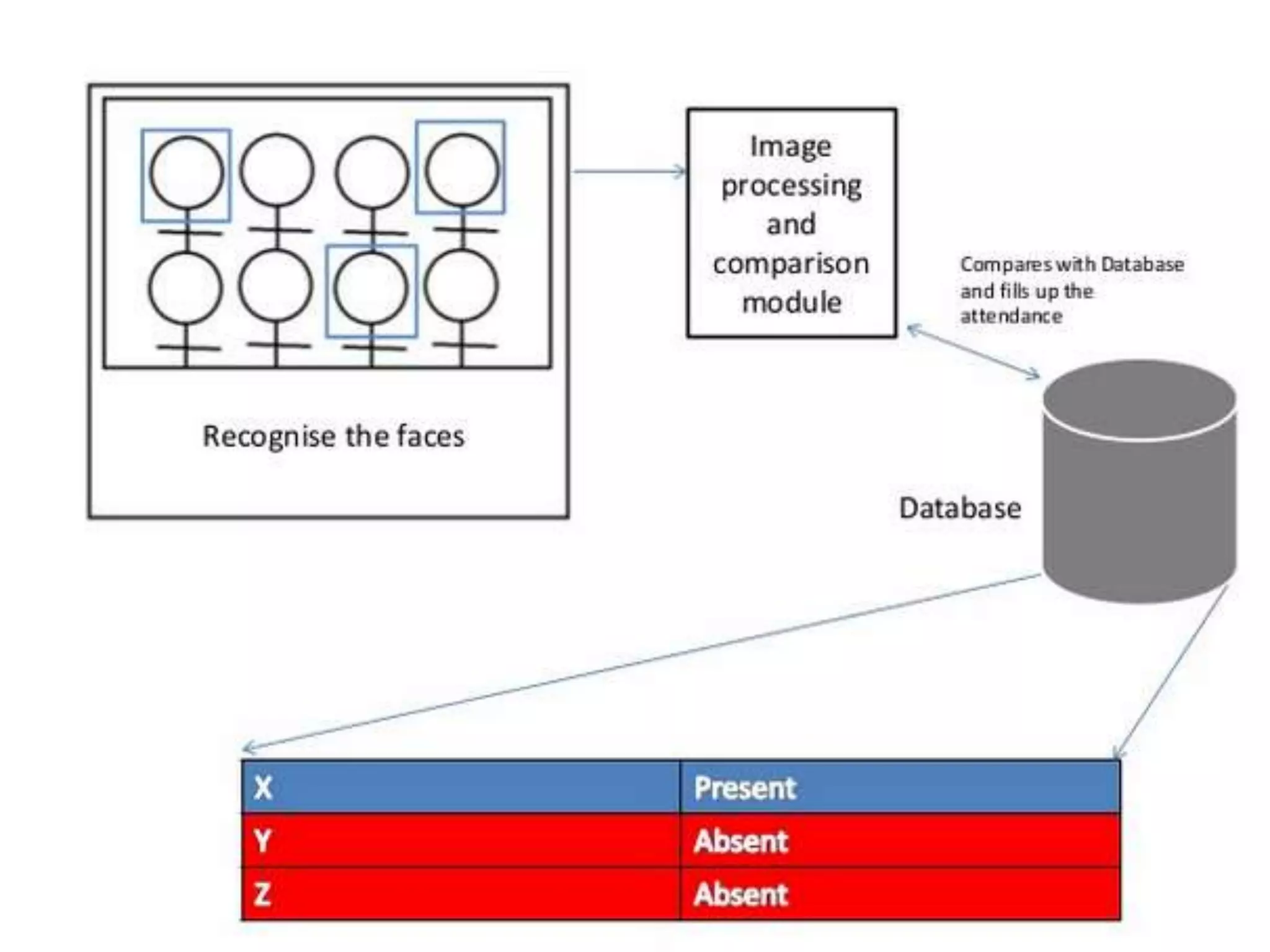
In order to determine classroom attendance, face detection and
face recognition are performed. Face detection is used to
determine the face extract sub images for each face. Then, in
face recognition, the face images detected will be compared
with the data base consisting of images of students in the class,
and attendance will be recorded accordingly.
INTRODUCTION
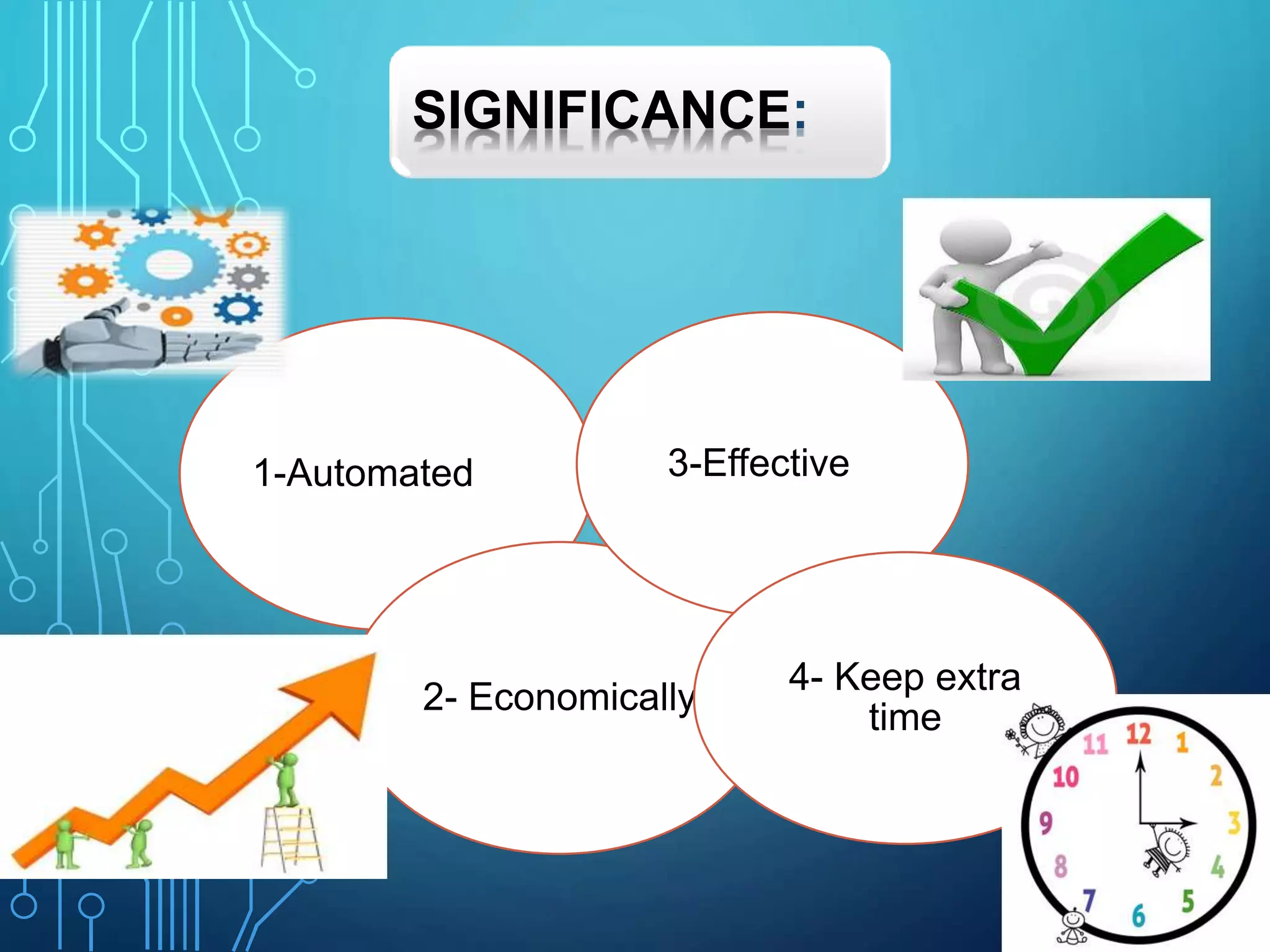
SIGNIFICANCE:
1-Automated
2- Economically
3-Effective
4- Keep extra
time
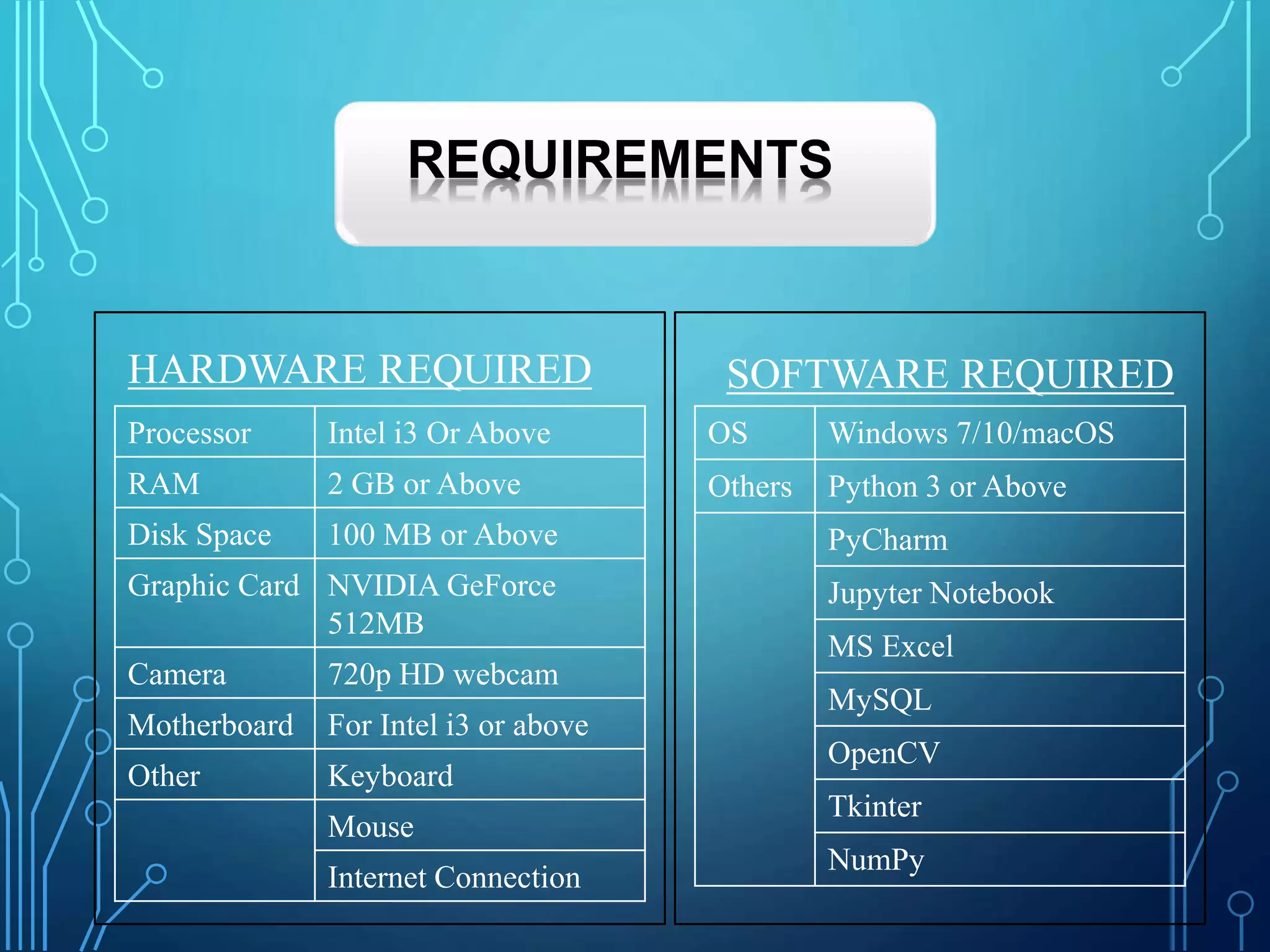
SOFTWARE REQUIRED
REQUIREMENTS
HARDWARE REQUIRED
Processor Intel i3 Or Above
RAM 2 GB or Above
Disk Space 100 MB or Above
Graphic Card NVIDIA GeForce
512MB
Camera 720p HD webcam
Motherboard For Intel i3 or above
Other Keyboard
Mouse
Internet Connection
OS Windows 7/10/macOS
Others Python 3 or Above
PyCharm
Jupyter Notebook
MS Excel
MySQL
OpenCV
Tkinter
NumPy
A
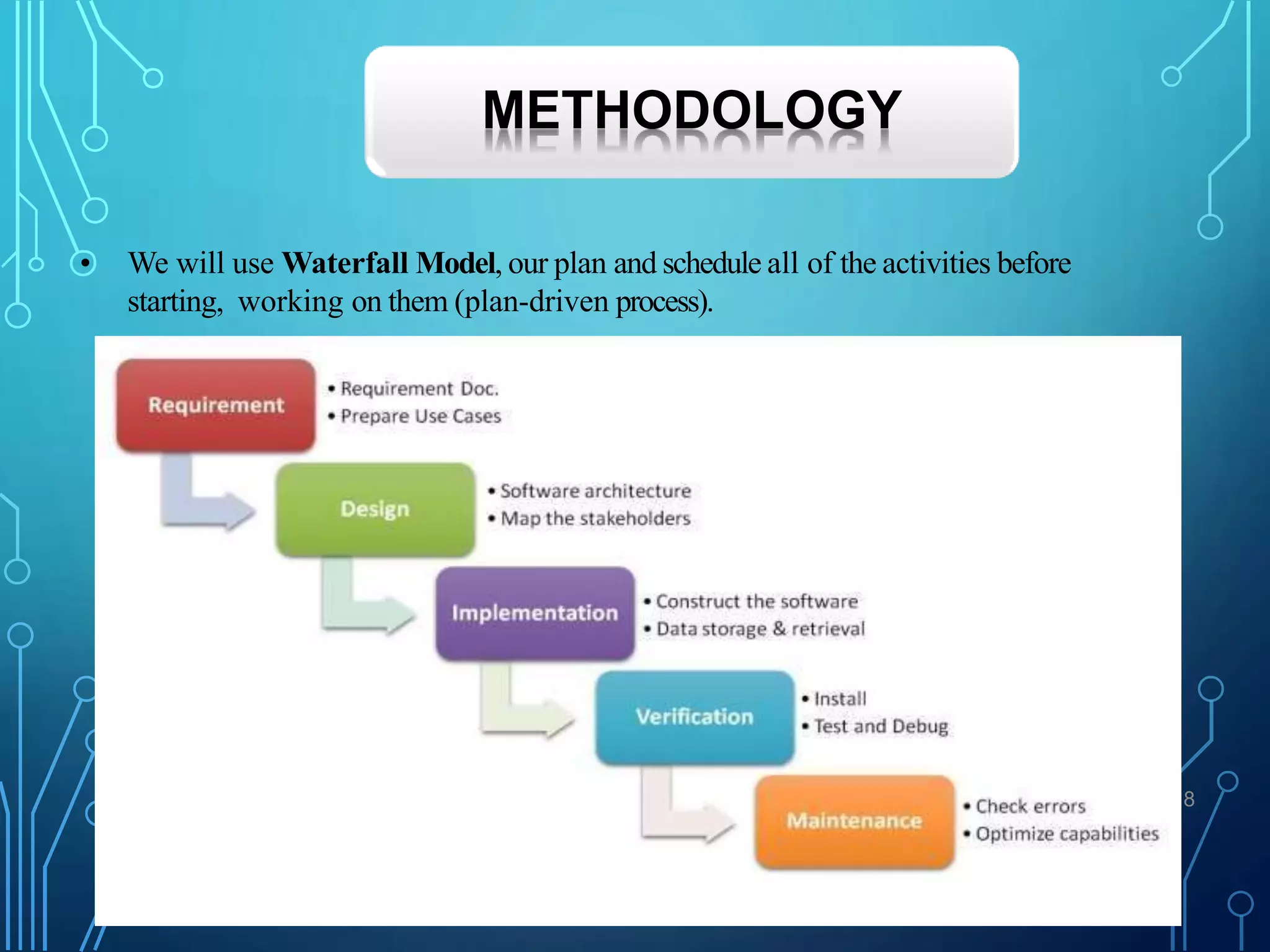
• We will use Waterfall Model, our plan and schedule all of the activities before
starting, working on them (plan-driven process).
8
METHODOLOGY
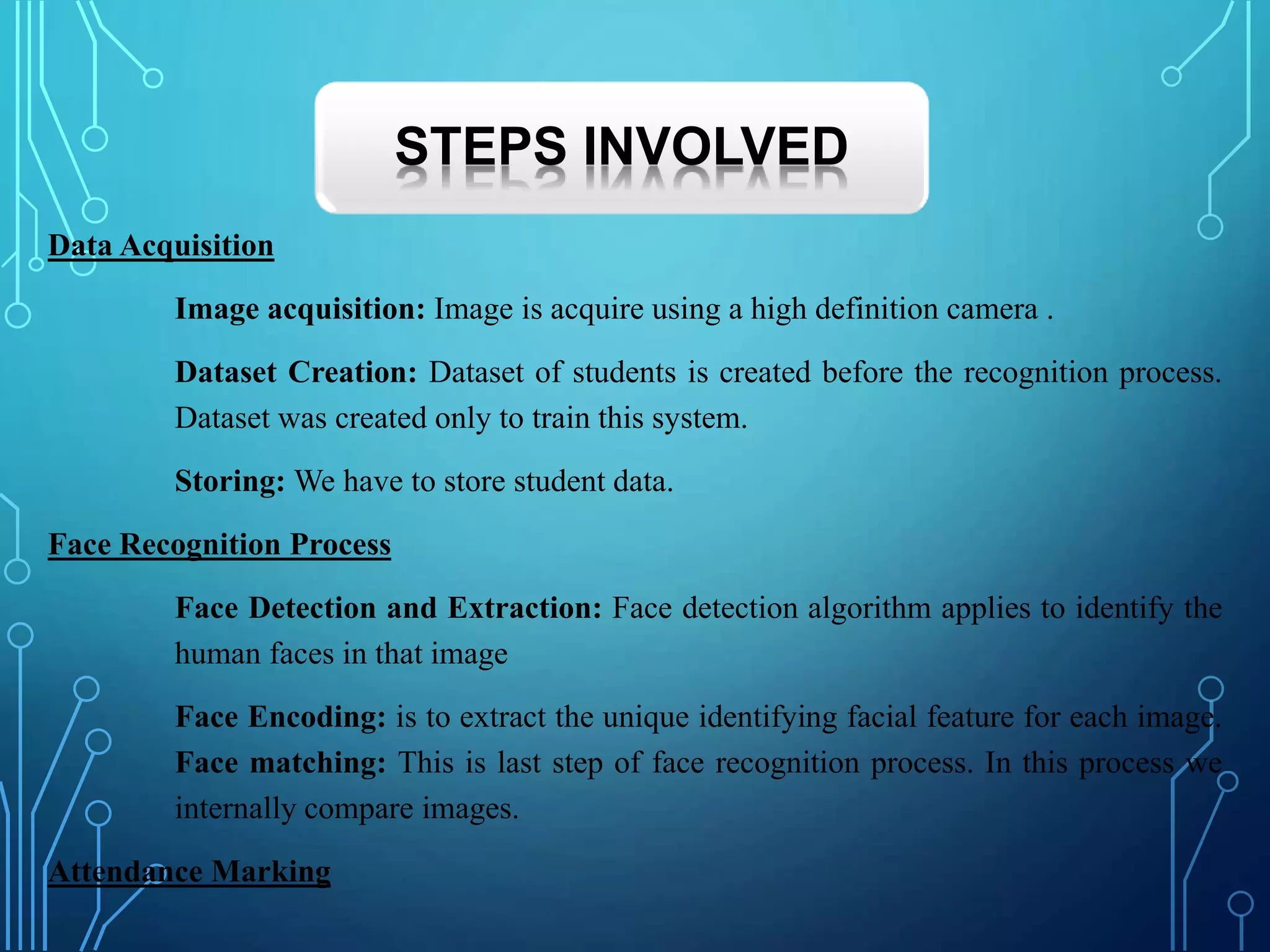
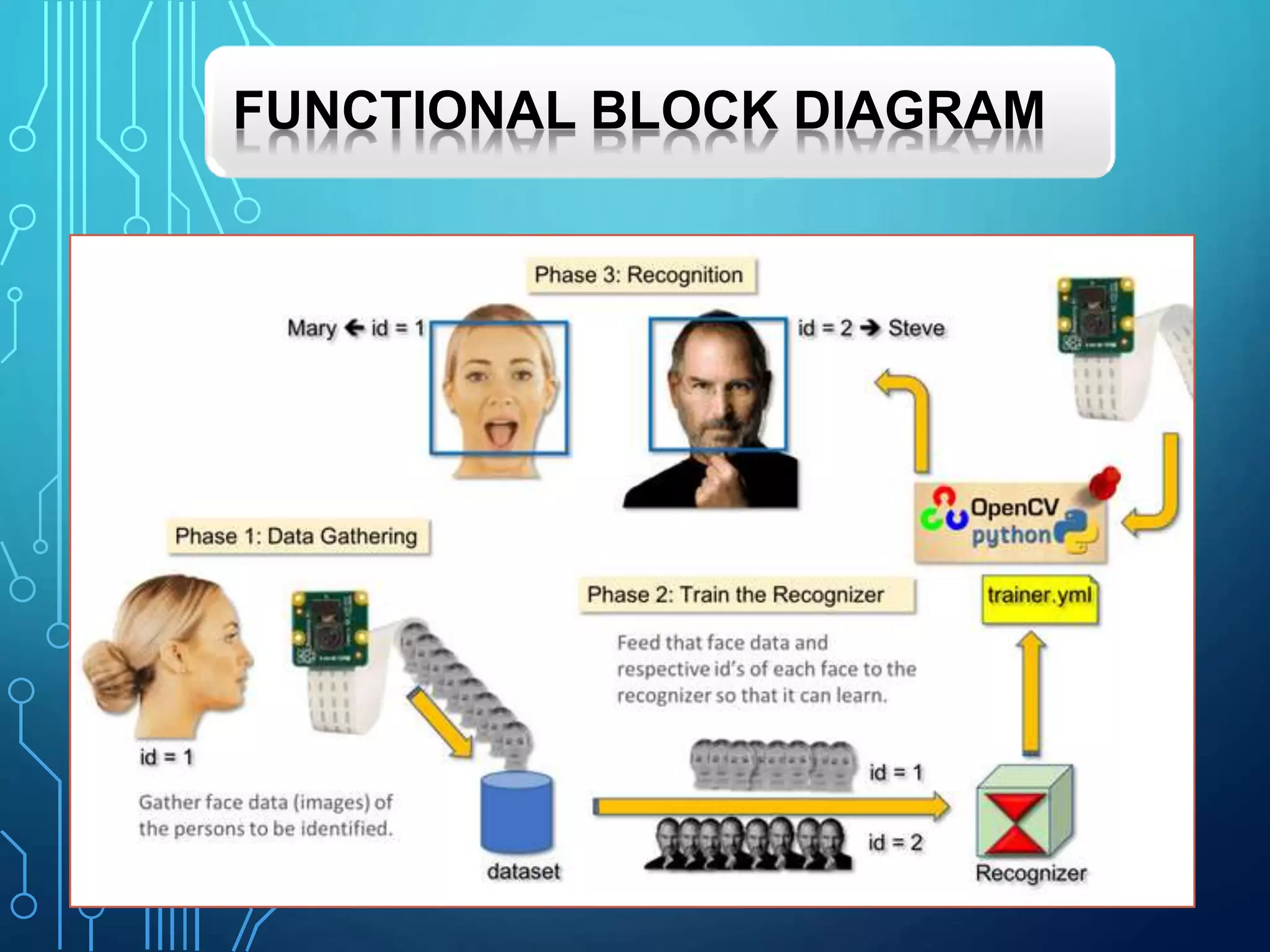
Data Acquisition
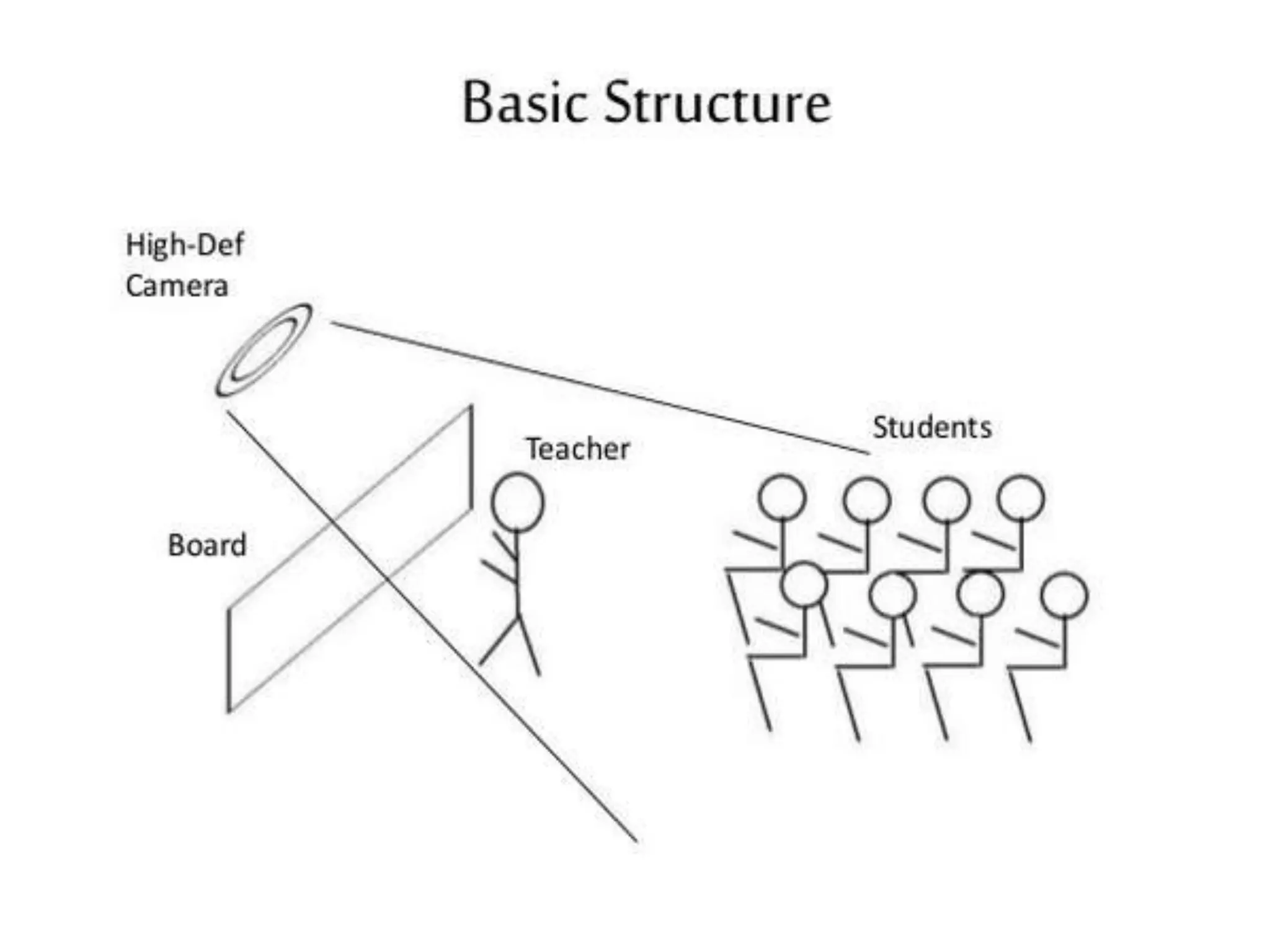
Image acquisition: Image is acquire using a high definition camera .
Dataset Creation: Dataset of students is created before the recognition process.
Dataset was created only to train this system.
Storing: We have to store student data.
Face Recognition Process
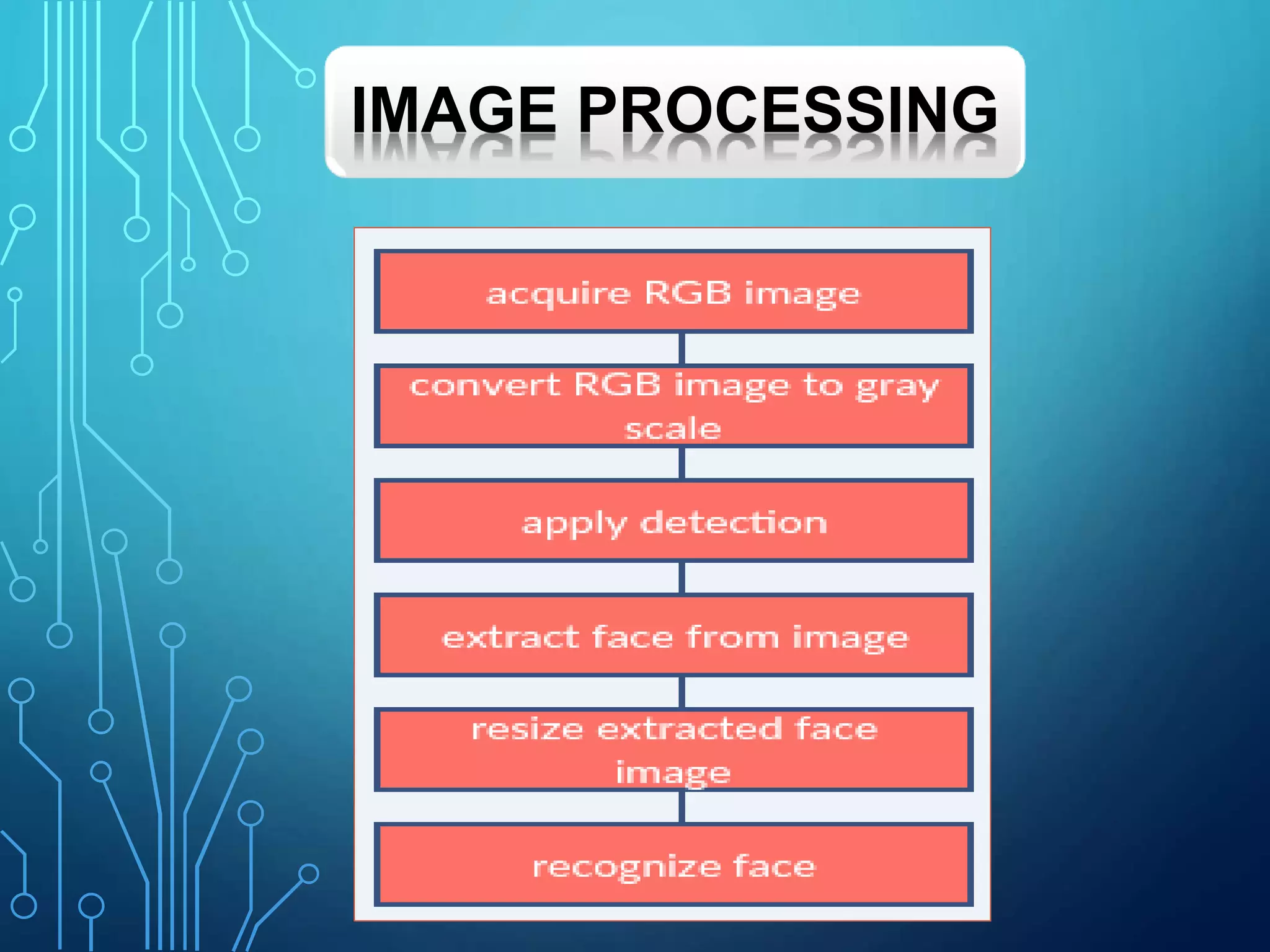
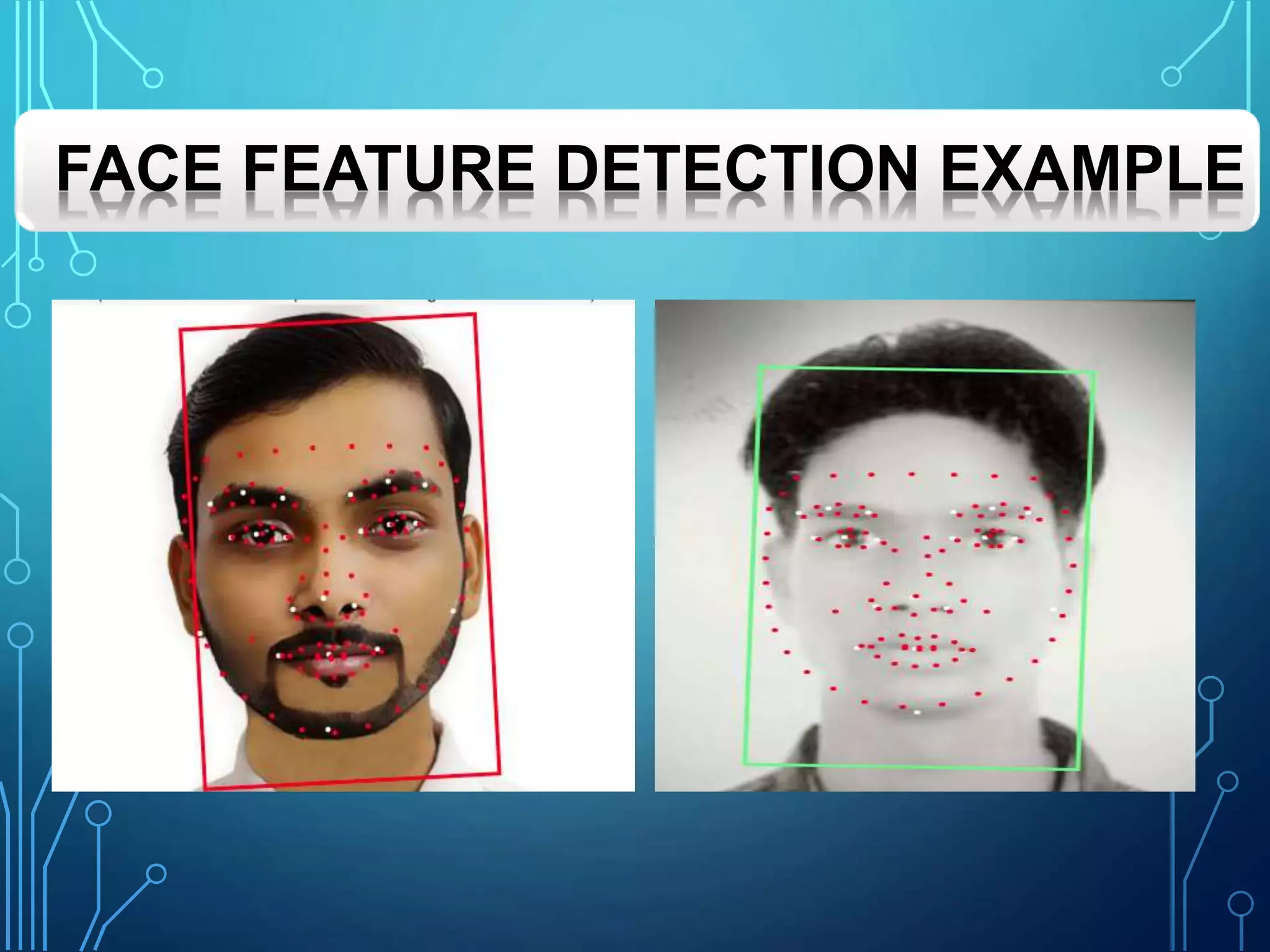
Face Detection and Extraction: Face detection algorithm applies to identify the
human faces in that image
Face Encoding: is to extract the unique identifying facial feature for each image.
Face matching: This is last step of face recognition process. In this process we
internally compare images.
Attendance Marking
STEPS INVOLVED
S
1
0
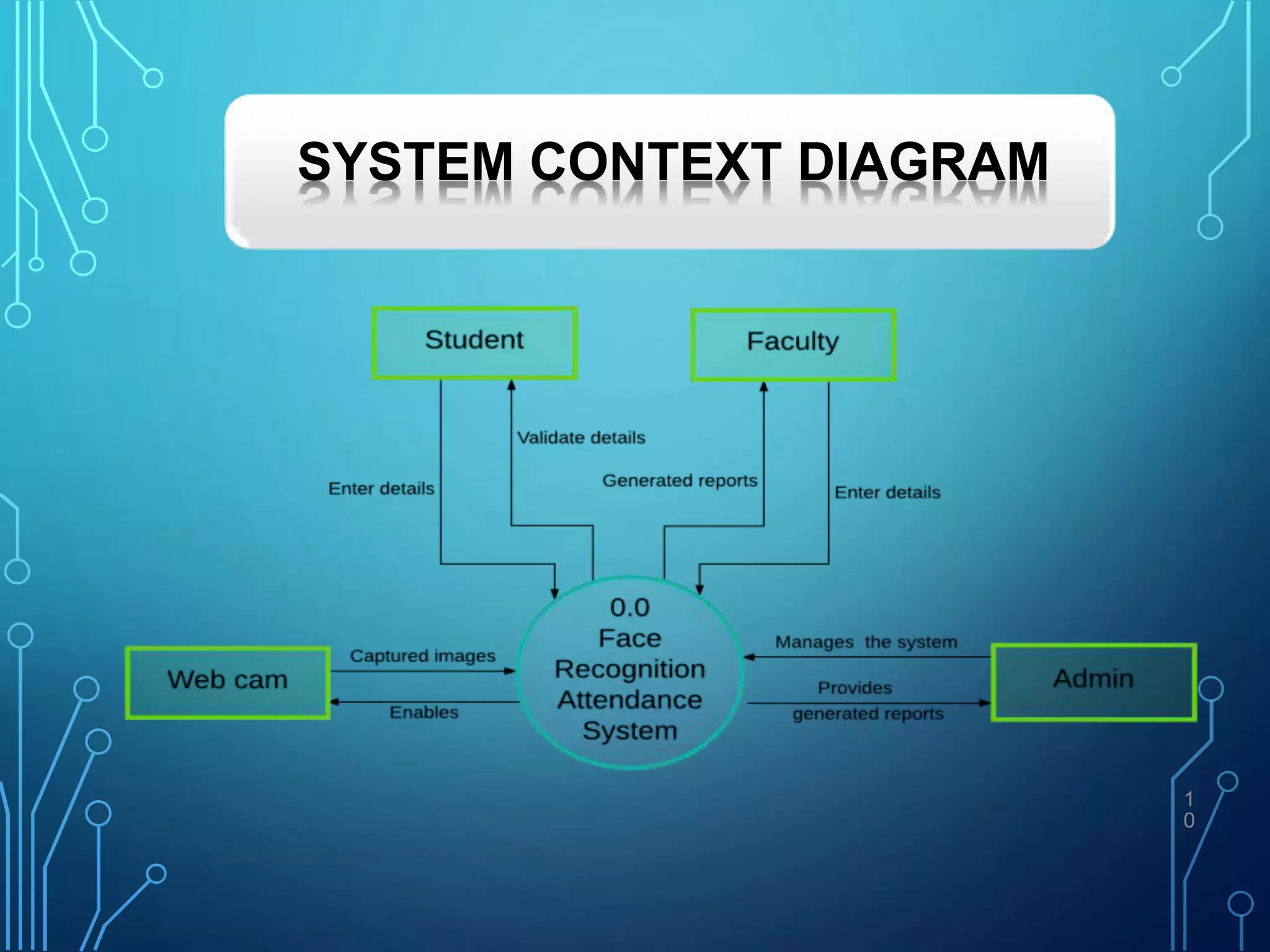
SYSTEM CONTEXT DIAGRAM
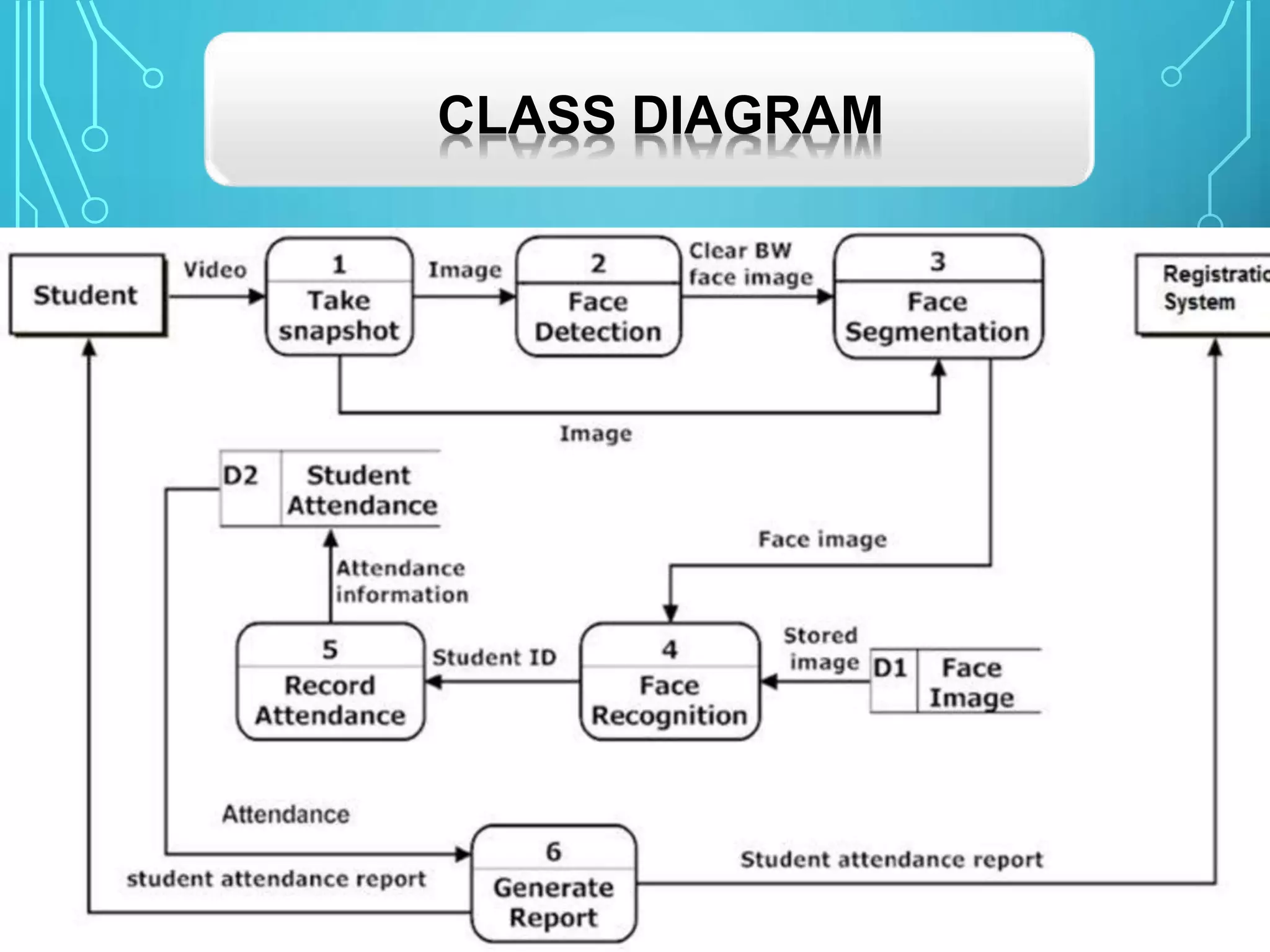
CLASS DIAGRAM
FUNCTIONAL BLOCK DIAGRAM
IMAGE PROCESSING
FACE FEATURE DETECTION EXAMPLE
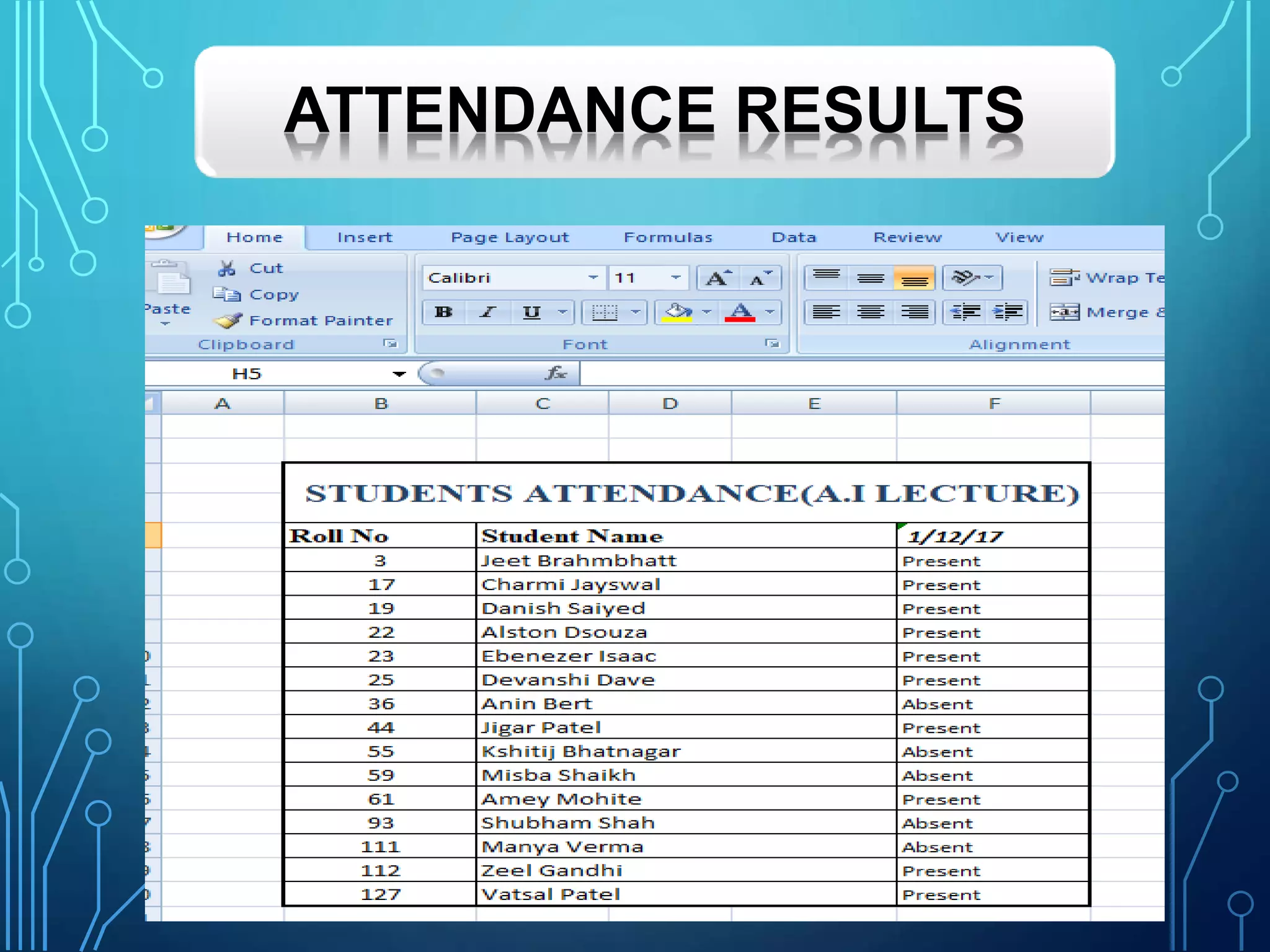
ATTENDANCE RESULTS
ADVANTAGES
• Proxy attendance is eliminated
• It saves there time and efforts.
• It stores the faces that are detected and automatically marks
attendance.
• The system is convenient and secure for the user.
LIMITATIONS
• It can only detect face from a limited distance with some specific angle
• The system don’t recognized properly in poor light so may give false results.
CONCLUSION
Smart attendance management system is designed to solve the issues of
existing manual systems. We will use face recognition concept to mark the
attendance of student and make the system better. In future this system need be
improved because these system sometimes fails to recognize students from
some distance, also we have some processing limitation, working with a
system of high processing may result even better performance of this system.
REFERENCES
1. Adrian Rhesa Septian Siswanto, Anto Satriyo Nugroho, Maulahikmah
Galinium,” Implementation of face recognition algorithm for biometrics based
time attendance system”, IEEE, ICT For Smart Society (ICISS), International
Conference ,January 2015.
2. International Journal of Computer and Communication Engineering, Vol. 1, No.
2, July 2012 - Study of Implementing Automated Attendance System Using
Face Recognition Technique by Nirmalya Kar, Mrinal Kanti Debbarma, Ashim
Saha, and Dwijen Rudra Pal.
3. Real time face recognition system using PCA and various distanceclassifiers
byDeepesh Raj – IIT Kanpur.
THANK YOU

SMART ATTENDANCE SYSTEM USING FACE RECOGNITION (233.pptx

  • 1.
    SMART ATTENDANCE SYSTEMUSING FACE RECOGNITION DEPARTMENT OF COMPUTER SCIENCE & ENGINEERING PRESENTATION ON Presented By: ABHISHEK RAWAT (1170432007) GAURAV YADAV (1170432037) BIPIN SINGH (1170432032) DHIRENDRA PRATAP SINGH (1170432035) JAY GOVIND SINGH (1170432047) Prof. (Dr.) Praveen Kumar Shukla HOD(CSE)
  • 2.
    AGENDA • Scope • Introduction •Requirements • Methodology • Data Flow Diagram • System Architecture • Demo Snapshots
  • 3.
    • In thisproject we aim to build a Smart Attendance System Using Face Recognition with the help of Face detection owing to the difficulty in the manual as well as other traditional means of attendance system during the practical and maintain the computerised data for the user. OBJECTIVE
  • 4.
    • To maintainthe attendance record with day to day activities is a challenging task. The conventional method of calling name of each student is time consuming and there is always a chance of proxy attendance • The following system is based on face recognition to maintain the attendance record of students. The daily attendance of students is recorded subject wise which is stored already by the administrator. SCOPE
  • 5.
    In order todetermine classroom attendance, face detection and face recognition are performed. Face detection is used to determine the face extract sub images for each face. Then, in face recognition, the face images detected will be compared with the data base consisting of images of students in the class, and attendance will be recorded accordingly. INTRODUCTION
  • 6.
  • 7.
    SOFTWARE REQUIRED REQUIREMENTS HARDWARE REQUIRED ProcessorIntel i3 Or Above RAM 2 GB or Above Disk Space 100 MB or Above Graphic Card NVIDIA GeForce 512MB Camera 720p HD webcam Motherboard For Intel i3 or above Other Keyboard Mouse Internet Connection OS Windows 7/10/macOS Others Python 3 or Above PyCharm Jupyter Notebook MS Excel MySQL OpenCV Tkinter NumPy
  • 8.
    A • We willuse Waterfall Model, our plan and schedule all of the activities before starting, working on them (plan-driven process). 8 METHODOLOGY
  • 9.
    Data Acquisition Image acquisition:Image is acquire using a high definition camera . Dataset Creation: Dataset of students is created before the recognition process. Dataset was created only to train this system. Storing: We have to store student data. Face Recognition Process Face Detection and Extraction: Face detection algorithm applies to identify the human faces in that image Face Encoding: is to extract the unique identifying facial feature for each image. Face matching: This is last step of face recognition process. In this process we internally compare images. Attendance Marking STEPS INVOLVED
  • 10.
  • 11.
  • 14.
  • 15.
  • 16.
  • 17.
  • 18.
    ADVANTAGES • Proxy attendanceis eliminated • It saves there time and efforts. • It stores the faces that are detected and automatically marks attendance. • The system is convenient and secure for the user.
  • 19.
    LIMITATIONS • It canonly detect face from a limited distance with some specific angle • The system don’t recognized properly in poor light so may give false results.
  • 20.
    CONCLUSION Smart attendance managementsystem is designed to solve the issues of existing manual systems. We will use face recognition concept to mark the attendance of student and make the system better. In future this system need be improved because these system sometimes fails to recognize students from some distance, also we have some processing limitation, working with a system of high processing may result even better performance of this system.
  • 21.
    REFERENCES 1. Adrian RhesaSeptian Siswanto, Anto Satriyo Nugroho, Maulahikmah Galinium,” Implementation of face recognition algorithm for biometrics based time attendance system”, IEEE, ICT For Smart Society (ICISS), International Conference ,January 2015. 2. International Journal of Computer and Communication Engineering, Vol. 1, No. 2, July 2012 - Study of Implementing Automated Attendance System Using Face Recognition Technique by Nirmalya Kar, Mrinal Kanti Debbarma, Ashim Saha, and Dwijen Rudra Pal. 3. Real time face recognition system using PCA and various distanceclassifiers byDeepesh Raj – IIT Kanpur.
  • 22.