SLIT LAMP EXAMINATION-
ILLUMINATION TECHNIQUES
- DR AYUSHI SINGH
- FIRST YEAR POST GRADUATE
Basic slit lamp examination
โ€ข Patient positioning:
โ€ข Head support unit
โ€ข Adjust height of table or chair
โ€ข Adjust height of chin rest such that
patients lateral canthus is aligned
with the mark.
โ€ข Adjust ocular eyepieces.
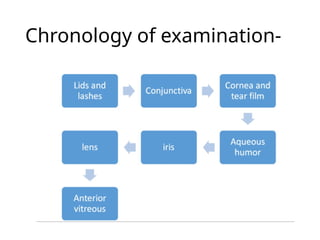
Chronology of examination-
Illumination techniques
โ€ข Includes
โ€ข Diffuse illumination
โ€ข Direct focal illumination
โ€ข Parallilepiped
โ€ข Optic section
โ€ข Conical(pinpoint)
โ€ข Tangential
โ€ข Specular reflection
โ€ข Focal Indirect illumination
โ€ข Retro-illumination
โ€ข Sclerotic scatter
โ€ข Transillumination
โ€ข Proximal illumination
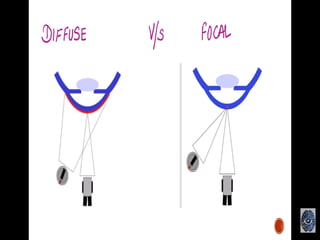
Diffuse illumination
โ€ข Angle between microscope and
illumination system should be 30-45
degree.
โ€ข Slit width should be widest.
โ€ข Filter to be used is diffusing filter.
โ€ข Magnification: low to medium
โ€ข Illumination: medium to high.
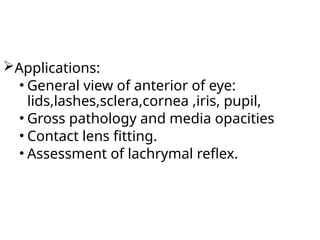
๏ƒ˜Applications:
โ€ข General view of anterior of eye:
lids,lashes,sclera,cornea ,iris, pupil,
โ€ข Gross pathology and media opacities
โ€ข Contact lens fitting.
โ€ข Assessment of lachrymal reflex.
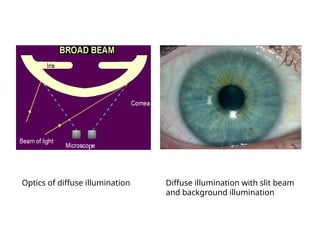
Optics of diffuse illumination Diffuse illumination with slit beam
and background illumination
p
Focal Direct illumination
โ€ข Involves placing the light source at an angle of
about 40-50 degree from microscope.
โ€ข This arrangement permits both light beam and
microscope to be sharply focused on the ocular
tissue being observed.
โ€ข Narrowing of beam and shortening of height
creating a spotlight
โ€ข Wide beam direct illumination is commonly used
as a preliminary technique to evaluate large area.
โ€ข it is particularly suitable for assessment of
cataracts,scars,nerves,vessels etc.
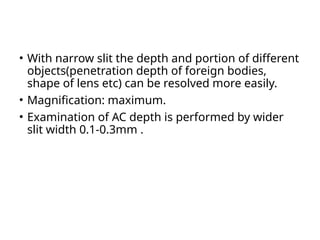
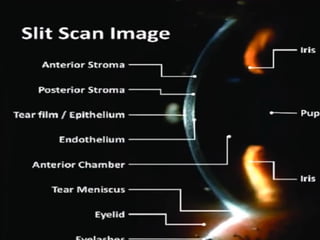
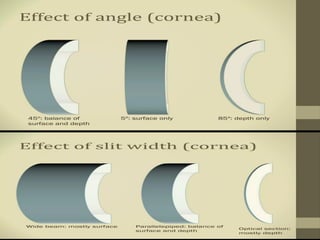
Optic section
โ€ข Optic section is a very thin parallelepiped and
optically cuts a very thin slice(0.1-0.2mm) of the
cornea.
โ€ข Two beams are seen- one curved beam outlining
the surface of the cornea; the other a flatter
unfocused beam reflecting the iris surface.
โ€ข Angle between illuminating and viewing path is
45 degree.
โ€ข Slit length should be kept small to minimize
dazzling the patient.
โ€ข With narrow slit the depth and portion of different
objects(penetration depth of foreign bodies,
shape of lens etc) can be resolved more easily.
โ€ข Magnification: maximum.
โ€ข Examination of AC depth is performed by wider
slit width 0.1-0.3mm .
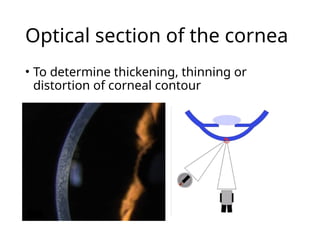
Optical section of the cornea
โ€ข To determine thickening, thinning or
distortion of corneal contour
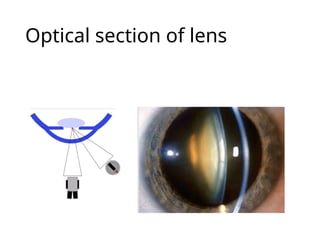
Optical section of lens
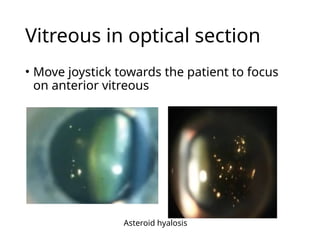
Vitreous in optical section
โ€ข Move joystick towards the patient to focus
on anterior vitreous
Asteroid hyalosis
โ€ข Parallelepiped:
โ€ข Constructed by narrowing the beam to
1-2mm in width to illuminate a
rectangular area of cornea.
โ€ข Microscope is placed directly in front of
patients cornea.
โ€ข Light source is approximately 45 degree
from straight ahead position.
โ€ข Used to study stroma of cornea
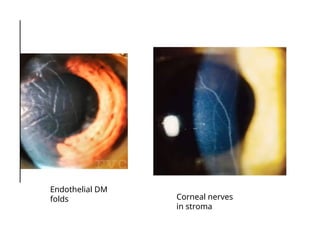
Endothelial DM
folds Corneal nerves
in stroma
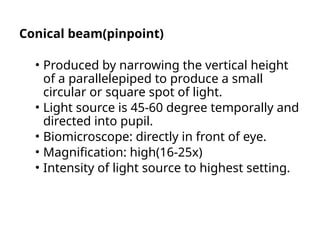
Conical beam(pinpoint)
โ€ข Produced by narrowing the vertical height
of a parallelepiped to produce a small
circular or square spot of light.
โ€ข Light source is 45-60 degree temporally and
directed into pupil.
โ€ข Biomicroscope: directly in front of eye.
โ€ข Magnification: high(16-25x)
โ€ข Intensity of light source to highest setting.
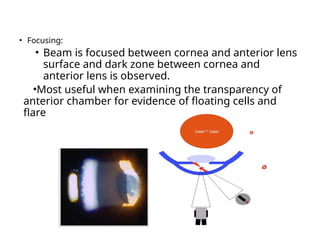
โ€ข Focusing:
โ€ข Beam is focused between cornea and anterior lens
surface and dark zone between cornea and
anterior lens is observed.
โ€ขMost useful when examining the transparency of
anterior chamber for evidence of floating cells and
flare seen in anterior uveitis.
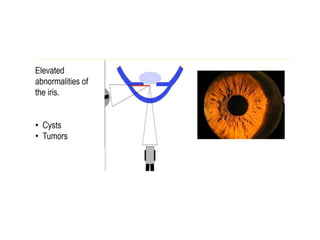
Tangential illumination
โ€ข Requires that the illumination arm and
the viewing arm be separated by 90
degree.
โ€ข Medium โ€“wide beam of moderate height
is used.
โ€ข Microscope is pointing straight ahead.
โ€ข Magnification of 10x,16x,or 25x are
used.
โ€ข Observe:
โ€ข Anterior and posterior cornea
โ€ข Iris is best viewed without dilation
by this method.
โ€ข Anterior lens (especially useful for
viewing pseudoexfolation).
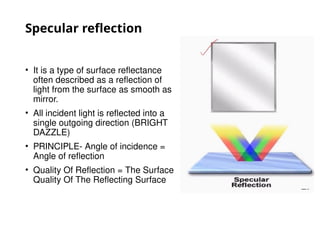
Specular reflection
โ€ข It is a type of surface reflectance
often described as a reflection of
light from the surface as smooth as
mirror.
โ€ข All incident light is reflected into a
single outgoing direction (BRIGHT
DAZZLE)
โ€ข PRINCIPLE- Angle of incidence =
Angle of reflection
โ€ข Quality Of Reflection = The Surface
Quality Of The Reflecting Surface
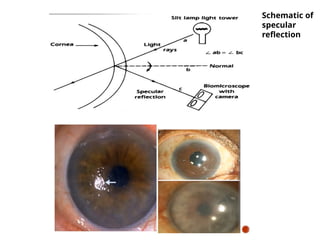
โ€ข Established by separating the microscope and
slit beam by equal angles from normal to
cornea.
โ€ข Position of illuminator about 30 degree to one
side and the microscope 30 degree to otherside.
โ€ข Angle of illuminator to microscope must be
equal and opposite.
โ€ข Angle of light should be moved until a very
bright reflex obtained from corneal surface
which is called zone of specular reflection.
โ€ข Irregularities ,deposits ,or excavasation in
these smooth surfaces will fail to reflect light
and these appear darker than surrounding.
โ€ข Under specular reflection anterior corneal
surface appears as white uniform surface and
corneal endothelium takes on a mosaic
pattern.
โ€ข Uses-
1. Movement of the lipid layer of the cornea
2. Tear meniscus
3. Irregularities on anterior cornea
4. Corneal endothelium
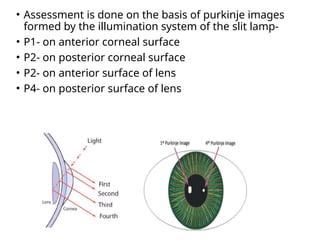
โ€ข Assessment is done on the basis of purkinje images
formed by the illumination system of the slit lamp-
โ€ข P1- on anterior corneal surface
โ€ข P2- on posterior corneal surface
โ€ข P2- on anterior surface of lens
โ€ข P4- on posterior surface of lens
Schematic of
specular
reflection
Thank You

slit lamp examination techniques in ophthalmology

  • 1.
    SLIT LAMP EXAMINATION- ILLUMINATIONTECHNIQUES - DR AYUSHI SINGH - FIRST YEAR POST GRADUATE
  • 2.
    Basic slit lampexamination โ€ข Patient positioning: โ€ข Head support unit โ€ข Adjust height of table or chair โ€ข Adjust height of chin rest such that patients lateral canthus is aligned with the mark. โ€ข Adjust ocular eyepieces.
  • 3.
  • 4.
    Illumination techniques โ€ข Includes โ€ขDiffuse illumination โ€ข Direct focal illumination โ€ข Parallilepiped โ€ข Optic section โ€ข Conical(pinpoint) โ€ข Tangential โ€ข Specular reflection โ€ข Focal Indirect illumination โ€ข Retro-illumination โ€ข Sclerotic scatter โ€ข Transillumination โ€ข Proximal illumination
  • 5.
    Diffuse illumination โ€ข Anglebetween microscope and illumination system should be 30-45 degree. โ€ข Slit width should be widest. โ€ข Filter to be used is diffusing filter. โ€ข Magnification: low to medium โ€ข Illumination: medium to high.
  • 6.
    ๏ƒ˜Applications: โ€ข General viewof anterior of eye: lids,lashes,sclera,cornea ,iris, pupil, โ€ข Gross pathology and media opacities โ€ข Contact lens fitting. โ€ข Assessment of lachrymal reflex.
  • 7.
    Optics of diffuseillumination Diffuse illumination with slit beam and background illumination p
  • 8.
    Focal Direct illumination โ€ขInvolves placing the light source at an angle of about 40-50 degree from microscope. โ€ข This arrangement permits both light beam and microscope to be sharply focused on the ocular tissue being observed. โ€ข Narrowing of beam and shortening of height creating a spotlight โ€ข Wide beam direct illumination is commonly used as a preliminary technique to evaluate large area. โ€ข it is particularly suitable for assessment of cataracts,scars,nerves,vessels etc.
  • 10.
    Optic section โ€ข Opticsection is a very thin parallelepiped and optically cuts a very thin slice(0.1-0.2mm) of the cornea. โ€ข Two beams are seen- one curved beam outlining the surface of the cornea; the other a flatter unfocused beam reflecting the iris surface. โ€ข Angle between illuminating and viewing path is 45 degree. โ€ข Slit length should be kept small to minimize dazzling the patient.
  • 11.
    โ€ข With narrowslit the depth and portion of different objects(penetration depth of foreign bodies, shape of lens etc) can be resolved more easily. โ€ข Magnification: maximum. โ€ข Examination of AC depth is performed by wider slit width 0.1-0.3mm .
  • 12.
    Optical section ofthe cornea โ€ข To determine thickening, thinning or distortion of corneal contour
  • 14.
  • 15.
    Vitreous in opticalsection โ€ข Move joystick towards the patient to focus on anterior vitreous Asteroid hyalosis
  • 16.
    โ€ข Parallelepiped: โ€ข Constructedby narrowing the beam to 1-2mm in width to illuminate a rectangular area of cornea. โ€ข Microscope is placed directly in front of patients cornea. โ€ข Light source is approximately 45 degree from straight ahead position. โ€ข Used to study stroma of cornea
  • 17.
  • 19.
    Conical beam(pinpoint) โ€ข Producedby narrowing the vertical height of a parallelepiped to produce a small circular or square spot of light. โ€ข Light source is 45-60 degree temporally and directed into pupil. โ€ข Biomicroscope: directly in front of eye. โ€ข Magnification: high(16-25x) โ€ข Intensity of light source to highest setting.
  • 20.
    โ€ข Focusing: โ€ข Beamis focused between cornea and anterior lens surface and dark zone between cornea and anterior lens is observed. โ€ขMost useful when examining the transparency of anterior chamber for evidence of floating cells and flare seen in anterior uveitis.
  • 21.
    Tangential illumination โ€ข Requiresthat the illumination arm and the viewing arm be separated by 90 degree. โ€ข Medium โ€“wide beam of moderate height is used. โ€ข Microscope is pointing straight ahead. โ€ข Magnification of 10x,16x,or 25x are used.
  • 22.
    โ€ข Observe: โ€ข Anteriorand posterior cornea โ€ข Iris is best viewed without dilation by this method. โ€ข Anterior lens (especially useful for viewing pseudoexfolation).
  • 24.
    Specular reflection โ€ข Itis a type of surface reflectance often described as a reflection of light from the surface as smooth as mirror. โ€ข All incident light is reflected into a single outgoing direction (BRIGHT DAZZLE) โ€ข PRINCIPLE- Angle of incidence = Angle of reflection โ€ข Quality Of Reflection = The Surface Quality Of The Reflecting Surface
  • 25.
    โ€ข Established byseparating the microscope and slit beam by equal angles from normal to cornea. โ€ข Position of illuminator about 30 degree to one side and the microscope 30 degree to otherside. โ€ข Angle of illuminator to microscope must be equal and opposite. โ€ข Angle of light should be moved until a very bright reflex obtained from corneal surface which is called zone of specular reflection.
  • 26.
    โ€ข Irregularities ,deposits,or excavasation in these smooth surfaces will fail to reflect light and these appear darker than surrounding. โ€ข Under specular reflection anterior corneal surface appears as white uniform surface and corneal endothelium takes on a mosaic pattern. โ€ข Uses- 1. Movement of the lipid layer of the cornea 2. Tear meniscus 3. Irregularities on anterior cornea 4. Corneal endothelium
  • 27.
    โ€ข Assessment isdone on the basis of purkinje images formed by the illumination system of the slit lamp- โ€ข P1- on anterior corneal surface โ€ข P2- on posterior corneal surface โ€ข P2- on anterior surface of lens โ€ข P4- on posterior surface of lens
  • 28.
  • 29.