

Optimizing Nursing
Staff Resilience
Presented by:
ADAHLIA TAGALAG BASCO, EdD, MAN, RN
Nursing Quality/EBP Coordinator
Objectives
 To be familiar with resilience in nursing
 To inform the importance for nurse leaders to educate nurses about self-
care and techniques to build resilience.
 To be familiar to the factors contributing to nurse dissatisfaction
 Know the actions in optimizing nurse resilence
Introduction
 Health crises, including pandemics, are associated with significant health
risk and concomitant stress, fear, decreased sense of control, and
uncertainty.
 Deleterious impact on both physical and mental health for healthcare
professionals ,coping skills may be challenged and strengths may be
elucidated.
 Such crises create an imperative for nursing leaders a to support staff
wellbeing through adaptive flexibility for culturally sensitive resilience
and wellbeing interventions.
 Strategies (‘tips’) is needed to optimize resilience and wellbeing with an
integrative resilience approach of individual, environment, and
organization/systems
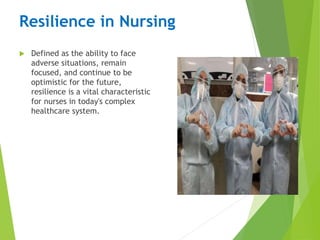
Resilience in Nursing
 Defined as the ability to face
adverse situations, remain
focused, and continue to be
optimistic for the future,
resilience is a vital characteristic
for nurses in today's complex
healthcare system.
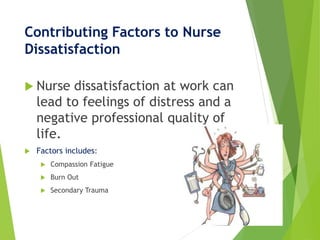
Contributing Factors to Nurse
Dissatisfaction
 Nurse dissatisfaction at work can
lead to feelings of distress and a
negative professional quality of
life.
 Factors includes:
 Compassion Fatigue
 Burn Out
 Secondary Trauma
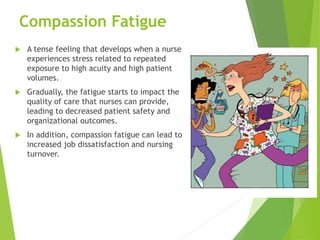
Compassion Fatigue
 A tense feeling that develops when a nurse
experiences stress related to repeated
exposure to high acuity and high patient
volumes.
 Gradually, the fatigue starts to impact the
quality of care that nurses can provide,
leading to decreased patient safety and
organizational outcomes.
 In addition, compassion fatigue can lead to
increased job dissatisfaction and nursing
turnover.
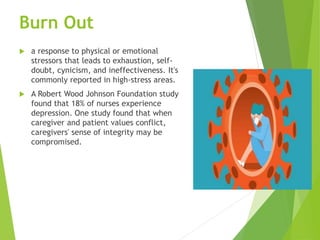
Burn Out
 a response to physical or emotional
stressors that leads to exhaustion, self-
doubt, cynicism, and ineffectiveness. It's
commonly reported in high-stress areas.
 A Robert Wood Johnson Foundation study
found that 18% of nurses experience
depression. One study found that when
caregiver and patient values conflict,
caregivers' sense of integrity may be
compromised.
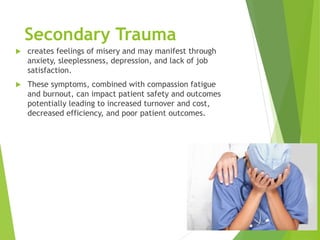
Secondary Trauma
 creates feelings of misery and may manifest through
anxiety, sleeplessness, depression, and lack of job
satisfaction.
 These symptoms, combined with compassion fatigue
and burnout, can impact patient safety and outcomes
potentially leading to increased turnover and cost,
decreased efficiency, and poor patient outcomes.
What is the Issue?
 As the frontline caregivers in health care today, nurses accomplish a
myriad of tasks and responsibilities, but often at high personal cost.
 The need to juggle competing priorities in often high-stress situations can
result in feeling overwhelmed or burnout.
 The negative effect of these stressors can affect the ability of health care
professionals to care for others.
 Organizations have a responsibility to support nursing staff and
address the causes of burnout. An emerging method to do this is by
developing and fostering resilient environments and individuals.
Optimizing resilience with an integrative
approach for promoting wellbeing is part of
holistic health professions education
including the development of emotional
competencies (Tempski et al. 2012).
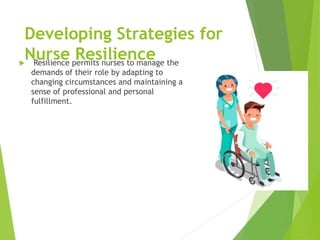
Developing Strategies for
Nurse Resilience Resilience permits nurses to manage the
demands of their role by adapting to
changing circumstances and maintaining a
sense of professional and personal
fulfillment.
A study in 2010 by Cameron and Brownie
identified eight themes that impact
nurse resilience
 Experience.
 Amount of satisfaction attained.
 Positive attitude or sense of faith.
 Feeling of making a difference.
 Leadership strategies, such as debriefing, validating and
self-reflection.
 Support from colleagues, mentors and teams.
 Insight in ability to recognize stressors.
 Maintaining work-life balance
Leader Empowering Behavior
(LEB) workplace empowerment refers to
employees’ ability to access resources,
information, and support needed to
perform their work and to gain the
opportunity to develop.
Categories of LEB
 Enhancing the meaningfulness of work
 Fostering opportunity to participate in decision making
 Expressing confidence in high performance
 Facilitating the attainment of organizational goals
 Providing autonomy and freedom from bureaucratic
restrictions
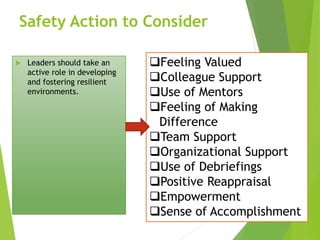
Safety Action to Consider
 Leaders should take an
active role in developing
and fostering resilient
environments.
Feeling Valued
Colleague Support
Use of Mentors
Feeling of Making
Difference
Team Support
Organizational Support
Use of Debriefings
Positive Reappraisal
Empowerment
Sense of Accomplishment
Tips to Optimize Resilience
 Validate & embrace the whole emotional experience
 Calm the mind
 Reflect
 Relationship Matter
 Adopt Healthy Lifestyle
 Humanities for Healing
 Appreciative Inquiry
 Asking for help is a strength
Building Block
 Building nurse resilience through formal education, social support, and
meaningful recognition is an important focus for nurse leaders in
establishing a healthy work environment and maintaining a stable nurse
workforce.
 Prioritizing the well-being of caregivers is necessary for patient safety,
quality of care, and the patient experience.
Reference
 Dyess SM, Prestia AS, Smith MC. Support for caring and resiliency among
successful nurse leaders. Nurs Adm Q. 2015;39(2):104–116.
 McCann CM, et al. Resilience in the health professions: A review of the
literature. International Journal of Wellbeing, 2013;3(1):60-81.
 Magtibay DL and Chesak SS. Decreasing Stress and Burnout in Nurses.
Efficacy of Blended Learning with Stress Management and Resilience
Training Program. The Journal of Nursing Administration,
2017;47(7/8):391-395. 3. Brusie C. Study reveals alarming statistics on
nurse burnout. nurse.org, April 7, 2019.
 Schmidt M, Haglund K. Debrief in emergency departments to improve
compassion fatigue and promote resiliency. J Trauma Nurs.
2017;24(5):317–322.
Slidesahre presentation optimizing nursing staff resilience

Slidesahre presentation optimizing nursing staff resilience

  • 1.
    Optimizing Nursing Staff Resilience Presentedby: ADAHLIA TAGALAG BASCO, EdD, MAN, RN Nursing Quality/EBP Coordinator
  • 2.
    Objectives  To befamiliar with resilience in nursing  To inform the importance for nurse leaders to educate nurses about self- care and techniques to build resilience.  To be familiar to the factors contributing to nurse dissatisfaction  Know the actions in optimizing nurse resilence
  • 3.
    Introduction  Health crises,including pandemics, are associated with significant health risk and concomitant stress, fear, decreased sense of control, and uncertainty.  Deleterious impact on both physical and mental health for healthcare professionals ,coping skills may be challenged and strengths may be elucidated.  Such crises create an imperative for nursing leaders a to support staff wellbeing through adaptive flexibility for culturally sensitive resilience and wellbeing interventions.  Strategies (‘tips’) is needed to optimize resilience and wellbeing with an integrative resilience approach of individual, environment, and organization/systems
  • 4.
    Resilience in Nursing Defined as the ability to face adverse situations, remain focused, and continue to be optimistic for the future, resilience is a vital characteristic for nurses in today's complex healthcare system.
  • 5.
    Contributing Factors toNurse Dissatisfaction  Nurse dissatisfaction at work can lead to feelings of distress and a negative professional quality of life.  Factors includes:  Compassion Fatigue  Burn Out  Secondary Trauma
  • 6.
    Compassion Fatigue  Atense feeling that develops when a nurse experiences stress related to repeated exposure to high acuity and high patient volumes.  Gradually, the fatigue starts to impact the quality of care that nurses can provide, leading to decreased patient safety and organizational outcomes.  In addition, compassion fatigue can lead to increased job dissatisfaction and nursing turnover.
  • 7.
    Burn Out  aresponse to physical or emotional stressors that leads to exhaustion, self- doubt, cynicism, and ineffectiveness. It's commonly reported in high-stress areas.  A Robert Wood Johnson Foundation study found that 18% of nurses experience depression. One study found that when caregiver and patient values conflict, caregivers' sense of integrity may be compromised.
  • 8.
    Secondary Trauma  createsfeelings of misery and may manifest through anxiety, sleeplessness, depression, and lack of job satisfaction.  These symptoms, combined with compassion fatigue and burnout, can impact patient safety and outcomes potentially leading to increased turnover and cost, decreased efficiency, and poor patient outcomes.
  • 9.
    What is theIssue?  As the frontline caregivers in health care today, nurses accomplish a myriad of tasks and responsibilities, but often at high personal cost.  The need to juggle competing priorities in often high-stress situations can result in feeling overwhelmed or burnout.  The negative effect of these stressors can affect the ability of health care professionals to care for others.  Organizations have a responsibility to support nursing staff and address the causes of burnout. An emerging method to do this is by developing and fostering resilient environments and individuals.
  • 10.
    Optimizing resilience withan integrative approach for promoting wellbeing is part of holistic health professions education including the development of emotional competencies (Tempski et al. 2012).
  • 11.
    Developing Strategies for NurseResilience Resilience permits nurses to manage the demands of their role by adapting to changing circumstances and maintaining a sense of professional and personal fulfillment.
  • 12.
    A study in2010 by Cameron and Brownie identified eight themes that impact nurse resilience  Experience.  Amount of satisfaction attained.  Positive attitude or sense of faith.  Feeling of making a difference.  Leadership strategies, such as debriefing, validating and self-reflection.  Support from colleagues, mentors and teams.  Insight in ability to recognize stressors.  Maintaining work-life balance
  • 13.
    Leader Empowering Behavior (LEB)workplace empowerment refers to employees’ ability to access resources, information, and support needed to perform their work and to gain the opportunity to develop.
  • 14.
    Categories of LEB Enhancing the meaningfulness of work  Fostering opportunity to participate in decision making  Expressing confidence in high performance  Facilitating the attainment of organizational goals  Providing autonomy and freedom from bureaucratic restrictions
  • 15.
    Safety Action toConsider  Leaders should take an active role in developing and fostering resilient environments. Feeling Valued Colleague Support Use of Mentors Feeling of Making Difference Team Support Organizational Support Use of Debriefings Positive Reappraisal Empowerment Sense of Accomplishment
  • 16.
    Tips to OptimizeResilience  Validate & embrace the whole emotional experience  Calm the mind  Reflect  Relationship Matter  Adopt Healthy Lifestyle  Humanities for Healing  Appreciative Inquiry  Asking for help is a strength
  • 17.
    Building Block  Buildingnurse resilience through formal education, social support, and meaningful recognition is an important focus for nurse leaders in establishing a healthy work environment and maintaining a stable nurse workforce.  Prioritizing the well-being of caregivers is necessary for patient safety, quality of care, and the patient experience.
  • 18.
    Reference  Dyess SM,Prestia AS, Smith MC. Support for caring and resiliency among successful nurse leaders. Nurs Adm Q. 2015;39(2):104–116.  McCann CM, et al. Resilience in the health professions: A review of the literature. International Journal of Wellbeing, 2013;3(1):60-81.  Magtibay DL and Chesak SS. Decreasing Stress and Burnout in Nurses. Efficacy of Blended Learning with Stress Management and Resilience Training Program. The Journal of Nursing Administration, 2017;47(7/8):391-395. 3. Brusie C. Study reveals alarming statistics on nurse burnout. nurse.org, April 7, 2019.  Schmidt M, Haglund K. Debrief in emergency departments to improve compassion fatigue and promote resiliency. J Trauma Nurs. 2017;24(5):317–322.