Healthy Lifestyle
Adult health
Print
Products and services
Free E-newsletter
Subscribe to
Housecall
Our general interest e-
newsletter keeps you
up to date on a wide
variety of health topics.
Sign up now
Think about all the factors that can interfere with a good night's
sleep — from work stress and family responsibilities to
unexpected challenges, such as illnesses. It's no wonder that
quality sleep is sometimes elusive.
While you might not be able to control the factors that interfere
with your sleep, you can adopt habits that encourage better sleep.
Start with these simple tips.
1. Stick to a sleep schedule
Set aside no more than eight hours for sleep. The recommended
amount of sleep for a healthy adult is at least seven hours. Most
people don't need more than eight hours in bed to achieve this
goal.
Go to bed and get up at the same time every day. Try to limit the
difference in your sleep schedule on weeknights and weekends to
no more than one hour. Being consistent reinforces your body's
sleep-wake cycle.
If you don't fall asleep within about 20 minutes, leave your
bedroom and do something relaxing. Read or listen to soothing
music. Go back to bed when you're tired. Repeat as needed.
2. Pay attention to what you eat and drink
Don't go to bed hungry or stuffed. In particular, avoid heavy or
large meals within a couple of hours of bedtime. Your discomfort
might keep you up.
Nicotine, caffeine and alcohol deserve caution, too. The
stimulating effects of nicotine and caffeine take hours to wear off
and can wreak havoc on quality sleep. And even though alcohol
might make you feel sleepy, it can disrupt sleep later in the night.
Sleep tips: 6 steps to better sleep
You're not doomed to toss and turn every night. Consider
simple tips for better sleep, from setting a sleep schedule to
including physical activity in your daily routine.
By Mayo Clinic Staff
Advertisement
Policy Opportunities
Mayo Clinic does not endorse companies or
products. Advertising revenue supports our
not-for-profit mission.
Advertising & Sponsorship
Ad Choices
Mayo Clinic Marketplace
Check out these best-sellers and special
offers on books and newsletters from Mayo
Clinic.
The Mayo Clinic Diet Online
Live stronger and healthier at any age
Concerned about Diabetes? This diet works.
Arthritis solutions for a more active life
4 simple steps to a joy-filled life
Basics In-Depth Expert Answers Multimedia Resources News From Mayo Clinic What's New
Search Mayo Clinic
Request an Appointment
Find a Doctor
Find a Job
Give Now
English
Log in to Patient Account
PATIENT CARE &
HEALTH INFO
DEPARTMENTS &
CENTERS
RESEARCH EDUCATION FOR MEDICAL
PROFESSIONALS
PRODUCTS &
SERVICES
GIVING TO
MAYO CLINIC
3. Create a restful environment
Create a room that's ideal for sleeping. Often, this means cool,
dark and quiet. Exposure to light might make it more challenging
to fall asleep. Avoid prolonged use of light-emitting screens just
before bedtime. Consider using room-darkening shades,
earplugs, a fan or other devices to create an environment that
suits your needs.
Doing calming activities before bedtime, such as taking a bath or
using relaxation techniques, might promote better sleep.
4. Limit daytime naps
Long daytime naps can interfere with nighttime sleep. If you
choose to nap, limit yourself to up to 30 minutes and avoid doing
so late in the day.
If you work nights, however, you might need to nap late in the day
before work to help make up your sleep debt.
5. Include physical activity in your daily
routine
Regular physical activity can promote better sleep. Avoid being
active too close to bedtime, however.
Spending time outside every day might be helpful, too.
6. Manage worries
Try to resolve your worries or concerns before bedtime. Jot down
what's on your mind and then set it aside for tomorrow.
Stress management might help. Start with the basics, such as
getting organized, setting priorities and delegating tasks.
Meditation also can ease anxiety.
Know when to contact your doctor
Nearly everyone has an occasional sleepless night — but if you
often have trouble sleeping, contact your doctor. Identifying and
treating any underlying causes can help you get the better sleep
you deserve.
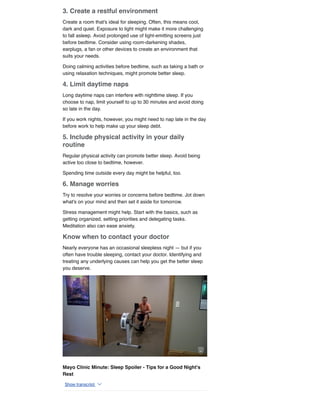
Mayo Clinic Minute: Sleep Spoiler - Tips for a Good Night's
Rest
Showtranscript
Feb. 08, 2019
See more In-depth
Showreferences
See also
Tips for better sleep
8 ways to improve sleep quality as you age
Alzheimer's sleep problems
Sleep and psoriatic arthritis
Healthy heart for life: Avoiding heart disease
How a sleep diary can transform how you feel
Sleep guidelines
Showmorerelatedcontent
Other Topics in Patient Care & Health Info
Healthy Lifestyle Symptoms A-Z Diseases &
Conditions A-Z
Tests &
Procedures A-Z
Drugs &
Supplements A-Z
Appointments Patient & Visitor
Guide
Billing &
Insurance
Patient Online
Services
ART-20048379Healthy Lifestyle Adult health In-Depth Sleep tips 6 steps to better sleep
REQUEST APPOINTMENT GIVE NOW CONTACT US ABOUT MAYO CLINIC EMPLOYEES SITE MAP ABOUT THIS SITE
Any use of this site constitutes your agreement to
the Terms and Conditions and Privacy Policy linked
below.
A single copy of these materials may be reprinted for
noncommercial personal use only. "Mayo," "Mayo
Clinic," "MayoClinic.org," "Mayo Clinic Healthy
This site complies with the HONcode
standard for trustworthy health information:
verify here.
Share Tweet
© 1998-2019 Mayo Foundation for Medical Education and Research (MFMER). All rights reserved.
Terms and Conditions
Privacy Policy
Notice of Privacy Practices
Notice of Nondiscrimination
Living," and the triple-shield Mayo Clinic logo are
trademarks of Mayo Foundation for Medical
Education and Research.

Sleep tips: 6 steps to better sleep

  • 1.
    Healthy Lifestyle Adult health Print Productsand services Free E-newsletter Subscribe to Housecall Our general interest e- newsletter keeps you up to date on a wide variety of health topics. Sign up now Think about all the factors that can interfere with a good night's sleep — from work stress and family responsibilities to unexpected challenges, such as illnesses. It's no wonder that quality sleep is sometimes elusive. While you might not be able to control the factors that interfere with your sleep, you can adopt habits that encourage better sleep. Start with these simple tips. 1. Stick to a sleep schedule Set aside no more than eight hours for sleep. The recommended amount of sleep for a healthy adult is at least seven hours. Most people don't need more than eight hours in bed to achieve this goal. Go to bed and get up at the same time every day. Try to limit the difference in your sleep schedule on weeknights and weekends to no more than one hour. Being consistent reinforces your body's sleep-wake cycle. If you don't fall asleep within about 20 minutes, leave your bedroom and do something relaxing. Read or listen to soothing music. Go back to bed when you're tired. Repeat as needed. 2. Pay attention to what you eat and drink Don't go to bed hungry or stuffed. In particular, avoid heavy or large meals within a couple of hours of bedtime. Your discomfort might keep you up. Nicotine, caffeine and alcohol deserve caution, too. The stimulating effects of nicotine and caffeine take hours to wear off and can wreak havoc on quality sleep. And even though alcohol might make you feel sleepy, it can disrupt sleep later in the night. Sleep tips: 6 steps to better sleep You're not doomed to toss and turn every night. Consider simple tips for better sleep, from setting a sleep schedule to including physical activity in your daily routine. By Mayo Clinic Staff Advertisement Policy Opportunities Mayo Clinic does not endorse companies or products. Advertising revenue supports our not-for-profit mission. Advertising & Sponsorship Ad Choices Mayo Clinic Marketplace Check out these best-sellers and special offers on books and newsletters from Mayo Clinic. The Mayo Clinic Diet Online Live stronger and healthier at any age Concerned about Diabetes? This diet works. Arthritis solutions for a more active life 4 simple steps to a joy-filled life Basics In-Depth Expert Answers Multimedia Resources News From Mayo Clinic What's New Search Mayo Clinic Request an Appointment Find a Doctor Find a Job Give Now English Log in to Patient Account PATIENT CARE & HEALTH INFO DEPARTMENTS & CENTERS RESEARCH EDUCATION FOR MEDICAL PROFESSIONALS PRODUCTS & SERVICES GIVING TO MAYO CLINIC
  • 2.
    3. Create arestful environment Create a room that's ideal for sleeping. Often, this means cool, dark and quiet. Exposure to light might make it more challenging to fall asleep. Avoid prolonged use of light-emitting screens just before bedtime. Consider using room-darkening shades, earplugs, a fan or other devices to create an environment that suits your needs. Doing calming activities before bedtime, such as taking a bath or using relaxation techniques, might promote better sleep. 4. Limit daytime naps Long daytime naps can interfere with nighttime sleep. If you choose to nap, limit yourself to up to 30 minutes and avoid doing so late in the day. If you work nights, however, you might need to nap late in the day before work to help make up your sleep debt. 5. Include physical activity in your daily routine Regular physical activity can promote better sleep. Avoid being active too close to bedtime, however. Spending time outside every day might be helpful, too. 6. Manage worries Try to resolve your worries or concerns before bedtime. Jot down what's on your mind and then set it aside for tomorrow. Stress management might help. Start with the basics, such as getting organized, setting priorities and delegating tasks. Meditation also can ease anxiety. Know when to contact your doctor Nearly everyone has an occasional sleepless night — but if you often have trouble sleeping, contact your doctor. Identifying and treating any underlying causes can help you get the better sleep you deserve. Mayo Clinic Minute: Sleep Spoiler - Tips for a Good Night's Rest Showtranscript
  • 3.
    Feb. 08, 2019 Seemore In-depth Showreferences See also Tips for better sleep 8 ways to improve sleep quality as you age Alzheimer's sleep problems Sleep and psoriatic arthritis Healthy heart for life: Avoiding heart disease How a sleep diary can transform how you feel Sleep guidelines Showmorerelatedcontent Other Topics in Patient Care & Health Info Healthy Lifestyle Symptoms A-Z Diseases & Conditions A-Z Tests & Procedures A-Z Drugs & Supplements A-Z Appointments Patient & Visitor Guide Billing & Insurance Patient Online Services ART-20048379Healthy Lifestyle Adult health In-Depth Sleep tips 6 steps to better sleep REQUEST APPOINTMENT GIVE NOW CONTACT US ABOUT MAYO CLINIC EMPLOYEES SITE MAP ABOUT THIS SITE Any use of this site constitutes your agreement to the Terms and Conditions and Privacy Policy linked below. A single copy of these materials may be reprinted for noncommercial personal use only. "Mayo," "Mayo Clinic," "MayoClinic.org," "Mayo Clinic Healthy This site complies with the HONcode standard for trustworthy health information: verify here. Share Tweet
  • 4.
    © 1998-2019 MayoFoundation for Medical Education and Research (MFMER). All rights reserved. Terms and Conditions Privacy Policy Notice of Privacy Practices Notice of Nondiscrimination Living," and the triple-shield Mayo Clinic logo are trademarks of Mayo Foundation for Medical Education and Research.