SLAVERY IN THE USA

      by Lilli Schindler
Structure

 Meaning of slavery
 Historical overview
 Oppression of Afro-Americans
 Abolitionism; Abolitionist movement
 End of slavery (American Civil War)
Meaning of Slavery

 Conflict between freedom and slavery in the
  USA
 Humans are seen as property of others
 No fundamental rights
Historical overview

 Conflict between northern and southern states
 Plantation economy
   Upswing in the export of tobacco, cotton, rice and
    cane sugar
   Forced mass migration
   Racial ideology
 Stono uprising
   “Negro Act”
     absolute restriction of all rights; hardening of the
      situation of the slave
 19th century
   Confederate states
   Civil war between northern and southern states
 1865 Act on the final abolition of slavery
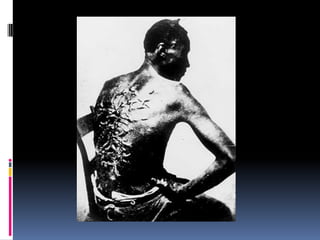
Oppression of Afro-Americans

 No equality
 Torture methods
 No fundamental rights
 Ideology of subordination
Abolitionism; Abolitionist Movement


 Society for Effecting the Abolition of Slavery
 Movement against slavery and racialist
  ideology
 Later active for the Civil Rights Movement
End of Slavery

 Civil war resulted in the liberation of the
  slaves
 1865 slavery prohibited by law in all areas in
  the USA
 1868 civil rights formally guaranteed

Slavery in the usa lilli corrected

  • 1.
    SLAVERY IN THEUSA by Lilli Schindler
  • 2.
    Structure  Meaning ofslavery  Historical overview  Oppression of Afro-Americans  Abolitionism; Abolitionist movement  End of slavery (American Civil War)
  • 3.
    Meaning of Slavery Conflict between freedom and slavery in the USA  Humans are seen as property of others  No fundamental rights
  • 5.
    Historical overview  Conflictbetween northern and southern states  Plantation economy  Upswing in the export of tobacco, cotton, rice and cane sugar  Forced mass migration  Racial ideology
  • 6.
     Stono uprising  “Negro Act”  absolute restriction of all rights; hardening of the situation of the slave  19th century  Confederate states  Civil war between northern and southern states  1865 Act on the final abolition of slavery
  • 7.
    Oppression of Afro-Americans No equality  Torture methods  No fundamental rights  Ideology of subordination
  • 8.
    Abolitionism; Abolitionist Movement Society for Effecting the Abolition of Slavery  Movement against slavery and racialist ideology  Later active for the Civil Rights Movement
  • 9.
    End of Slavery Civil war resulted in the liberation of the slaves  1865 slavery prohibited by law in all areas in the USA  1868 civil rights formally guaranteed