Based on –
Six Simple Rules – How to manage
complexity without getting complicated,
by
Yves Morieux, Peter Tollman
Click on the book image for a link to Yves Morieux
YouTube clip.
How to Deal with Unnecessary
Organisational Complicatedness
Book Club Review Template
How to manage complexity without
getting complicated
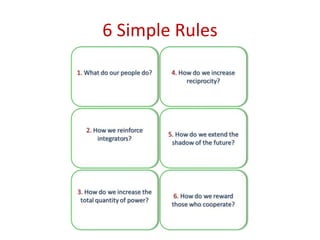
• There are six simple rules. The first three
involve enabling—providing the information needed to
understand where the problems are and empowering the
right people to make good choices.
• The second three involve impelling—motivating people
to apply all their abilities and to cooperate, thanks to
feedback loops that expose them as directly as possible
to the consequences of their actions.
Harvard Business Review - Smart Rules: Six Ways to Get People to Solve
Problems Without You Yves Morieux, SEPTEMBER 2011 ISSUE
HTTPS://HBR.ORG/2011/09/SMART-RULES-SIX-WAYS-TO-GET-PEOPLE-TO-SOLVE-PROBLEMS-WITHOUT-YOU
Format of this review
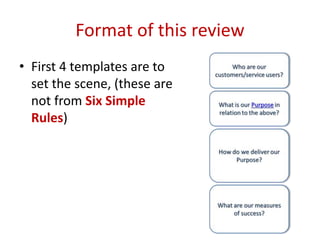
• First 4 templates are to
set the scene, (these are
not from Six Simple
Rules)
6 Simple Rules
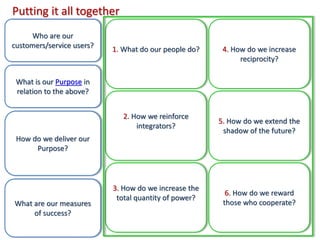
What is our Purpose in
relation to the above?
How do we deliver our
Purpose?
Putting it all together
2. How we reinforce
integrators?
1. What do our people do?
3. How do we increase the
total quantity of power?
5. How do we extend the
shadow of the future?
4. How do we increase
reciprocity?
6. How do we reward
those who cooperate?What are our measures
of success?
Who are our
customers/service users?
Who are our Customers/Service Users?
What is our Purpose in relation to our customers
/Service Users?
How do we deliver this?
What are our Measures of Success?
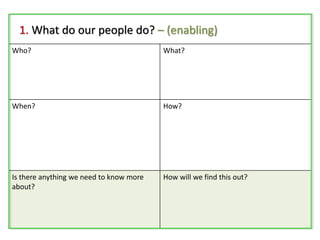
1. What do our people do? – (enabling)
Who? What?
When? How?
Is there anything we need to know more
about?
How will we find this out?
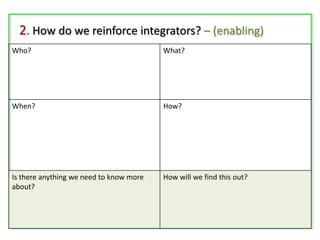
2. How do we reinforce integrators? – (enabling)
Who? What?
When? How?
Is there anything we need to know more
about?
How will we find this out?
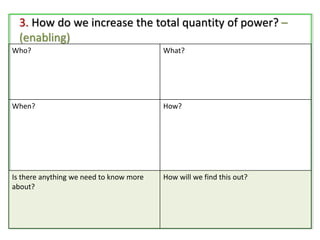
3. How do we increase the total quantity of power? –
(enabling)
Who? What?
When? How?
Is there anything we need to know more
about?
How will we find this out?
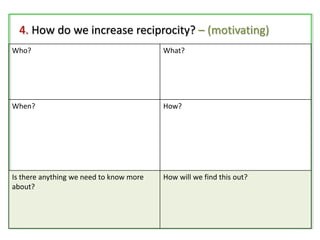
4. How do we increase reciprocity? – (motivating)
Who? What?
When? How?
Is there anything we need to know more
about?
How will we find this out?
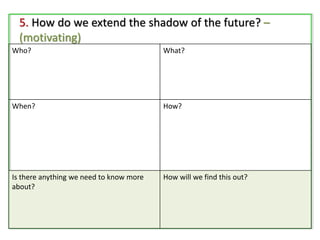
5. How do we extend the shadow of the future? –
(motivating)
Who? What?
When? How?
Is there anything we need to know more
about?
How will we find this out?
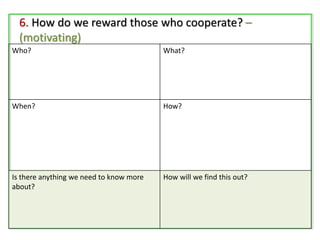
6. How do we reward those who cooperate? –
(motivating)
Who? What?
When? How?
Is there anything we need to know more
about?
How will we find this out?
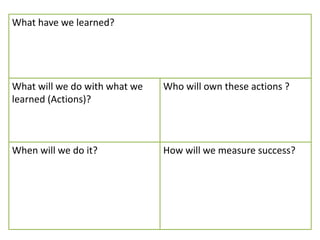
What have we learned?
What will we do with what we
learned (Actions)?
When will we do it? How will we measure success?
Who will own these actions ?

Six simple rules canvas

  • 1.
    Based on – SixSimple Rules – How to manage complexity without getting complicated, by Yves Morieux, Peter Tollman Click on the book image for a link to Yves Morieux YouTube clip. How to Deal with Unnecessary Organisational Complicatedness Book Club Review Template
  • 2.
    How to managecomplexity without getting complicated • There are six simple rules. The first three involve enabling—providing the information needed to understand where the problems are and empowering the right people to make good choices. • The second three involve impelling—motivating people to apply all their abilities and to cooperate, thanks to feedback loops that expose them as directly as possible to the consequences of their actions. Harvard Business Review - Smart Rules: Six Ways to Get People to Solve Problems Without You Yves Morieux, SEPTEMBER 2011 ISSUE HTTPS://HBR.ORG/2011/09/SMART-RULES-SIX-WAYS-TO-GET-PEOPLE-TO-SOLVE-PROBLEMS-WITHOUT-YOU
  • 3.
    Format of thisreview • First 4 templates are to set the scene, (these are not from Six Simple Rules)
  • 4.
  • 5.
    What is ourPurpose in relation to the above? How do we deliver our Purpose? Putting it all together 2. How we reinforce integrators? 1. What do our people do? 3. How do we increase the total quantity of power? 5. How do we extend the shadow of the future? 4. How do we increase reciprocity? 6. How do we reward those who cooperate?What are our measures of success? Who are our customers/service users?
  • 6.
    Who are ourCustomers/Service Users?
  • 7.
    What is ourPurpose in relation to our customers /Service Users?
  • 8.
    How do wedeliver this?
  • 9.
    What are ourMeasures of Success?
  • 10.
    1. What doour people do? – (enabling) Who? What? When? How? Is there anything we need to know more about? How will we find this out?
  • 11.
    2. How dowe reinforce integrators? – (enabling) Who? What? When? How? Is there anything we need to know more about? How will we find this out?
  • 12.
    3. How dowe increase the total quantity of power? – (enabling) Who? What? When? How? Is there anything we need to know more about? How will we find this out?
  • 13.
    4. How dowe increase reciprocity? – (motivating) Who? What? When? How? Is there anything we need to know more about? How will we find this out?
  • 14.
    5. How dowe extend the shadow of the future? – (motivating) Who? What? When? How? Is there anything we need to know more about? How will we find this out?
  • 15.
    6. How dowe reward those who cooperate? – (motivating) Who? What? When? How? Is there anything we need to know more about? How will we find this out?
  • 16.
    What have welearned? What will we do with what we learned (Actions)? When will we do it? How will we measure success? Who will own these actions ?