SIX SIGMA
DEFECTS
SIX SIGMA
Six Sigma is a quality program that, when all is
said and done, improves your customer’s
experience, lowers your costs, and builds
better leaders. –JackWelch
In this segment we will examine the seventh point
of Six Sigma, Defects.
Defects can be caused in several different ways. In the same
sense, Defects has a variety of costs depending on the stage
determining the Defect.
In the book The Goal, the standard procedure was to
perform a quality check after a bottle neck control
point.
This procedure was changed to have the
quality check before the bottle neck. This
allowed the company to proceed with
good product through the bottle neck.
Defects cost more than you think. Defect costs are
like an iceberg. The big costs hide beneath the
surface, and most estimates place the true cost of a
defect at ten (10x) times the initial cost.
A defect leads to reworking the product/service and the need
to fill in reports and hold problem solving meetings.
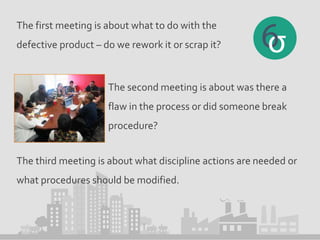
The first meeting is about what to do with the
defective product – do we rework it or scrap it?
The second meeting is about was there a
flaw in the process or did someone break
procedure?
The third meeting is about what discipline actions are needed or
what procedures should be modified.
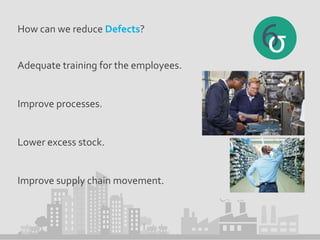
How can we reduce Defects?
Adequate training for the employees.
Improve processes.
Lower excess stock.
Improve supply chain movement.
Earlier, I discussed how a Quality Control point was
moved from before a bottle neck to after the bottle
neck.
With that said, it is important to perform a quality review when
raw materials or resale merchandise is received. If you do not
have Raw Material Specifications documented to your supplier,
do it now. It will help you avoid future issues.
We have completed the
Defects
section of Six Sigma.
The next presentation we will examine Skills
Matching.
If this Slide Presentation was helpful, please Like It
and Share It with your Community.
SIX SIGMA
DEFECTS
THE END

Six Sigma Quality - Defects

  • 1.
  • 2.
    SIX SIGMA Six Sigmais a quality program that, when all is said and done, improves your customer’s experience, lowers your costs, and builds better leaders. –JackWelch
  • 3.
    In this segmentwe will examine the seventh point of Six Sigma, Defects. Defects can be caused in several different ways. In the same sense, Defects has a variety of costs depending on the stage determining the Defect.
  • 4.
    In the bookThe Goal, the standard procedure was to perform a quality check after a bottle neck control point. This procedure was changed to have the quality check before the bottle neck. This allowed the company to proceed with good product through the bottle neck.
  • 5.
    Defects cost morethan you think. Defect costs are like an iceberg. The big costs hide beneath the surface, and most estimates place the true cost of a defect at ten (10x) times the initial cost. A defect leads to reworking the product/service and the need to fill in reports and hold problem solving meetings.
  • 6.
    The first meetingis about what to do with the defective product – do we rework it or scrap it? The second meeting is about was there a flaw in the process or did someone break procedure? The third meeting is about what discipline actions are needed or what procedures should be modified.
  • 7.
    How can wereduce Defects? Adequate training for the employees. Improve processes. Lower excess stock. Improve supply chain movement.
  • 8.
    Earlier, I discussedhow a Quality Control point was moved from before a bottle neck to after the bottle neck. With that said, it is important to perform a quality review when raw materials or resale merchandise is received. If you do not have Raw Material Specifications documented to your supplier, do it now. It will help you avoid future issues.
  • 9.
    We have completedthe Defects section of Six Sigma. The next presentation we will examine Skills Matching. If this Slide Presentation was helpful, please Like It and Share It with your Community.
  • 10.