Situational Context
Context
 Context must take into consideration while
studying discourse analysis.
 According to George Yule:
“Context is the physical environment in which
a word is used.”
 One common point of the context is the
environment in which a discourse occurs.
Cont.
 Context refers to the setting in which
communication takes place.
 The context helps establish meaning and can
influence what is said and how it is said.
Situational Context
 Situational context, or context of situation,
refers to the environment, time and place, etc.
in which the discourse occurs, and also the
relationship between the participants.
 It is one of the types of context that influence
communication.
 Deals with appropriate behavior and actions
associated with the situation.
Cont.
 This is the immediate physical
correspondence, the situation where the
interaction is taking place at the moment of
speaking.
 For example:
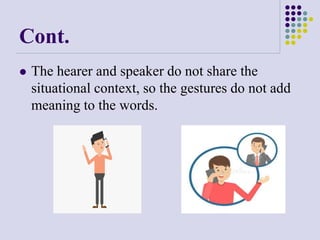
o People talking on the phone and making
gestures with their hands or face.
o Go right or take left (by indicating).
Cont.
 The hearer and speaker do not share the
situational context, so the gestures do not add
meaning to the words.
Cont.
 Each atmosphere has its own set of rules for
how to communicate.
 You would not talk in the same manner in a
same situation.
 For example:
o At funeral or at wedding
Components
 Situational context influences communication.
 Setting/place (home, school, play field,
theater, etc.)
 Activity (lecture, discussion, free play, pair-
share, party, etc.)
 Environment (materials, light, noise,
furniture, temperature, number of people, etc.)
Cont.
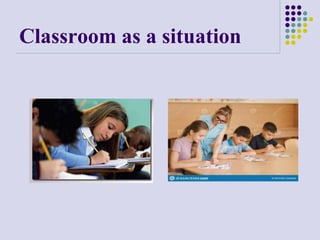
 For example:
o In a classroom, a lecturer creates an imaginary
situation to write a story i.e. robbery of a bank.
 Setting (Classroom)
 Activity (Writing)
 Environment (Material, no. of people)
Classroom as a situation
Situational context & register
 The Field-Tenor-Mode approach is used for
text analysis and, simply how text produce
o Field (What)
o Tenor (Who)
o Mode (How)
Cont.
 Field (What):
o Field of discourse refers to the ongoing
activity.
 Tenor (Who):
o Refers to the participants in a discourse, their
relationships to each other, and their purposes.
 Mode (How):
 Mean of communication i.e. written or spoken
Conclusion
 The situational context is defined by the event
itself; you communicate differently in different
settings.
 You use differing types and styles of
communication in different type of settings.
 Imagine using the same type of speech in
different situations.
 This would not be appropriate at all.
Thank You

Situational Context

  • 1.
  • 2.
    Context  Context musttake into consideration while studying discourse analysis.  According to George Yule: “Context is the physical environment in which a word is used.”  One common point of the context is the environment in which a discourse occurs.
  • 3.
    Cont.  Context refersto the setting in which communication takes place.  The context helps establish meaning and can influence what is said and how it is said.
  • 4.
    Situational Context  Situationalcontext, or context of situation, refers to the environment, time and place, etc. in which the discourse occurs, and also the relationship between the participants.  It is one of the types of context that influence communication.  Deals with appropriate behavior and actions associated with the situation.
  • 5.
    Cont.  This isthe immediate physical correspondence, the situation where the interaction is taking place at the moment of speaking.  For example: o People talking on the phone and making gestures with their hands or face. o Go right or take left (by indicating).
  • 6.
    Cont.  The hearerand speaker do not share the situational context, so the gestures do not add meaning to the words.
  • 7.
    Cont.  Each atmospherehas its own set of rules for how to communicate.  You would not talk in the same manner in a same situation.  For example: o At funeral or at wedding
  • 8.
    Components  Situational contextinfluences communication.  Setting/place (home, school, play field, theater, etc.)  Activity (lecture, discussion, free play, pair- share, party, etc.)  Environment (materials, light, noise, furniture, temperature, number of people, etc.)
  • 9.
    Cont.  For example: oIn a classroom, a lecturer creates an imaginary situation to write a story i.e. robbery of a bank.  Setting (Classroom)  Activity (Writing)  Environment (Material, no. of people)
  • 10.
    Classroom as asituation
  • 11.
    Situational context &register  The Field-Tenor-Mode approach is used for text analysis and, simply how text produce o Field (What) o Tenor (Who) o Mode (How)
  • 12.
    Cont.  Field (What): oField of discourse refers to the ongoing activity.  Tenor (Who): o Refers to the participants in a discourse, their relationships to each other, and their purposes.  Mode (How):  Mean of communication i.e. written or spoken
  • 13.
    Conclusion  The situationalcontext is defined by the event itself; you communicate differently in different settings.  You use differing types and styles of communication in different type of settings.  Imagine using the same type of speech in different situations.  This would not be appropriate at all.
  • 14.