The major differentiating factor for these two applications was that the
distributed applications provided an interactive user experience whereas web
applications provided very limited features (due to technology limitations). The
downside of distributed applications was that it was very difficult to roll-out and
ensure the application updated across all users. Web applications had no such
problems because once the application is updated on the server, all users got
the updated applications.
Both these approaches had pros and cons and something needed to be done
to get the best of both worlds. Then came the time when browsers became
more capable and HTML became more mature. Creating a rich internet
application became possible only using browser based client side technologies.
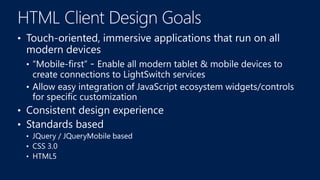
This led developers to write client side code using HTML and JavaScript to
create rich internet applications. No need for plugins like Flash and Silverlight.
These are better know today as (Single Page Applications or SPAs)
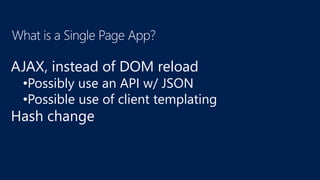
AJAX, instead of DOM reload
•Possibly use an API w/ JSON
•Possible use of client templating
Hash change
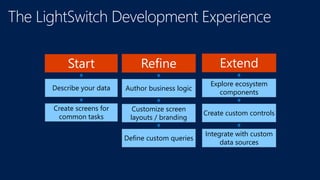
Refine
Author business logic
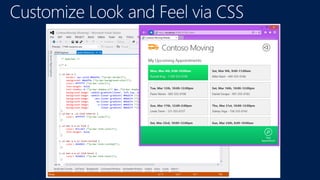
Customize screen
layouts / branding
Define custom queries
Extend
Explore ecosystem
components
Create custom controls
Integrate with custom
data sources
Start
Describe your data
Create screens for
common tasks
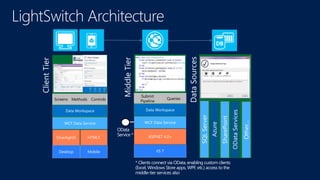
MiddleTier
Submit
Pipeline
Queries
Data Workspace
WCF Data Service
DataSources
ClientTier
Methods ControlsScreens
Data Workspace
WCF Data Service
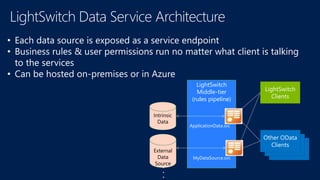
Intrinsic
Data
External
Data
Source
LightSwitch
Middle-tier
(rules pipeline)
.
.
.
ApplicationData.svc
MyDataSource.svc
LightSwitch
Clients
Other OData
Clients
• Each data source is exposed as a service endpoint
• Business rules & user permissions run no matter what client is talking
to the services
• Can be hosted on-premises or in Azure
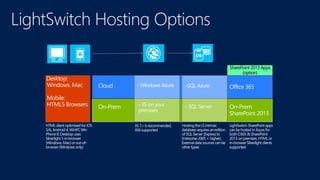
SharePoint 2013 Apps
(option)
HTML Client & SharePoint Support = VS 2012 Update 2
LightSwitch Team Blog
Developer Center
Forums
Facebook
Twitter
Single Page App Dev with LightSwitch Framework.

Single Page App Dev with LightSwitch Framework.

  • 3.
    The major differentiatingfactor for these two applications was that the distributed applications provided an interactive user experience whereas web applications provided very limited features (due to technology limitations). The downside of distributed applications was that it was very difficult to roll-out and ensure the application updated across all users. Web applications had no such problems because once the application is updated on the server, all users got the updated applications. Both these approaches had pros and cons and something needed to be done to get the best of both worlds. Then came the time when browsers became more capable and HTML became more mature. Creating a rich internet application became possible only using browser based client side technologies. This led developers to write client side code using HTML and JavaScript to create rich internet applications. No need for plugins like Flash and Silverlight. These are better know today as (Single Page Applications or SPAs)
  • 4.
    AJAX, instead ofDOM reload •Possibly use an API w/ JSON •Possible use of client templating Hash change
  • 9.
    Refine Author business logic Customizescreen layouts / branding Define custom queries Extend Explore ecosystem components Create custom controls Integrate with custom data sources Start Describe your data Create screens for common tasks
  • 10.
    MiddleTier Submit Pipeline Queries Data Workspace WCF DataService DataSources ClientTier Methods ControlsScreens Data Workspace WCF Data Service
  • 11.
    Intrinsic Data External Data Source LightSwitch Middle-tier (rules pipeline) . . . ApplicationData.svc MyDataSource.svc LightSwitch Clients Other OData Clients •Each data source is exposed as a service endpoint • Business rules & user permissions run no matter what client is talking to the services • Can be hosted on-premises or in Azure
  • 12.
  • 19.
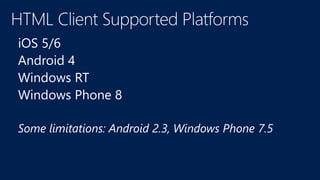
    HTML Client &SharePoint Support = VS 2012 Update 2 LightSwitch Team Blog Developer Center Forums Facebook Twitter