SILICON CONTROLLED RECTIFIER
(SCRs)
CONTENTS :
• Introduction
• What is SCR?
INTRODUCTION
• The silicon-controlled rectifier(SCR) which is a power electronic device.
• It was first introduced in 1956 by Bell Telephone Laboratories.
• It can convert alternating current into direct current and at the same time can
control the amount of power fed to the load.
• Thus it combines the features of a rectifier and a transistor.
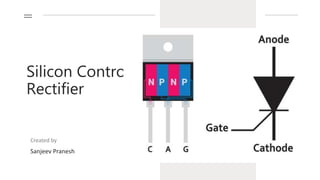
Silicon Controlled
Rectifier
Created by
Sanjeev Pranesh
Introduction
Overview of Silicon Controlled Rectifier
A silicon controlled rectifier (SCR) is a semiconductor
device used for controlling large electrical power. Its
applications range from power control in various
industries to voltage regulation in electronic devices.
Understanding the working principles and essential
characteristics of SCRs is vital to appreciate their
significance in modern electronics.
Photos provided by Pexels
Operation Principles
Working Principles Characteristics Triggering Mechanism
SCRs operate as a switch and can
control high power with
relatively small input power.
They consist of multiple layers of
semiconductors and utilize a
gate to trigger conduction.
Understanding the detailed
working principles is crucial for
efficient implementation.
Key characteristics of SCRs
include unidirectional
conductivity, latching behavior,
and the ability to handle high
current and voltage levels. These
unique characteristics make SCRs
highly efficient in power
management applications.
The triggering mechanism of
SCRs involves applying a small
current or voltage to the gate,
allowing for precise control over
the conduction of larger
currents. This mechanism is
fundamental to the reliable and
efficient operation of SCRs.
Applications
Practical Uses
SCRs find extensive applications
in industries for power control
and regulation. From motor
speed control and lighting
systems to industrial heating and
welding equipment, SCRs play a
pivotal role in ensuring efficient
power management and
regulation.
In electronic devices, SCRs are
utilized for voltage regulation
and protection. Their ability to
handle high power and voltage
levels makes them indispensable
in applications where precise
control and protection are
essential.
Photos provided by Pexels
Voltage Regulation
Advantages and Disadvantages
Advantages Disadvantages Overcurrent Protection
SCRs offer high power handling
capability, excellent reliability,
and low maintenance
requirements. Their ability to
handle both AC and DC currents
makes them versatile for various
applications, contributing to
energy efficiency and cost
savings.
Despite their numerous
advantages, SCRs have
limitations in fast switching
speeds and may require
additional circuitry for
protection. Understanding these
limitations is crucial for optimal
integration and performance in
electronic systems.
One critical aspect to consider is
overcurrent protection, as SCRs
may become uncontrollable if
subjected to excessive current.
Implementing effective
protection measures is essential
to prevent damage and ensure
safe operation.
Comparison with Other
Devices
Performance and
Applications
Efficiency and
Versatility
Comparing SCRs with other
semiconductor devices such as
diodes and transistors reveals
their unique performance
characteristics in power
management. Understanding
these distinctions aids in
selecting the most suitable
device for specific applications.
While SCRs excel in high-power
applications, they may not
match the switching speeds of
other devices. Evaluating their
efficiency and versatility across
diverse applications is crucial for
optimal system design.
Photos provided by Pexels
Conclusion
Significance of SCRs
In conclusion, silicon controlled rectifiers play a crucial role
in modern electronics and industrial power control.
Understanding their operation principles, applications, and
comparative advantages empowers engineers and
designers to make informed decisions for efficient power
management and voltage regulation.
Photos provided by Pexels

SILICON CONTROLLED RECTIFIER complete.pptx

  • 1.
  • 2.
  • 3.
    INTRODUCTION • The silicon-controlledrectifier(SCR) which is a power electronic device. • It was first introduced in 1956 by Bell Telephone Laboratories. • It can convert alternating current into direct current and at the same time can control the amount of power fed to the load. • Thus it combines the features of a rectifier and a transistor.
  • 5.
  • 6.
    Introduction Overview of SiliconControlled Rectifier A silicon controlled rectifier (SCR) is a semiconductor device used for controlling large electrical power. Its applications range from power control in various industries to voltage regulation in electronic devices. Understanding the working principles and essential characteristics of SCRs is vital to appreciate their significance in modern electronics. Photos provided by Pexels
  • 7.
    Operation Principles Working PrinciplesCharacteristics Triggering Mechanism SCRs operate as a switch and can control high power with relatively small input power. They consist of multiple layers of semiconductors and utilize a gate to trigger conduction. Understanding the detailed working principles is crucial for efficient implementation. Key characteristics of SCRs include unidirectional conductivity, latching behavior, and the ability to handle high current and voltage levels. These unique characteristics make SCRs highly efficient in power management applications. The triggering mechanism of SCRs involves applying a small current or voltage to the gate, allowing for precise control over the conduction of larger currents. This mechanism is fundamental to the reliable and efficient operation of SCRs.
  • 8.
    Applications Practical Uses SCRs findextensive applications in industries for power control and regulation. From motor speed control and lighting systems to industrial heating and welding equipment, SCRs play a pivotal role in ensuring efficient power management and regulation. In electronic devices, SCRs are utilized for voltage regulation and protection. Their ability to handle high power and voltage levels makes them indispensable in applications where precise control and protection are essential. Photos provided by Pexels Voltage Regulation
  • 9.
    Advantages and Disadvantages AdvantagesDisadvantages Overcurrent Protection SCRs offer high power handling capability, excellent reliability, and low maintenance requirements. Their ability to handle both AC and DC currents makes them versatile for various applications, contributing to energy efficiency and cost savings. Despite their numerous advantages, SCRs have limitations in fast switching speeds and may require additional circuitry for protection. Understanding these limitations is crucial for optimal integration and performance in electronic systems. One critical aspect to consider is overcurrent protection, as SCRs may become uncontrollable if subjected to excessive current. Implementing effective protection measures is essential to prevent damage and ensure safe operation.
  • 10.
    Comparison with Other Devices Performanceand Applications Efficiency and Versatility Comparing SCRs with other semiconductor devices such as diodes and transistors reveals their unique performance characteristics in power management. Understanding these distinctions aids in selecting the most suitable device for specific applications. While SCRs excel in high-power applications, they may not match the switching speeds of other devices. Evaluating their efficiency and versatility across diverse applications is crucial for optimal system design. Photos provided by Pexels
  • 11.
    Conclusion Significance of SCRs Inconclusion, silicon controlled rectifiers play a crucial role in modern electronics and industrial power control. Understanding their operation principles, applications, and comparative advantages empowers engineers and designers to make informed decisions for efficient power management and voltage regulation. Photos provided by Pexels