Learning objectives
• To be able to understand the basic history of Sikhism
• To know what the five K‟s are at the end of the lesson
• To understand what a Gurdwara is
• To understand the main Rites of passenger of Sikhs
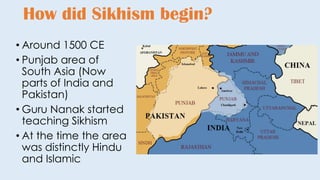
• Around 1500 CE
• Punjab area of
South Asia (Now
parts of India and
Pakistan)
• Guru Nanak started
teaching Sikhism
• At the time the area
was distinctly Hindu
and Islamic
How did Sikhism begin?
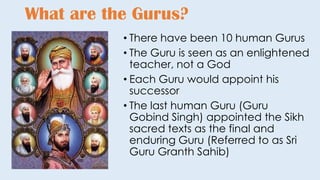
• There have been 10 human Gurus
• The Guru is seen as an enlightened
teacher, not a God
• Each Guru would appoint his
successor
• The last human Guru (Guru
Gobind Singh) appointed the Sikh
sacred texts as the final and
enduring Guru (Referred to as Sri
Guru Granth Sahib)
What are the Gurus?
What are the 5 K’s?
What do they Represent?
This is
called the
Khanda.
This Symbol
represents some
of the concepts
of Sikhism.
The Khanda is
made up by
some of the 5
K‟s.
So what
are the 5
K‟s?
What are the 5 K’s?
• The 5 K‟s are objects that most Sikhs carry to represent
different aspects of their religion.
• The reason they are called the 5 K‟s is because the name
of all 5 objects begin with a „K.‟
• Sikhs who carry these 5 K‟s are called Khalsa. Khalsa
meaning “pure.”
• Both men and women can carry the 5 K‟s.
• Each one of the 5 K‟s has a different significance, but they
all just as important as each other.
• The 5 K‟s are………
Kesh Kesh
means
uncut
hair.
Uncut hair
symbolizes
holiness and
strength.
Hair is part of
God‟s creation,
by having uncut
hair it shows the
acceptance of
God‟s gift.
This applies
for all body
hair, women
and men.
Kara
The Kara
is a steel
bracelet.
The Kara
symbolizes
eternity,
showing God
has no
beginning or
end.
The Kara also
represents
restrained and not
doing anything
against the Guru‟s
wishes.
The Kara is
worn on the
right wrist.
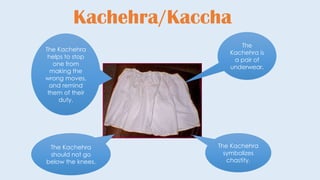
Kachehra/Kaccha
The
Kachehra is
a pair of
underwear.
The Kachehra
symbolizes
chastity.
The Kachehra
should not go
below the knees.
The Kachehra
helps to stop
one from
making the
wrong moves,
and remind
them of their
duty.
Kanga
The Kanga
is a
wooden
comb.
The Kanga
symbolizes a
clean body
and a clean
mind.
The Kanga is
used to brush
the uncut hair,
keeping it neat
and tidy.
It is
important to
look after
God‟s
creation (our
body).
Kirpan
The Kirpan
is a sword.
The Kirpan
represents
courage
and
defence.
The Kirpan
symbolizes self-
defense,
defense of God
and defense of
the weak.
The rule is
“never do
injustice and
never let
anyone else
do injustice”
What is the place of worship?
The Gurdwara is the Sikh
place of worship. Gurdwara
means gateway to the guru.
Services
• Services are based
on the writings in
the Guru Granth
Sahib. A scripture of
a collection of
teachings. Together
with chants and
prayers from the
gurus known as
keertan.
Services
• The service ends with a
shared meal known as
langar.
• Langar is served to
everyone who attends
the Gurdwara.
• The food is shared out
by the Granthi, which is
the person who looks
after the Gurdwara.
• When both the mother and child are ready to move
about, they are taken to the Gurdwara along with
the rest of the family.
• They recite hymns from the Guru Granth Sahib.
• Karah Prashad and Amrit are prepared.
• The new-born's name is chosen from the Hukam. The
Granthi randomly opens a page from the Guru
Granth and recites the hymn on that page. The
name is chosen by the first letter of the first word on
that hymn.
What is a Nam Karan?
• A Sikh marriage is called Anand Karaj.
• The Guru Granth Sahib is present during the
wedding ceremony.
• While reciting the Lavan the couple must walk
around the Guru Granth Sahib four times.
• Wedding ceremonies can be performed by any
Sikhs who has gone through the Armit initiation.
• Sikhs believe in monogamy.
• Widows and widowers may remarry.
• Child marriage is forbidden.
What is an Anand Karaj?
• Death is considered a natural process.
• Public displays of grief at a funeral is discouraged
and so is worshipping the dead with gravestones.
• Cremation is what Sikhs prefers.
• Before cremation the body is cleaned and clothed
by a family member.
• Hymns are recited, while being cremated they
recite a night time prayer and Ardas is performed.
• Non continuos reading of the whole Guru Granth
Sahib takes place and concludes on the 10th day.
Funeral Rites
How many human Gurus
were there?
15
2
10
Try again
What does Khalsa mean?
Pure
Holy
Spiritual
Try again
What is a Gurdwara?
A temple where Sikhs go for prayers
A sacred bangle
A house full of Holy people
Try again
What is Armit?
Sacred water
Sweet water
Holy salt water
Try again
Sikhism

Sikhism

  • 2.
    Learning objectives • Tobe able to understand the basic history of Sikhism • To know what the five K‟s are at the end of the lesson • To understand what a Gurdwara is • To understand the main Rites of passenger of Sikhs
  • 3.
    • Around 1500CE • Punjab area of South Asia (Now parts of India and Pakistan) • Guru Nanak started teaching Sikhism • At the time the area was distinctly Hindu and Islamic How did Sikhism begin?
  • 4.
    • There havebeen 10 human Gurus • The Guru is seen as an enlightened teacher, not a God • Each Guru would appoint his successor • The last human Guru (Guru Gobind Singh) appointed the Sikh sacred texts as the final and enduring Guru (Referred to as Sri Guru Granth Sahib) What are the Gurus?
  • 5.
    What are the5 K’s? What do they Represent? This is called the Khanda. This Symbol represents some of the concepts of Sikhism. The Khanda is made up by some of the 5 K‟s. So what are the 5 K‟s?
  • 6.
    What are the5 K’s? • The 5 K‟s are objects that most Sikhs carry to represent different aspects of their religion. • The reason they are called the 5 K‟s is because the name of all 5 objects begin with a „K.‟ • Sikhs who carry these 5 K‟s are called Khalsa. Khalsa meaning “pure.” • Both men and women can carry the 5 K‟s. • Each one of the 5 K‟s has a different significance, but they all just as important as each other. • The 5 K‟s are………
  • 7.
    Kesh Kesh means uncut hair. Uncut hair symbolizes holinessand strength. Hair is part of God‟s creation, by having uncut hair it shows the acceptance of God‟s gift. This applies for all body hair, women and men.
  • 8.
    Kara The Kara is asteel bracelet. The Kara symbolizes eternity, showing God has no beginning or end. The Kara also represents restrained and not doing anything against the Guru‟s wishes. The Kara is worn on the right wrist.
  • 9.
    Kachehra/Kaccha The Kachehra is a pairof underwear. The Kachehra symbolizes chastity. The Kachehra should not go below the knees. The Kachehra helps to stop one from making the wrong moves, and remind them of their duty.
  • 10.
    Kanga The Kanga is a wooden comb. TheKanga symbolizes a clean body and a clean mind. The Kanga is used to brush the uncut hair, keeping it neat and tidy. It is important to look after God‟s creation (our body).
  • 11.
    Kirpan The Kirpan is asword. The Kirpan represents courage and defence. The Kirpan symbolizes self- defense, defense of God and defense of the weak. The rule is “never do injustice and never let anyone else do injustice”
  • 13.
    What is theplace of worship? The Gurdwara is the Sikh place of worship. Gurdwara means gateway to the guru.
  • 14.
    Services • Services arebased on the writings in the Guru Granth Sahib. A scripture of a collection of teachings. Together with chants and prayers from the gurus known as keertan.
  • 15.
    Services • The serviceends with a shared meal known as langar. • Langar is served to everyone who attends the Gurdwara. • The food is shared out by the Granthi, which is the person who looks after the Gurdwara.
  • 17.
    • When boththe mother and child are ready to move about, they are taken to the Gurdwara along with the rest of the family. • They recite hymns from the Guru Granth Sahib. • Karah Prashad and Amrit are prepared. • The new-born's name is chosen from the Hukam. The Granthi randomly opens a page from the Guru Granth and recites the hymn on that page. The name is chosen by the first letter of the first word on that hymn. What is a Nam Karan?
  • 18.
    • A Sikhmarriage is called Anand Karaj. • The Guru Granth Sahib is present during the wedding ceremony. • While reciting the Lavan the couple must walk around the Guru Granth Sahib four times. • Wedding ceremonies can be performed by any Sikhs who has gone through the Armit initiation. • Sikhs believe in monogamy. • Widows and widowers may remarry. • Child marriage is forbidden. What is an Anand Karaj?
  • 19.
    • Death isconsidered a natural process. • Public displays of grief at a funeral is discouraged and so is worshipping the dead with gravestones. • Cremation is what Sikhs prefers. • Before cremation the body is cleaned and clothed by a family member. • Hymns are recited, while being cremated they recite a night time prayer and Ardas is performed. • Non continuos reading of the whole Guru Granth Sahib takes place and concludes on the 10th day. Funeral Rites
  • 21.
    How many humanGurus were there? 15 2 10
  • 22.
  • 24.
    What does Khalsamean? Pure Holy Spiritual
  • 25.
  • 27.
    What is aGurdwara? A temple where Sikhs go for prayers A sacred bangle A house full of Holy people
  • 28.
  • 30.
    What is Armit? Sacredwater Sweet water Holy salt water
  • 31.