Sikh Lifestyle
2
Places to Go
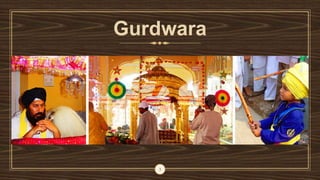
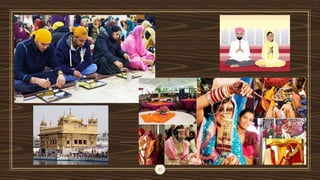
 For Sikhs, the holiest place is the local gurdwara, meaning 'door to
the Guru'.
 The Sikh version of a church or temple, the gurdwara is a place to
pray, learn, worship and connect with others.
 Gurdwara services usually consist of singing hymns and reading
teachings from their scriptures, led by women and men, young and
old.
 Afterward, the sweet smell of rice and spices wafts from the
gurdwara kitchen as the langar meal is prepared for all who care to
join.
Gurdwara
3
4
Holy Book
 Guru Granth Sahib is the principal scripture of Sikhism written by
their ten gurus and is itself regarded as the eternal living guru.
 The text consists of 1,430 pages and 6,000 lines.
 It is written in Gurmukhi script.
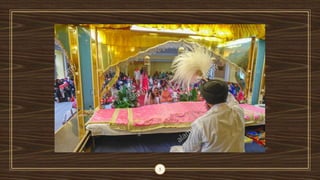
 Guru Granth Sahib is always the focal point in any gurudwara,
seated on a raised platform known as a Takht (throne).
 A Chaur sahib is waved above the Guru Granth Sahib.
 Sikhs recite 5 chapters of the book in the morning at 4:am and one
chapter before going to bed.
5
Moments They
Remember Their most significant spiritual event is
taking Amrit, a sweet, holy nectar drink,
pursuing closeness with God and protecting
the rights of the oppressed as a member of
the Khalsa, the Sikh “alliance of the pure.”
 Other moments they treasure include the walk
with their new spouse in a symbolic circle
around the holy scripture on their wedding
day.
 Choosing a Sikh name from the Guru Granth
Sahib for their infant sons and daughters
during naming ceremonies.
 They celebrate all the birth and death
anniversaries of their 10 Gurus as festivals.
6
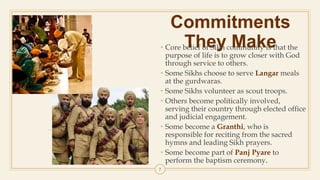
Commitments
They Make• Core belief of Sikh community is that the
purpose of life is to grow closer with God
through service to others.
• Some Sikhs choose to serve Langar meals
at the gurdwaras.
• Some Sikhs volunteer as scout troops.
• Others become politically involved,
serving their country through elected office
and judicial engagement.
• Some become a Granthi, who is
responsible for reciting from the sacred
hymns and leading Sikh prayers.
• Some become part of Panj Pyare to
perform the baptism ceremony.
7
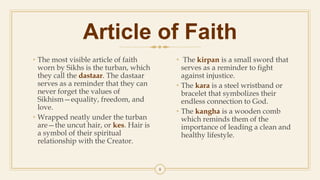
Article of Faith
• The most visible article of faith
worn by Sikhs is the turban, which
they call the dastaar. The dastaar
serves as a reminder that they can
never forget the values of
Sikhism—equality, freedom, and
love.
• Wrapped neatly under the turban
are—the uncut hair, or kes. Hair is
a symbol of their spiritual
relationship with the Creator.
• The kirpan is a small sword that
serves as a reminder to fight
against injustice.
• The kara is a steel wristband or
bracelet that symbolizes their
endless connection to God.
• The kangha is a wooden comb
which reminds them of the
importance of leading a clean and
healthy lifestyle.
8
9
Prohibitions
•Lust
•Grudge
•Greed
•Pride
•Materialistic Trends
10
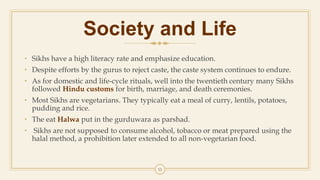
Society and Life
• Sikhs have a high literacy rate and emphasize education.
• Despite efforts by the gurus to reject caste, the caste system continues to endure.
• As for domestic and life-cycle rituals, well into the twentieth century many Sikhs
followed Hindu customs for birth, marriage, and death ceremonies.
• Most Sikhs are vegetarians. They typically eat a meal of curry, lentils, potatoes,
pudding and rice.
• The eat Halwa put in the gurduwara as parshad.
• Sikhs are not supposed to consume alcohol, tobacco or meat prepared using the
halal method, a prohibition later extended to all non-vegetarian food.
11
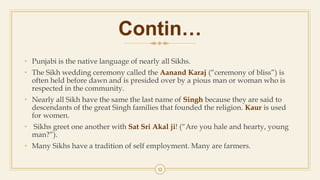
Contin…
• Punjabi is the native language of nearly all Sikhs.
• The Sikh wedding ceremony called the Aanand Karaj (“ceremony of bliss”) is
often held before dawn and is presided over by a pious man or woman who is
respected in the community.
• Nearly all Sikh have the same the last name of Singh because they are said to
descendants of the great Singh families that founded the religion. Kaur is used
for women.
• Sikhs greet one another with Sat Sri Akal ji! (“Are you hale and hearty, young
man?”).
• Many Sikhs have a tradition of self employment. Many are farmers.
12
13
14
Sikh Funerals
ADD A FOOTER
• Sikhism believes in transmigration of the soul which never dies.
• The opportunity for the soul to break out of the cycle of transmigration
(karma) to unite with Waheguru, the Wondrous Giver of Knowledge, the
Sikh name for God.
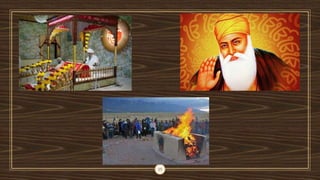
• The Sikh funeral is known as Antam Sanskaar, meaning “the last rite of
passage”.
• Most Sikh funerals include the recital of Ardas, a community prayer, as
well as two daily prayers, Japji and Kirtan Sohila.
• Services can take place at the home of the bereaved family, at the
gurdwara, outdoors, or at the crematorium.
15
Thank You

Sikh lifestyle

  • 1.
  • 2.
    2 Places to Go For Sikhs, the holiest place is the local gurdwara, meaning 'door to the Guru'.  The Sikh version of a church or temple, the gurdwara is a place to pray, learn, worship and connect with others.  Gurdwara services usually consist of singing hymns and reading teachings from their scriptures, led by women and men, young and old.  Afterward, the sweet smell of rice and spices wafts from the gurdwara kitchen as the langar meal is prepared for all who care to join.
  • 3.
  • 4.
    4 Holy Book  GuruGranth Sahib is the principal scripture of Sikhism written by their ten gurus and is itself regarded as the eternal living guru.  The text consists of 1,430 pages and 6,000 lines.  It is written in Gurmukhi script.  Guru Granth Sahib is always the focal point in any gurudwara, seated on a raised platform known as a Takht (throne).  A Chaur sahib is waved above the Guru Granth Sahib.  Sikhs recite 5 chapters of the book in the morning at 4:am and one chapter before going to bed.
  • 5.
  • 6.
    Moments They Remember Theirmost significant spiritual event is taking Amrit, a sweet, holy nectar drink, pursuing closeness with God and protecting the rights of the oppressed as a member of the Khalsa, the Sikh “alliance of the pure.”  Other moments they treasure include the walk with their new spouse in a symbolic circle around the holy scripture on their wedding day.  Choosing a Sikh name from the Guru Granth Sahib for their infant sons and daughters during naming ceremonies.  They celebrate all the birth and death anniversaries of their 10 Gurus as festivals. 6
  • 7.
    Commitments They Make• Corebelief of Sikh community is that the purpose of life is to grow closer with God through service to others. • Some Sikhs choose to serve Langar meals at the gurdwaras. • Some Sikhs volunteer as scout troops. • Others become politically involved, serving their country through elected office and judicial engagement. • Some become a Granthi, who is responsible for reciting from the sacred hymns and leading Sikh prayers. • Some become part of Panj Pyare to perform the baptism ceremony. 7
  • 8.
    Article of Faith •The most visible article of faith worn by Sikhs is the turban, which they call the dastaar. The dastaar serves as a reminder that they can never forget the values of Sikhism—equality, freedom, and love. • Wrapped neatly under the turban are—the uncut hair, or kes. Hair is a symbol of their spiritual relationship with the Creator. • The kirpan is a small sword that serves as a reminder to fight against injustice. • The kara is a steel wristband or bracelet that symbolizes their endless connection to God. • The kangha is a wooden comb which reminds them of the importance of leading a clean and healthy lifestyle. 8
  • 9.
  • 10.
  • 11.
    Society and Life •Sikhs have a high literacy rate and emphasize education. • Despite efforts by the gurus to reject caste, the caste system continues to endure. • As for domestic and life-cycle rituals, well into the twentieth century many Sikhs followed Hindu customs for birth, marriage, and death ceremonies. • Most Sikhs are vegetarians. They typically eat a meal of curry, lentils, potatoes, pudding and rice. • The eat Halwa put in the gurduwara as parshad. • Sikhs are not supposed to consume alcohol, tobacco or meat prepared using the halal method, a prohibition later extended to all non-vegetarian food. 11
  • 12.
    Contin… • Punjabi isthe native language of nearly all Sikhs. • The Sikh wedding ceremony called the Aanand Karaj (“ceremony of bliss”) is often held before dawn and is presided over by a pious man or woman who is respected in the community. • Nearly all Sikh have the same the last name of Singh because they are said to descendants of the great Singh families that founded the religion. Kaur is used for women. • Sikhs greet one another with Sat Sri Akal ji! (“Are you hale and hearty, young man?”). • Many Sikhs have a tradition of self employment. Many are farmers. 12
  • 13.
  • 14.
    14 Sikh Funerals ADD AFOOTER • Sikhism believes in transmigration of the soul which never dies. • The opportunity for the soul to break out of the cycle of transmigration (karma) to unite with Waheguru, the Wondrous Giver of Knowledge, the Sikh name for God. • The Sikh funeral is known as Antam Sanskaar, meaning “the last rite of passage”. • Most Sikh funerals include the recital of Ardas, a community prayer, as well as two daily prayers, Japji and Kirtan Sohila. • Services can take place at the home of the bereaved family, at the gurdwara, outdoors, or at the crematorium.
  • 15.
  • 16.