Poppy Victoria Burford
Tuesday 17th May 2022
Apprentice nursery practitioner
17/05/22 1
Sudden infant
death
syndrome
(SIDS)
Contents
01 What is SIDS?
02 What are the causes of SIDS?
03 Symptoms of SIDS
04 Help and advice on SIDS
05 Minimizing the risk of SIDS
17/05/22 2
01
What is SIDS?
Sudden infant death syndrome
(SIDS) is the occurrence of a
sudden, or unexpected death of a
child under the age of one.
It can sometimes also be referred to
as ‘cot death’ due to the fact that a
lot of babies will unfortunately pass
away once placed into their cots,
with no explanation.
17/05/22 3
02
What are the
causes of SIDS?
Causes of sudden infant death syndrome.
17/05/22 5
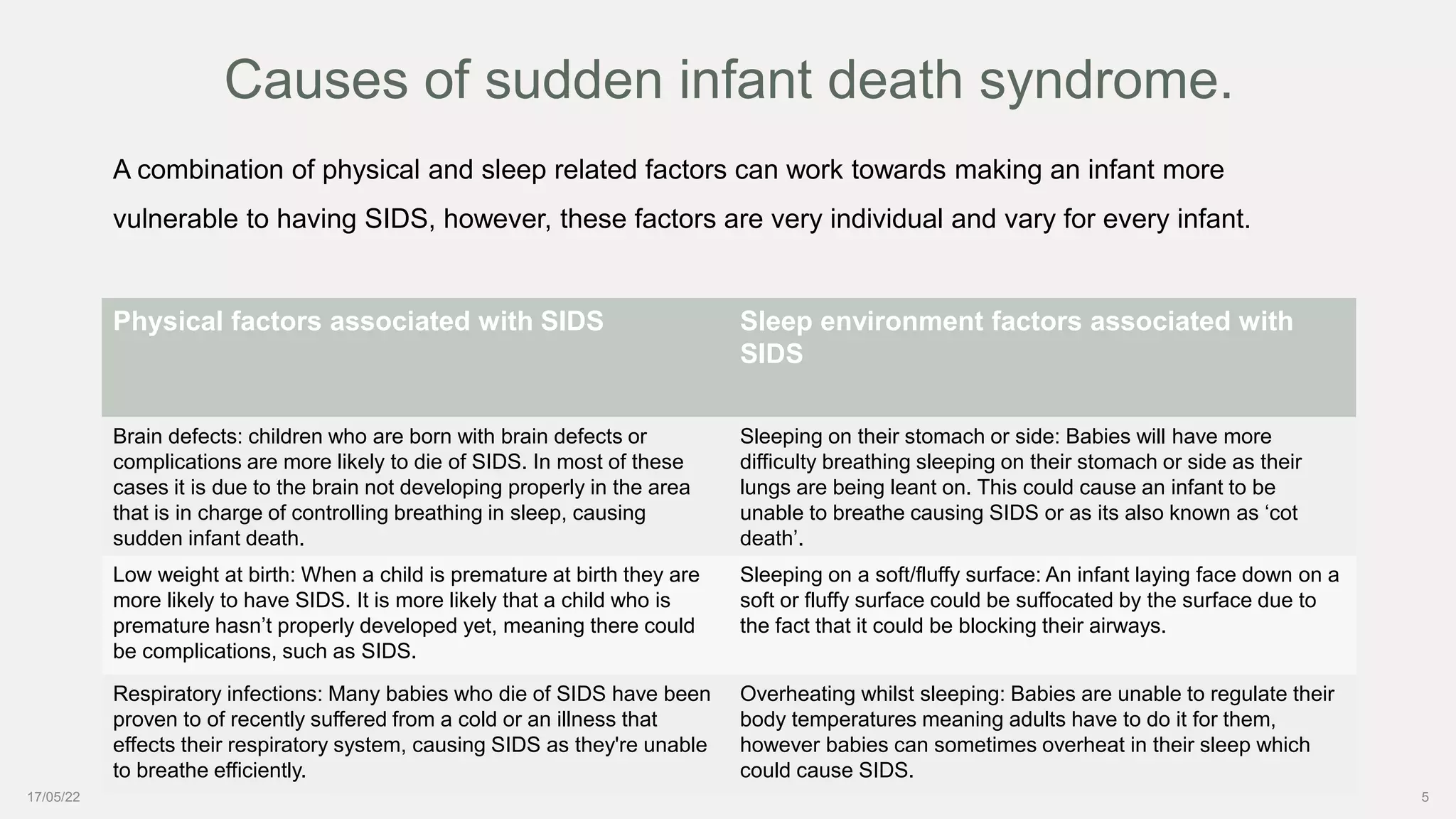
A combination of physical and sleep related factors can work towards making an infant more
vulnerable to having SIDS, however, these factors are very individual and vary for every infant.
Physical factors associated with SIDS Sleep environment factors associated with
SIDS
Brain defects: children who are born with brain defects or
complications are more likely to die of SIDS. In most of these
cases it is due to the brain not developing properly in the area
that is in charge of controlling breathing in sleep, causing
sudden infant death.
Sleeping on their stomach or side: Babies will have more
difficulty breathing sleeping on their stomach or side as their
lungs are being leant on. This could cause an infant to be
unable to breathe causing SIDS or as its also known as ‘cot
death’.
Low weight at birth: When a child is premature at birth they are
more likely to have SIDS. It is more likely that a child who is
premature hasn’t properly developed yet, meaning there could
be complications, such as SIDS.
Sleeping on a soft/fluffy surface: An infant laying face down on a
soft or fluffy surface could be suffocated by the surface due to
the fact that it could be blocking their airways.
Respiratory infections: Many babies who die of SIDS have been
proven to of recently suffered from a cold or an illness that
effects their respiratory system, causing SIDS as they're unable
to breathe efficiently.
Overheating whilst sleeping: Babies are unable to regulate their
body temperatures meaning adults have to do it for them,
however babies can sometimes overheat in their sleep which
could cause SIDS.
SIDS Statistics 1990-2017
17/05/22 6
03
Symptoms of SIDS
17/05/22 7
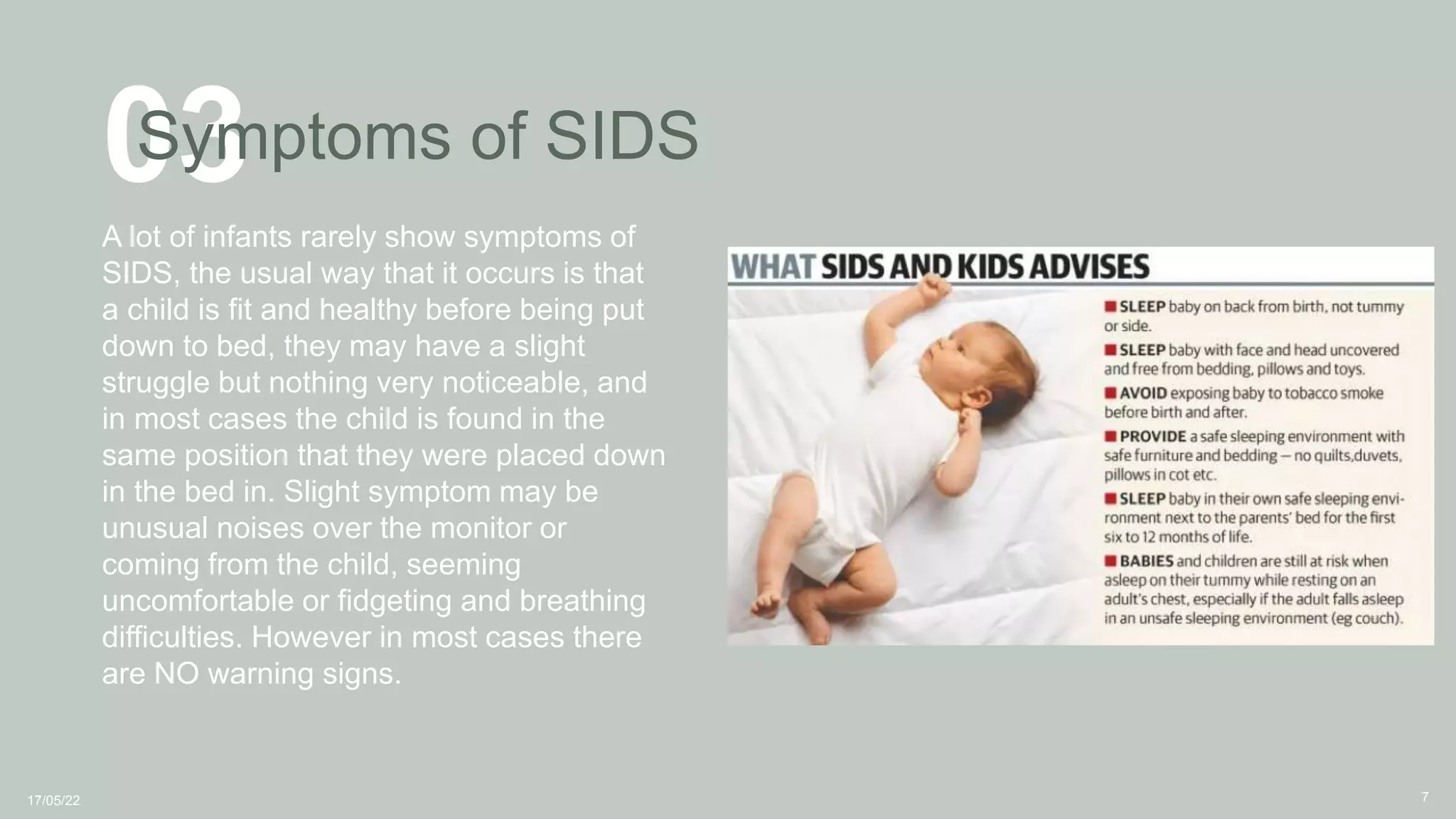
A lot of infants rarely show symptoms of
SIDS, the usual way that it occurs is that
a child is fit and healthy before being put
down to bed, they may have a slight
struggle but nothing very noticeable, and
in most cases the child is found in the
same position that they were placed down
in the bed in. Slight symptom may be
unusual noises over the monitor or
coming from the child, seeming
uncomfortable or fidgeting and breathing
difficulties. However in most cases there
are NO warning signs.
04
Help and advice on
SIDS
Where to get help and advice on SIDS.
Jun
17/05/22 9
Sudden infant death syndrome (SIDS) - NHS (www.nhs.uk)
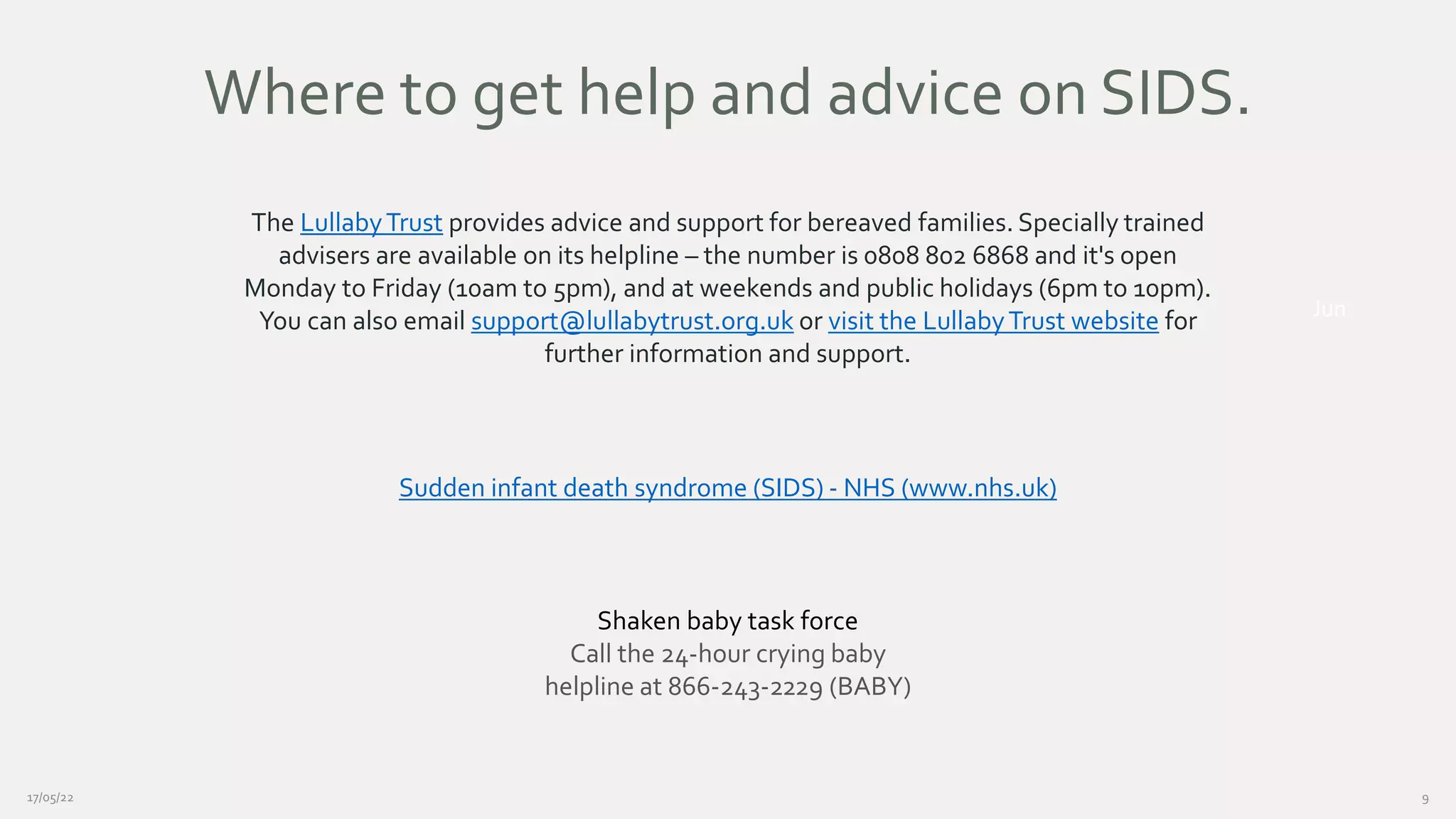
The LullabyTrust provides advice and support for bereaved families. Specially trained
advisers are available on its helpline – the number is 0808 802 6868 and it's open
Monday to Friday (10am to 5pm), and at weekends and public holidays (6pm to 10pm).
You can also email support@lullabytrust.org.uk or visit the LullabyTrust website for
further information and support.
Shaken baby task force
Call the 24-hour crying baby
helpline at 866-243-2229 (BABY)
05
9/8/2022 10
Minimising the risk
of SIDS
How to minimize the risk
of SIDS
17/05/22 11
There are multiple ways of preventing/minimising the risk of SIDS in infants, here
are some examples:
o Putting new-borns to sleep on their back – this reduces the risk of suffocation and
opens the airways more,
o Breastfeeding (if you can) – gives children the nutrients that they need to develop
efficiently, reduced the risk of complications,
o Immunisation – reduces the risk of infection or illnesses that could potentially
cause respiratory problems and being unable to breathe,
o Educating people on the ‘safe to sleep campaign’ – ensuring all caregivers of
children place children on their back to sleep to reduce the risk of suffocation.
Explore the Campaign | Safe to Sleep (nih.gov)

SIDS Powerpoint.pptx

  • 1.
    Poppy Victoria Burford Tuesday17th May 2022 Apprentice nursery practitioner 17/05/22 1 Sudden infant death syndrome (SIDS)
  • 2.
    Contents 01 What isSIDS? 02 What are the causes of SIDS? 03 Symptoms of SIDS 04 Help and advice on SIDS 05 Minimizing the risk of SIDS 17/05/22 2
  • 3.
    01 What is SIDS? Suddeninfant death syndrome (SIDS) is the occurrence of a sudden, or unexpected death of a child under the age of one. It can sometimes also be referred to as ‘cot death’ due to the fact that a lot of babies will unfortunately pass away once placed into their cots, with no explanation. 17/05/22 3
  • 4.
  • 5.
    Causes of suddeninfant death syndrome. 17/05/22 5 A combination of physical and sleep related factors can work towards making an infant more vulnerable to having SIDS, however, these factors are very individual and vary for every infant. Physical factors associated with SIDS Sleep environment factors associated with SIDS Brain defects: children who are born with brain defects or complications are more likely to die of SIDS. In most of these cases it is due to the brain not developing properly in the area that is in charge of controlling breathing in sleep, causing sudden infant death. Sleeping on their stomach or side: Babies will have more difficulty breathing sleeping on their stomach or side as their lungs are being leant on. This could cause an infant to be unable to breathe causing SIDS or as its also known as ‘cot death’. Low weight at birth: When a child is premature at birth they are more likely to have SIDS. It is more likely that a child who is premature hasn’t properly developed yet, meaning there could be complications, such as SIDS. Sleeping on a soft/fluffy surface: An infant laying face down on a soft or fluffy surface could be suffocated by the surface due to the fact that it could be blocking their airways. Respiratory infections: Many babies who die of SIDS have been proven to of recently suffered from a cold or an illness that effects their respiratory system, causing SIDS as they're unable to breathe efficiently. Overheating whilst sleeping: Babies are unable to regulate their body temperatures meaning adults have to do it for them, however babies can sometimes overheat in their sleep which could cause SIDS.
  • 6.
  • 7.
    03 Symptoms of SIDS 17/05/227 A lot of infants rarely show symptoms of SIDS, the usual way that it occurs is that a child is fit and healthy before being put down to bed, they may have a slight struggle but nothing very noticeable, and in most cases the child is found in the same position that they were placed down in the bed in. Slight symptom may be unusual noises over the monitor or coming from the child, seeming uncomfortable or fidgeting and breathing difficulties. However in most cases there are NO warning signs.
  • 8.
  • 9.
    Where to gethelp and advice on SIDS. Jun 17/05/22 9 Sudden infant death syndrome (SIDS) - NHS (www.nhs.uk) The LullabyTrust provides advice and support for bereaved families. Specially trained advisers are available on its helpline – the number is 0808 802 6868 and it's open Monday to Friday (10am to 5pm), and at weekends and public holidays (6pm to 10pm). You can also email support@lullabytrust.org.uk or visit the LullabyTrust website for further information and support. Shaken baby task force Call the 24-hour crying baby helpline at 866-243-2229 (BABY)
  • 10.
  • 11.
    How to minimizethe risk of SIDS 17/05/22 11 There are multiple ways of preventing/minimising the risk of SIDS in infants, here are some examples: o Putting new-borns to sleep on their back – this reduces the risk of suffocation and opens the airways more, o Breastfeeding (if you can) – gives children the nutrients that they need to develop efficiently, reduced the risk of complications, o Immunisation – reduces the risk of infection or illnesses that could potentially cause respiratory problems and being unable to breathe, o Educating people on the ‘safe to sleep campaign’ – ensuring all caregivers of children place children on their back to sleep to reduce the risk of suffocation. Explore the Campaign | Safe to Sleep (nih.gov)

Editor's Notes

  • #2 Line spacing + Page numbers