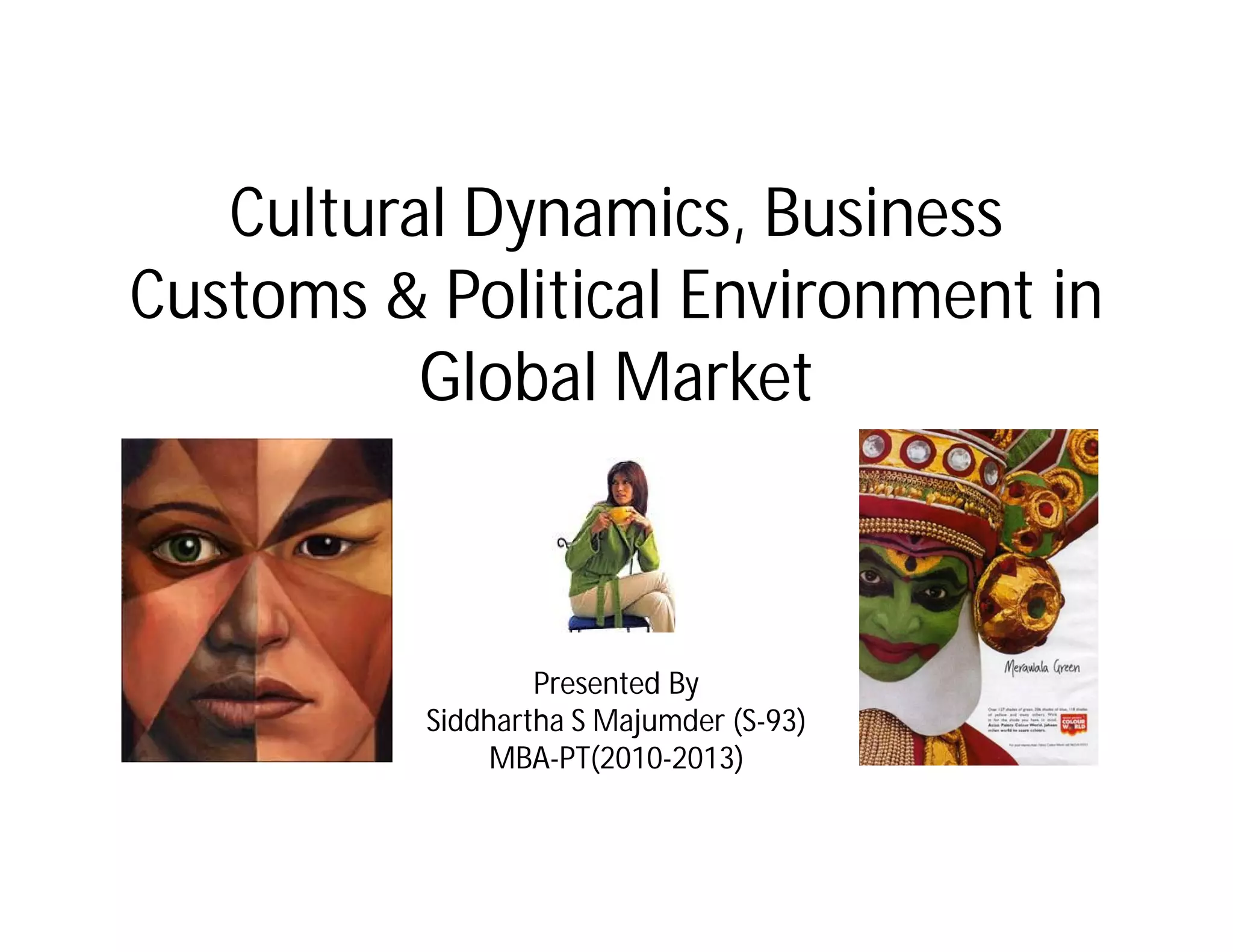
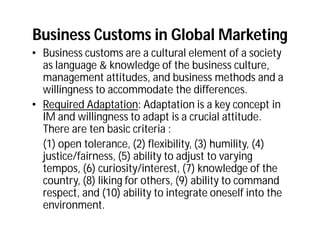
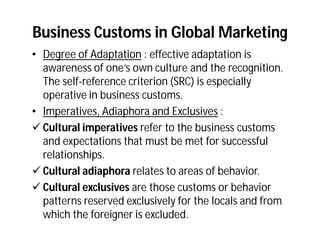
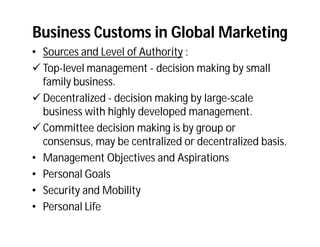
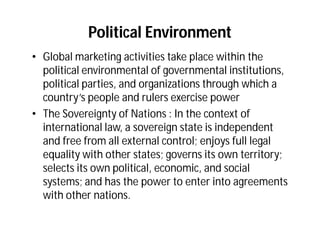
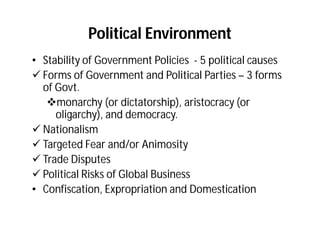
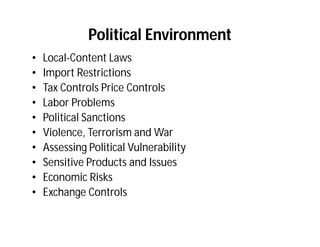
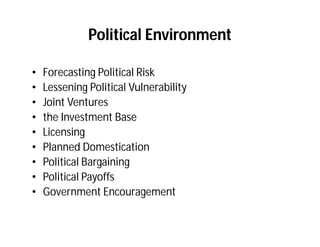
Cultural dynamics, business customs, and political environments are important factors to consider for global markets. [1] Culture can be defined as the shared knowledge, beliefs, and habits of a society, which guide how people think and behave. [2] Elements of culture include values, rituals, symbols, language, and thought processes. [3] Cultures are dynamic and can change through cultural borrowing or planned and unplanned changes in response to innovations or ideas.