c
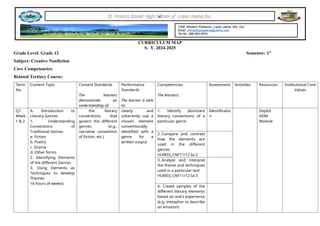
CURRICULUM MAP
S. Y. 2024-2025
Grade Level: Grade 12 Semester: 1st
Subject: Creative Nonfiction
Core Competencies:
Related Tertiary Course:
Term
No.
Content Topic Content Standards
The learners
demonstrate an
understanding of:
Performance
Standards
The learner is able
to:
Competencies
The learners:
Assessment Activities Resources Institutional Core
Values
Q1-
Week
1 & 2
A. Introduction to
Literary Genres
1. Understanding
Conventions of
Traditional Genres
a. Fiction
b. Poetry
c. Drama
d. Other forms
2. Identifying Elements
of the different Genres
3. Using Elements as
Techniques to develop
Themes
16 hours (4 weeks)
the literary
conventions that
govern the different
genres. (e.g.,
narrative convention
of fiction, etc.)
clearly and
coherently use a
chosen element
conventionally
identified with a
genre for a
written output
1. Identify dominant
literary conventions of a
particular genre
Identificatio
n
DepEd
ADM
Module
2. Compare and contrast
how the elements are
used in the different
genres
HUMSS_CNF11/12-Ia-2
3. Analyze and interpret
the theme and techniques
used in a particular text
HUMSS_CNF11/12-Ia-3
4. Create samples of the
different literary elements
based on one’s experience
(e.g. metaphor to describe
an emotion)
St. Francis Xavier High School of Lopez Jaena,Inc.
7208, Western Poblacion, Lopez Jaena, Mis. Occ
Email: sfxhsoflopezjaena@yahoo.com
Tel No. 088-564-5919
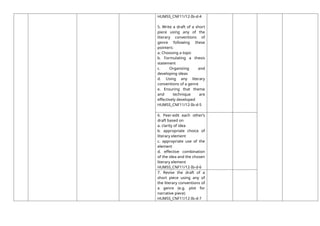
HUMSS_CNF11/12-Ib-d-4
5. Write a draft of a short
piece using any of the
literary conventions of
genre following these
pointers:
a. Choosing a topic
b. Formulating a thesis
statement
c. Organizing and
developing ideas
d. Using any literary
conventions of a genre
e. Ensuring that theme
and technique are
effectively developed
HUMSS_CNF11/12-Ib-d-5
6. Peer-edit each other’s
draft based on
a. clarity of idea
b. appropriate choice of
literary element
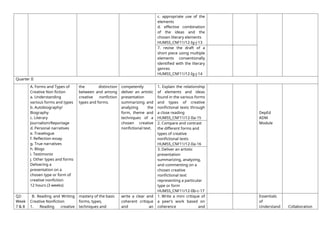
c. appropriate use of the
element
d. effective combination
of the idea and the chosen
literary element
HUMSS_CNF11/12-Ib-d-6
7. Revise the draft of a
short piece using any of
the literary conventions of
a genre (e.g. plot for
narrative piece)
HUMSS_CNF11/12-Ib-d-7
Q1-
Week
3 & 4
B. Principles, Elements,
Techniques, and Devices
of Creative Nonfiction
1. Using Elements of
Creative Nonfiction
a. Plot
b. Characters
c. Characterization
d. Point of View
e. Angle
f. Setting and
Atmosphere
g. Symbols and
Symbolisms
h. Irony
i. Figures of speech
j. Dialogue
k. Scene
l. Other elements and
devices
2. Developing themes by
combining multiple
elements
24 hours (6 weeks)
the delineation
between creative
and the nonfictional
elements of creative
nonfictional text.
clearly and
coherently use
multiple
elements
conventionally
identified with a
genre for a
written output
1. Do a close reading of
creative nonfictional texts
HUMSS_CNF11/12-Ie-f-8
2. Identify the fictional
elements in the texts
HUMSS_CNF11/12-I-e-f-9
3. Analyze and interpret
factual/nonfictional
aspects in the texts
HUMSS_CNF11/12-Ie-f-10
4. Evaluate the
relationship of creative
and nonfictional elements
of the texts
HUMSS_CNF11/12-Ie-f-11
5. Write a draft of a short
piece using multiple
elements conventionally
identified with the literary
genres following these
pointers:
a. Choosing a topic
b. Formulating a thesis
statement
c. Organizing and
developing ideas
d. Using multiple literary
conventions of a genre
e. Ensuring that theme
and technique are
effectively developed
HUMSS_CNF11/12-Ig-j-12
6. Peer-edit each other’s
draft based on
a. clarity of ideas
b. appropriate choice of
literary elements
c. appropriate use of the
elements
d. effective combination
of the ideas and the
chosen literary elements
HUMSS_CNF11/12-Ig-j-13
7. revise the draft of a
short piece using multiple
elements conventionally
identified with the literary
genres
HUMSS_CNF11/12-Ig-j-14
Quarter II
A. Forms and Types of
Creative Non fiction
a. Understanding
various forms and types
b. Autobiography/
Biography
c. Literary
Journalism/Reportage
d. Personal narratives
e. Travelogue
f. Reflection essay
g. True narratives
h. Blogs
i. Testimonio
j. Other types and forms
Delivering a
presentation on a
chosen type or form of
creative nonfiction
12 hours (3 weeks)
the distinction
between and among
creative nonfiction
types and forms.
competently
deliver an artistic
presentation
summarizing and
analyzing the
form, theme and
techniques of a
chosen creative
nonfictional text.
1. Explain the relationship
of elements and ideas
found in the various forms
and types of creative
nonfictional texts through
a close reading
HUMSS_CNF11/12-IIa-15
DepEd
ADM
Module
2. Compare and contrast
the different forms and
types of creative
nonfictional texts
HUMSS_CNF11/12-IIa-16
3. Deliver an artistic
presentation
summarizing, analyzing,
and commenting on a
chosen creative
nonfictional text
representing a particular
type or form
HUMSS_CNF11/12-IIb-c-17
Q2-
Week
7 & 8
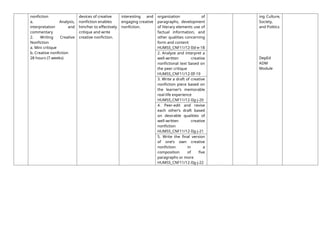
B. Reading and Writing
Creative Nonfiction
1. Reading creative
mastery of the basic
forms, types,
techniques and
write a clear and
coherent critique
and an
1. Write a mini critique of
a peer’s work based on
coherence and
Essentials
of
Understand Collaboration
nonfiction
a. Analysis,
interpretation and
commentary
2. Writing Creative
Nonfiction
a. Mini critique
b. Creative nonfiction
28 hours (7 weeks)
devices of creative
nonfiction enables
him/her to effectively
critique and write
creative nonfiction.
interesting and
engaging creative
nonfiction.
organization of
paragraphs, development
of literary elements use of
factual information, and
other qualities concerning
form and content
HUMSS_CNF11/12-IId-e-18
ing Culture,
Society,
and Politics
DepEd
ADM
Module
2. Analyze and interpret a
well-written creative
nonfictional text based on
the peer critique
HUMSS_CNF11/12-IIf-19
3. Write a draft of creative
nonfiction piece based on
the learner’s memorable
real-life experience
HUMSS_CNF11/12-IIg-j-20
4. Peer-edit and revise
each other’s draft based
on desirable qualities of
well-written creative
nonfiction
HUMSS_CNF11/12-IIg-j-21
5. Write the final version
of one’s own creative
nonfiction in a
composition of five
paragraphs or more
HUMSS_CNF11/12-IIg-j-22

SHS Curriculum Map Creative NonFict.docx

  • 1.
    c CURRICULUM MAP S. Y.2024-2025 Grade Level: Grade 12 Semester: 1st Subject: Creative Nonfiction Core Competencies: Related Tertiary Course: Term No. Content Topic Content Standards The learners demonstrate an understanding of: Performance Standards The learner is able to: Competencies The learners: Assessment Activities Resources Institutional Core Values Q1- Week 1 & 2 A. Introduction to Literary Genres 1. Understanding Conventions of Traditional Genres a. Fiction b. Poetry c. Drama d. Other forms 2. Identifying Elements of the different Genres 3. Using Elements as Techniques to develop Themes 16 hours (4 weeks) the literary conventions that govern the different genres. (e.g., narrative convention of fiction, etc.) clearly and coherently use a chosen element conventionally identified with a genre for a written output 1. Identify dominant literary conventions of a particular genre Identificatio n DepEd ADM Module 2. Compare and contrast how the elements are used in the different genres HUMSS_CNF11/12-Ia-2 3. Analyze and interpret the theme and techniques used in a particular text HUMSS_CNF11/12-Ia-3 4. Create samples of the different literary elements based on one’s experience (e.g. metaphor to describe an emotion) St. Francis Xavier High School of Lopez Jaena,Inc. 7208, Western Poblacion, Lopez Jaena, Mis. Occ Email: sfxhsoflopezjaena@yahoo.com Tel No. 088-564-5919
  • 2.
    HUMSS_CNF11/12-Ib-d-4 5. Write adraft of a short piece using any of the literary conventions of genre following these pointers: a. Choosing a topic b. Formulating a thesis statement c. Organizing and developing ideas d. Using any literary conventions of a genre e. Ensuring that theme and technique are effectively developed HUMSS_CNF11/12-Ib-d-5 6. Peer-edit each other’s draft based on a. clarity of idea b. appropriate choice of literary element c. appropriate use of the element d. effective combination of the idea and the chosen literary element HUMSS_CNF11/12-Ib-d-6 7. Revise the draft of a short piece using any of the literary conventions of a genre (e.g. plot for narrative piece) HUMSS_CNF11/12-Ib-d-7
  • 3.
    Q1- Week 3 & 4 B.Principles, Elements, Techniques, and Devices of Creative Nonfiction 1. Using Elements of Creative Nonfiction a. Plot b. Characters c. Characterization d. Point of View e. Angle f. Setting and Atmosphere g. Symbols and Symbolisms h. Irony i. Figures of speech j. Dialogue k. Scene l. Other elements and devices 2. Developing themes by combining multiple elements 24 hours (6 weeks) the delineation between creative and the nonfictional elements of creative nonfictional text. clearly and coherently use multiple elements conventionally identified with a genre for a written output 1. Do a close reading of creative nonfictional texts HUMSS_CNF11/12-Ie-f-8 2. Identify the fictional elements in the texts HUMSS_CNF11/12-I-e-f-9 3. Analyze and interpret factual/nonfictional aspects in the texts HUMSS_CNF11/12-Ie-f-10 4. Evaluate the relationship of creative and nonfictional elements of the texts HUMSS_CNF11/12-Ie-f-11 5. Write a draft of a short piece using multiple elements conventionally identified with the literary genres following these pointers: a. Choosing a topic b. Formulating a thesis statement c. Organizing and developing ideas d. Using multiple literary conventions of a genre e. Ensuring that theme and technique are effectively developed HUMSS_CNF11/12-Ig-j-12 6. Peer-edit each other’s draft based on a. clarity of ideas b. appropriate choice of literary elements
  • 4.
    c. appropriate useof the elements d. effective combination of the ideas and the chosen literary elements HUMSS_CNF11/12-Ig-j-13 7. revise the draft of a short piece using multiple elements conventionally identified with the literary genres HUMSS_CNF11/12-Ig-j-14 Quarter II A. Forms and Types of Creative Non fiction a. Understanding various forms and types b. Autobiography/ Biography c. Literary Journalism/Reportage d. Personal narratives e. Travelogue f. Reflection essay g. True narratives h. Blogs i. Testimonio j. Other types and forms Delivering a presentation on a chosen type or form of creative nonfiction 12 hours (3 weeks) the distinction between and among creative nonfiction types and forms. competently deliver an artistic presentation summarizing and analyzing the form, theme and techniques of a chosen creative nonfictional text. 1. Explain the relationship of elements and ideas found in the various forms and types of creative nonfictional texts through a close reading HUMSS_CNF11/12-IIa-15 DepEd ADM Module 2. Compare and contrast the different forms and types of creative nonfictional texts HUMSS_CNF11/12-IIa-16 3. Deliver an artistic presentation summarizing, analyzing, and commenting on a chosen creative nonfictional text representing a particular type or form HUMSS_CNF11/12-IIb-c-17 Q2- Week 7 & 8 B. Reading and Writing Creative Nonfiction 1. Reading creative mastery of the basic forms, types, techniques and write a clear and coherent critique and an 1. Write a mini critique of a peer’s work based on coherence and Essentials of Understand Collaboration
  • 5.
    nonfiction a. Analysis, interpretation and commentary 2.Writing Creative Nonfiction a. Mini critique b. Creative nonfiction 28 hours (7 weeks) devices of creative nonfiction enables him/her to effectively critique and write creative nonfiction. interesting and engaging creative nonfiction. organization of paragraphs, development of literary elements use of factual information, and other qualities concerning form and content HUMSS_CNF11/12-IId-e-18 ing Culture, Society, and Politics DepEd ADM Module 2. Analyze and interpret a well-written creative nonfictional text based on the peer critique HUMSS_CNF11/12-IIf-19 3. Write a draft of creative nonfiction piece based on the learner’s memorable real-life experience HUMSS_CNF11/12-IIg-j-20 4. Peer-edit and revise each other’s draft based on desirable qualities of well-written creative nonfiction HUMSS_CNF11/12-IIg-j-21 5. Write the final version of one’s own creative nonfiction in a composition of five paragraphs or more HUMSS_CNF11/12-IIg-j-22