Holes & Goals:
A Short Study of the Short Story
          By Stefanie Wells
Why Short Stories?
• Past emphasis on novels

• Short stories prevalent in curriculum

• Exposure to a wide variety
  – Writing styles
  – Genres
  – Multicultural literature
Essential Questions
• What defines the genre of the short story and
  what are its origins?

• What makes a short story “great”?

• What are some common themes among short
  stories that are often taught?

• Why teach short stories?
Enduring Understandings
• Short stories are extremely varied, but are typically
  characterized by a sense of artistic whole.

• Commonly taught short stories often have widely
  applicable themes and incite more questions than
  they answer.

• Short stories can be used to teach a variety of
  literary concepts and to expose students to a wide
  assortment of authors and writing styles.
What stories did I read?
• “The Tell-Tale Heart,” by       • “The Necklace,” by Guy de
  Edgar Allan Poe                   Maupassant
• “The Cask of Amontillado,” by   • “The Open Window,” by Saki
  Edgar Allan Poe
                                  • “Thank You, Ma’am,” by
• “Hills Like White Elephants,”     Langston Hughes
  by Ernest Hemingway
                                  • “The Looking Glass,” by Anton
• “The Lottery,” by Shirley         Chekhov
  Jackson
                                  • “Just Lather, That’s All,” by
• “Harrison Bergeron,” by Kurt      Hernando Téllez
  Vonnegut, Jr.
                                  • “The South,” by Jorge Luis
• “The Gift of the Magi,” by O.     Borges
  Henry
                                  • “The Ones Who Walk Away
• “Where Are You                    from Omelas,” by Ursula K.
  Going, Where Have You             LeGuin
  Been?” by Joyce Carol Oates
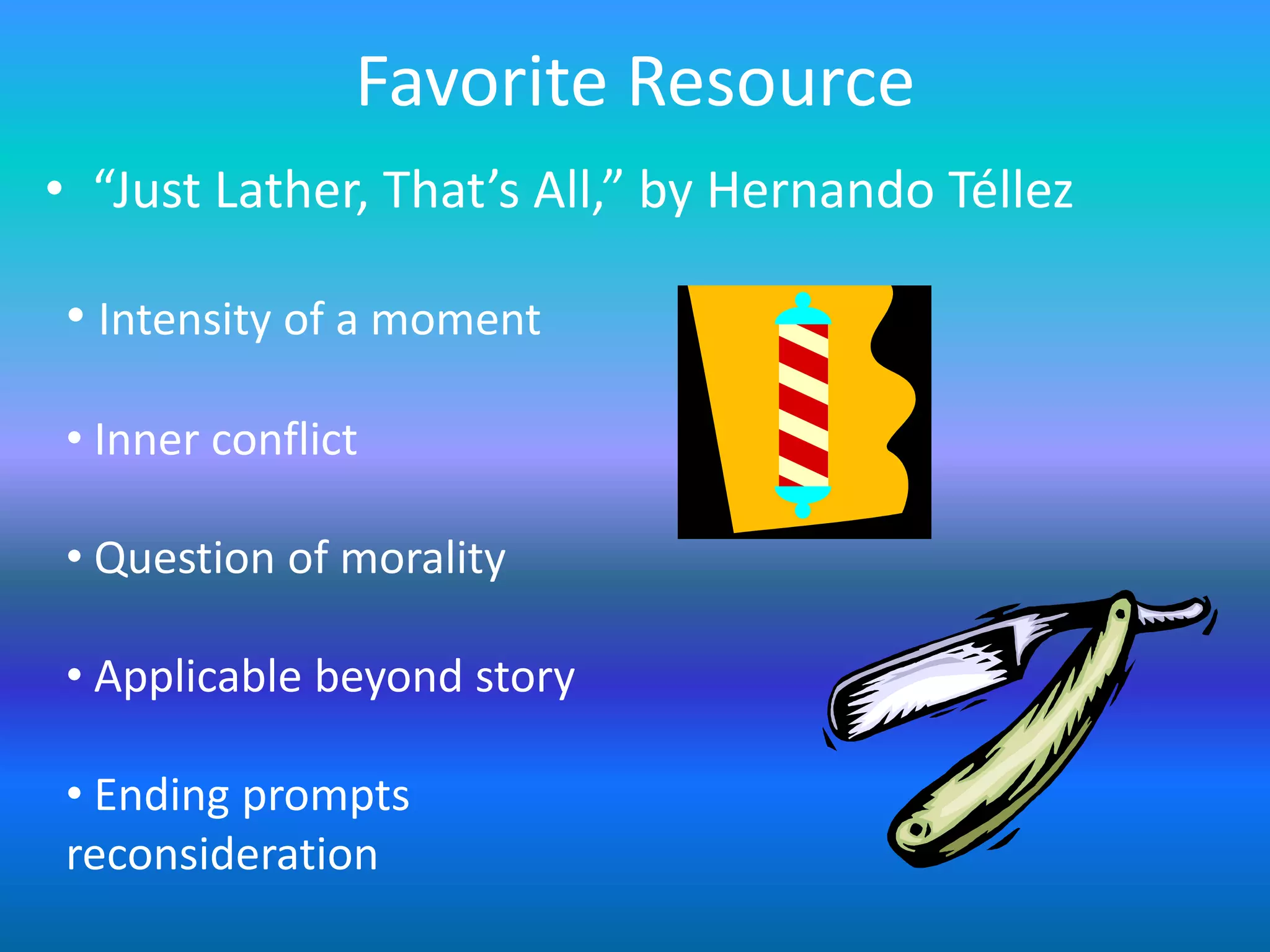
Favorite Resource
• “Just Lather, That’s All,” by Hernando Téllez

• Intensity of a moment

• Inner conflict

• Question of morality

• Applicable beyond story

• Ending prompts
reconsideration
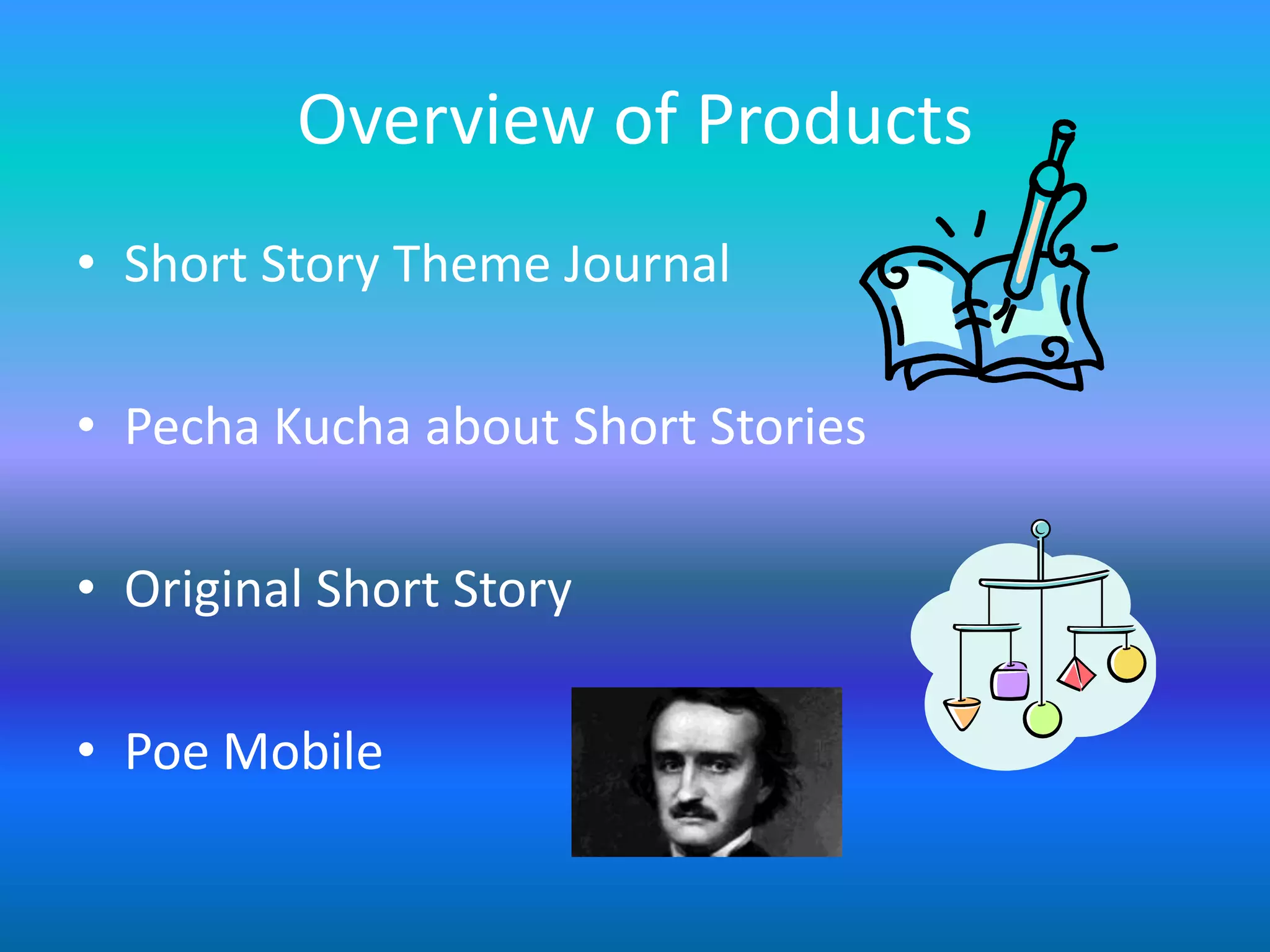
Overview of Products
• Short Story Theme Journal

• Pecha Kucha about Short Stories

• Original Short Story

• Poe Mobile
What I’ve learned/been reminded
     about English/Language Arts
• Exposure to a variety of new (for me) authors and texts

• Greatness in writing can be achieved in many different
  ways

• Sometimes what is left unsaid is more powerful than
  what is said

• Stories help us to put the world in perspective, to see
  through the eyes of others, and to reflect on ourselves
Myself as a Learner
• Active learning
  – Short stories vs. sources on the short story
  – Creating my own story

• Social learning
  – Discussion as a processing aid

• Mulling it over
  – Rereading, reflecting
Making Short Stories Accessible to
              Students
• Include a diverse selection of stories

• Connect story themes to student lives

• Have students write stories

• Discussion!!!
Continuing my study…
• Read more short stories!
  – Melville, Tolstoy, Asimov, Mansfield, O’Connor
• What are good ways to introduce short stories
  when teaching?
• How do teachers decide what to emphasize
  when teaching a specific short story?
  – Time limitations
• What are strategies to help students write
  their own short stories?

Short Story Study

  • 1.
    Holes & Goals: AShort Study of the Short Story By Stefanie Wells
  • 2.
    Why Short Stories? •Past emphasis on novels • Short stories prevalent in curriculum • Exposure to a wide variety – Writing styles – Genres – Multicultural literature
  • 3.
    Essential Questions • Whatdefines the genre of the short story and what are its origins? • What makes a short story “great”? • What are some common themes among short stories that are often taught? • Why teach short stories?
  • 4.
    Enduring Understandings • Shortstories are extremely varied, but are typically characterized by a sense of artistic whole. • Commonly taught short stories often have widely applicable themes and incite more questions than they answer. • Short stories can be used to teach a variety of literary concepts and to expose students to a wide assortment of authors and writing styles.
  • 5.
    What stories didI read? • “The Tell-Tale Heart,” by • “The Necklace,” by Guy de Edgar Allan Poe Maupassant • “The Cask of Amontillado,” by • “The Open Window,” by Saki Edgar Allan Poe • “Thank You, Ma’am,” by • “Hills Like White Elephants,” Langston Hughes by Ernest Hemingway • “The Looking Glass,” by Anton • “The Lottery,” by Shirley Chekhov Jackson • “Just Lather, That’s All,” by • “Harrison Bergeron,” by Kurt Hernando Téllez Vonnegut, Jr. • “The South,” by Jorge Luis • “The Gift of the Magi,” by O. Borges Henry • “The Ones Who Walk Away • “Where Are You from Omelas,” by Ursula K. Going, Where Have You LeGuin Been?” by Joyce Carol Oates
  • 6.
    Favorite Resource • “JustLather, That’s All,” by Hernando Téllez • Intensity of a moment • Inner conflict • Question of morality • Applicable beyond story • Ending prompts reconsideration
  • 7.
    Overview of Products •Short Story Theme Journal • Pecha Kucha about Short Stories • Original Short Story • Poe Mobile
  • 8.
    What I’ve learned/beenreminded about English/Language Arts • Exposure to a variety of new (for me) authors and texts • Greatness in writing can be achieved in many different ways • Sometimes what is left unsaid is more powerful than what is said • Stories help us to put the world in perspective, to see through the eyes of others, and to reflect on ourselves
  • 9.
    Myself as aLearner • Active learning – Short stories vs. sources on the short story – Creating my own story • Social learning – Discussion as a processing aid • Mulling it over – Rereading, reflecting
  • 10.
    Making Short StoriesAccessible to Students • Include a diverse selection of stories • Connect story themes to student lives • Have students write stories • Discussion!!!
  • 11.
    Continuing my study… •Read more short stories! – Melville, Tolstoy, Asimov, Mansfield, O’Connor • What are good ways to introduce short stories when teaching? • How do teachers decide what to emphasize when teaching a specific short story? – Time limitations • What are strategies to help students write their own short stories?