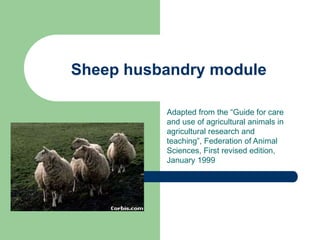
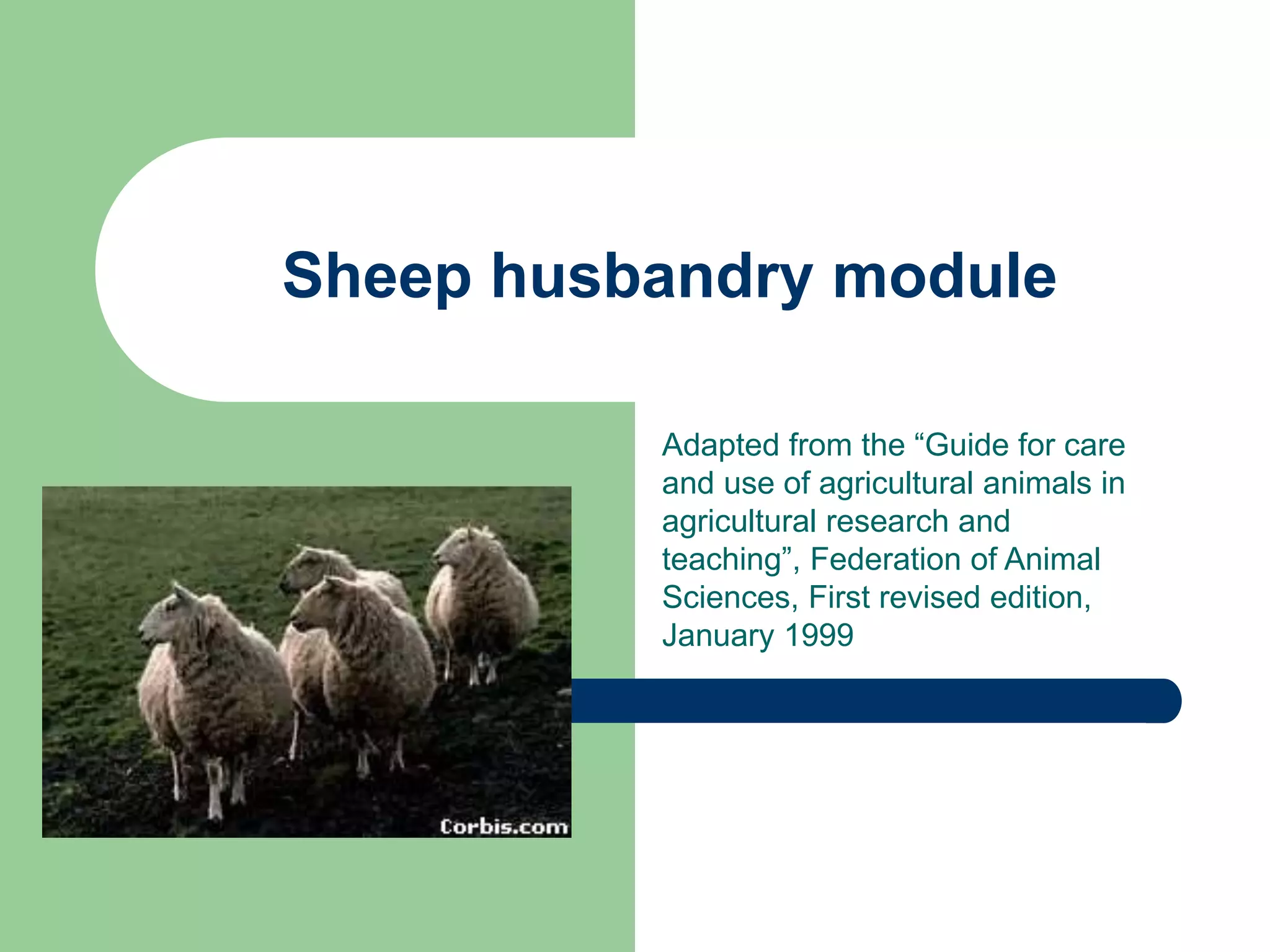
Sheep husbandry module
Adapted from the “Guide for care
and use of agricultural animals in
agricultural research and
teaching”, Federation of Animal
Sciences, First revised edition,
January 1999
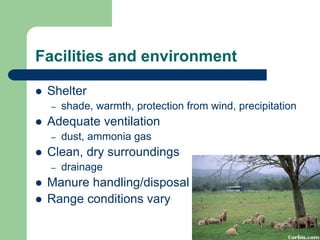
Facilities and environment
 Shelter
– shade, warmth, protection from wind, precipitation
 Adequate ventilation
– dust, ammonia gas
 Clean, dry surroundings
– drainage
 Manure handling/disposal
 Range conditions vary
Facilities and environment
 Flooring surfaces
– well-drained compacted soil, concrete, composition
mats, wood, expanded metal
 Lambs
– observation for hypothermia (low body
temperature), hyperthermia (elevated body
temperature) and sunburn
 Adequate feed and water for environmental
conditions
Intensive laboratory environments
 Prolonged restraint, frequent sampling,
collection of urine/feces
 Pens, metabolism stalls, stanchions,
respiration chambers, environmental chambers
 Do not house alone
 Uniform light intensity/photoperiod
 Shearing for cleanliness
 sanitation
Intensive laboratory environments
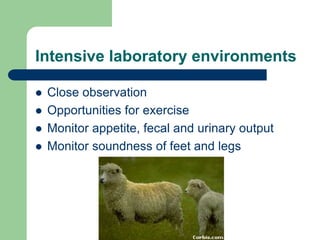
 Close observation
 Opportunities for exercise
 Monitor appetite, fecal and urinary output
 Monitor soundness of feet and legs
Fencing
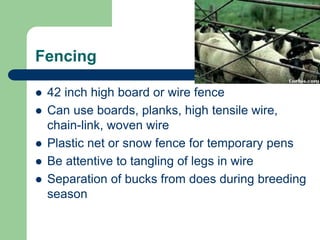
 42 inch high board or wire fence
 Can use boards, planks, high tensile wire,
chain-link, woven wire
 Plastic net or snow fence for temporary pens
 Be attentive to tangling of legs in wire
 Separation of bucks from does during breeding
season
Lighting
 Photoperiod and light intensity adequate for
inspection and maintenance of activity patterns
and physiological control of reproductive cycles
 May need supplemental light during lambing
for observation
 Outside lights can deter predators
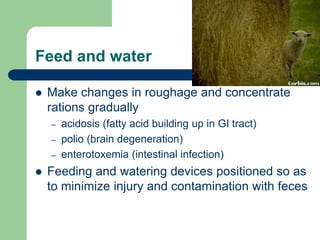
Feed and water
 Make changes in roughage and concentrate
rations gradually
– acidosis (fatty acid building up in GI tract)
– polio (brain degeneration)
– enterotoxemia (intestinal infection)
 Feeding and watering devices positioned so as
to minimize injury and contamination with feces
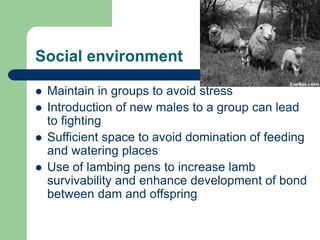
Social environment
 Maintain in groups to avoid stress
 Introduction of new males to a group can lead
to fighting
 Sufficient space to avoid domination of feeding
and watering places
 Use of lambing pens to increase lamb
survivability and enhance development of bond
between dam and offspring
Husbandry
 Ear-notching
 Ear-tattooing
 Tail web-tattooing
 Ear-tagging
 Shearing
 Hoof-trimming
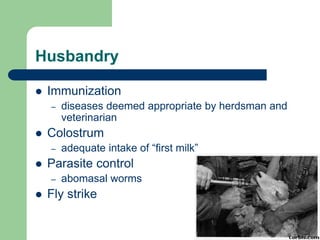
Husbandry
 Immunization
– diseases deemed appropriate by herdsman and
veterinarian
 Colostrum
– adequate intake of “first milk”
 Parasite control
– abomasal worms
 Fly strike
Shearing
 Shearing lambs during hot weather stimulates
feed intake and improves performance
 Shear ewes around lambing – easier for lambs
to suckle
– crutching
 Disinfect shearing equipment
– spread of caseous lymphadenitis (infection of the
lymph nodes and internal organs)
Shearing
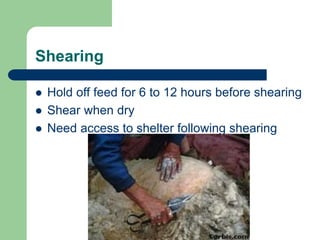
 Hold off feed for 6 to 12 hours before shearing
 Shear when dry
 Need access to shelter following shearing
Additional husbandry practices
 Advanced
– artificial insemination
– electroejaculation
– pregnancy detection
– ultrasound evaluation
– embryo flushing and transfer
– venipuncture
Standard agricultural practices
 Tail-docking
– reduces perianal soiling and incidence of fly strike
– rubber rings, hot iron cautery, surgical removal,
emasculator
– docking too short contributes to rectal and vaginal
prolapses
– dock lambs before two weeks of age
Standard agricultural practices
 Castration
– rubber rings
– emasculator
– surgical removal
– castrate prior to 2 months of age
– anesthesia, monitor hemorrhage, monitor infection
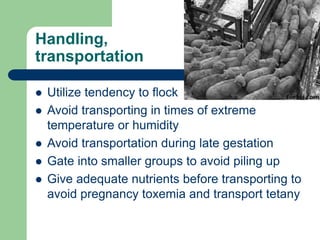
Handling,
transportation
 Utilize tendency to flock
 Avoid transporting in times of extreme
temperature or humidity
 Avoid transportation during late gestation
 Gate into smaller groups to avoid piling up
 Give adequate nutrients before transporting to
avoid pregnancy toxemia and transport tetany
Euthanasia
 Euthanasia solution
 Penetrating captive bolt
 Gunshot to the head
 Should be performed by a trained individual

sheepmodulereadytoload.ppt

  • 1.
    Sheep husbandry module Adaptedfrom the “Guide for care and use of agricultural animals in agricultural research and teaching”, Federation of Animal Sciences, First revised edition, January 1999
  • 2.
    Facilities and environment Shelter – shade, warmth, protection from wind, precipitation  Adequate ventilation – dust, ammonia gas  Clean, dry surroundings – drainage  Manure handling/disposal  Range conditions vary
  • 3.
    Facilities and environment Flooring surfaces – well-drained compacted soil, concrete, composition mats, wood, expanded metal  Lambs – observation for hypothermia (low body temperature), hyperthermia (elevated body temperature) and sunburn  Adequate feed and water for environmental conditions
  • 4.
    Intensive laboratory environments Prolonged restraint, frequent sampling, collection of urine/feces  Pens, metabolism stalls, stanchions, respiration chambers, environmental chambers  Do not house alone  Uniform light intensity/photoperiod  Shearing for cleanliness  sanitation
  • 5.
    Intensive laboratory environments Close observation  Opportunities for exercise  Monitor appetite, fecal and urinary output  Monitor soundness of feet and legs
  • 6.
    Fencing  42 inchhigh board or wire fence  Can use boards, planks, high tensile wire, chain-link, woven wire  Plastic net or snow fence for temporary pens  Be attentive to tangling of legs in wire  Separation of bucks from does during breeding season
  • 7.
    Lighting  Photoperiod andlight intensity adequate for inspection and maintenance of activity patterns and physiological control of reproductive cycles  May need supplemental light during lambing for observation  Outside lights can deter predators
  • 8.
    Feed and water Make changes in roughage and concentrate rations gradually – acidosis (fatty acid building up in GI tract) – polio (brain degeneration) – enterotoxemia (intestinal infection)  Feeding and watering devices positioned so as to minimize injury and contamination with feces
  • 9.
    Social environment  Maintainin groups to avoid stress  Introduction of new males to a group can lead to fighting  Sufficient space to avoid domination of feeding and watering places  Use of lambing pens to increase lamb survivability and enhance development of bond between dam and offspring
  • 10.
    Husbandry  Ear-notching  Ear-tattooing Tail web-tattooing  Ear-tagging  Shearing  Hoof-trimming
  • 11.
    Husbandry  Immunization – diseasesdeemed appropriate by herdsman and veterinarian  Colostrum – adequate intake of “first milk”  Parasite control – abomasal worms  Fly strike
  • 12.
    Shearing  Shearing lambsduring hot weather stimulates feed intake and improves performance  Shear ewes around lambing – easier for lambs to suckle – crutching  Disinfect shearing equipment – spread of caseous lymphadenitis (infection of the lymph nodes and internal organs)
  • 13.
    Shearing  Hold offfeed for 6 to 12 hours before shearing  Shear when dry  Need access to shelter following shearing
  • 14.
    Additional husbandry practices Advanced – artificial insemination – electroejaculation – pregnancy detection – ultrasound evaluation – embryo flushing and transfer – venipuncture
  • 15.
    Standard agricultural practices Tail-docking – reduces perianal soiling and incidence of fly strike – rubber rings, hot iron cautery, surgical removal, emasculator – docking too short contributes to rectal and vaginal prolapses – dock lambs before two weeks of age
  • 16.
    Standard agricultural practices Castration – rubber rings – emasculator – surgical removal – castrate prior to 2 months of age – anesthesia, monitor hemorrhage, monitor infection
  • 17.
    Handling, transportation  Utilize tendencyto flock  Avoid transporting in times of extreme temperature or humidity  Avoid transportation during late gestation  Gate into smaller groups to avoid piling up  Give adequate nutrients before transporting to avoid pregnancy toxemia and transport tetany
  • 18.
    Euthanasia  Euthanasia solution Penetrating captive bolt  Gunshot to the head  Should be performed by a trained individual