Karena Kiis
    TÖ-21
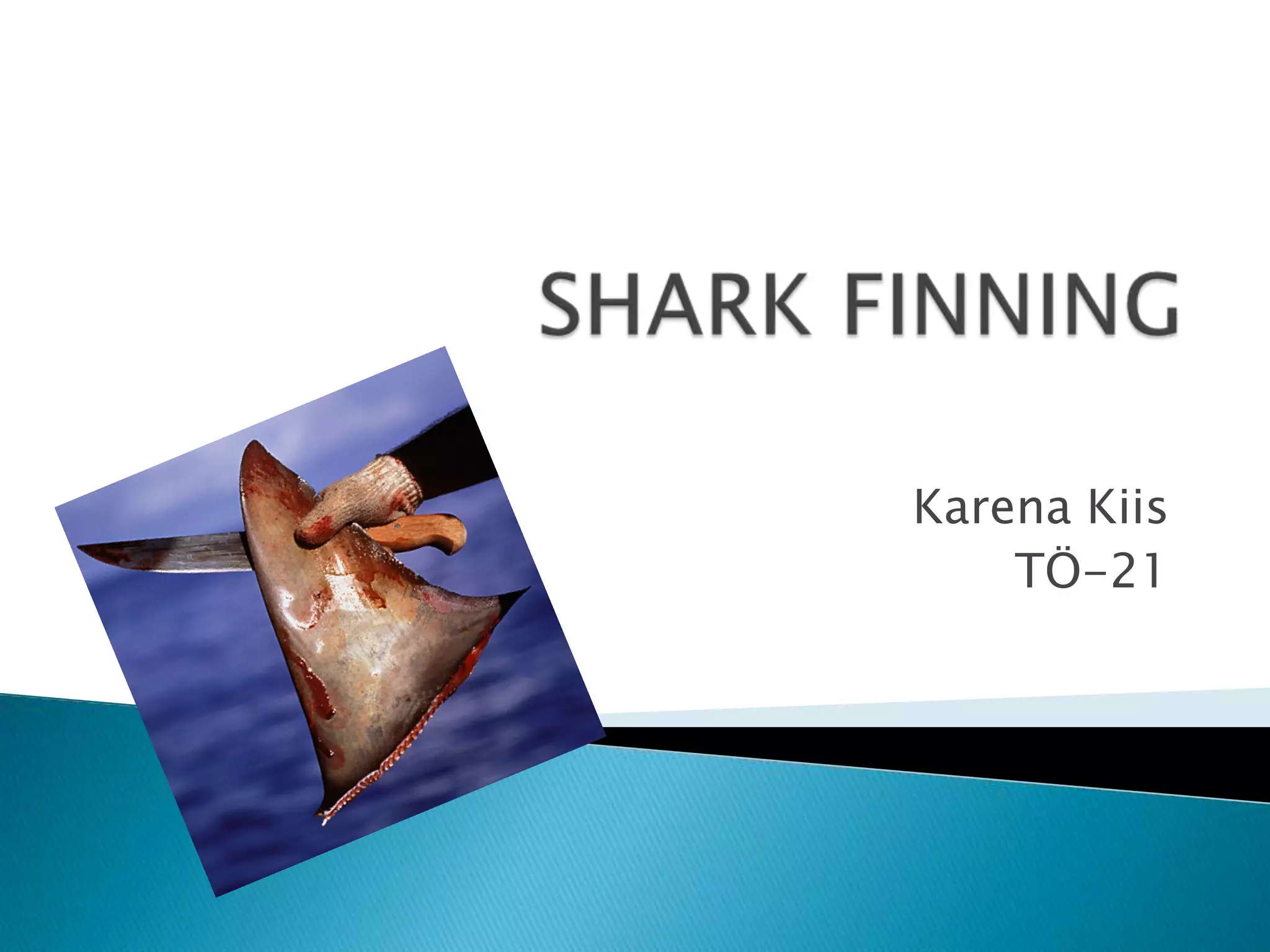
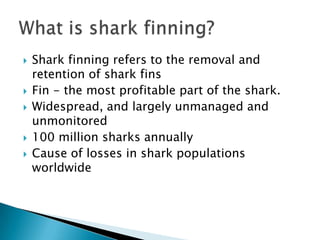
   Shark finning refers to the removal and
    retention of shark fins
   Fin - the most profitable part of the shark.
   Widespread, and largely unmanaged and
    unmonitored
   100 million sharks annually
   Cause of losses in shark populations
    worldwide
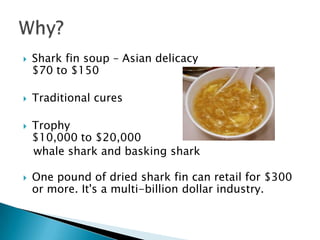
   Shark fin soup – Asian delicacy
    $70 to $150

   Traditional cures

   Trophy
    $10,000 to $20,000
    whale shark and basking shark

   One pound of dried shark fin can retail for $300
    or more. It's a multi-billion dollar industry.
   The rest of the body is generally discarded in
    the ocean
   Unable to move normally, they die of
    suffocation or are eaten by other predators
   Sandbar, bull, hammerhead, blacktip, porbea
    gle, mako, thresher, blue and occasionally
    white sharks are usually finned
   Loss and devastation of shark populations
    around the world.
   Unsustainable fishery.
   Threatens the stability of marine ecosystems.
   Loss of sharks as a food staple for many
    developing countries.
   Local waters are invaded by large
    industrial, foreign fishing vessels that threaten
    traditional sustainable fisheries.
   Wasteful of protein and other shark-based
    products. Up to 99 per cent of the shark is
    thrown away.
   Each country with a coastline is responsible for laws
    and regulations pertaining to fishing in their waters.
   A number of countries have shark-finning legislation.
   Only a few countries demand that sharks arrive in
    port with fins attached.
   Code of Conduct for Responsible Fisheries.
   Conservation and Management of Sharks.
   The United Nations Convention on the Trade of
    Endangered Species of Flora and Fauna (CITES) lists
    the whale shark, basking shark, and great white
    shark as species that could become threatened if
    trade is not controlled.
   To date, 169 countries have agreed to be legally
    bound by CITES.
Shark finning

Shark finning

  • 1.
  • 2.
    Shark finning refers to the removal and retention of shark fins  Fin - the most profitable part of the shark.  Widespread, and largely unmanaged and unmonitored  100 million sharks annually  Cause of losses in shark populations worldwide
  • 3.
    Shark fin soup – Asian delicacy $70 to $150  Traditional cures  Trophy $10,000 to $20,000 whale shark and basking shark  One pound of dried shark fin can retail for $300 or more. It's a multi-billion dollar industry.
  • 4.
    The rest of the body is generally discarded in the ocean  Unable to move normally, they die of suffocation or are eaten by other predators  Sandbar, bull, hammerhead, blacktip, porbea gle, mako, thresher, blue and occasionally white sharks are usually finned
  • 5.
    Loss and devastation of shark populations around the world.  Unsustainable fishery.  Threatens the stability of marine ecosystems.  Loss of sharks as a food staple for many developing countries.  Local waters are invaded by large industrial, foreign fishing vessels that threaten traditional sustainable fisheries.  Wasteful of protein and other shark-based products. Up to 99 per cent of the shark is thrown away.
  • 6.
    Each country with a coastline is responsible for laws and regulations pertaining to fishing in their waters.  A number of countries have shark-finning legislation.  Only a few countries demand that sharks arrive in port with fins attached.  Code of Conduct for Responsible Fisheries.  Conservation and Management of Sharks.  The United Nations Convention on the Trade of Endangered Species of Flora and Fauna (CITES) lists the whale shark, basking shark, and great white shark as species that could become threatened if trade is not controlled.  To date, 169 countries have agreed to be legally bound by CITES.