
Share and Sharealike – The How and Why
of Sharing Collections Online

Nick Poole, CEO, Collections Trust (@NickPoole1)
The presentation…
That became a research project…
That became a book…
Initial question:


“There are many different ways of opening up collections online for
access and engagement. Each one costs my museum something.

How do I decide which ones to go with?”
Access ≠ value
Open access ≠ fewer sales
Commercial ≠ profit-making
Content ≠ metadata
‘Digital’ ≠ an audience
Let’s start with:

- Audience

- Culture

- Mission
So what are the options?
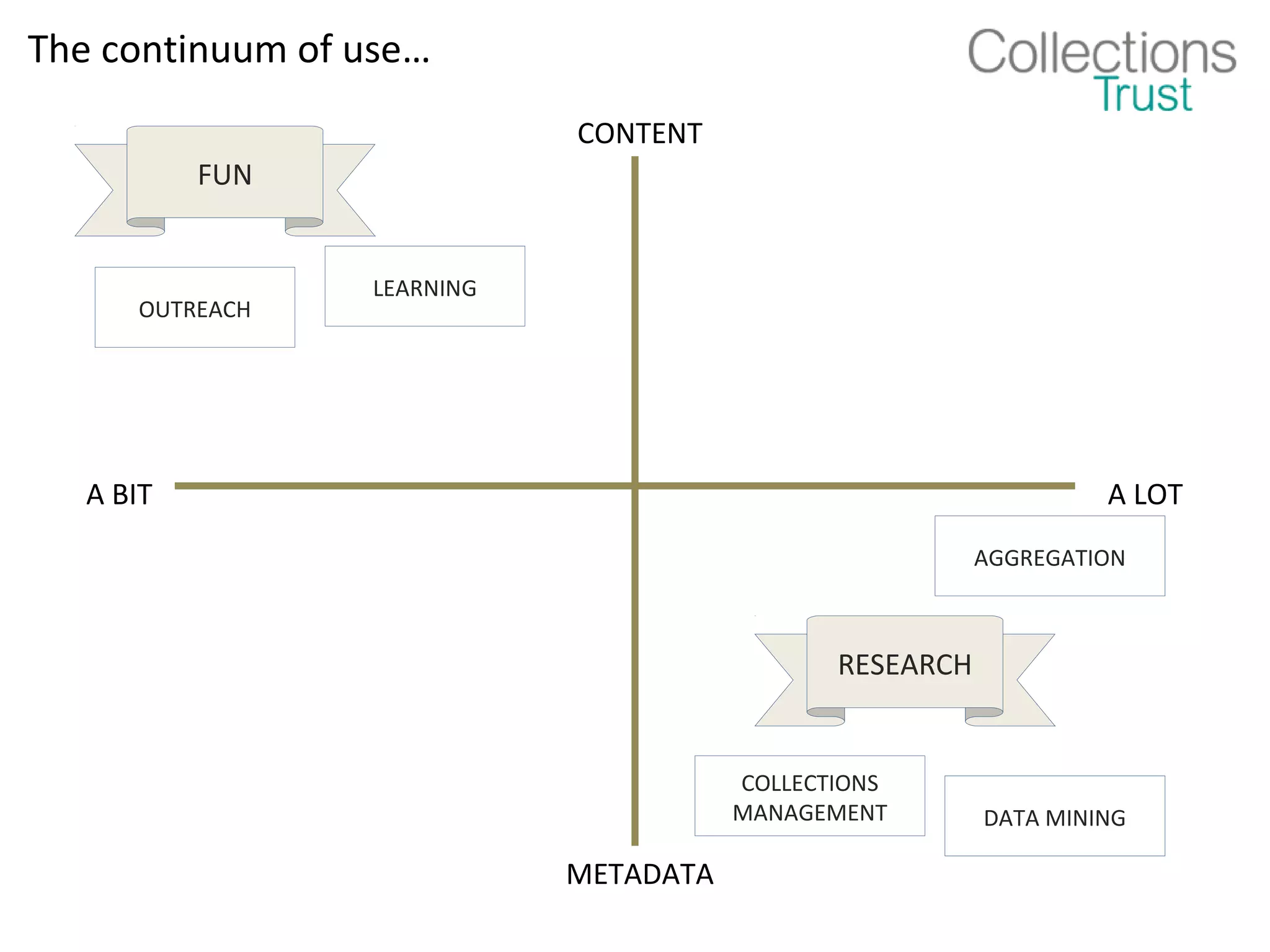
The continuum of use…
                            CONTENT
           FUN


                 LEARNING
      OUTREACH


   A BIT                                                          A LOT
                                                         AGGREGATION


                                              RESEARCH


                                       COLLECTIONS
                                       MANAGEMENT        DATA MINING

                            METADATA
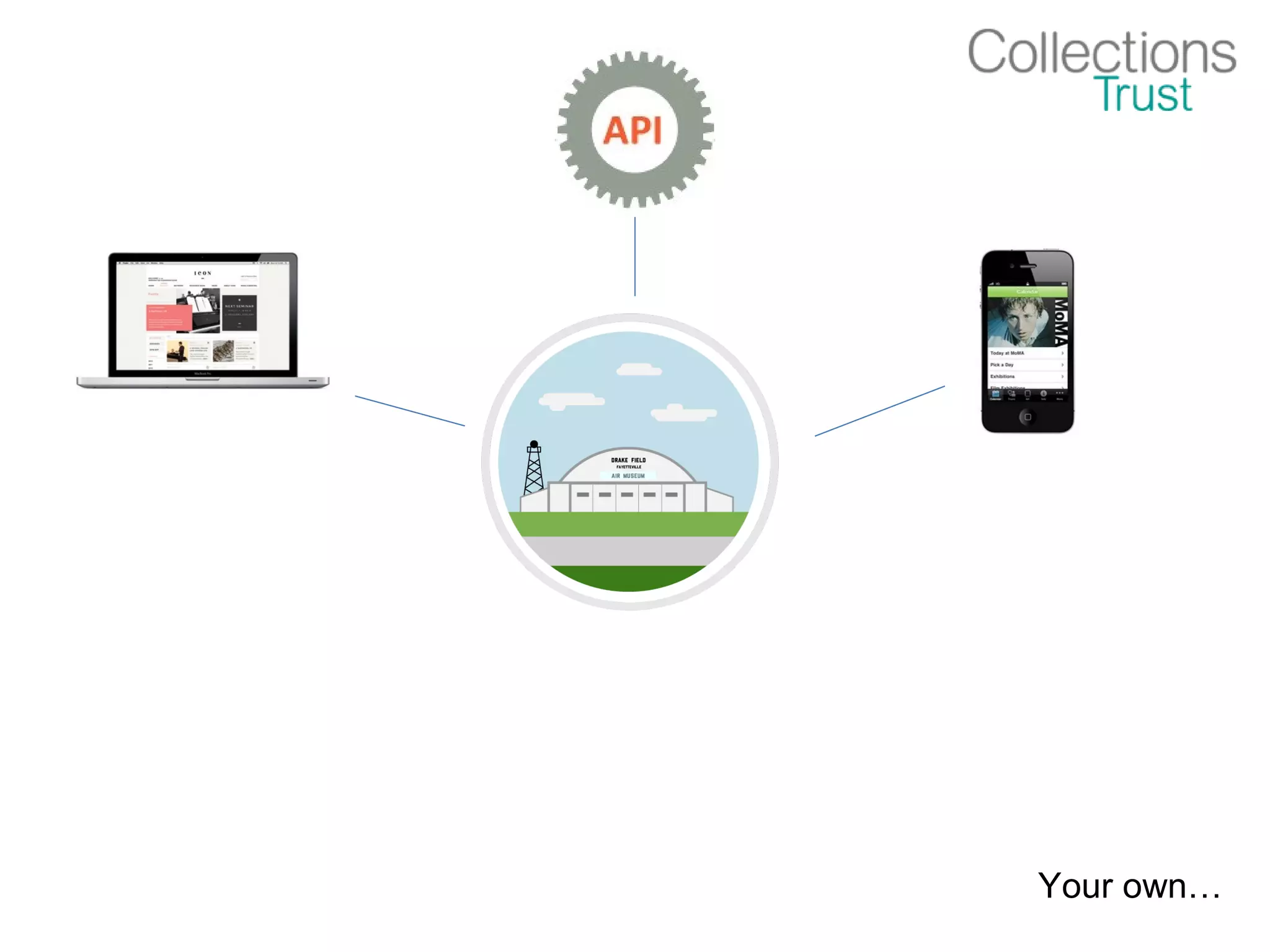
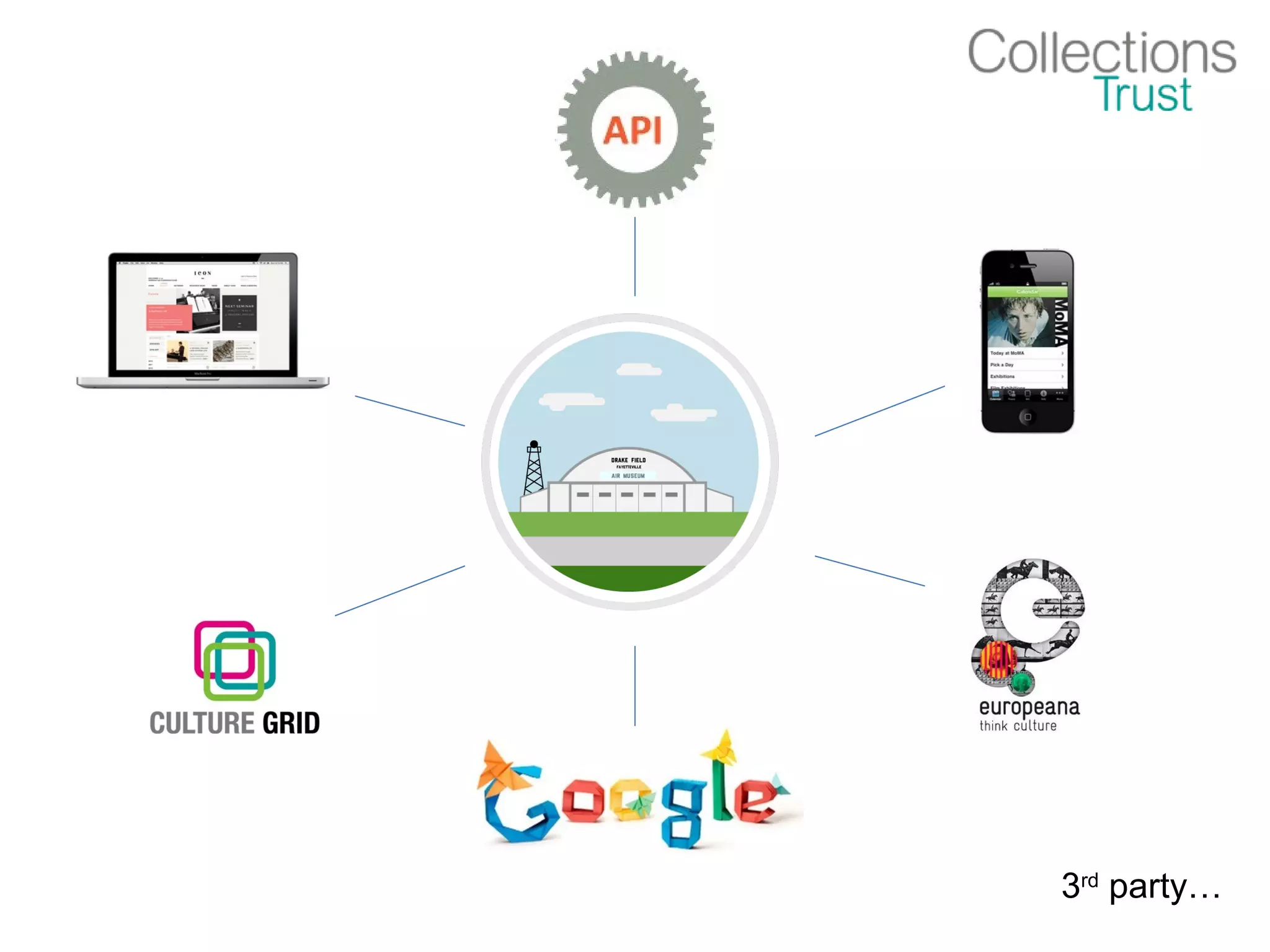
Content-based experiences…
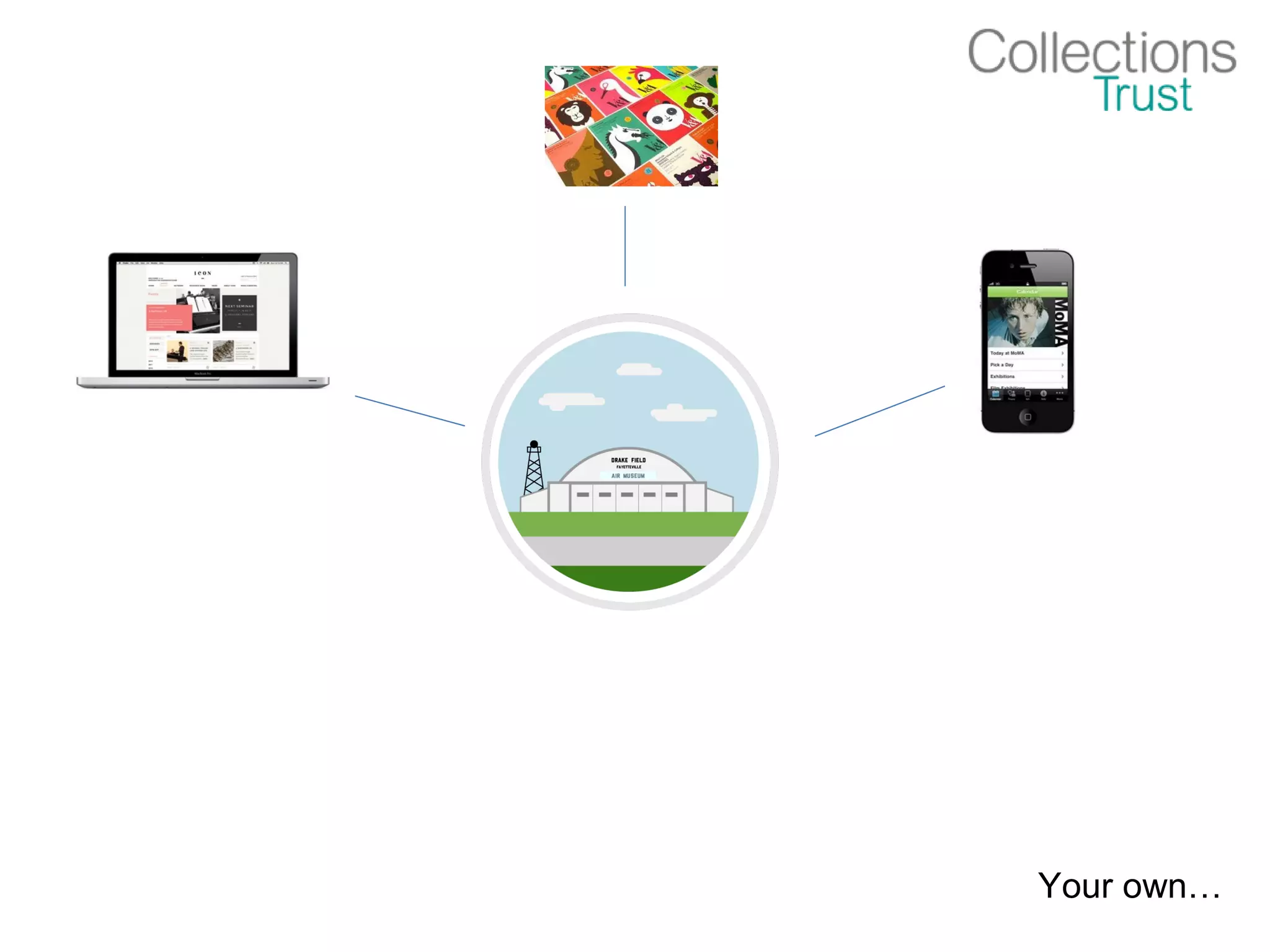
Your own…
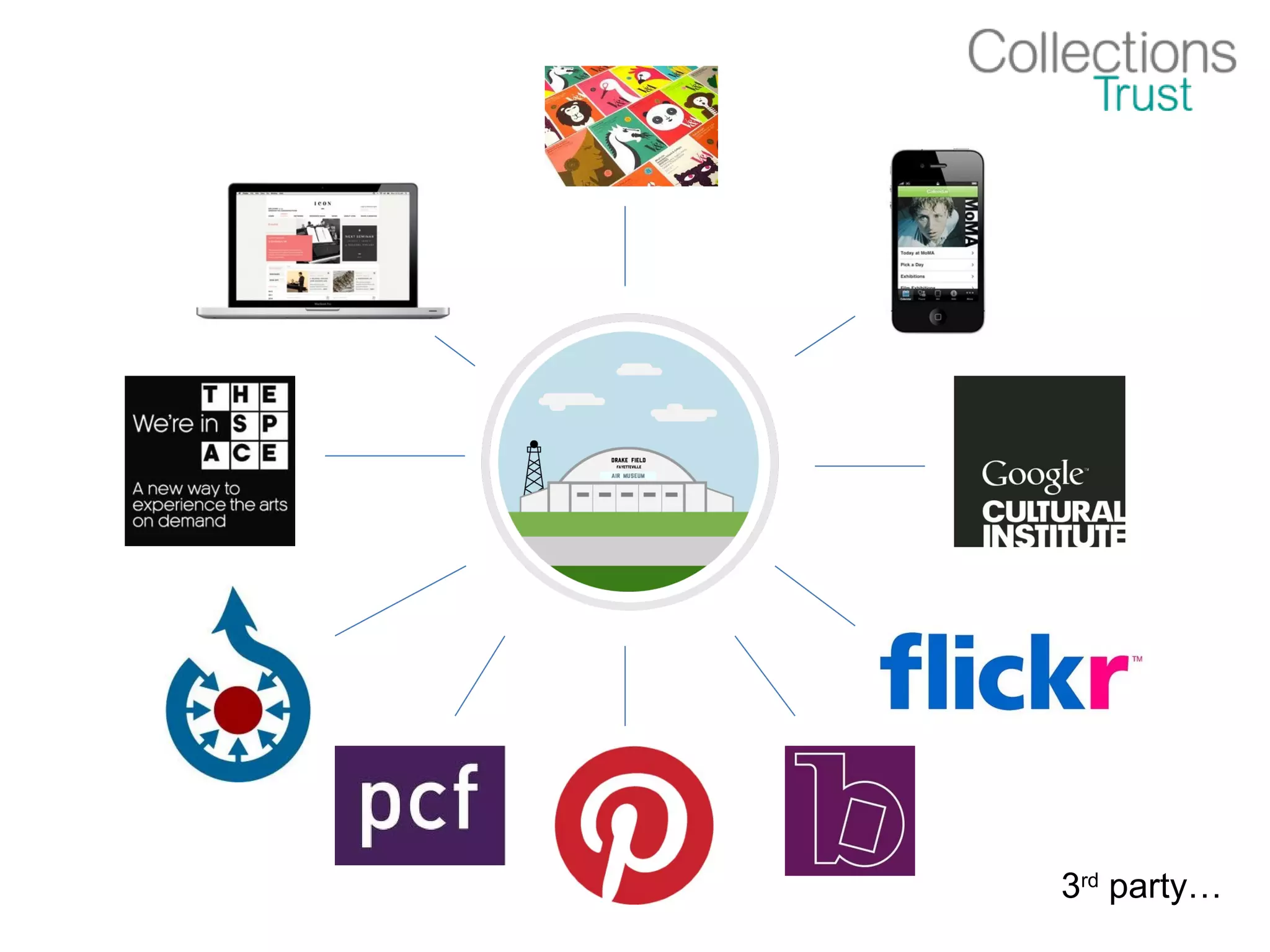
3rd party…
Metadata-based promotional/finding tools…
Your own…
3rd party…
Return on Investment
•   Achieving your cultural mission and/or objectives
•   Delivering on your public task
•   Enhancing the status of your museum or gallery
•   Raising the public profile of the organisation
•   Establishing new revenue streams
•   Increased revenue from existing image licensing/commercial activity
•   Improved balance of commercial revenue against grant-in-aid or other support
•   Access to new funding streams (such as European funding programmes)
•   Advocating the importance of collections as a key part of service delivery
•   Improved case for collections management and/or documentation
•   Opening up tasks for collaboration and crowdsourcing
•   Improving the quality and consistency of your collections information
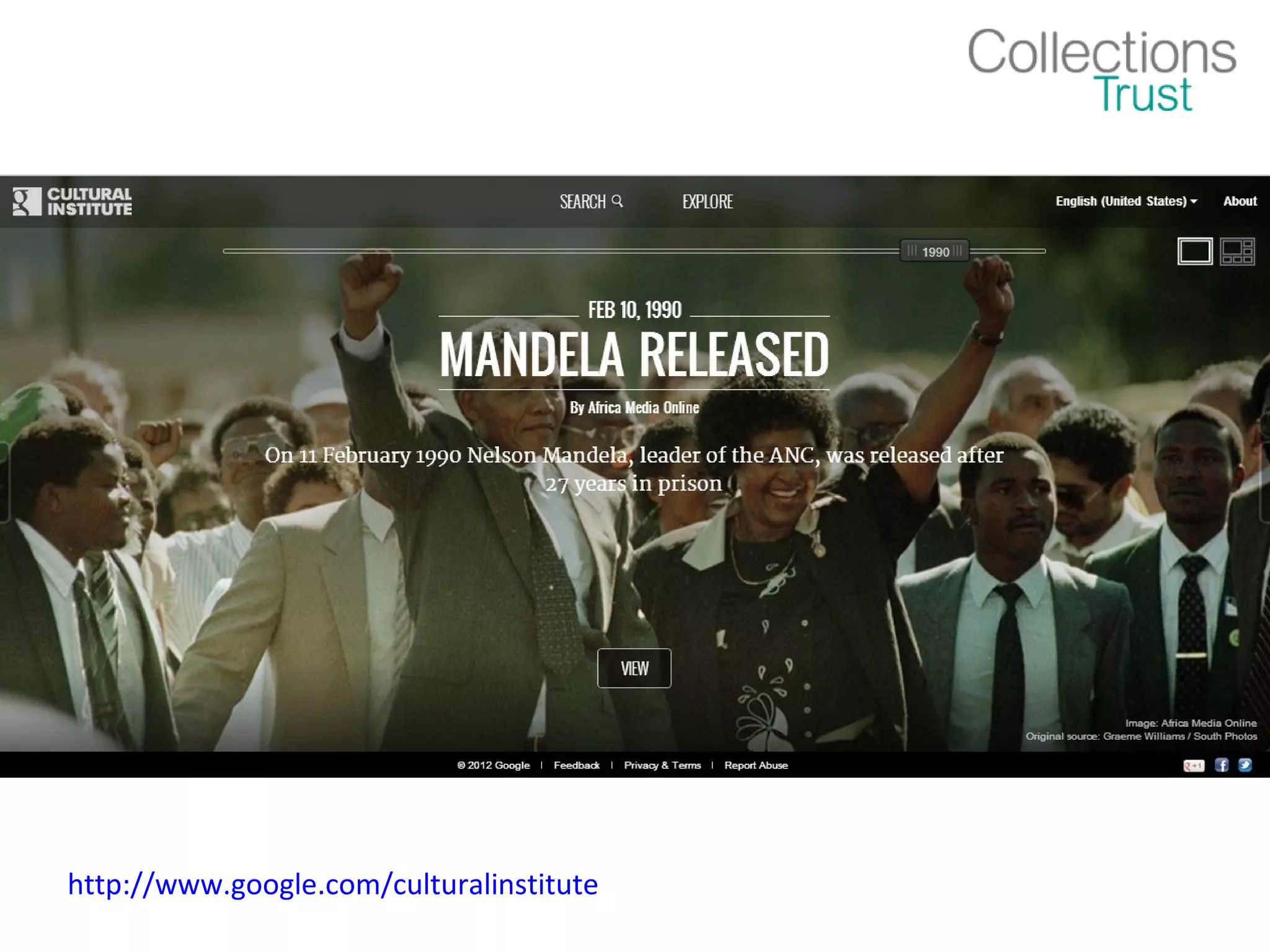
http://www.google.com/culturalinstitute
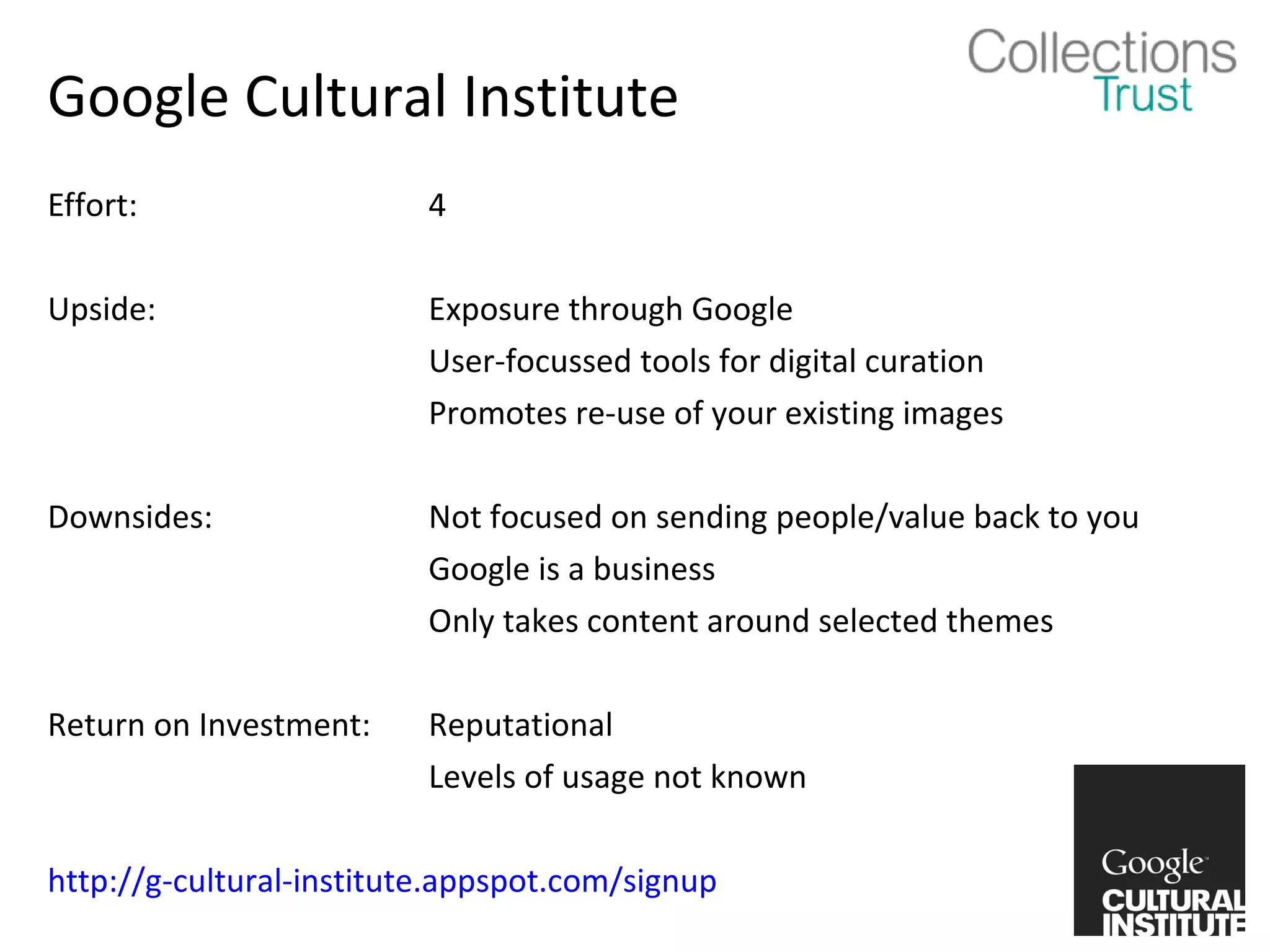
Google Cultural Institute
Effort:                   4

Upside:                   Exposure through Google
                          User-focussed tools for digital curation
                          Promotes re-use of your existing images

Downsides:                Not focused on sending people/value back to you
                          Google is a business
                          Only takes content around selected themes

Return on Investment:     Reputational
                          Levels of usage not known

http://g-cultural-institute.appspot.com/signup
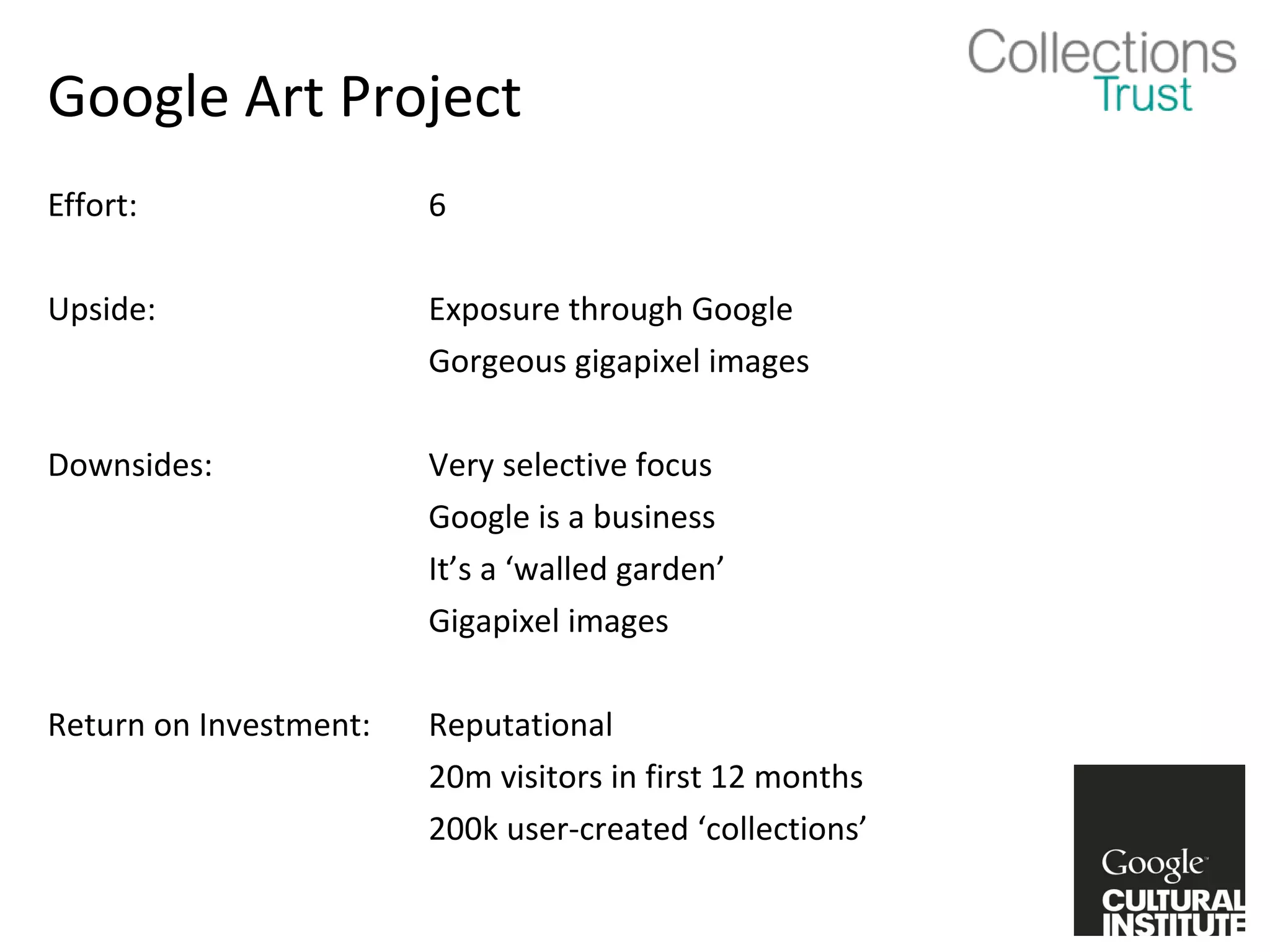
Google Art Project
Effort:                 6

Upside:                 Exposure through Google
                        Gorgeous gigapixel images

Downsides:              Very selective focus
                        Google is a business
                        It’s a ‘walled garden’
                        Gigapixel images

Return on Investment:   Reputational
                        20m visitors in first 12 months
                        200k user-created ‘collections’
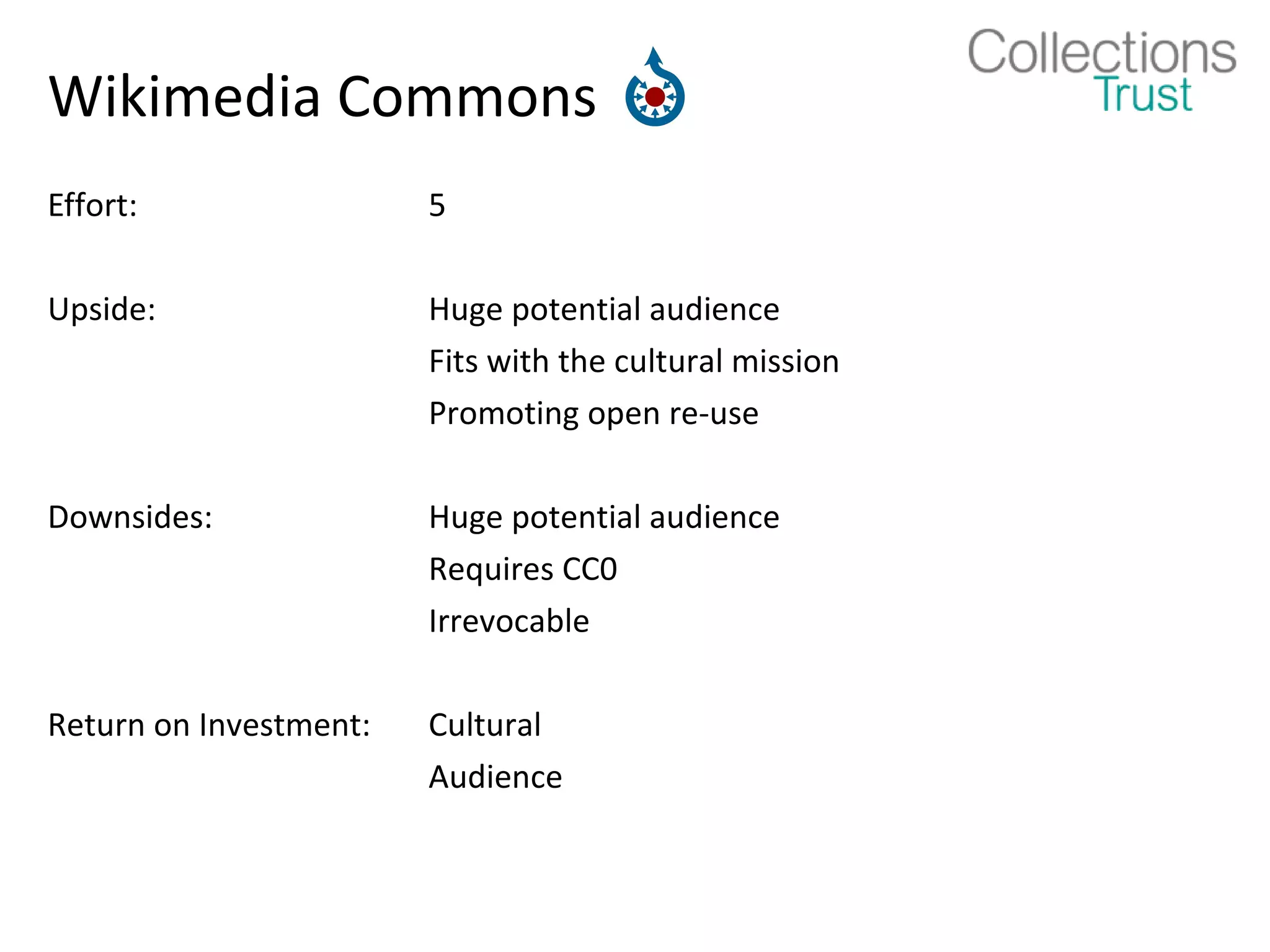
Wikimedia Commons
Effort:                 5

Upside:                 Huge potential audience
                        Fits with the cultural mission
                        Promoting open re-use

Downsides:              Huge potential audience
                        Requires CC0
                        Irrevocable

Return on Investment:   Cultural
                        Audience
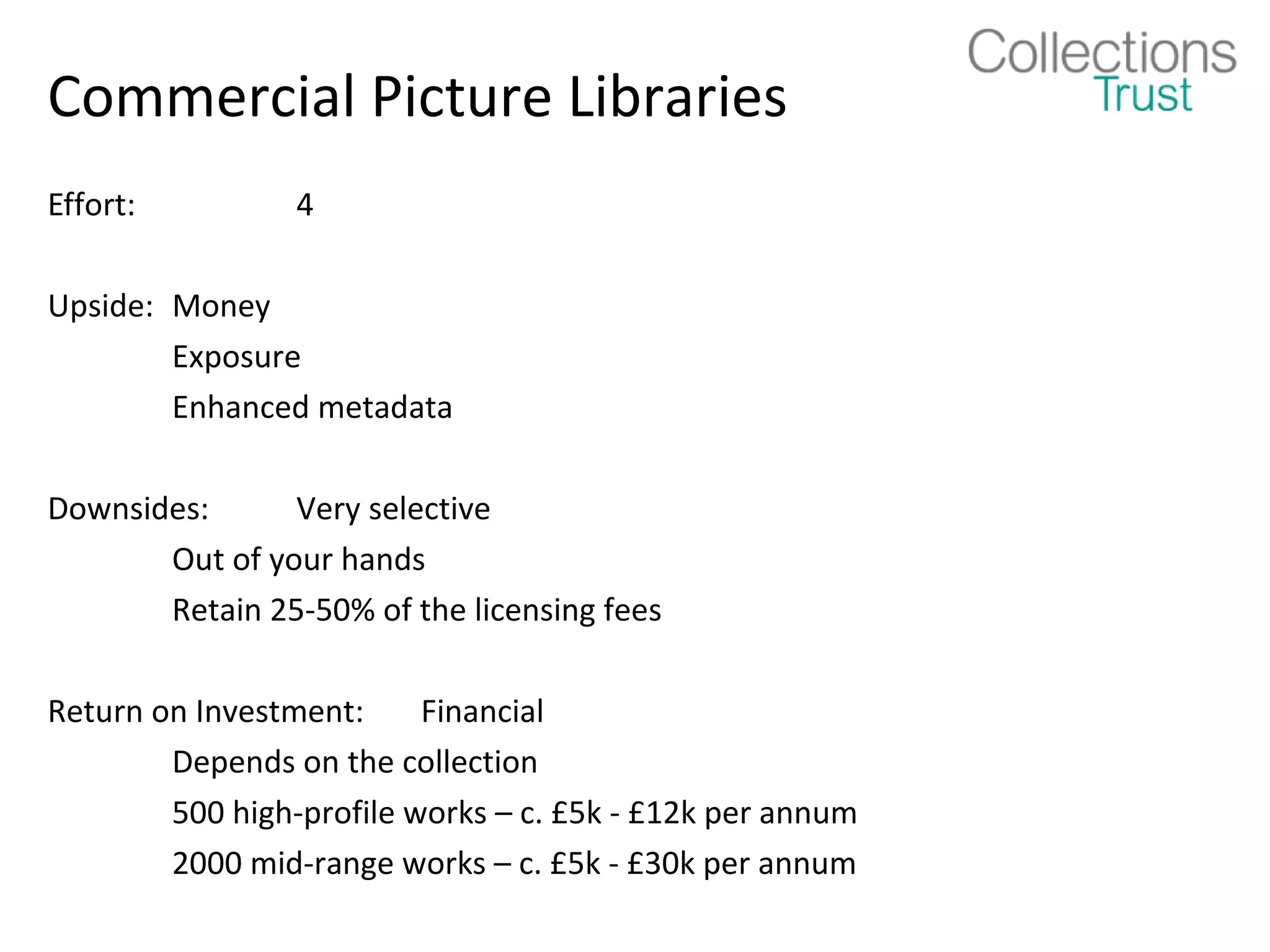
Commercial Picture Libraries
Effort:          4

Upside: Money
        Exposure
        Enhanced metadata

Downsides:      Very selective
       Out of your hands
       Retain 25-50% of the licensing fees

Return on Investment:     Financial
        Depends on the collection
        500 high-profile works – c. £5k - £12k per annum
        2000 mid-range works – c. £5k - £30k per annum
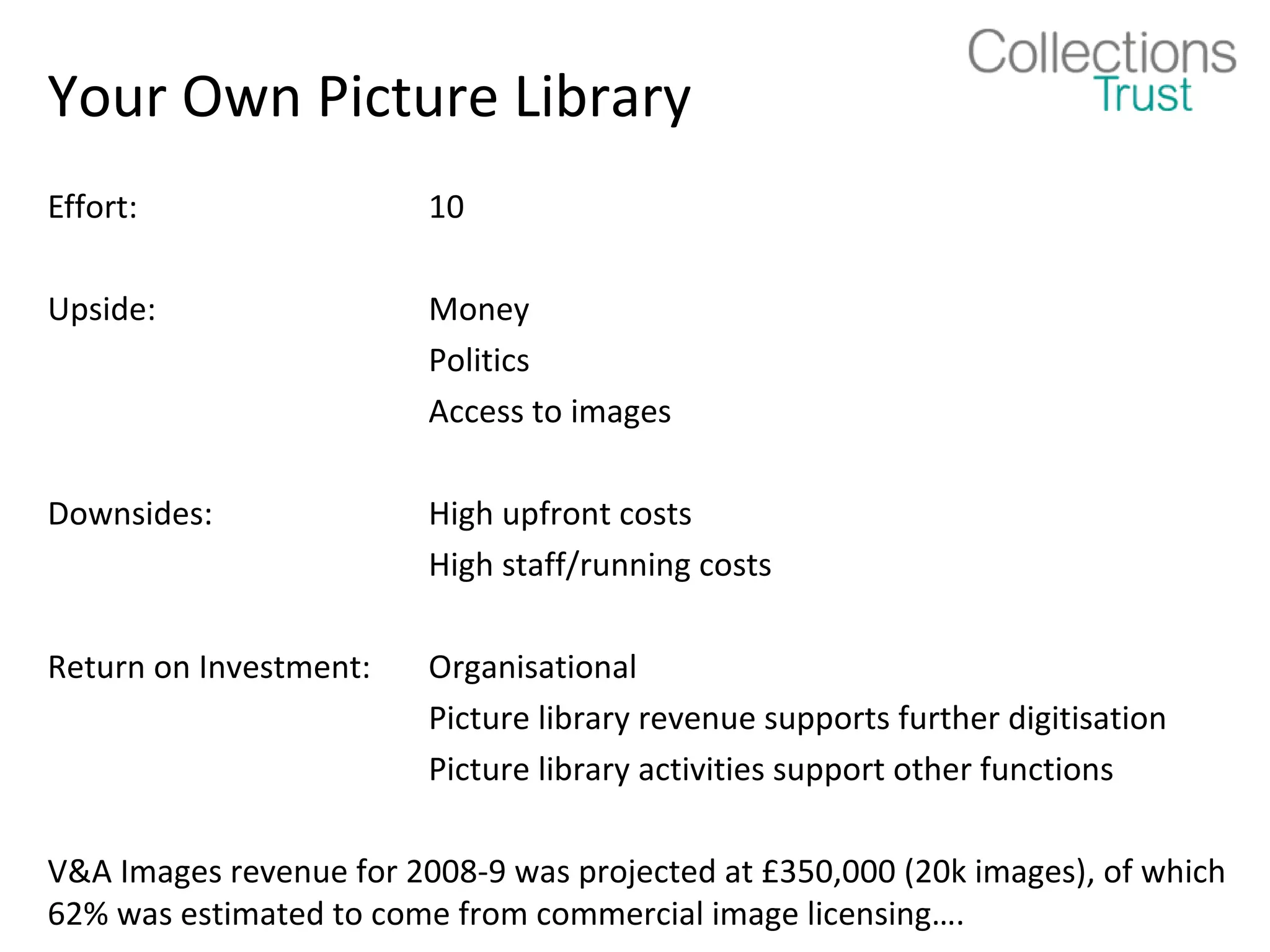
Your Own Picture Library
Effort:                  10

Upside:                  Money
                         Politics
                         Access to images

Downsides:               High upfront costs
                         High staff/running costs

Return on Investment:    Organisational
                         Picture library revenue supports further digitisation
                         Picture library activities support other functions

V&A Images revenue for 2008-9 was projected at £350,000 (20k images), of which
62% was estimated to come from commercial image licensing….
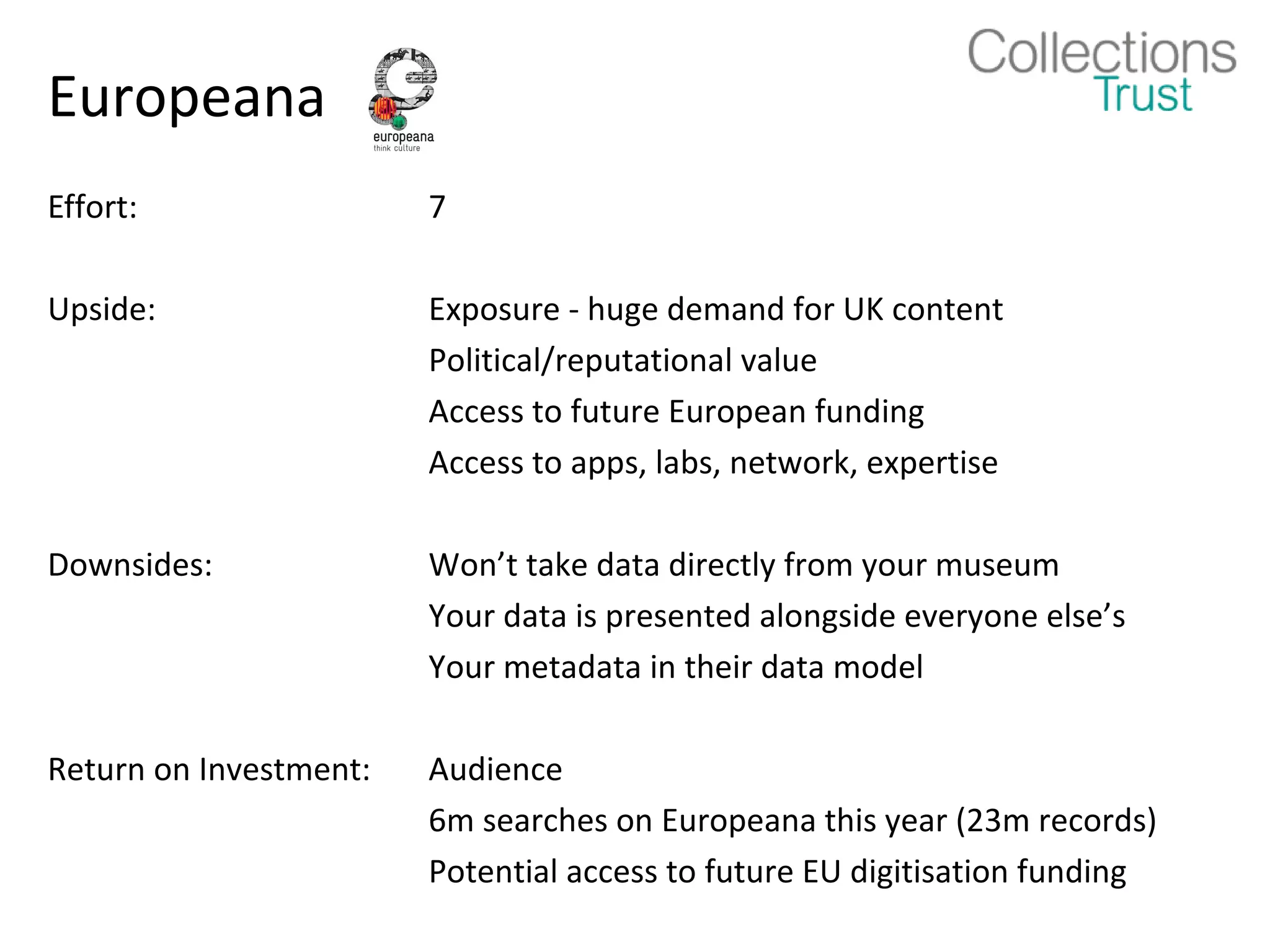
Europeana
Effort:                 7

Upside:                 Exposure - huge demand for UK content
                        Political/reputational value
                        Access to future European funding
                        Access to apps, labs, network, expertise

Downsides:              Won’t take data directly from your museum
                        Your data is presented alongside everyone else’s
                        Your metadata in their data model

Return on Investment:   Audience
                        6m searches on Europeana this year (23m records)
                        Potential access to future EU digitisation funding
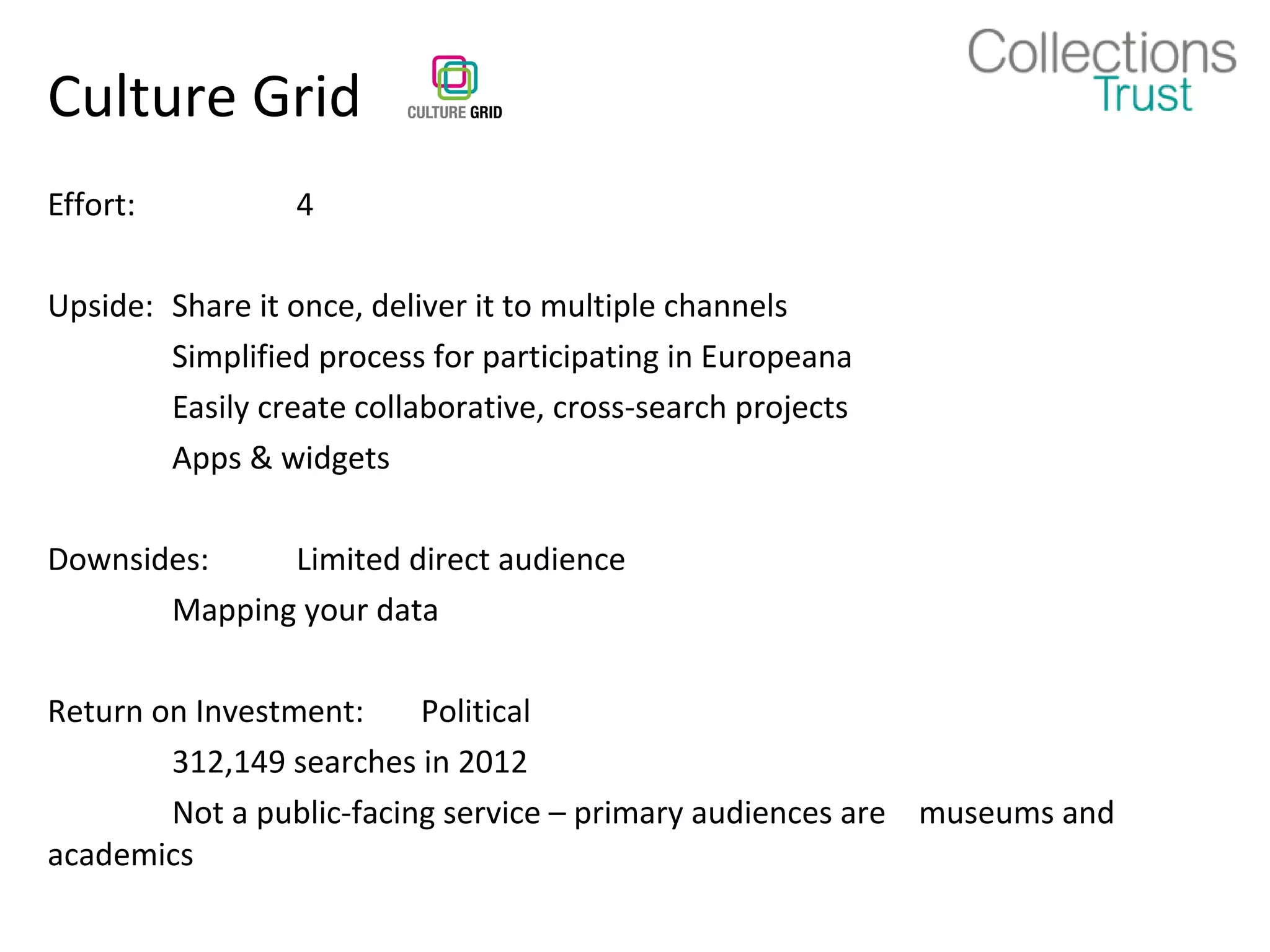
Culture Grid
Effort:          4

Upside: Share it once, deliver it to multiple channels
        Simplified process for participating in Europeana
        Easily create collaborative, cross-search projects
        Apps & widgets

Downsides:    Limited direct audience
       Mapping your data

Return on Investment:     Political
        312,149 searches in 2012
        Not a public-facing service – primary audiences are museums and
academics
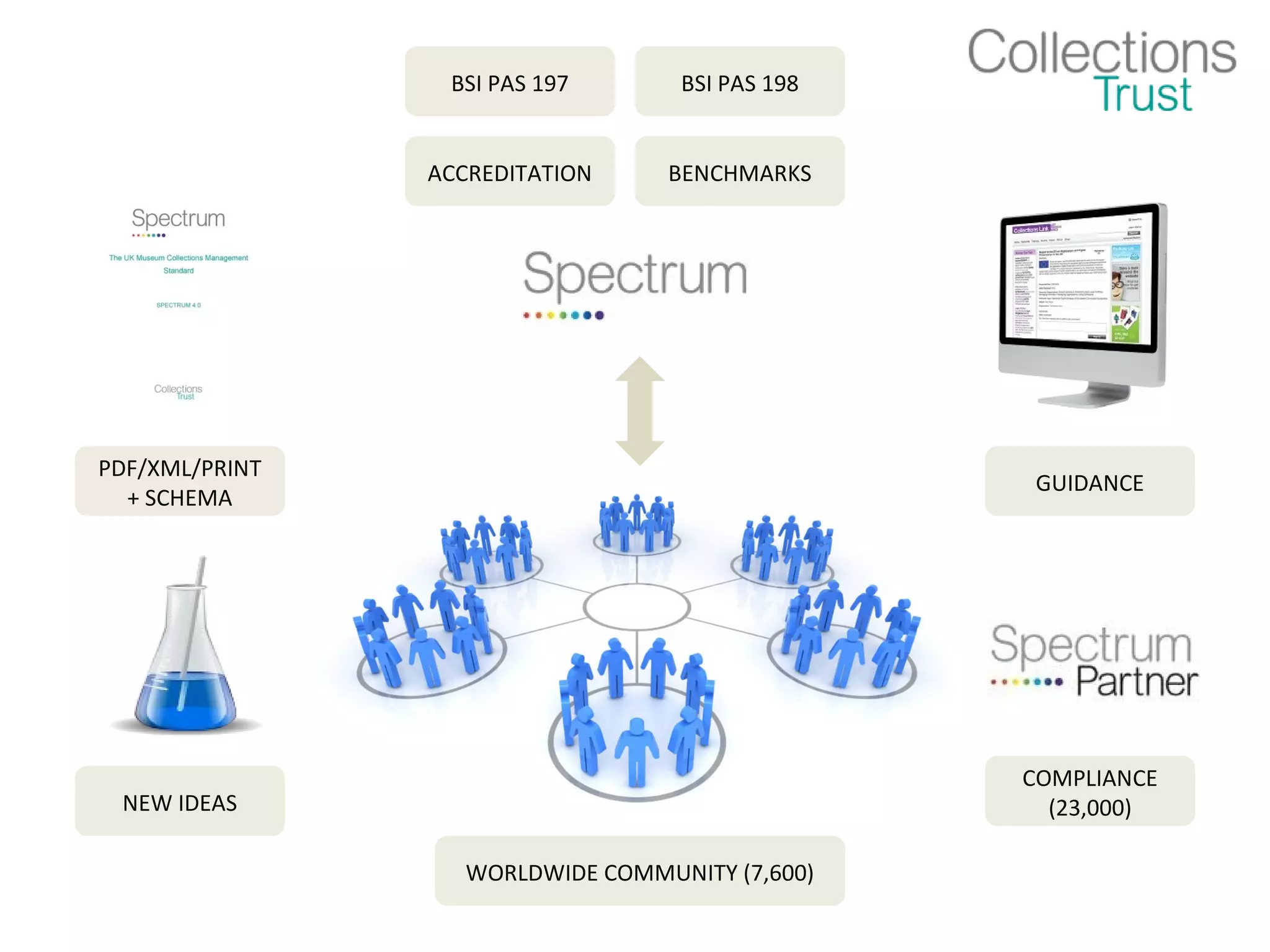
BSI PAS 197       BSI PAS 198


                ACCREDITATION     BENCHMARKS


PDF/XML/PRINT
                                                 GUIDANCE
  + SCHEMA


                                                 COMPLIANCE
 NEW IDEAS                                         (23,000)

                   WORLDWIDE COMMUNITY (7,600)
Key messages:
How you share your collections online is defined by your audience, your culture, your
values and your mission.

High-quality images of high-value items, decent SEO and an API will unlock pretty much all
of these options

Commercial activity rarely generates profit, but it can deliver income that can be re-
invested in opening up the collection.

A very small proportion of your collection is likely to be commercially valuable – be harsh
with yourself (or get someone else to be)

Sharing high-quality images for open non-commercial use drives value and new business
to commercial image sales.

With an open, standards-compliant, well-documented API (& a SPECTRUM-compliant
system), you can make use of metadata-based promotional tools without having to do
additional work.
Please help me build on this research:

  http://tiny.cc/sharingcollections
Nick Poole
Chief Executive, Collections Trust

nick@collectionstrust.org.uk

http://www.slideshare.net/nickpoole

twitter @NickPoole1

Sharing Collections Online

  • 1.
    Share and Sharealike– The How and Why of Sharing Collections Online Nick Poole, CEO, Collections Trust (@NickPoole1)
  • 2.
  • 3.
    That became aresearch project…
  • 4.
  • 5.
    Initial question: “There aremany different ways of opening up collections online for access and engagement. Each one costs my museum something. How do I decide which ones to go with?”
  • 6.
  • 7.
    Open access ≠fewer sales
  • 8.
  • 9.
  • 10.
  • 11.
    Let’s start with: -Audience - Culture - Mission
  • 12.
    So what arethe options?
  • 13.
    The continuum ofuse… CONTENT FUN LEARNING OUTREACH A BIT A LOT AGGREGATION RESEARCH COLLECTIONS MANAGEMENT DATA MINING METADATA
  • 14.
  • 15.
  • 16.
  • 17.
  • 18.
  • 19.
  • 20.
    Return on Investment • Achieving your cultural mission and/or objectives • Delivering on your public task • Enhancing the status of your museum or gallery • Raising the public profile of the organisation • Establishing new revenue streams • Increased revenue from existing image licensing/commercial activity • Improved balance of commercial revenue against grant-in-aid or other support • Access to new funding streams (such as European funding programmes) • Advocating the importance of collections as a key part of service delivery • Improved case for collections management and/or documentation • Opening up tasks for collaboration and crowdsourcing • Improving the quality and consistency of your collections information
  • 21.
  • 22.
    Google Cultural Institute Effort: 4 Upside: Exposure through Google User-focussed tools for digital curation Promotes re-use of your existing images Downsides: Not focused on sending people/value back to you Google is a business Only takes content around selected themes Return on Investment: Reputational Levels of usage not known http://g-cultural-institute.appspot.com/signup
  • 23.
    Google Art Project Effort: 6 Upside: Exposure through Google Gorgeous gigapixel images Downsides: Very selective focus Google is a business It’s a ‘walled garden’ Gigapixel images Return on Investment: Reputational 20m visitors in first 12 months 200k user-created ‘collections’
  • 24.
    Wikimedia Commons Effort: 5 Upside: Huge potential audience Fits with the cultural mission Promoting open re-use Downsides: Huge potential audience Requires CC0 Irrevocable Return on Investment: Cultural Audience
  • 25.
    Commercial Picture Libraries Effort: 4 Upside: Money Exposure Enhanced metadata Downsides: Very selective Out of your hands Retain 25-50% of the licensing fees Return on Investment: Financial Depends on the collection 500 high-profile works – c. £5k - £12k per annum 2000 mid-range works – c. £5k - £30k per annum
  • 26.
    Your Own PictureLibrary Effort: 10 Upside: Money Politics Access to images Downsides: High upfront costs High staff/running costs Return on Investment: Organisational Picture library revenue supports further digitisation Picture library activities support other functions V&A Images revenue for 2008-9 was projected at £350,000 (20k images), of which 62% was estimated to come from commercial image licensing….
  • 27.
    Europeana Effort: 7 Upside: Exposure - huge demand for UK content Political/reputational value Access to future European funding Access to apps, labs, network, expertise Downsides: Won’t take data directly from your museum Your data is presented alongside everyone else’s Your metadata in their data model Return on Investment: Audience 6m searches on Europeana this year (23m records) Potential access to future EU digitisation funding
  • 28.
    Culture Grid Effort: 4 Upside: Share it once, deliver it to multiple channels Simplified process for participating in Europeana Easily create collaborative, cross-search projects Apps & widgets Downsides: Limited direct audience Mapping your data Return on Investment: Political 312,149 searches in 2012 Not a public-facing service – primary audiences are museums and academics
  • 29.
    BSI PAS 197 BSI PAS 198 ACCREDITATION BENCHMARKS PDF/XML/PRINT GUIDANCE + SCHEMA COMPLIANCE NEW IDEAS (23,000) WORLDWIDE COMMUNITY (7,600)
  • 30.
    Key messages: How youshare your collections online is defined by your audience, your culture, your values and your mission. High-quality images of high-value items, decent SEO and an API will unlock pretty much all of these options Commercial activity rarely generates profit, but it can deliver income that can be re- invested in opening up the collection. A very small proportion of your collection is likely to be commercially valuable – be harsh with yourself (or get someone else to be) Sharing high-quality images for open non-commercial use drives value and new business to commercial image sales. With an open, standards-compliant, well-documented API (& a SPECTRUM-compliant system), you can make use of metadata-based promotional tools without having to do additional work.
  • 31.
    Please help mebuild on this research: http://tiny.cc/sharingcollections
  • 32.
    Nick Poole Chief Executive,Collections Trust nick@collectionstrust.org.uk http://www.slideshare.net/nickpoole twitter @NickPoole1