Building Interpretive and Critical Thinking
Overview of Junior Great Books - Learning Objectives of JGR - What is Shared Inquiry? Ooka and the Honest Thief Video Shared Inquiry Practice Discussion


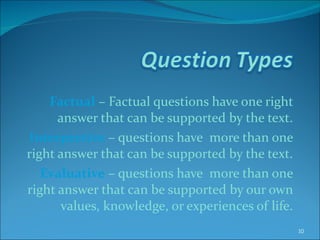
Factual   – Factual questions have one right answer that can be supported by the text. Interpretive   – questions have  more than one right answer that can be supported by the text. Evaluative  – questions have  more than one right answer that can be supported by our own values, knowledge, or experiences of life.
Overview Focus on interpretation and discussion of  literature Each unit consists of: - Story Introduction - Two readings of the story - Questioning and note-taking activities - Shared Inquiry discussion - Writing activities
INTRODUCTION Before Reading Strategy Connect to story, genre, background knowledge  Introduce important vocabulary How would you introduce this story?
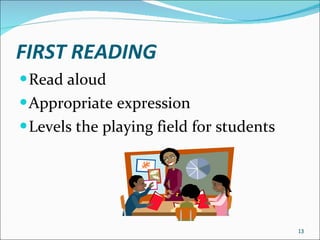
FIRST READING Read aloud Appropriate expression Levels the playing field for students
SHARING QUESTIONS and  INITIAL REACTIONS Clear up misunderstandings Get help with vocabulary Set the selection more firmly in mind Pose interpretive or evaluative questions Starting point for interpretive thinking
SECOND READING with DIRECTED NOTES Texts are complex. We want students to be very familiar with events and ideas in the story. Use post-it notes to mark places in the story related to specific ideas or characters
Interpreting Through Art and Writing My favorite part Something that the story reminds me of Something from the story that scared me A part of the story I thought was funny A sentence form the story that I liked and why Why I like/do not like this story A part of the story I’m still wondering bout A note to the main character
Vocabulary Place the word in context Define the word Use the word Ask a question about the story using the word Add to Curious Words
Conducting Shared Inquiry Arrange seating in a circle An arrangement in which the leader and students can see, listen to, and talk directly to one another encourages genuine interaction and stimulates discussion.  Having the leader be part of the discussion group and sit at eye level helps to avoid the teacher being seen as the authority on the story’s meaning. It communicates the kind of respect, responsibility, and empowerment desired.
Prepare a Seating Chart During discussion, leaders take note of ideas and keep track of participation with the help of a seating chart.  Placing checkmarks beside students' names as they participate can help ensure that everyone has had the opportunity to join in the discussion.  Notes give you some record of the ideas expressed and can help you formulate follow-up questions.
Review the Guidelines Read the story carefully before participating in the discussion. Discuss only the story everyone has read. Support your ideas with evidence from the story. Listen to other participants and respond to them directly. Expect the leader to only ask questions.  Guidelines for Shared Inquiry
Pose  an Interpretive Question Interpretive questions can be validly answered in more than one way.  Shared Inquiry focuses on a question that can be adequately answered in more than one way, and that  calls for supporting evidence and reasoning .  An interpretive question is most likely to generate a lively discussion.  They allow the leader and students to unlock the meaning of the text together through close and careful reading and discussion
Building Your Answer Form This form is a place for students to write down the focus question they will discuss and their answer to that question.  Before discussion even begins, it is important for students to understand that there can be more than one good or valid answer to the question. This will help them feel free to try out ideas and explore an issue in depth.
Reflect and Write Give students ample time to reflect and write an answer People think in different ways and at different rates. It is too easy to jump into discussion before everyone is truly ready.  Writing helps students think; it demands that they articulate their ideas in words and sentences. After writing, students are in a much better position to contribute constructively to the discussion.  Students who have written are also in a better position to listen to and appreciate the ideas of others. They don’t have to worry that they will forget their idea, and they have an established viewpoint from which to consider other alternatives.
Shared Inquiry Discussion Lead discussion by asking questions Explain themselves  Understand another student's idea or answer  Back up ideas with evidence from the text  Express agreement or disagreement  Talk directly to one another  Pursue implications and answers  Use follow-up questions
Follow-Up Questions The leader asks follow-up questions that invite students to explain their comments, revisit the text, and develop their ideas. They encourage students to… Support their idea with evidence Respond to one another’s ideas
Reflective Thinking Shared Inquiry is a reflective process. In a discussion, interpretive questions provide the problem, while students’ ideas and the leader’s follow-up questions move each person toward an individual solution.
End Discussion After… When students begin to range well outside the scope of the question, it can be a signal that their curiosity for that question has been satisfied.  When the same answer seems to be repeated with little or no development, it can be a sign to move on.
Closing Activity Did you change your answer?  Did you hear an idea you especially liked?  What different answers to the question did you hear?  Are there other questions about the story we have not explored?
Writing Responding to Literature –  Explain  interpretations Essay development Expository and persuasive writing Creative Writing –  Extend  interpretation Other writing forms- letters, poems, stories
Additional Activities Supporting Shared Inquiry Discussion Teacher's Editions and Leader's Guides contain suggested activities designed to help students prepare for Shared Inquiry Discussion and to continue their exploration of meaning. Art Dramatization   Text Openers   Multiple readings   Note taking  Generating and sharing questions   Extended writing
In a Shared Inquiry discussion students learn to… Think for themselves Concentrate on interpretation Develop ideas and implications thoroughly Use factual information from the text to support their ideas Recognize and respond to competing answers and interpretations Consider, evaluate, and use the insights of others

Shared Inquiry Overview

  • 1.
    Building Interpretive andCritical Thinking
  • 2.
    Overview of JuniorGreat Books - Learning Objectives of JGR - What is Shared Inquiry? Ooka and the Honest Thief Video Shared Inquiry Practice Discussion
  • 3.
  • 4.
  • 5.
  • 6.
  • 7.
  • 8.
  • 9.
  • 10.
    Factual – Factual questions have one right answer that can be supported by the text. Interpretive – questions have more than one right answer that can be supported by the text. Evaluative – questions have more than one right answer that can be supported by our own values, knowledge, or experiences of life.
  • 11.
    Overview Focus oninterpretation and discussion of literature Each unit consists of: - Story Introduction - Two readings of the story - Questioning and note-taking activities - Shared Inquiry discussion - Writing activities
  • 12.
    INTRODUCTION Before ReadingStrategy Connect to story, genre, background knowledge Introduce important vocabulary How would you introduce this story?
  • 13.
    FIRST READING Readaloud Appropriate expression Levels the playing field for students
  • 14.
    SHARING QUESTIONS and INITIAL REACTIONS Clear up misunderstandings Get help with vocabulary Set the selection more firmly in mind Pose interpretive or evaluative questions Starting point for interpretive thinking
  • 15.
    SECOND READING withDIRECTED NOTES Texts are complex. We want students to be very familiar with events and ideas in the story. Use post-it notes to mark places in the story related to specific ideas or characters
  • 16.
    Interpreting Through Artand Writing My favorite part Something that the story reminds me of Something from the story that scared me A part of the story I thought was funny A sentence form the story that I liked and why Why I like/do not like this story A part of the story I’m still wondering bout A note to the main character
  • 17.
    Vocabulary Place theword in context Define the word Use the word Ask a question about the story using the word Add to Curious Words
  • 18.
    Conducting Shared InquiryArrange seating in a circle An arrangement in which the leader and students can see, listen to, and talk directly to one another encourages genuine interaction and stimulates discussion. Having the leader be part of the discussion group and sit at eye level helps to avoid the teacher being seen as the authority on the story’s meaning. It communicates the kind of respect, responsibility, and empowerment desired.
  • 19.
    Prepare a SeatingChart During discussion, leaders take note of ideas and keep track of participation with the help of a seating chart. Placing checkmarks beside students' names as they participate can help ensure that everyone has had the opportunity to join in the discussion. Notes give you some record of the ideas expressed and can help you formulate follow-up questions.
  • 20.
    Review the GuidelinesRead the story carefully before participating in the discussion. Discuss only the story everyone has read. Support your ideas with evidence from the story. Listen to other participants and respond to them directly. Expect the leader to only ask questions. Guidelines for Shared Inquiry
  • 21.
    Pose anInterpretive Question Interpretive questions can be validly answered in more than one way. Shared Inquiry focuses on a question that can be adequately answered in more than one way, and that calls for supporting evidence and reasoning . An interpretive question is most likely to generate a lively discussion. They allow the leader and students to unlock the meaning of the text together through close and careful reading and discussion
  • 22.
    Building Your AnswerForm This form is a place for students to write down the focus question they will discuss and their answer to that question. Before discussion even begins, it is important for students to understand that there can be more than one good or valid answer to the question. This will help them feel free to try out ideas and explore an issue in depth.
  • 23.
    Reflect and WriteGive students ample time to reflect and write an answer People think in different ways and at different rates. It is too easy to jump into discussion before everyone is truly ready. Writing helps students think; it demands that they articulate their ideas in words and sentences. After writing, students are in a much better position to contribute constructively to the discussion. Students who have written are also in a better position to listen to and appreciate the ideas of others. They don’t have to worry that they will forget their idea, and they have an established viewpoint from which to consider other alternatives.
  • 24.
    Shared Inquiry DiscussionLead discussion by asking questions Explain themselves Understand another student's idea or answer Back up ideas with evidence from the text Express agreement or disagreement Talk directly to one another Pursue implications and answers Use follow-up questions
  • 25.
    Follow-Up Questions Theleader asks follow-up questions that invite students to explain their comments, revisit the text, and develop their ideas. They encourage students to… Support their idea with evidence Respond to one another’s ideas
  • 26.
    Reflective Thinking SharedInquiry is a reflective process. In a discussion, interpretive questions provide the problem, while students’ ideas and the leader’s follow-up questions move each person toward an individual solution.
  • 27.
    End Discussion After…When students begin to range well outside the scope of the question, it can be a signal that their curiosity for that question has been satisfied. When the same answer seems to be repeated with little or no development, it can be a sign to move on.
  • 28.
    Closing Activity Didyou change your answer? Did you hear an idea you especially liked? What different answers to the question did you hear? Are there other questions about the story we have not explored?
  • 29.
    Writing Responding toLiterature – Explain interpretations Essay development Expository and persuasive writing Creative Writing – Extend interpretation Other writing forms- letters, poems, stories
  • 30.
    Additional Activities SupportingShared Inquiry Discussion Teacher's Editions and Leader's Guides contain suggested activities designed to help students prepare for Shared Inquiry Discussion and to continue their exploration of meaning. Art Dramatization Text Openers Multiple readings Note taking Generating and sharing questions Extended writing
  • 31.
    In a SharedInquiry discussion students learn to… Think for themselves Concentrate on interpretation Develop ideas and implications thoroughly Use factual information from the text to support their ideas Recognize and respond to competing answers and interpretations Consider, evaluate, and use the insights of others

Editor's Notes

  • #5 Activate prior knowledge of themes Raise questions and reread with a purpose Identify significant passages to read closely Compare possible meanings Draw conclusions based on several parts of the text Work to understand words and figurative language in context Recall relevant details Make inferences, draw conclusions, and summarize Trace cause and effect within the text Analyze tone and author’s purpose Discover the multiple meanings inherent within words, stories, and ideas
  • #6 Identify problems for themselves Generate unique ideas for solutions Support opinions with evidence from the text Develop ideas in response to divergent perspectives Weigh the value of competing evidence Extend and apply ideas in personal reflection Learn to demand evidence and reason to support opinions and conclusions Become comfortable with having their ideas challenged by critical reflection
  • #8 Write a thesis, using writing prompts that help them generate and support ideas Cultivate topics with an audience before writing Write from literature in imitations, sequels, and parodies Write to connect prior experience to what they learn from literature
  • #30 Write a thesis, using writing prompts that help them generate and support ideas Cultivate topics with an audience before writing Write from literature in imitations, sequels, and parodies Write to connect prior experience to what they learn from literature