LABORATORY SAMPLE
SUBMISSION
Justin A. Nelson
SGS North America, Inc.
Anchorage, Alaska Environmental Laboratory
2
OUTLINE
 Sample Kit Requests
 Sampling Procedures
 Chain of Custody Forms / Sample Labeling
 Shipping Coolers to SGS
 Receiving Results
3
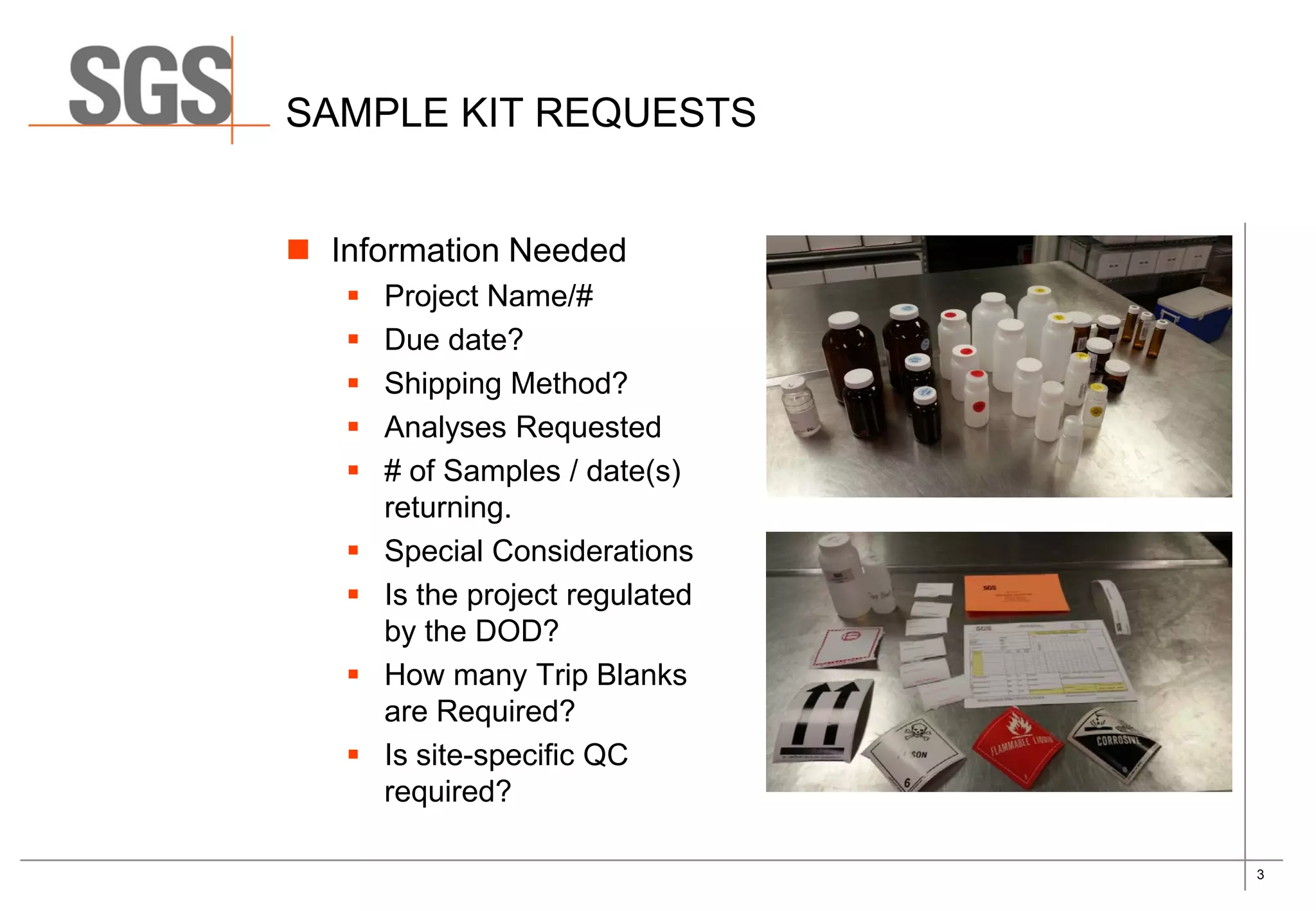
SAMPLE KIT REQUESTS
 Information Needed
 Project Name/#
 Due date?
 Shipping Method?
 Analyses Requested
 # of Samples / date(s)
returning.
 Special Considerations
 Is the project regulated
by the DOD?
 How many Trip Blanks
are Required?
 Is site-specific QC
required?
4
SAMPLE KIT REQUESTS CONTINUED
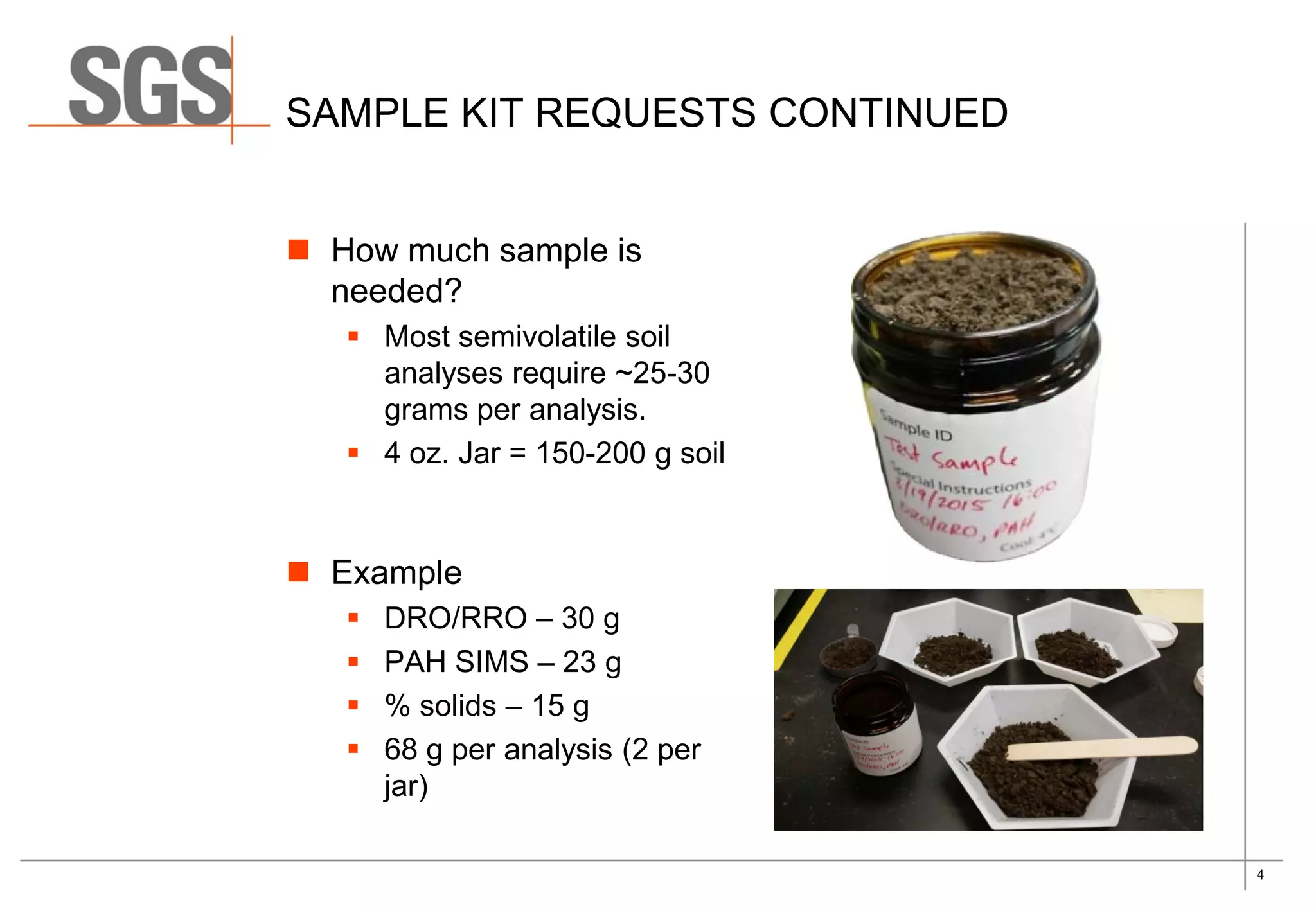
 How much sample is
needed?
 Most semivolatile soil
analyses require ~25-30
grams per analysis.
 4 oz. Jar = 150-200 g soil
 Example
 DRO/RRO – 30 g
 PAH SIMS – 23 g
 % solids – 15 g
 68 g per analysis (2 per
jar)
5
SAMPLE KIT REQUESTS CONTINUED
 Organic Water Analyses
require the entire
container for each run.
 Inorganics generally do
not require the entire
container for analysis,
with the exception of
BOD/TSS analysis of
clean water.
 Analyses are grouped by
container/preservative
type.
 For analyses with short
holding time, an expected
date/time of delivery is
helpful:
 Chromium VI
 Nitrate/Nitrite
 Orthophosphate
 Turbidity
 BOD
 Total Coliform
 Fecal Coliform
 Etc.
6
SAMPLING PROCEDURES
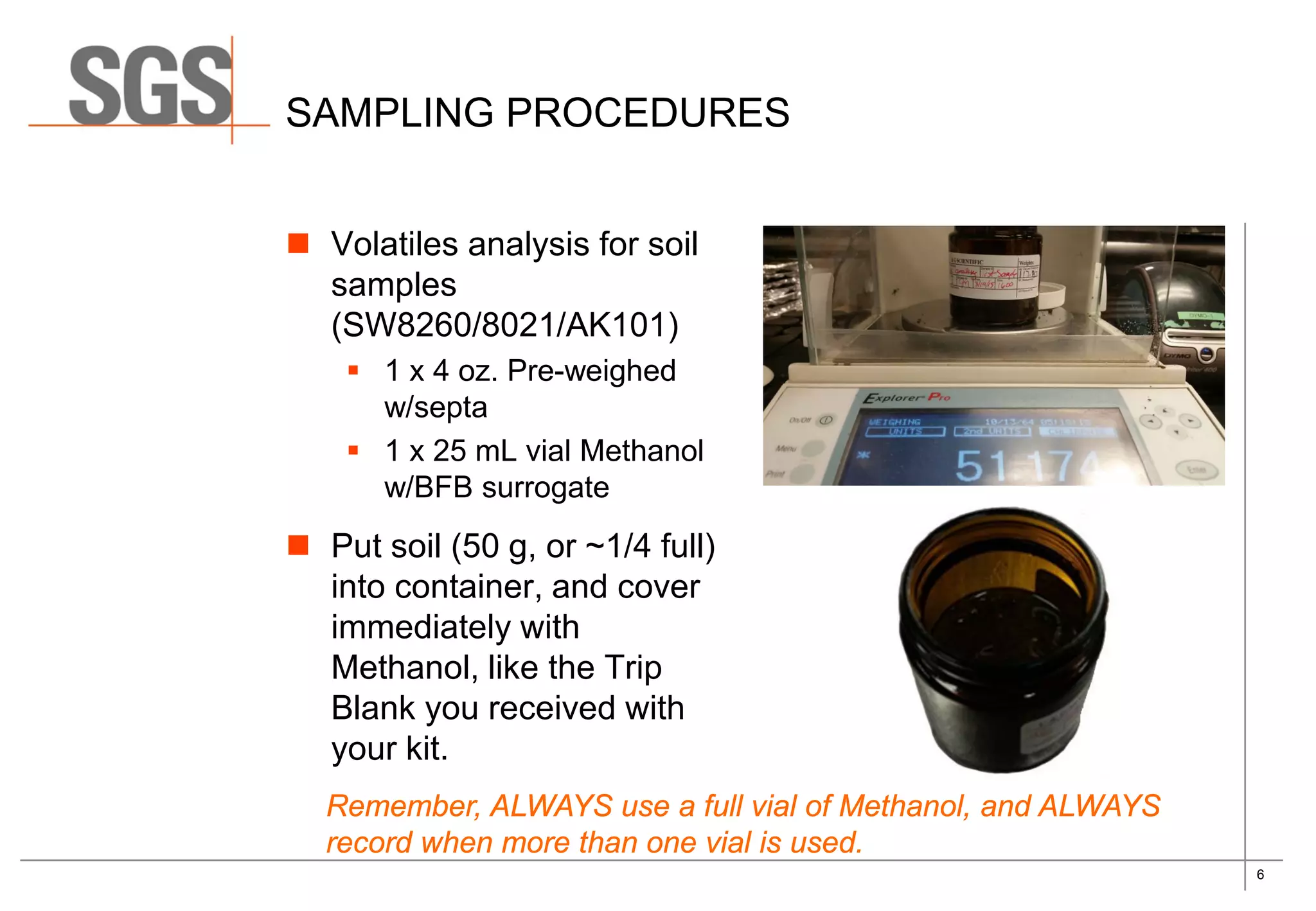
 Volatiles analysis for soil
samples
(SW8260/8021/AK101)
 1 x 4 oz. Pre-weighed
w/septa
 1 x 25 mL vial Methanol
w/BFB surrogate
 Put soil (50 g, or ~1/4 full)
into container, and cover
immediately with
Methanol, like the Trip
Blank you received with
your kit.
Remember, ALWAYS use a full vial of Methanol, and ALWAYS
record when more than one vial is used.
7
SAMPLING PROCEDURES CONTINUED
 Volatiles analysis of water
samples
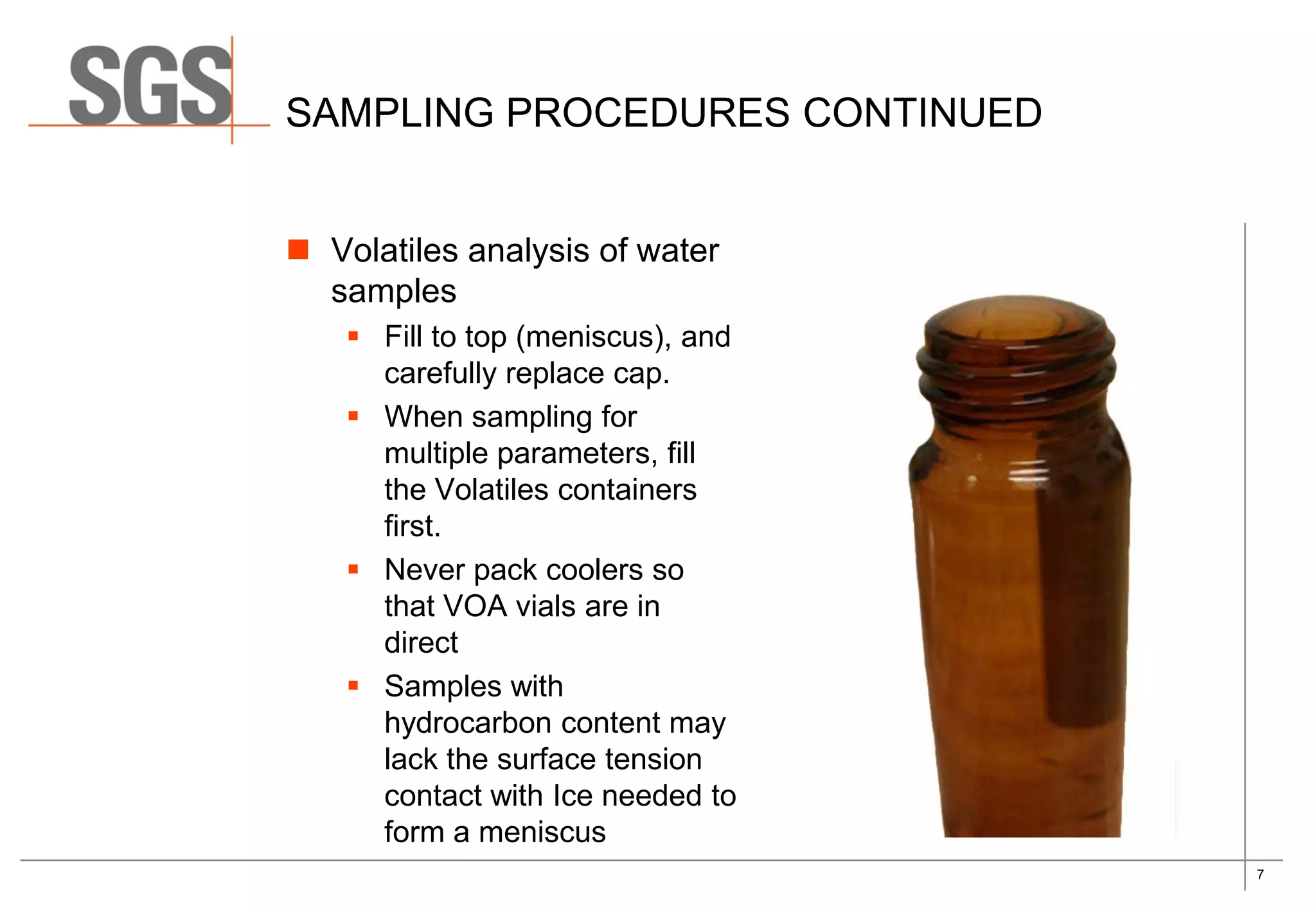
 Fill to top (meniscus), and
carefully replace cap.
 When sampling for
multiple parameters, fill
the Volatiles containers
first.
 Never pack coolers so
that VOA vials are in
direct
 Samples with
hydrocarbon content may
lack the surface tension
contact with Ice needed to
form a meniscus
8
VOLATILES ANALYSIS OF WATER SAMPLES
CONTINUED
 Water sources with high
amounts of CaCO3 may
effervesce upon
acidification.
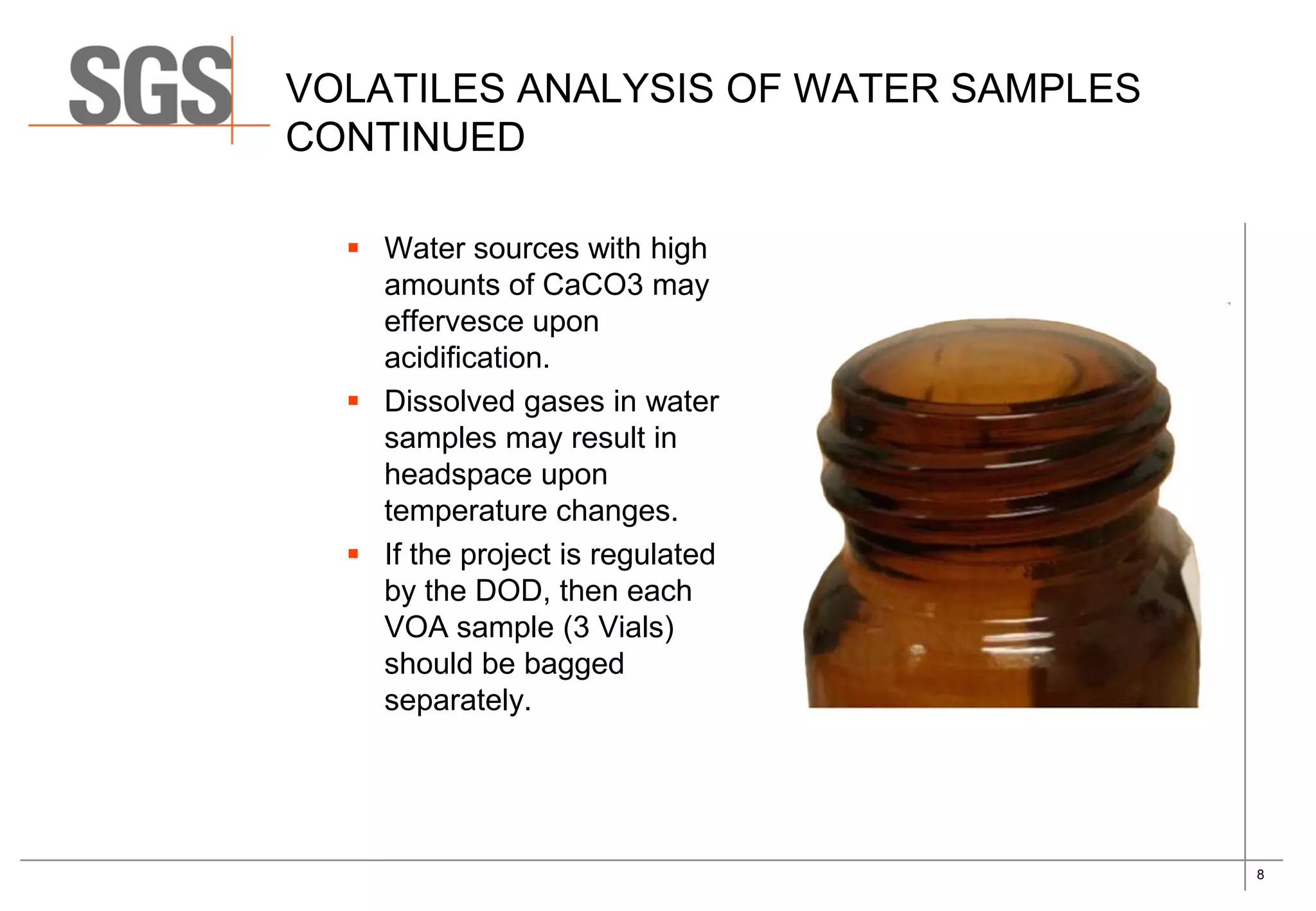
 Dissolved gases in water
samples may result in
headspace upon
temperature changes.
 If the project is regulated
by the DOD, then each
VOA sample (3 Vials)
should be bagged
separately.
9
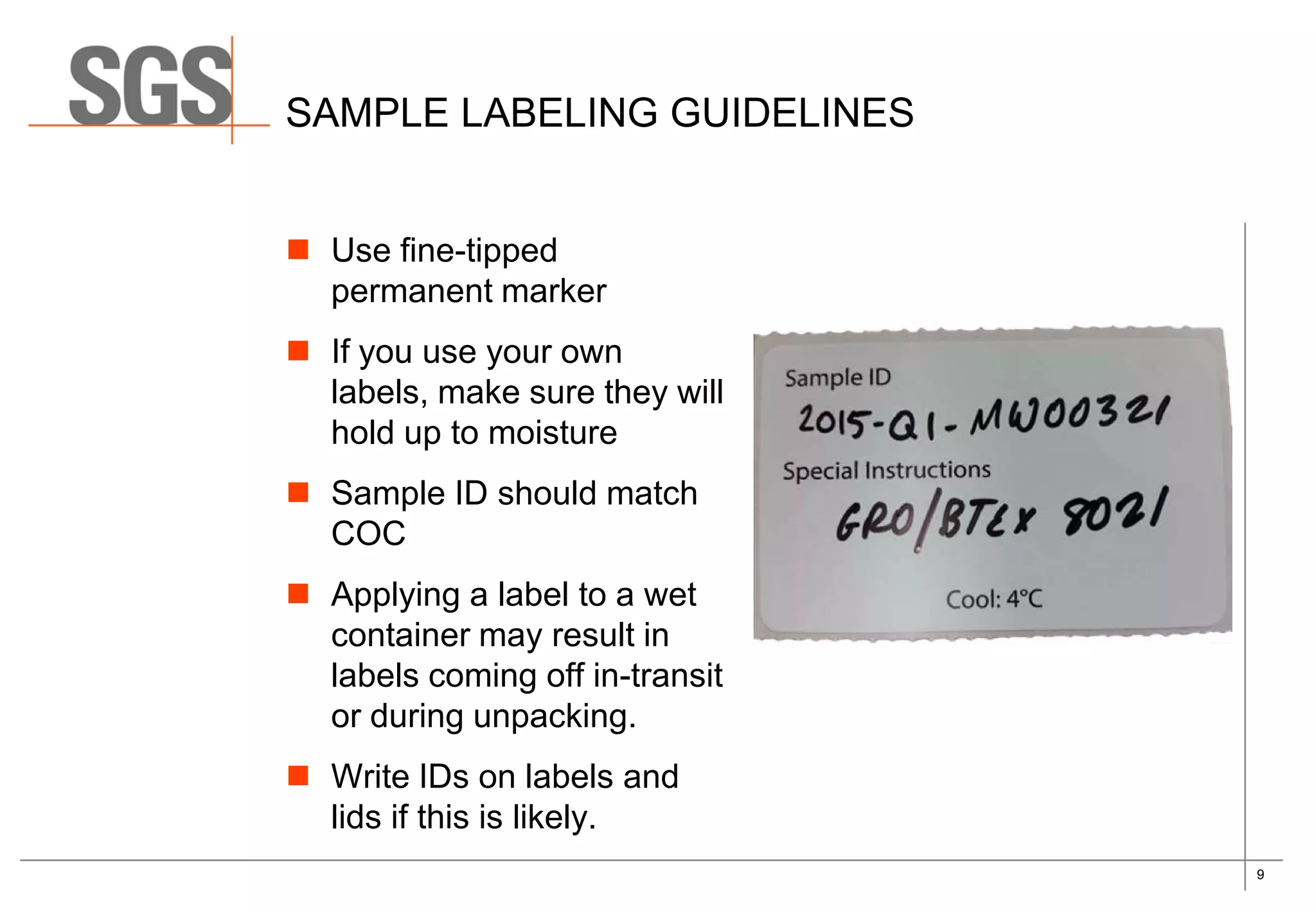
SAMPLE LABELING GUIDELINES
 Use fine-tipped
permanent marker
 If you use your own
labels, make sure they will
hold up to moisture
 Sample ID should match
COC
 Applying a label to a wet
container may result in
labels coming off in-transit
or during unpacking.
 Write IDs on labels and
lids if this is likely.
10
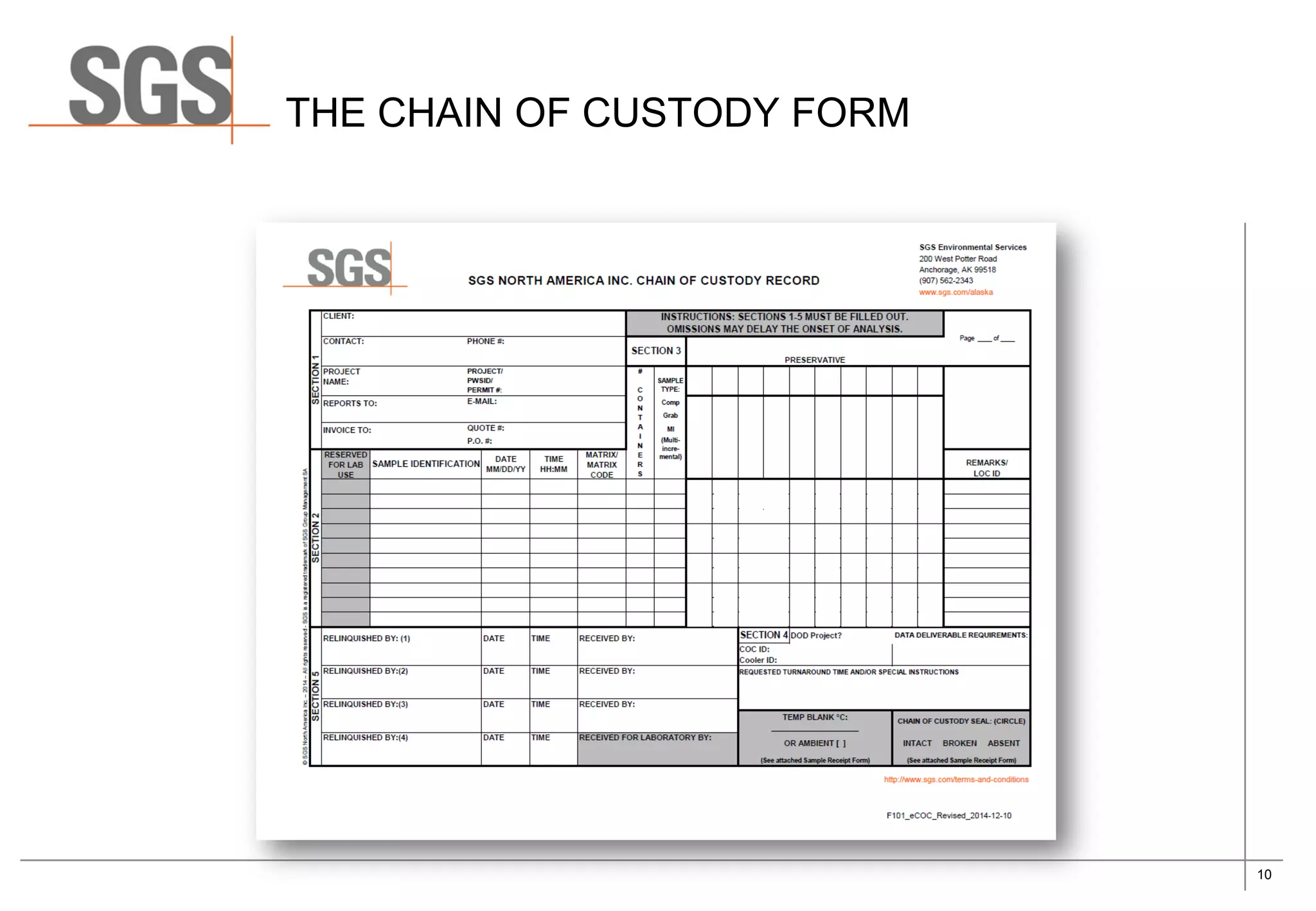
THE CHAIN OF CUSTODY FORM
11
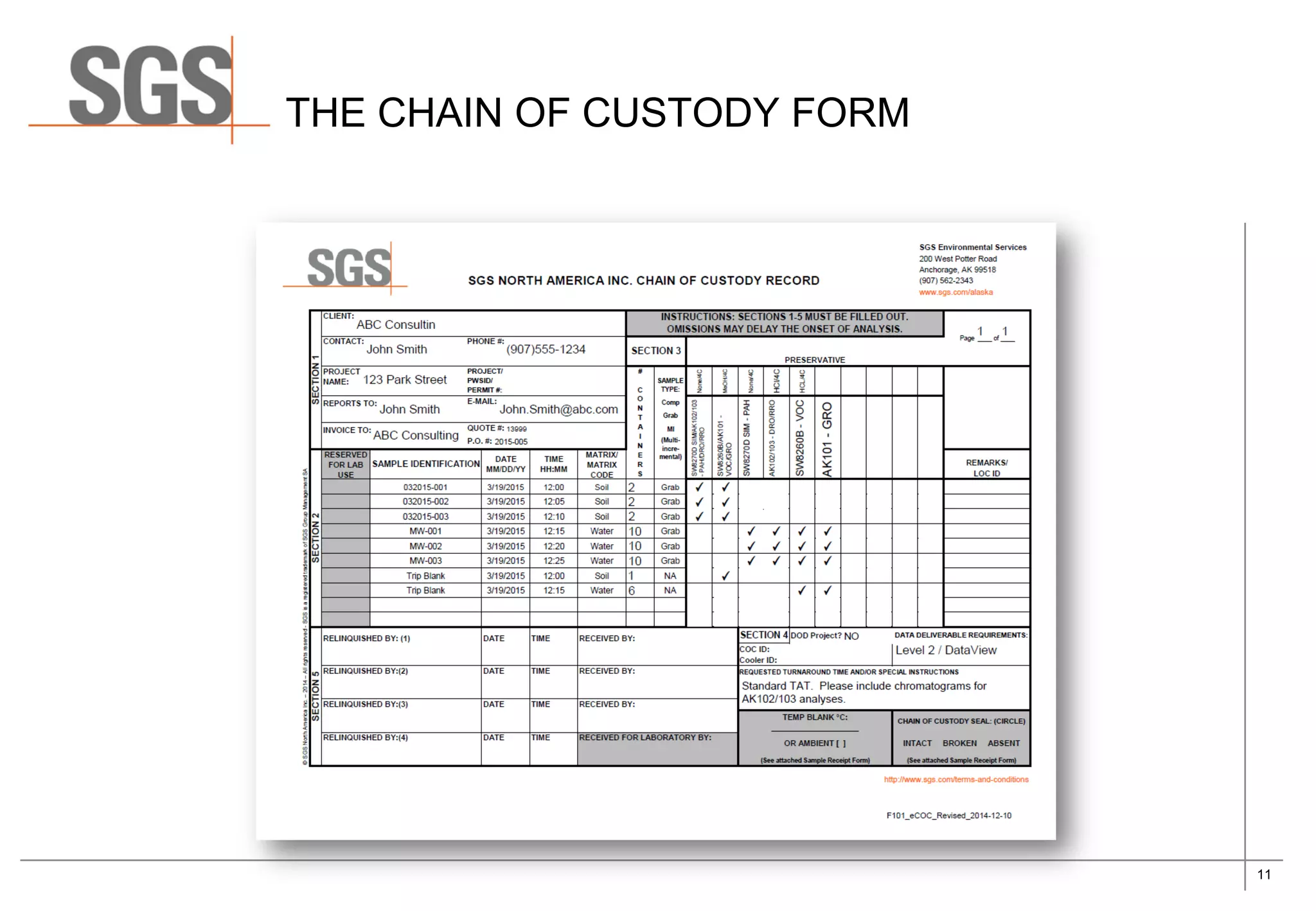
THE CHAIN OF CUSTODY FORM
12
THE CHAIN OF CUSTODY FORM – SITE
SPECIFIC QC
 If QC is required on a particular sample from your site,
then additional containers need to be filled.
 For Organic Waters analyses, this simply means tripling
the number of containers filled.
 Soils generally require 1-2 more 4 ounce jars, depending
on analyses. No additional 4-ounce w/Methanol is needed
for MS/MSD
 Inorganic waters analysis is more complicated with regards
to MS/MSD/Duplicate, so it is best if we know in advance
(at Kit Request) if it is required.
13
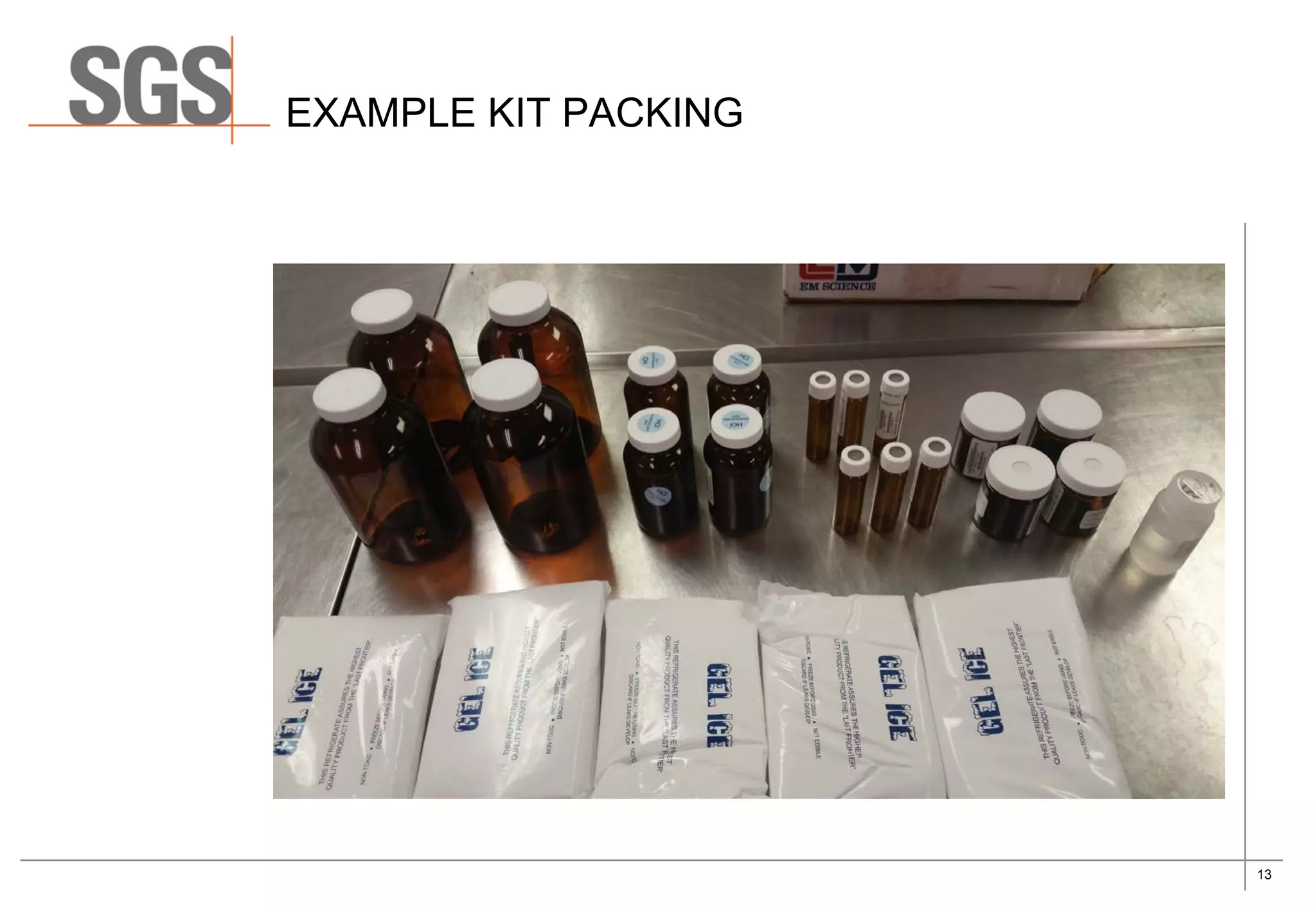
EXAMPLE KIT PACKING
14
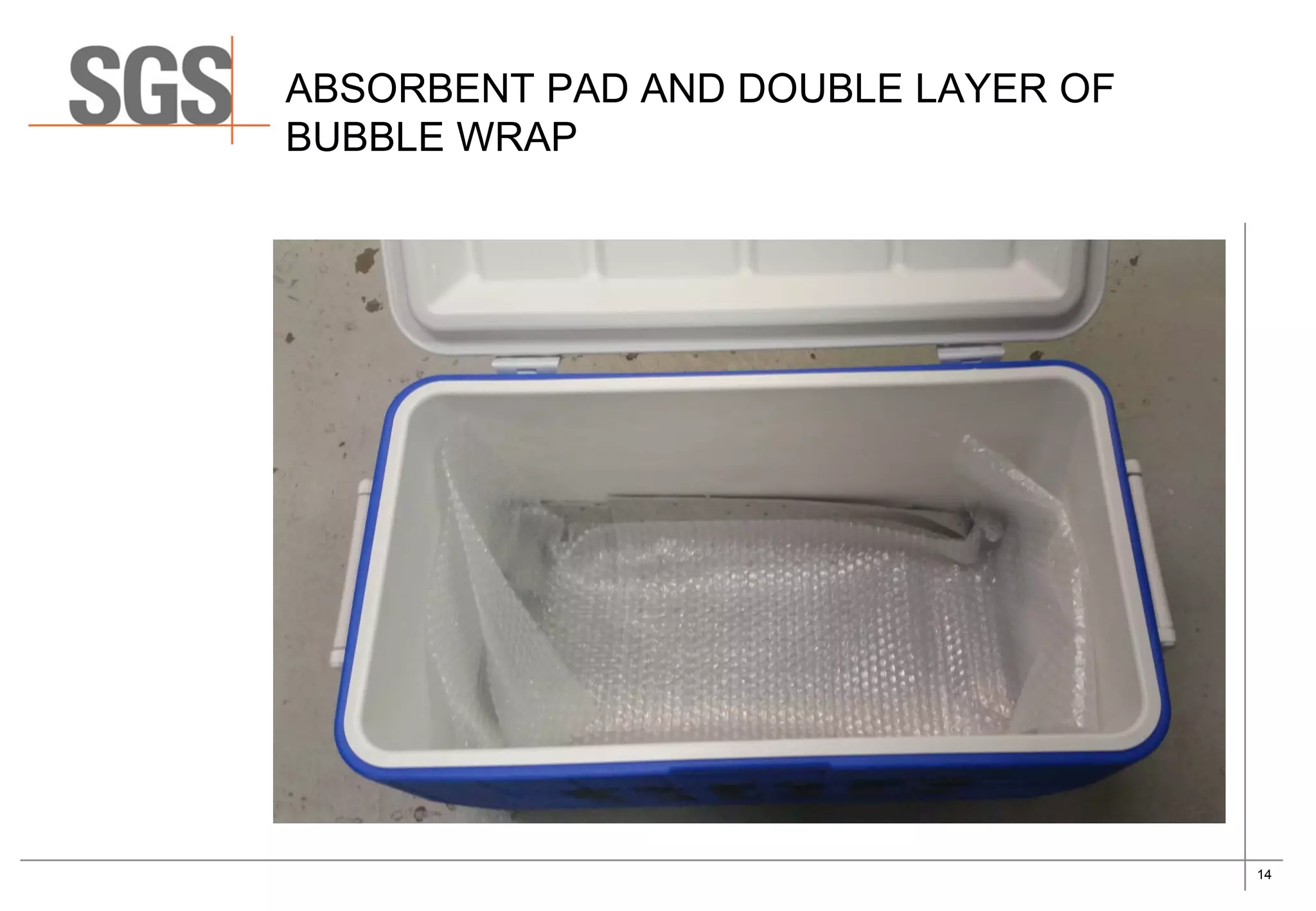
ABSORBENT PAD AND DOUBLE LAYER OF
BUBBLE WRAP
15
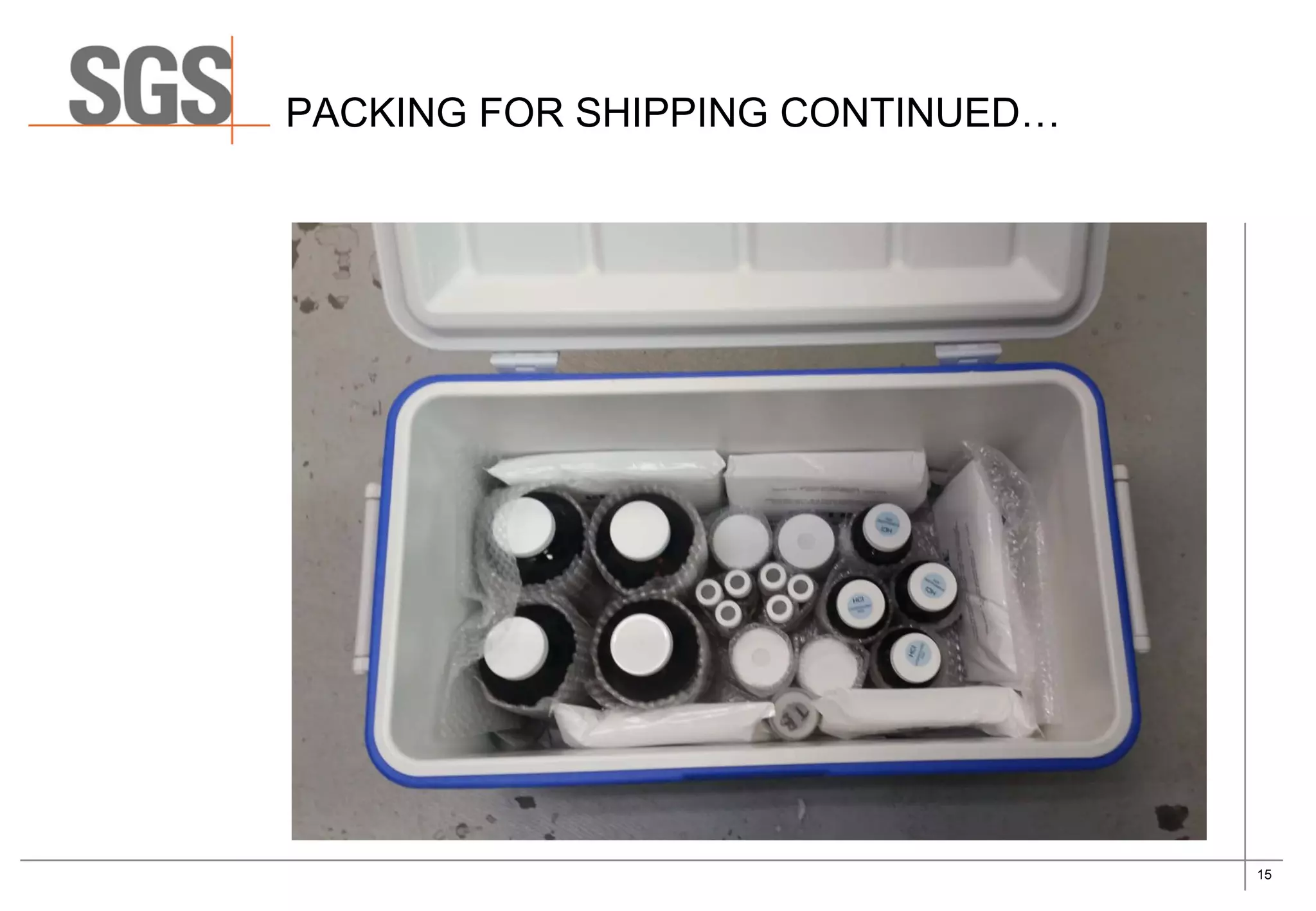
PACKING FOR SHIPPING CONTINUED…
16
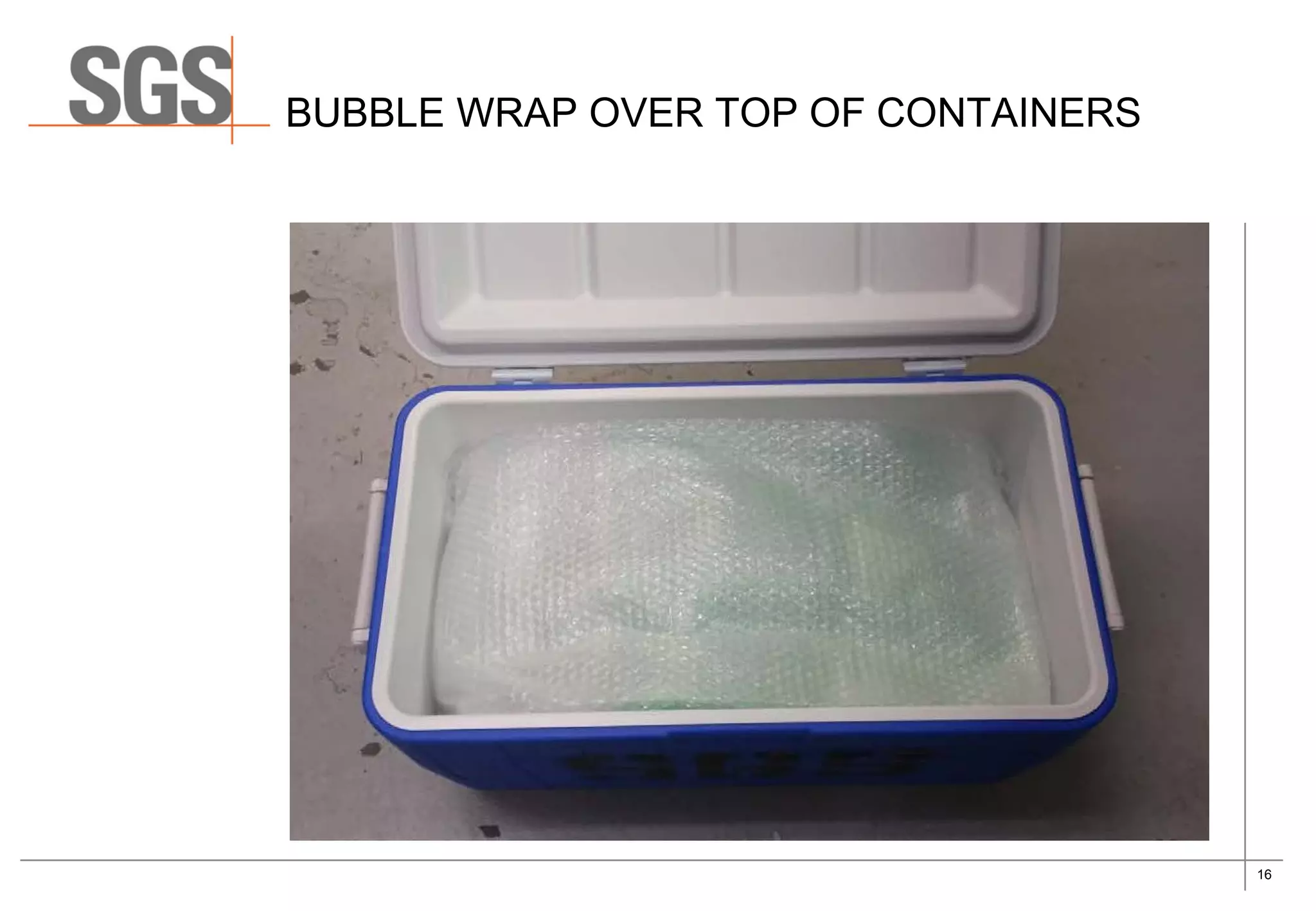
BUBBLE WRAP OVER TOP OF CONTAINERS
17
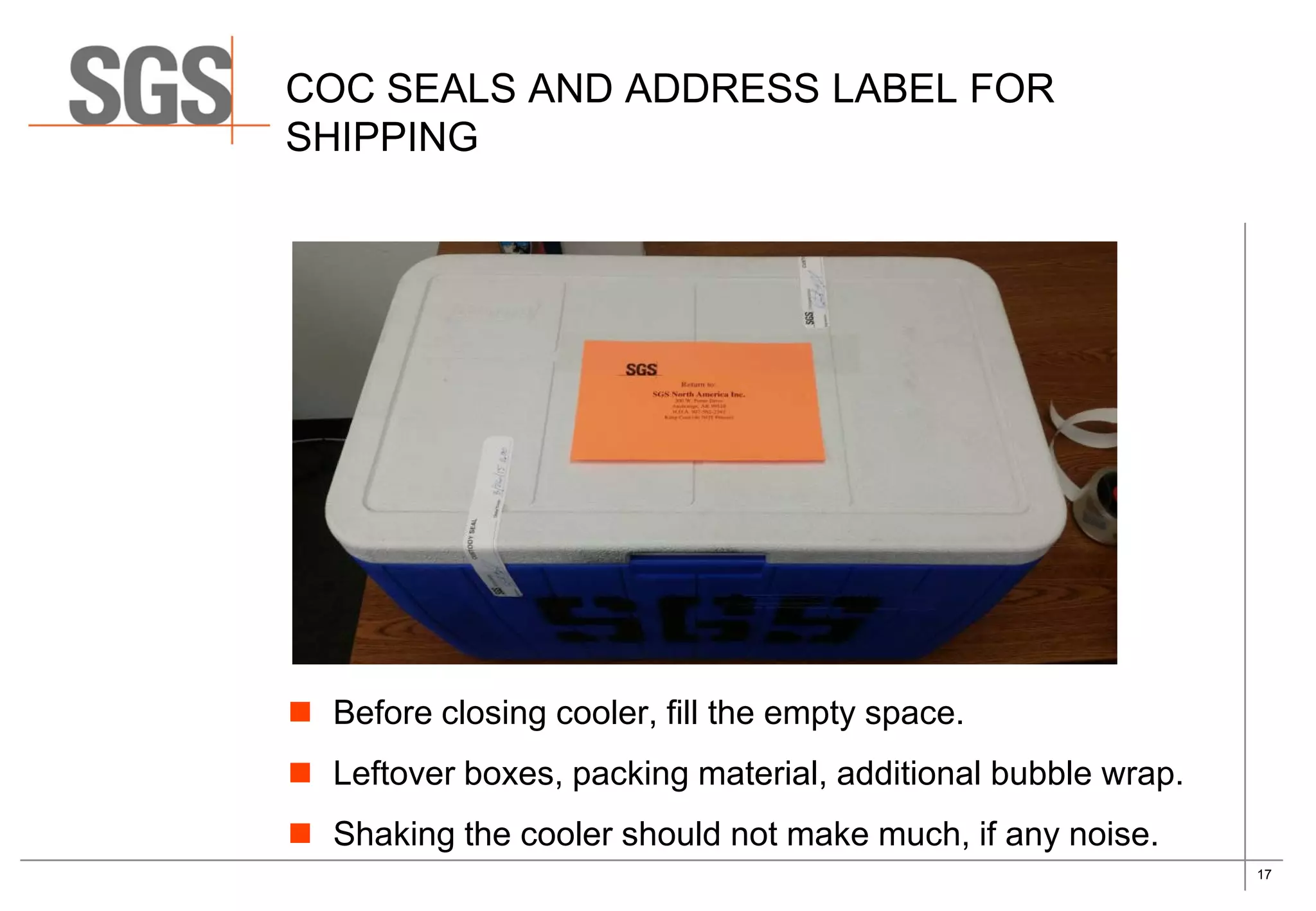
COC SEALS AND ADDRESS LABEL FOR
SHIPPING
 Before closing cooler, fill the empty space.
 Leftover boxes, packing material, additional bubble wrap.
 Shaking the cooler should not make much, if any noise.
18
GUIDELINES FOR SHIPPING TO THE LAB…
 Our Courier (Alert Courier) has scheduled pickups at the
main carriers (Goldstreak, Ravn, PenAir) in the morning
and afternoon. They will pick up all coolers addressed to
SGS automatically. Cost is $20 per Airbill.
 Prior notice of samples incoming is always appreciated,
especially for Rush/Short hold samples.
 An airbill number and the name of the carrier is convenient
for tracking the shipment.
19
AFTER RECEIPT AT THE LAB
 Sit back and relax, we’ll take it from here!
 After the samples are in our LIMS System, the chain of
custody / sample receipt form will be uploaded to Engage.
 Any issues with the samples will be communicated to you.
 Once results are available, the final report is reviewed and
uploaded, along with the Data View, if requested
 Other EDDs, such as COELT, SEDD, ERPIMS, or
Terrabase are done by our Data Services department.
 Samples are held for 14 days after the final report is
issued, unless other arrangements are made.
20
REVISED / CORRECTED REPORTS…AND HOW
TO PREVENT THEM
 Corrected Reports are generally a result of a failure of
communication from Client  Project Manager 
Laboratory.
 Sample IDs – is it a 5 or an S?
 Compound list errors
 Acronyms, Acronyms, Acronyms…PCE, DCA, TCE, Tl, Ti,
etc.
 Sample dates/times – Errors not caught at review
 The list goes on…
21
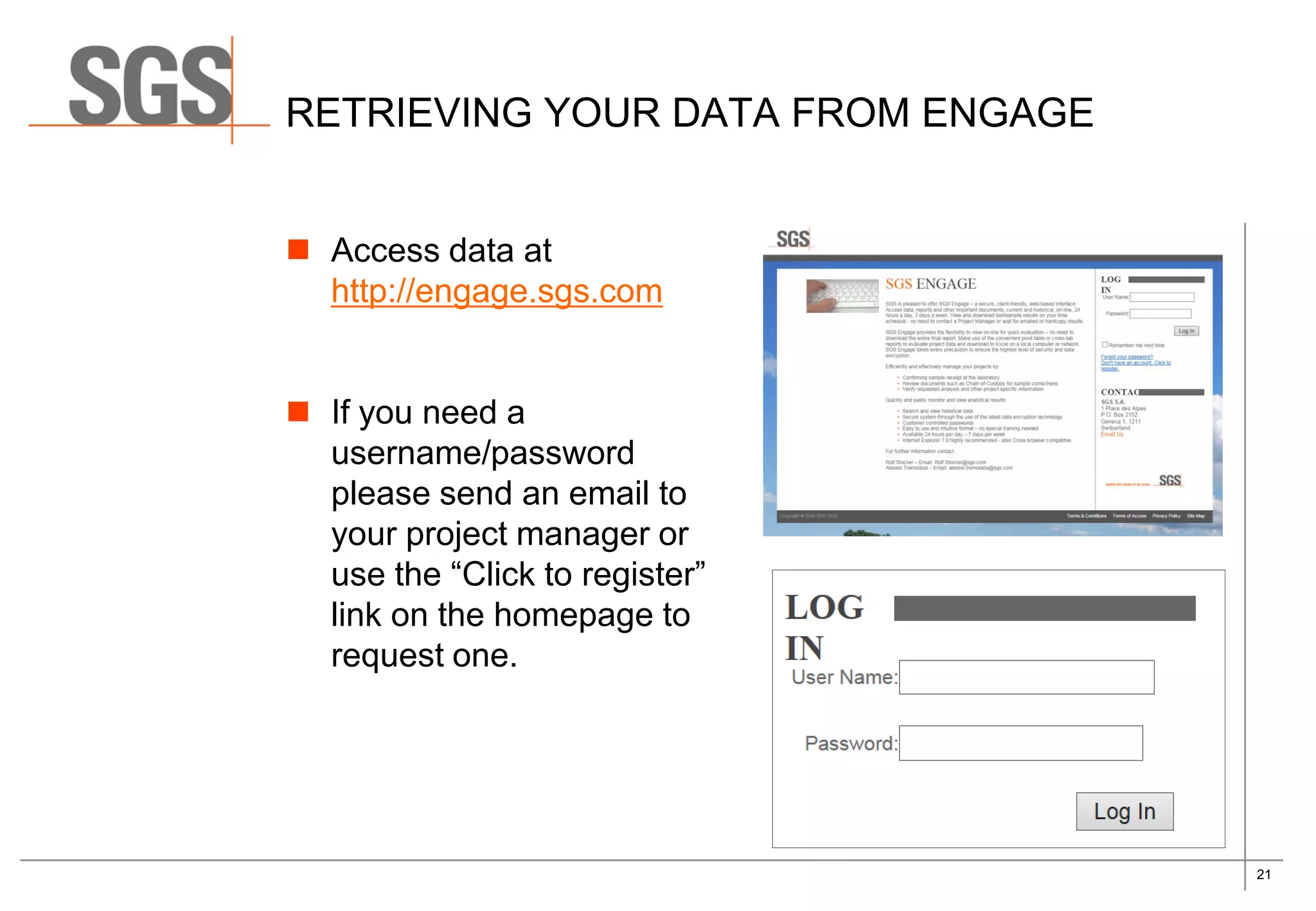
RETRIEVING YOUR DATA FROM ENGAGE
 Access data at
http://engage.sgs.com
 If you need a
username/password
please send an email to
your project manager or
use the “Click to register”
link on the homepage to
request one.
WWW.SGS.COM/ALASKA
©SGSGroupManagementSA–2015–Allrightsreserved-SGSisaregisteredtrademarkofSGSGroupManagementSA

Laboratory Sample Submission in the Last Frontier – Keys to a successful analytical project in Alaska

  • 1.
    LABORATORY SAMPLE SUBMISSION Justin A.Nelson SGS North America, Inc. Anchorage, Alaska Environmental Laboratory
  • 2.
    2 OUTLINE  Sample KitRequests  Sampling Procedures  Chain of Custody Forms / Sample Labeling  Shipping Coolers to SGS  Receiving Results
  • 3.
    3 SAMPLE KIT REQUESTS Information Needed  Project Name/#  Due date?  Shipping Method?  Analyses Requested  # of Samples / date(s) returning.  Special Considerations  Is the project regulated by the DOD?  How many Trip Blanks are Required?  Is site-specific QC required?
  • 4.
    4 SAMPLE KIT REQUESTSCONTINUED  How much sample is needed?  Most semivolatile soil analyses require ~25-30 grams per analysis.  4 oz. Jar = 150-200 g soil  Example  DRO/RRO – 30 g  PAH SIMS – 23 g  % solids – 15 g  68 g per analysis (2 per jar)
  • 5.
    5 SAMPLE KIT REQUESTSCONTINUED  Organic Water Analyses require the entire container for each run.  Inorganics generally do not require the entire container for analysis, with the exception of BOD/TSS analysis of clean water.  Analyses are grouped by container/preservative type.  For analyses with short holding time, an expected date/time of delivery is helpful:  Chromium VI  Nitrate/Nitrite  Orthophosphate  Turbidity  BOD  Total Coliform  Fecal Coliform  Etc.
  • 6.
    6 SAMPLING PROCEDURES  Volatilesanalysis for soil samples (SW8260/8021/AK101)  1 x 4 oz. Pre-weighed w/septa  1 x 25 mL vial Methanol w/BFB surrogate  Put soil (50 g, or ~1/4 full) into container, and cover immediately with Methanol, like the Trip Blank you received with your kit. Remember, ALWAYS use a full vial of Methanol, and ALWAYS record when more than one vial is used.
  • 7.
    7 SAMPLING PROCEDURES CONTINUED Volatiles analysis of water samples  Fill to top (meniscus), and carefully replace cap.  When sampling for multiple parameters, fill the Volatiles containers first.  Never pack coolers so that VOA vials are in direct  Samples with hydrocarbon content may lack the surface tension contact with Ice needed to form a meniscus
  • 8.
    8 VOLATILES ANALYSIS OFWATER SAMPLES CONTINUED  Water sources with high amounts of CaCO3 may effervesce upon acidification.  Dissolved gases in water samples may result in headspace upon temperature changes.  If the project is regulated by the DOD, then each VOA sample (3 Vials) should be bagged separately.
  • 9.
    9 SAMPLE LABELING GUIDELINES Use fine-tipped permanent marker  If you use your own labels, make sure they will hold up to moisture  Sample ID should match COC  Applying a label to a wet container may result in labels coming off in-transit or during unpacking.  Write IDs on labels and lids if this is likely.
  • 10.
    10 THE CHAIN OFCUSTODY FORM
  • 11.
    11 THE CHAIN OFCUSTODY FORM
  • 12.
    12 THE CHAIN OFCUSTODY FORM – SITE SPECIFIC QC  If QC is required on a particular sample from your site, then additional containers need to be filled.  For Organic Waters analyses, this simply means tripling the number of containers filled.  Soils generally require 1-2 more 4 ounce jars, depending on analyses. No additional 4-ounce w/Methanol is needed for MS/MSD  Inorganic waters analysis is more complicated with regards to MS/MSD/Duplicate, so it is best if we know in advance (at Kit Request) if it is required.
  • 13.
  • 14.
    14 ABSORBENT PAD ANDDOUBLE LAYER OF BUBBLE WRAP
  • 15.
  • 16.
    16 BUBBLE WRAP OVERTOP OF CONTAINERS
  • 17.
    17 COC SEALS ANDADDRESS LABEL FOR SHIPPING  Before closing cooler, fill the empty space.  Leftover boxes, packing material, additional bubble wrap.  Shaking the cooler should not make much, if any noise.
  • 18.
    18 GUIDELINES FOR SHIPPINGTO THE LAB…  Our Courier (Alert Courier) has scheduled pickups at the main carriers (Goldstreak, Ravn, PenAir) in the morning and afternoon. They will pick up all coolers addressed to SGS automatically. Cost is $20 per Airbill.  Prior notice of samples incoming is always appreciated, especially for Rush/Short hold samples.  An airbill number and the name of the carrier is convenient for tracking the shipment.
  • 19.
    19 AFTER RECEIPT ATTHE LAB  Sit back and relax, we’ll take it from here!  After the samples are in our LIMS System, the chain of custody / sample receipt form will be uploaded to Engage.  Any issues with the samples will be communicated to you.  Once results are available, the final report is reviewed and uploaded, along with the Data View, if requested  Other EDDs, such as COELT, SEDD, ERPIMS, or Terrabase are done by our Data Services department.  Samples are held for 14 days after the final report is issued, unless other arrangements are made.
  • 20.
    20 REVISED / CORRECTEDREPORTS…AND HOW TO PREVENT THEM  Corrected Reports are generally a result of a failure of communication from Client  Project Manager  Laboratory.  Sample IDs – is it a 5 or an S?  Compound list errors  Acronyms, Acronyms, Acronyms…PCE, DCA, TCE, Tl, Ti, etc.  Sample dates/times – Errors not caught at review  The list goes on…
  • 21.
    21 RETRIEVING YOUR DATAFROM ENGAGE  Access data at http://engage.sgs.com  If you need a username/password please send an email to your project manager or use the “Click to register” link on the homepage to request one.
  • 22.