Lower GI disorders
Krause’s Food & the Nutrition Care Process, Mahan, K. et al.14th edition
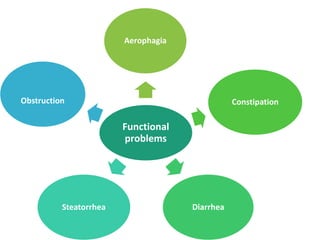
Functional
problems
Aerophagia
Constipation
Diarrhea
Steatorrhea
Obstruction
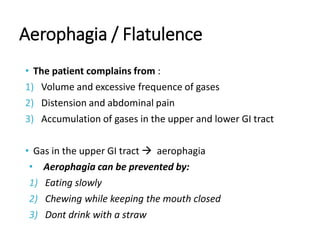
Aerophagia / Flatulence
• The patient complains from :
1) Volume and excessive frequence of gases
2) Distension and abdominal pain
3) Accumulation of gases in the upper and lower GI tract
• Gas in the upper GI tract  aerophagia
• Aerophagia can be prevented by:
1) Eating slowly
2) Chewing while keeping the mouth closed
3) Dont drink with a straw
Aerophagia/Flatulence
1) Reduce carbohydrate foods, which are the substrates of fermentation
• Vegetables, soluble fiber, resistant starches, simple sugars, fructose and
polyols.
• Undigested CHOs are fermented in the colon to short chain fatty acids
and gases.
• The excess production depends on the dose of CHO consumed CHOs are
well digested in small portions
2) Increase the intake of insoluble fibers that are not very fermentable
(whole grains)
3) Physical activity
Recommandations
Constipation
Treatment
 Ensure adequate intake of fibers, liquids, moderate
activity.
 Gradually decrease the use of laxatives.
 Use osmotic and bulky agents (cellulose, hemicellulose,
psyllium seeds, osmotic agents; lactose, magnesium
hydroxide, sorbitol) .
 Use of laxatives and lubricants for children, ensuring
good fiber intake, with behavioral intervention and
education.
Constipation
Nutritional and lifestyle recommendations :
 Adequate intake of insoluble and soluble fibers (they
increase fecal mass, fluidity, frequency, speed of
transit) .
 To avoid obstruction, gradually increase fiber intake,
to also ease flatulence, cramps, diarrhea.
 High fiber diet: 14g of fibers per 1000Kcal, 25-38g /
d, in the form of: whole grains and cereal products,
fruits, vegetables, legumes, oils eeds, seeds.
 Regular physical activity
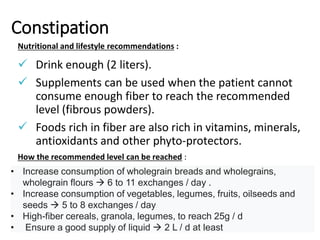
Constipation
Nutritional and lifestyle recommendations :
 Drink enough (2 liters).
 Supplements can be used when the patient cannot
consume enough fiber to reach the recommended
level (fibrous powders).
 Foods rich in fiber are also rich in vitamins, minerals,
antioxidants and other phyto-protectors.
How the recommended level can be reached :
• Increase consumption of wholegrain breads and wholegrains,
wholegrain flours  6 to 11 exchanges / day .
• Increase consumption of vegetables, legumes, fruits, oilseeds and
seeds  5 to 8 exchanges / day
• High-fiber cereals, granola, legumes, to reach 25g / d
• Ensure a good supply of liquid  2 L / d at least
Diarrhea
Treatment
1) Identify the cause in order to be treated
2) Replace the fluids and electrolytes : Sufficient fluid intake
(2L/d in the form of a sweet and salty drink :
• Salted vegetable broths, rice water, infusions, fruit juice.
• Vary and split the non-iced water supplies Used for 24-48
hours
• Use of oral rehydration solutions for children: 20g / L of
glucose, 20 mEq / L K and 45-90 mEq Na
Treatment
3) Low residue diet after the acute phase
- Food items to eliminate :
a. Foods rich in cellulose, hemicellulose, pectin: fresh and dried vegetables and
fruits, bread and whole grains
b. Milk and dairy products (lactose: 6-12g are tolerated) Fats: cold meats, frying,
etc.
c. Excess fiber (> 20g): 10 to 15g help maintain normal consistency and normal
mucosa
d. Resistant starch: raffinose and stachyose present in legumes, sorbitol /
mannitol / xylitol> 10g / d, fructose> 20-25g / meal, sucrose> 25-50g / meal.
e. These foods are tolerated moderately.
f. Large amounts cause osmotic diarrhea Caffeine: it increases GI secretion and
colon motility
g. Alcohol: increases GI secretions
h. Fluid diet without residue for 24 hours - rest
Diarrhea
Treatment
Allowed food items
• rice, semolina, pasta, well-cooked fruits and vegetables, carrots /
apples, meats and fish, jam / jelly, yogurt / cheese, butter and raw
oils, hard-boiled egg
• Pre-biotic products (pectins, oligosaccharides, inulin, oats, chicory)
and pro-biotics, to restore the flora.
4) Split the food intake into 4-5 meals / day and eat slowly and in small
quantities.
5) Cook the fruits and vegetables , mix them well to reduce the
irritation effect
6) When solving the problem, gradually introduce the foods avoided,
the fibers to a normal level, to help restore the function of the
mucosal membrane
Diarrhea
Steatorrhea
Recommandations :
1) Increase caloric intake to compensate for weight
loss (proteins and complex carbohydrates)
2) MCTs used because of their short chain, for better
absorption (8.3kcal / g), divided over several meals
3) Pay attention to the risk of deficiency in fat-soluble
vitamins.
Obstructions
The diet is personalized:
fFibers are not digested, chewing may be insufficient
Fiber restriction (fruits, vegetables, seeds) at a level
<10-15g / d.
 Some obstructions require diet in the form of clear
fluids, or parenteral and fluid nutrition
Coeliac disease and lactose intolerance
1. REVIEW The nutritional management of celiac
disease and lactose intolerance in the
presentation of ch. 2 (food allergies and
intolerance).
2. See table p.535-536 in KRAUSE of the gluten-free
diet
Malabsorption du fructose
• Limit consumption of foods rich in fructose (pear, mango, apple, fruit juice, dried fruit).
Absorption of fructose is improved when it is ingested with glucose
(such as in sucrose) because glucose absorption stimulates pathways
for fructose absorption. Although some degree of fructose
malabsorption may be normal, those with coexisting GI disorders
may be more likely to experience GI symptoms after fructose ingestion.
Patients with IBS and visceral hypersensitivity may be
more sensitive to gas, distension, or pain from fructose malabsorption,
whereas those with small bowel bacterial overgrowth (SIBO)
may experience symptoms from normal amounts of fructose.
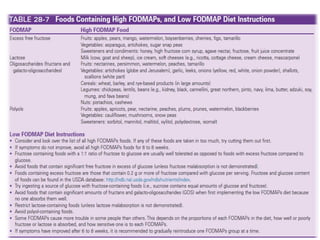
• See FODMAPs table
Chronic inflammatory bowel disease Crohn's disease and
ulcerative-hemorrhagic colitis.
Dietetic treatment
Acute phase :
 1.3-1.5 g/kg/d of proteins.
 Omega 3 supplements
 Probiotics and prebiotics
 Limit the food rich in fibers
 Milk consumption according to tolerance
 Adequate fluid intake
 Maintain the nutritional status : Prevent PEM and micronutrients deficiency
Chronic inflammatory bowel disease Crohn's disease and
ulcerative-hemorrhagic colitis.
Dietetic treatment
Recovery:
 Ensure an adequate supply of energy and micronutrients
diversified diet without exclusions
 Moderate consumption of alcohol, spices, and fatty
seasoning.
 Split meals and choose appetizing foods.
 Education to overcome food phobias
Chronic inflammatory bowel disease Crohn's disease and ulcerative-
hemorrhagic colitis.
Colon pathologgies
Irritable bowel sundrom/Functional colopathy
Predominant symptoms:
• Diarrhea, constipation and abdominal pain.
• Others are digestive discomfort, bloating, gas ...
Aggravating factors:
• Nutrition Stress
• Laxative abuse
• Preexisting digestive pathologies
• Lack of sleep, rest, fluids
Irritable bowel syndrome
Treatment
 Relieve symptoms and the factors that stimulate
them
 No malabsorption / poor digestion
 Ensure a good nutritional intake
 Diet that prevents symptoms + role of eating habits
 Reduce: lipids, caffeine, sugar (lactose, fructose,
sorbitol), alcohol .
 Small meals
 Adequate intake of fiber (25g / d) and liquids
Diverticulosis
Dietetic treatment
• Non complicated Diverticulosis :
oAsymptomatic
oObjective: avoid excessive intra-luminal pressure
oSufficient consumption of fibers regularize transit,
reduce hardness of stool (to avoid constipation)
gradual introduction of fibers
Diverticulosis
Dietetic treatment
• Diverticulitis:
oAntibiotics
oAlleviate symptoms: strict residue-free diet  limit stool
volume
oReduce the intake of insoluble fiber (irritating texture)
o Reduce soluble fiber to prevent fermentation and distension
of the tube
oAfter the acute phase, the diet is gradually extended to
introduce fruits and vegetables
Cancers and polyps
Increase the consumption of food rich in fibers
 Regular physical activity
Intestinal resections
Small intestine  malabsorption of fluids and nutrients
Adaptation: adaptive response in the remaining portion
of the intestine (longer, thick, large)
 Proximal jejunal resections:
- No malabsorption
- No special dietary prescription
 Ileal resections:
- Malabsorption of bile salts
- Malabsorption of long-chain TG, fat-soluble vitamins,
B12 prescription of medium-chain TG, reduction of
long-chain TG, B12 supplementation(unable gastric and
pancreatic lipases)
Intestinal resections
Small bowel resection diarrhea, weight / muscle loss, bone
disease, protein malabsorption, energy, micronutrients.
2-3 weeks postoperative: compensate for hydroelectric losses
Adaptation period: parenteral, enteral, oral Split meals.
Favor solid meals
Avoid hypotonic drinks, drinks with meals
Compensatory overeating
Correct and prevent deficiencies
Colon resection does not affect absorption or nutritional
status therefore Colostomy / ileostomy: fibers well tolerated
beneficial effect on the lining of the ileal reservoir
Case studies
Lower GI tract
Case study 1
Mr S., a 33-year-old teacher, was recently diagnosed with inflammatory bowel disease.
He was referred for evaluation because of abdominal pain, bloating, nausea and occasional
diarrhea.
His doctor had found segmental lesions in the small intestine, and recently suspected a
constriction of the distal small intestine.
Here are the results of his blood test:
Hb = 12 g / dl [14-17], Vit D 22 mg / ml [30-100], CRP = 22 mg / dl [<1], Folate = 23 ng / dl [
5-25].
The doctor refered Mr.S to you in order to give him the necessary dietary information and
to prevent the problem from getting worse.
1- What kind of inflammatory bowel disease do you think he has?
2- Based on the data, what kind of information are you going to give?
3- Based on what clues did the doctor suspect a constriction?
4-Assess the BMI of this patient, his energy and protein needs knowing that his weight is 82
kg, his height is 184 cm and declares that he walks 1 hour 2 to 3 times / week on the
treadmill when he doesn’t have pain.
5-Prepare a list of nutritional recommendations.
6- Because of his condition, Mr S. is at risk to have deficiencies in vitamins and minerals.
Specify them and what can be the causes of these deficiencies.
Case study 2
A 42-year-old patient is referred to your clinic for assessment and treatment, due
to recurrent bloating, with alternating periods of constipation and diarrhea.
Her family doctor found a negative stool culture and a negative colonoscopy for
active disease.
She is 165 cm tall and weighs 68 kg, and has no other health problems except that
she suffered from obesity a few years ago.
She consumes alcohol quite often (3-4 times / week), and often eats once a day,
towards the evening for lack of time.
She reports that her symptoms worsen during times of stress at work, and so she
asks you for advice.
1- What is the probable diagnosis of this patient?
2- What information do you need to know more about this patient?
3- She asks you for dietary advice for her lifestyle and for foods that she could
consider as healthy foods to eat during the days when she has long reports to
prepare at work?
4-And why do you think her symptoms get worse during such periods?
5- Prepare a list of permitted foods and food t avoid in a FODMAP diet.
Case study 3
Breakast
•120ml of Orange Juice
•1 egg
•1 slice of pain de mie (white)
•1 tsp of margarine
•240ml half skimmed milk
•Coffee
Dinner
120g of meat
½ cup pf mashed potato
100g of cooked asparagus
1 small french bread
½ cup of vanilla ice cream
Tea
Mr. R. has diverticulosis. His 24 hour recall gives you a
typical menu as follows:
Lunch
•90g of meat slices
•2 slices of pain de mie
•1 tsp of mayonnaise
•Green salad
•Dressing ( vinegar, mustard, mayonnaise)
•1 peach
•240 ml of half skimmed milk
1. Next to the menu above, write a few changes that
you would suggest to increase his fiber intake to
20-30g / d.
2. What are the side effects of a high fiber diet (>
40g / d)?
3. What advice do you give to avoid these side
effects and improve adherence to the given diet?
4. If Mr.R develops diverticulitis, what diet would be
appropriate during the acute phase?
Case study 4
Ms. J is a 20-year-old student, referred to the doctor for the
assessment of chronic diarrhea. She denies the presence of blood
or mucus in the stool.
She complains of weight loss, fatigue, weakness, month-long
diarrhea (4-5 times / d, foul-smelling stools).
These symptoms are not new, they occur from time to time, but
this is the most severe and prolonged manifestation.
She hasn't had any trips to make during the last period. She lives
alone. She had no fever or joint pain.
History: She had an older sister who died as an infant from
undiagnosed diarrhea.
She made a rubella, being young.
She has a history of exacerbation and remission of diarrhea from
childhood.
She is a very active young woman, she runs and swims regularly.
Complains only of diarrhea and flatulence.
Clinical exam:
H: 165cm, W: 51kg.
Protruding abdomen, dry oral mucosa.
Chronic diarrhea and dehydration. Tachycardia and moderate
postural change.
Weight at the margin of the underweight.
Serum albumin 30g / l (normal: 40-60), normal hemoglobin /
hematocrit, normal electrolytes (sodium, potassium, chloride,
carbonate, phosphorus), creatinine 1.2mmol / l (normal: 0.05-0.11),
normal cholesterol, amylase 10 U / L (normal = 25-100 U / L), lipase
0.015 (normal = 0.02-0.5), serum carotene 0.8 µmol / l (normal =
0.9-4, 6), vitamin A 0.25 µmol / l (0.35-1.75).
Absence of blood in the stool.
Imagery of the intestine with a meal of barium: dilation of the small
intestine.
The ileal mucosa appeared normal.
Endoscopy biopsy: flat mucosal surface, cuboid epithelial cells,
absence of villi.
1- Assess briefly the case of this lady.
2-List the probable causes of her diarrhea
3- Based on the result of her blood test, what
values ​​show that this patient has nutritional
malabsorption.
An interview with this patient shows the following information:
the consumption of a large quantity of milk recently has led to an
aggravation of her symptoms.
She therefore limited her intake to 240 ml / day.
In periods of remission, a typical day included:
Breakfast
¼ cantaloupe
¾ cup « rice crispies »
¼ cup of milk
1 egg
1 small croissant
1 cup of coffee
Lunch :
90g hamburger meat
Bread (with sesame seeds) and
ketchup
90g of chips
½ cup of vanilla ice cream
360ml of sugary soft drink
Dinner :
150g of pork meat
½ cup sweet potato
½ cup sauteed peas
Green salad with mayonnaise
lemon dressing
1 slice of apple pie
30g of parmesan cheese
Tea
The doctor's order indicated a gluten-free, low-fat,
low-lactose diet (lactose allowed depending on
tolerance).
4- Why is there malabsorption of fats and lactose in
association with gluten intolerance?
5- What changes will you make to the above diet to
make it suitable for t eh patient? illustrate by giving
examples
6- Regarding the weight and the difficulty of
maintaining it normal, what advice will you give her
to avoid weight loss?
The doctor's order indicated a gluten-free, low-fat,
low-lactose diet (lactose allowed depending on
tolerance).
4- Why is there malabsorption of fats and lactose in
association with gluten intolerance?
5- What changes will you make to the above diet to
make it suitable for t eh patient? illustrate by giving
examples
6- Regarding the weight and the difficulty of
maintaining it normal, what advice will you give her
to avoid weight loss?

Lower GI disorders.pdf

  • 1.
    Lower GI disorders Krause’sFood & the Nutrition Care Process, Mahan, K. et al.14th edition
  • 2.
  • 3.
    Aerophagia / Flatulence •The patient complains from : 1) Volume and excessive frequence of gases 2) Distension and abdominal pain 3) Accumulation of gases in the upper and lower GI tract • Gas in the upper GI tract  aerophagia • Aerophagia can be prevented by: 1) Eating slowly 2) Chewing while keeping the mouth closed 3) Dont drink with a straw
  • 4.
  • 5.
    Aerophagia/Flatulence 1) Reduce carbohydratefoods, which are the substrates of fermentation • Vegetables, soluble fiber, resistant starches, simple sugars, fructose and polyols. • Undigested CHOs are fermented in the colon to short chain fatty acids and gases. • The excess production depends on the dose of CHO consumed CHOs are well digested in small portions 2) Increase the intake of insoluble fibers that are not very fermentable (whole grains) 3) Physical activity Recommandations
  • 6.
    Constipation Treatment  Ensure adequateintake of fibers, liquids, moderate activity.  Gradually decrease the use of laxatives.  Use osmotic and bulky agents (cellulose, hemicellulose, psyllium seeds, osmotic agents; lactose, magnesium hydroxide, sorbitol) .  Use of laxatives and lubricants for children, ensuring good fiber intake, with behavioral intervention and education.
  • 7.
    Constipation Nutritional and lifestylerecommendations :  Adequate intake of insoluble and soluble fibers (they increase fecal mass, fluidity, frequency, speed of transit) .  To avoid obstruction, gradually increase fiber intake, to also ease flatulence, cramps, diarrhea.  High fiber diet: 14g of fibers per 1000Kcal, 25-38g / d, in the form of: whole grains and cereal products, fruits, vegetables, legumes, oils eeds, seeds.  Regular physical activity
  • 8.
    Constipation Nutritional and lifestylerecommendations :  Drink enough (2 liters).  Supplements can be used when the patient cannot consume enough fiber to reach the recommended level (fibrous powders).  Foods rich in fiber are also rich in vitamins, minerals, antioxidants and other phyto-protectors. How the recommended level can be reached : • Increase consumption of wholegrain breads and wholegrains, wholegrain flours  6 to 11 exchanges / day . • Increase consumption of vegetables, legumes, fruits, oilseeds and seeds  5 to 8 exchanges / day • High-fiber cereals, granola, legumes, to reach 25g / d • Ensure a good supply of liquid  2 L / d at least
  • 9.
    Diarrhea Treatment 1) Identify thecause in order to be treated 2) Replace the fluids and electrolytes : Sufficient fluid intake (2L/d in the form of a sweet and salty drink : • Salted vegetable broths, rice water, infusions, fruit juice. • Vary and split the non-iced water supplies Used for 24-48 hours • Use of oral rehydration solutions for children: 20g / L of glucose, 20 mEq / L K and 45-90 mEq Na
  • 10.
    Treatment 3) Low residuediet after the acute phase - Food items to eliminate : a. Foods rich in cellulose, hemicellulose, pectin: fresh and dried vegetables and fruits, bread and whole grains b. Milk and dairy products (lactose: 6-12g are tolerated) Fats: cold meats, frying, etc. c. Excess fiber (> 20g): 10 to 15g help maintain normal consistency and normal mucosa d. Resistant starch: raffinose and stachyose present in legumes, sorbitol / mannitol / xylitol> 10g / d, fructose> 20-25g / meal, sucrose> 25-50g / meal. e. These foods are tolerated moderately. f. Large amounts cause osmotic diarrhea Caffeine: it increases GI secretion and colon motility g. Alcohol: increases GI secretions h. Fluid diet without residue for 24 hours - rest Diarrhea
  • 11.
    Treatment Allowed food items •rice, semolina, pasta, well-cooked fruits and vegetables, carrots / apples, meats and fish, jam / jelly, yogurt / cheese, butter and raw oils, hard-boiled egg • Pre-biotic products (pectins, oligosaccharides, inulin, oats, chicory) and pro-biotics, to restore the flora. 4) Split the food intake into 4-5 meals / day and eat slowly and in small quantities. 5) Cook the fruits and vegetables , mix them well to reduce the irritation effect 6) When solving the problem, gradually introduce the foods avoided, the fibers to a normal level, to help restore the function of the mucosal membrane Diarrhea
  • 12.
    Steatorrhea Recommandations : 1) Increasecaloric intake to compensate for weight loss (proteins and complex carbohydrates) 2) MCTs used because of their short chain, for better absorption (8.3kcal / g), divided over several meals 3) Pay attention to the risk of deficiency in fat-soluble vitamins.
  • 13.
    Obstructions The diet ispersonalized: fFibers are not digested, chewing may be insufficient Fiber restriction (fruits, vegetables, seeds) at a level <10-15g / d.  Some obstructions require diet in the form of clear fluids, or parenteral and fluid nutrition
  • 14.
    Coeliac disease andlactose intolerance 1. REVIEW The nutritional management of celiac disease and lactose intolerance in the presentation of ch. 2 (food allergies and intolerance). 2. See table p.535-536 in KRAUSE of the gluten-free diet
  • 15.
    Malabsorption du fructose •Limit consumption of foods rich in fructose (pear, mango, apple, fruit juice, dried fruit). Absorption of fructose is improved when it is ingested with glucose (such as in sucrose) because glucose absorption stimulates pathways for fructose absorption. Although some degree of fructose malabsorption may be normal, those with coexisting GI disorders may be more likely to experience GI symptoms after fructose ingestion. Patients with IBS and visceral hypersensitivity may be more sensitive to gas, distension, or pain from fructose malabsorption, whereas those with small bowel bacterial overgrowth (SIBO) may experience symptoms from normal amounts of fructose. • See FODMAPs table
  • 17.
    Chronic inflammatory boweldisease Crohn's disease and ulcerative-hemorrhagic colitis. Dietetic treatment Acute phase :  1.3-1.5 g/kg/d of proteins.  Omega 3 supplements  Probiotics and prebiotics  Limit the food rich in fibers  Milk consumption according to tolerance  Adequate fluid intake  Maintain the nutritional status : Prevent PEM and micronutrients deficiency Chronic inflammatory bowel disease Crohn's disease and ulcerative-hemorrhagic colitis.
  • 18.
    Dietetic treatment Recovery:  Ensurean adequate supply of energy and micronutrients diversified diet without exclusions  Moderate consumption of alcohol, spices, and fatty seasoning.  Split meals and choose appetizing foods.  Education to overcome food phobias Chronic inflammatory bowel disease Crohn's disease and ulcerative- hemorrhagic colitis.
  • 19.
    Colon pathologgies Irritable bowelsundrom/Functional colopathy Predominant symptoms: • Diarrhea, constipation and abdominal pain. • Others are digestive discomfort, bloating, gas ... Aggravating factors: • Nutrition Stress • Laxative abuse • Preexisting digestive pathologies • Lack of sleep, rest, fluids
  • 20.
    Irritable bowel syndrome Treatment Relieve symptoms and the factors that stimulate them  No malabsorption / poor digestion  Ensure a good nutritional intake  Diet that prevents symptoms + role of eating habits  Reduce: lipids, caffeine, sugar (lactose, fructose, sorbitol), alcohol .  Small meals  Adequate intake of fiber (25g / d) and liquids
  • 21.
    Diverticulosis Dietetic treatment • Noncomplicated Diverticulosis : oAsymptomatic oObjective: avoid excessive intra-luminal pressure oSufficient consumption of fibers regularize transit, reduce hardness of stool (to avoid constipation) gradual introduction of fibers
  • 22.
    Diverticulosis Dietetic treatment • Diverticulitis: oAntibiotics oAlleviatesymptoms: strict residue-free diet  limit stool volume oReduce the intake of insoluble fiber (irritating texture) o Reduce soluble fiber to prevent fermentation and distension of the tube oAfter the acute phase, the diet is gradually extended to introduce fruits and vegetables
  • 23.
    Cancers and polyps Increasethe consumption of food rich in fibers  Regular physical activity
  • 24.
    Intestinal resections Small intestine malabsorption of fluids and nutrients Adaptation: adaptive response in the remaining portion of the intestine (longer, thick, large)  Proximal jejunal resections: - No malabsorption - No special dietary prescription  Ileal resections: - Malabsorption of bile salts - Malabsorption of long-chain TG, fat-soluble vitamins, B12 prescription of medium-chain TG, reduction of long-chain TG, B12 supplementation(unable gastric and pancreatic lipases)
  • 25.
    Intestinal resections Small bowelresection diarrhea, weight / muscle loss, bone disease, protein malabsorption, energy, micronutrients. 2-3 weeks postoperative: compensate for hydroelectric losses Adaptation period: parenteral, enteral, oral Split meals. Favor solid meals Avoid hypotonic drinks, drinks with meals Compensatory overeating Correct and prevent deficiencies Colon resection does not affect absorption or nutritional status therefore Colostomy / ileostomy: fibers well tolerated beneficial effect on the lining of the ileal reservoir
  • 26.
  • 27.
    Case study 1 MrS., a 33-year-old teacher, was recently diagnosed with inflammatory bowel disease. He was referred for evaluation because of abdominal pain, bloating, nausea and occasional diarrhea. His doctor had found segmental lesions in the small intestine, and recently suspected a constriction of the distal small intestine. Here are the results of his blood test: Hb = 12 g / dl [14-17], Vit D 22 mg / ml [30-100], CRP = 22 mg / dl [<1], Folate = 23 ng / dl [ 5-25]. The doctor refered Mr.S to you in order to give him the necessary dietary information and to prevent the problem from getting worse. 1- What kind of inflammatory bowel disease do you think he has? 2- Based on the data, what kind of information are you going to give? 3- Based on what clues did the doctor suspect a constriction? 4-Assess the BMI of this patient, his energy and protein needs knowing that his weight is 82 kg, his height is 184 cm and declares that he walks 1 hour 2 to 3 times / week on the treadmill when he doesn’t have pain. 5-Prepare a list of nutritional recommendations. 6- Because of his condition, Mr S. is at risk to have deficiencies in vitamins and minerals. Specify them and what can be the causes of these deficiencies.
  • 28.
    Case study 2 A42-year-old patient is referred to your clinic for assessment and treatment, due to recurrent bloating, with alternating periods of constipation and diarrhea. Her family doctor found a negative stool culture and a negative colonoscopy for active disease. She is 165 cm tall and weighs 68 kg, and has no other health problems except that she suffered from obesity a few years ago. She consumes alcohol quite often (3-4 times / week), and often eats once a day, towards the evening for lack of time. She reports that her symptoms worsen during times of stress at work, and so she asks you for advice. 1- What is the probable diagnosis of this patient? 2- What information do you need to know more about this patient? 3- She asks you for dietary advice for her lifestyle and for foods that she could consider as healthy foods to eat during the days when she has long reports to prepare at work? 4-And why do you think her symptoms get worse during such periods? 5- Prepare a list of permitted foods and food t avoid in a FODMAP diet.
  • 29.
    Case study 3 Breakast •120mlof Orange Juice •1 egg •1 slice of pain de mie (white) •1 tsp of margarine •240ml half skimmed milk •Coffee Dinner 120g of meat ½ cup pf mashed potato 100g of cooked asparagus 1 small french bread ½ cup of vanilla ice cream Tea Mr. R. has diverticulosis. His 24 hour recall gives you a typical menu as follows: Lunch •90g of meat slices •2 slices of pain de mie •1 tsp of mayonnaise •Green salad •Dressing ( vinegar, mustard, mayonnaise) •1 peach •240 ml of half skimmed milk
  • 30.
    1. Next tothe menu above, write a few changes that you would suggest to increase his fiber intake to 20-30g / d. 2. What are the side effects of a high fiber diet (> 40g / d)? 3. What advice do you give to avoid these side effects and improve adherence to the given diet? 4. If Mr.R develops diverticulitis, what diet would be appropriate during the acute phase?
  • 31.
    Case study 4 Ms.J is a 20-year-old student, referred to the doctor for the assessment of chronic diarrhea. She denies the presence of blood or mucus in the stool. She complains of weight loss, fatigue, weakness, month-long diarrhea (4-5 times / d, foul-smelling stools). These symptoms are not new, they occur from time to time, but this is the most severe and prolonged manifestation. She hasn't had any trips to make during the last period. She lives alone. She had no fever or joint pain. History: She had an older sister who died as an infant from undiagnosed diarrhea. She made a rubella, being young. She has a history of exacerbation and remission of diarrhea from childhood. She is a very active young woman, she runs and swims regularly. Complains only of diarrhea and flatulence.
  • 32.
    Clinical exam: H: 165cm,W: 51kg. Protruding abdomen, dry oral mucosa. Chronic diarrhea and dehydration. Tachycardia and moderate postural change. Weight at the margin of the underweight. Serum albumin 30g / l (normal: 40-60), normal hemoglobin / hematocrit, normal electrolytes (sodium, potassium, chloride, carbonate, phosphorus), creatinine 1.2mmol / l (normal: 0.05-0.11), normal cholesterol, amylase 10 U / L (normal = 25-100 U / L), lipase 0.015 (normal = 0.02-0.5), serum carotene 0.8 µmol / l (normal = 0.9-4, 6), vitamin A 0.25 µmol / l (0.35-1.75). Absence of blood in the stool. Imagery of the intestine with a meal of barium: dilation of the small intestine. The ileal mucosa appeared normal. Endoscopy biopsy: flat mucosal surface, cuboid epithelial cells, absence of villi.
  • 33.
    1- Assess brieflythe case of this lady. 2-List the probable causes of her diarrhea 3- Based on the result of her blood test, what values ​​show that this patient has nutritional malabsorption.
  • 34.
    An interview withthis patient shows the following information: the consumption of a large quantity of milk recently has led to an aggravation of her symptoms. She therefore limited her intake to 240 ml / day. In periods of remission, a typical day included: Breakfast ¼ cantaloupe ¾ cup « rice crispies » ¼ cup of milk 1 egg 1 small croissant 1 cup of coffee Lunch : 90g hamburger meat Bread (with sesame seeds) and ketchup 90g of chips ½ cup of vanilla ice cream 360ml of sugary soft drink Dinner : 150g of pork meat ½ cup sweet potato ½ cup sauteed peas Green salad with mayonnaise lemon dressing 1 slice of apple pie 30g of parmesan cheese Tea
  • 35.
    The doctor's orderindicated a gluten-free, low-fat, low-lactose diet (lactose allowed depending on tolerance). 4- Why is there malabsorption of fats and lactose in association with gluten intolerance? 5- What changes will you make to the above diet to make it suitable for t eh patient? illustrate by giving examples 6- Regarding the weight and the difficulty of maintaining it normal, what advice will you give her to avoid weight loss? The doctor's order indicated a gluten-free, low-fat, low-lactose diet (lactose allowed depending on tolerance). 4- Why is there malabsorption of fats and lactose in association with gluten intolerance? 5- What changes will you make to the above diet to make it suitable for t eh patient? illustrate by giving examples 6- Regarding the weight and the difficulty of maintaining it normal, what advice will you give her to avoid weight loss?