
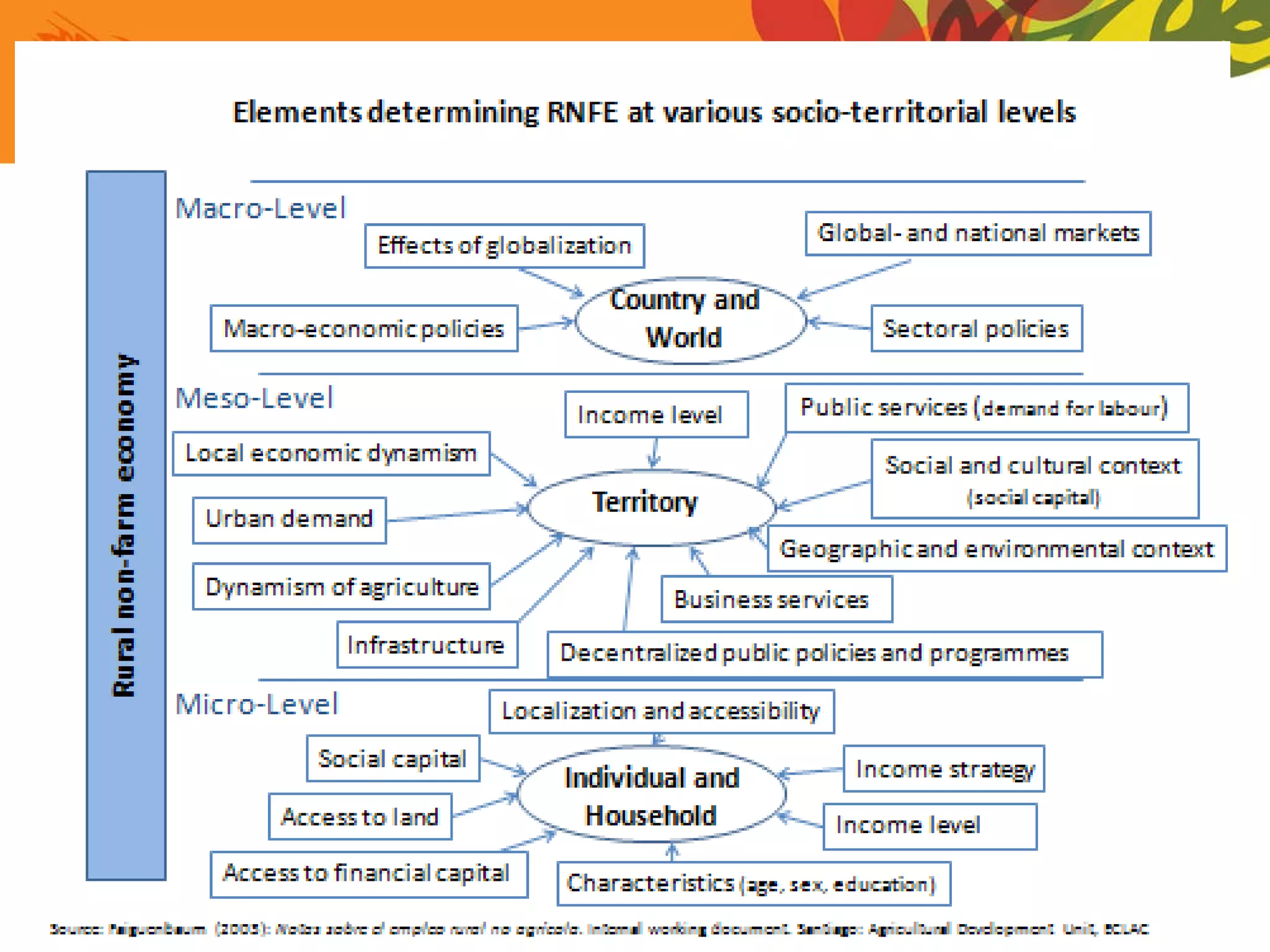
Conference on New Directions for Smallholder Agriculture Martine Dirven  R ural non-farm employment and rural poverty reduction:  What  we know in Latin America in 2010 25 January 2011
1- What we know 2- Several open questions and needs for further research or thought .
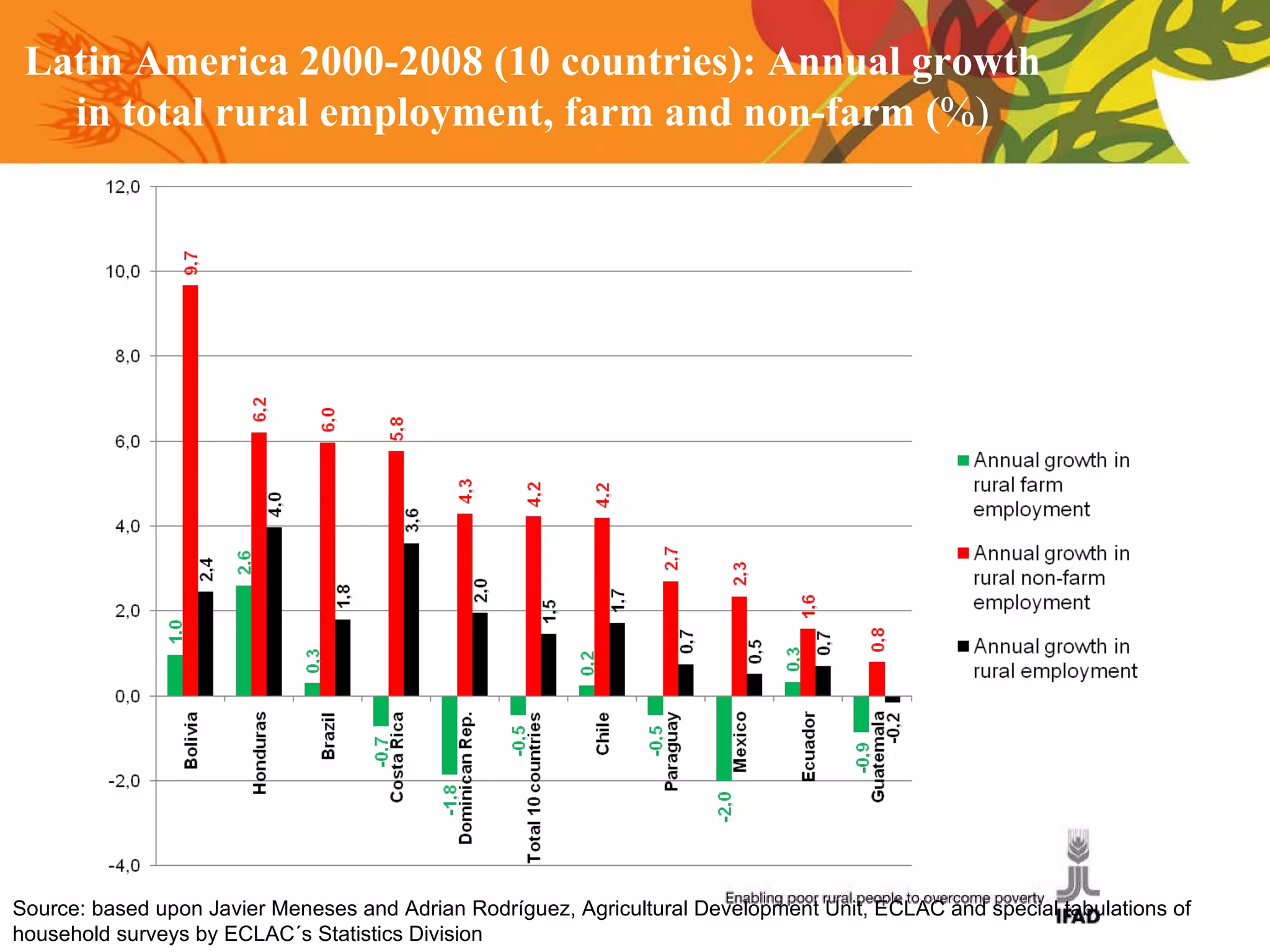
Source: based upon Javier Meneses and Adrian Rodríguez, Agricultural Development Unit, ECLAC and special tabulations of household surveys by ECLAC´s Statistics Division Latin America 2000-2008 (10 countries): Annual growth in total rural employment, farm and non-farm ( %)
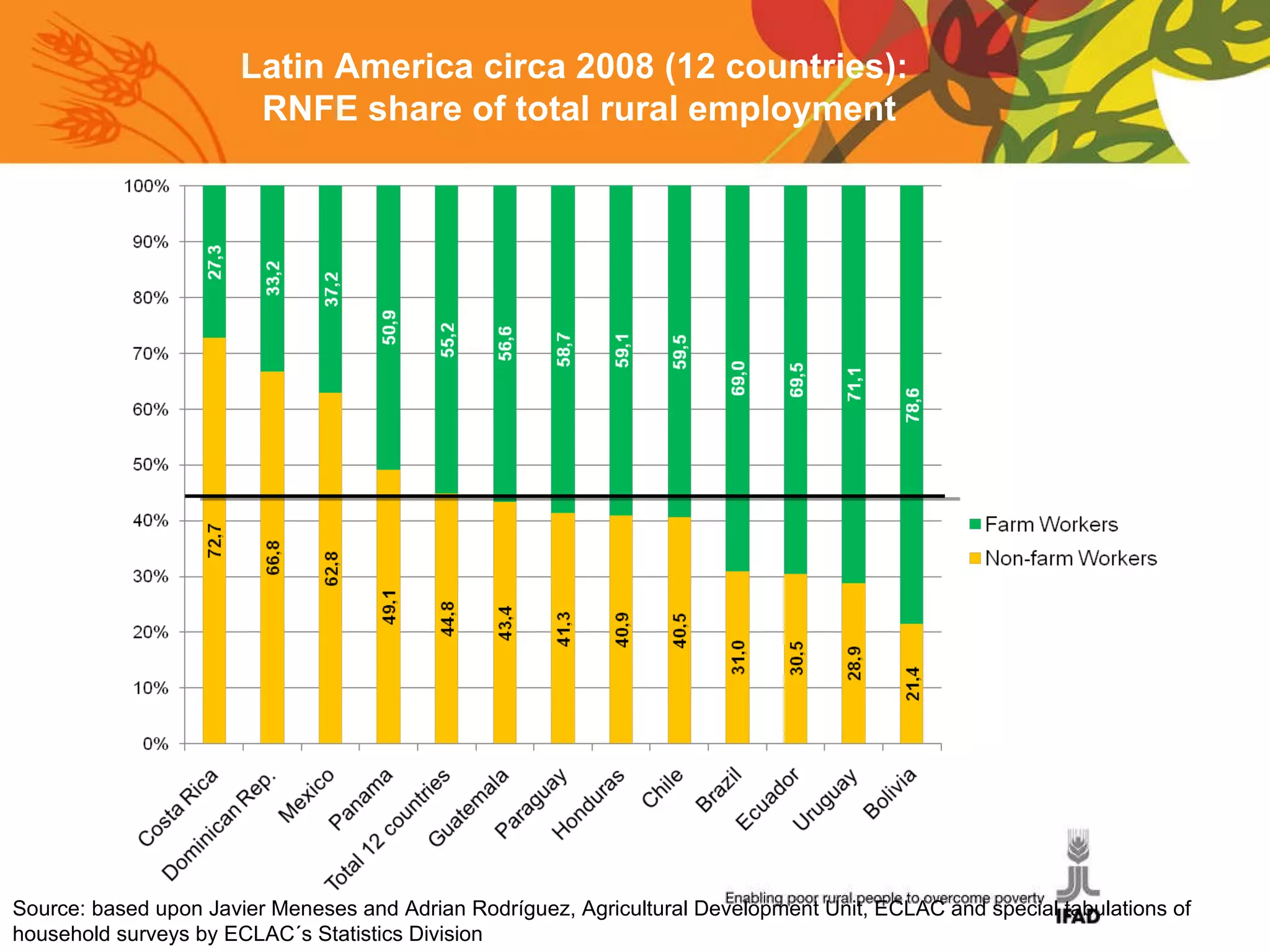
Latin America circa 2008 (12 countries):  RNFE share of total rural employment Source: based upon Javier Meneses and Adrian Rodríguez, Agricultural Development Unit, ECLAC and special tabulations of household surveys by ECLAC´s Statistics Division
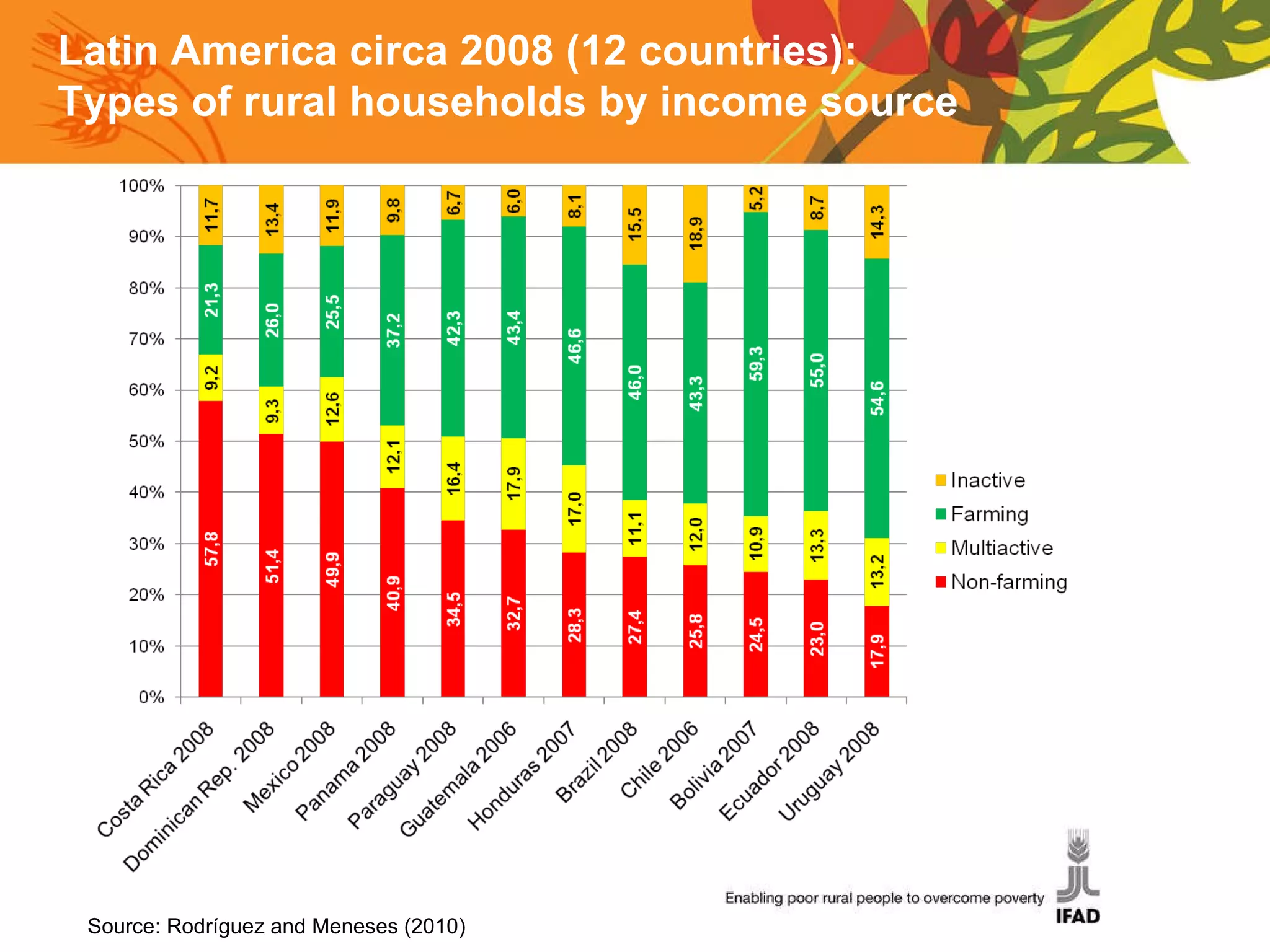
Source: Rodríguez and Meneses (2010)  Latin America circa 2008 (12 countries):  Types of rural households by income source
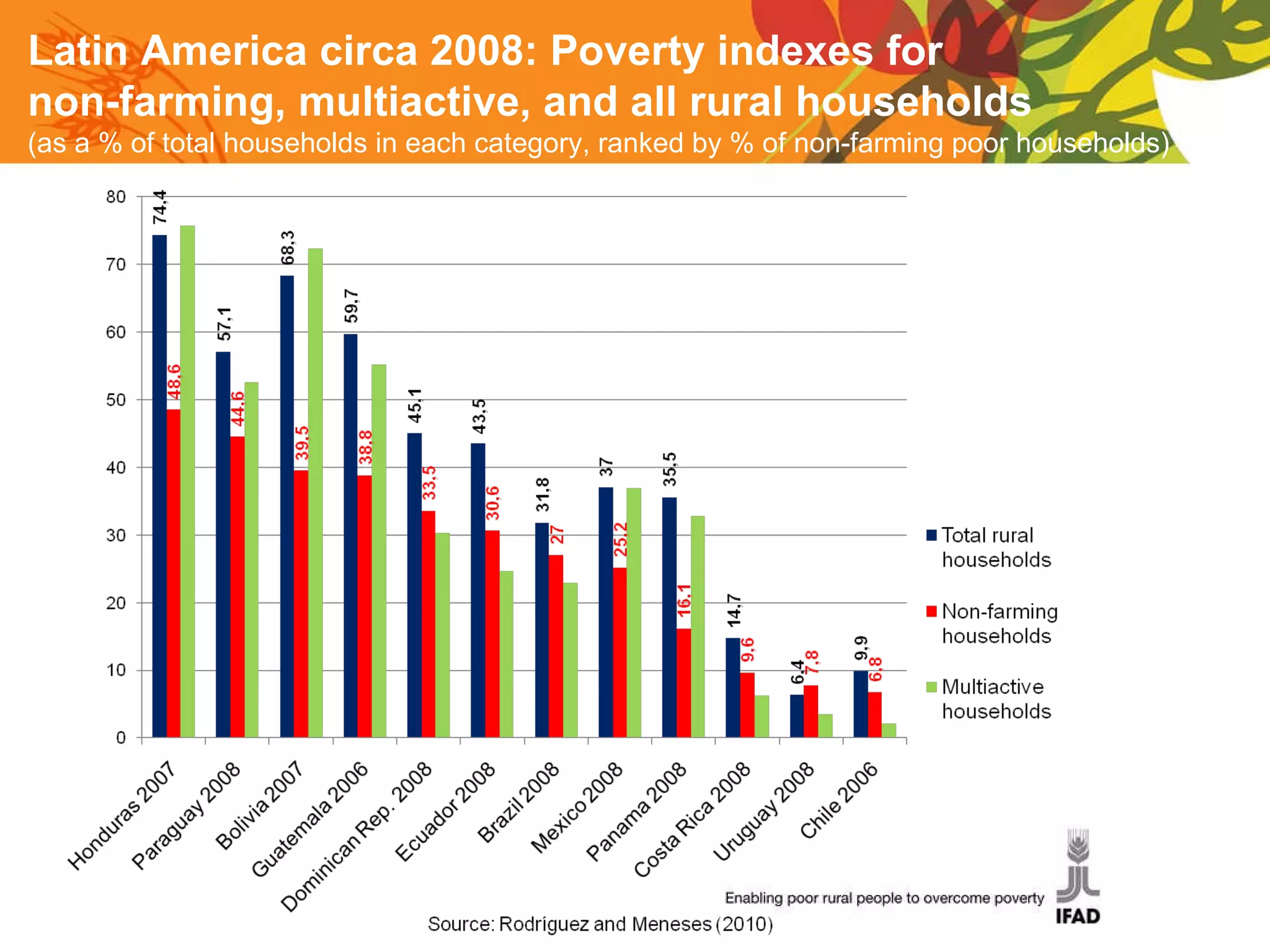
Latin America circa 2008: Poverty indexes for  non-farming, multiactive, and all rural households  (as a % of total households in each category, ranked by % of non-farming poor households)
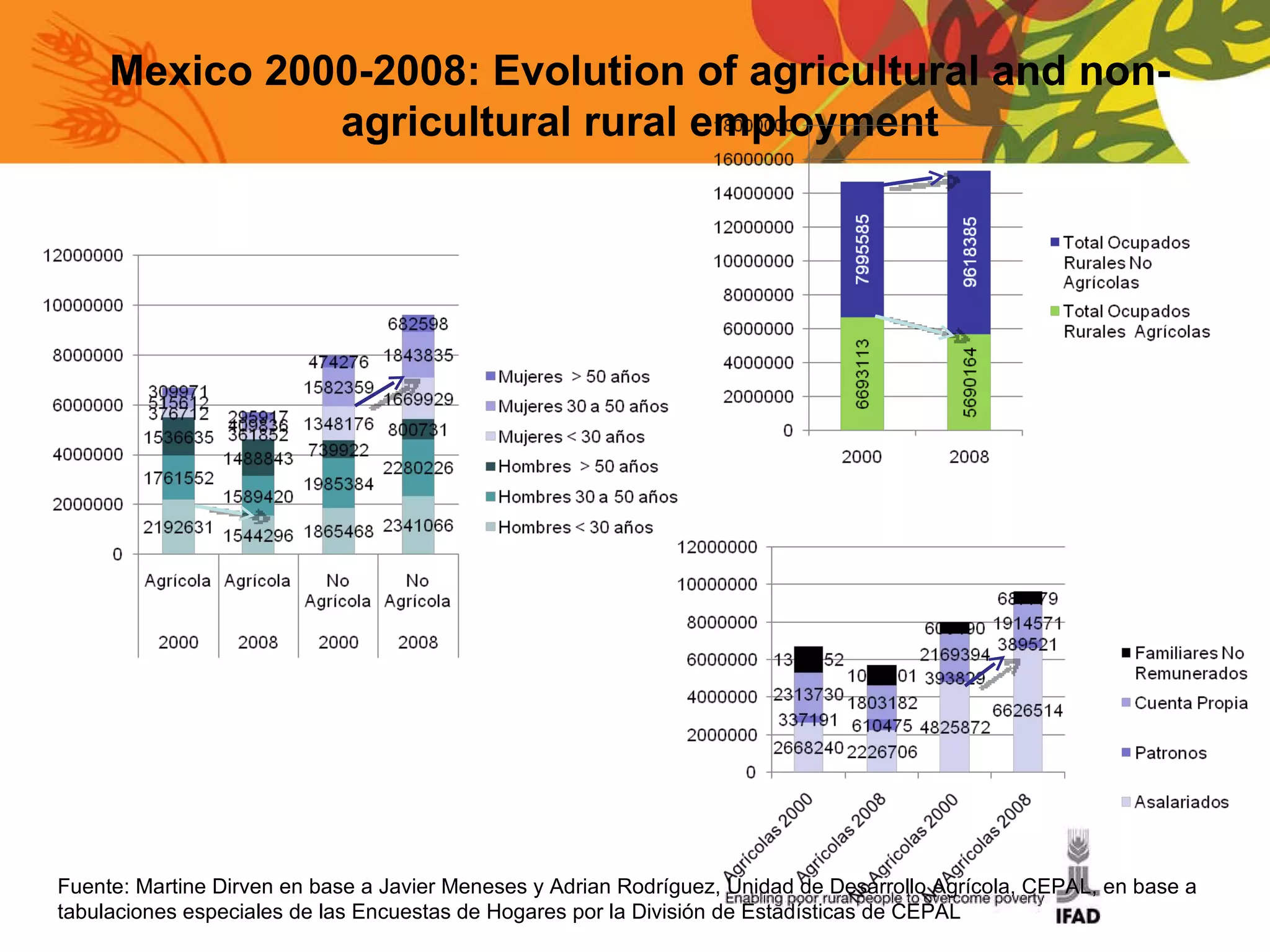
Mexico 2000-2008: Evolution of agricultural and non-agricultural rural employment Fuente: Martine Dirven en base a Javier Meneses y Adrian Rodríguez, Unidad de Desarrollo Agrícola, CEPAL, en base a tabulaciones especiales de las Encuestas de Hogares por la División de Estadísticas de CEPAL
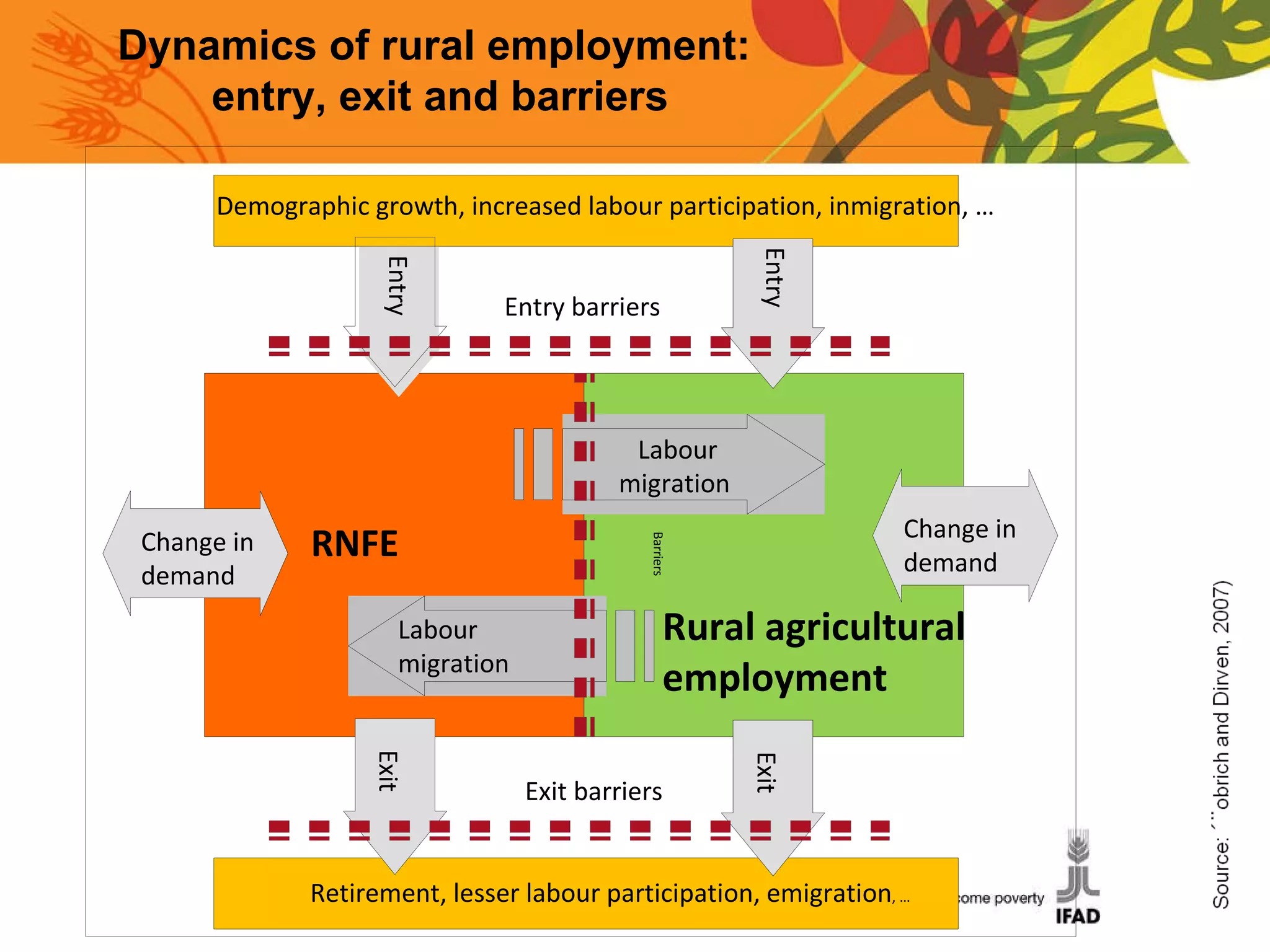
Dynamics of rural employment:  entry, exit and barriers RNFE Rural agricultural  employment   Change in  demand Change in  demand Demographic growth, increased labour participation, inmigration, … Entry Entry Entry barriers Exit Exit Exit barriers Labour migration Labour migration Barriers Retirement, lesser labour participation, emigration , …
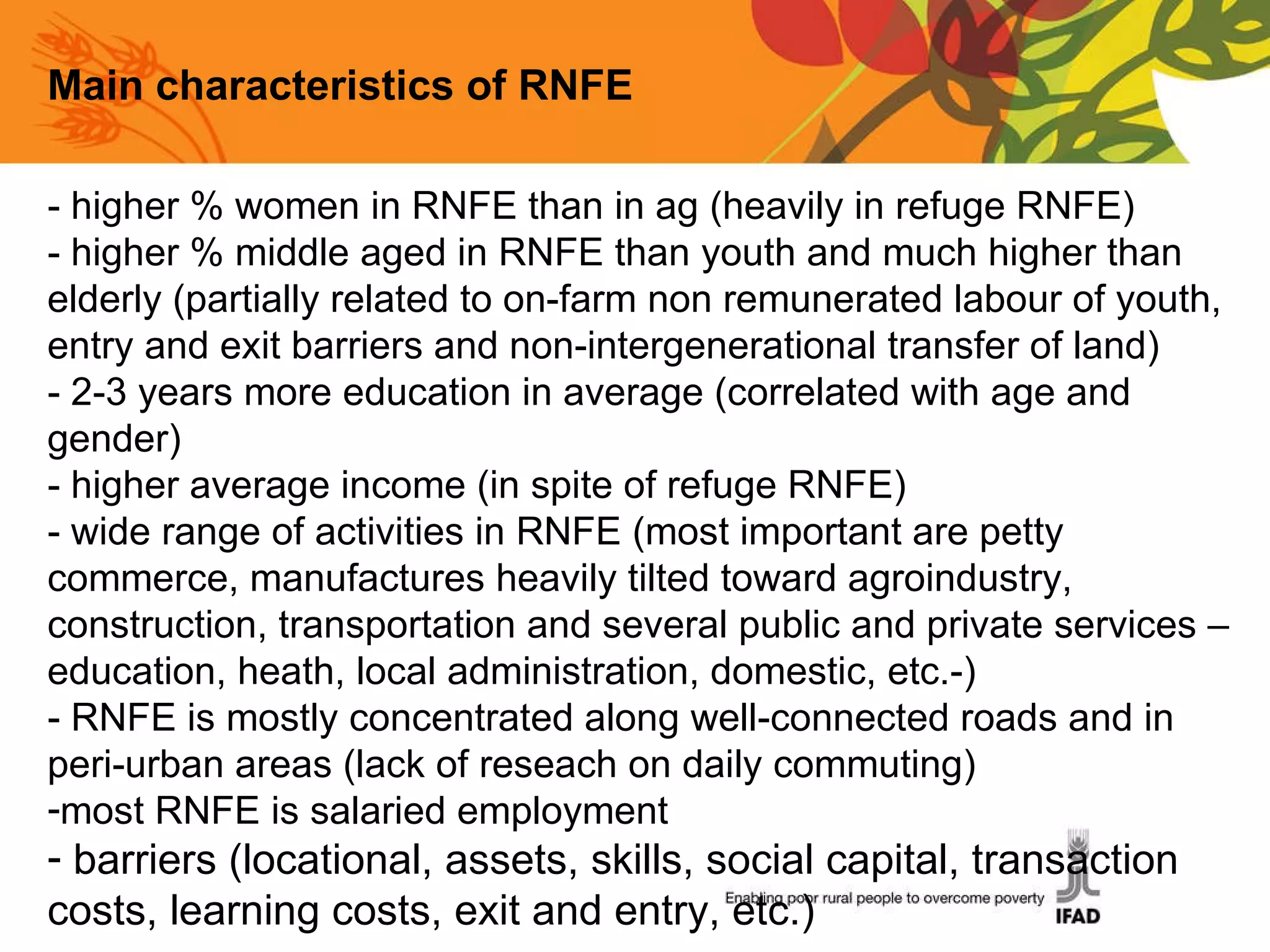
Main characteristics of RNFE - higher % women in RNFE than in ag (heavily in refuge RNFE) - higher % middle aged in RNFE than youth and much higher than elderly (partially related to on-farm non remunerated labour of youth, entry and exit barriers and non-intergenerational transfer of land) - 2-3 years more education in average (correlated with age and gender) - higher average income (in spite of refuge RNFE) - wide range of activities in RNFE (most important are petty commerce, manufactures heavily tilted toward agroindustry, construction, transportation and several public and private services –education, heath, local administration, domestic, etc.-) - RNFE is mostly concentrated along well-connected roads and in peri-urban areas (lack of reseach on daily commuting) most RNFE is salaried employment barriers (locational, assets, skills, social capital, transaction costs, learning costs, exit and entry, etc.)
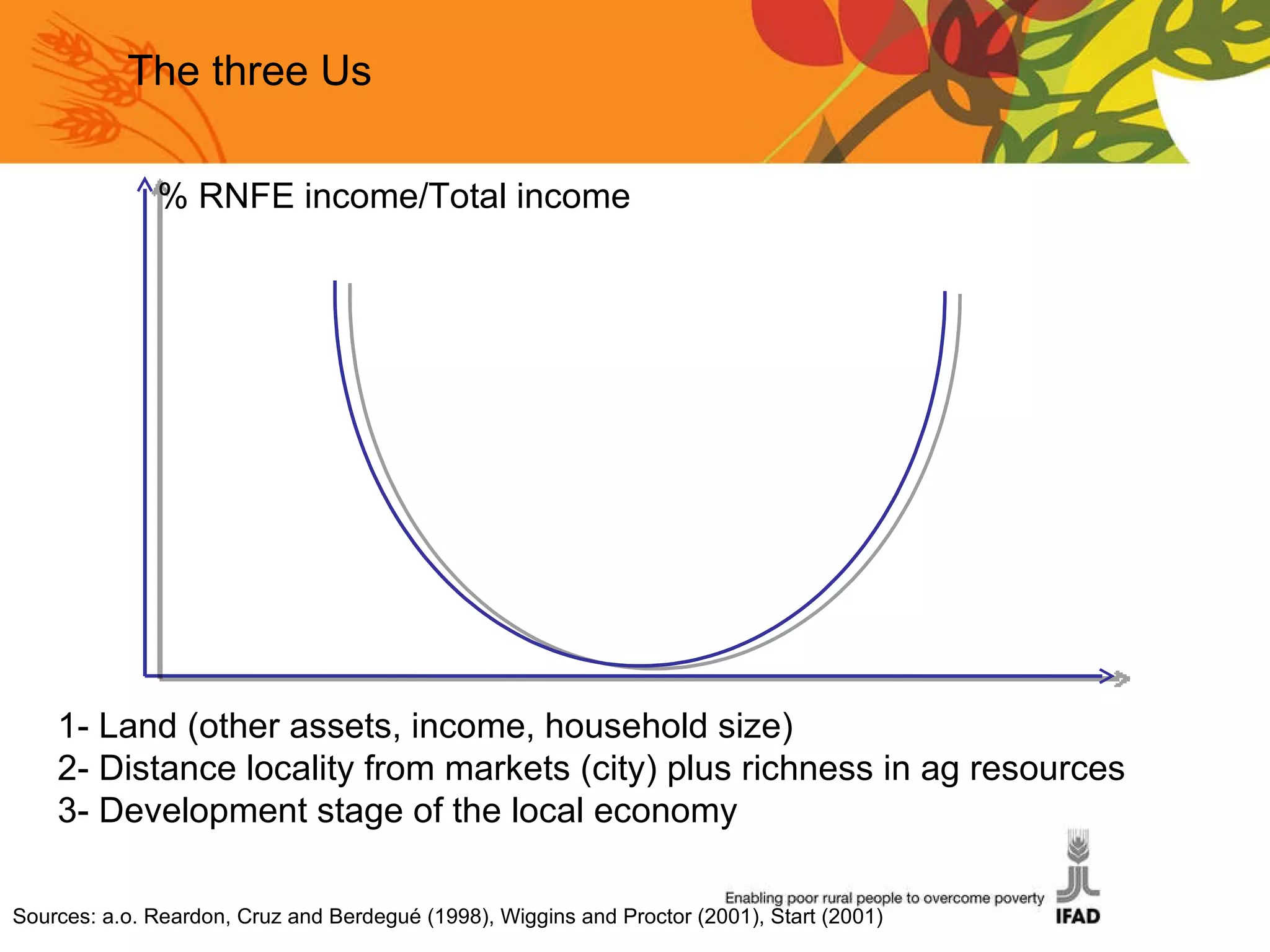
% RNFE income/Total income 1- Land (other assets, income, household size) 2- Distance locality from markets (city) plus richness in ag resources  3- Development stage of the local economy  The three Us Sources: a.o. Reardon, Cruz and Berdegué (1998), Wiggins and Proctor (2001), Start (2001)
 
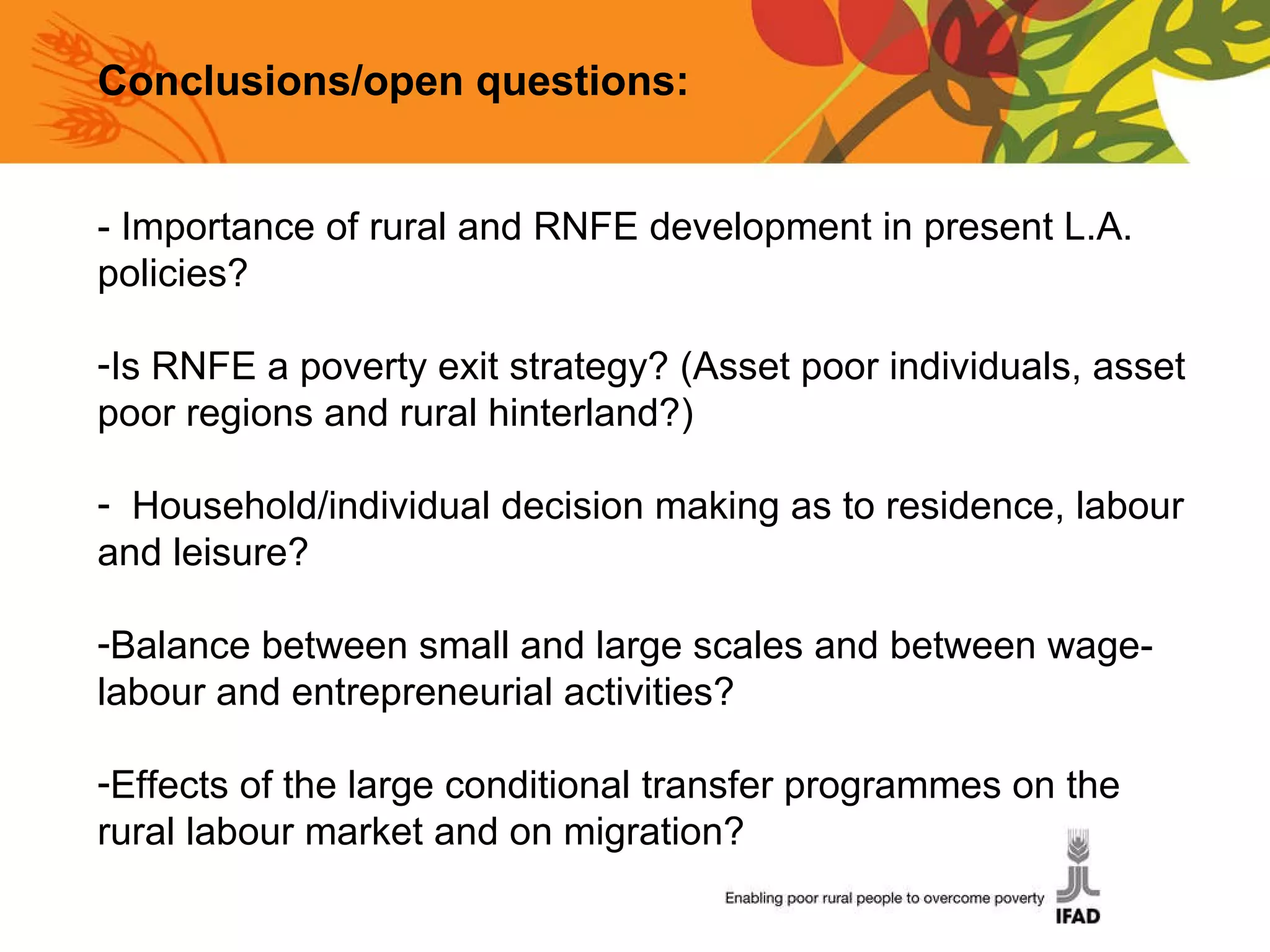
Conclusions/open questions: - Importance of rural and RNFE development in present L.A. policies? Is RNFE a poverty exit strategy? (Asset poor individuals, asset poor regions and rural hinterland?) Household/individual decision making as to residence, labour and leisure? Balance between small and large scales and between wage-labour and entrepreneurial activities? Effects of the large conditional transfer programmes on the rural labour market and on migration?
This presentation is the result of activities carried out under the project Knowledge for Change: normative processes to improve the impact on poverty of RIMISP-Latin American Centre for Rural Development.  The programme is financed by the International Fund for Agricultural Development (IFAD) and the International Development Research Centre, Canada (IDRC) Este trabajo es resultado de actividades realizadas en el marco del Programa Conocimientos a favor del cambio: procesos normativos para mejorar el impacto en la pobreza  de Rimisp-Centro Latinoamericano para el Desarrollo Rural. Dicho programa es financiando por el Fondo Internacional de Desarrollo Agrícola (FIDA) y el International Development Research Centre, Canada (IDRC). Rural Non Agricultural Employment and poverty reduction: what do we know in Latin America in 2010?

Rural non-farm employment and rural poverty reduction: What we know in Latin America in 2010

  • 1.
    Conference on NewDirections for Smallholder Agriculture Martine Dirven R ural non-farm employment and rural poverty reduction: What we know in Latin America in 2010 25 January 2011
  • 2.
    1- What weknow 2- Several open questions and needs for further research or thought .
  • 3.
    Source: based uponJavier Meneses and Adrian Rodríguez, Agricultural Development Unit, ECLAC and special tabulations of household surveys by ECLAC´s Statistics Division Latin America 2000-2008 (10 countries): Annual growth in total rural employment, farm and non-farm ( %)
  • 4.
    Latin America circa2008 (12 countries): RNFE share of total rural employment Source: based upon Javier Meneses and Adrian Rodríguez, Agricultural Development Unit, ECLAC and special tabulations of household surveys by ECLAC´s Statistics Division
  • 5.
    Source: Rodríguez andMeneses (2010) Latin America circa 2008 (12 countries): Types of rural households by income source
  • 6.
    Latin America circa2008: Poverty indexes for non-farming, multiactive, and all rural households (as a % of total households in each category, ranked by % of non-farming poor households)
  • 7.
    Mexico 2000-2008: Evolutionof agricultural and non-agricultural rural employment Fuente: Martine Dirven en base a Javier Meneses y Adrian Rodríguez, Unidad de Desarrollo Agrícola, CEPAL, en base a tabulaciones especiales de las Encuestas de Hogares por la División de Estadísticas de CEPAL
  • 8.
    Dynamics of ruralemployment: entry, exit and barriers RNFE Rural agricultural employment Change in demand Change in demand Demographic growth, increased labour participation, inmigration, … Entry Entry Entry barriers Exit Exit Exit barriers Labour migration Labour migration Barriers Retirement, lesser labour participation, emigration , …
  • 9.
    Main characteristics ofRNFE - higher % women in RNFE than in ag (heavily in refuge RNFE) - higher % middle aged in RNFE than youth and much higher than elderly (partially related to on-farm non remunerated labour of youth, entry and exit barriers and non-intergenerational transfer of land) - 2-3 years more education in average (correlated with age and gender) - higher average income (in spite of refuge RNFE) - wide range of activities in RNFE (most important are petty commerce, manufactures heavily tilted toward agroindustry, construction, transportation and several public and private services –education, heath, local administration, domestic, etc.-) - RNFE is mostly concentrated along well-connected roads and in peri-urban areas (lack of reseach on daily commuting) most RNFE is salaried employment barriers (locational, assets, skills, social capital, transaction costs, learning costs, exit and entry, etc.)
  • 10.
    % RNFE income/Totalincome 1- Land (other assets, income, household size) 2- Distance locality from markets (city) plus richness in ag resources 3- Development stage of the local economy The three Us Sources: a.o. Reardon, Cruz and Berdegué (1998), Wiggins and Proctor (2001), Start (2001)
  • 11.
  • 12.
    Conclusions/open questions: -Importance of rural and RNFE development in present L.A. policies? Is RNFE a poverty exit strategy? (Asset poor individuals, asset poor regions and rural hinterland?) Household/individual decision making as to residence, labour and leisure? Balance between small and large scales and between wage-labour and entrepreneurial activities? Effects of the large conditional transfer programmes on the rural labour market and on migration?
  • 13.
    This presentation isthe result of activities carried out under the project Knowledge for Change: normative processes to improve the impact on poverty of RIMISP-Latin American Centre for Rural Development. The programme is financed by the International Fund for Agricultural Development (IFAD) and the International Development Research Centre, Canada (IDRC) Este trabajo es resultado de actividades realizadas en el marco del Programa Conocimientos a favor del cambio: procesos normativos para mejorar el impacto en la pobreza de Rimisp-Centro Latinoamericano para el Desarrollo Rural. Dicho programa es financiando por el Fondo Internacional de Desarrollo Agrícola (FIDA) y el International Development Research Centre, Canada (IDRC). Rural Non Agricultural Employment and poverty reduction: what do we know in Latin America in 2010?