Defining the level of competence for approved doctors, the experience of the UK - is international consensus on the mutual recognition of approved doctors possible? 
Caroline Livingstone 
Medical Administration Manager 
Maritime and Coastguard Agency UK
UK Seafarer Medical System (ENG 1) Certificates 
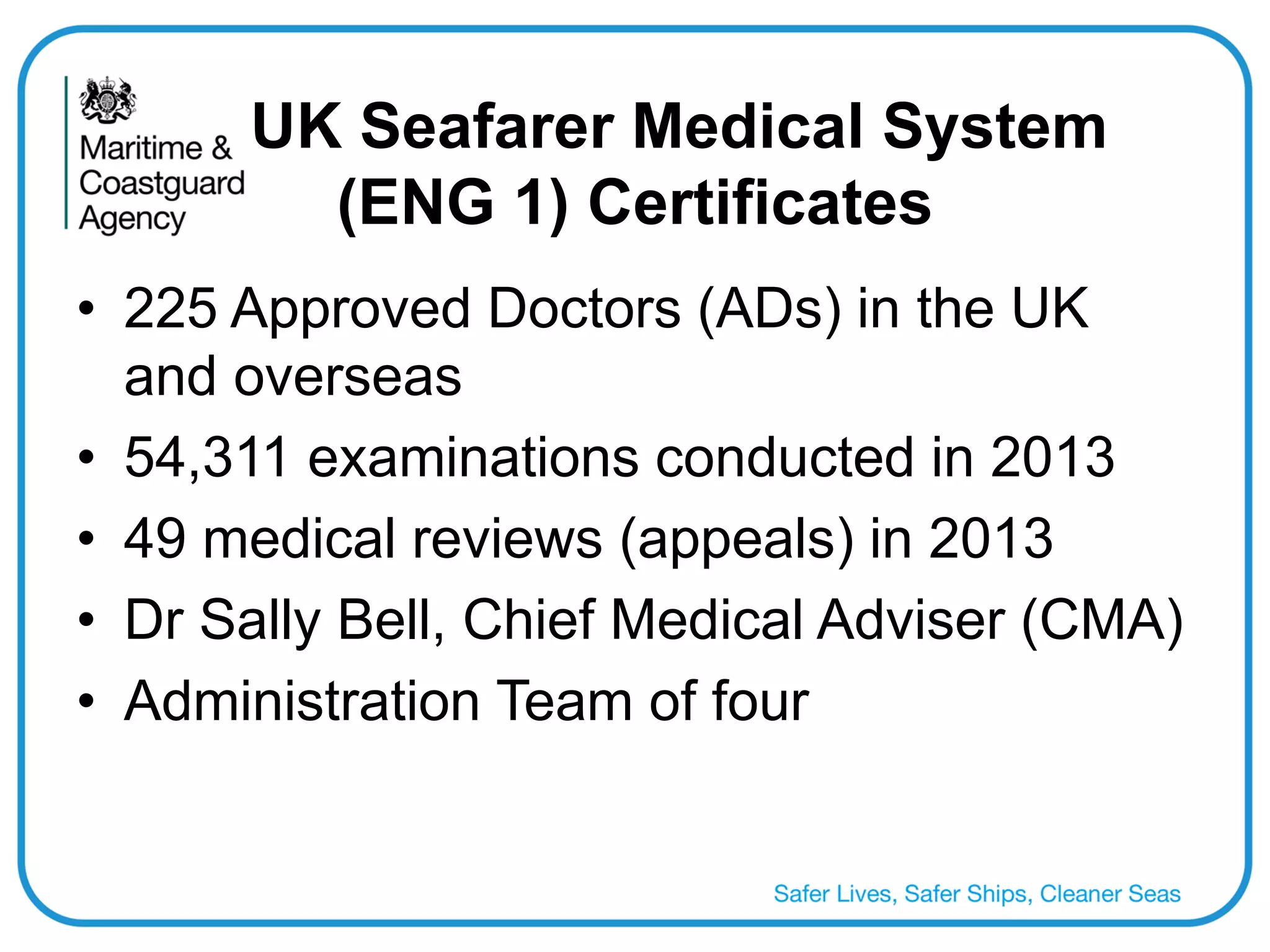
•225 Approved Doctors (ADs) in the UK and overseas 
•54,311 examinations conducted in 2013 
•49 medical reviews (appeals) in 2013 
•Dr Sally Bell, Chief Medical Adviser (CMA) 
•Administration Team of four
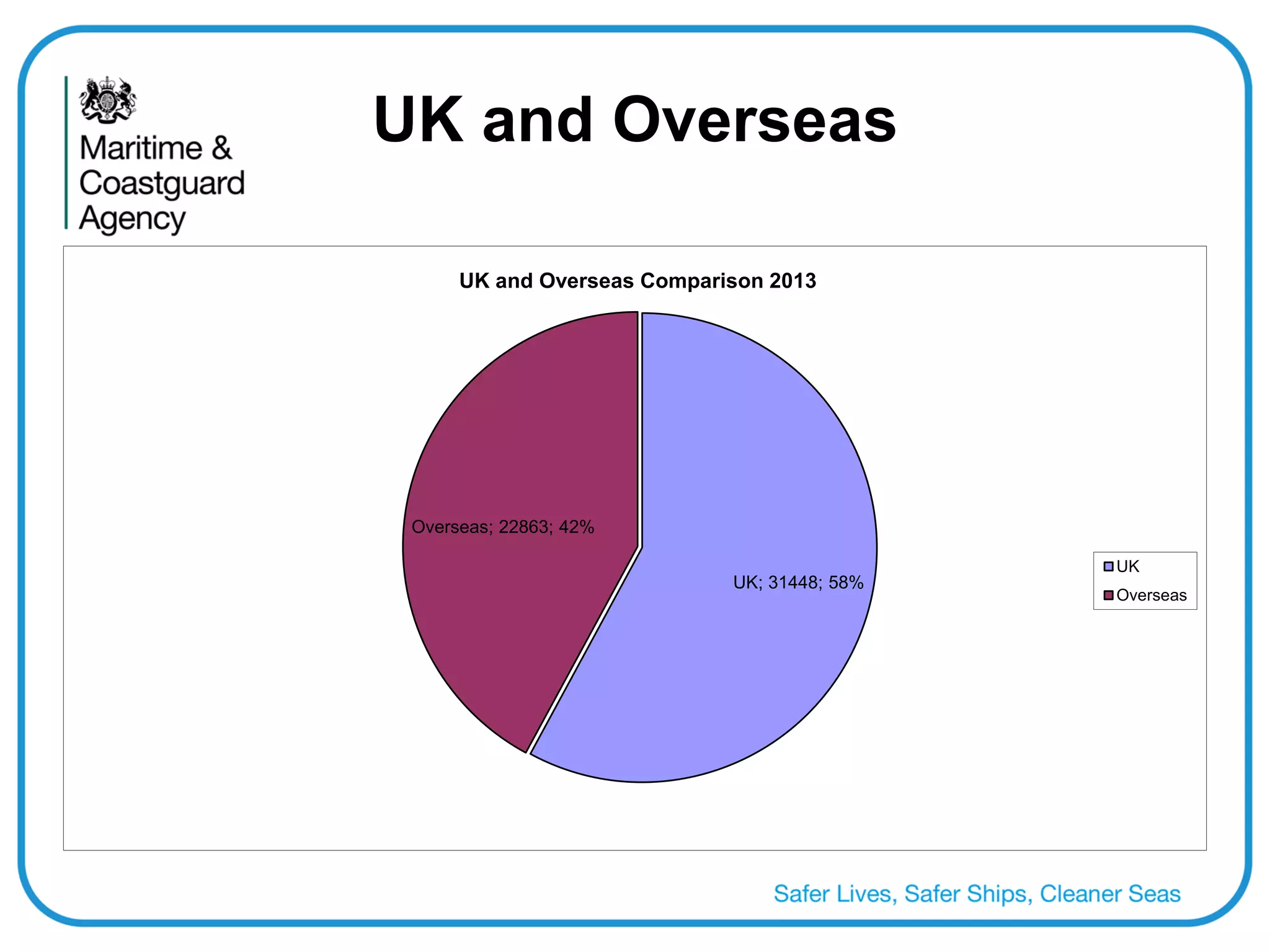
UK and Overseas 
UK; 31448; 58% 
Overseas; 22863; 42% 
UK and Overseas Comparison 2013 
UK 
Overseas
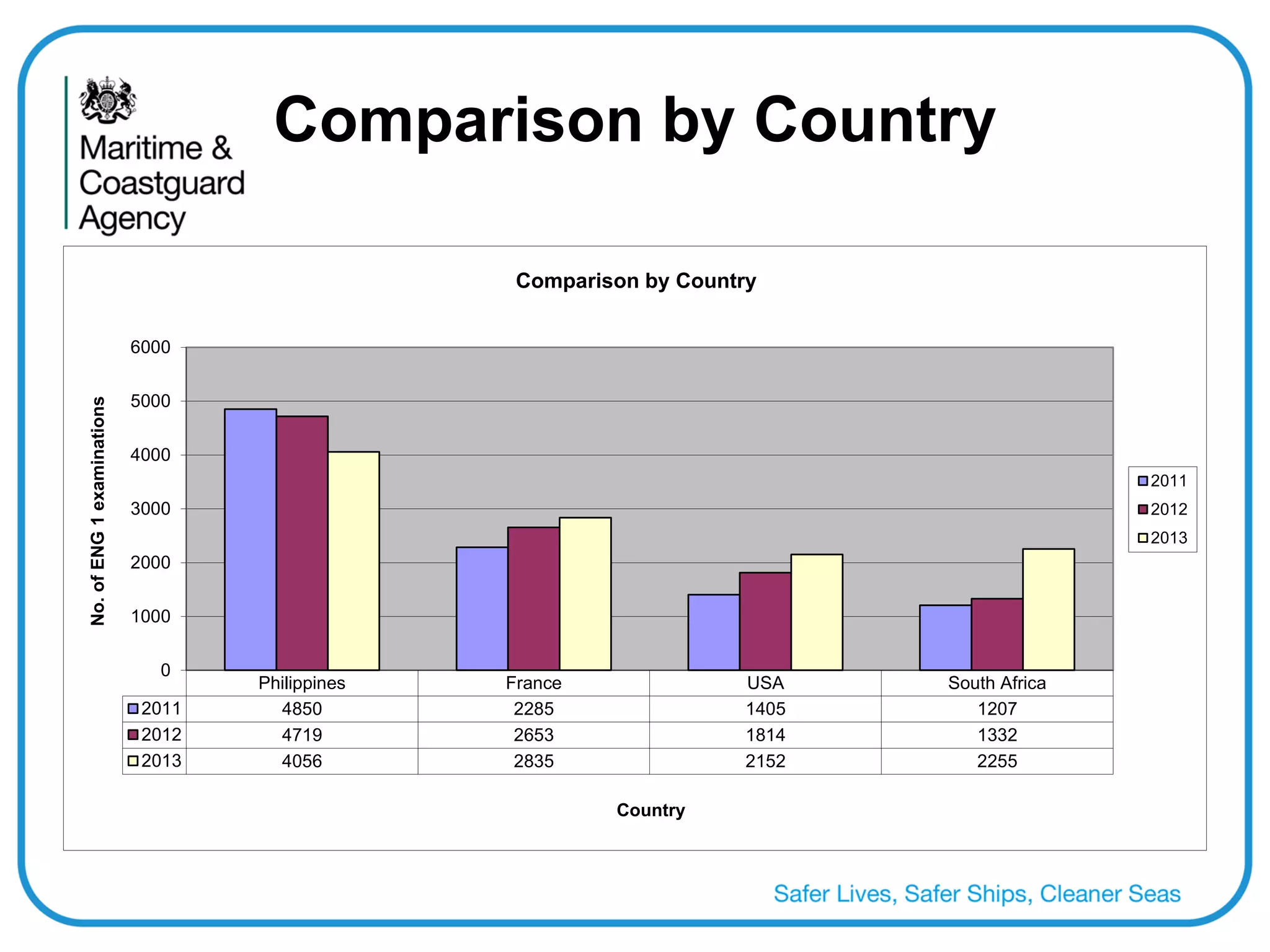
Comparison by Country 
Philippines 
France 
USA 
South Africa 
2011 
4850 
2285 
1405 
1207 
2012 
4719 
2653 
1814 
1332 
2013 
4056 
2835 
2152 
2255 
0 
1000 
2000 
3000 
4000 
5000 
6000 
No. of ENG 1 examinations 
Country 
Comparison by Country 
2011 
2012 
2013
Competence 
•Doctors to deliver consistent decisions that are aligned with the UK medical fitness standards 
•Doctors to conduct the examinations in a way that is thorough, fair and acceptable to seafarers 
•The examination is seen as providing good value for money
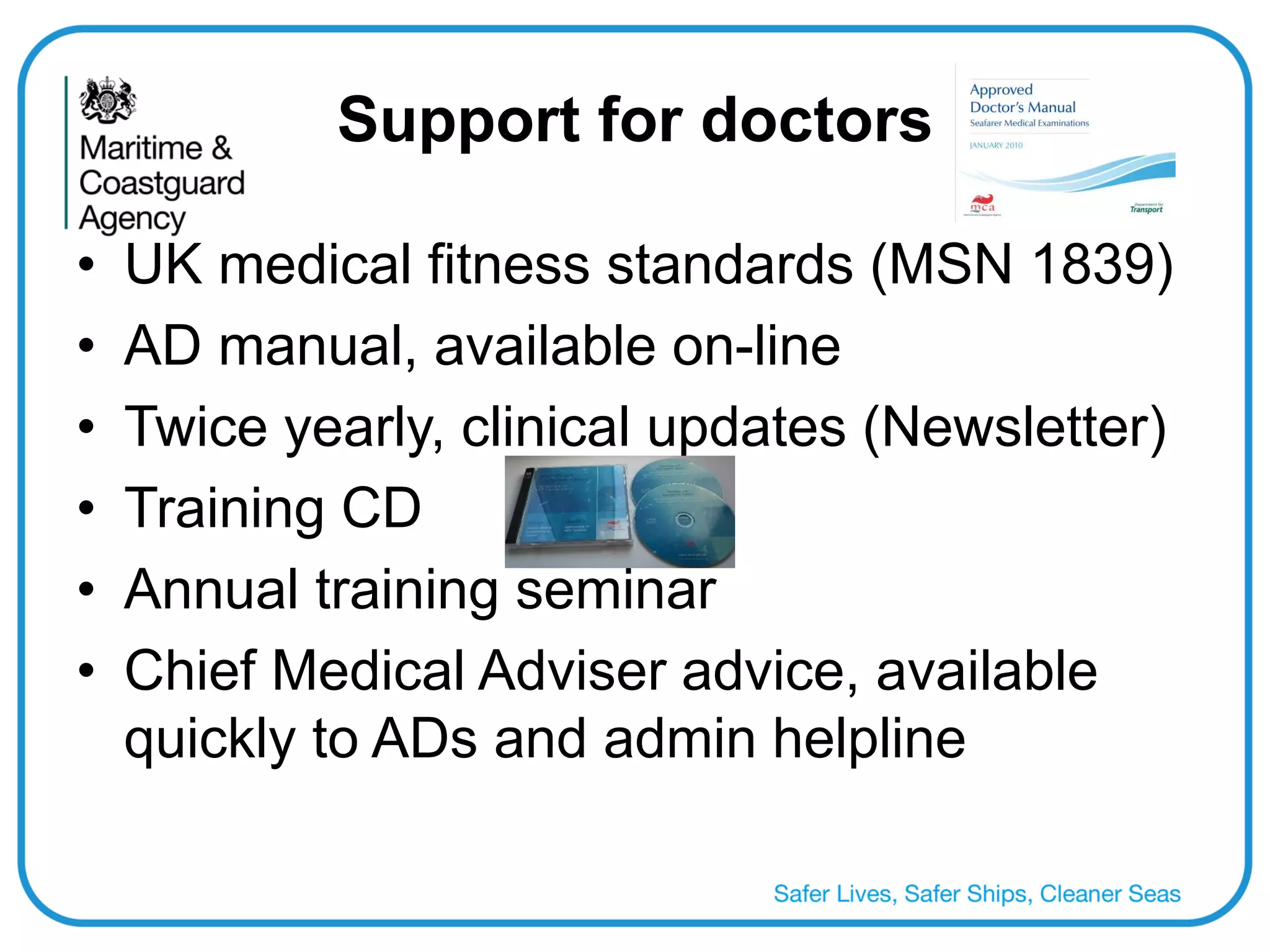
Support for doctors 
•UK medical fitness standards (MSN 1839) 
•AD manual, available on-line 
•Twice yearly, clinical updates (Newsletter) 
•Training CD 
•Annual training seminar 
•Chief Medical Adviser advice, available quickly to ADs and admin helpline
Support for doctors 
•This level of support defines the type of competence that is required 
•Inexperienced ADs are offered additional guidance 
•We monitor competency through, audits, complaints, annual statistics review and questions asked by ADs
Maintaining competency 
•All ADs must complete an annual return form of examinations conducted 
•MCA conducts an audit of all new ADs 
•New ADs must attend the annual training seminar 
•Medical Referee system 
•We issue warning letters to ADs who are not following our medical standards or procedures 
•We do end appointments of ADs
Defining competence 
•Competence – requires a great deal of medical autonomy and this needs to be initial, consistent and regular training 
•There needs to be Quality Assurance of doctors 
•Clinical support and guidance 
•However, there are established doctors who think they know best and looking up standards is for novices and wimps. These doctors may be difficult to engage with
International meetings 
•The revision of the ILO guidelines on the medical examinations of seafarers, the recent STCW Manila amendments and the introduction of the Maritime Labour Convention (MLC) should lead to consistency of medical standards and their application internationally 
•Norway, Germany, the Netherlands and the UK have held a number of meetings to discuss if it is possible to reach an international consensus 
•Denmark attended the last two meetings and Finland have expressed a wish to attend the next meeting
The aims of collaboration 
•Better access to statutory seafarer medicals that meet the requirements of all the countries involved 
•Greater effectiveness and efficiency in the provision of support for doctors and for the improvement of their performance 
•The adoption of common fitness criteria aligned with the requirements of the MLC and STCW and following the revised ILO/IMO Guidelines on medical examinations which support these conventions 
•An improved service to seafarers and to their employers
Appointment criteria 
•All countries in the group require confirmation that a doctor is registered with the appropriate national medical registration body 
•All seek applicants who have occupational and/or maritime experience but none have specific qualification based requirements 
•Decisions on appointments are taken by the maritime authority on the advice of a doctor in Germany, Netherlands and UK. In Norway this is an administrative decision for the authority in Norway and for an embassy elsewhere
Comparison of certificates and their compliance with STCW and MLC 
•The group invested time in the comparison of our seafarer medical certificates and medical fitness standards 
•We bench marked each against the MLC and new STCW requirements
Discrepancies between the four national medical fitness criteria 
•Vision – criteria for colour and monocular vision and the supplementary tests used, if the Ishihara plates are failed vary 
•Hearing – testing and duties 
•There are some differences in the ways in which criteria for diabetes, epilepsy and obesity are expressed between the countries
Where are we now? 
•The group has been working on a joint statement for our websites, confirming that seafarer medical certificates are mutually accepted by Norway, UK and the Netherlands 
•Investigating basic and refresher training for doctors 
•Links to our websites and lists of doctors 
•A further meeting is planned in November
Is international consensus on the mutual recognition of approved doctors possible? 
•A great deal of progress has been made, mapping our respective seafarer medical systems 
•However, further work is needed before mutual recognition is possible
Thank you for listening

Session 4 7 - caroline livingstone - nshc presentation final

  • 1.
    Defining the levelof competence for approved doctors, the experience of the UK - is international consensus on the mutual recognition of approved doctors possible? Caroline Livingstone Medical Administration Manager Maritime and Coastguard Agency UK
  • 2.
    UK Seafarer MedicalSystem (ENG 1) Certificates •225 Approved Doctors (ADs) in the UK and overseas •54,311 examinations conducted in 2013 •49 medical reviews (appeals) in 2013 •Dr Sally Bell, Chief Medical Adviser (CMA) •Administration Team of four
  • 3.
    UK and Overseas UK; 31448; 58% Overseas; 22863; 42% UK and Overseas Comparison 2013 UK Overseas
  • 4.
    Comparison by Country Philippines France USA South Africa 2011 4850 2285 1405 1207 2012 4719 2653 1814 1332 2013 4056 2835 2152 2255 0 1000 2000 3000 4000 5000 6000 No. of ENG 1 examinations Country Comparison by Country 2011 2012 2013
  • 5.
    Competence •Doctors todeliver consistent decisions that are aligned with the UK medical fitness standards •Doctors to conduct the examinations in a way that is thorough, fair and acceptable to seafarers •The examination is seen as providing good value for money
  • 6.
    Support for doctors •UK medical fitness standards (MSN 1839) •AD manual, available on-line •Twice yearly, clinical updates (Newsletter) •Training CD •Annual training seminar •Chief Medical Adviser advice, available quickly to ADs and admin helpline
  • 7.
    Support for doctors •This level of support defines the type of competence that is required •Inexperienced ADs are offered additional guidance •We monitor competency through, audits, complaints, annual statistics review and questions asked by ADs
  • 8.
    Maintaining competency •AllADs must complete an annual return form of examinations conducted •MCA conducts an audit of all new ADs •New ADs must attend the annual training seminar •Medical Referee system •We issue warning letters to ADs who are not following our medical standards or procedures •We do end appointments of ADs
  • 9.
    Defining competence •Competence– requires a great deal of medical autonomy and this needs to be initial, consistent and regular training •There needs to be Quality Assurance of doctors •Clinical support and guidance •However, there are established doctors who think they know best and looking up standards is for novices and wimps. These doctors may be difficult to engage with
  • 10.
    International meetings •Therevision of the ILO guidelines on the medical examinations of seafarers, the recent STCW Manila amendments and the introduction of the Maritime Labour Convention (MLC) should lead to consistency of medical standards and their application internationally •Norway, Germany, the Netherlands and the UK have held a number of meetings to discuss if it is possible to reach an international consensus •Denmark attended the last two meetings and Finland have expressed a wish to attend the next meeting
  • 11.
    The aims ofcollaboration •Better access to statutory seafarer medicals that meet the requirements of all the countries involved •Greater effectiveness and efficiency in the provision of support for doctors and for the improvement of their performance •The adoption of common fitness criteria aligned with the requirements of the MLC and STCW and following the revised ILO/IMO Guidelines on medical examinations which support these conventions •An improved service to seafarers and to their employers
  • 12.
    Appointment criteria •Allcountries in the group require confirmation that a doctor is registered with the appropriate national medical registration body •All seek applicants who have occupational and/or maritime experience but none have specific qualification based requirements •Decisions on appointments are taken by the maritime authority on the advice of a doctor in Germany, Netherlands and UK. In Norway this is an administrative decision for the authority in Norway and for an embassy elsewhere
  • 13.
    Comparison of certificatesand their compliance with STCW and MLC •The group invested time in the comparison of our seafarer medical certificates and medical fitness standards •We bench marked each against the MLC and new STCW requirements
  • 14.
    Discrepancies between thefour national medical fitness criteria •Vision – criteria for colour and monocular vision and the supplementary tests used, if the Ishihara plates are failed vary •Hearing – testing and duties •There are some differences in the ways in which criteria for diabetes, epilepsy and obesity are expressed between the countries
  • 15.
    Where are wenow? •The group has been working on a joint statement for our websites, confirming that seafarer medical certificates are mutually accepted by Norway, UK and the Netherlands •Investigating basic and refresher training for doctors •Links to our websites and lists of doctors •A further meeting is planned in November
  • 16.
    Is international consensuson the mutual recognition of approved doctors possible? •A great deal of progress has been made, mapping our respective seafarer medical systems •However, further work is needed before mutual recognition is possible
  • 17.
    Thank you forlistening