In the wake of the revised ILO/IMO Guidelines on medical examination of seafarers: Will more nations approve their own doctors, or will we get international recognition of medical examiners? 
Dr. Nebojša Nikolić
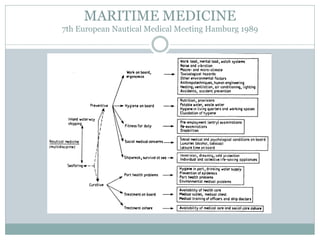
MARITIME MEDICINE 7th European Nautical Medical Meeting Hamburg 1989
International Cooperation 
The field of maritime medicine is probably the most international of all the different fields of medicine 
National regulation of the shipping industry is not sufficient. 
There is no supranational authority 
It is necessary to cooperate and reach consensus across national boundaries by establishing multilateral treaties or conventions that can be followed by all shipping nations. 
The international organizations are important forums for discussions, negotiations and contract formations between seafaring nations, resulting in mutual binding regulations for the shipping industry. 
This is of special importance to several fields of maritime medicine.
Organisations of Importance to Maritime Medicine 
World Health Organization 
International Labour Organization 
International Maritime Organization (IMO) 
International Organization for Migration (IOM) 
International Maritime Health Association 
International Transport Workers’ Federation 
International Chamber of Shipping (ICS) and International Shipping Federation (ISF)
Other Organisations of Importance to Maritime Medicine 
International Mobile Satellite Organization (IMSO) 
Comité International Radio-Maritime (CIRM) 
UNEP 
PARIS MOU 
Cruise Lines International Association (CLIA) 
Other International Organizations that influence Shipping Industry and Trade (CDC, EUCDC) 
European Maritime Safety Agency (EMSA) 
International Association of Classification Societies 
National Organizations with International Impact (Norwegian Maritime Directorate, Australia, MCA) 
IMHA
International Conventions and Regulations of Importance to Maritime Medicine 
The International Law of the Sea 
High seas are the waters outside national jurisdiction, like oceans and other waters including some estuaries and rivers and even lakes. 
Ships sailing the high seas are generally under the jurisdiction of the flag state; 
Freedom of navigation is established through different international conventions
Ratification 
The process of adoption, ratification and entry into force of multilateral treaties like international conventions, is often a slow one. 
A minimum number of member states, representing a minimum amount of the world’s total gross tonnage are usually necessary for a convention entering into force.
What After The Ratification ? 
Who is going to build national legislation? 
Who should be involved ? 
Which institutions to involve ? 
Which institutions to build?
“The Four Pillars” Conventions Relating to Maritime Health 
SOLAS 1974 
STCW 1978 
MARPOL 1973 
MLC 2006
There is no International Convention of Maritime Medicine 
A list of conventions which in some way discuss aspects of maritime medicine would probably include most maritime conventions.
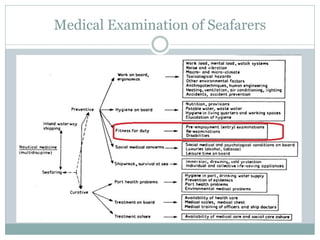
Medical Examination of Seafarers
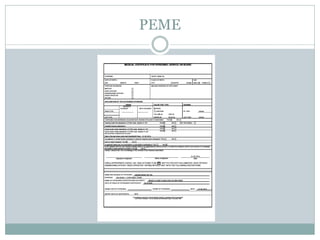
PEME
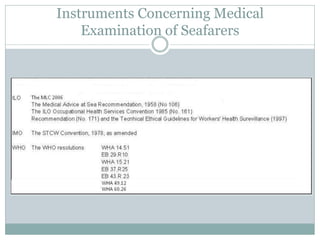
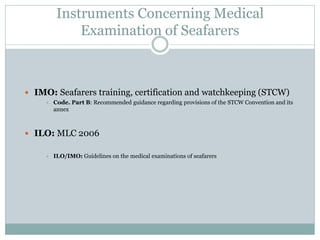
Instruments Concerning Medical Examination of Seafarers
IMO: Seafarers training, certification and watchkeeping (STCW) 
Code. Part B: Recommended guidance regarding provisions of the STCW Convention and its annex 
ILO: MLC 2006 
ILO/IMO: Guidelines on the medical examinations of seafarers 
Instruments Concerning Medical Examination of Seafarers
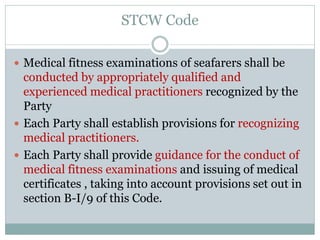
STCW Code 
Medical fitness examinations of seafarers shall be conducted by appropriately qualified and experienced medical practitioners recognized by the Party 
Each Party shall establish provisions for recognizing medical practitioners. 
Each Party shall provide guidance for the conduct of medical fitness examinations and issuing of medical certificates , taking into account provisions set out in section B-I/9 of this Code.
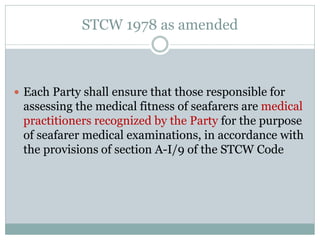
STCW 1978 as amended 
Each Party shall ensure that those responsible for assessing the medical fitness of seafarers are medical practitioners recognized by the Party for the purpose of seafarer medical examinations, in accordance with the provisions of section A-I/9 of the STCW Code
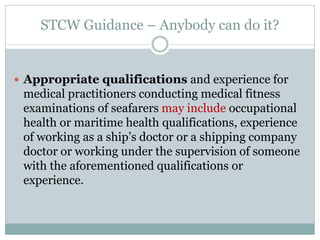
STCW Guidance – Anybody can do it? 
Appropriate qualifications and experience for medical practitioners conducting medical fitness examinations of seafarers may include occupational health or maritime health qualifications, experience of working as a ship’s doctor or a shipping company doctor or working under the supervision of someone with the aforementioned qualifications or experience.
The Articles 
The Regulations 
The Code 
Part A (mandatory Standards) 
Part B (non-mandatory Guidlines) 
MLC 2006
Members which have ratified this Convention are not bound by the guidance concerned 
Inspections would deal only with the relevant requirements of this Convention (Articles, Regulations and the Standards in Part A) 
If having duly considered the relevant Guidlines, a Member decides to provide different arrangements as required by the Standard in Part A, that is acceptable 
MLC 2006
Guidline B1.2.1 – International guidlines 
The competent authority, medical practitioners.... …should follow ILO/WHO Guidlines.., 
…including any subsequent version, and any other applicable international guidlines 
published by the ILO, the IMO or the WHO. 
Guidline B1.2 – Medical certificate Luckily !
ILO/IMO Guidlines on the medical examinations of seafarers 
Purpose and scope of the Guidelines 
Seafarers are required to undergo medical examinations to reduce risks to other crew members and for the safe operation of the ship, as well as to safeguard their personal health and safety. 
These Guidelines are intended to provide maritime administrations with an internationally recognized set of criteria for use by competent authorities either directly or as the basis for framing national medical examination standards that will be compatible with international requirements.
ILO/IMO Guidlines on the medical examinations of seafarers 
These Guidelines have been developed in order to reduce the differences in the application of medical requirements and examination procedures and to ensure that the medical certificates which are issued to seafarers are a valid indicator of their medical fitness for the duties they will perform. Ultimately, the aim of the Guidelines is to contribute to health and safety at sea.
ILO/IMO Guidlines on the medical examinations of seafarers 
The Guidelines are designed as a tool to enhance medical examinations and make them more consistent; they cannot and are not intended to replace the professional skill and judgement of recognized medical practitioners.
ILO/IMO Guidlines on the medical examinations of seafarers 
Seafarer medical fitness examinations 
Consistent decision-making needs to be based on the application of criteria for fitness that are applied in a uniform way, both nationally and, because of the global nature of seafaring and marine transport, internationally. These Guidelines provide the basis for establishing national arrangements which are compliant with the relevant international Conventions. 
the routine and emergency duties must be known to the examining medical practitioner, who will have to establish, using clinical skills, whether the seafarer meets the standards for all anticipated routine and emergency duties specific to their individual post and whether any routine or emergency duties need to be modified to enable them to be performed safely and effectively 
the examining medical practitioner needs the skills to assess individual fitness in all these areas and the knowledge to relate their findings to the requirements of the individual’s routine and emergency duties at sea whenever any limitations in fitness are identified.
ILO/IMO Guidlines on the medical examinations of seafarers 
Recognition of medical practitioners 
A medical practitioner so recognized by the competent authority: 
should be a qualified medical practitioner currently accredited by the medical registration authority for the place where they are working; 
should be experienced in general and occupational medicine or maritime occupational medicine; 
should have knowledge of the living and working conditions on board ships and the job demands on seafarers in so far as they relate to the effects of health problems on fitness for work, gained wherever possible through special instruction and through knowledge based on personal experience of seafaring;
ILO/IMO Guidlines on the medical examinations of seafarers 
The competent authority should have in place quality assurance procedures to ensure that medical examinations meet the required standards. 
ISO ?
International rules and regulations ? 
Interests of ship owners ? 
Interests of seafarers ? 
Interests of medical doctors ? 
Interests of trainers ? 
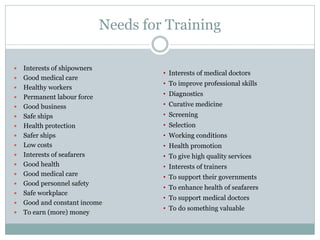
Training in Maritime Health - Needs for Training
IMO: Seafarers training, certification and watchkeeping (STCW) 
Code. Part B: Recommended guidance regarding provisions of the STCW Convention and its annex 
ILO: MLC 2006 
ILO/IMO: Guidelines on the medical examinations of seafarers 
Instruments Concerning Training for Maritime Doctors
Training in Maritime Medicine – Why ? 
Changes in the character of the seafaring industry and changes in regulations laid down with this convention, resulting changes in all areas of maritime health, and reappearance of travel- connected infective diseases like SARS and Bird Flu endangering the whole world, are requiring integrated maritime health, with a new set of knowledge and competences from maritime doctors
Needs for Training 
Interests of shipowners 
Good medical care 
Healthy workers 
Permanent labour force 
Good business 
Safe ships 
Health protection 
Safer ships 
Low costs 
Interests of seafarers 
Good health 
Good medical care 
Good personnel safety 
Safe workplace 
Good and constant income 
To earn (more) money 
• Interests of medical doctors 
• To improve professional skills 
• Diagnostics 
• Curative medicine 
• Screening 
• Selection 
• Working conditions 
• Health promotion 
• To give high quality services 
• Interests of trainers 
• To support their governments 
• To enhance health of seafarers 
• To support medical doctors 
• To do something valuable
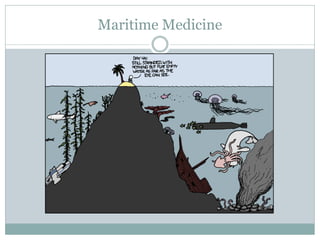
Maritime Medicine
Or in occupational maritime health? 
Or in maritime medicine? 
Or in occupational medicine? 
Training for Medical Doctors in Maritime Health
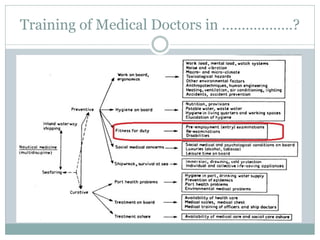
Training of Medical Doctors in ………………?
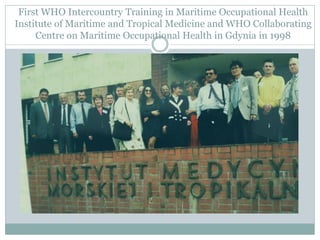
First WHO Intercountry Training in Maritime Occupational Health Institute of Maritime and Tropical Medicine and WHO Collaborating Centre on Maritime Occupational Health in Gdynia in 1998
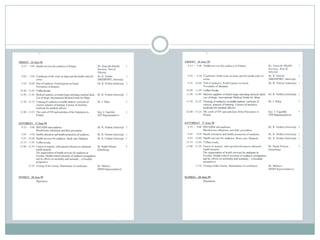
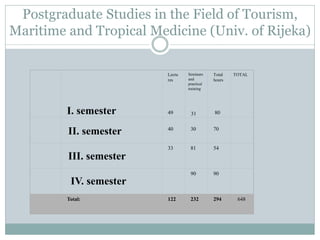
Postgraduate Studies in the Field of Tourism, Maritime and Tropical Medicine (Univ. of Rijeka) 
I. semester 
Lectures 
49 
Seminars and practical training 
31 
Total hours 
80 
TOTAL 
40 
30 
70 
33 
81 
54 
90 
90 
Total: 
122 
232 
294 
648 
II. semester 
IV. semester 
III. semester
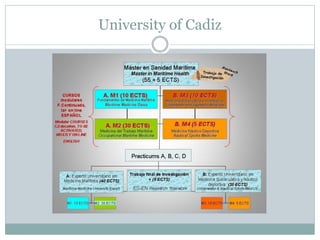
University of Cadiz
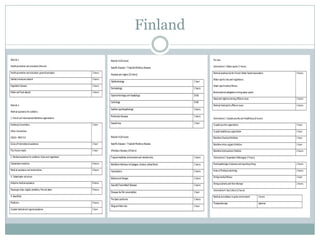
Finland
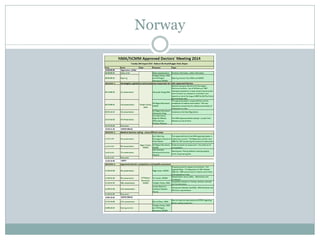
Norway
Healthcare Accreditation 
Although healthcare accreditation is available in some countries, the only similar quality project in place specifically designed for seafarer health care facilities is that run by the one P & I Club for some of their participating clinics. 
Other organisations do inspect clinics, but not to a set of validated peer-reviewed quality standards.
Should it be the Same for Everybody ?
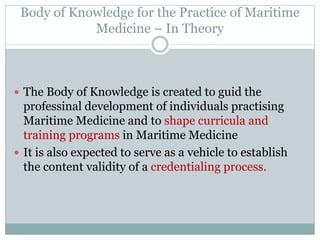
Body of Knowledge for the Practice of Maritime Medicine – In Theory 
The Body of Knowledge is created to guid the professinal development of individuals practising Maritime Medicine and to shape curricula and training programs in Maritime Medicine 
It is also expected to serve as a vehicle to establish the content validity of a credentialing process.
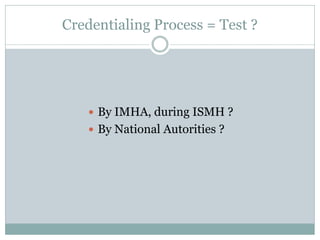
Credentialing Process = Test ? 
By IMHA, during ISMH ? 
By National Autorities ?
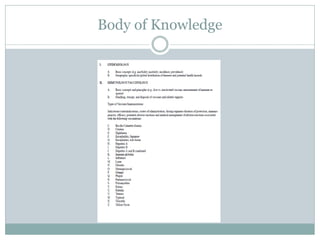
Body of Knowledge
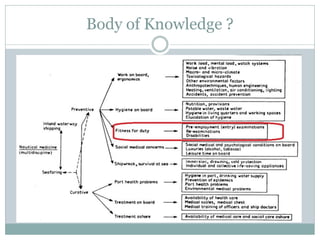
Body of Knowledge ?
MEDMAR Project
Meeting of the Maritime Authorities of Norway, Germany, Netherlands and UK to rewiew the arrangements for approval of maritime medical examiners outside of home territories 
United Kingdom, The Netherlands, (Germany, Denmark) and Norway (the parties) intend to enter into an agreement which states that Seafarer Medical Certificates issued by the parties are valid on vessels underthe parties’ flag. 
This agreement will be based on the parties’ standards for training of approved doctors, medical examination of seafarers and the issue of seafarer medical certificates.
Rationale 
For Doctors assessing seafarers a lot more is left to the individual Doctor as the guidelines are not as strict and it is easy to end up with different decisions by different Doctors 
discussion had started with the long term goal of having identical training, standards, certificate, QA etc between all nations and the development of a course based on ILO guidelines was a first step in that goal. 
EU directive 2005/45/EG states that European countries should accept certificates from other EU countries.
Meeting of the Maritime Authorities of Norway, Germany, Netherlands and UK to rewiew the arrangements for approval of maritime medical examiners outside of home territories 
Re. document outlining the revised course content: 
agree with the general principles but have questions concerning the details of the course and how Doctors are trained….. 
the most important thing is the final competency achieved no matter how the training is delivered…. 
if we only look at common outcomes it is unlikely that a common course will ever be developed….. 
develop two documents - the first should be an agreement in principal for the learning objectives and competencies to be achieved and the second to outline the course as in the original document…..
Course
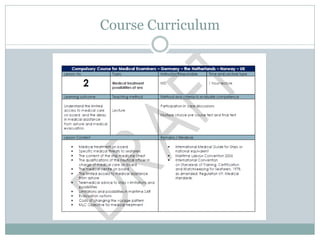
Course Curriculum
Branding the Product
European Initiatives on Medical Education 
EMA (European Medical Association)
Tuning 
The TUNING project is a project by and for universities. 
It is the Universities’ response to the challenge of the Bologna Declaration
Tuning of educational structures and programmes on the basis of diversity and autonomy
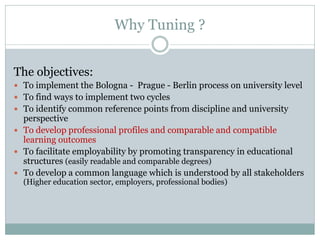
Why Tuning ? 
The objectives: 
To implement the Bologna - Prague - Berlin process on university level 
To find ways to implement two cycles 
To identify common reference points from discipline and university perspective 
To develop professional profiles and comparable and compatible learning outcomes 
To facilitate employability by promoting transparency in educational structures (easily readable and comparable degrees) 
To develop a common language which is understood by all stakeholders (Higher education sector, employers, professional bodies)
Berlin Communique (19 Sept 2003) 
Degree structure: adoption of a system essentially based on two main cycles 
“Ministers encourage the member States to elaborate a framework of comparable and compatible qualifications for their higher education systems, which should seek to describe qualifications in terms of workload, level, learning outcomes, competences and profile. They also undertake to elaborate an overarching framework of qualifications for the Higher Education Area.”
Tuning Methodology learning outcomes and competences 
What should a student know, understand and be able to do to be employable (to examine seafarer and issue the certificate)?
Why Focus on Competences 
1. Further transparency of professional profiles in study programmes and emphasis on learning outcomes 
2. Shift to a more learner oriented approach to education 
3. Growing demands of a lifelong learning society which requires more flexibility 
4. Need for higher levels of employability and citizenship 
5. Enhancement of the European dimension of Higher Education 
6.Need for a shared language for consultation with all stakeholders
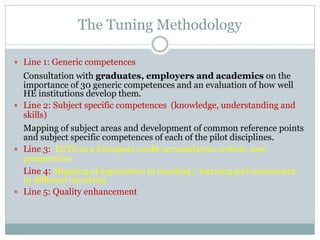
The Tuning Methodology 
Line 1: Generic competences 
Consultation with graduates, employers and academics on the importance of 30 generic competences and an evaluation of how well HE institutions develop them. 
Line 2: Subject specific competences (knowledge, understanding and skills) 
Mapping of subject areas and development of common reference points and subject specific competences of each of the pilot disciplines. 
Line 3: ECTS as a European credit accumulation system: new perspectives 
Line 4: Mapping of approaches to teaching / learning and assessment in different countries 
Line 5: Quality enhancement
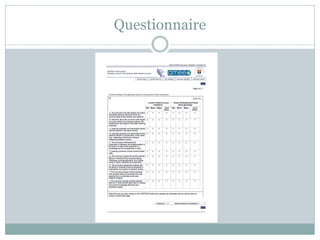
Questionnaire
The Tuning Questionnaire 
FOCUS ON GENERIC COMPETENCES 
(GENERAL ACADEMIC SKILLS) 
TARGET GROUPS: 
•GRADUATES (Doctors ?) 
•EMPLOYERS (Shipowners ?) 
•ACADEMICS (National Authorities ?) 
WHAT ARE THE MOST IMPORTANT COMPETENCES TO BE EMPLOYABLE INDEPENDENT OF ONE’S SUBJECT AREA? 
ARE THESE ACTUALY TAUGHT AND TO WHAT EXTENT?
The Tuning Questionnaire 
TYPES OF COMPETENCES MEASURED: 
•Instrumental competences: cognitive abilities, methodological abilities, technological abilities and linguistic abilities 
•Interpersonal competences: individual abilities like social skills (social interaction and co-operation) 
•Systemic competences: abilities and skills concerning whole systems (combination of understanding, sensibility and knowledge; prior acquisition of instrumental and interpersonal competences required)
TYPES OF COMPETENCES MEASURED: 
Instrumental competences: 
•Capacity for analyses and synthesis 
•Capacity for organisation and planning 
•Basic general knowledge 
•Grounding in basic knowledge of the profession 
•Oral and written communication in your native language 
•Knowledge of a second language 
•Elementary computing skills 
•Information management skills (ability to retrieve and analyse information from different sources) 
•Problem solving 
•Decision-making 
The Tuning Questionnaire
The Tuning Questionnaire 
TYPES OF COMPETENCES MEASURED: 
Interpersonal competences: 
•Critical and self-critical abilities 
•Teamwork 
•Interpersonal skills 
•Ability to work in an interdisciplinary team 
•ability to communicate with experts in other fields 
•Appreciation of diversity and multiculturality 
•Ability to work in an international context 
•Ethical commitment
TYPES OF COMPETENCES MEASURED: 
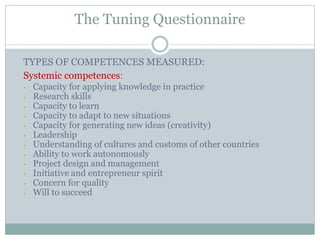
Systemic competences: 
•Capacity for applying knowledge in practice 
•Research skills 
•Capacity to learn 
•Capacity to adapt to new situations 
•Capacity for generating new ideas (creativity) 
•Leadership 
•Understanding of cultures and customs of other countries 
•Ability to work autonomously 
•Project design and management 
•Initiative and entrepreneur spirit 
•Concern for quality 
•Will to succeed 
The Tuning Questionnaire
Methodology and Results 
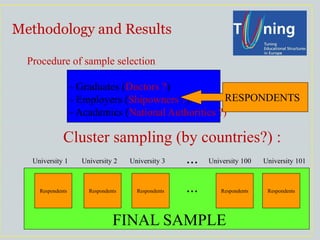
Cluster sampling (by countries?) : 
University 1 
Respondents 
University 2 
Respondents 
University 3 
Respondents 
University 100 
Respondents 
University 101 
Respondents 
... 
... 
Procedure of sample selection - Graduates (Doctors ?) - Employers (Shipowners ?) - Academics (National Authorities ?) 
RESPONDENTS 
FINAL SAMPLE
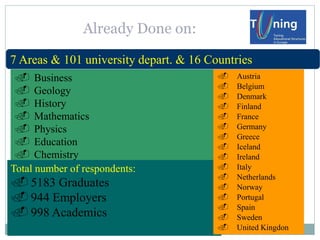
7 Areas & 101 university depart. & 16 Countries 
Business 
Geology 
History 
Mathematics 
Physics 
Education 
Chemistry 
Total number of respondents: 
5183 Graduates 
944 Employers 
998 Academics 
Already Done on: 
Austria 
Belgium 
Denmark 
Finland 
France 
Germany 
Greece 
Iceland 
Ireland 
Italy 
Netherlands 
Norway 
Portugal 
Spain 
Sweden 
United Kingdon
2 
Capacity for applying knowledge in practice 
Instrumental 
Interpersonal 
Systemic 
3 
3 
Capacity to adapt to new situations 
Concern for quality 
4 
4 
Information management skills 
Ability to work autonomously 
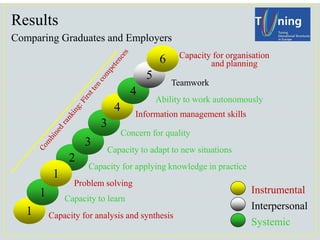
Results 
Comparing Graduates and Employers 
1 
1 
1 
Capacity for analysis and synthesis 
Capacity to learn 
Problem solving 
5 
Teamwork 
6 
Capacity for organisation 
and planning
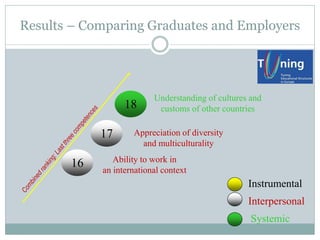
Results – Comparing Graduates and Employers 
18 
Understanding of cultures and 
customs of other countries 
Appreciation of diversity 
and multiculturality 
17 
16 
Ability to work in an international context 
Instrumental 
Interpersonal 
Systemic
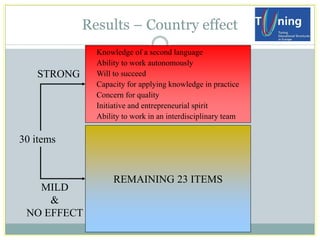
Will to succeed 
Ability to work autonomously 
Knowledge of a second language 
Capacity for applying knowledge in practice 
Concern for quality 
Initiative and entrepreneurial spirit 
Ability to work in an interdisciplinary team 
30 items 
REMAINING 23 ITEMS 
STRONG 
MILD & NO EFFECT 
Results – Country effect
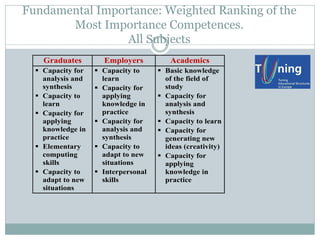
Fundamental Importance: Weighted Ranking of the 
Most Importance Competences. 
All Subjects 
Graduates Employers Academics 
 Capacity for 
analysis and 
synthesis 
 Capacity to 
learn 
 Capacity for 
applying 
knowledge in 
practice 
 Elementary 
computing 
skills 
 Capacity to 
adapt to new 
situations 
 Capacity to 
learn 
 Capacity for 
applying 
knowledge in 
practice 
 Capacity for 
analysis and 
synthesis 
 Capacity to 
adapt to new 
situations 
 Interpersonal 
skills 
 Basic knowledge 
of the field of 
study 
 Capacity for 
analysis and 
synthesis 
 Capacity to learn 
 Capacity for 
generating new 
ideas (creativity) 
 Capacity for 
applying 
knowledge in 
practice
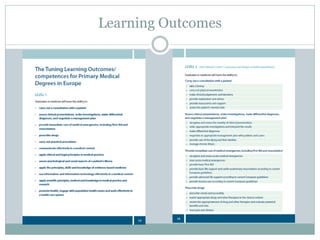
Learning Outcomes
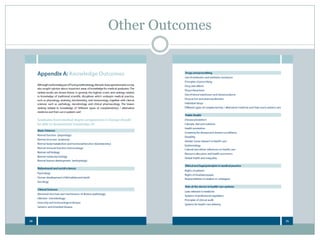
Other Outcomes
Clinical Attachments
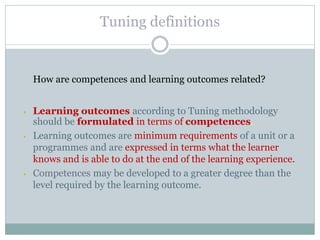
Tuning definitions 
Competences: The Tuning Project focuses on subject specific competences and generic competences. These competences represent a dynamic combination of attributes, abilities and attitudes. Fostering these competences are the object of educational programmes. 
Competences will be formed in various course units and assessed at different stages. 
[competences are obtained by the student]
Tuning definitions 
Learning outcomes: Statements of what a learner is expected to know, understand and/or be able to demonstrate after completion of learning. They can refer to a single course unit or module or else to a period of studies, for example, a first or a second cycle programme. Learning outcomes specify the minimum requirements for award of credit. 
[learning outcomes are formulated by academic staff]
Tuning definitions 
How are competences and learning outcomes related? 
•Learning outcomes according to Tuning methodology should be formulated in terms of competences. 
•Learning outcomes are minimum requirements of a unit or a programmes and are expressed in terms what the learner knows and is able to do at the end of the learning experience. 
•Competences may be developed to a greater degree than the level required by the learning outcome.
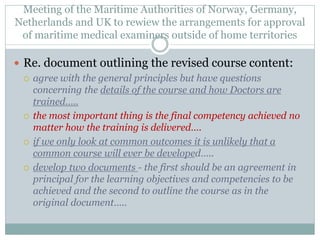
Meeting of the Maritime Authorities of Norway, Germany, Netherlands and UK to rewiew the arrangements for approval of maritime medical examiners outside of home territories 
Re. document outlining the revised course content: 
agree with the general principles but have questions concerning the details of the course and how Doctors are trained….. 
the most important thing is the final competency achieved no matter how the training is delivered…. 
if we only look at common outcomes it is unlikely that a common course will ever be developed….. 
develop two documents - the first should be an agreement in principal for the learning objectives and competencies to be achieved and the second to outline the course as in the original document…..
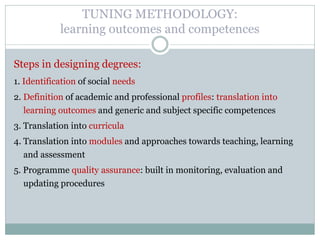
TUNING METHODOLOGY: learning outcomes and competences 
Steps in designing degrees: 
1. Identification of social needs 
2. Definition of academic and professional profiles: translation into learning outcomes and generic and subject specific competences 
3. Translation into curricula 
4. Translation into modules and approaches towards teaching, learning and assessment 
5. Programme quality assurance: built in monitoring, evaluation and updating procedures
A methodology for designing, planning and implementing curricula 
Traditional methodology: 
developed in a national context largely for mono- disciplinary study programmes 
intended for educating graduates with a traditional profile 
focussing on knowledge and content 
Approach: 
staff / teacher oriented 
compulsory subjects to be covered 
input oriented
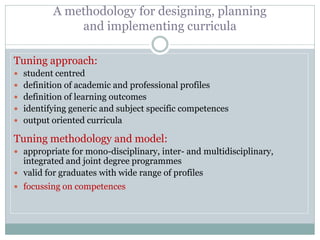
Tuning approach: 
student centred 
definition of academic and professional profiles 
definition of learning outcomes 
identifying generic and subject specific competences 
output oriented curricula 
Tuning methodology and model: 
appropriate for mono-disciplinary, inter- and multidisciplinary, integrated and joint degree programmes 
valid for graduates with wide range of profiles 
focussing on competences 
A methodology for designing, planning and implementing curricula
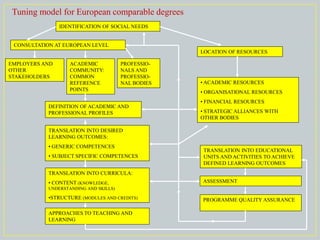
IDENTIFICATION OF SOCIAL NEEDS 
CONSULTATION AT EUROPEAN LEVEL 
LOCATION OF RESOURCES 
EMPLOYERS AND OTHER STAKEHOLDERS 
ACADEMIC COMMUNITY: COMMON REFERENCE POINTS 
PROFESSIO- NALS AND PROFESSIO- NAL BODIES 
DEFINITION OF ACADEMIC AND PROFESSIONAL PROFILES 
TRANSLATION INTO DESIRED LEARNING OUTCOMES: 
• GENERIC COMPETENCES 
• SUBJECT SPECIFIC COMPETENCES 
TRANSLATION INTO CURRICULA: 
• CONTENT (KNOWLEDGE, UNDERSTANDING AND SKILLS) 
•STRUCTURE (MODULES AND CREDITS) 
APPROACHES TO TEACHING AND LEARNING 
• ACADEMIC RESOURCES 
• ORGANISATIONAL RESOURCES 
• FINANCIAL RESOURCES 
• STRATEGIC ALLIANCES WITH OTHER BODIES 
TRANSLATION INTO EDUCATIONAL UNITS AND ACTIVITIES TO ACHIEVE DEFINED LEARNING OUTCOMES 
ASSESSMENT 
PROGRAMME QUALITY ASSURANCE 
Tuning model for European comparable degrees
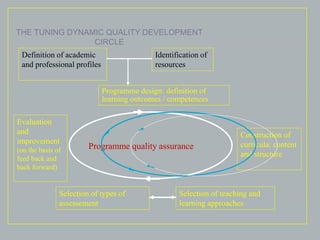
THE TUNING DYNAMIC QUALITY DEVELOPMENT CIRCLE 
Definition of academic and professional profiles 
Programme design: definition of learning outcomes / competences 
Identification of resources 
Construction of curricula: content and structure 
Selection of teaching and learning approaches 
Selection of types of assessement 
Evaluation and improvement (on the basis of feed back and back forward) 
Programme quality assurance
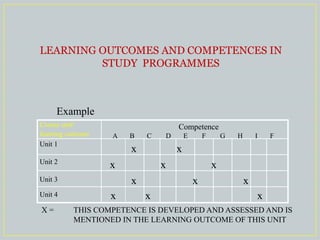
LEARNING OUTCOMES AND COMPETENCES IN STUDY PROGRAMMES 
Example 
Course unit/ learning outcome 
Unit 1 
Unit 2 
Competence 
A B C D E F G H I F 
x x 
X = THIS COMPETENCE IS DEVELOPED AND ASSESSED AND IS MENTIONED IN THE LEARNING OUTCOME OF THIS UNIT 
Unit 3 
Unit 4 
x x x 
x x x 
x x x
How to adapt and how to adopt the Tuning methodology? 
National Authorities (Shipowners, IMHA?) and Tuning:
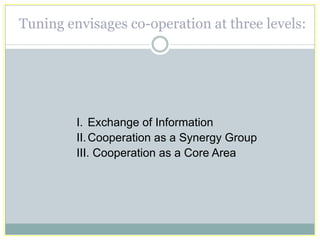
Tuning envisages co-operation at three levels: 
I. Exchange of Information 
II. Cooperation as a Synergy Group 
III. Cooperation as a Core Area
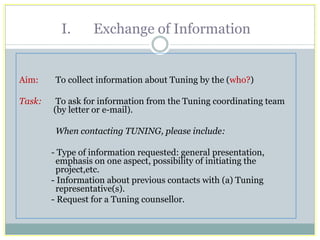
I. Exchange of Information 
Aim: To collect information about Tuning by the (who?) 
Task: To ask for information from the Tuning coordinating team (by letter or e-mail). 
When contacting TUNING, please include: 
- Type of information requested: general presentation, emphasis on one aspect, possibility of initiating the project,etc. 
- Information about previous contacts with (a) Tuning representative(s). 
- Request for a Tuning counsellor.
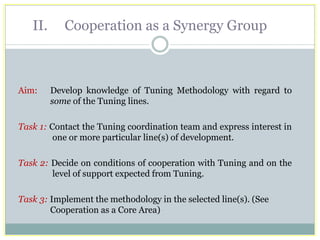
II. Cooperation as a Synergy Group 
Aim: Develop knowledge of Tuning Methodology with regard to some of the Tuning lines. 
Task 1: Contact the Tuning coordination team and express interest in one or more particular line(s) of development. 
Task 2: Decide on conditions of cooperation with Tuning and on the level of support expected from Tuning. 
Task 3: Implement the methodology in the selected line(s). (See Cooperation as a Core Area)
III. Cooperation as a Core Area 
Aim: Apply the Tuning Methodology along all five lines for the specific subject area of the Thematic Network (Maritime medicine). 
Line 1 and 2: 
Generic and Subject Specific Competences 
Objective:Develop academic and professional profiles for a degree programme within the Thematic Network area. Identify the learning outcomes expressed in generic and subject specific competences.
Generic and Subject Specific Competences 
Task 1: Obtain information on the findings and methodology of Tuning. 
Task 2: Produce a Map of Professions (National requests, training 
programs?) in Europe (Global?) in relation to the (Maritime) area. 
Task 3: Choose a degree programme and debate how to find out the 
importance of generic competences for the degree chosen and 
select a number of competences from the Tuning list. 
Task 4: Reflect and debate on Levels particularly in relation to First and 
Second Cycle 
Task 5: Identify the most relevant generic competences for the subject area. 
Task 6: Identify the most relevant subject specific competences, taking into 
account the input from professional bodies and graduates 
stakeholders (Shipowners, National authorities).
Generic and Subject Specific Competences 
Task 7: Make a questionnaire with the most relevant subject specific competences and distribute it among academic colleagues in Europe. 
Task 8: Send the set of completed questionnaires (minimum 250) to the coordination team for analysis. 
Task 9: Discuss the outcomes in the TNP and with stakeholders. 
Task 10: Write a final report; formulate the learning outcomes (European reference points) expressed in terms of competences by identifying the common, diverse and dynamic elements of the subject area. Distinguish the learning outcomes by level (first and second cycle).
Line 3: Use of ECTS as an Accumulation System (Is it relevant to us ?) 
Objective: To build up knowledge and experience on ECTS both as a transfer and accumulation system and to be able to use it in curricula design and delivery in the specific subject area. 
Task 1: Understanding of ECTS principles, tools and key features through awareness and group debate on ECTS key documents. 
Task 2: Raise awareness of the relation between ECTS and the concept of learning outcomes and competences for curriculum design and development by using Tuning documentation. 
Task 3: Identify methods for measuring workload in the subject area and compare these to the Tuning approach. Test examples of good practice. 
Task 4: Write a report about the findings regarding the implementation of ECTS as an accumulation system and the measuring of workload.
Line 4: Approaches to Teaching, Learning and Assessment 
Objective: 
Obtain a deeper understanding of competence based - student-centred learning and the impact it has on approaches to teaching, learning and assessment. 
Task 1: 
Choose a number of generic and subject specific competences, relevant for the thematic area and debate how to implement them in curricula. 
Task 2: 
Collect ideas and examples of good practice of teaching, learning and assessment methods regarding the implementation of generic and subject specific competences in degree programmes. 
Task 3: 
Reflect on the outcomes of this exercise. 
Task 4: 
Write a report on approaches to Teaching, Learning and Assessment in relation to the subject area.
Line 5 – Quality Enhancement 
Objective: Develop an understanding of the Tuning methodology as an internal system of quality assurance in relation to programme design and programme delivery. 
Task 1: Raise awareness on the Tuning approach in relation to Quality assurance in programme design and delivery. 
Task 2: Apply this approach to the subject area. 
Task 3: Write a report on the experiences.
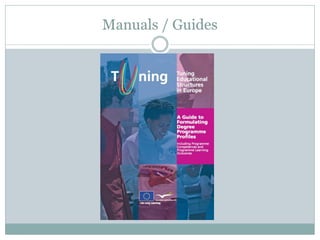
Manuals / Guides
More information: 
Websites 
http://europa.eu.int/comm/education/socrates/ 
TuningProject 
http://www.relint.deusto.es/TuningProject/index.htm 
http://www.let.rug.nl/TuningProject/index.htm
Question ? 
In the wake of the revised ILO/IMO Guidelines on medical examination of seafarers: Will more nations approve their own doctors, or will we get international recognition of medical examiners?
No
YES

Session 3 6 - dr. n.nikolić [reparert]

  • 1.
    In the wakeof the revised ILO/IMO Guidelines on medical examination of seafarers: Will more nations approve their own doctors, or will we get international recognition of medical examiners? Dr. Nebojša Nikolić
  • 2.
    MARITIME MEDICINE 7thEuropean Nautical Medical Meeting Hamburg 1989
  • 3.
    International Cooperation Thefield of maritime medicine is probably the most international of all the different fields of medicine National regulation of the shipping industry is not sufficient. There is no supranational authority It is necessary to cooperate and reach consensus across national boundaries by establishing multilateral treaties or conventions that can be followed by all shipping nations. The international organizations are important forums for discussions, negotiations and contract formations between seafaring nations, resulting in mutual binding regulations for the shipping industry. This is of special importance to several fields of maritime medicine.
  • 4.
    Organisations of Importanceto Maritime Medicine World Health Organization International Labour Organization International Maritime Organization (IMO) International Organization for Migration (IOM) International Maritime Health Association International Transport Workers’ Federation International Chamber of Shipping (ICS) and International Shipping Federation (ISF)
  • 5.
    Other Organisations ofImportance to Maritime Medicine International Mobile Satellite Organization (IMSO) Comité International Radio-Maritime (CIRM) UNEP PARIS MOU Cruise Lines International Association (CLIA) Other International Organizations that influence Shipping Industry and Trade (CDC, EUCDC) European Maritime Safety Agency (EMSA) International Association of Classification Societies National Organizations with International Impact (Norwegian Maritime Directorate, Australia, MCA) IMHA
  • 6.
    International Conventions andRegulations of Importance to Maritime Medicine The International Law of the Sea High seas are the waters outside national jurisdiction, like oceans and other waters including some estuaries and rivers and even lakes. Ships sailing the high seas are generally under the jurisdiction of the flag state; Freedom of navigation is established through different international conventions
  • 7.
    Ratification The processof adoption, ratification and entry into force of multilateral treaties like international conventions, is often a slow one. A minimum number of member states, representing a minimum amount of the world’s total gross tonnage are usually necessary for a convention entering into force.
  • 8.
    What After TheRatification ? Who is going to build national legislation? Who should be involved ? Which institutions to involve ? Which institutions to build?
  • 9.
    “The Four Pillars”Conventions Relating to Maritime Health SOLAS 1974 STCW 1978 MARPOL 1973 MLC 2006
  • 10.
    There is noInternational Convention of Maritime Medicine A list of conventions which in some way discuss aspects of maritime medicine would probably include most maritime conventions.
  • 11.
  • 12.
  • 13.
    Instruments Concerning MedicalExamination of Seafarers
  • 14.
    IMO: Seafarers training,certification and watchkeeping (STCW) Code. Part B: Recommended guidance regarding provisions of the STCW Convention and its annex ILO: MLC 2006 ILO/IMO: Guidelines on the medical examinations of seafarers Instruments Concerning Medical Examination of Seafarers
  • 15.
    STCW Code Medicalfitness examinations of seafarers shall be conducted by appropriately qualified and experienced medical practitioners recognized by the Party Each Party shall establish provisions for recognizing medical practitioners. Each Party shall provide guidance for the conduct of medical fitness examinations and issuing of medical certificates , taking into account provisions set out in section B-I/9 of this Code.
  • 16.
    STCW 1978 asamended Each Party shall ensure that those responsible for assessing the medical fitness of seafarers are medical practitioners recognized by the Party for the purpose of seafarer medical examinations, in accordance with the provisions of section A-I/9 of the STCW Code
  • 17.
    STCW Guidance –Anybody can do it? Appropriate qualifications and experience for medical practitioners conducting medical fitness examinations of seafarers may include occupational health or maritime health qualifications, experience of working as a ship’s doctor or a shipping company doctor or working under the supervision of someone with the aforementioned qualifications or experience.
  • 18.
    The Articles TheRegulations The Code Part A (mandatory Standards) Part B (non-mandatory Guidlines) MLC 2006
  • 19.
    Members which haveratified this Convention are not bound by the guidance concerned Inspections would deal only with the relevant requirements of this Convention (Articles, Regulations and the Standards in Part A) If having duly considered the relevant Guidlines, a Member decides to provide different arrangements as required by the Standard in Part A, that is acceptable MLC 2006
  • 21.
    Guidline B1.2.1 –International guidlines The competent authority, medical practitioners.... …should follow ILO/WHO Guidlines.., …including any subsequent version, and any other applicable international guidlines published by the ILO, the IMO or the WHO. Guidline B1.2 – Medical certificate Luckily !
  • 23.
    ILO/IMO Guidlines onthe medical examinations of seafarers Purpose and scope of the Guidelines Seafarers are required to undergo medical examinations to reduce risks to other crew members and for the safe operation of the ship, as well as to safeguard their personal health and safety. These Guidelines are intended to provide maritime administrations with an internationally recognized set of criteria for use by competent authorities either directly or as the basis for framing national medical examination standards that will be compatible with international requirements.
  • 24.
    ILO/IMO Guidlines onthe medical examinations of seafarers These Guidelines have been developed in order to reduce the differences in the application of medical requirements and examination procedures and to ensure that the medical certificates which are issued to seafarers are a valid indicator of their medical fitness for the duties they will perform. Ultimately, the aim of the Guidelines is to contribute to health and safety at sea.
  • 25.
    ILO/IMO Guidlines onthe medical examinations of seafarers The Guidelines are designed as a tool to enhance medical examinations and make them more consistent; they cannot and are not intended to replace the professional skill and judgement of recognized medical practitioners.
  • 26.
    ILO/IMO Guidlines onthe medical examinations of seafarers Seafarer medical fitness examinations Consistent decision-making needs to be based on the application of criteria for fitness that are applied in a uniform way, both nationally and, because of the global nature of seafaring and marine transport, internationally. These Guidelines provide the basis for establishing national arrangements which are compliant with the relevant international Conventions. the routine and emergency duties must be known to the examining medical practitioner, who will have to establish, using clinical skills, whether the seafarer meets the standards for all anticipated routine and emergency duties specific to their individual post and whether any routine or emergency duties need to be modified to enable them to be performed safely and effectively the examining medical practitioner needs the skills to assess individual fitness in all these areas and the knowledge to relate their findings to the requirements of the individual’s routine and emergency duties at sea whenever any limitations in fitness are identified.
  • 27.
    ILO/IMO Guidlines onthe medical examinations of seafarers Recognition of medical practitioners A medical practitioner so recognized by the competent authority: should be a qualified medical practitioner currently accredited by the medical registration authority for the place where they are working; should be experienced in general and occupational medicine or maritime occupational medicine; should have knowledge of the living and working conditions on board ships and the job demands on seafarers in so far as they relate to the effects of health problems on fitness for work, gained wherever possible through special instruction and through knowledge based on personal experience of seafaring;
  • 28.
    ILO/IMO Guidlines onthe medical examinations of seafarers The competent authority should have in place quality assurance procedures to ensure that medical examinations meet the required standards. ISO ?
  • 30.
    International rules andregulations ? Interests of ship owners ? Interests of seafarers ? Interests of medical doctors ? Interests of trainers ? Training in Maritime Health - Needs for Training
  • 31.
    IMO: Seafarers training,certification and watchkeeping (STCW) Code. Part B: Recommended guidance regarding provisions of the STCW Convention and its annex ILO: MLC 2006 ILO/IMO: Guidelines on the medical examinations of seafarers Instruments Concerning Training for Maritime Doctors
  • 32.
    Training in MaritimeMedicine – Why ? Changes in the character of the seafaring industry and changes in regulations laid down with this convention, resulting changes in all areas of maritime health, and reappearance of travel- connected infective diseases like SARS and Bird Flu endangering the whole world, are requiring integrated maritime health, with a new set of knowledge and competences from maritime doctors
  • 33.
    Needs for Training Interests of shipowners Good medical care Healthy workers Permanent labour force Good business Safe ships Health protection Safer ships Low costs Interests of seafarers Good health Good medical care Good personnel safety Safe workplace Good and constant income To earn (more) money • Interests of medical doctors • To improve professional skills • Diagnostics • Curative medicine • Screening • Selection • Working conditions • Health promotion • To give high quality services • Interests of trainers • To support their governments • To enhance health of seafarers • To support medical doctors • To do something valuable
  • 34.
  • 35.
    Or in occupationalmaritime health? Or in maritime medicine? Or in occupational medicine? Training for Medical Doctors in Maritime Health
  • 36.
    Training of MedicalDoctors in ………………?
  • 37.
    First WHO IntercountryTraining in Maritime Occupational Health Institute of Maritime and Tropical Medicine and WHO Collaborating Centre on Maritime Occupational Health in Gdynia in 1998
  • 39.
    Postgraduate Studies inthe Field of Tourism, Maritime and Tropical Medicine (Univ. of Rijeka) I. semester Lectures 49 Seminars and practical training 31 Total hours 80 TOTAL 40 30 70 33 81 54 90 90 Total: 122 232 294 648 II. semester IV. semester III. semester
  • 40.
  • 41.
  • 42.
  • 43.
    Healthcare Accreditation Althoughhealthcare accreditation is available in some countries, the only similar quality project in place specifically designed for seafarer health care facilities is that run by the one P & I Club for some of their participating clinics. Other organisations do inspect clinics, but not to a set of validated peer-reviewed quality standards.
  • 45.
    Should it bethe Same for Everybody ?
  • 46.
    Body of Knowledgefor the Practice of Maritime Medicine – In Theory The Body of Knowledge is created to guid the professinal development of individuals practising Maritime Medicine and to shape curricula and training programs in Maritime Medicine It is also expected to serve as a vehicle to establish the content validity of a credentialing process.
  • 47.
    Credentialing Process =Test ? By IMHA, during ISMH ? By National Autorities ?
  • 48.
  • 49.
  • 50.
  • 51.
    Meeting of theMaritime Authorities of Norway, Germany, Netherlands and UK to rewiew the arrangements for approval of maritime medical examiners outside of home territories United Kingdom, The Netherlands, (Germany, Denmark) and Norway (the parties) intend to enter into an agreement which states that Seafarer Medical Certificates issued by the parties are valid on vessels underthe parties’ flag. This agreement will be based on the parties’ standards for training of approved doctors, medical examination of seafarers and the issue of seafarer medical certificates.
  • 52.
    Rationale For Doctorsassessing seafarers a lot more is left to the individual Doctor as the guidelines are not as strict and it is easy to end up with different decisions by different Doctors discussion had started with the long term goal of having identical training, standards, certificate, QA etc between all nations and the development of a course based on ILO guidelines was a first step in that goal. EU directive 2005/45/EG states that European countries should accept certificates from other EU countries.
  • 53.
    Meeting of theMaritime Authorities of Norway, Germany, Netherlands and UK to rewiew the arrangements for approval of maritime medical examiners outside of home territories Re. document outlining the revised course content: agree with the general principles but have questions concerning the details of the course and how Doctors are trained….. the most important thing is the final competency achieved no matter how the training is delivered…. if we only look at common outcomes it is unlikely that a common course will ever be developed….. develop two documents - the first should be an agreement in principal for the learning objectives and competencies to be achieved and the second to outline the course as in the original document…..
  • 54.
  • 55.
  • 56.
  • 57.
    European Initiatives onMedical Education EMA (European Medical Association)
  • 60.
    Tuning The TUNINGproject is a project by and for universities. It is the Universities’ response to the challenge of the Bologna Declaration
  • 61.
    Tuning of educationalstructures and programmes on the basis of diversity and autonomy
  • 62.
    Why Tuning ? The objectives: To implement the Bologna - Prague - Berlin process on university level To find ways to implement two cycles To identify common reference points from discipline and university perspective To develop professional profiles and comparable and compatible learning outcomes To facilitate employability by promoting transparency in educational structures (easily readable and comparable degrees) To develop a common language which is understood by all stakeholders (Higher education sector, employers, professional bodies)
  • 63.
    Berlin Communique (19Sept 2003) Degree structure: adoption of a system essentially based on two main cycles “Ministers encourage the member States to elaborate a framework of comparable and compatible qualifications for their higher education systems, which should seek to describe qualifications in terms of workload, level, learning outcomes, competences and profile. They also undertake to elaborate an overarching framework of qualifications for the Higher Education Area.”
  • 64.
    Tuning Methodology learningoutcomes and competences What should a student know, understand and be able to do to be employable (to examine seafarer and issue the certificate)?
  • 65.
    Why Focus onCompetences 1. Further transparency of professional profiles in study programmes and emphasis on learning outcomes 2. Shift to a more learner oriented approach to education 3. Growing demands of a lifelong learning society which requires more flexibility 4. Need for higher levels of employability and citizenship 5. Enhancement of the European dimension of Higher Education 6.Need for a shared language for consultation with all stakeholders
  • 66.
    The Tuning Methodology Line 1: Generic competences Consultation with graduates, employers and academics on the importance of 30 generic competences and an evaluation of how well HE institutions develop them. Line 2: Subject specific competences (knowledge, understanding and skills) Mapping of subject areas and development of common reference points and subject specific competences of each of the pilot disciplines. Line 3: ECTS as a European credit accumulation system: new perspectives Line 4: Mapping of approaches to teaching / learning and assessment in different countries Line 5: Quality enhancement
  • 67.
  • 68.
    The Tuning Questionnaire FOCUS ON GENERIC COMPETENCES (GENERAL ACADEMIC SKILLS) TARGET GROUPS: •GRADUATES (Doctors ?) •EMPLOYERS (Shipowners ?) •ACADEMICS (National Authorities ?) WHAT ARE THE MOST IMPORTANT COMPETENCES TO BE EMPLOYABLE INDEPENDENT OF ONE’S SUBJECT AREA? ARE THESE ACTUALY TAUGHT AND TO WHAT EXTENT?
  • 69.
    The Tuning Questionnaire TYPES OF COMPETENCES MEASURED: •Instrumental competences: cognitive abilities, methodological abilities, technological abilities and linguistic abilities •Interpersonal competences: individual abilities like social skills (social interaction and co-operation) •Systemic competences: abilities and skills concerning whole systems (combination of understanding, sensibility and knowledge; prior acquisition of instrumental and interpersonal competences required)
  • 70.
    TYPES OF COMPETENCESMEASURED: Instrumental competences: •Capacity for analyses and synthesis •Capacity for organisation and planning •Basic general knowledge •Grounding in basic knowledge of the profession •Oral and written communication in your native language •Knowledge of a second language •Elementary computing skills •Information management skills (ability to retrieve and analyse information from different sources) •Problem solving •Decision-making The Tuning Questionnaire
  • 71.
    The Tuning Questionnaire TYPES OF COMPETENCES MEASURED: Interpersonal competences: •Critical and self-critical abilities •Teamwork •Interpersonal skills •Ability to work in an interdisciplinary team •ability to communicate with experts in other fields •Appreciation of diversity and multiculturality •Ability to work in an international context •Ethical commitment
  • 72.
    TYPES OF COMPETENCESMEASURED: Systemic competences: •Capacity for applying knowledge in practice •Research skills •Capacity to learn •Capacity to adapt to new situations •Capacity for generating new ideas (creativity) •Leadership •Understanding of cultures and customs of other countries •Ability to work autonomously •Project design and management •Initiative and entrepreneur spirit •Concern for quality •Will to succeed The Tuning Questionnaire
  • 73.
    Methodology and Results Cluster sampling (by countries?) : University 1 Respondents University 2 Respondents University 3 Respondents University 100 Respondents University 101 Respondents ... ... Procedure of sample selection - Graduates (Doctors ?) - Employers (Shipowners ?) - Academics (National Authorities ?) RESPONDENTS FINAL SAMPLE
  • 74.
    7 Areas &101 university depart. & 16 Countries Business Geology History Mathematics Physics Education Chemistry Total number of respondents: 5183 Graduates 944 Employers 998 Academics Already Done on: Austria Belgium Denmark Finland France Germany Greece Iceland Ireland Italy Netherlands Norway Portugal Spain Sweden United Kingdon
  • 75.
    2 Capacity forapplying knowledge in practice Instrumental Interpersonal Systemic 3 3 Capacity to adapt to new situations Concern for quality 4 4 Information management skills Ability to work autonomously Results Comparing Graduates and Employers 1 1 1 Capacity for analysis and synthesis Capacity to learn Problem solving 5 Teamwork 6 Capacity for organisation and planning
  • 76.
    Results – ComparingGraduates and Employers 18 Understanding of cultures and customs of other countries Appreciation of diversity and multiculturality 17 16 Ability to work in an international context Instrumental Interpersonal Systemic
  • 77.
    Will to succeed Ability to work autonomously Knowledge of a second language Capacity for applying knowledge in practice Concern for quality Initiative and entrepreneurial spirit Ability to work in an interdisciplinary team 30 items REMAINING 23 ITEMS STRONG MILD & NO EFFECT Results – Country effect
  • 78.
    Fundamental Importance: WeightedRanking of the Most Importance Competences. All Subjects Graduates Employers Academics  Capacity for analysis and synthesis  Capacity to learn  Capacity for applying knowledge in practice  Elementary computing skills  Capacity to adapt to new situations  Capacity to learn  Capacity for applying knowledge in practice  Capacity for analysis and synthesis  Capacity to adapt to new situations  Interpersonal skills  Basic knowledge of the field of study  Capacity for analysis and synthesis  Capacity to learn  Capacity for generating new ideas (creativity)  Capacity for applying knowledge in practice
  • 80.
  • 81.
  • 82.
  • 83.
    Tuning definitions Competences:The Tuning Project focuses on subject specific competences and generic competences. These competences represent a dynamic combination of attributes, abilities and attitudes. Fostering these competences are the object of educational programmes. Competences will be formed in various course units and assessed at different stages. [competences are obtained by the student]
  • 84.
    Tuning definitions Learningoutcomes: Statements of what a learner is expected to know, understand and/or be able to demonstrate after completion of learning. They can refer to a single course unit or module or else to a period of studies, for example, a first or a second cycle programme. Learning outcomes specify the minimum requirements for award of credit. [learning outcomes are formulated by academic staff]
  • 85.
    Tuning definitions Howare competences and learning outcomes related? •Learning outcomes according to Tuning methodology should be formulated in terms of competences. •Learning outcomes are minimum requirements of a unit or a programmes and are expressed in terms what the learner knows and is able to do at the end of the learning experience. •Competences may be developed to a greater degree than the level required by the learning outcome.
  • 86.
    Meeting of theMaritime Authorities of Norway, Germany, Netherlands and UK to rewiew the arrangements for approval of maritime medical examiners outside of home territories Re. document outlining the revised course content: agree with the general principles but have questions concerning the details of the course and how Doctors are trained….. the most important thing is the final competency achieved no matter how the training is delivered…. if we only look at common outcomes it is unlikely that a common course will ever be developed….. develop two documents - the first should be an agreement in principal for the learning objectives and competencies to be achieved and the second to outline the course as in the original document…..
  • 87.
    TUNING METHODOLOGY: learningoutcomes and competences Steps in designing degrees: 1. Identification of social needs 2. Definition of academic and professional profiles: translation into learning outcomes and generic and subject specific competences 3. Translation into curricula 4. Translation into modules and approaches towards teaching, learning and assessment 5. Programme quality assurance: built in monitoring, evaluation and updating procedures
  • 88.
    A methodology fordesigning, planning and implementing curricula Traditional methodology: developed in a national context largely for mono- disciplinary study programmes intended for educating graduates with a traditional profile focussing on knowledge and content Approach: staff / teacher oriented compulsory subjects to be covered input oriented
  • 89.
    Tuning approach: studentcentred definition of academic and professional profiles definition of learning outcomes identifying generic and subject specific competences output oriented curricula Tuning methodology and model: appropriate for mono-disciplinary, inter- and multidisciplinary, integrated and joint degree programmes valid for graduates with wide range of profiles focussing on competences A methodology for designing, planning and implementing curricula
  • 90.
    IDENTIFICATION OF SOCIALNEEDS CONSULTATION AT EUROPEAN LEVEL LOCATION OF RESOURCES EMPLOYERS AND OTHER STAKEHOLDERS ACADEMIC COMMUNITY: COMMON REFERENCE POINTS PROFESSIO- NALS AND PROFESSIO- NAL BODIES DEFINITION OF ACADEMIC AND PROFESSIONAL PROFILES TRANSLATION INTO DESIRED LEARNING OUTCOMES: • GENERIC COMPETENCES • SUBJECT SPECIFIC COMPETENCES TRANSLATION INTO CURRICULA: • CONTENT (KNOWLEDGE, UNDERSTANDING AND SKILLS) •STRUCTURE (MODULES AND CREDITS) APPROACHES TO TEACHING AND LEARNING • ACADEMIC RESOURCES • ORGANISATIONAL RESOURCES • FINANCIAL RESOURCES • STRATEGIC ALLIANCES WITH OTHER BODIES TRANSLATION INTO EDUCATIONAL UNITS AND ACTIVITIES TO ACHIEVE DEFINED LEARNING OUTCOMES ASSESSMENT PROGRAMME QUALITY ASSURANCE Tuning model for European comparable degrees
  • 91.
    THE TUNING DYNAMICQUALITY DEVELOPMENT CIRCLE Definition of academic and professional profiles Programme design: definition of learning outcomes / competences Identification of resources Construction of curricula: content and structure Selection of teaching and learning approaches Selection of types of assessement Evaluation and improvement (on the basis of feed back and back forward) Programme quality assurance
  • 92.
    LEARNING OUTCOMES ANDCOMPETENCES IN STUDY PROGRAMMES Example Course unit/ learning outcome Unit 1 Unit 2 Competence A B C D E F G H I F x x X = THIS COMPETENCE IS DEVELOPED AND ASSESSED AND IS MENTIONED IN THE LEARNING OUTCOME OF THIS UNIT Unit 3 Unit 4 x x x x x x x x x
  • 93.
    How to adaptand how to adopt the Tuning methodology? National Authorities (Shipowners, IMHA?) and Tuning:
  • 94.
    Tuning envisages co-operationat three levels: I. Exchange of Information II. Cooperation as a Synergy Group III. Cooperation as a Core Area
  • 95.
    I. Exchange ofInformation Aim: To collect information about Tuning by the (who?) Task: To ask for information from the Tuning coordinating team (by letter or e-mail). When contacting TUNING, please include: - Type of information requested: general presentation, emphasis on one aspect, possibility of initiating the project,etc. - Information about previous contacts with (a) Tuning representative(s). - Request for a Tuning counsellor.
  • 96.
    II. Cooperation asa Synergy Group Aim: Develop knowledge of Tuning Methodology with regard to some of the Tuning lines. Task 1: Contact the Tuning coordination team and express interest in one or more particular line(s) of development. Task 2: Decide on conditions of cooperation with Tuning and on the level of support expected from Tuning. Task 3: Implement the methodology in the selected line(s). (See Cooperation as a Core Area)
  • 97.
    III. Cooperation asa Core Area Aim: Apply the Tuning Methodology along all five lines for the specific subject area of the Thematic Network (Maritime medicine). Line 1 and 2: Generic and Subject Specific Competences Objective:Develop academic and professional profiles for a degree programme within the Thematic Network area. Identify the learning outcomes expressed in generic and subject specific competences.
  • 98.
    Generic and SubjectSpecific Competences Task 1: Obtain information on the findings and methodology of Tuning. Task 2: Produce a Map of Professions (National requests, training programs?) in Europe (Global?) in relation to the (Maritime) area. Task 3: Choose a degree programme and debate how to find out the importance of generic competences for the degree chosen and select a number of competences from the Tuning list. Task 4: Reflect and debate on Levels particularly in relation to First and Second Cycle Task 5: Identify the most relevant generic competences for the subject area. Task 6: Identify the most relevant subject specific competences, taking into account the input from professional bodies and graduates stakeholders (Shipowners, National authorities).
  • 99.
    Generic and SubjectSpecific Competences Task 7: Make a questionnaire with the most relevant subject specific competences and distribute it among academic colleagues in Europe. Task 8: Send the set of completed questionnaires (minimum 250) to the coordination team for analysis. Task 9: Discuss the outcomes in the TNP and with stakeholders. Task 10: Write a final report; formulate the learning outcomes (European reference points) expressed in terms of competences by identifying the common, diverse and dynamic elements of the subject area. Distinguish the learning outcomes by level (first and second cycle).
  • 100.
    Line 3: Useof ECTS as an Accumulation System (Is it relevant to us ?) Objective: To build up knowledge and experience on ECTS both as a transfer and accumulation system and to be able to use it in curricula design and delivery in the specific subject area. Task 1: Understanding of ECTS principles, tools and key features through awareness and group debate on ECTS key documents. Task 2: Raise awareness of the relation between ECTS and the concept of learning outcomes and competences for curriculum design and development by using Tuning documentation. Task 3: Identify methods for measuring workload in the subject area and compare these to the Tuning approach. Test examples of good practice. Task 4: Write a report about the findings regarding the implementation of ECTS as an accumulation system and the measuring of workload.
  • 101.
    Line 4: Approachesto Teaching, Learning and Assessment Objective: Obtain a deeper understanding of competence based - student-centred learning and the impact it has on approaches to teaching, learning and assessment. Task 1: Choose a number of generic and subject specific competences, relevant for the thematic area and debate how to implement them in curricula. Task 2: Collect ideas and examples of good practice of teaching, learning and assessment methods regarding the implementation of generic and subject specific competences in degree programmes. Task 3: Reflect on the outcomes of this exercise. Task 4: Write a report on approaches to Teaching, Learning and Assessment in relation to the subject area.
  • 102.
    Line 5 –Quality Enhancement Objective: Develop an understanding of the Tuning methodology as an internal system of quality assurance in relation to programme design and programme delivery. Task 1: Raise awareness on the Tuning approach in relation to Quality assurance in programme design and delivery. Task 2: Apply this approach to the subject area. Task 3: Write a report on the experiences.
  • 103.
  • 104.
    More information: Websites http://europa.eu.int/comm/education/socrates/ TuningProject http://www.relint.deusto.es/TuningProject/index.htm http://www.let.rug.nl/TuningProject/index.htm
  • 105.
    Question ? Inthe wake of the revised ILO/IMO Guidelines on medical examination of seafarers: Will more nations approve their own doctors, or will we get international recognition of medical examiners?
  • 106.
  • 107.