Norwegian Sea Health Conference 2014 Bergen, 27-28 August ILO and seafarers’ medical examinations: how we got here, where we are, what’s next Brandt Wagner ILO 
1
How we got here 93 years 
2 
Medical Examination of Young Persons (Sea) Convention, 1921 (No. 16) 
Medical Examination (Seafarers) Convention, 1946 (No. 73) 
Merchant Shipping (Minimum Standards) Convention, 1976 (No. 147) 
[IMO’s Standards of Training, Certification and Watchkeeping for Seafarers (STCW), 1978] 
[STCW 1995] 
ILO/WHO Guidelines for Conducting Pre-sea and Periodic Medical Fitness Examinations of Seafarers (1997) 
Maritime Labour Convention, 2006 
[STCW Manila amendments , 2010] 
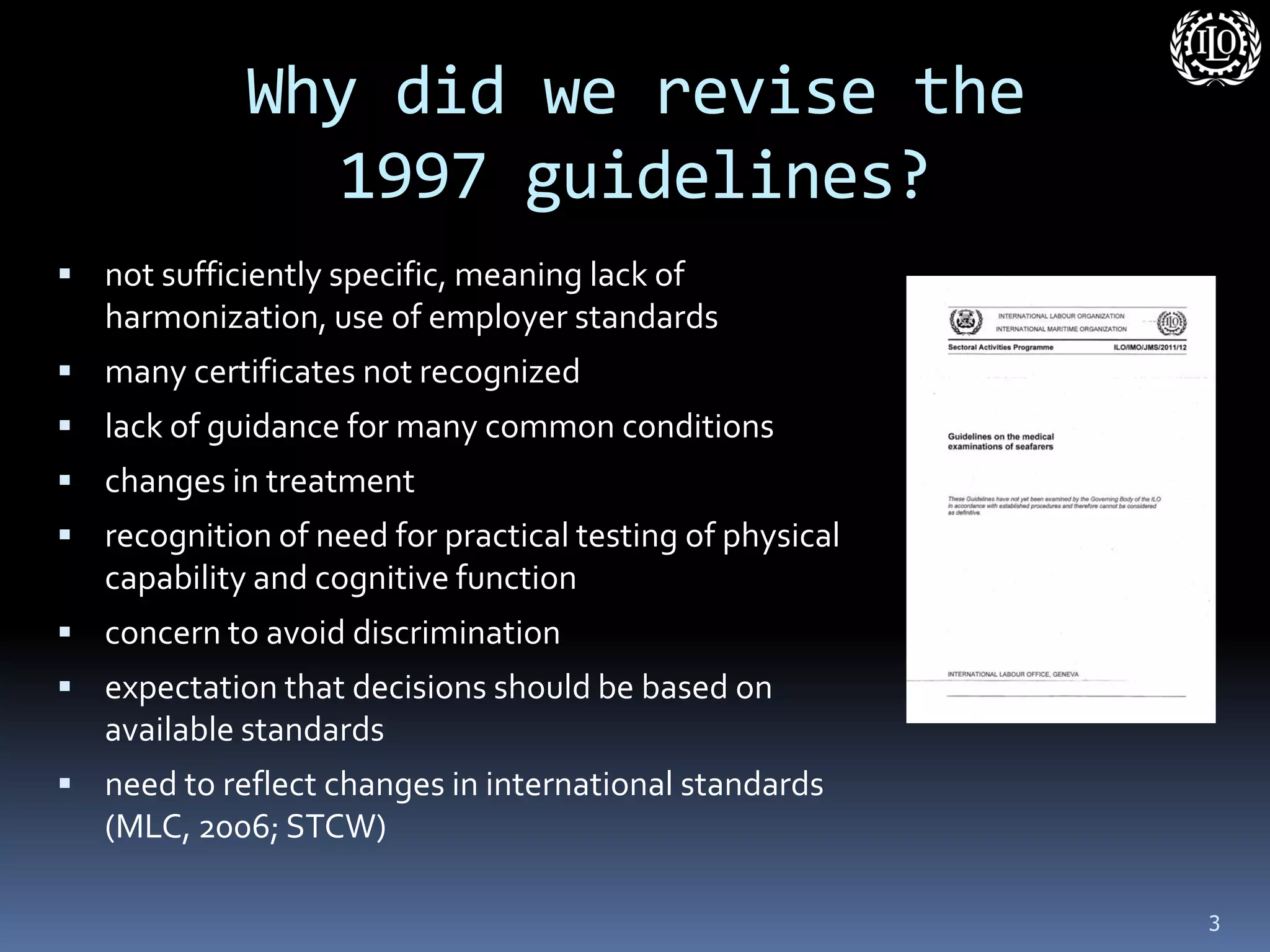
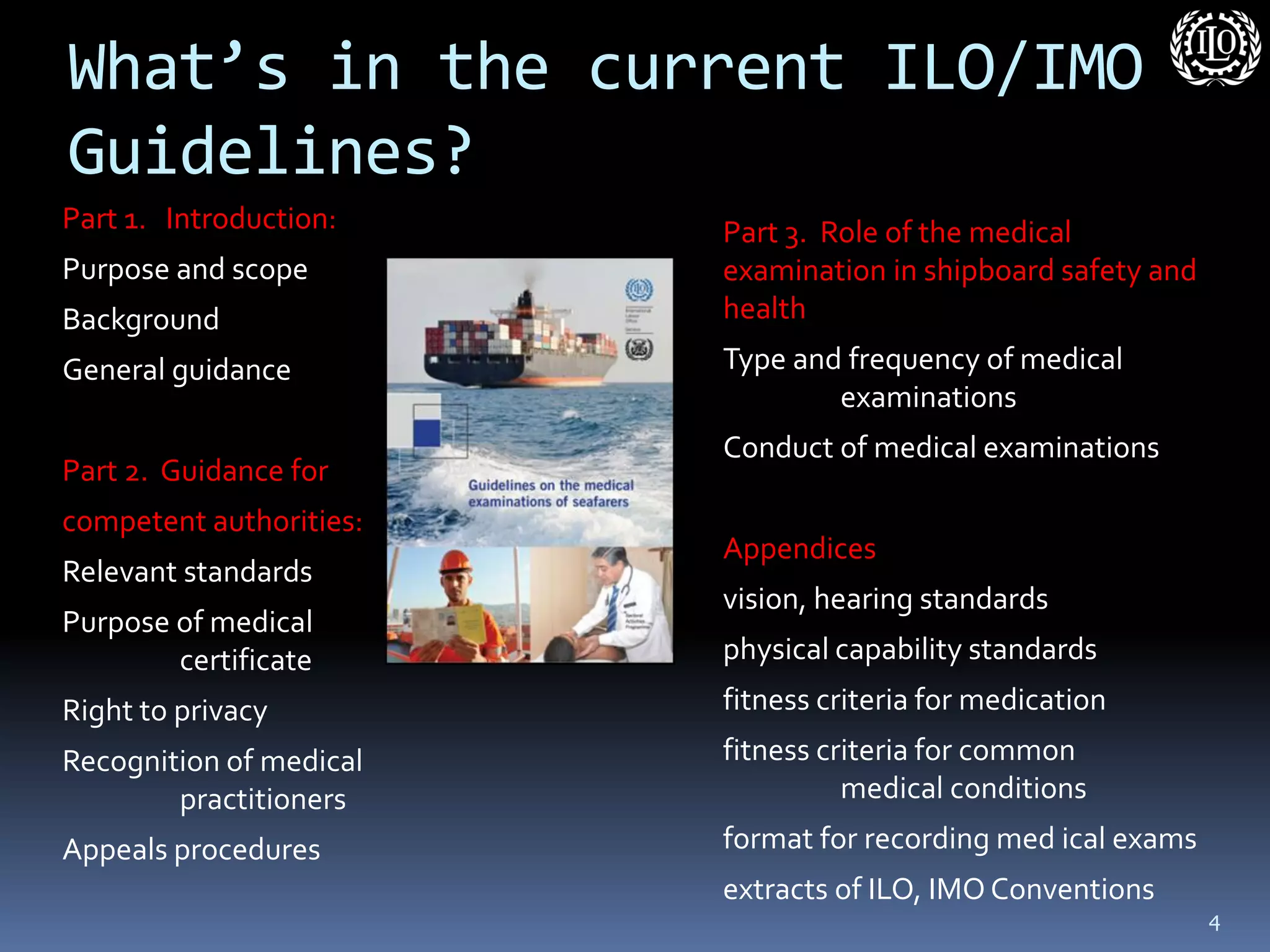
ILO/IMO Guidelines on the medical examinations of seafarers
Why did we revise the 1997 guidelines? 
not sufficiently specific, meaning lack of harmonization, use of employer standards 
many certificates not recognized 
lack of guidance for many common conditions 
changes in treatment 
recognition of need for practical testing of physical capability and cognitive function 
concern to avoid discrimination 
expectation that decisions should be based on available standards 
need to reflect changes in international standards (MLC, 2006; STCW) 
3
What’s in the current ILO/IMO Guidelines? 
Part 1. Introduction: 
Purpose and scope 
Background 
General guidance 
Part 2. Guidance for 
competent authorities: 
Relevant standards 
Purpose of medical certificate 
Right to privacy 
Recognition of medical practitioners 
Appeals procedures 
Part 3. Role of the medical examination in shipboard safety and health 
Type and frequency of medical examinations 
Conduct of medical examinations 
Appendices 
vision, hearing standards 
physical capability standards 
fitness criteria for medication 
fitness criteria for common medical conditions 
format for recording med ical exams 
extracts of ILO, IMO Conventions 
4
Some competent authority “shoulds” 
list recognized medical practitioners , list of those whose recognition has been withdrawn 
interview practitioners and inspection of clinic facilities 
provide detailed guidance, expert helpline. 
have quality assurance procedures 
publicize arrangements for: 
investigate of complaints 
collect and anonomous information 
undertake review and audit programme (or endorse external clinical accreditation arrangements) 
5
Some Medical practitioner “shoulds” 
be qualified, accredited, experienced 
have knowledge of the living and working conditions, job demands of seafarers 
have proper facilities 
have written guidance on procedures, including for appeals 
understand ethical position 
refer medical problems for further investigation/treatment 
have professional independence 
be given information on competency standards seafarers who give medical care 
be familiar with IMGS or equivalent 
6
Where we are and what is next re MLC,2006? 
63 ratifications, 80+% gt; eif 20 August 2013 
First 30 “Article 22” reports due this year 
Questions: 
Are seafarers required to be certified as medically fit to perform their duties? 
What requirements (or guidance) have been established concerning the nature of the medical examination and the right of appeal? 
What are the requirements concerning persons who can issue medical certificates and any certificate solely concerning eyesight? 
What are the periods of validity for medical and colour vision certificates? 
Article 24 representations, Article 26 complaints possible 
Amendments to MLC possible (Special Tripartite Committee) 
7
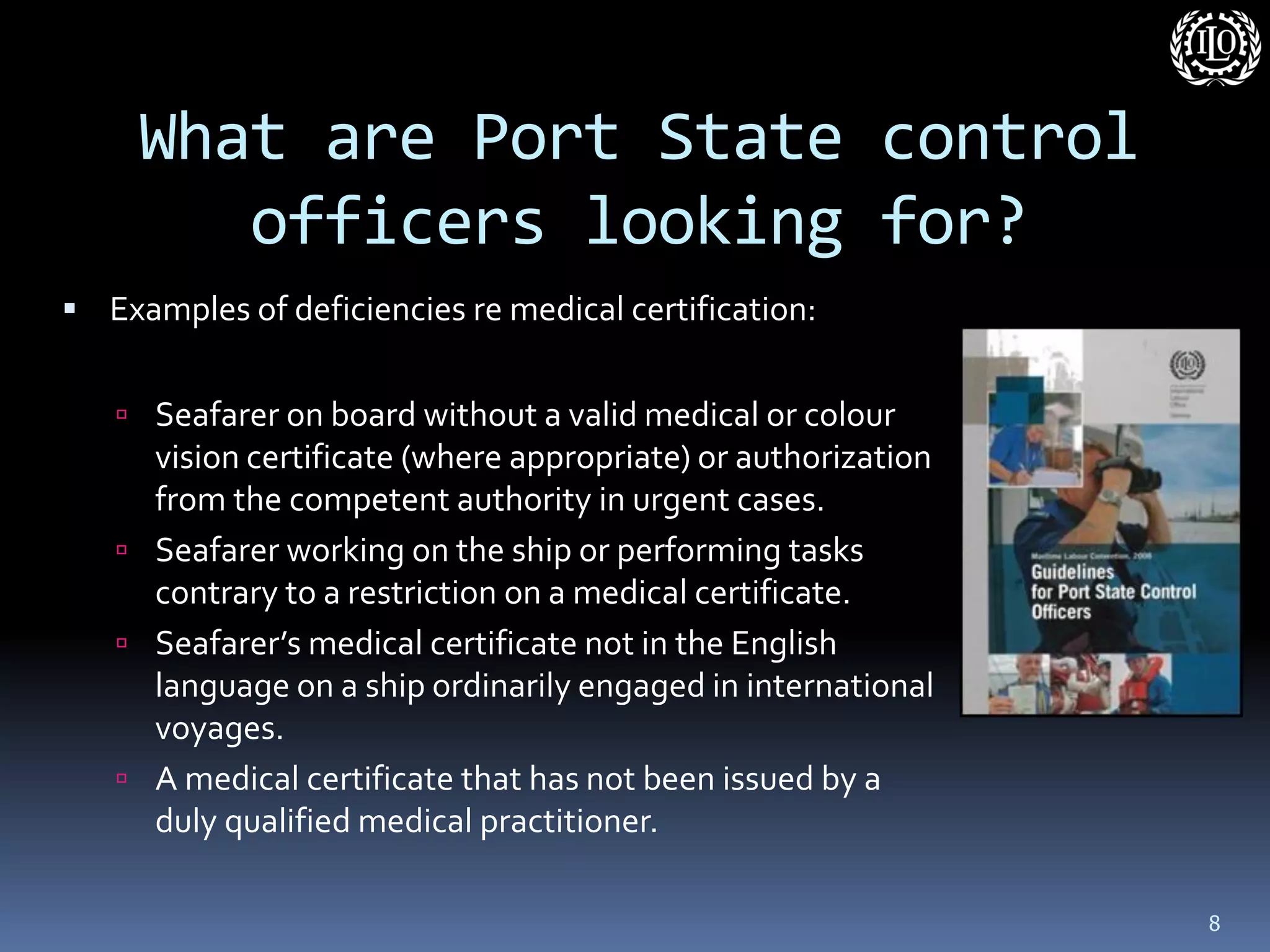
What are Port State control officers looking for? 
Examples of deficiencies re medical certification: 
Seafarer on board without a valid medical or colour vision certificate (where appropriate) or authorization from the competent authority in urgent cases. 
Seafarer working on the ship or performing tasks contrary to a restriction on a medical certificate. 
Seafarer’s medical certificate not in the English language on a ship ordinarily engaged in international voyages. 
A medical certificate that has not been issued by a duly qualified medical practitioner. 
8
9 
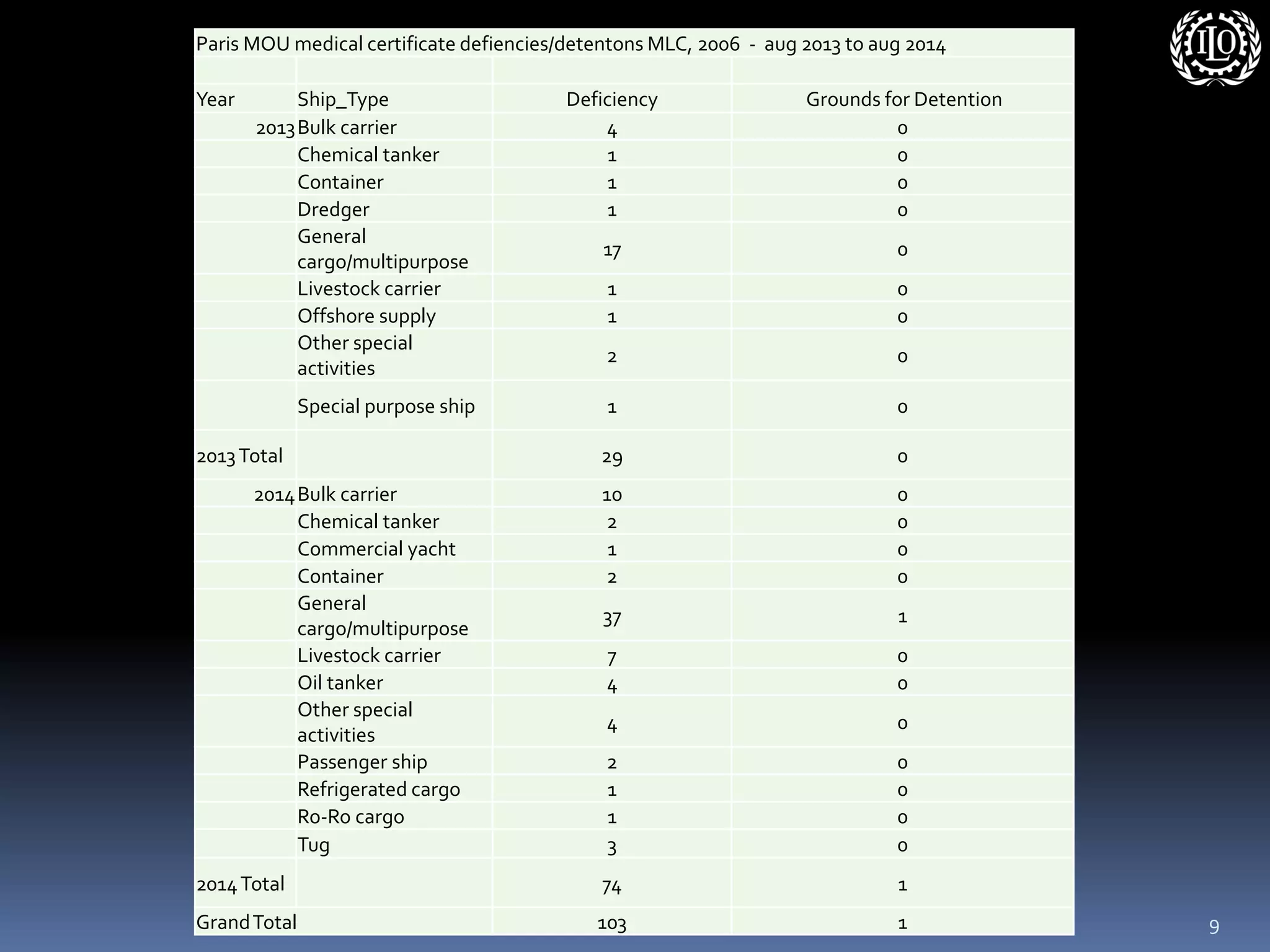
Paris MOU medical certificate defiencies/detentons MLC, 2006 - aug 2013 to aug 2014 
Year 
Ship_Type 
Deficiency 
Grounds for Detention 
2013 
Bulk carrier 
4 
0 
Chemical tanker 
1 
0 
Container 
1 
0 
Dredger 
1 
0 
General cargo/multipurpose 
17 
0 
Livestock carrier 
1 
0 
Offshore supply 
1 
0 
Other special activities 
2 
0 
Special purpose ship 
1 
0 
2013 Total 
29 
0 
2014 
Bulk carrier 
10 
0 
Chemical tanker 
2 
0 
Commercial yacht 
1 
0 
Container 
2 
0 
General cargo/multipurpose 
37 
1 
Livestock carrier 
7 
0 
Oil tanker 
4 
0 
Other special activities 
4 
0 
Passenger ship 
2 
0 
Refrigerated cargo 
1 
0 
Ro-Ro cargo 
1 
0 
Tug 
3 
0 
2014 Total 
74 
1 
Grand Total 
103 
1
Some questions for NSHC 
Are ILO/IMO Guidelines widely used? 
Have guidelines helped improve the recognition of medical examiners? 
Are certificates issued within States that have ratified the MLC, 2006 being accepted? 
Is there sufficient follow up to the “shoulds” in the Guidelines, and how is this being done? 
10

Session 2 2 - b wagner - nshc - ilo presentation

  • 1.
    Norwegian Sea HealthConference 2014 Bergen, 27-28 August ILO and seafarers’ medical examinations: how we got here, where we are, what’s next Brandt Wagner ILO 1
  • 2.
    How we gothere 93 years 2 Medical Examination of Young Persons (Sea) Convention, 1921 (No. 16) Medical Examination (Seafarers) Convention, 1946 (No. 73) Merchant Shipping (Minimum Standards) Convention, 1976 (No. 147) [IMO’s Standards of Training, Certification and Watchkeeping for Seafarers (STCW), 1978] [STCW 1995] ILO/WHO Guidelines for Conducting Pre-sea and Periodic Medical Fitness Examinations of Seafarers (1997) Maritime Labour Convention, 2006 [STCW Manila amendments , 2010] ILO/IMO Guidelines on the medical examinations of seafarers
  • 3.
    Why did werevise the 1997 guidelines? not sufficiently specific, meaning lack of harmonization, use of employer standards many certificates not recognized lack of guidance for many common conditions changes in treatment recognition of need for practical testing of physical capability and cognitive function concern to avoid discrimination expectation that decisions should be based on available standards need to reflect changes in international standards (MLC, 2006; STCW) 3
  • 4.
    What’s in thecurrent ILO/IMO Guidelines? Part 1. Introduction: Purpose and scope Background General guidance Part 2. Guidance for competent authorities: Relevant standards Purpose of medical certificate Right to privacy Recognition of medical practitioners Appeals procedures Part 3. Role of the medical examination in shipboard safety and health Type and frequency of medical examinations Conduct of medical examinations Appendices vision, hearing standards physical capability standards fitness criteria for medication fitness criteria for common medical conditions format for recording med ical exams extracts of ILO, IMO Conventions 4
  • 5.
    Some competent authority“shoulds” list recognized medical practitioners , list of those whose recognition has been withdrawn interview practitioners and inspection of clinic facilities provide detailed guidance, expert helpline. have quality assurance procedures publicize arrangements for: investigate of complaints collect and anonomous information undertake review and audit programme (or endorse external clinical accreditation arrangements) 5
  • 6.
    Some Medical practitioner“shoulds” be qualified, accredited, experienced have knowledge of the living and working conditions, job demands of seafarers have proper facilities have written guidance on procedures, including for appeals understand ethical position refer medical problems for further investigation/treatment have professional independence be given information on competency standards seafarers who give medical care be familiar with IMGS or equivalent 6
  • 7.
    Where we areand what is next re MLC,2006? 63 ratifications, 80+% gt; eif 20 August 2013 First 30 “Article 22” reports due this year Questions: Are seafarers required to be certified as medically fit to perform their duties? What requirements (or guidance) have been established concerning the nature of the medical examination and the right of appeal? What are the requirements concerning persons who can issue medical certificates and any certificate solely concerning eyesight? What are the periods of validity for medical and colour vision certificates? Article 24 representations, Article 26 complaints possible Amendments to MLC possible (Special Tripartite Committee) 7
  • 8.
    What are PortState control officers looking for? Examples of deficiencies re medical certification: Seafarer on board without a valid medical or colour vision certificate (where appropriate) or authorization from the competent authority in urgent cases. Seafarer working on the ship or performing tasks contrary to a restriction on a medical certificate. Seafarer’s medical certificate not in the English language on a ship ordinarily engaged in international voyages. A medical certificate that has not been issued by a duly qualified medical practitioner. 8
  • 9.
    9 Paris MOUmedical certificate defiencies/detentons MLC, 2006 - aug 2013 to aug 2014 Year Ship_Type Deficiency Grounds for Detention 2013 Bulk carrier 4 0 Chemical tanker 1 0 Container 1 0 Dredger 1 0 General cargo/multipurpose 17 0 Livestock carrier 1 0 Offshore supply 1 0 Other special activities 2 0 Special purpose ship 1 0 2013 Total 29 0 2014 Bulk carrier 10 0 Chemical tanker 2 0 Commercial yacht 1 0 Container 2 0 General cargo/multipurpose 37 1 Livestock carrier 7 0 Oil tanker 4 0 Other special activities 4 0 Passenger ship 2 0 Refrigerated cargo 1 0 Ro-Ro cargo 1 0 Tug 3 0 2014 Total 74 1 Grand Total 103 1
  • 10.
    Some questions forNSHC Are ILO/IMO Guidelines widely used? Have guidelines helped improve the recognition of medical examiners? Are certificates issued within States that have ratified the MLC, 2006 being accepted? Is there sufficient follow up to the “shoulds” in the Guidelines, and how is this being done? 10