
Download to read offline
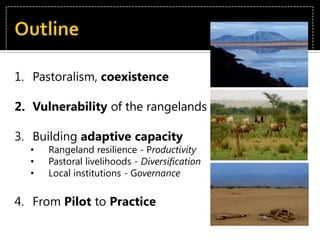
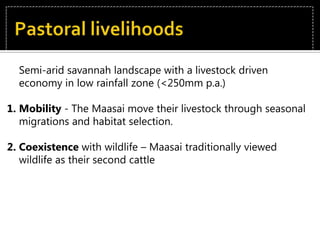
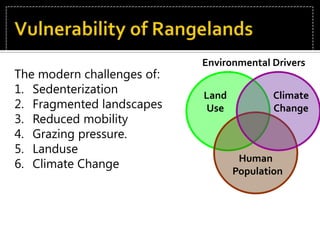
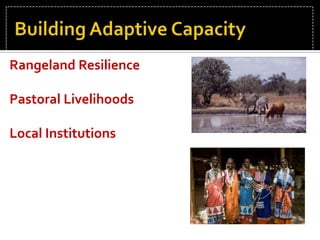
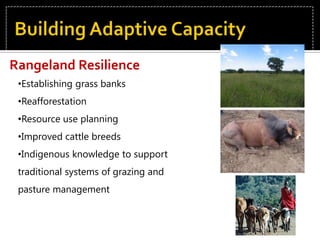
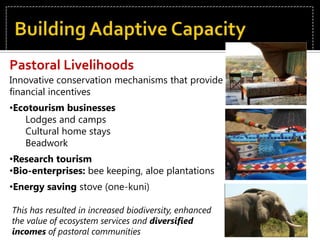
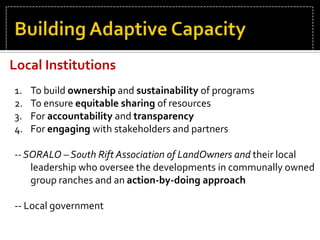
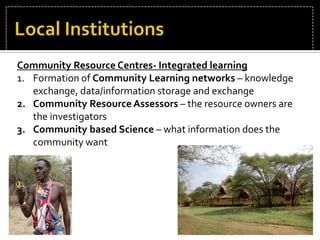
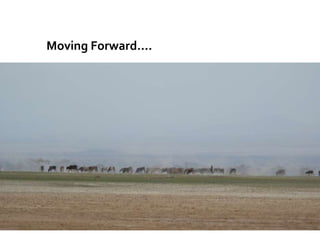
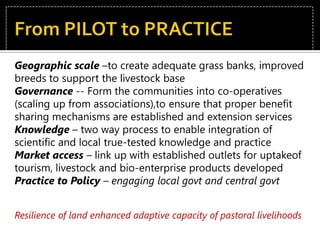

This document summarizes approaches for community-based adaptation in pastoral communities in Kenya. It discusses how pastoral livelihoods depend on mobility and coexistence with wildlife. However, modern challenges like sedentarization, fragmented landscapes, and reduced mobility have increased vulnerability of rangelands to environmental and climate change impacts. Approaches to build adaptive capacity include establishing grass banks and improved cattle breeds to boost rangeland resilience, and ecotourism businesses and crafts to diversify pastoral livelihoods. Local institutions like community associations and centers help build ownership, share resources equitably, and support knowledge exchange between communities and researchers. Moving forward, efforts need to be scaled up geographically, strengthen governance structures, better integrate scientific and traditional


![Getting Started with Apache Spark: Big Data Made Simple [Free Meetup]](https://cdn.slidesharecdn.com/ss_thumbnails/apachesparkgettingstarted-260203175547-8361bcc3-thumbnail.jpg?width=640&height=640&fit=bounds)


