Downloaded 75 times


![413 Saint Jacques Street, Suite 800 Montreal QC , Canada H2Y 1N9 Tel: +1 514 288 2220 Fax: +1 514 288 6588 E-mail: [email_address] Web: www.cbd.int For more information, please contact: Secretariat for the Convention on Biological Diversity Financial support has been provided by the French Ministry of Foreign and European Affairs, and the Government of Finland.](https://image.slidesharecdn.com/cbd-good-practice-guide-pastoralism-powerpoint-en-110113100626-phpapp02/85/Cbd-good-practice-guide-pastoralism-powerpoint-en-32-320.jpg)

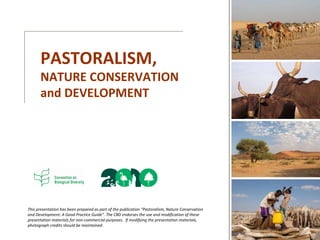
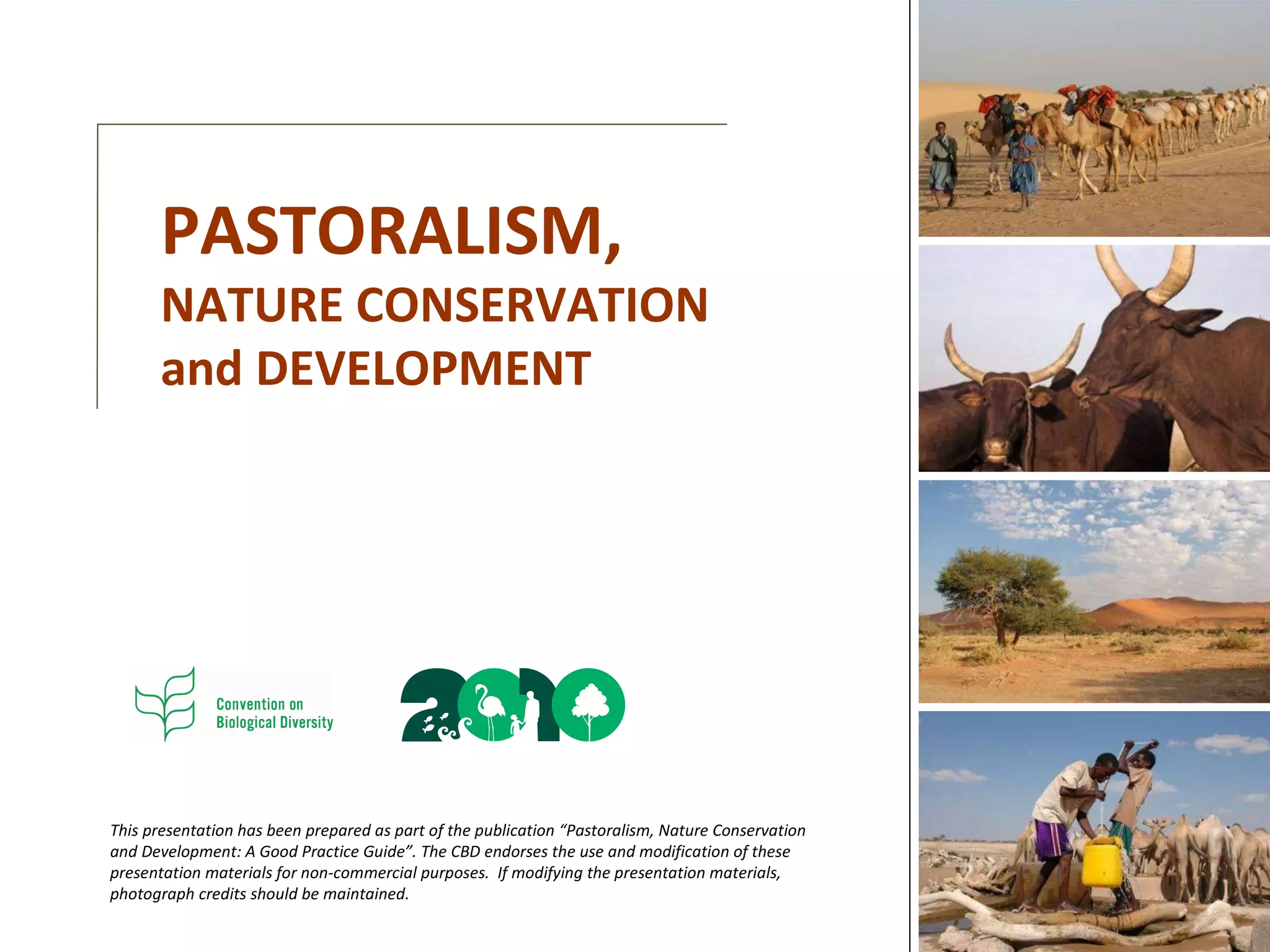
This document discusses pastoralism and its relationship to biodiversity conservation and development. Some key points: - Pastoralism supports biodiversity at the genetic, species, and ecosystem levels through grazing land management practices that mimic natural ecosystem interactions. - Pastoralism provides numerous ecosystem goods and services through the vegetation and habitats supported by livestock grazing. However, environmental challenges include overgrazing, water overuse, and wildlife conflicts during drought. - Supporting pastoralist livelihoods can help reduce poverty and achieve development goals while maintaining cultural relationships with the land and ensuring provision of ecosystem services.


