Simple present and Objects 
Pronouns
Simple Present 
We use it to talk about : 
● Regular actions or events (routines) 
● Facts 
● Future facts (found in a timetable or a chart) 
● Toughts and feelings at the time of speaking
Questions 
● With Verb To Be 
To Be + + Comp. + ? 
Are you OK ? Is Mary at home ? 
● With auxiliar Do 
Do / Does + + verb + Comp. + ? 
Does Bob take breakfast today ? 
Do they travel to London ?
Objects Pronouns 
● Los pronombres básicos son 7, se utilizan 
como sujetos y la otra forma cuando se utilizan 
como objetos. 
Subjects sobre lo que trata la oración. 
Objects lo que es afectado por la acción del 
sujeto.
Ejemplos 
● I like whisky. (I is the subject). 
● I read books. (Books is the object as it is 
receiving the action).
Ejemplos 
● My mother is from Italy, her father too. 
● Peter and Luis are twins, them do everything 
together. 
● I have a new car, my father bought it to me. 
● We stay in the classroom, and the teacher 
taught us.
Short Answers
Examples 
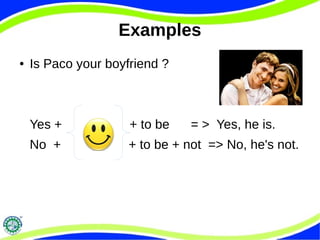
● Is Paco your boyfriend ? 
Yes + + to be = > Yes, he is. 
No + + to be + not => No, he's not.
Examples 
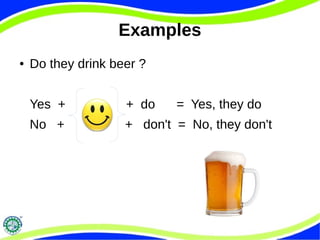
● Do they drink beer ? 
Yes + + do = Yes, they do 
No + + don't = No, they don't
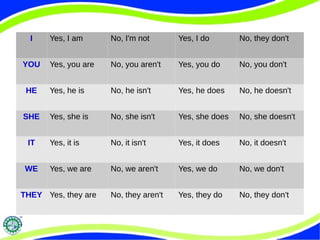
I Yes, I am No, I'm not Yes, I do No, they don't 
YOU Yes, you are No, you aren't Yes, you do No, you don't 
HE Yes, he is No, he isn't Yes, he does No, he doesn't 
SHE Yes, she is No, she isn't Yes, she does No, she doesn't 
IT Yes, it is No, it isn't Yes, it does No, it doesn't 
WE Yes, we are No, we aren't Yes, we do No, we don't 
THEY Yes, they are No, they aren't Yes, they do No, they don't
Would
Would 
'Would' es el pasado de will en algunos casos y 
verbo auxiliar en otros. 
Lo usamos principalmente para: 
● Hablar acerca del pasado 
● Hablar acerca del futuro en el pasado 
● Expresar el estado de animo condicional
Would 
También se usa para hablar de: 
● Expresar deseo 
● Pedir favores educadamente 
● Hacer preguntas educadamente 
● Dar opiniones o esperanzas 
● Deseos y arrepentimientos
Would 
● Un verbo auxiliar que representa las 
terminaciones de los verbos españoles –ría, -rías, 
-ríamos, -ríais y –rían, por ejemplo, compraría, 
viviríamos, vendrían, etc. 
● Es el que se utiliza para la forma condicional en 
inglés. 
Me gusta = I like 
Me gustaría = I would like
ESTRUCTURA
NOTICE 
● Would nunca es conjugado. 
● Siempre se utiliza solo “would” o “ 'd “ (short 
form). 
● El verbo principal siempre está en forma 
infinitiva. 
● No podemos decir: “I would to like coffee”.
¡Cuidado! 
● Observa... “Would” y “had” tienen la misma 
forma corta: 'd 
● He'd finished. (He had finished.) 
● He'd like coffee. (He would like coffee.)
Usos de Would 
Para decir que creemos que podría pasar: 
I thought I would be late 
I would have to take the train 
I thought I would be late …… so I would have 
to take the train.
Present continous (Future)
¿Para que sirve ? 
● Para hablar de cosas que están planeadas en 
un futuro próximo. 
I'm going to play tennis this afternoon. 
Alicia is going to eat pasta today. 
● Si estamos hablando del futuro, las 
expresiones de tiempo deberán ser: “this 
afternoon”, “next week”, etc.
Estructura 
● Se forma igual que el presente continuo solo 
que esta vez va acompañado de una expresión 
de tiempo. 
I'm going to play tennis this afternoon. 
Alicia is going to eat pasta tomorrow. 
I'm going to watch the TV program tonight.
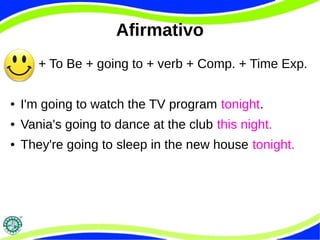
Afirmativo 
+ To Be + going to + verb + Comp. + Time Exp. 
● I'm going to watch the TV program tonight. 
● Vania's going to dance at the club this night. 
● They're going to sleep in the new house tonight.
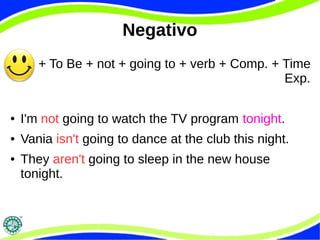
Negativo 
+ To Be + not + going to + verb + Comp. + Time 
Exp. 
● I'm not going to watch the TV program tonight. 
● Vania isn't going to dance at the club this night. 
● They aren't going to sleep in the new house 
tonight.
Interrogativo 
To Be + + verb (ing) + Comp. + Time 
Exp. 
● Am I watching the TV program tonight ? 
● Is Vania dancing at the club this night ? 
● Are they sleeping in the new house tonight?
Reglas (ing) 
● Agregamos ing a la mayoria de los verbos 
read reading 
● Verbos terminados con e 
write writing
Reglas (ing) 
● Doblamos la consonante si termina en 
consonante + vocal + consonante (monosilabos) 
swim swimming 
● Agregar ing siempre que termine en “y” 
try trying / buy buyin

Sesion6-Presente Simple y Object Pronouns

  • 1.
    Simple present andObjects Pronouns
  • 2.
    Simple Present Weuse it to talk about : ● Regular actions or events (routines) ● Facts ● Future facts (found in a timetable or a chart) ● Toughts and feelings at the time of speaking
  • 3.
    Questions ● WithVerb To Be To Be + + Comp. + ? Are you OK ? Is Mary at home ? ● With auxiliar Do Do / Does + + verb + Comp. + ? Does Bob take breakfast today ? Do they travel to London ?
  • 4.
    Objects Pronouns ●Los pronombres básicos son 7, se utilizan como sujetos y la otra forma cuando se utilizan como objetos. Subjects sobre lo que trata la oración. Objects lo que es afectado por la acción del sujeto.
  • 5.
    Ejemplos ● Ilike whisky. (I is the subject). ● I read books. (Books is the object as it is receiving the action).
  • 7.
    Ejemplos ● Mymother is from Italy, her father too. ● Peter and Luis are twins, them do everything together. ● I have a new car, my father bought it to me. ● We stay in the classroom, and the teacher taught us.
  • 8.
  • 9.
    Examples ● IsPaco your boyfriend ? Yes + + to be = > Yes, he is. No + + to be + not => No, he's not.
  • 10.
    Examples ● Dothey drink beer ? Yes + + do = Yes, they do No + + don't = No, they don't
  • 11.
    I Yes, Iam No, I'm not Yes, I do No, they don't YOU Yes, you are No, you aren't Yes, you do No, you don't HE Yes, he is No, he isn't Yes, he does No, he doesn't SHE Yes, she is No, she isn't Yes, she does No, she doesn't IT Yes, it is No, it isn't Yes, it does No, it doesn't WE Yes, we are No, we aren't Yes, we do No, we don't THEY Yes, they are No, they aren't Yes, they do No, they don't
  • 12.
  • 13.
    Would 'Would' esel pasado de will en algunos casos y verbo auxiliar en otros. Lo usamos principalmente para: ● Hablar acerca del pasado ● Hablar acerca del futuro en el pasado ● Expresar el estado de animo condicional
  • 14.
    Would También seusa para hablar de: ● Expresar deseo ● Pedir favores educadamente ● Hacer preguntas educadamente ● Dar opiniones o esperanzas ● Deseos y arrepentimientos
  • 15.
    Would ● Unverbo auxiliar que representa las terminaciones de los verbos españoles –ría, -rías, -ríamos, -ríais y –rían, por ejemplo, compraría, viviríamos, vendrían, etc. ● Es el que se utiliza para la forma condicional en inglés. Me gusta = I like Me gustaría = I would like
  • 16.
  • 17.
    NOTICE ● Wouldnunca es conjugado. ● Siempre se utiliza solo “would” o “ 'd “ (short form). ● El verbo principal siempre está en forma infinitiva. ● No podemos decir: “I would to like coffee”.
  • 18.
    ¡Cuidado! ● Observa...“Would” y “had” tienen la misma forma corta: 'd ● He'd finished. (He had finished.) ● He'd like coffee. (He would like coffee.)
  • 19.
    Usos de Would Para decir que creemos que podría pasar: I thought I would be late I would have to take the train I thought I would be late …… so I would have to take the train.
  • 20.
  • 21.
    ¿Para que sirve? ● Para hablar de cosas que están planeadas en un futuro próximo. I'm going to play tennis this afternoon. Alicia is going to eat pasta today. ● Si estamos hablando del futuro, las expresiones de tiempo deberán ser: “this afternoon”, “next week”, etc.
  • 22.
    Estructura ● Seforma igual que el presente continuo solo que esta vez va acompañado de una expresión de tiempo. I'm going to play tennis this afternoon. Alicia is going to eat pasta tomorrow. I'm going to watch the TV program tonight.
  • 23.
    Afirmativo + ToBe + going to + verb + Comp. + Time Exp. ● I'm going to watch the TV program tonight. ● Vania's going to dance at the club this night. ● They're going to sleep in the new house tonight.
  • 24.
    Negativo + ToBe + not + going to + verb + Comp. + Time Exp. ● I'm not going to watch the TV program tonight. ● Vania isn't going to dance at the club this night. ● They aren't going to sleep in the new house tonight.
  • 25.
    Interrogativo To Be+ + verb (ing) + Comp. + Time Exp. ● Am I watching the TV program tonight ? ● Is Vania dancing at the club this night ? ● Are they sleeping in the new house tonight?
  • 26.
    Reglas (ing) ●Agregamos ing a la mayoria de los verbos read reading ● Verbos terminados con e write writing
  • 27.
    Reglas (ing) ●Doblamos la consonante si termina en consonante + vocal + consonante (monosilabos) swim swimming ● Agregar ing siempre que termine en “y” try trying / buy buyin