Serving Fruits,
Vegetables, Seafood, and
Meat
Introduction
Welcome to the presentation on Serving Fruits,
Vegetables, Seafood, and Meat . Today, we will explore
the importance of a balanced diet and the benefits of
consuming nutritious foods. Let's get started!
Benefits of Consuming Fruits and Vegetables
Health and Nutrition
Fruits and vegetables are packed with
essential vitamins and minerals that
support the growth and development of
the body. They enhance the immune
system and promote overall health.
Fiber found in fruits and vegetables aids
in digestion and helps maintain a healthy
weight. Antioxidants protect the body
against harmful free radicals, reducing
the risk of chronic diseases.
Vitamins and
Minerals
Fiber and
Antioxidants
Exploring Various Seafood Options
Rich in Omega-3 Fatty Acids
Salmon is a popular seafood choice that is rich in
omega-3 fatty acids, which promote brain health and
reduce the risk of heart disease.
1
Salmo
n Shrimp and shellfish are excellent sources of protein,
vitamins, and minerals. They support muscle
development and provide important nutrients for the
body.
2 Shrimp and
Shellfish
Tuna is another seafood option with high levels of
omega-3 fatty acids. It is a versatile ingredient that can
be used in various dishes.
3
Tun
a Other types of fish, such as mackerel and sardines, are
also rich in omega-3 fatty acids. Including them in your
diet can have numerous health benefits.
4 Fish for Omega-
3
Understanding Different Types of Meat
Choose Lean and Protein-Rich Options
Beef is a good source of protein, iron, and vitamin B12. Opt for lean cuts of beef to reduce saturated fat intake.
Beef
1
2 Chicken and Turkey
Chicken and turkey are lean meat options, providing protein without excessive fat. Always remove the skin before
cooking to reduce fat content.
3 Pork
Pork is a versatile meat that can be lean if trimmed properly. Look for lean cuts like tenderloin and loin chops.
The Importance of a Balanced Diet
Maintaining a balanced diet is crucial for overall health
and well-being. A balanced diet ensures that your body
receives essential nutrients, such as carbohydrates,
proteins, fats, vitamins, and minerals, in the right
proportions. It promotes healthy growth, supports the
immune system, and helps prevent chronic diseases.
Let's explore some key components of a balanced diet.
Healthy Recipes
Nutritious and Delicious
One recipe idea is a veggie stir-fry packed with colorful
vegetables like bell peppers, broccoli, and carrots. Add
lean protein like tofu or chicken for a complete meal.
1 Veggie Stir-
Fry
A fruit smoothie bowl made with blended fruits, yogurt,
and toppings like nuts and granola is a tasty and
nutritious option for a quick and refreshing meal.
2 Fruit Smoothie
Bowl
Grilled fish tacos with whole-grain tortillas, fresh salsa,
and a side of avocado provide a balance of protein,
healthy fats, and carbohydrates.
3 Grilled Fish
Tacos
A quinoa salad loaded with vegetables, chickpeas, and
feta cheese is a nutrient-dense option for a satisfying
and filling lunch or dinner.
4 Quinoa
Salad
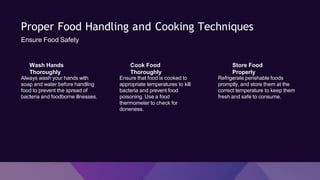
Proper Food Handling and Cooking Techniques
Ensure Food Safety
Always wash your hands with
soap and water before handling
food to prevent the spread of
bacteria and foodborne illnesses.
Wash Hands
Thoroughly
Ensure that food is cooked to
appropriate temperatures to kill
bacteria and prevent food
poisoning. Use a food
thermometer to check for
doneness.
Cook Food
Thoroughly
Refrigerate perishable foods
promptly, and store them at the
correct temperature to keep them
fresh and safe to consume.
Store Food
Properly
Incorporating Seasonal Produce in Your Meals
Variety and Freshness
Benefits of Seasonal
Produce
1
Incorporating seasonal fruits and vegetables in your meals provides freshness, flavor, and a wider range of nutrients. It
supports local farmers and reduces the environmental impact of transporting produce long distances.
2 Meal Planning with Seasons
Plan your meals around seasonal produce to enjoy the nutritional benefits and explore new recipe ideas. Visit local
farmers' markets or join community-supported agriculture (CSA) programs.
3 Tips for Storing Seasonal Produce
Learn proper storage techniques for different seasonal produce to extend their shelf life and ensure optimal taste and
quality.
The Role of Nutrition in Academic Performance
Nutrition plays a vital role in academic performance. A
well-balanced diet supports cognitive function, memory,
and concentration. Consuming nutrient-rich foods, such
as fruits, vegetables, whole grains, and lean proteins,
enhances brain health and fuel students for optimal
learning. Let's prioritize nutrition for academic success!
Tips for Making Healthy Food Choices Outside of Home
Stay Healthy On-the-Go
Pack nutritious snacks like fruits, granola bars, or trail
mix to have healthier options when eating out or during
travel.
1 Plan
Ahead
Look for healthier choices on restaurant menus, such as
grilled or baked options, salads, and steamed
vegetables.
2 Choose Better
Options
Be mindful of portion sizes to avoid consuming
excessive calories. Opt for smaller portions or share
meals with friends and family.
3 Portion
Control
Drink plenty of water throughout the day to stay
hydrated and limit sugary beverages. Carry a refillable
water bottle when going out.
4 Stay
Hydrated

serving food

  • 1.
  • 2.
    Introduction Welcome to thepresentation on Serving Fruits, Vegetables, Seafood, and Meat . Today, we will explore the importance of a balanced diet and the benefits of consuming nutritious foods. Let's get started!
  • 3.
    Benefits of ConsumingFruits and Vegetables Health and Nutrition Fruits and vegetables are packed with essential vitamins and minerals that support the growth and development of the body. They enhance the immune system and promote overall health. Fiber found in fruits and vegetables aids in digestion and helps maintain a healthy weight. Antioxidants protect the body against harmful free radicals, reducing the risk of chronic diseases. Vitamins and Minerals Fiber and Antioxidants
  • 4.
    Exploring Various SeafoodOptions Rich in Omega-3 Fatty Acids Salmon is a popular seafood choice that is rich in omega-3 fatty acids, which promote brain health and reduce the risk of heart disease. 1 Salmo n Shrimp and shellfish are excellent sources of protein, vitamins, and minerals. They support muscle development and provide important nutrients for the body. 2 Shrimp and Shellfish Tuna is another seafood option with high levels of omega-3 fatty acids. It is a versatile ingredient that can be used in various dishes. 3 Tun a Other types of fish, such as mackerel and sardines, are also rich in omega-3 fatty acids. Including them in your diet can have numerous health benefits. 4 Fish for Omega- 3
  • 5.
    Understanding Different Typesof Meat Choose Lean and Protein-Rich Options Beef is a good source of protein, iron, and vitamin B12. Opt for lean cuts of beef to reduce saturated fat intake. Beef 1 2 Chicken and Turkey Chicken and turkey are lean meat options, providing protein without excessive fat. Always remove the skin before cooking to reduce fat content. 3 Pork Pork is a versatile meat that can be lean if trimmed properly. Look for lean cuts like tenderloin and loin chops.
  • 6.
    The Importance ofa Balanced Diet Maintaining a balanced diet is crucial for overall health and well-being. A balanced diet ensures that your body receives essential nutrients, such as carbohydrates, proteins, fats, vitamins, and minerals, in the right proportions. It promotes healthy growth, supports the immune system, and helps prevent chronic diseases. Let's explore some key components of a balanced diet.
  • 7.
    Healthy Recipes Nutritious andDelicious One recipe idea is a veggie stir-fry packed with colorful vegetables like bell peppers, broccoli, and carrots. Add lean protein like tofu or chicken for a complete meal. 1 Veggie Stir- Fry A fruit smoothie bowl made with blended fruits, yogurt, and toppings like nuts and granola is a tasty and nutritious option for a quick and refreshing meal. 2 Fruit Smoothie Bowl Grilled fish tacos with whole-grain tortillas, fresh salsa, and a side of avocado provide a balance of protein, healthy fats, and carbohydrates. 3 Grilled Fish Tacos A quinoa salad loaded with vegetables, chickpeas, and feta cheese is a nutrient-dense option for a satisfying and filling lunch or dinner. 4 Quinoa Salad
  • 8.
    Proper Food Handlingand Cooking Techniques Ensure Food Safety Always wash your hands with soap and water before handling food to prevent the spread of bacteria and foodborne illnesses. Wash Hands Thoroughly Ensure that food is cooked to appropriate temperatures to kill bacteria and prevent food poisoning. Use a food thermometer to check for doneness. Cook Food Thoroughly Refrigerate perishable foods promptly, and store them at the correct temperature to keep them fresh and safe to consume. Store Food Properly
  • 9.
    Incorporating Seasonal Producein Your Meals Variety and Freshness Benefits of Seasonal Produce 1 Incorporating seasonal fruits and vegetables in your meals provides freshness, flavor, and a wider range of nutrients. It supports local farmers and reduces the environmental impact of transporting produce long distances. 2 Meal Planning with Seasons Plan your meals around seasonal produce to enjoy the nutritional benefits and explore new recipe ideas. Visit local farmers' markets or join community-supported agriculture (CSA) programs. 3 Tips for Storing Seasonal Produce Learn proper storage techniques for different seasonal produce to extend their shelf life and ensure optimal taste and quality.
  • 10.
    The Role ofNutrition in Academic Performance Nutrition plays a vital role in academic performance. A well-balanced diet supports cognitive function, memory, and concentration. Consuming nutrient-rich foods, such as fruits, vegetables, whole grains, and lean proteins, enhances brain health and fuel students for optimal learning. Let's prioritize nutrition for academic success!
  • 11.
    Tips for MakingHealthy Food Choices Outside of Home Stay Healthy On-the-Go Pack nutritious snacks like fruits, granola bars, or trail mix to have healthier options when eating out or during travel. 1 Plan Ahead Look for healthier choices on restaurant menus, such as grilled or baked options, salads, and steamed vegetables. 2 Choose Better Options Be mindful of portion sizes to avoid consuming excessive calories. Opt for smaller portions or share meals with friends and family. 3 Portion Control Drink plenty of water throughout the day to stay hydrated and limit sugary beverages. Carry a refillable water bottle when going out. 4 Stay Hydrated