SUSTAINABILITY EDUCATION FOR
CULINARY PROFESSIONALS
Part 8: Sustainable Nutrition
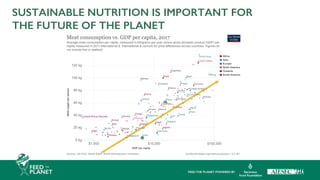
SUSTAINABLE NUTRITION IS IMPORTANT FOR
THE FUTURE OF THE PLANET
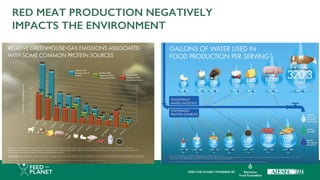
RED MEAT PRODUCTION NEGATIVELY
IMPACTS THE ENVIRONMENT
Ø Diet Quality: Not all calories are created equal.
Ø A calorie is a unit of measurement, not an indicator of quality
Ø If you consume more calories than you use, you will gain weight; it’s simple mathematics
Ø Our body metabolizes different types of calories differently, which is why focusing on the quality of
the calories we serve is key. A dish filled with whole grains, vegetables, and fish, for example, might
have the same calories as an ice cream. But what it contributes to our body is vastly different.
Ø Environmental Impact: Not all foods have the same environmental impact, which is often due to how
they are cultivated or raised.
Ø Think back to the graphics in the previous slides and the difference between beef and dry beans, for
example.
Ø The two cannot be disconnected. The foods that are healthier for us—fruits, vegetables, and whole
grains—tend to have a lower environmental footprint than those that health experts recommend
limiting, such as animal products and highly processed foods.
NUTRITIONAL QUALITY AND
ENVIRONMENTAL IMPACT BOTH MATTER
WHEN IT COMES TO WHAT WE EAT
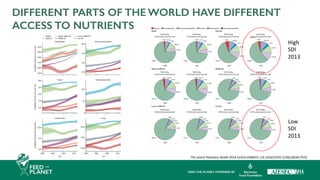
DIFFERENT PARTS OF THE WORLD HAVE DIFFERENT
ACCESS TO NUTRIENTS
The Lancet Planetary Health 2018 2e353-e368DOI: (10.1016/S2542-5196(18)30170-0)
High
SDI
2013
Low
SDI
2013
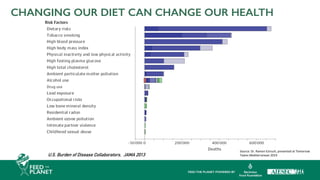
CHANGING OUR DIET CAN CHANGE OUR HEALTH
U.S. Burden of Disease Collaborators, JAMA 2013
Source: Dr. Ramon Estruch, presented at Tomorrow
Tastes Mediterranean 2019
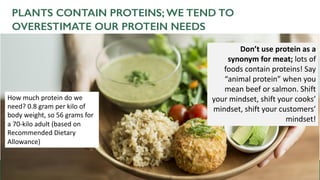
PLANTS CONTAIN PROTEINS; WE TEND TO
OVERESTIMATE OUR PROTEIN NEEDS
How much protein do we
need? 0.8 gram per kilo of
body weight, so 56 grams for
a 70-kilo adult (based on
Recommended Dietary
Allowance)
Don’t use protein as a
synonym for meat; lots of
foods contain proteins! Say
“animal protein” when you
mean beef or salmon. Shift
your mindset, shift your cooks’
mindset, shift your customers’
mindset!
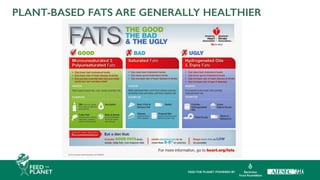
PLANT-BASED FATS ARE GENERALLY HEALTHIER
HIGH-QUALITY CARBOHYDRATES AND
REDUCED SUGAR ARE BEST FOR OUR HEALTH
ØCarbohydrate QUALITY is the most important element to
consider.
ØFocus on whole grains and minimally processed
ingredients, for carbohydrate quality.
ØAvoid serving sugar-sweetened beverages; instead,
serve waters aromatized with fresh fruits and/or herbs,
herbal teas hot and cold, and drinks like water infusions.
ØCreate desserts that focus on fruits, nuts, and dark
chocolate
Ø“Flip” your more traditional desserts to include a greater
percentage of fruits; for example, a cheesecake serving
that is more fruit topping than cake.
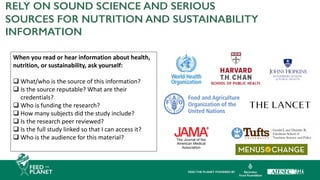
RELY ON SOUND SCIENCE AND SERIOUS
SOURCES FOR NUTRITION AND SUSTAINABILITY
INFORMATION
When you read or hear information about health,
nutrition, or sustainability, ask yourself:
q What/who is the source of this information?
q Is the source reputable? What are their
credentials?
q Who is funding the research?
q How many subjects did the study include?
q Is the research peer reviewed?
q Is the full study linked so that I can access it?
q Who is the audience for this material?
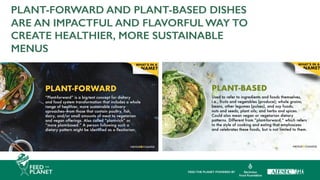
PLANT-FORWARD AND PLANT-BASED DISHES
ARE AN IMPACTFUL AND FLAVORFUL WAY TO
CREATE HEALTHIER, MORE SUSTAINABLE
MENUS
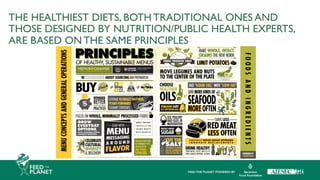
The Healthiest Diets, Both Traditional Ones and Those
Designed by Nutrition/Public Health Experts, are based
on the same principles
THE HEALTHIEST DIETS, BOTH TRADITIONAL ONES AND
THOSE DESIGNED BY NUTRITION/PUBLIC HEALTH EXPERTS,
ARE BASED ON THE SAME PRINCIPLES
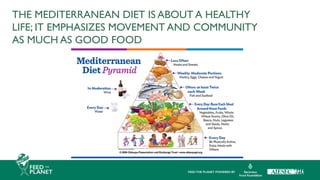
THE MEDITERRANEAN DIET IS ABOUT A HEALTHY
LIFE; IT EMPHASIZES MOVEMENT AND COMMUNITY
AS MUCH AS GOOD FOOD
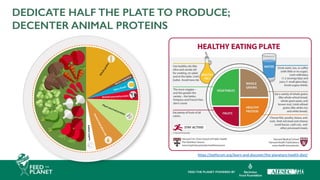
DEDICATE HALF THE PLATE TO PRODUCE;
DECENTER ANIMAL PROTEINS
https://eatforum.org/learn-and-discover/the-planetary-health-diet/
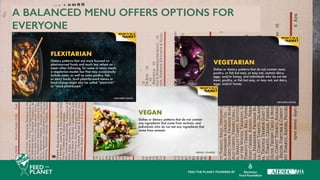
A BALANCED MENU OFFERS OPTIONS FOR
EVERYONE
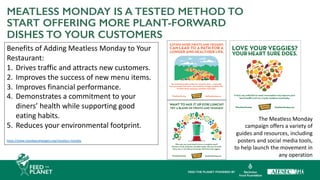
MEATLESS MONDAY IS A TESTED METHOD TO
START OFFERING MORE PLANT-FORWARD
DISHES TO YOUR CUSTOMERS
The Meatless Monday
campaign offers a variety of
guides and resources, including
posters and social media tools,
to help launch the movement in
any operation
Benefits of Adding Meatless Monday to Your
Restaurant:
1. Drives traffic and attracts new customers.
2. Improves the success of new menu items.
3. Improves financial performance.
4. Demonstrates a commitment to your
diners’ health while supporting good
eating habits.
5. Reduces your environmental footprint.
https://www.mondaycampaigns.org/meatless-monday
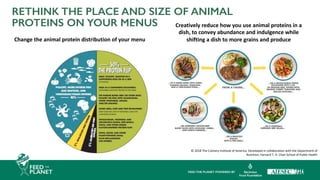
RETHINK THE PLACE AND SIZE OF ANIMAL
PROTEINS ON YOUR MENUS Creatively reduce how you use animal proteins in a
dish, to convey abundance and indulgence while
shifting a dish to more grains and produce
© 2018 The Culinary Institute of America. Developed in collaboration with the Department of
Nutrition, Harvard T. H. Chan School of Public Health
Change the animal protein distribution of your menu
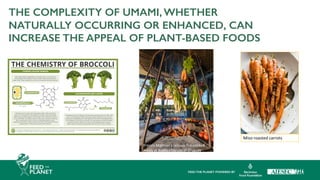
Miso roasted carrots
Francis Mallman’s famous fire-cooked
meals at Bodega Garzón in Uruguay
THE COMPLEXITY OF UMAMI, WHETHER
NATURALLY OCCURRING OR ENHANCED, CAN
INCREASE THE APPEAL OF PLANT-BASED FOODS
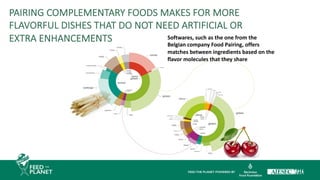
Softwares, such as the one from the
Belgian company Food Pairing, offers
matches between ingredients based on the
flavor molecules that they share
PAIRING COMPLEMENTARY FOODS MAKES FOR MORE
FLAVORFUL DISHES THAT DO NOT NEED ARTIFICIAL OR
EXTRA ENHANCEMENTS
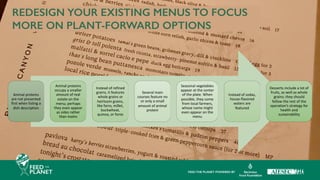
REDESIGN YOUR EXISTING MENUS TO FOCUS
MORE ON PLANT-FORWARD OPTIONS
Animal proteins
are not presented
first when listing a
dish description
Animal proteins
occupy a smaller
amount of real
estate on the
menu; perhaps
they even appear
as sides rather
than mains
Instead of refined
grains, it features
whole grains or
heirloom grains,
like farro, millet,
buckwheat,
quinoa, or fonio
Several main
courses feature no
or only a small
amount of animal
protein
Seasonal vegetables
appear at the center
of the plate. When
possible, they come
from local farmers,
whose name might
even appear on the
menu
Instead of sodas,
house-flavored
waters are
featured
Desserts include a lot of
fruits, as well as whole
grains; they should
follow the rest of the
operation’s strategy for
health and
sustainability
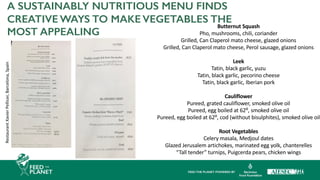
A SUSTAINABLY NUTRITIOUS MENU FINDS
CREATIVE WAYS TO MAKE VEGETABLES THE
MOST APPEALING
Restaurant
Xavier
Pellicer,
Barcelona,
Spain
Butternut Squash
Pho, mushrooms, chili, coriander
Grilled, Can Claperol mato cheese, glazed onions
Grilled, Can Claperol mato cheese, Perol sausage, glazed onions
Leek
Tatin, black garlic, yuzu
Tatin, black garlic, pecorino cheese
Tatin, black garlic, Iberian pork
Cauliflower
Pureed, grated cauliflower, smoked olive oil
Pureed, egg boiled at 62⁰, smoked olive oil
Pureed, egg boiled at 62⁰, cod (without bisulphites), smoked olive oil
Root Vegetables
Celery masala, Medjoul dates
Glazed Jerusalem artichokes, marinated egg yolk, chanterelles
“Tall tender” turnips, Puigcerda pears, chicken wings
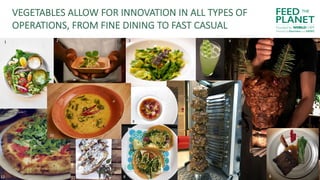
VEGETABLES ALLOW FOR INNOVATION IN ALL TYPES OF
OPERATIONS, FROM FINE DINING TO FAST CASUAL
FEED
PLANET
Founded by WORLDCHEFS
THE
Powered by Electrolux and AIESEC
1 2 3 4 5
6
7
8
9
10
11
12
ASKING YOURSELF THE RIGHT QUESTIONS WILL YOU
ENACT CHANGE AT WORK AND AT HOME
At Work
Ø How sustainable is your menu?
Ø Could your menu be healthier?
Ø What needs to change to make it healthier/more sustainable?
Ø What can you change tomorrow?
Ø What can you change in three months?
Ø What can you change next year?
Ø Are there local producers, including for animal proteins, whom
you should talk to?
Ø Do you have food waste reduction efforts in place?
Ø Is there somewhere on your property where you could grow
food, even herbs in pots, and involve your team in the process?
Ø What are the biggest obstacles you face when wanting to
implement change?
Ø How can you overcome those obstacles?
Ø What evidence do you need to show your boss to get them to
approve the changes you want to make?
Ø Where and how will you obtain that evidence, and how will you
build your case?
Ø How and where will you communicate these changes to your
customers?
At Home
Ø Do you pay attention to sustainability when you buy food for
home?
Ø Where do you usually shop, and what type of foods do you buy?
Ø Is there a farmer’s market near you?
Ø How could you reduce the food waste you generate?
Ø What can you do today to make your home food healthier?
Ø How often do you cook something you’ve never tried before, like
a vegetable or a grain, at home?
EATING WELL IS GOOD FOR YOU AND GOOD FOR THE PLANET!
Module developed by
hello@tmcmediterranean.org
www.tmcmediterranean.org

8_-_Sustainable_Nutrition_(1).pdf

  • 1.
    SUSTAINABILITY EDUCATION FOR CULINARYPROFESSIONALS Part 8: Sustainable Nutrition
  • 2.
    SUSTAINABLE NUTRITION ISIMPORTANT FOR THE FUTURE OF THE PLANET
  • 3.
    RED MEAT PRODUCTIONNEGATIVELY IMPACTS THE ENVIRONMENT
  • 4.
    Ø Diet Quality:Not all calories are created equal. Ø A calorie is a unit of measurement, not an indicator of quality Ø If you consume more calories than you use, you will gain weight; it’s simple mathematics Ø Our body metabolizes different types of calories differently, which is why focusing on the quality of the calories we serve is key. A dish filled with whole grains, vegetables, and fish, for example, might have the same calories as an ice cream. But what it contributes to our body is vastly different. Ø Environmental Impact: Not all foods have the same environmental impact, which is often due to how they are cultivated or raised. Ø Think back to the graphics in the previous slides and the difference between beef and dry beans, for example. Ø The two cannot be disconnected. The foods that are healthier for us—fruits, vegetables, and whole grains—tend to have a lower environmental footprint than those that health experts recommend limiting, such as animal products and highly processed foods. NUTRITIONAL QUALITY AND ENVIRONMENTAL IMPACT BOTH MATTER WHEN IT COMES TO WHAT WE EAT
  • 5.
    DIFFERENT PARTS OFTHE WORLD HAVE DIFFERENT ACCESS TO NUTRIENTS The Lancet Planetary Health 2018 2e353-e368DOI: (10.1016/S2542-5196(18)30170-0) High SDI 2013 Low SDI 2013
  • 6.
    CHANGING OUR DIETCAN CHANGE OUR HEALTH U.S. Burden of Disease Collaborators, JAMA 2013 Source: Dr. Ramon Estruch, presented at Tomorrow Tastes Mediterranean 2019
  • 7.
    PLANTS CONTAIN PROTEINS;WE TEND TO OVERESTIMATE OUR PROTEIN NEEDS How much protein do we need? 0.8 gram per kilo of body weight, so 56 grams for a 70-kilo adult (based on Recommended Dietary Allowance) Don’t use protein as a synonym for meat; lots of foods contain proteins! Say “animal protein” when you mean beef or salmon. Shift your mindset, shift your cooks’ mindset, shift your customers’ mindset!
  • 8.
    PLANT-BASED FATS AREGENERALLY HEALTHIER
  • 9.
    HIGH-QUALITY CARBOHYDRATES AND REDUCEDSUGAR ARE BEST FOR OUR HEALTH ØCarbohydrate QUALITY is the most important element to consider. ØFocus on whole grains and minimally processed ingredients, for carbohydrate quality. ØAvoid serving sugar-sweetened beverages; instead, serve waters aromatized with fresh fruits and/or herbs, herbal teas hot and cold, and drinks like water infusions. ØCreate desserts that focus on fruits, nuts, and dark chocolate Ø“Flip” your more traditional desserts to include a greater percentage of fruits; for example, a cheesecake serving that is more fruit topping than cake.
  • 10.
    RELY ON SOUNDSCIENCE AND SERIOUS SOURCES FOR NUTRITION AND SUSTAINABILITY INFORMATION When you read or hear information about health, nutrition, or sustainability, ask yourself: q What/who is the source of this information? q Is the source reputable? What are their credentials? q Who is funding the research? q How many subjects did the study include? q Is the research peer reviewed? q Is the full study linked so that I can access it? q Who is the audience for this material?
  • 11.
    PLANT-FORWARD AND PLANT-BASEDDISHES ARE AN IMPACTFUL AND FLAVORFUL WAY TO CREATE HEALTHIER, MORE SUSTAINABLE MENUS
  • 12.
    The Healthiest Diets,Both Traditional Ones and Those Designed by Nutrition/Public Health Experts, are based on the same principles THE HEALTHIEST DIETS, BOTH TRADITIONAL ONES AND THOSE DESIGNED BY NUTRITION/PUBLIC HEALTH EXPERTS, ARE BASED ON THE SAME PRINCIPLES
  • 13.
    THE MEDITERRANEAN DIETIS ABOUT A HEALTHY LIFE; IT EMPHASIZES MOVEMENT AND COMMUNITY AS MUCH AS GOOD FOOD
  • 14.
    DEDICATE HALF THEPLATE TO PRODUCE; DECENTER ANIMAL PROTEINS https://eatforum.org/learn-and-discover/the-planetary-health-diet/
  • 15.
    A BALANCED MENUOFFERS OPTIONS FOR EVERYONE
  • 16.
    MEATLESS MONDAY ISA TESTED METHOD TO START OFFERING MORE PLANT-FORWARD DISHES TO YOUR CUSTOMERS The Meatless Monday campaign offers a variety of guides and resources, including posters and social media tools, to help launch the movement in any operation Benefits of Adding Meatless Monday to Your Restaurant: 1. Drives traffic and attracts new customers. 2. Improves the success of new menu items. 3. Improves financial performance. 4. Demonstrates a commitment to your diners’ health while supporting good eating habits. 5. Reduces your environmental footprint. https://www.mondaycampaigns.org/meatless-monday
  • 17.
    RETHINK THE PLACEAND SIZE OF ANIMAL PROTEINS ON YOUR MENUS Creatively reduce how you use animal proteins in a dish, to convey abundance and indulgence while shifting a dish to more grains and produce © 2018 The Culinary Institute of America. Developed in collaboration with the Department of Nutrition, Harvard T. H. Chan School of Public Health Change the animal protein distribution of your menu
  • 18.
    Miso roasted carrots FrancisMallman’s famous fire-cooked meals at Bodega Garzón in Uruguay THE COMPLEXITY OF UMAMI, WHETHER NATURALLY OCCURRING OR ENHANCED, CAN INCREASE THE APPEAL OF PLANT-BASED FOODS
  • 19.
    Softwares, such asthe one from the Belgian company Food Pairing, offers matches between ingredients based on the flavor molecules that they share PAIRING COMPLEMENTARY FOODS MAKES FOR MORE FLAVORFUL DISHES THAT DO NOT NEED ARTIFICIAL OR EXTRA ENHANCEMENTS
  • 20.
    REDESIGN YOUR EXISTINGMENUS TO FOCUS MORE ON PLANT-FORWARD OPTIONS Animal proteins are not presented first when listing a dish description Animal proteins occupy a smaller amount of real estate on the menu; perhaps they even appear as sides rather than mains Instead of refined grains, it features whole grains or heirloom grains, like farro, millet, buckwheat, quinoa, or fonio Several main courses feature no or only a small amount of animal protein Seasonal vegetables appear at the center of the plate. When possible, they come from local farmers, whose name might even appear on the menu Instead of sodas, house-flavored waters are featured Desserts include a lot of fruits, as well as whole grains; they should follow the rest of the operation’s strategy for health and sustainability
  • 21.
    A SUSTAINABLY NUTRITIOUSMENU FINDS CREATIVE WAYS TO MAKE VEGETABLES THE MOST APPEALING Restaurant Xavier Pellicer, Barcelona, Spain Butternut Squash Pho, mushrooms, chili, coriander Grilled, Can Claperol mato cheese, glazed onions Grilled, Can Claperol mato cheese, Perol sausage, glazed onions Leek Tatin, black garlic, yuzu Tatin, black garlic, pecorino cheese Tatin, black garlic, Iberian pork Cauliflower Pureed, grated cauliflower, smoked olive oil Pureed, egg boiled at 62⁰, smoked olive oil Pureed, egg boiled at 62⁰, cod (without bisulphites), smoked olive oil Root Vegetables Celery masala, Medjoul dates Glazed Jerusalem artichokes, marinated egg yolk, chanterelles “Tall tender” turnips, Puigcerda pears, chicken wings
  • 22.
    VEGETABLES ALLOW FORINNOVATION IN ALL TYPES OF OPERATIONS, FROM FINE DINING TO FAST CASUAL FEED PLANET Founded by WORLDCHEFS THE Powered by Electrolux and AIESEC 1 2 3 4 5 6 7 8 9 10 11 12
  • 23.
    ASKING YOURSELF THERIGHT QUESTIONS WILL YOU ENACT CHANGE AT WORK AND AT HOME At Work Ø How sustainable is your menu? Ø Could your menu be healthier? Ø What needs to change to make it healthier/more sustainable? Ø What can you change tomorrow? Ø What can you change in three months? Ø What can you change next year? Ø Are there local producers, including for animal proteins, whom you should talk to? Ø Do you have food waste reduction efforts in place? Ø Is there somewhere on your property where you could grow food, even herbs in pots, and involve your team in the process? Ø What are the biggest obstacles you face when wanting to implement change? Ø How can you overcome those obstacles? Ø What evidence do you need to show your boss to get them to approve the changes you want to make? Ø Where and how will you obtain that evidence, and how will you build your case? Ø How and where will you communicate these changes to your customers? At Home Ø Do you pay attention to sustainability when you buy food for home? Ø Where do you usually shop, and what type of foods do you buy? Ø Is there a farmer’s market near you? Ø How could you reduce the food waste you generate? Ø What can you do today to make your home food healthier? Ø How often do you cook something you’ve never tried before, like a vegetable or a grain, at home?
  • 24.
    EATING WELL ISGOOD FOR YOU AND GOOD FOR THE PLANET!
  • 25.