SERICULTURE
BY OJASWI
231FA14025
QUICK FACTS
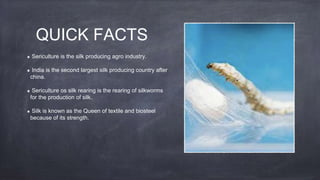
Sericulture is the silk producing agro industry.
India is the second largest silk producing country after
china.
Sericulture os silk rearing is the rearing of silkworms
for the production of silk.
Silk is known as the Queen of textile and biosteel
because of its strength.
History of Sericulture
• A chinese tale of the discovery of silkworm was by an ancient
empress Si-Ling-Shi in the 27th century BC.
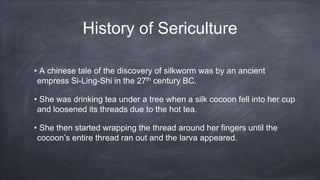
• She was drinking tea under a tree when a silk cocoon fell into her cup
and loosened its threads due to the hot tea.
• She then started wrapping the thread around her fingers until the
cocoon’s entire thread ran out and the larva appeared.
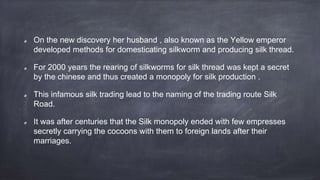
On the new discovery her husband , also known as the Yellow emperor
developed methods for domesticating silkworm and producing silk thread.
For 2000 years the rearing of silkworms for silk thread was kept a secret
by the chinese and thus created a monopoly for silk production .
This infamous silk trading lead to the naming of the trading route Silk
Road.
It was after centuries that the Silk monopoly ended with few empresses
secretly carrying the cocoons with them to foreign lands after their
marriages.
Chinese empress Drinks tea under a tree
Silk cocoon falls into her
hot tea
Silk thread unravels and
larva is exposed
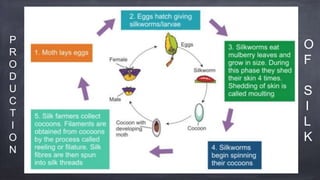
L
I
F
E
C
Y
C
L
E
P
R
O
D
U
C
T
I
O
N
O
F
S
I
L
K
NATURAL TYPES
OF SILK
FROM SILKWORMS
MULBERRY SILK
Mulberry silk is the most luxurious natural
silk available on the global textile market
and it is also the most expensive type of silk
to buy.
Mulberry silk sarees can range from a price
of 5000 to 2,00,000 in Indian Rupees.
The Indian states Karnataka, Andhra
Pradesh, West Bengal, Tamil Nadu and
Jammu & Kashmir which together accounts
for 92 % of country's total mulberry raw silk
production.
TESSAR SILK
Tussar silk is a type of wild silk, which is
made from silkworms that feed on plants
like asan and Arjun.
It is famous and valued for its natural
golden color. Tussar silk is lightweight,
has a luxurious touch, and feels like a
charm.
It can range between 7000 to 80,000.
The main producers of tussar silk are
Jharkhand and Bihar
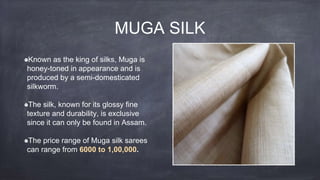
MUGA SILK
Known as the king of silks, Muga is
honey-toned in appearance and is
produced by a semi-domesticated
silkworm.
The silk, known for its glossy fine
texture and durability, is exclusive
since it can only be found in Assam.
The price range of Muga silk sarees
can range from 6000 to 1,00,000.
ERI SILK
Eri silk is a protein fibre derived from
cocoons made by the Samia Cynthia Ricini
moth or Philosamia Ricini moth.
It is 100% natural and is one of the four
major silks being produced. Predominantly
found in Meghalaya and other northeast
states of India
It is also considered a Vanya (wild) silk.
It’s price can range between 20,000 to
40,000.
SERICULTURE.pptx

SERICULTURE.pptx

  • 1.
  • 2.
    QUICK FACTS Sericulture isthe silk producing agro industry. India is the second largest silk producing country after china. Sericulture os silk rearing is the rearing of silkworms for the production of silk. Silk is known as the Queen of textile and biosteel because of its strength.
  • 3.
    History of Sericulture •A chinese tale of the discovery of silkworm was by an ancient empress Si-Ling-Shi in the 27th century BC. • She was drinking tea under a tree when a silk cocoon fell into her cup and loosened its threads due to the hot tea. • She then started wrapping the thread around her fingers until the cocoon’s entire thread ran out and the larva appeared.
  • 4.
    On the newdiscovery her husband , also known as the Yellow emperor developed methods for domesticating silkworm and producing silk thread. For 2000 years the rearing of silkworms for silk thread was kept a secret by the chinese and thus created a monopoly for silk production . This infamous silk trading lead to the naming of the trading route Silk Road. It was after centuries that the Silk monopoly ended with few empresses secretly carrying the cocoons with them to foreign lands after their marriages.
  • 5.
    Chinese empress Drinkstea under a tree
  • 6.
    Silk cocoon fallsinto her hot tea Silk thread unravels and larva is exposed
  • 8.
  • 9.
  • 10.
  • 13.
    MULBERRY SILK Mulberry silkis the most luxurious natural silk available on the global textile market and it is also the most expensive type of silk to buy. Mulberry silk sarees can range from a price of 5000 to 2,00,000 in Indian Rupees. The Indian states Karnataka, Andhra Pradesh, West Bengal, Tamil Nadu and Jammu & Kashmir which together accounts for 92 % of country's total mulberry raw silk production.
  • 14.
    TESSAR SILK Tussar silkis a type of wild silk, which is made from silkworms that feed on plants like asan and Arjun. It is famous and valued for its natural golden color. Tussar silk is lightweight, has a luxurious touch, and feels like a charm. It can range between 7000 to 80,000. The main producers of tussar silk are Jharkhand and Bihar
  • 15.
    MUGA SILK Known asthe king of silks, Muga is honey-toned in appearance and is produced by a semi-domesticated silkworm. The silk, known for its glossy fine texture and durability, is exclusive since it can only be found in Assam. The price range of Muga silk sarees can range from 6000 to 1,00,000.
  • 16.
    ERI SILK Eri silkis a protein fibre derived from cocoons made by the Samia Cynthia Ricini moth or Philosamia Ricini moth. It is 100% natural and is one of the four major silks being produced. Predominantly found in Meghalaya and other northeast states of India It is also considered a Vanya (wild) silk. It’s price can range between 20,000 to 40,000.