Closing Remarks
Chandra A. Madramootoo Eng.
Distinguished James McGill Professor
Bioresource Engineering
McGill University
Montreal, Canada
Thursday September 01,
2022
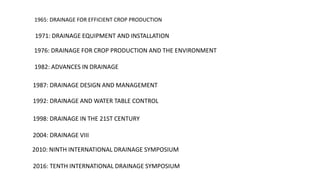
1965: DRAINAGE FOR EFFICIENT CROP PRODUCTION
1971: DRAINAGE EQUIPMENT AND INSTALLATION
1982: ADVANCES IN DRAINAGE
1976: DRAINAGE FOR CROP PRODUCTION AND THE ENVIRONMENT
1987: DRAINAGE DESIGN AND MANAGEMENT
1992: DRAINAGE AND WATER TABLE CONTROL
1998: DRAINAGE IN THE 21ST CENTURY
2004: DRAINAGE VIII
2010: NINTH INTERNATIONAL DRAINAGE SYMPOSIUM
2016: TENTH INTERNATIONAL DRAINAGE SYMPOSIUM
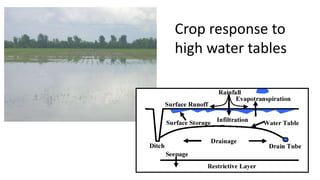
Crop response to
high water tables
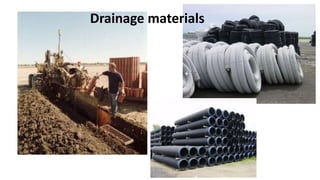
Drainage materials
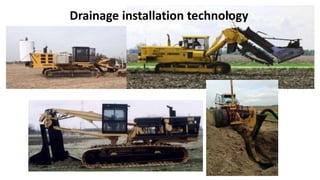
Drainage installation technology
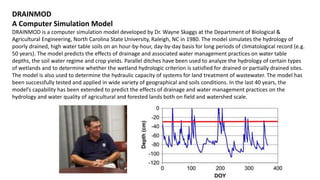
DRAINMOD
A Computer Simulation Model
DRAINMOD is a computer simulation model developed by Dr. Wayne Skaggs at the Department of Biological &
Agricultural Engineering, North Carolina State University, Raleigh, NC in 1980. The model simulates the hydrology of
poorly drained, high water table soils on an hour-by-hour, day-by-day basis for long periods of climatological record (e.g.
50 years). The model predicts the effects of drainage and associated water management practices on water table
depths, the soil water regime and crop yields. Parallel ditches have been used to analyze the hydrology of certain types
of wetlands and to determine whether the wetland hydrologic criterion is satisfied for drained or partially drained sites.
The model is also used to determine the hydraulic capacity of systems for land treatment of wastewater. The model has
been successfully tested and applied in wide variety of geographical and soils conditions. In the last 40 years, the
model’s capability has been extended to predict the effects of drainage and water management practices on the
hydrology and water quality of agricultural and forested lands both on field and watershed scale.
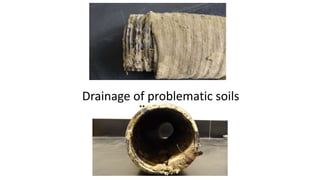
Drainage of problematic soils
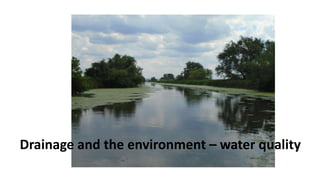
Drainage and the environment – water quality
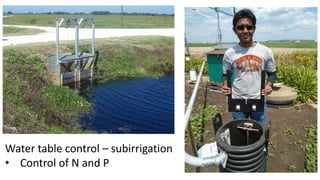
Water table control – subirrigation
• Control of N and P
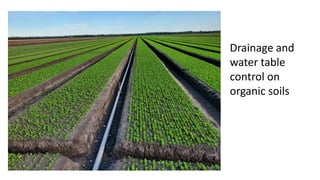
Drainage and
water table
control on
organic soils
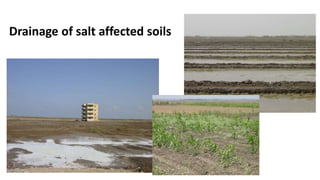
Drainage of salt affected soils
The Drainage Industry
• Pipe and sock manufacturers
• Drainage and agricultural equipment
• Agricultural industry/crop producers associations
• Land owners
• Drainage contractors
• Environmental – water quality technology sector
• Conservation partners (TNC)
IMPROVING WATER QUALITY AND AGRONOMICS BY
MANAGING DRAINAGE WATER
An industry led organization that was formed in 2004 to enhance
crop production and improve water quality outcomes. ADMC was
crucial in the development of development of three water
management NRCS conservation practice standards as well as
training for over 130 technical service providers. Moving forward,
ADMC is leading in the advancement of water management practice
adoption throughout the United States. ADMC also serves a critical
role in identifying research and programmatic needs to better meet
America’s production, environmental, and sustainability goals.
The Agricultural Drainage Management Coalition
ADVANCES IN DRAINAGE: SELECTED WORKS
FROM THE TENTH INTERNATIONAL DRAINAGE SYMPOSIUM
J. S. Strock, C. H. Hay, M. J. Helmers, K. A. Nelson,
G. R. Sands, R. W. Skaggs, K. R. Douglas-Mankin
Transactions of the ASABE
Vol. 61(1): 161-168 © 2018 American Society of Agricultural and
Biological Engineers https://doi.org/10.13031/trans.12668
Future research must consider drainage system design and
management, agronomic management practices, and the role of
government and market forces in implementing technical
solutions at the scale needed to make a measurable impact.
Future emphasis on management of drainage systems should
focus on achieving an acceptable balance between agricultural
productivity, conservation, and environmental quality
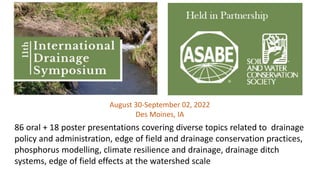
August 30-September 02, 2022
Des Moines, IA
86 oral + 18 poster presentations covering diverse topics related to drainage
policy and administration, edge of field and drainage conservation practices,
phosphorus modelling, climate resilience and drainage, drainage ditch
systems, edge of field effects at the watershed scale
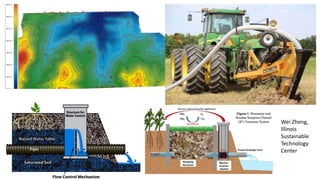
Wei Zheng,
Illinois
Sustainable
Technology
Center
Looking to the Future
• Water quality improvement
• Climate change
• Surface drainage and improvements in ditch systems
• Riparian protection
• Improvements to contaminant transport models
• Drainage and reclamation of disturbed soils
• Drainage for salinity control and drainage of irrigated lands
• Drainage water disposal: drainage water reuse and recycling
• Drainage and the environment; incorporating and protecting
wetlands
Looking to the Future
• Integrated agricultural drainage and storm water management
• Quantifying environmental co-benefits – water quality and GHG
emissions
• Water table control on moderately sloping lands
• Integrating drainage with crop and soil management recommendations
– linking drainage to precision agriculture
• Improving drainage on lands already tiled; identification technology,
installation equipment, system retrofitting
• Alleviation of compacted soils
• Drainage of problem soils, including sediment filtration
• Quantifying social, environmental and economic benefits of drainage
Is there more to be done in pipe structural mechanics and
hydraulics?
Gaj and Madramootoo – J. Irrign and Drain Eng, ASCE (2020); J. ASABE (2022)
1. New methodology of incorporating perforations into the structural analysis and
design of buried corrugated HDPE pipes. Incorporating shape, dimension, and
configuration of the perforations allowed for an improved appraisal of the pipe's
structural performance.
2. New dimensionless parameter to compute the hydraulic exit resistance of buried
corrugated pipes with variable perforation characteristics when operated under the
subsurface irrigation mode.
3. Computation of exit head losses to set better target water levels in control
chambers for water conservation.
4. Size and configuration of perforations on subsurface irrigation pipes can play an
important role in reducing the response time for water table rise into the
unsaturated zone. These parameters can be integrated into water management
simulation models.
Special thanks to:
SYMPOSIUM CO-CHAIRS: Matthew Helmers, Symposium Co-Chair, Iowa State
University; Christopher Hay, Symposium Co-Chair, Iowa Soybean Association;
Bethany Brittenham, Program Co-Chair, John McMaine, Program Co-Chair, South Dakota
State University
Mohamed Youssef, Publication Co-Chair, North Carolina State University; Zhiming Qi,
Publication Co-Chair, McGill University
PLANNING COMMITTEE: Courtney Allen, Renee Bouldin, Bethany
Brittenham, Laura Christianson, Jane Frankenberger, Ehsan Ghane, Jeppe
Kjaersgaard, Ainis Lagzdins, John McMaine, Zhiming Qi, Malcolm Robertson,
Gary Sands, Vinayak Shedekar, Ranvir Singh, Mohamed Youssef
September 1 - 0330 - Chandra Madramootoo

September 1 - 0330 - Chandra Madramootoo

  • 1.
    Closing Remarks Chandra A.Madramootoo Eng. Distinguished James McGill Professor Bioresource Engineering McGill University Montreal, Canada Thursday September 01, 2022
  • 3.
    1965: DRAINAGE FOREFFICIENT CROP PRODUCTION 1971: DRAINAGE EQUIPMENT AND INSTALLATION 1982: ADVANCES IN DRAINAGE 1976: DRAINAGE FOR CROP PRODUCTION AND THE ENVIRONMENT 1987: DRAINAGE DESIGN AND MANAGEMENT 1992: DRAINAGE AND WATER TABLE CONTROL 1998: DRAINAGE IN THE 21ST CENTURY 2004: DRAINAGE VIII 2010: NINTH INTERNATIONAL DRAINAGE SYMPOSIUM 2016: TENTH INTERNATIONAL DRAINAGE SYMPOSIUM
  • 4.
  • 5.
  • 6.
  • 7.
    DRAINMOD A Computer SimulationModel DRAINMOD is a computer simulation model developed by Dr. Wayne Skaggs at the Department of Biological & Agricultural Engineering, North Carolina State University, Raleigh, NC in 1980. The model simulates the hydrology of poorly drained, high water table soils on an hour-by-hour, day-by-day basis for long periods of climatological record (e.g. 50 years). The model predicts the effects of drainage and associated water management practices on water table depths, the soil water regime and crop yields. Parallel ditches have been used to analyze the hydrology of certain types of wetlands and to determine whether the wetland hydrologic criterion is satisfied for drained or partially drained sites. The model is also used to determine the hydraulic capacity of systems for land treatment of wastewater. The model has been successfully tested and applied in wide variety of geographical and soils conditions. In the last 40 years, the model’s capability has been extended to predict the effects of drainage and water management practices on the hydrology and water quality of agricultural and forested lands both on field and watershed scale.
  • 8.
  • 9.
    Drainage and theenvironment – water quality
  • 10.
    Water table control– subirrigation • Control of N and P
  • 11.
  • 12.
    Drainage of saltaffected soils
  • 13.
    The Drainage Industry •Pipe and sock manufacturers • Drainage and agricultural equipment • Agricultural industry/crop producers associations • Land owners • Drainage contractors • Environmental – water quality technology sector • Conservation partners (TNC)
  • 14.
    IMPROVING WATER QUALITYAND AGRONOMICS BY MANAGING DRAINAGE WATER An industry led organization that was formed in 2004 to enhance crop production and improve water quality outcomes. ADMC was crucial in the development of development of three water management NRCS conservation practice standards as well as training for over 130 technical service providers. Moving forward, ADMC is leading in the advancement of water management practice adoption throughout the United States. ADMC also serves a critical role in identifying research and programmatic needs to better meet America’s production, environmental, and sustainability goals. The Agricultural Drainage Management Coalition
  • 15.
    ADVANCES IN DRAINAGE:SELECTED WORKS FROM THE TENTH INTERNATIONAL DRAINAGE SYMPOSIUM J. S. Strock, C. H. Hay, M. J. Helmers, K. A. Nelson, G. R. Sands, R. W. Skaggs, K. R. Douglas-Mankin Transactions of the ASABE Vol. 61(1): 161-168 © 2018 American Society of Agricultural and Biological Engineers https://doi.org/10.13031/trans.12668
  • 16.
    Future research mustconsider drainage system design and management, agronomic management practices, and the role of government and market forces in implementing technical solutions at the scale needed to make a measurable impact. Future emphasis on management of drainage systems should focus on achieving an acceptable balance between agricultural productivity, conservation, and environmental quality
  • 17.
    August 30-September 02,2022 Des Moines, IA 86 oral + 18 poster presentations covering diverse topics related to drainage policy and administration, edge of field and drainage conservation practices, phosphorus modelling, climate resilience and drainage, drainage ditch systems, edge of field effects at the watershed scale
  • 18.
  • 19.
    Looking to theFuture • Water quality improvement • Climate change • Surface drainage and improvements in ditch systems • Riparian protection • Improvements to contaminant transport models • Drainage and reclamation of disturbed soils • Drainage for salinity control and drainage of irrigated lands • Drainage water disposal: drainage water reuse and recycling • Drainage and the environment; incorporating and protecting wetlands
  • 20.
    Looking to theFuture • Integrated agricultural drainage and storm water management • Quantifying environmental co-benefits – water quality and GHG emissions • Water table control on moderately sloping lands • Integrating drainage with crop and soil management recommendations – linking drainage to precision agriculture • Improving drainage on lands already tiled; identification technology, installation equipment, system retrofitting • Alleviation of compacted soils • Drainage of problem soils, including sediment filtration • Quantifying social, environmental and economic benefits of drainage
  • 21.
    Is there moreto be done in pipe structural mechanics and hydraulics? Gaj and Madramootoo – J. Irrign and Drain Eng, ASCE (2020); J. ASABE (2022) 1. New methodology of incorporating perforations into the structural analysis and design of buried corrugated HDPE pipes. Incorporating shape, dimension, and configuration of the perforations allowed for an improved appraisal of the pipe's structural performance. 2. New dimensionless parameter to compute the hydraulic exit resistance of buried corrugated pipes with variable perforation characteristics when operated under the subsurface irrigation mode. 3. Computation of exit head losses to set better target water levels in control chambers for water conservation. 4. Size and configuration of perforations on subsurface irrigation pipes can play an important role in reducing the response time for water table rise into the unsaturated zone. These parameters can be integrated into water management simulation models.
  • 23.
    Special thanks to: SYMPOSIUMCO-CHAIRS: Matthew Helmers, Symposium Co-Chair, Iowa State University; Christopher Hay, Symposium Co-Chair, Iowa Soybean Association; Bethany Brittenham, Program Co-Chair, John McMaine, Program Co-Chair, South Dakota State University Mohamed Youssef, Publication Co-Chair, North Carolina State University; Zhiming Qi, Publication Co-Chair, McGill University PLANNING COMMITTEE: Courtney Allen, Renee Bouldin, Bethany Brittenham, Laura Christianson, Jane Frankenberger, Ehsan Ghane, Jeppe Kjaersgaard, Ainis Lagzdins, John McMaine, Zhiming Qi, Malcolm Robertson, Gary Sands, Vinayak Shedekar, Ranvir Singh, Mohamed Youssef