DRAINAGE
DRAINAGE
 removal and disposal of excess water from
agricultural lands
 Excess water in the root one is detrimental to
crop production
 restricts soil aeration
 affects soil temperatures,
 hinders with tillage operations
WATERLOGGING
 Term used to describe the conditions when the
water table comes near the surface such that
crop growth is affected
 rising watertable
 may restrict root development of the crops
 may also bring up harmful substances to the root
one.
APPROACH TO DRAINAGE PROBLEMS
• The period and the amount of water standing on the
land surface during rainy season
• Number of days for which soil is workable for
agricultural operations
• The average depth of watertable during cropping
season and the number of days it is at critical level for
crops
• Seasonal salinity of the root zone
• Average depth of watertable during non-cropping
season.
METHODS
 Surface
 Subsurface
SURFACE METHODS
 safe removal of excess water from the land
surface through land shaping and improved or
constructed channels.
 remove the excess rainfall as well as collection
and disposal of excess surface irrigation water
SURFACE DRAINAGE PROBLEMS
OCCUR IN
 flat or nearly flat areas
 uneven land surfaces with depressions or ridges
preventing natural runoff
 In areas without any outlet
 Soils with low infiltration rates
 In deep heavy soils, wherein vertical movement
of water is restricted
SURFACE DRAINAGE SYSTEMS
 Important both in rainfed and irrigated areas
 In sloping areas, surface drainage is to be
accomplished without causing soil erosion.
SURFACE DRAINAGE SYSTEMS
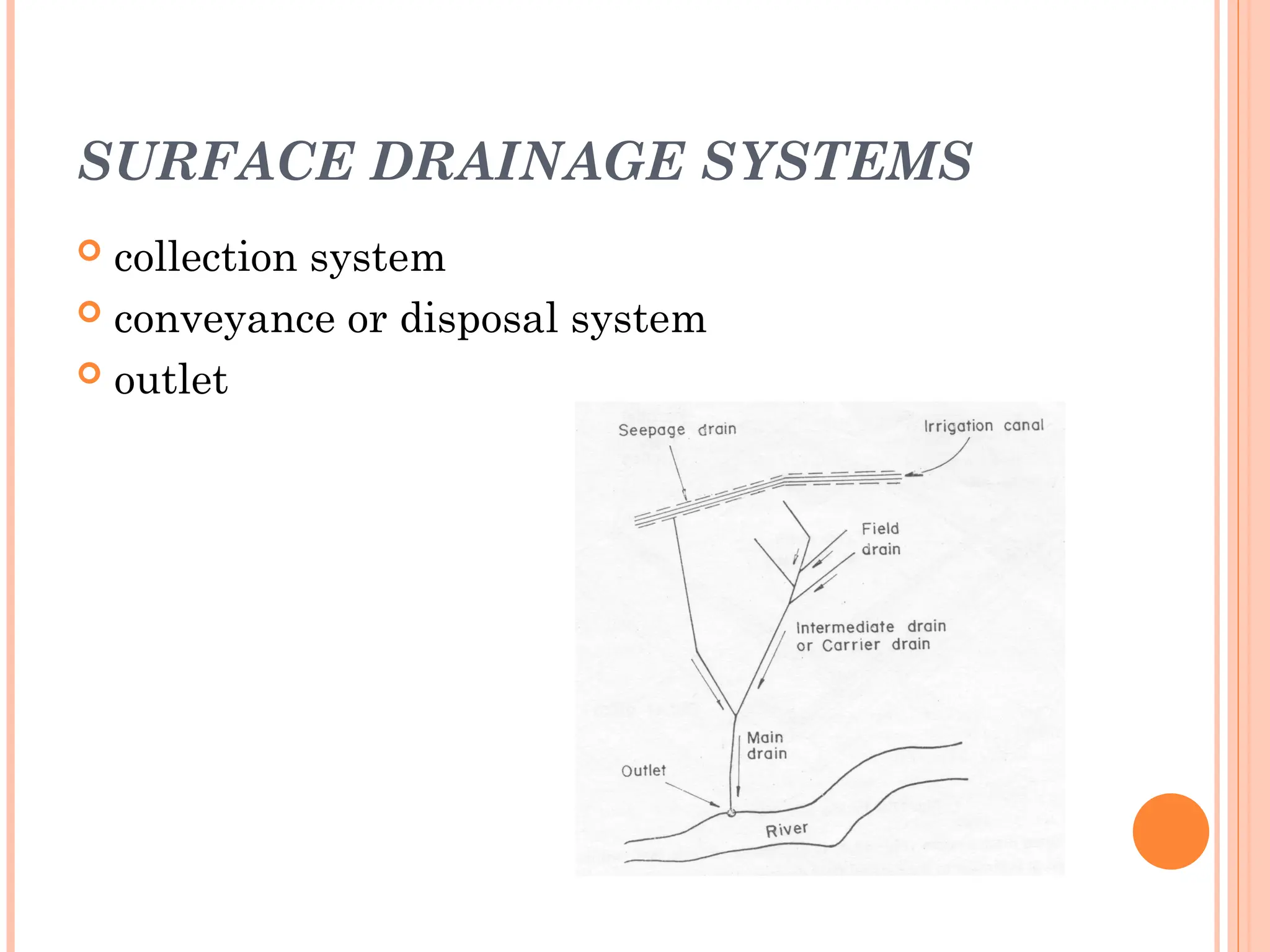
 collection system
 conveyance or disposal system
 outlet
 Water from the individual fields is collected
through the collection system and moves through
the disposal system to the outlet.
 Collection system consists of the field drains and
the conveyance system consist of intermediate
and the main drains.
SURFACE DRAINAGE SYSTEMS
Used in flat areas (less than 2%)
•Random drain system
•Parallel field drain system
•Parallel open ditch system
•Bedding system
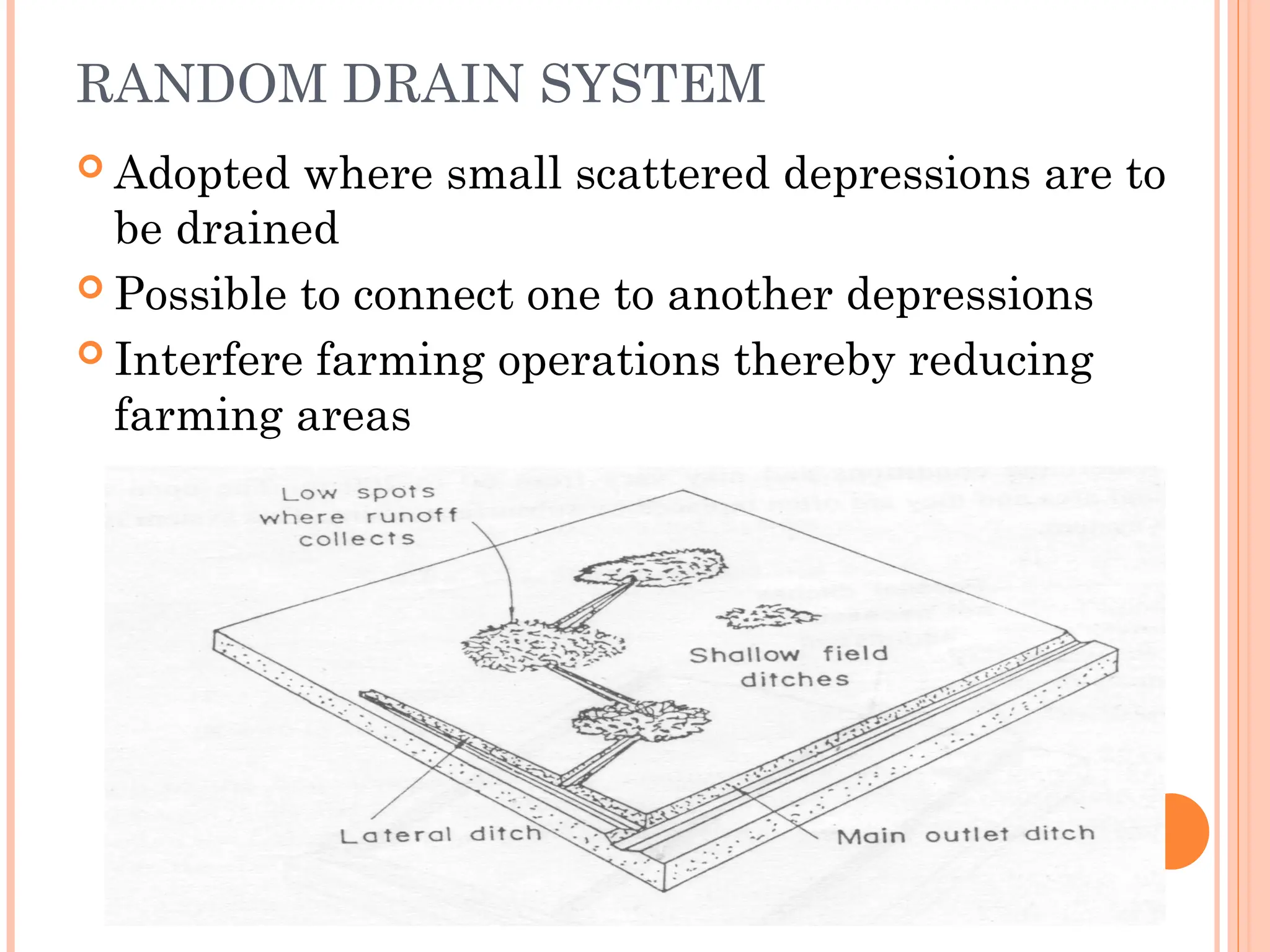
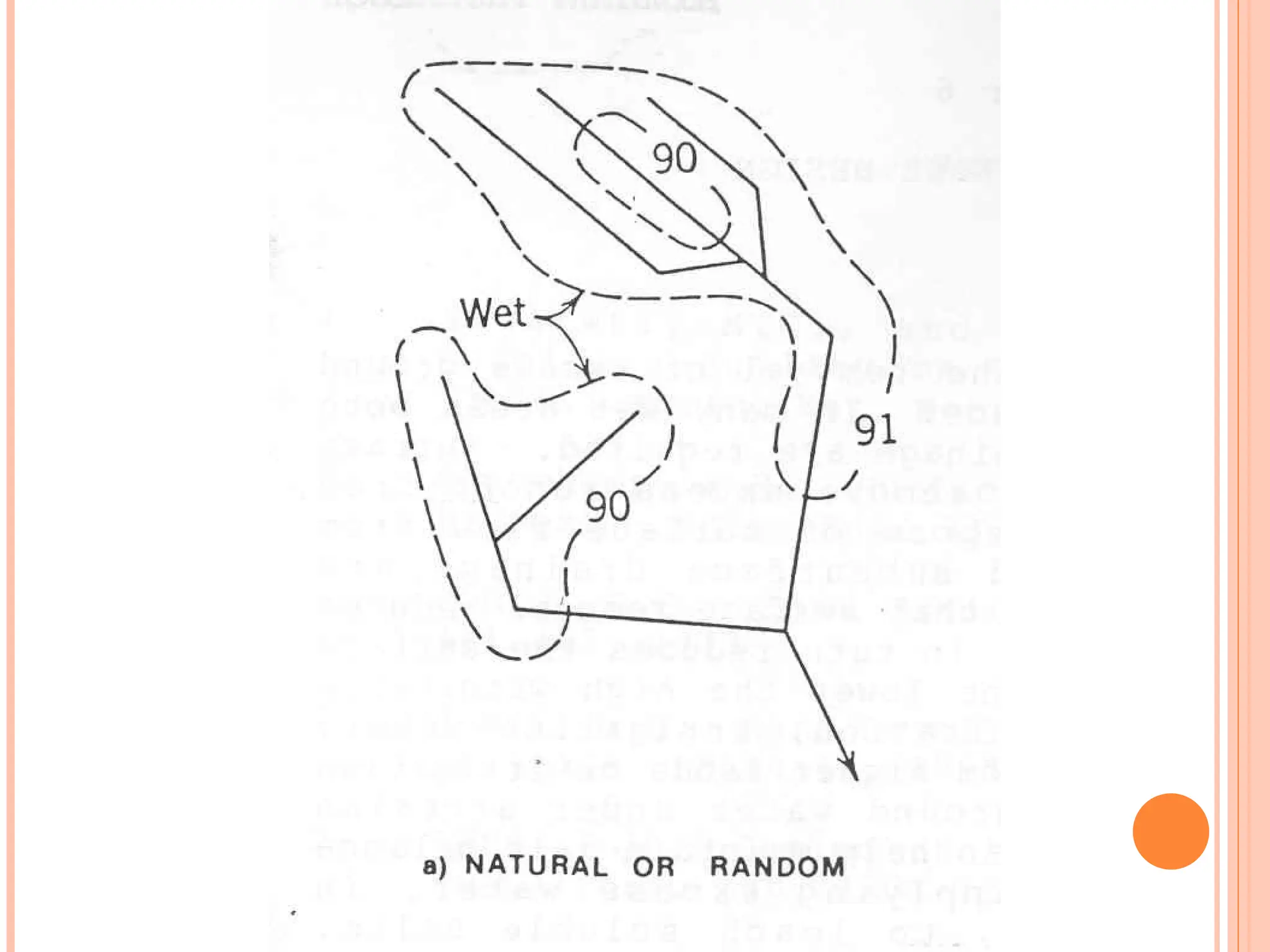
RANDOM DRAIN SYSTEM
 Adopted where small scattered depressions are to
be drained
 Possible to connect one to another depressions
 Interfere farming operations thereby reducing
farming areas
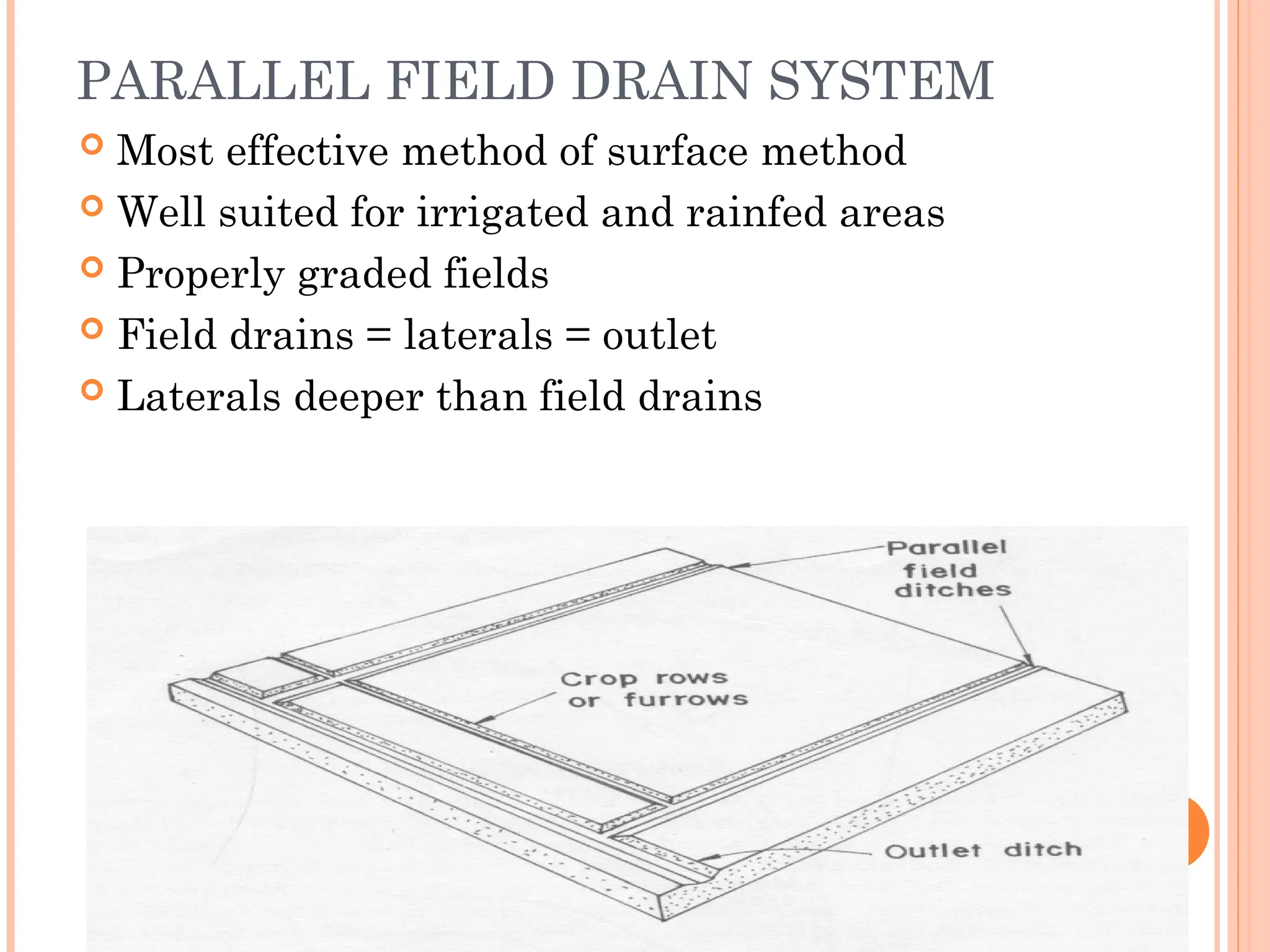
PARALLEL FIELD DRAIN SYSTEM
 Most effective method of surface method
 Well suited for irrigated and rainfed areas
 Properly graded fields
 Field drains = laterals = outlet
 Laterals deeper than field drains
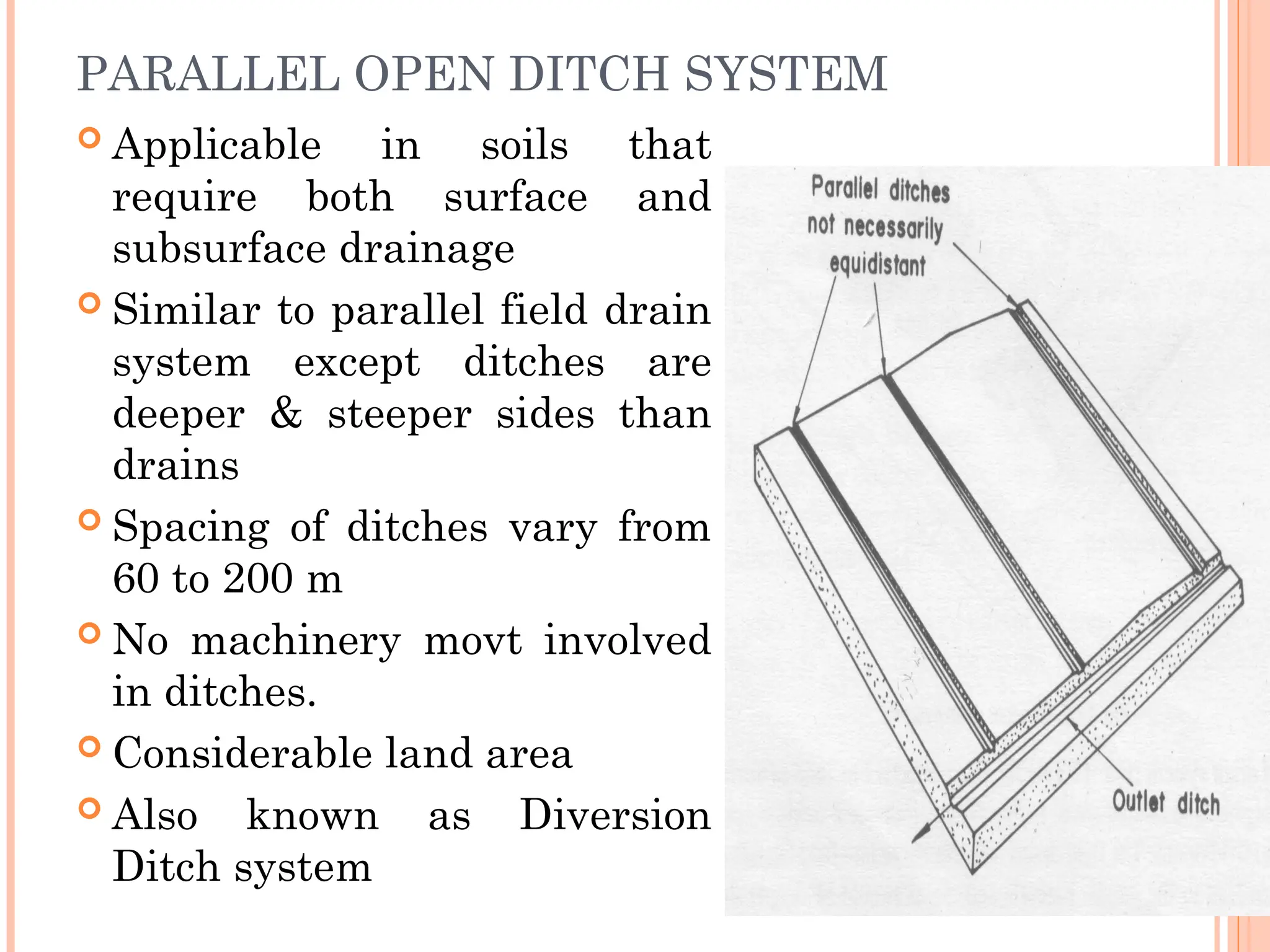
PARALLEL OPEN DITCH SYSTEM
 Applicable in soils that
require both surface and
subsurface drainage
 Similar to parallel field drain
system except ditches are
deeper & steeper sides than
drains
 Spacing of ditches vary from
60 to 200 m
 No machinery movt involved
in ditches.
 Considerable land area
 Also known as Diversion
Ditch system
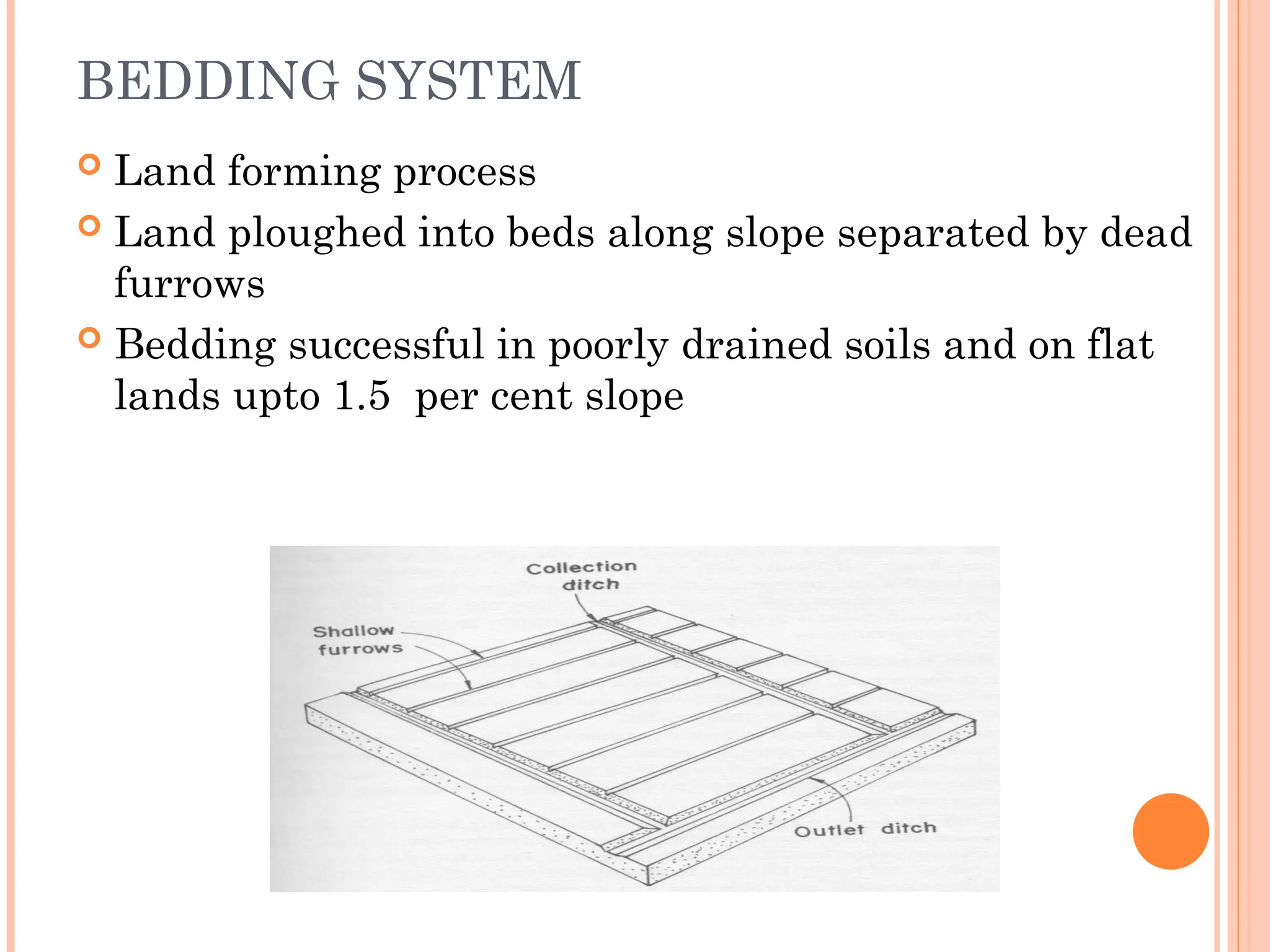
BEDDING SYSTEM
 Land forming process
 Land ploughed into beds along slope separated by dead
furrows
 Bedding successful in poorly drained soils and on flat
lands upto 1.5 per cent slope
BEDDING SYSTEM
 Bed width depends – land use, slope, soil permeability
and farming operations
 Length of bed varies from 100 to 300m
 Max bed height 20 to 40 cm
 Disadv
 Furrows require regular maintenance
 Movt of top soil, reduction in yields nearer to furrows
 Slope of furrows may not be enough for drainage
SUB SURFACE DRAINAGE
 Advantages
 Aeration of root zone
 Availability of soil for early cultivation
 Improvement of soil moisture condition for farm machinery
operation
 Removal of undesirable salts
 Greater storage of rain water in the root zone
SUBSURFACE DRAINAGE
 Drain excess water from the plant root zone of
the soil profile by artificially lowering the water
table level
 To control the water table level through a series
of drainage pipes that are installed below the soil
surface
SUBSURFACE DRAINAGE METHODS
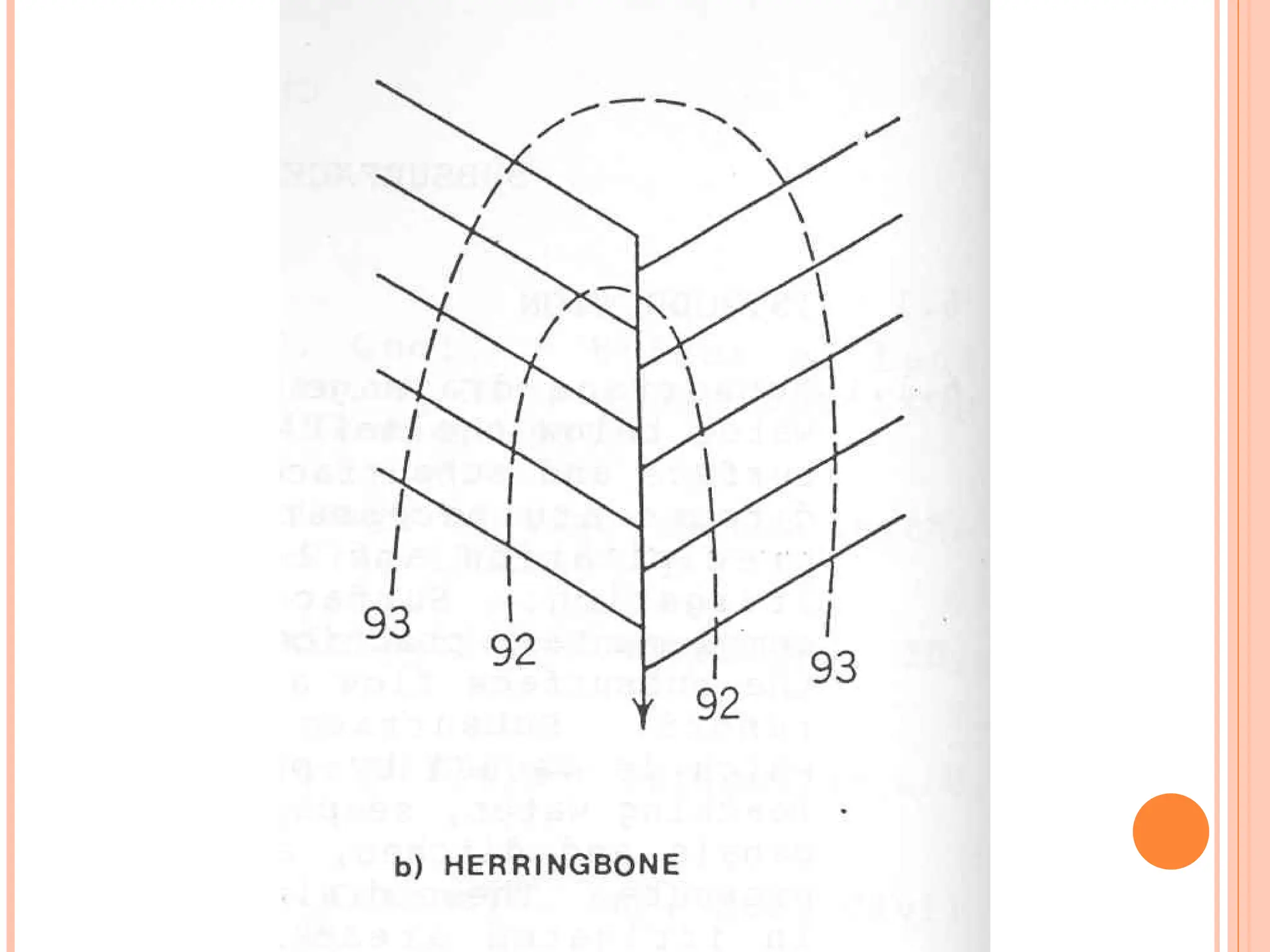
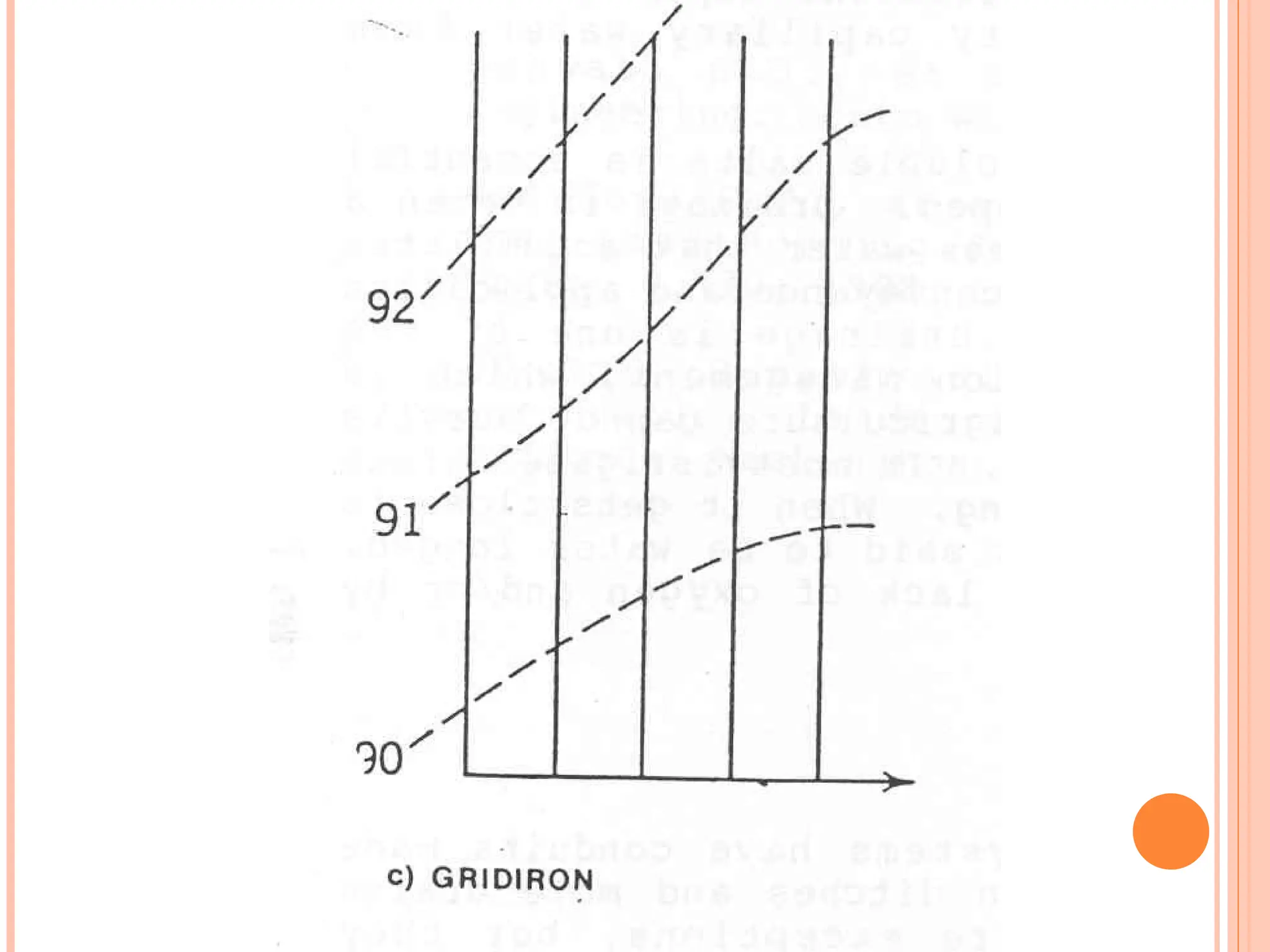
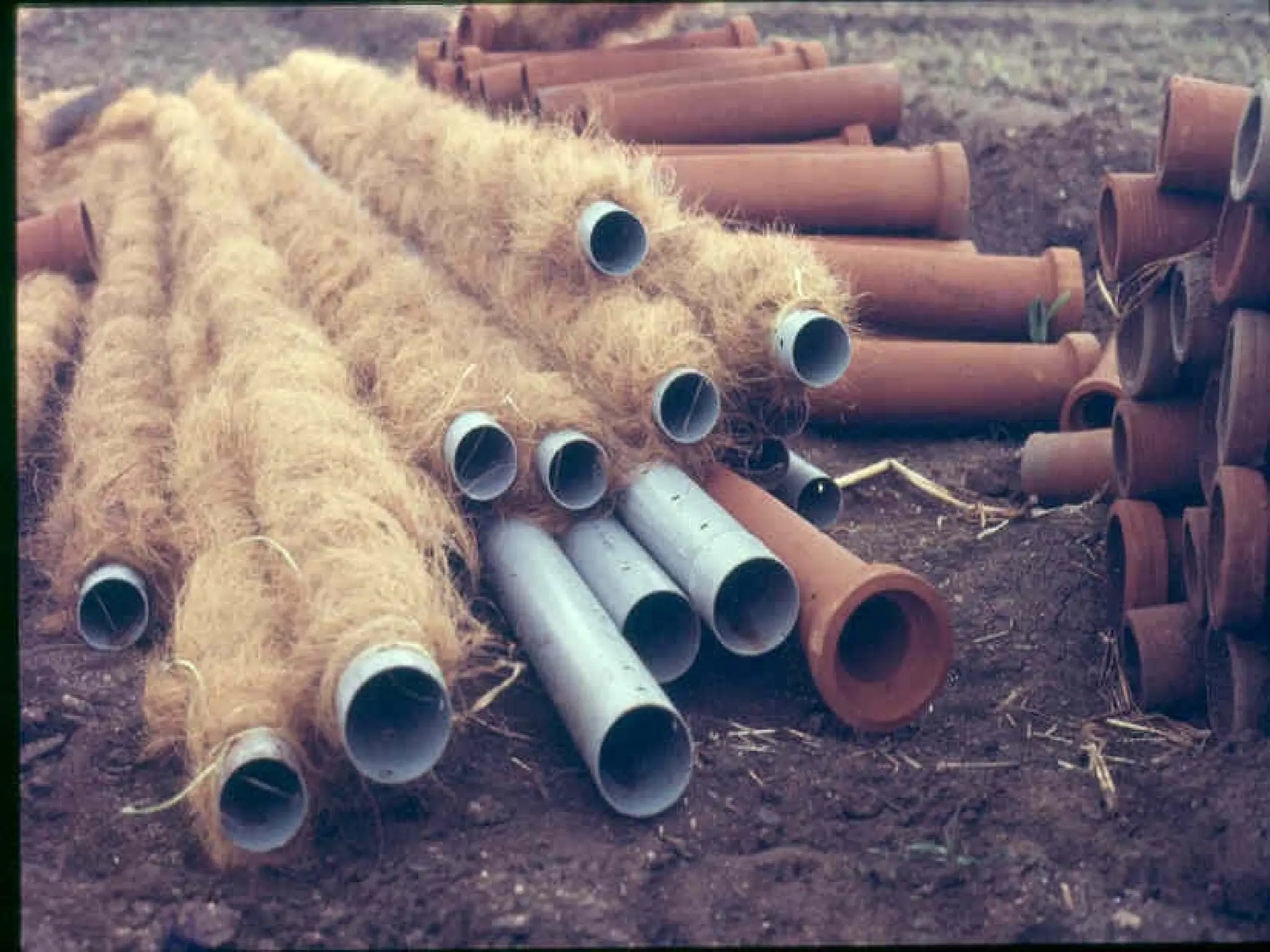
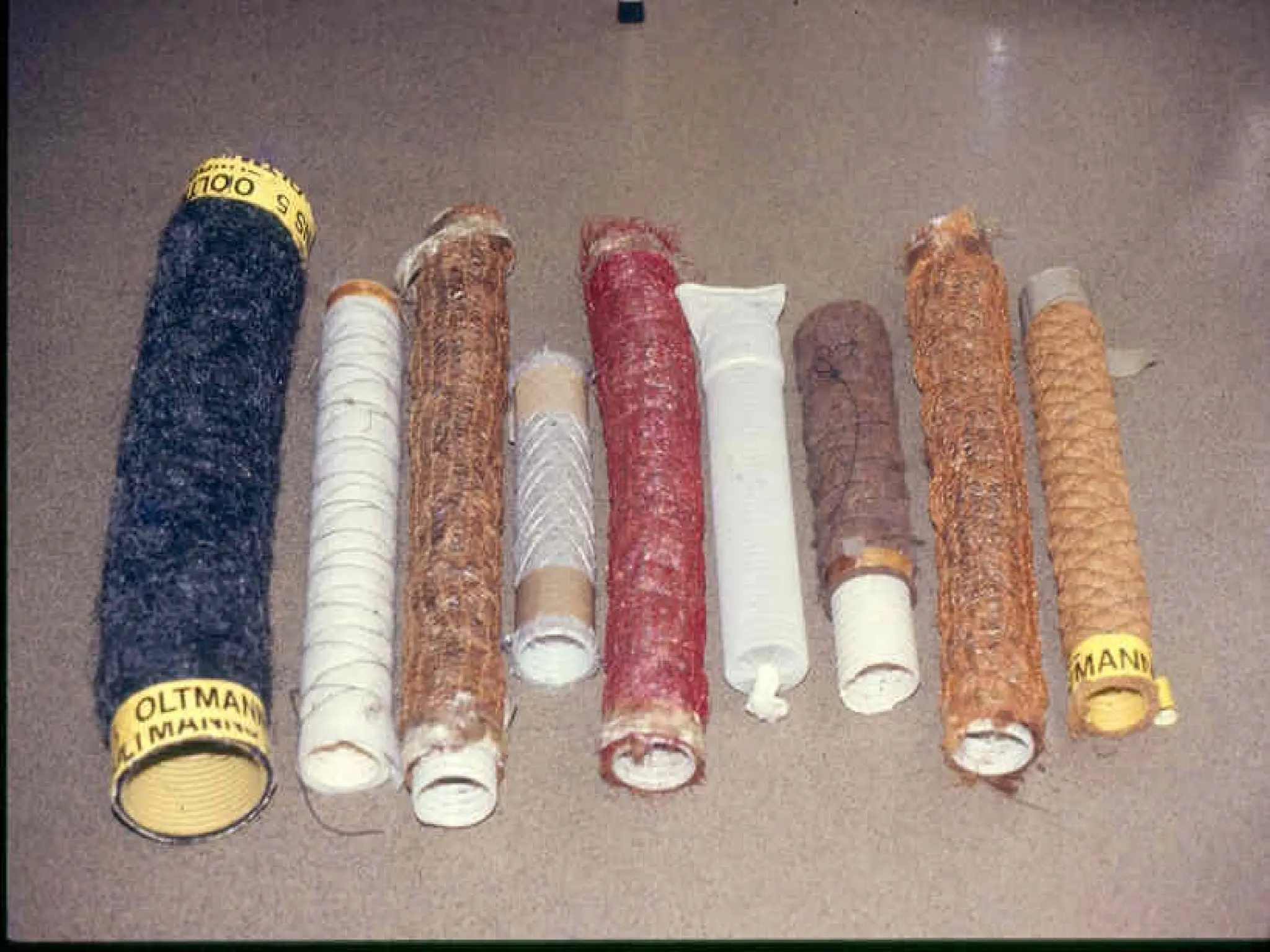
• Tile drains including perforated pipes
a. Random or natural
b. Herringbone
c. Grid iron
d. Interceptor
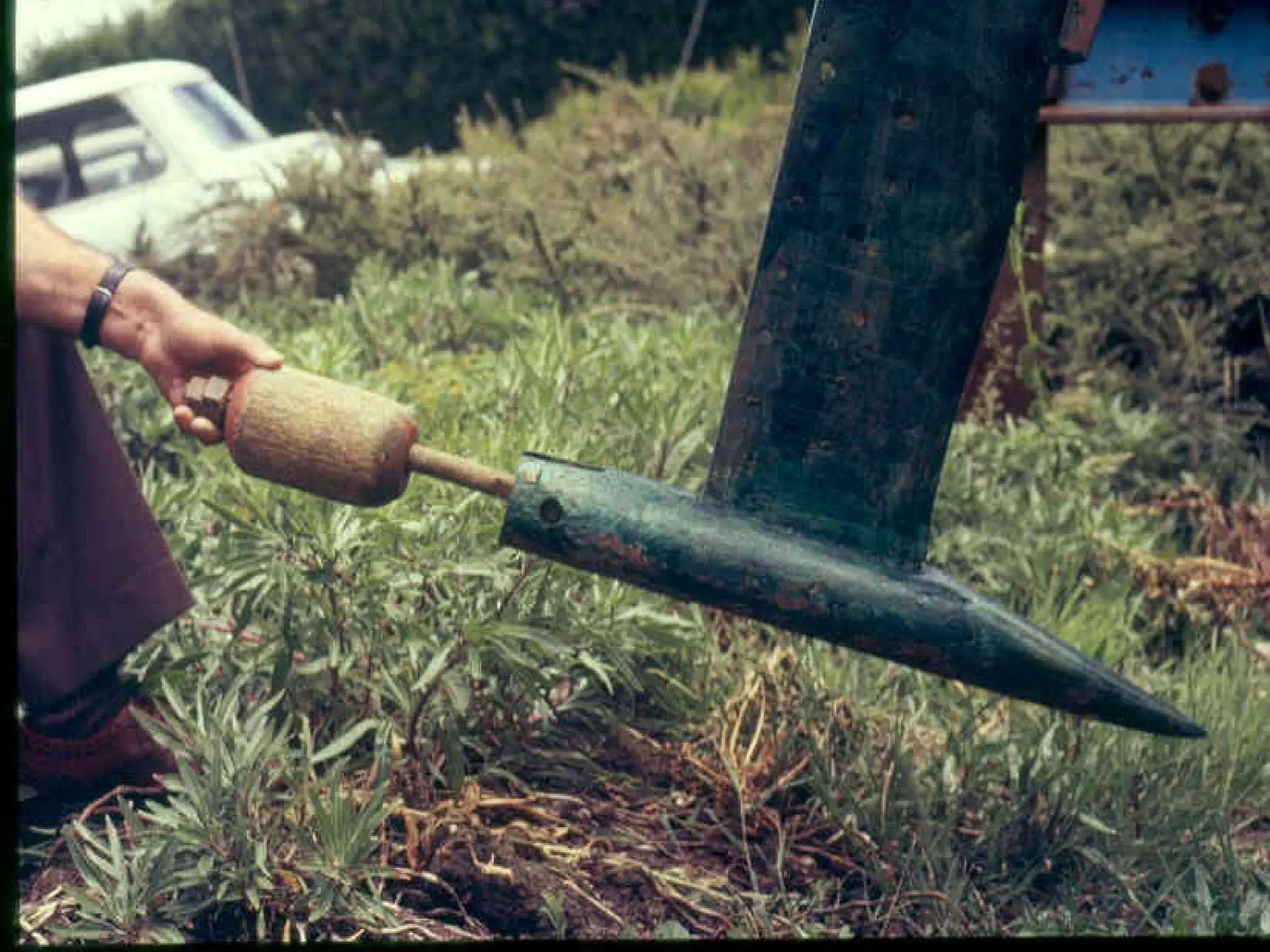
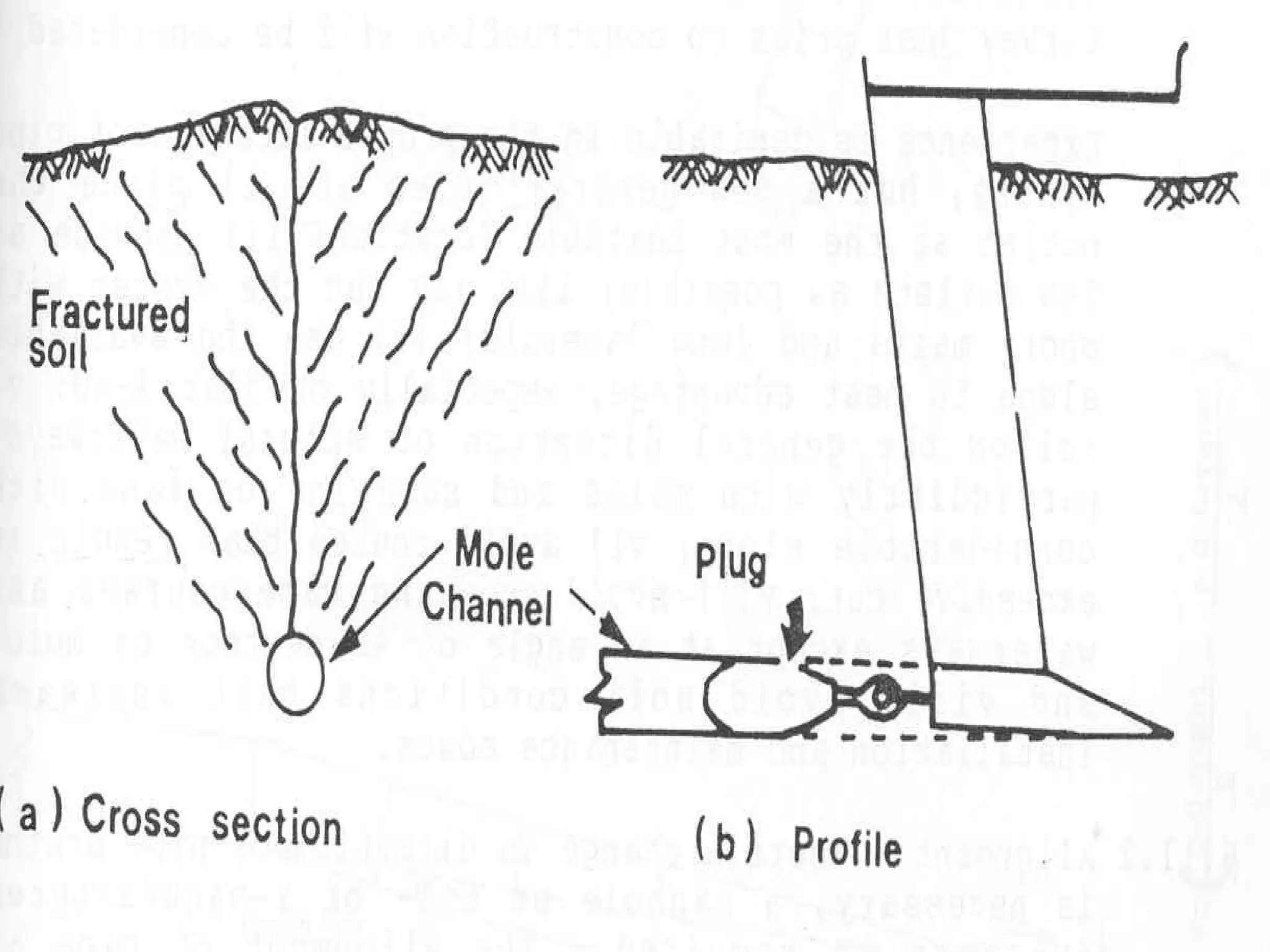
• Mole drains
• Drainage wells (vertical drainage)
• Deep open drains
• Combination of tile and open drains
TILE DRAINAGE
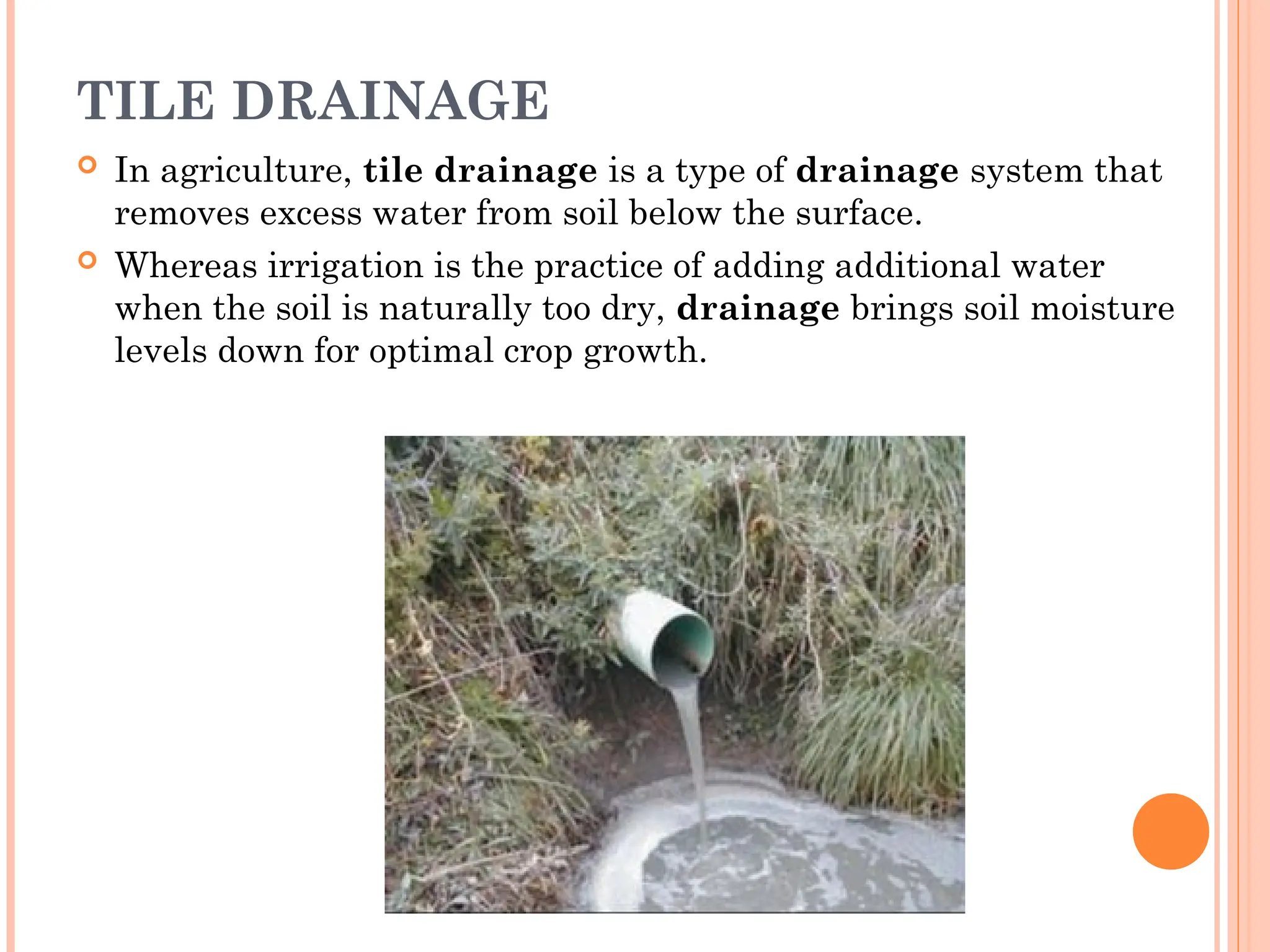
 In agriculture, tile drainage is a type of drainage system that
removes excess water from soil below the surface.
 Whereas irrigation is the practice of adding additional water
when the soil is naturally too dry, drainage brings soil moisture
levels down for optimal crop growth.
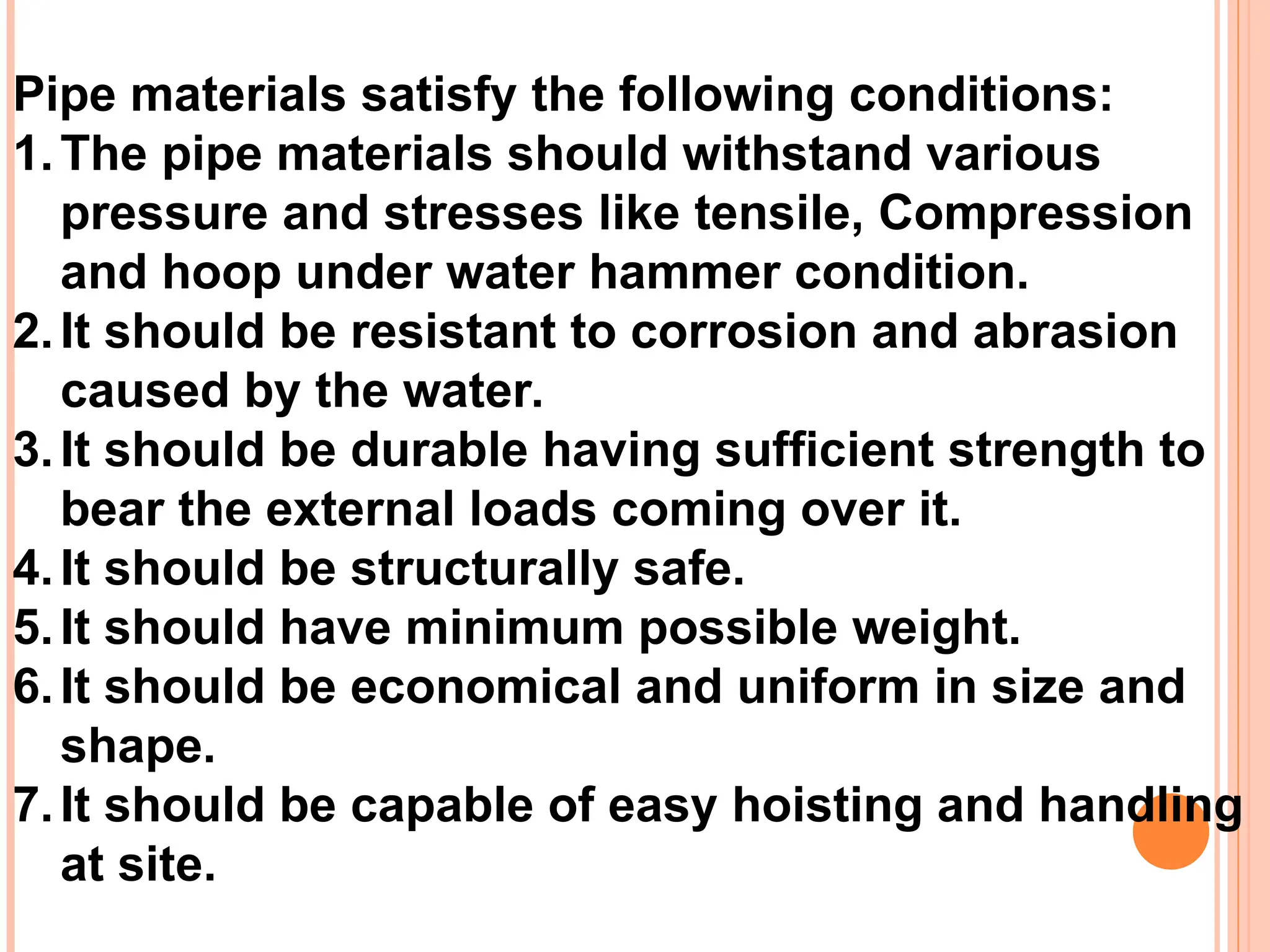
Pipe materials satisfy the following conditions:
1.The pipe materials should withstand various
pressure and stresses like tensile, Compression
and hoop under water hammer condition.
2.It should be resistant to corrosion and abrasion
caused by the water.
3.It should be durable having sufficient strength to
bear the external loads coming over it.
4.It should be structurally safe.
5.It should have minimum possible weight.
6.It should be economical and uniform in size and
shape.
7.It should be capable of easy hoisting and handling
at site.
DRAINAGE WELL
• Well drainage means drainage of agricultural lands
by wells. Agricultural land is drained by
pumped wells (vertical drainage) to improve the soils
by controlling water table levels and soil salinity.
• Open deep drains. Open deep drains are deep
excavated channels with sloping floors and sides,
designed to intercept and drain surface (usually fresh)
and subsurface water (usually saline in Western
Australia) from agricultural land.
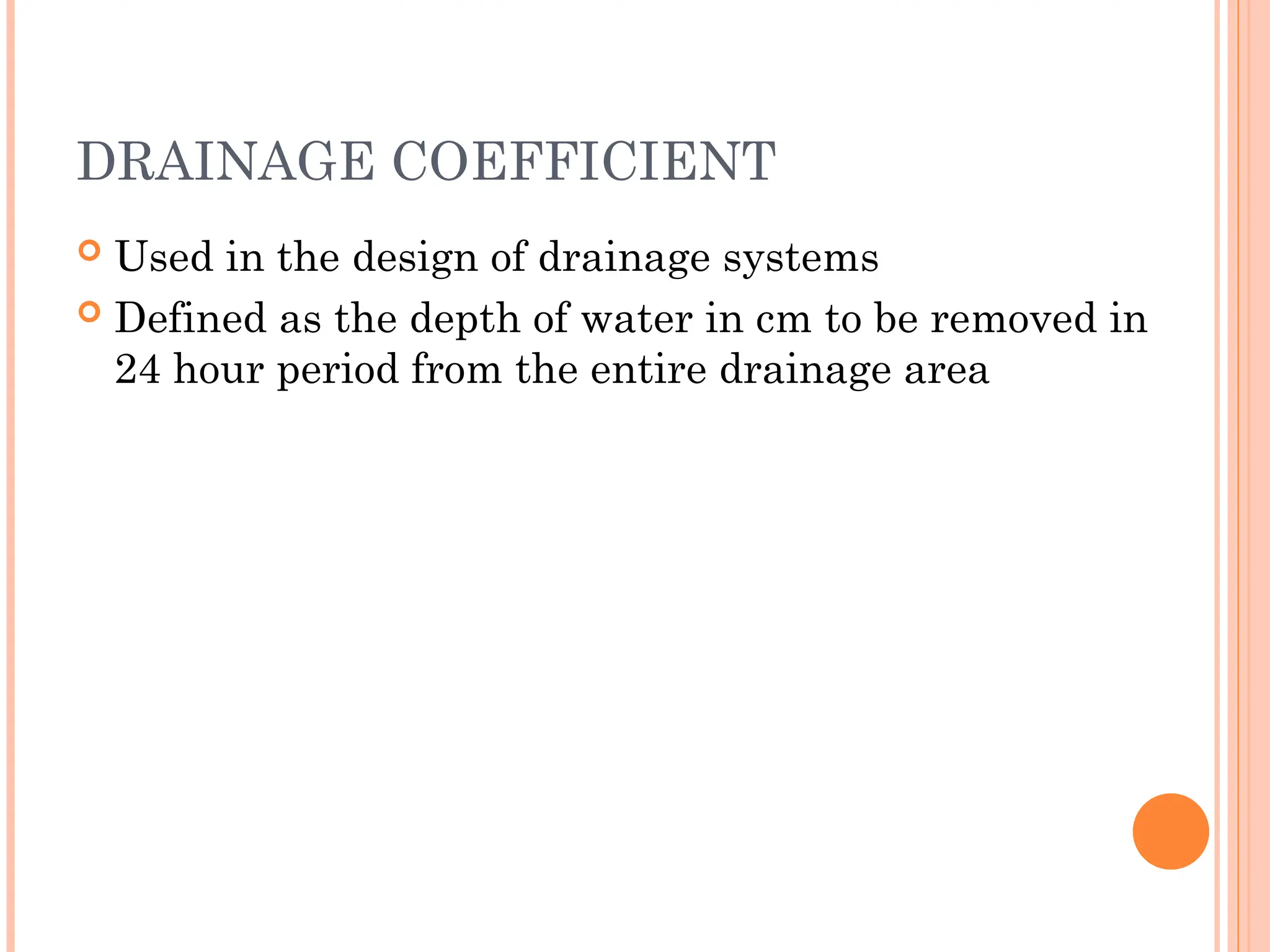
DRAINAGE COEFFICIENT
 Used in the design of drainage systems
 Defined as the depth of water in cm to be removed in
24 hour period from the entire drainage area
drainage pattern - soil and water conservation

  • 1.
  • 2.
    DRAINAGE  removal anddisposal of excess water from agricultural lands  Excess water in the root one is detrimental to crop production  restricts soil aeration  affects soil temperatures,  hinders with tillage operations
  • 3.
    WATERLOGGING  Term usedto describe the conditions when the water table comes near the surface such that crop growth is affected  rising watertable  may restrict root development of the crops  may also bring up harmful substances to the root one.
  • 4.
    APPROACH TO DRAINAGEPROBLEMS • The period and the amount of water standing on the land surface during rainy season • Number of days for which soil is workable for agricultural operations • The average depth of watertable during cropping season and the number of days it is at critical level for crops • Seasonal salinity of the root zone • Average depth of watertable during non-cropping season.
  • 5.
  • 6.
    SURFACE METHODS  saferemoval of excess water from the land surface through land shaping and improved or constructed channels.  remove the excess rainfall as well as collection and disposal of excess surface irrigation water
  • 7.
    SURFACE DRAINAGE PROBLEMS OCCURIN  flat or nearly flat areas  uneven land surfaces with depressions or ridges preventing natural runoff  In areas without any outlet  Soils with low infiltration rates  In deep heavy soils, wherein vertical movement of water is restricted
  • 8.
    SURFACE DRAINAGE SYSTEMS Important both in rainfed and irrigated areas  In sloping areas, surface drainage is to be accomplished without causing soil erosion.
  • 9.
    SURFACE DRAINAGE SYSTEMS collection system  conveyance or disposal system  outlet
  • 10.
     Water fromthe individual fields is collected through the collection system and moves through the disposal system to the outlet.  Collection system consists of the field drains and the conveyance system consist of intermediate and the main drains.
  • 11.
    SURFACE DRAINAGE SYSTEMS Usedin flat areas (less than 2%) •Random drain system •Parallel field drain system •Parallel open ditch system •Bedding system
  • 12.
    RANDOM DRAIN SYSTEM Adopted where small scattered depressions are to be drained  Possible to connect one to another depressions  Interfere farming operations thereby reducing farming areas
  • 13.
    PARALLEL FIELD DRAINSYSTEM  Most effective method of surface method  Well suited for irrigated and rainfed areas  Properly graded fields  Field drains = laterals = outlet  Laterals deeper than field drains
  • 14.
    PARALLEL OPEN DITCHSYSTEM  Applicable in soils that require both surface and subsurface drainage  Similar to parallel field drain system except ditches are deeper & steeper sides than drains  Spacing of ditches vary from 60 to 200 m  No machinery movt involved in ditches.  Considerable land area  Also known as Diversion Ditch system
  • 15.
    BEDDING SYSTEM  Landforming process  Land ploughed into beds along slope separated by dead furrows  Bedding successful in poorly drained soils and on flat lands upto 1.5 per cent slope
  • 16.
    BEDDING SYSTEM  Bedwidth depends – land use, slope, soil permeability and farming operations  Length of bed varies from 100 to 300m  Max bed height 20 to 40 cm  Disadv  Furrows require regular maintenance  Movt of top soil, reduction in yields nearer to furrows  Slope of furrows may not be enough for drainage
  • 17.
    SUB SURFACE DRAINAGE Advantages  Aeration of root zone  Availability of soil for early cultivation  Improvement of soil moisture condition for farm machinery operation  Removal of undesirable salts  Greater storage of rain water in the root zone
  • 18.
    SUBSURFACE DRAINAGE  Drainexcess water from the plant root zone of the soil profile by artificially lowering the water table level  To control the water table level through a series of drainage pipes that are installed below the soil surface
  • 19.
    SUBSURFACE DRAINAGE METHODS •Tile drains including perforated pipes a. Random or natural b. Herringbone c. Grid iron d. Interceptor • Mole drains • Drainage wells (vertical drainage) • Deep open drains • Combination of tile and open drains
  • 20.
    TILE DRAINAGE  Inagriculture, tile drainage is a type of drainage system that removes excess water from soil below the surface.  Whereas irrigation is the practice of adding additional water when the soil is naturally too dry, drainage brings soil moisture levels down for optimal crop growth.
  • 28.
    Pipe materials satisfythe following conditions: 1.The pipe materials should withstand various pressure and stresses like tensile, Compression and hoop under water hammer condition. 2.It should be resistant to corrosion and abrasion caused by the water. 3.It should be durable having sufficient strength to bear the external loads coming over it. 4.It should be structurally safe. 5.It should have minimum possible weight. 6.It should be economical and uniform in size and shape. 7.It should be capable of easy hoisting and handling at site.
  • 29.
    DRAINAGE WELL • Welldrainage means drainage of agricultural lands by wells. Agricultural land is drained by pumped wells (vertical drainage) to improve the soils by controlling water table levels and soil salinity. • Open deep drains. Open deep drains are deep excavated channels with sloping floors and sides, designed to intercept and drain surface (usually fresh) and subsurface water (usually saline in Western Australia) from agricultural land.
  • 30.
    DRAINAGE COEFFICIENT  Usedin the design of drainage systems  Defined as the depth of water in cm to be removed in 24 hour period from the entire drainage area