Kellie Murphy, BSN, RN, CCRN
Erin's Story
It is the clinical syndrome that results from a
dysregulated inflammatory response to an
infection (UpToDate, 2012).
Sepsis is not a specific event in time, but rather
a syndrome that occurs on a continuum.
~750,00 cases annually (trend has been on a
steady increase since the 70’s)
Thought to be influenced by:
aging population
increase in immune suppressed population
increased drug resistant diseases
~200,000 deaths/year
Patients >65 account for nearly 60% of all cases
(Angus, et all, 2001).
Increased incidence during winter
months
30-50% mortality, severity
dependent
Septic patients have 2x as long
hospital stay as patients without
Costs the health care system over
$16 billion dollars annually
Critically-ill patients
Severe community-acquired pneumonia
Chronic diseases
Immuno-compromise
Age
Obesity
Intra-abdominal surgery
Urinary tract infection
Invasive lines
All hospitalized patients
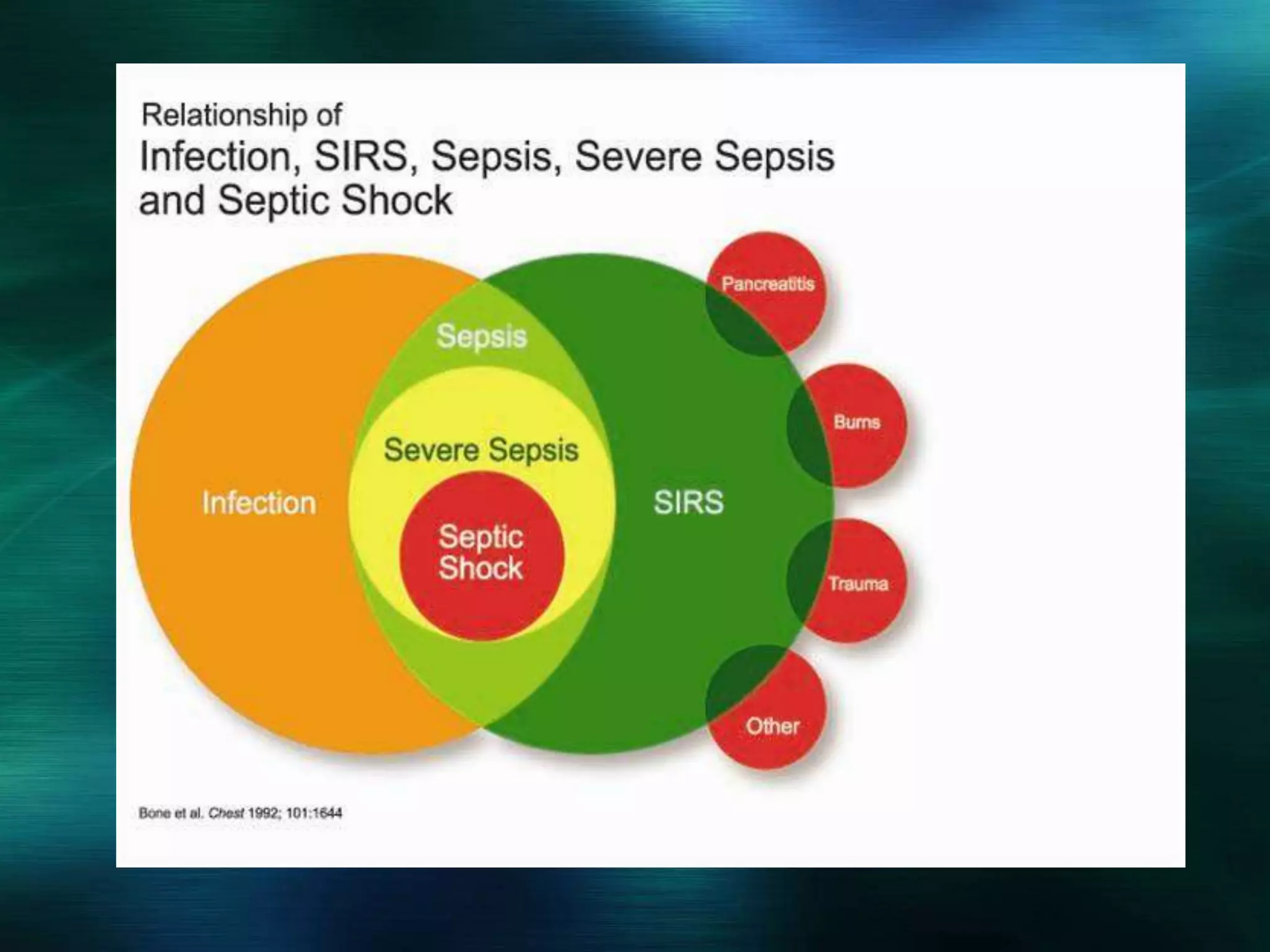
SIRS Sepsis
Septic
Shock
MODS Death
Clinical syndrome that results from a
dysregulated inflammatory response, but is due
to a non-infectious source.
Examples:
Acute pancreatitis
Trauma
Burns
Surgery
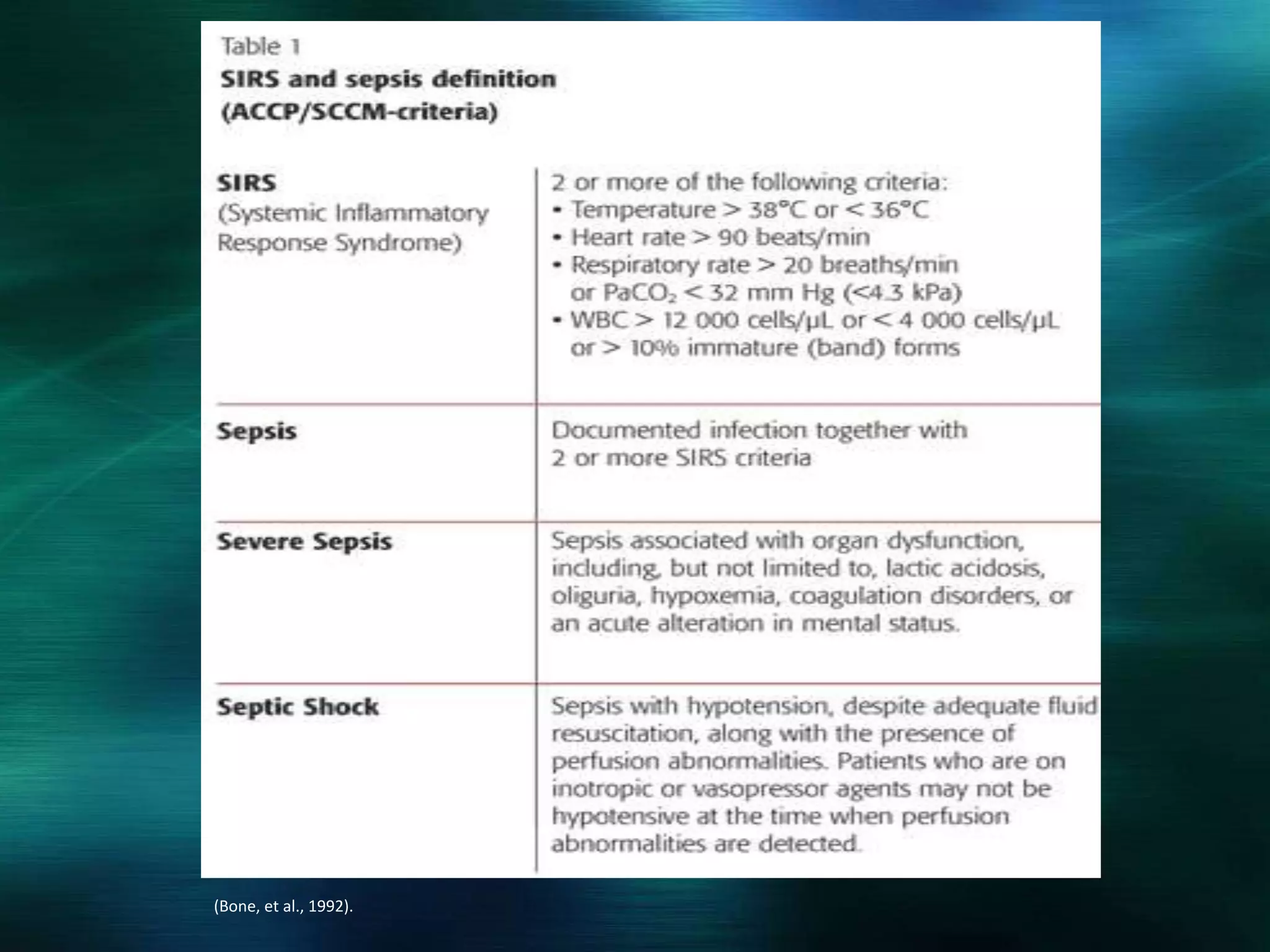
SIRS requires 2 or more of the following
derangements:
Temp >38.3: (100.4:F) or <36:C (96.8:F)
HR >90
RR >20 or PaCO2 >32 (normal 35-45)
WBC >12,000 or <4,000 or >10% immature
cells (bands)
A systemic inflammatory response to infection,
triggers cascade of inflammation, coagulation
and impaired fibrolysis.
This out of control inflammatory process results
in vasodilitation, increased capillary
permeability and clotting.
Same criteria as SIRS, however, occurs within a
context of known infection.
Sepsis plus at least one of the following signs of
hypoperfusion or end organ damage
Areas of mottled skin
Delayed capillary refill
Urine output of <0.5 mL/kg for at least one hour or
renal replacement therapy
Lactate >2 mmol/L
AMS
Abnormal EEG findings
Platelet count <100,000
DIC
Acute lung injury or ARDS
Cardiac dysfunction
Exists if there is severe sepsis & one or both of
the following:
Systemic mean blood pressure <60 mmHg despite
adequate fluid resuscitation
Maintaining systemic mean blood pressure >60
mmHg requires vasopressors despite adequate
fluid resuscitation
Vassopressor use is a significant predictor of
mortality
Altered function of one or more organs
Primary and secondary MODS
Primary: direct injury/insult to organs that results
from a specific event (i.e. pulmonary
contusion, liver laceration)
Secondary: indirect injury/insult to organs as a
result of systemic event (i.e. SIRS, sepsis)
Mortality with MODS is very high; proportionate
to the number of organs involved
2 organ failure mortality 45-55%
3 organ failure mortality >80%
(Bone, et al., 1992).
Localized site of infection, initiates a localized
inflammatory response
White blood cells converge to the site of infection
Neutrophils, macrophages
Localized infection can lead to bloodstream
infection (bactermia), this is sepsis
Bacteria release endotoxins
Immune system releases proinflammatory
mediators (prostaglandins, cytokines)
Endotoxins
Cytokines are immunomodulators (interleukons
& interferons) released by WBCs and cause:
Vasodilitation
Increased capillary permeability
Increased coagulation
Prostaglandins in the inflammatory process
cause vasodilitation, inhibit platelet aggregation
and effect the hypothalamus with regards to
thermoregulation (fever)
Vasodilitation is mechanism used to increase
blood flow to affected areas allowing for better
transport of WBCs
Without corresponding increase in blood
volume, hypotension follows
Increased capillary permeability leads to fluid
leak  third spacing & further volume loss
Impaired fibrinolysis causes decreased clot
breakdown microthrombi, then tissue
hypoperfusion, necrosis & organ failure
Third-spacing/Capillary leak
Microthrombi
In septic shock, the body’s compensatory
mechanisms are overwhelmed by malignant
inflammatory response.
Leading to:
Reduced coronary blood flow with decreased CO, BP &
tissue perfusion
Pro-inflammatory cytokines cause imbalances between
clotting & lysis, impairing circulation to
tissues/organs, third spacing & worsening hypotension
Brain fails to respond with vasomotor responses to
hypotension
Peripheral ischemia occurs due to prolonged shunting &
microemboli
Survival at this stage in the cascade is <10%
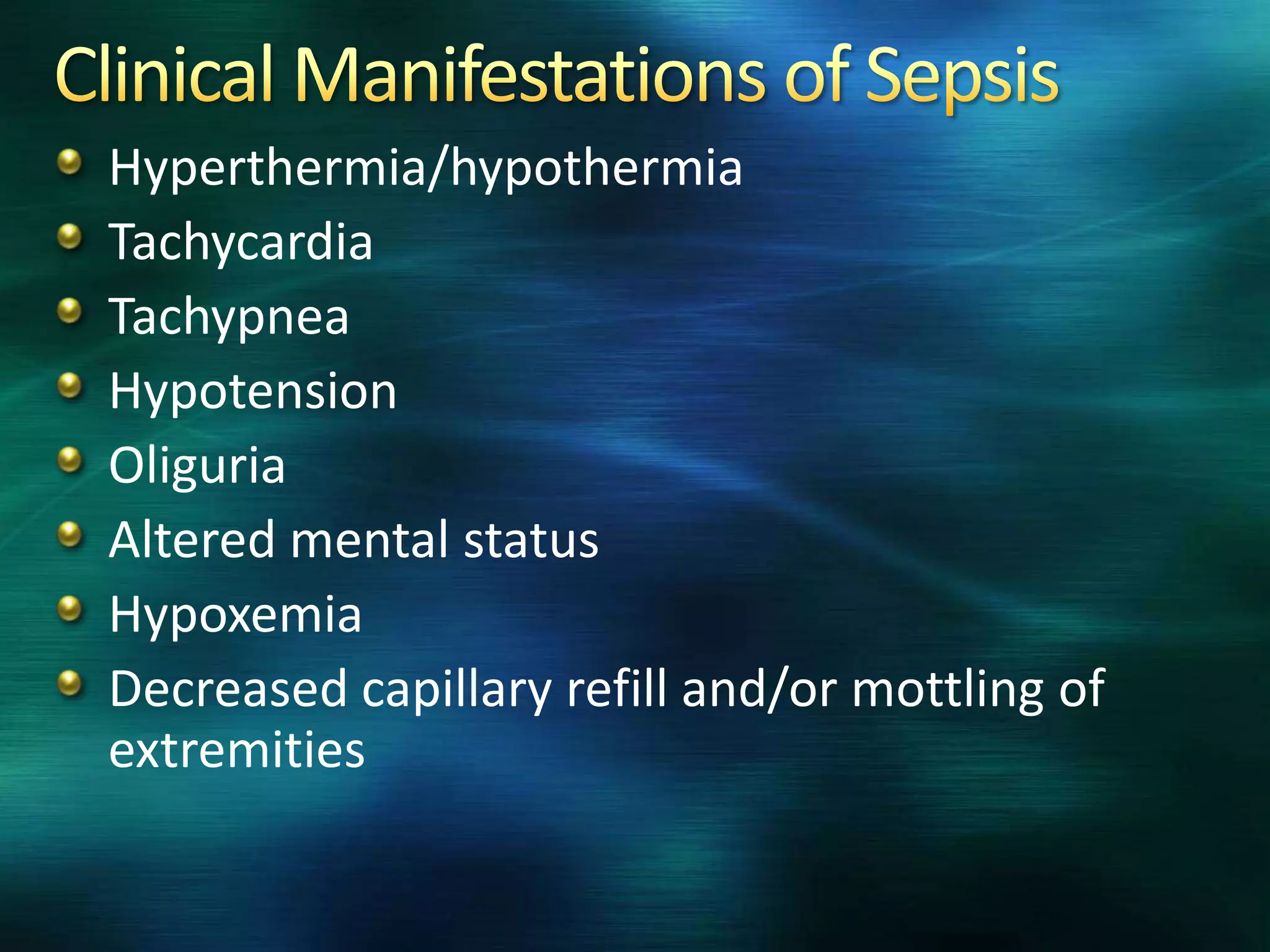
Hyperthermia/hypothermia
Tachycardia
Tachypnea
Hypotension
Oliguria
Altered mental status
Hypoxemia
Decreased capillary refill and/or mottling of
extremities
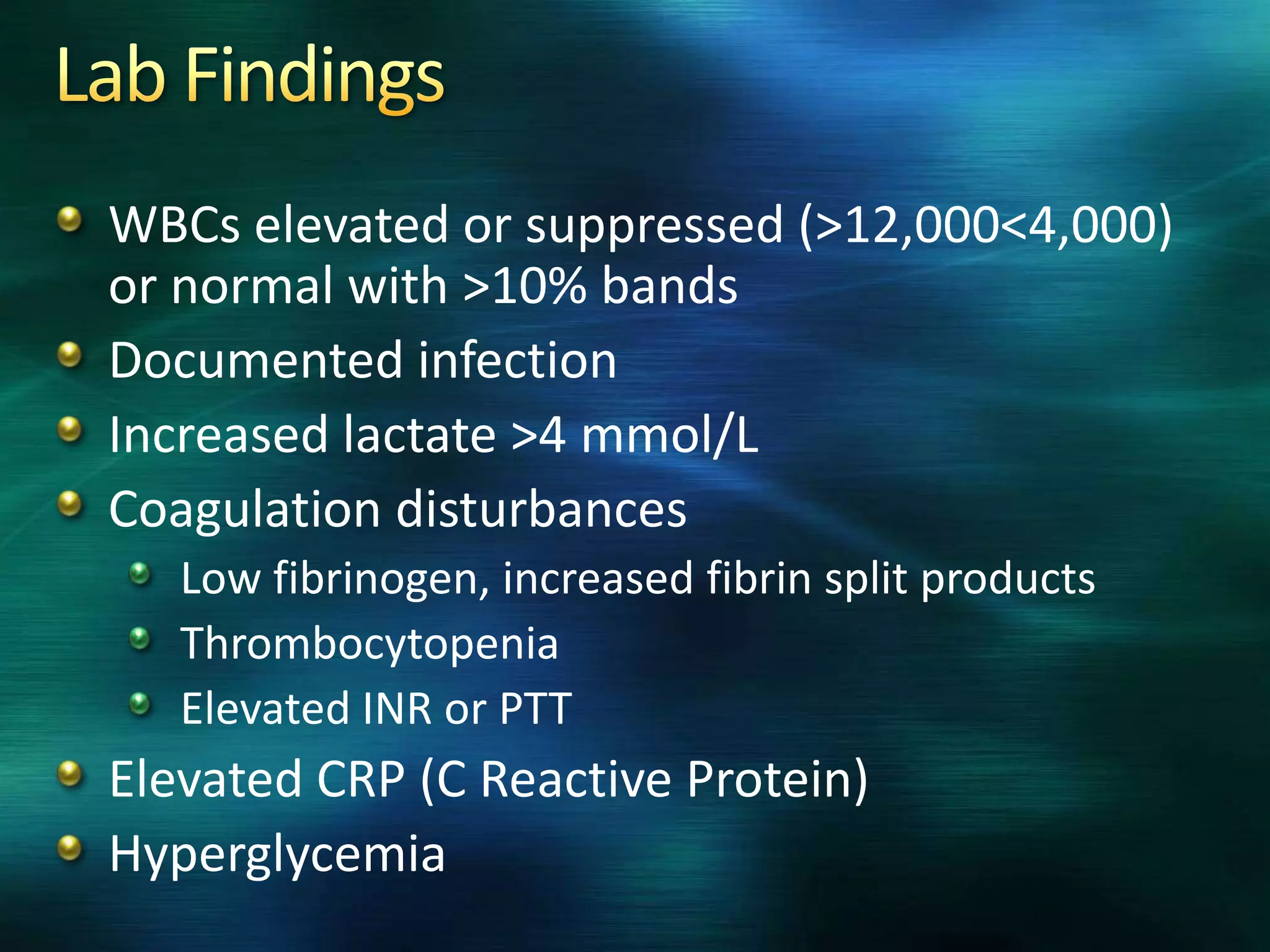
WBCs elevated or suppressed (>12,000<4,000)
or normal with >10% bands
Documented infection
Increased lactate >4 mmol/L
Coagulation disturbances
Low fibrinogen, increased fibrin split products
Thrombocytopenia
Elevated INR or PTT
Elevated CRP (C Reactive Protein)
Hyperglycemia
The key to sepsis treatment is: PREVENTION
HAND WASHING
Proper line management
VAP protocols
Hand washing
Catheter removal
Early mobility
Did I mention hand washing already?
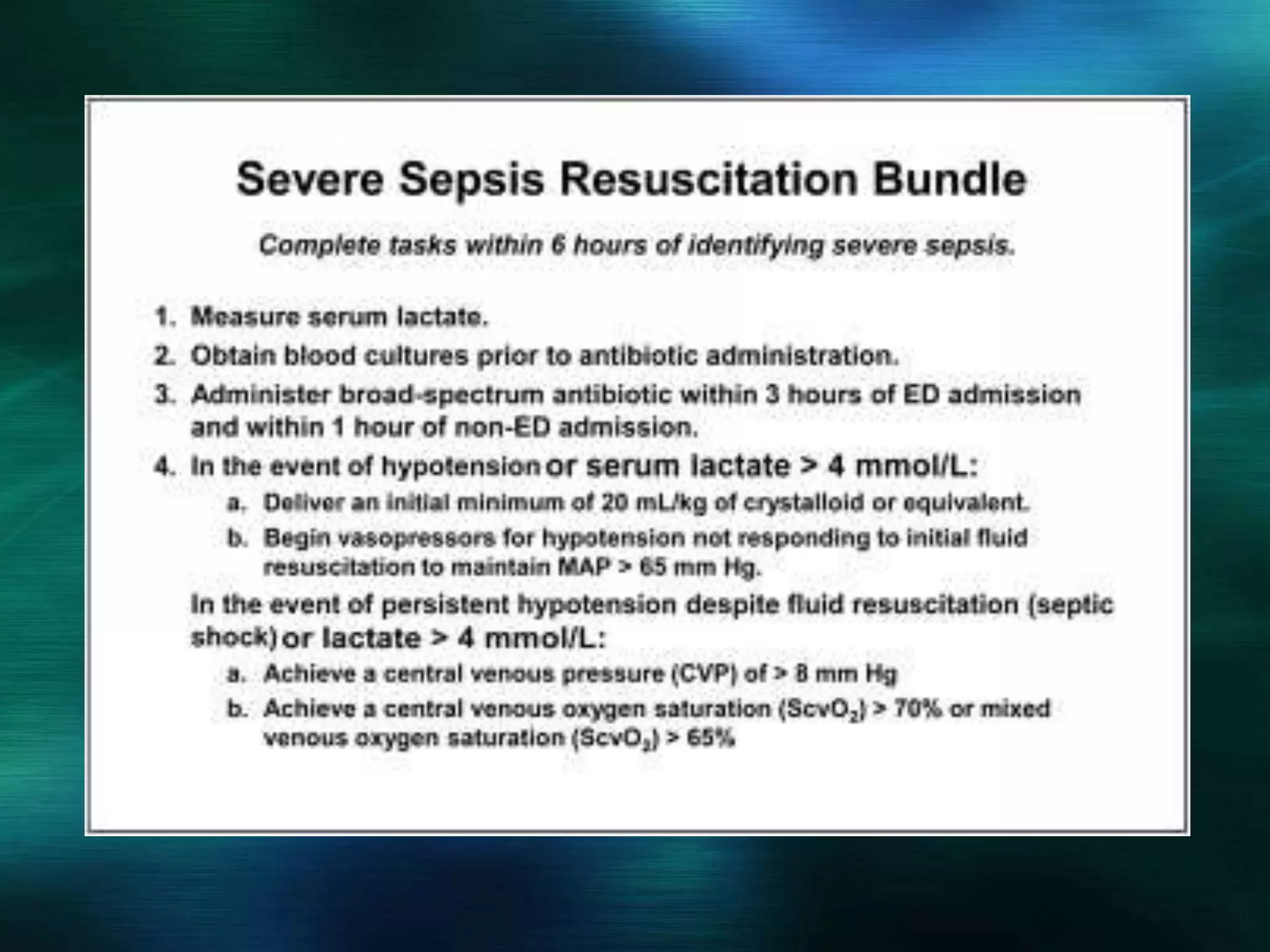
Broad spectrum antibiotics within first 1-3 hours
Corticosteroids, if persistent hypotension
despite adequate fluid resuscitation; may
indicate adrenal insufficiency
no longer requires cortisol stim test to start therapy
Vasopressors, for hemodynamic support after
adequate fluid resuscitation
Xigris (drotrecogin alfa) voluntarily pulled from
the market in 10/2011 as studies showed no
benefit
Stroke: Time is brain
MI: Time is muscle
Sepsis: Time is tissue
With every hour that intervention is delayed,
survival drops by 10%
Early recognition and intervention are key to
successful outcomes
Prevention is the key to sepsis
http://www.ed4nurses.com/resources/1/pdf/Se
psis.pdf
http://www.sccm.org/Documents/SSC-
Guidelines.pdf
http://journals.lww.com/nursingmadeincredibly
easy/Fulltext/2009/05000/Recognizing_the_sig
nposts_for_sepsis.10.aspx
HighImpactGraphics. (2011, August 14). Sepsis {Video file}. Retrieved from
http://www.youtube.com/watch?v=xm437bHXsrY
LoyolaHealth. (2012, September 24). Code sepsis {Video file}. Retrieved from
https://www.youtube.com/watch?v=t3qWMcDK-ME
Angus, B., Linde-Zwinde, W., Lidicker, J., Clemont, G., Carcillo, J., & Pinsky, M. (2001).
Epidemiology of severe sepsis in the United States: Analysis of incidence, outcome
and associated costs of care. Critical Care Medicine, 29(7), 1303-1310.
Bone, R., Balk, R., Cerra, F., Dellinger, R., Fein, A., Knaus, W., . . . Sibbald, W. (1992).
Definitions for sepsis and organ failure and guidelines for the use of innovative
therapies in sepsis. The ACCP/SCCM Consensus Conference Committee, (pp. 1644-55).
Angus, B., Linde-Zwinde, W., Lidicker, J., Clemont, G., Carcillo, J., & Pinsky, M. (2001).
Epidemiology of severe sepsis in the United States: Analysis of incidence, outcome
and associated costs of care. Critical Care Medicine, 29(7), 1303-1310.
Bone, R., Balk, R., Cerra, F., Dellinger, R., Fein, A., Knaus, W., . . . Sibbald, W. (1992).
Definitions for sepsis and organ failure and guidelines for the use of innovative
therapies in sepsis. The ACCP/SCCM Consensus Conference Committee, (pp. 1644-55).
Dellacroce, H. (2009). Surviving sepsis: The role of the nurse. RN, July, 16-21.
Dellinger, R.P.; Levy, M.M.; Rhodes, A.; Annane, D.; Gerlach, H.; opal, S.M.;
Sevrasky, J.E.; Sprung, C.L.; Douglas, I.S.; Jaeschke, R.; Osborn, T.M.; Nunnally, M.E.;
Townsend, S.R.; Reinhart, K.; Kleinpell, R.M.; Angus, D.; Deutschman, C.S.;
Machado, F.R.; Rubenfeld, G.D.; Webb, S.A.; Beale, R.J.; Vincent, JL; Moreno, R.;
Surviving Sepsis Campaign Guidelines Committee including the Pediatric Subgroup.
(2012, January 20). Surviving sepsis campaign: International guidelines for
management of severe sepsis and septic shock: 2012. Society of Critical Care
Medicine's 42nd Congress, (41)2, 580-637. DOI: 10.1097/CCM.0b013e31827e83af
McCormick, M.J. Recognizing the signposts for sepsis. Nursing Made Incredibly
Easy!, (7)3, 40-51. doi: 10.1097/01.NME.0000350939.27283.30
Woodruff, D.W. Why you need to know about sepsis syndrome {Webinar notes}.
(2011, July 22). Retrieved from
http://www.ed4nurses.com/resources/1/pdf/Sepsis.pdf
Wood, S.; Lavieri, M.C.; Durkin, T. (2007). What you need to know about sepsis.
Nursing2007, 37(3), 46-51

Sepsis rev

  • 1.
  • 2.
    Erin's Story It isthe clinical syndrome that results from a dysregulated inflammatory response to an infection (UpToDate, 2012). Sepsis is not a specific event in time, but rather a syndrome that occurs on a continuum.
  • 3.
    ~750,00 cases annually(trend has been on a steady increase since the 70’s) Thought to be influenced by: aging population increase in immune suppressed population increased drug resistant diseases ~200,000 deaths/year Patients >65 account for nearly 60% of all cases (Angus, et all, 2001).
  • 4.
    Increased incidence duringwinter months 30-50% mortality, severity dependent Septic patients have 2x as long hospital stay as patients without Costs the health care system over $16 billion dollars annually
  • 5.
    Critically-ill patients Severe community-acquiredpneumonia Chronic diseases Immuno-compromise Age Obesity Intra-abdominal surgery Urinary tract infection Invasive lines All hospitalized patients
  • 6.
  • 7.
    Clinical syndrome thatresults from a dysregulated inflammatory response, but is due to a non-infectious source. Examples: Acute pancreatitis Trauma Burns Surgery
  • 8.
    SIRS requires 2or more of the following derangements: Temp >38.3: (100.4:F) or <36:C (96.8:F) HR >90 RR >20 or PaCO2 >32 (normal 35-45) WBC >12,000 or <4,000 or >10% immature cells (bands)
  • 9.
    A systemic inflammatoryresponse to infection, triggers cascade of inflammation, coagulation and impaired fibrolysis. This out of control inflammatory process results in vasodilitation, increased capillary permeability and clotting. Same criteria as SIRS, however, occurs within a context of known infection.
  • 10.
    Sepsis plus atleast one of the following signs of hypoperfusion or end organ damage Areas of mottled skin Delayed capillary refill Urine output of <0.5 mL/kg for at least one hour or renal replacement therapy Lactate >2 mmol/L AMS Abnormal EEG findings Platelet count <100,000 DIC Acute lung injury or ARDS Cardiac dysfunction
  • 11.
    Exists if thereis severe sepsis & one or both of the following: Systemic mean blood pressure <60 mmHg despite adequate fluid resuscitation Maintaining systemic mean blood pressure >60 mmHg requires vasopressors despite adequate fluid resuscitation Vassopressor use is a significant predictor of mortality
  • 13.
    Altered function ofone or more organs Primary and secondary MODS Primary: direct injury/insult to organs that results from a specific event (i.e. pulmonary contusion, liver laceration) Secondary: indirect injury/insult to organs as a result of systemic event (i.e. SIRS, sepsis) Mortality with MODS is very high; proportionate to the number of organs involved 2 organ failure mortality 45-55% 3 organ failure mortality >80%
  • 14.
  • 16.
    Localized site ofinfection, initiates a localized inflammatory response White blood cells converge to the site of infection Neutrophils, macrophages Localized infection can lead to bloodstream infection (bactermia), this is sepsis Bacteria release endotoxins Immune system releases proinflammatory mediators (prostaglandins, cytokines) Endotoxins
  • 17.
    Cytokines are immunomodulators(interleukons & interferons) released by WBCs and cause: Vasodilitation Increased capillary permeability Increased coagulation Prostaglandins in the inflammatory process cause vasodilitation, inhibit platelet aggregation and effect the hypothalamus with regards to thermoregulation (fever)
  • 18.
    Vasodilitation is mechanismused to increase blood flow to affected areas allowing for better transport of WBCs Without corresponding increase in blood volume, hypotension follows Increased capillary permeability leads to fluid leak  third spacing & further volume loss Impaired fibrinolysis causes decreased clot breakdown microthrombi, then tissue hypoperfusion, necrosis & organ failure
  • 19.
  • 20.
    In septic shock,the body’s compensatory mechanisms are overwhelmed by malignant inflammatory response. Leading to: Reduced coronary blood flow with decreased CO, BP & tissue perfusion Pro-inflammatory cytokines cause imbalances between clotting & lysis, impairing circulation to tissues/organs, third spacing & worsening hypotension Brain fails to respond with vasomotor responses to hypotension Peripheral ischemia occurs due to prolonged shunting & microemboli Survival at this stage in the cascade is <10%
  • 22.
  • 23.
    WBCs elevated orsuppressed (>12,000<4,000) or normal with >10% bands Documented infection Increased lactate >4 mmol/L Coagulation disturbances Low fibrinogen, increased fibrin split products Thrombocytopenia Elevated INR or PTT Elevated CRP (C Reactive Protein) Hyperglycemia
  • 24.
    The key tosepsis treatment is: PREVENTION HAND WASHING Proper line management VAP protocols Hand washing Catheter removal Early mobility Did I mention hand washing already?
  • 26.
    Broad spectrum antibioticswithin first 1-3 hours Corticosteroids, if persistent hypotension despite adequate fluid resuscitation; may indicate adrenal insufficiency no longer requires cortisol stim test to start therapy Vasopressors, for hemodynamic support after adequate fluid resuscitation Xigris (drotrecogin alfa) voluntarily pulled from the market in 10/2011 as studies showed no benefit
  • 27.
    Stroke: Time isbrain MI: Time is muscle Sepsis: Time is tissue With every hour that intervention is delayed, survival drops by 10% Early recognition and intervention are key to successful outcomes Prevention is the key to sepsis
  • 28.
  • 29.
    HighImpactGraphics. (2011, August14). Sepsis {Video file}. Retrieved from http://www.youtube.com/watch?v=xm437bHXsrY LoyolaHealth. (2012, September 24). Code sepsis {Video file}. Retrieved from https://www.youtube.com/watch?v=t3qWMcDK-ME Angus, B., Linde-Zwinde, W., Lidicker, J., Clemont, G., Carcillo, J., & Pinsky, M. (2001). Epidemiology of severe sepsis in the United States: Analysis of incidence, outcome and associated costs of care. Critical Care Medicine, 29(7), 1303-1310. Bone, R., Balk, R., Cerra, F., Dellinger, R., Fein, A., Knaus, W., . . . Sibbald, W. (1992). Definitions for sepsis and organ failure and guidelines for the use of innovative therapies in sepsis. The ACCP/SCCM Consensus Conference Committee, (pp. 1644-55).
  • 30.
    Angus, B., Linde-Zwinde,W., Lidicker, J., Clemont, G., Carcillo, J., & Pinsky, M. (2001). Epidemiology of severe sepsis in the United States: Analysis of incidence, outcome and associated costs of care. Critical Care Medicine, 29(7), 1303-1310. Bone, R., Balk, R., Cerra, F., Dellinger, R., Fein, A., Knaus, W., . . . Sibbald, W. (1992). Definitions for sepsis and organ failure and guidelines for the use of innovative therapies in sepsis. The ACCP/SCCM Consensus Conference Committee, (pp. 1644-55). Dellacroce, H. (2009). Surviving sepsis: The role of the nurse. RN, July, 16-21. Dellinger, R.P.; Levy, M.M.; Rhodes, A.; Annane, D.; Gerlach, H.; opal, S.M.; Sevrasky, J.E.; Sprung, C.L.; Douglas, I.S.; Jaeschke, R.; Osborn, T.M.; Nunnally, M.E.; Townsend, S.R.; Reinhart, K.; Kleinpell, R.M.; Angus, D.; Deutschman, C.S.; Machado, F.R.; Rubenfeld, G.D.; Webb, S.A.; Beale, R.J.; Vincent, JL; Moreno, R.; Surviving Sepsis Campaign Guidelines Committee including the Pediatric Subgroup. (2012, January 20). Surviving sepsis campaign: International guidelines for management of severe sepsis and septic shock: 2012. Society of Critical Care Medicine's 42nd Congress, (41)2, 580-637. DOI: 10.1097/CCM.0b013e31827e83af
  • 31.
    McCormick, M.J. Recognizingthe signposts for sepsis. Nursing Made Incredibly Easy!, (7)3, 40-51. doi: 10.1097/01.NME.0000350939.27283.30 Woodruff, D.W. Why you need to know about sepsis syndrome {Webinar notes}. (2011, July 22). Retrieved from http://www.ed4nurses.com/resources/1/pdf/Sepsis.pdf Wood, S.; Lavieri, M.C.; Durkin, T. (2007). What you need to know about sepsis. Nursing2007, 37(3), 46-51

Editor's Notes

  • #5 Average cost of each case of sepsis approx. $22,000
  • #18 Cytokine: TNF…..central mediator in the inflammatory response. Effects fever, increases insulin resistance, stimulates phagocytosis. Locally, TNF causes traditional signs of inflammation: heat, redness, swelling, pain. High concentrations produce shock-like symptoms. IL6….part of the acute response phase crosses blood/brain barrier and effects fever, as well. Also triggers marrow production of neutrophils.
  • #19 Shunting occurs to preserve perfusion to vital organs-periphery feels cold to touch. Also shunts from the bowel, as digestion is considered a nonvital function. Blood is diverted to heart, lungs &amp; brain. Activated Protein C suppresses inflammatory response-reduces clotting, improves fibrinolysis.