SEO Webinar - With Neil Palmer of IM3.co.uk

             In Partnership with Huddlebuy

How do I improve my website traffic with SEO?

                      Covering:

                      What is SEO?
                Why is SEO Important?
               Painting the Right Picture
              Best ways to implement SEO
                    Industry Secrets
             Impact on your website design
What is Search Engine Optimisation?

SEO is the term used for optimising your rankings within the organic search
engine results - natural / non-paid

In the industry we call these SERP’s – Search Engine Results Pages

Most companies focus on rankings with Google

In the UK Google provide about 9 out of every 10 searches

SEO is ultimately about: ‘Improving your visibility on the Internet’

This is achieved by following ethical steps to improve website relevance
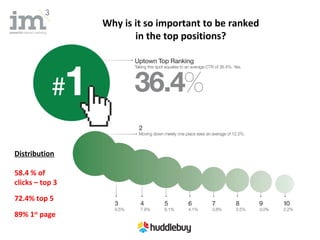
Why is it so important to be ranked
                        in the top positions?


Distribution

58.4 % of
clicks – top 3
72.4% top 5

89% 1st page
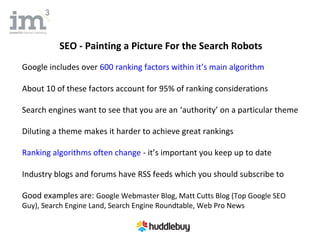
SEO - Painting a Picture For the Search Robots
Google includes over 600 ranking factors within it’s main algorithm

About 10 of these factors account for 95% of ranking considerations

Search engines want to see that you are an ‘authority’ on a particular theme

Diluting a theme makes it harder to achieve great rankings

Ranking algorithms often change - it’s important you keep up to date

Industry blogs and forums have RSS feeds which you should subscribe to

Good examples are: Google Webmaster Blog, Matt Cutts Blog (Top Google SEO
Guy), Search Engine Land, Search Engine Roundtable, Web Pro News
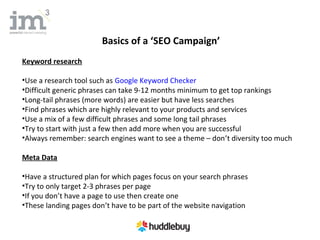
Basics of a ‘SEO Campaign’
Keyword research

•Use a research tool such as Google Keyword Checker
•Difficult generic phrases can take 9-12 months minimum to get top rankings
•Long-tail phrases (more words) are easier but have less searches
•Find phrases which are highly relevant to your products and services
•Use a mix of a few difficult phrases and some long tail phrases
•Try to start with just a few then add more when you are successful
•Always remember: search engines want to see a theme – don’t diversity too much

Meta Data

•Have a structured plan for which pages focus on your search phrases
•Try to only target 2-3 phrases per page
•If you don’t have a page to use then create one
•These landing pages don’t have to be part of the website navigation
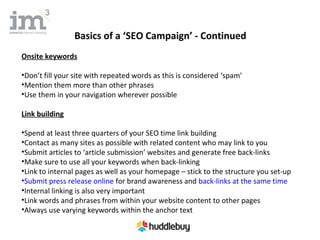
Basics of a ‘SEO Campaign’ - Continued
Onsite keywords

•Don’t fill your site with repeated words as this is considered ‘spam’
•Mention them more than other phrases
•Use them in your navigation wherever possible

Link building

•Spend at least three quarters of your SEO time link building
•Contact as many sites as possible with related content who may link to you
•Submit articles to ‘article submission’ websites and generate free back-links
•Make sure to use all your keywords when back-linking
•Link to internal pages as well as your homepage – stick to the structure you set-up
•Submit press release online for brand awareness and back-links at the same time
•Internal linking is also very important
•Link words and phrases from within your website content to other pages
•Always use varying keywords within the anchor text
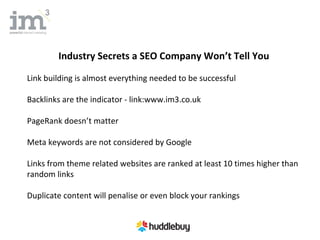
Industry Secrets a SEO Company Won’t Tell You

Link building is almost everything needed to be successful

Backlinks are the indicator - link:www.im3.co.uk

PageRank doesn’t matter

Meta keywords are not considered by Google

Links from theme related websites are ranked at least 10 times higher than
random links

Duplicate content will penalise or even block your rankings
The Impact of SEO on Your Website Visitors
Whilst optimising a website it’s important to consider on-page factors

Conversion rates – always have a clear path to checkout or contact

The ‘call to action’ is the vital part of converting your traffic

Articles and product descriptions can include this ‘call to action’ numerous
times. Make sure people are consistently prompted to buy or contact you

Don’t hide content away as Google knows where the text is displayed

Stick to ethical methods of adding content. Quality and engaging copy is the
only way to impress the search engines and your visitors
Top Tips for On-going Success
        Don’t use duplicated content for product or service descriptions

         Set-up a Google Webmaster Tools account to check for errors

List yourself on all the popular directories such as Dmoz and Business Directories

Don’t have duplicate meta data on your pages – check this with Webmaster Tools

          Blog once or twice a week about industry news or products

      Remember to link content on your website with relevant anchor text

    Update old pages – this is a ranking factor and dormant pages rank lower

                 Link build for a minimum of 5 hours per week
Thanks for your time and good luck with your
                    rankings!

For help with your SEO or to outsource completely,
          simply request a free proposal

                    seo@im3.co.uk
                    0800 292 2410
  Many thanks to Huddlebuy for their continued partnership with
                          IM3.co.uk

SEO

  • 1.
    SEO Webinar -With Neil Palmer of IM3.co.uk In Partnership with Huddlebuy How do I improve my website traffic with SEO? Covering: What is SEO? Why is SEO Important? Painting the Right Picture Best ways to implement SEO Industry Secrets Impact on your website design
  • 2.
    What is SearchEngine Optimisation? SEO is the term used for optimising your rankings within the organic search engine results - natural / non-paid In the industry we call these SERP’s – Search Engine Results Pages Most companies focus on rankings with Google In the UK Google provide about 9 out of every 10 searches SEO is ultimately about: ‘Improving your visibility on the Internet’ This is achieved by following ethical steps to improve website relevance
  • 3.
    Why is itso important to be ranked in the top positions? Distribution 58.4 % of clicks – top 3 72.4% top 5 89% 1st page
  • 4.
    SEO - Paintinga Picture For the Search Robots Google includes over 600 ranking factors within it’s main algorithm About 10 of these factors account for 95% of ranking considerations Search engines want to see that you are an ‘authority’ on a particular theme Diluting a theme makes it harder to achieve great rankings Ranking algorithms often change - it’s important you keep up to date Industry blogs and forums have RSS feeds which you should subscribe to Good examples are: Google Webmaster Blog, Matt Cutts Blog (Top Google SEO Guy), Search Engine Land, Search Engine Roundtable, Web Pro News
  • 5.
    Basics of a‘SEO Campaign’ Keyword research •Use a research tool such as Google Keyword Checker •Difficult generic phrases can take 9-12 months minimum to get top rankings •Long-tail phrases (more words) are easier but have less searches •Find phrases which are highly relevant to your products and services •Use a mix of a few difficult phrases and some long tail phrases •Try to start with just a few then add more when you are successful •Always remember: search engines want to see a theme – don’t diversity too much Meta Data •Have a structured plan for which pages focus on your search phrases •Try to only target 2-3 phrases per page •If you don’t have a page to use then create one •These landing pages don’t have to be part of the website navigation
  • 6.
    Basics of a‘SEO Campaign’ - Continued Onsite keywords •Don’t fill your site with repeated words as this is considered ‘spam’ •Mention them more than other phrases •Use them in your navigation wherever possible Link building •Spend at least three quarters of your SEO time link building •Contact as many sites as possible with related content who may link to you •Submit articles to ‘article submission’ websites and generate free back-links •Make sure to use all your keywords when back-linking •Link to internal pages as well as your homepage – stick to the structure you set-up •Submit press release online for brand awareness and back-links at the same time •Internal linking is also very important •Link words and phrases from within your website content to other pages •Always use varying keywords within the anchor text
  • 7.
    Industry Secrets aSEO Company Won’t Tell You Link building is almost everything needed to be successful Backlinks are the indicator - link:www.im3.co.uk PageRank doesn’t matter Meta keywords are not considered by Google Links from theme related websites are ranked at least 10 times higher than random links Duplicate content will penalise or even block your rankings
  • 8.
    The Impact ofSEO on Your Website Visitors Whilst optimising a website it’s important to consider on-page factors Conversion rates – always have a clear path to checkout or contact The ‘call to action’ is the vital part of converting your traffic Articles and product descriptions can include this ‘call to action’ numerous times. Make sure people are consistently prompted to buy or contact you Don’t hide content away as Google knows where the text is displayed Stick to ethical methods of adding content. Quality and engaging copy is the only way to impress the search engines and your visitors
  • 9.
    Top Tips forOn-going Success Don’t use duplicated content for product or service descriptions Set-up a Google Webmaster Tools account to check for errors List yourself on all the popular directories such as Dmoz and Business Directories Don’t have duplicate meta data on your pages – check this with Webmaster Tools Blog once or twice a week about industry news or products Remember to link content on your website with relevant anchor text Update old pages – this is a ranking factor and dormant pages rank lower Link build for a minimum of 5 hours per week
  • 10.
    Thanks for yourtime and good luck with your rankings! For help with your SEO or to outsource completely, simply request a free proposal seo@im3.co.uk 0800 292 2410 Many thanks to Huddlebuy for their continued partnership with IM3.co.uk