TOPICS COVERED… 
 INTRODUCTION 
 GI-FI 
 TECHNOLOGIES USED 
 WORKING PRINCIPLE 
 FREQUENCY OPERATION 
 FEATURES OF GI-FI 
 APPLICATIONS 
 FUTURE SCOPE 
 CONCLUSION
What is Gi-Fi ? 
 It offers some advantages over Wi-Fi, a 
similar wireless technology. In that it offers faster 
information rate in Gbps, less power consumption and 
low cost for short range transmissions 
 Gi-Fi which is developed on a integrated wireless 
transceiver chip. In which a small antenna used and 
both transmitter- receiver integrated on a single chip 
which is fabricated using the complementary metal 
oxide semiconductor (CMOS) process. Because of Gi- 
Fi transfer of large videos, files will be within seconds.
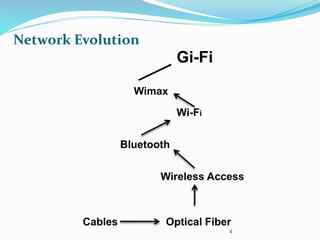
Network Evolution 
Wimax 
Bluetooth 
Gi-Fi 
Wi-Fi 
Wireless Access 
Cables Optical Fiber 
4
Why Gi-Fi? 
 The reason for pushing into Gi-Fi technology is 
because of slow rate, high power consumption, low 
range of frequency operations of earlier technologies 
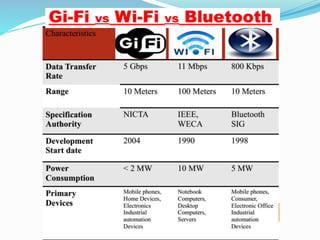
i.e. Bluetooth and Wi-Fi, see the comparisons and 
features of those two technologies 
Bluetooth 
Wi-Fi
Disadvantages of Bluetooth and Wi-Fi? 
 From the table we can conclude that the bit rate of 
Bluetooth is 800Kbps and Wi-Fi has 11Mbps. Both are 
having power consumptions 5mw and 10mw. They have 
lower frequency of operation 2.4GHz. For transferring 
large amount of videos, audios, data files take hours of 
time. So to have higher data transfer rate at lower power 
consumption we move onto GiFi Technology
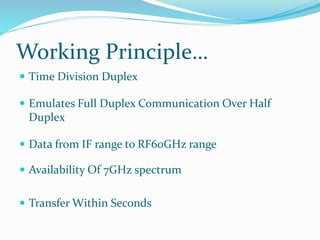
Working Principle… 
 Time Division Duplex 
 Emulates Full Duplex Communication Over Half 
Duplex 
 Data from IF range to RF60GHz range 
 Availability Of 7GHz spectrum 
 Transfer Within Seconds
Gi-Fi Features 
High speed of data transfer 
Low power consumption 
High security 
Cost effective 
Small size 
Quick deployment 
Highly portable, high mobility
Gi-Fi Features 
High Speed Data Transfer 
Speed of Gi-Fi is 5 Gbps; which is 10 times the 
data transfer of the existing technologies 
Provides High Security 
Gi-Fi technology is based on IEEE 
802.15.3C and this standard provides more 
security during transmission
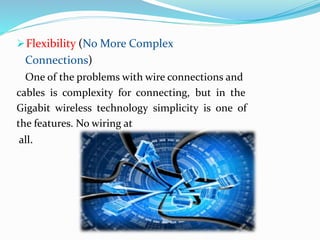
Flexibility (No More Complex 
Connections) 
One of the problems with wire connections and 
cables is complexity for connecting, but in the 
Gigabit wireless technology simplicity is one of 
the features. No wiring at 
all.
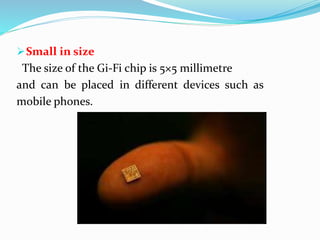
Small in size 
The size of the Gi-Fi chip is 5×5 millimetre 
and can be placed in different devices such as 
mobile phones.
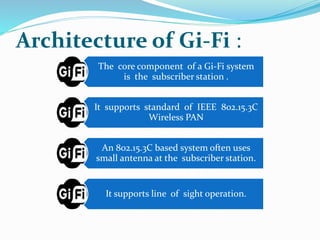
Architecture of Gi-Fi :
Architecture of Gi-Fi : 
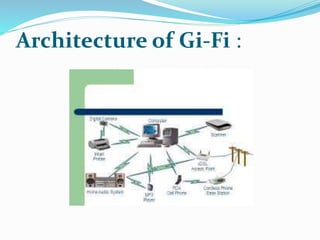
The core component of a Gi-Fi system 
is the subscriber station . 
It supports standard of IEEE 802.15.3C 
Wireless PAN 
An 802.15.3C based system often uses 
small antenna at the subscriber station. 
It supports line of sight operation.
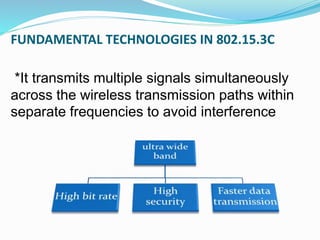
FUNDAMENTAL TECHNOLOGIES IN 802.15.3C 
*It transmits multiple signals simultaneously 
across the wireless transmission paths within 
separate frequencies to avoid interference
Frequency Of Operation… 
 Point-to-point Communication At 60GHz 
 Millimeter Wave Antenna At 60GHz 
 High Oxygen Absorption At 60GHz 
 High Data Rate Energy Propagation 
 Co-channel Interference , High Security , Frequency 
re-use
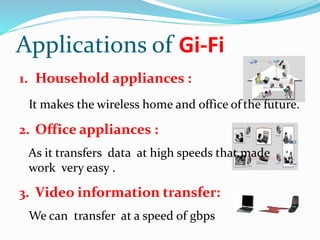
Applications of Gi-Fi 
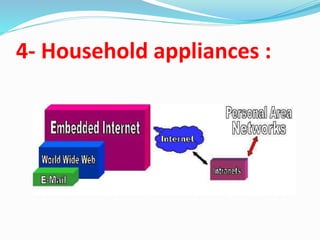
1. Household appliances : 
It makes the wireless home and office of the future. 
2. Office appliances : 
As it transfers data at high speeds that made 
work very easy . 
3. Video information transfer: 
We can transfer at a speed of gbps
4- Household appliances :
CONCLUSION 
 Within five years, we expect Gi-Fi to be the dominant 
technology for wireless networking. By that time it will 
be fully mobile, as well as providing low-cost, high 
broadband access, with very high speed large files 
swapped within seconds which will develop wireless 
home and office of future. 
 If the success of Wi-Fi and the imminent wide usage of 
Wi-Max is any indication, Gi-Fi potentially can bring 
wireless broadband to the enterprise in an entirely 
new way
REFERENCE 
WIKIPEDIA 
• http://en.wikipedia.org/wiki/Gi-Fi 
academia.edu 
• http://www.academia.edu/3882796/Gi- 
FI_Gigabit_Fidelity
GiFi

GiFi

  • 2.
    TOPICS COVERED… INTRODUCTION  GI-FI  TECHNOLOGIES USED  WORKING PRINCIPLE  FREQUENCY OPERATION  FEATURES OF GI-FI  APPLICATIONS  FUTURE SCOPE  CONCLUSION
  • 3.
    What is Gi-Fi?  It offers some advantages over Wi-Fi, a similar wireless technology. In that it offers faster information rate in Gbps, less power consumption and low cost for short range transmissions  Gi-Fi which is developed on a integrated wireless transceiver chip. In which a small antenna used and both transmitter- receiver integrated on a single chip which is fabricated using the complementary metal oxide semiconductor (CMOS) process. Because of Gi- Fi transfer of large videos, files will be within seconds.
  • 4.
    Network Evolution Wimax Bluetooth Gi-Fi Wi-Fi Wireless Access Cables Optical Fiber 4
  • 5.
    Why Gi-Fi? The reason for pushing into Gi-Fi technology is because of slow rate, high power consumption, low range of frequency operations of earlier technologies i.e. Bluetooth and Wi-Fi, see the comparisons and features of those two technologies Bluetooth Wi-Fi
  • 7.
    Disadvantages of Bluetoothand Wi-Fi?  From the table we can conclude that the bit rate of Bluetooth is 800Kbps and Wi-Fi has 11Mbps. Both are having power consumptions 5mw and 10mw. They have lower frequency of operation 2.4GHz. For transferring large amount of videos, audios, data files take hours of time. So to have higher data transfer rate at lower power consumption we move onto GiFi Technology
  • 8.
    Working Principle… Time Division Duplex  Emulates Full Duplex Communication Over Half Duplex  Data from IF range to RF60GHz range  Availability Of 7GHz spectrum  Transfer Within Seconds
  • 9.
    Gi-Fi Features Highspeed of data transfer Low power consumption High security Cost effective Small size Quick deployment Highly portable, high mobility
  • 10.
    Gi-Fi Features HighSpeed Data Transfer Speed of Gi-Fi is 5 Gbps; which is 10 times the data transfer of the existing technologies Provides High Security Gi-Fi technology is based on IEEE 802.15.3C and this standard provides more security during transmission
  • 11.
    Flexibility (No MoreComplex Connections) One of the problems with wire connections and cables is complexity for connecting, but in the Gigabit wireless technology simplicity is one of the features. No wiring at all.
  • 12.
    Small in size The size of the Gi-Fi chip is 5×5 millimetre and can be placed in different devices such as mobile phones.
  • 13.
  • 14.
    Architecture of Gi-Fi: The core component of a Gi-Fi system is the subscriber station . It supports standard of IEEE 802.15.3C Wireless PAN An 802.15.3C based system often uses small antenna at the subscriber station. It supports line of sight operation.
  • 15.
    FUNDAMENTAL TECHNOLOGIES IN802.15.3C *It transmits multiple signals simultaneously across the wireless transmission paths within separate frequencies to avoid interference
  • 16.
    Frequency Of Operation…  Point-to-point Communication At 60GHz  Millimeter Wave Antenna At 60GHz  High Oxygen Absorption At 60GHz  High Data Rate Energy Propagation  Co-channel Interference , High Security , Frequency re-use
  • 17.
    Applications of Gi-Fi 1. Household appliances : It makes the wireless home and office of the future. 2. Office appliances : As it transfers data at high speeds that made work very easy . 3. Video information transfer: We can transfer at a speed of gbps
  • 18.
  • 19.
    CONCLUSION  Withinfive years, we expect Gi-Fi to be the dominant technology for wireless networking. By that time it will be fully mobile, as well as providing low-cost, high broadband access, with very high speed large files swapped within seconds which will develop wireless home and office of future.  If the success of Wi-Fi and the imminent wide usage of Wi-Max is any indication, Gi-Fi potentially can bring wireless broadband to the enterprise in an entirely new way
  • 20.
    REFERENCE WIKIPEDIA •http://en.wikipedia.org/wiki/Gi-Fi academia.edu • http://www.academia.edu/3882796/Gi- FI_Gigabit_Fidelity