




Roll no : 003
What is this???
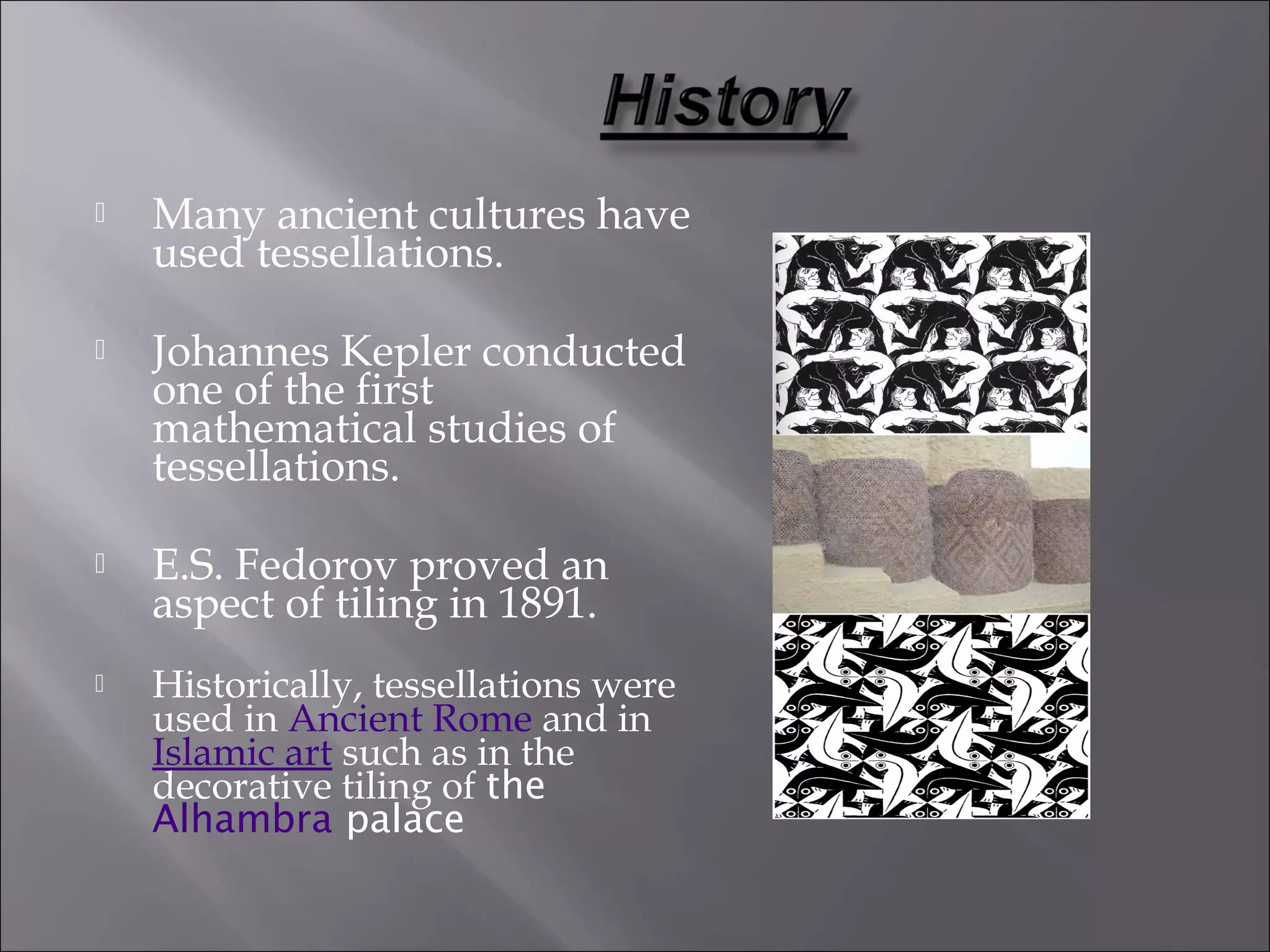
 Many ancient cultures have 
used tessellations. 
 Johannes Kepler conducted 
one of the first 
mathematical studies of 
tessellations. 
 E.S. Fedorov proved an 
aspect of tiling in 1891. 
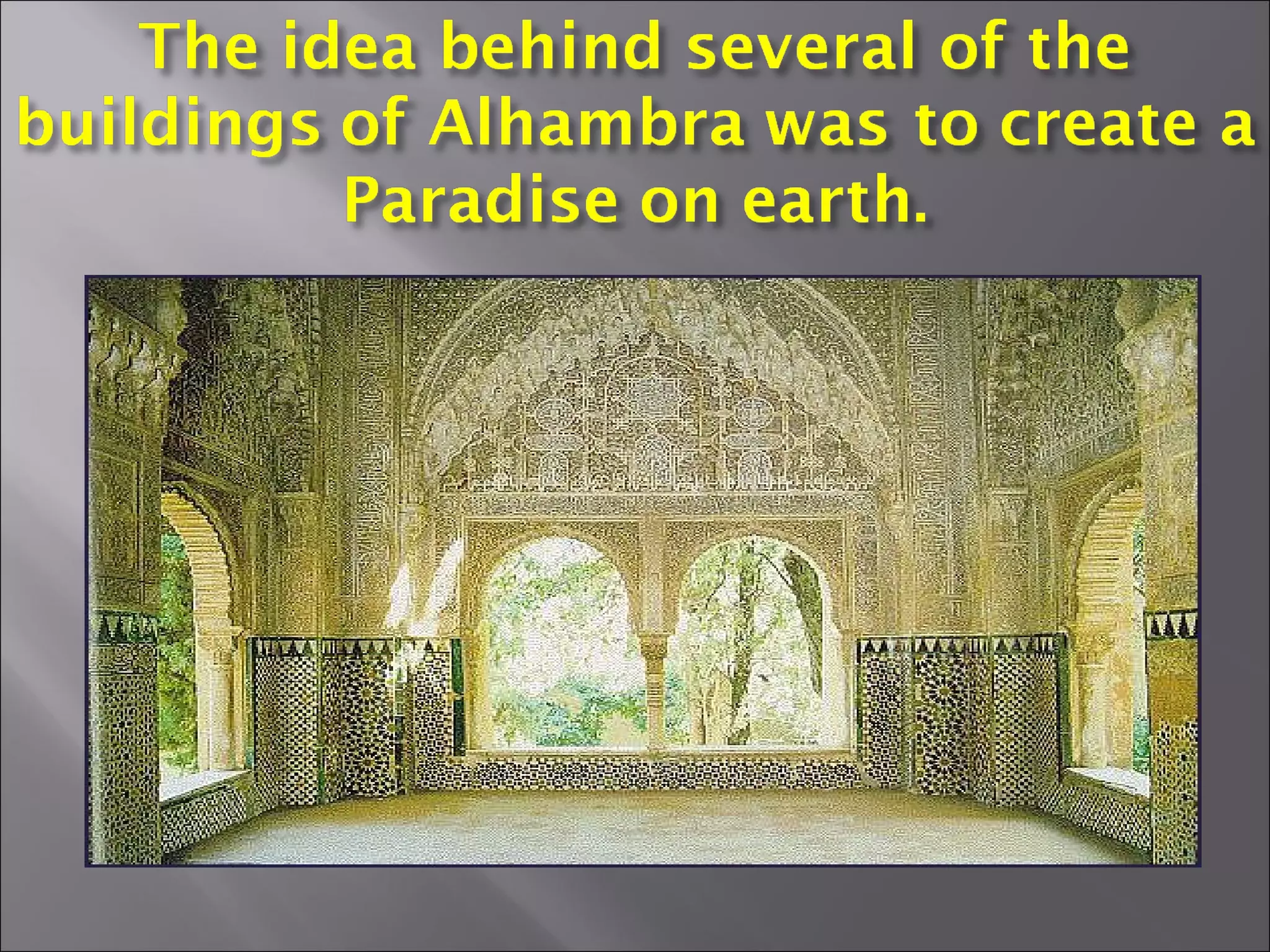
 Historically, tessellations were 
used in Ancient Rome and in 
Islamic art such as in the 
decorative tiling of the 
Alhambra palace
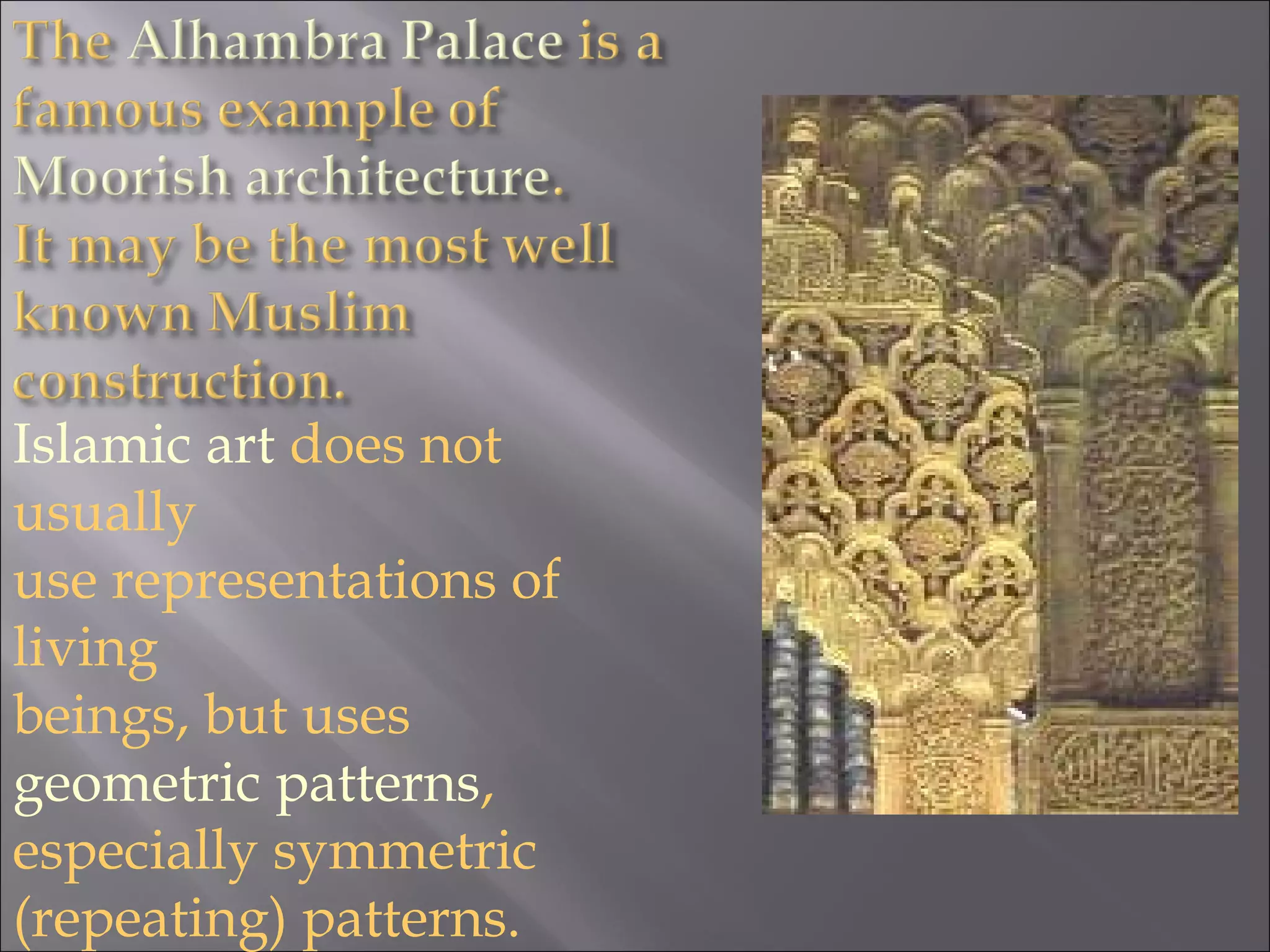
Islamic art does not 
usually 
use representations of 
living 
beings, but uses 
geometric patterns, 
especially symmetric 
(repeating) patterns.
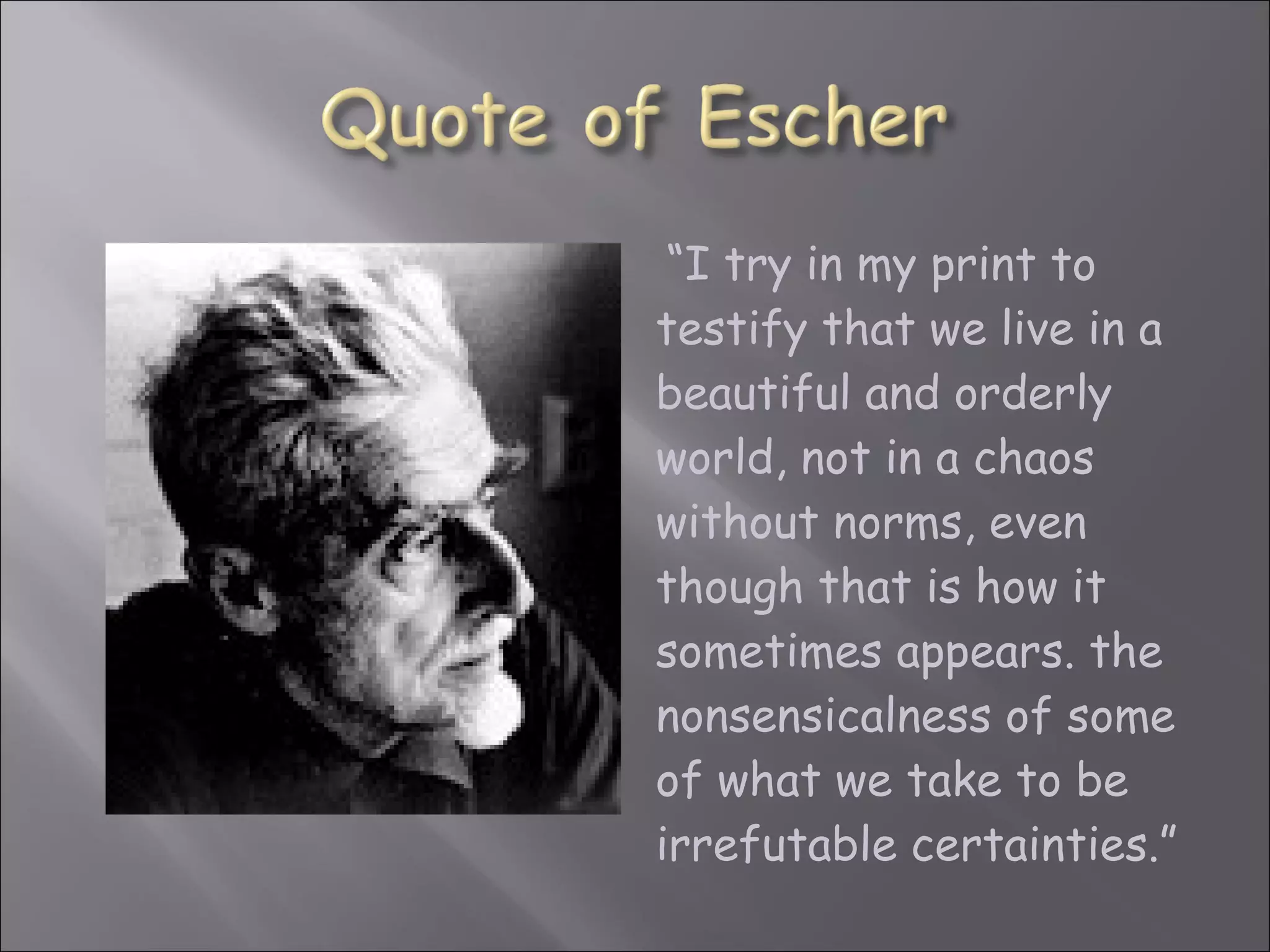
 “I try in my print to 
testify that we live in a 
beautiful and orderly 
world, not in a chaos 
without norms, even 
though that is how it 
sometimes appears. the 
nonsensicalness of some 
of what we take to be 
irrefutable certainties.”
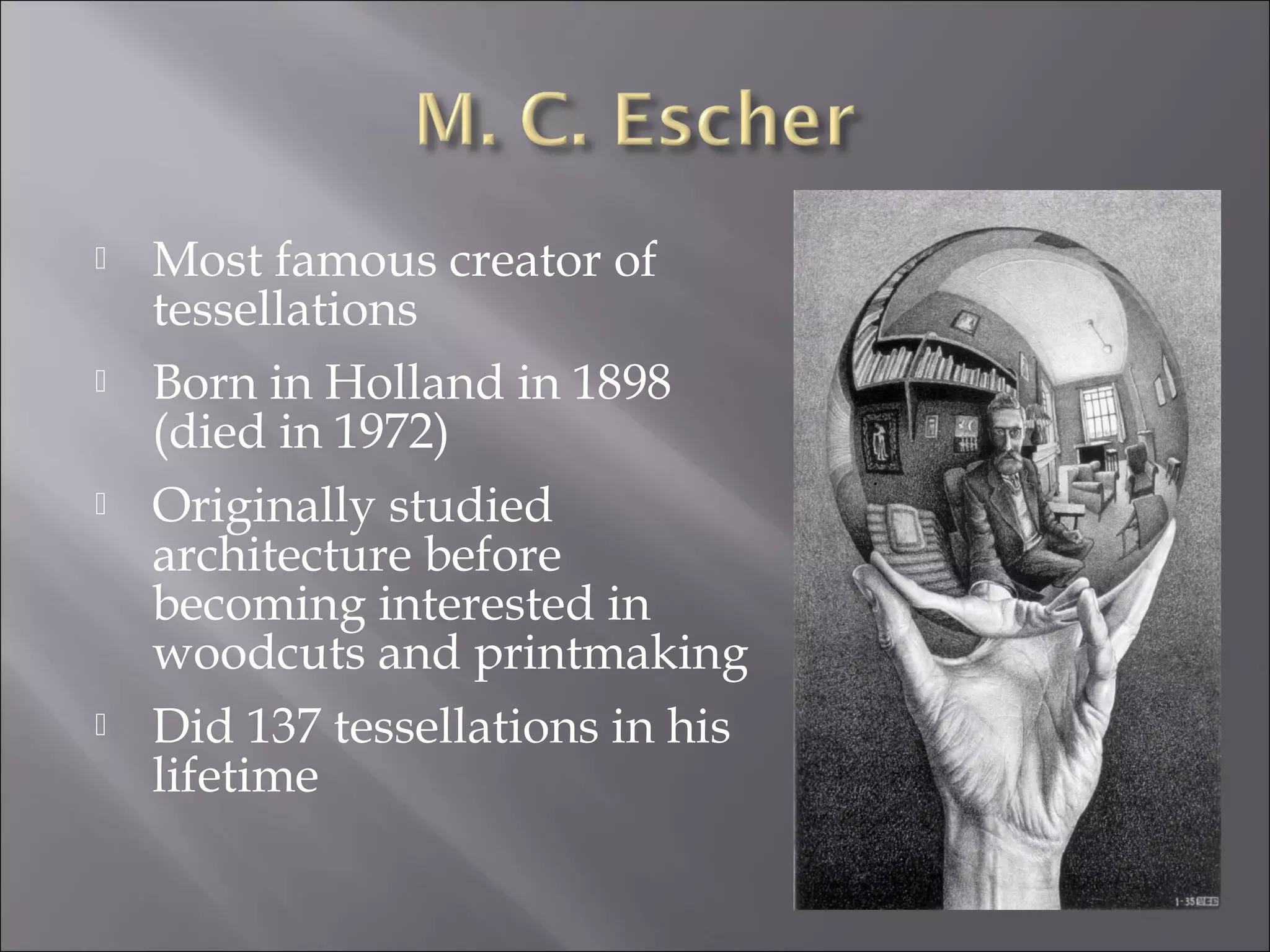
 Most famous creator of 
tessellations 
 Born in Holland in 1898 
(died in 1972) 
 Originally studied 
architecture before 
becoming interested in 
woodcuts and printmaking 
 Did 137 tessellations in his 
lifetime
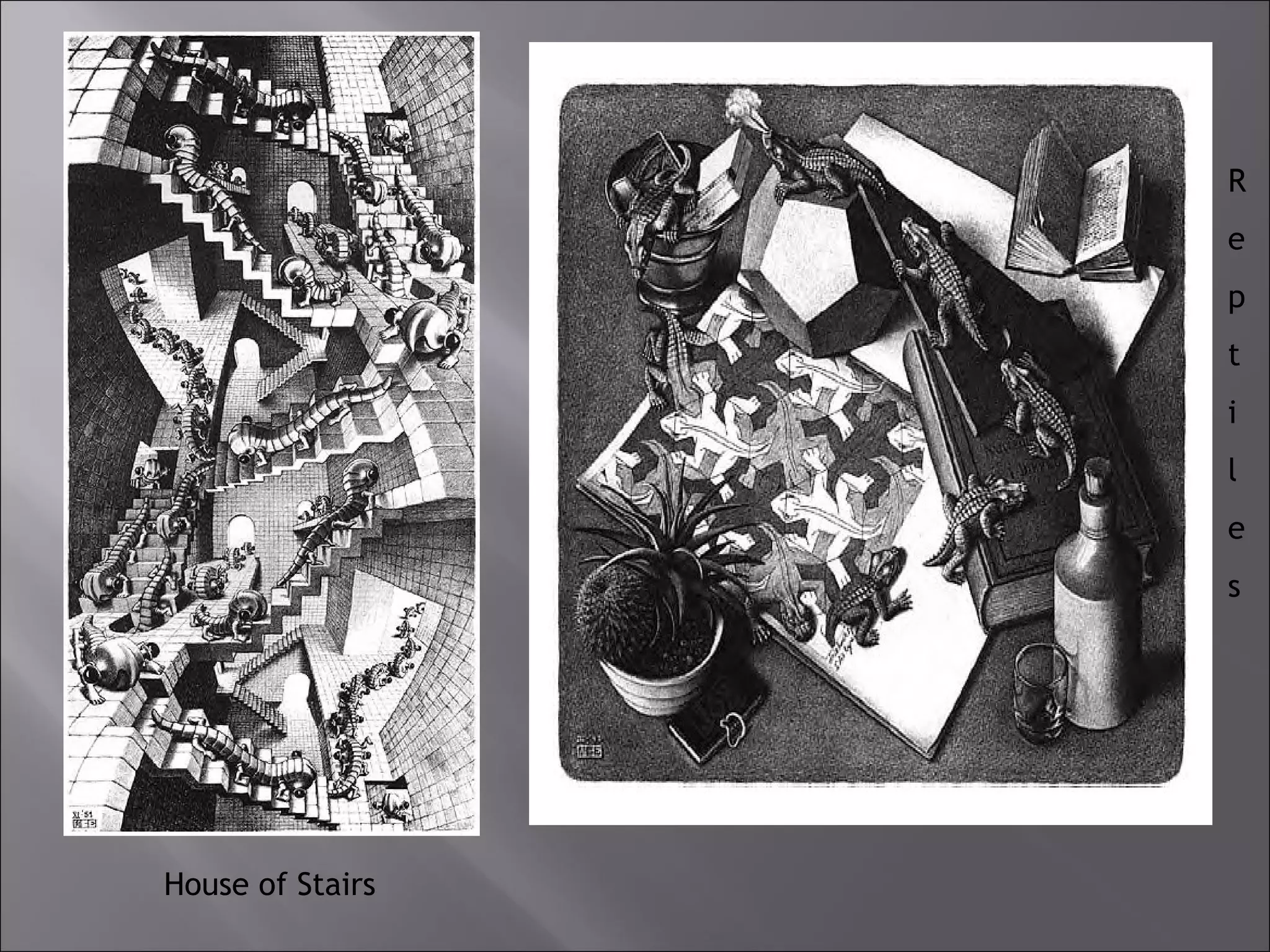
House of Stairs 
R 
e 
p 
t 
i 
l 
e 
s
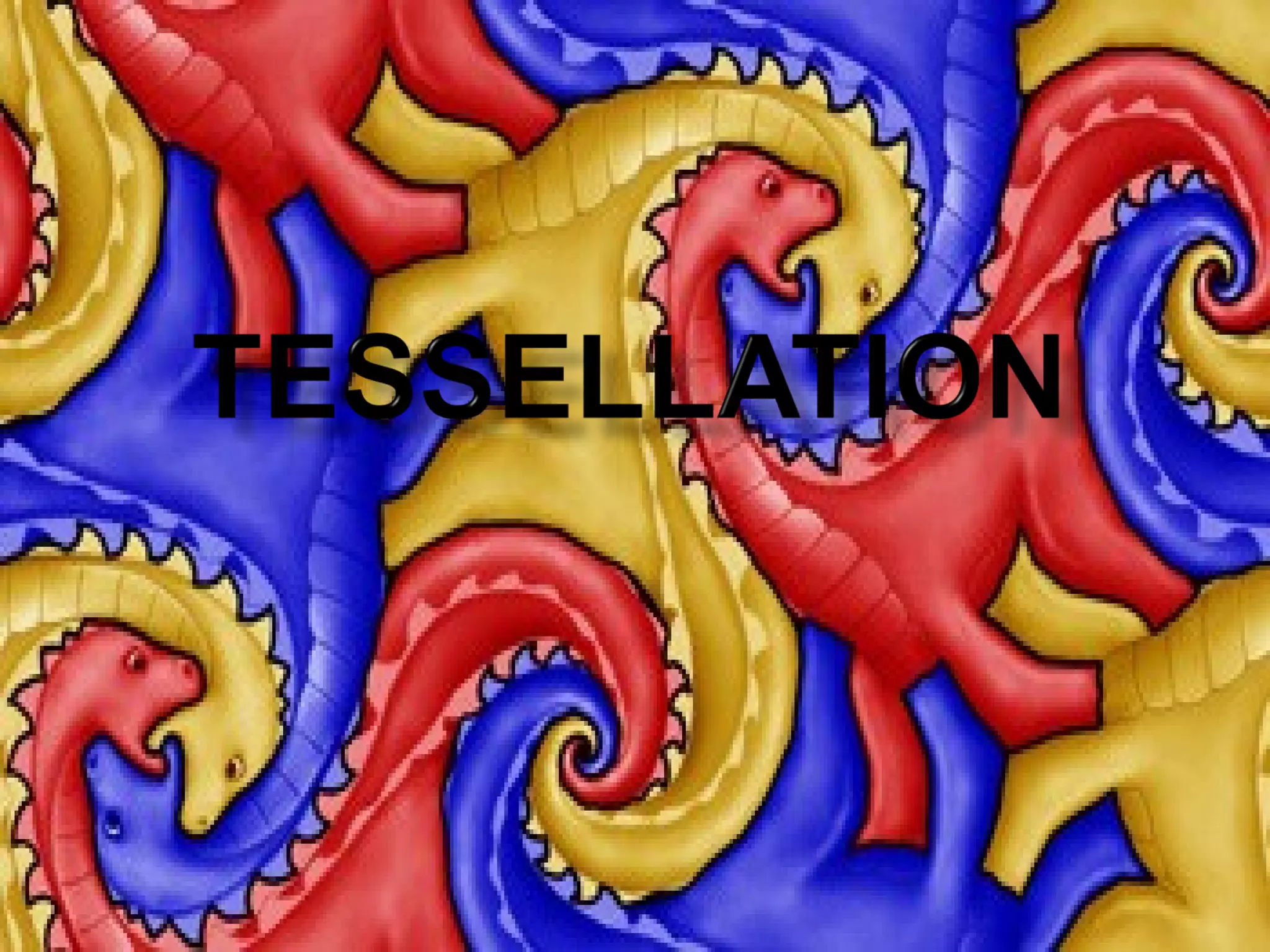
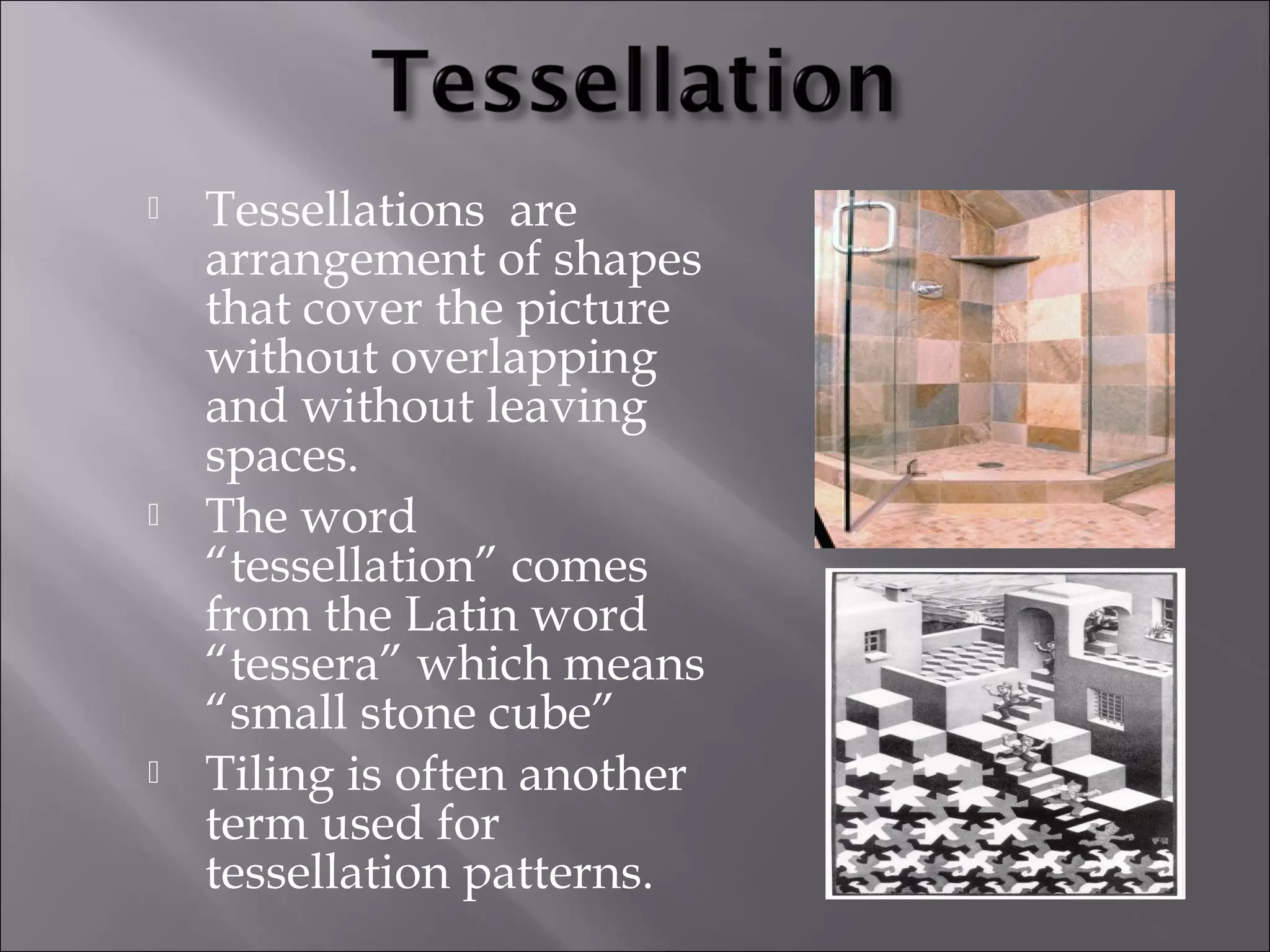
 Tessellations are 
arrangement of shapes 
that cover the picture 
without overlapping 
and without leaving 
spaces. 
 The word 
“tessellation” comes 
from the Latin word 
“tessera” which means 
“small stone cube” 
 Tiling is often another 
term used for 
tessellation patterns.
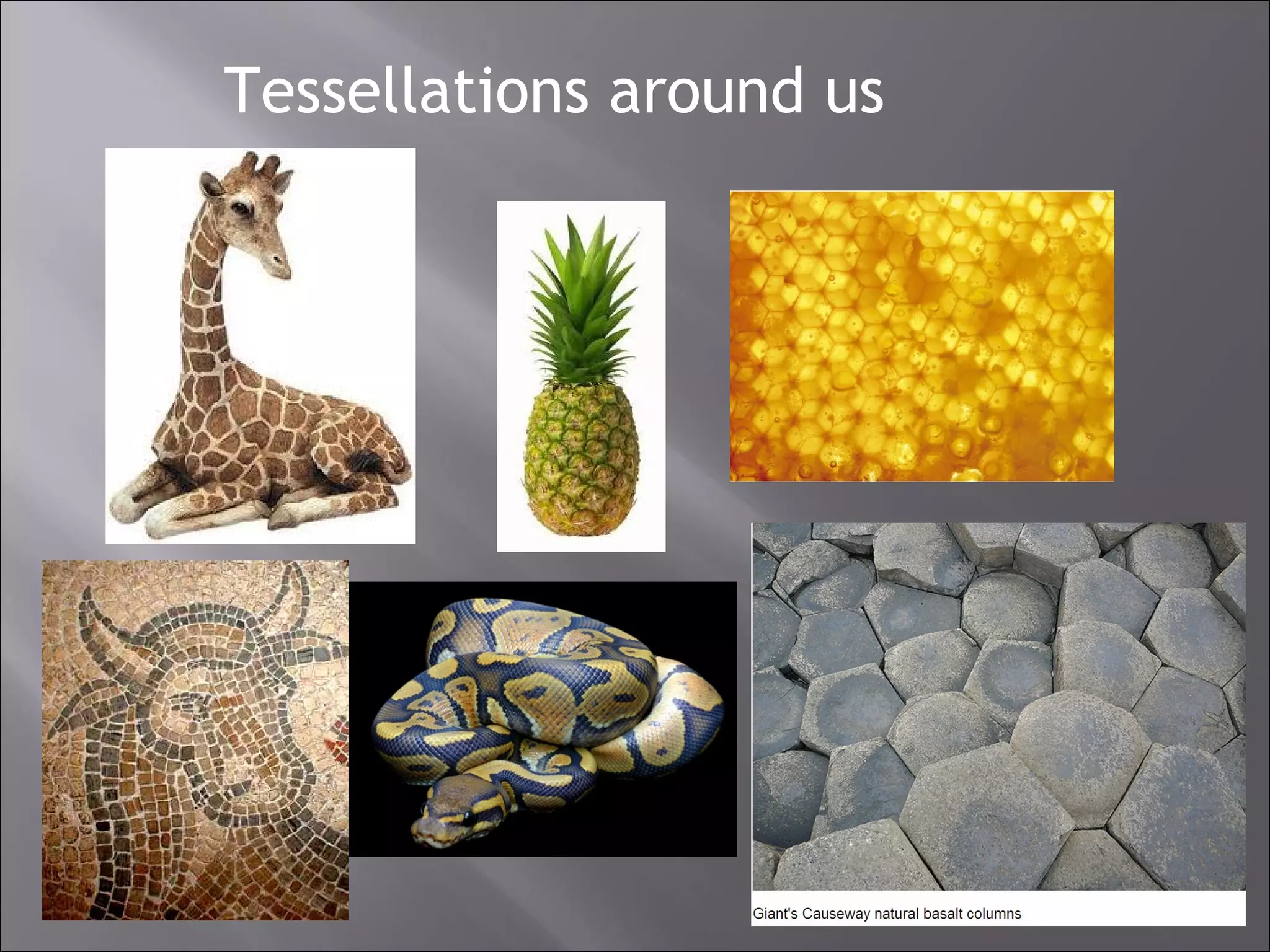
Tessellations around us
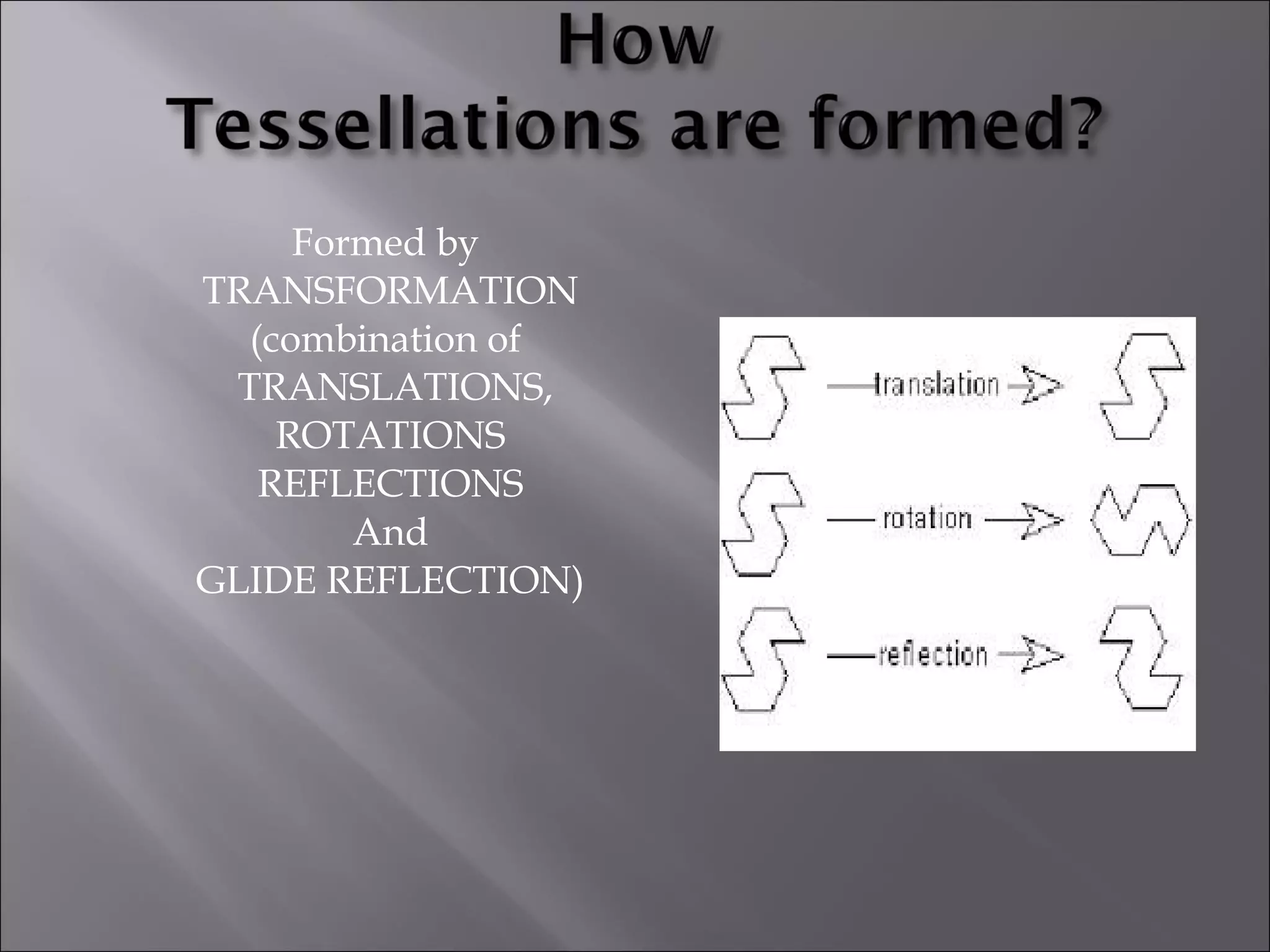
Formed by 
TRANSFORMATION 
(combination of 
TRANSLATIONS, 
ROTATIONS 
REFLECTIONS 
And 
GLIDE REFLECTION)
Movements of a figure in a 
plane 
May be a SLIDE, FLIP, or 
TURN
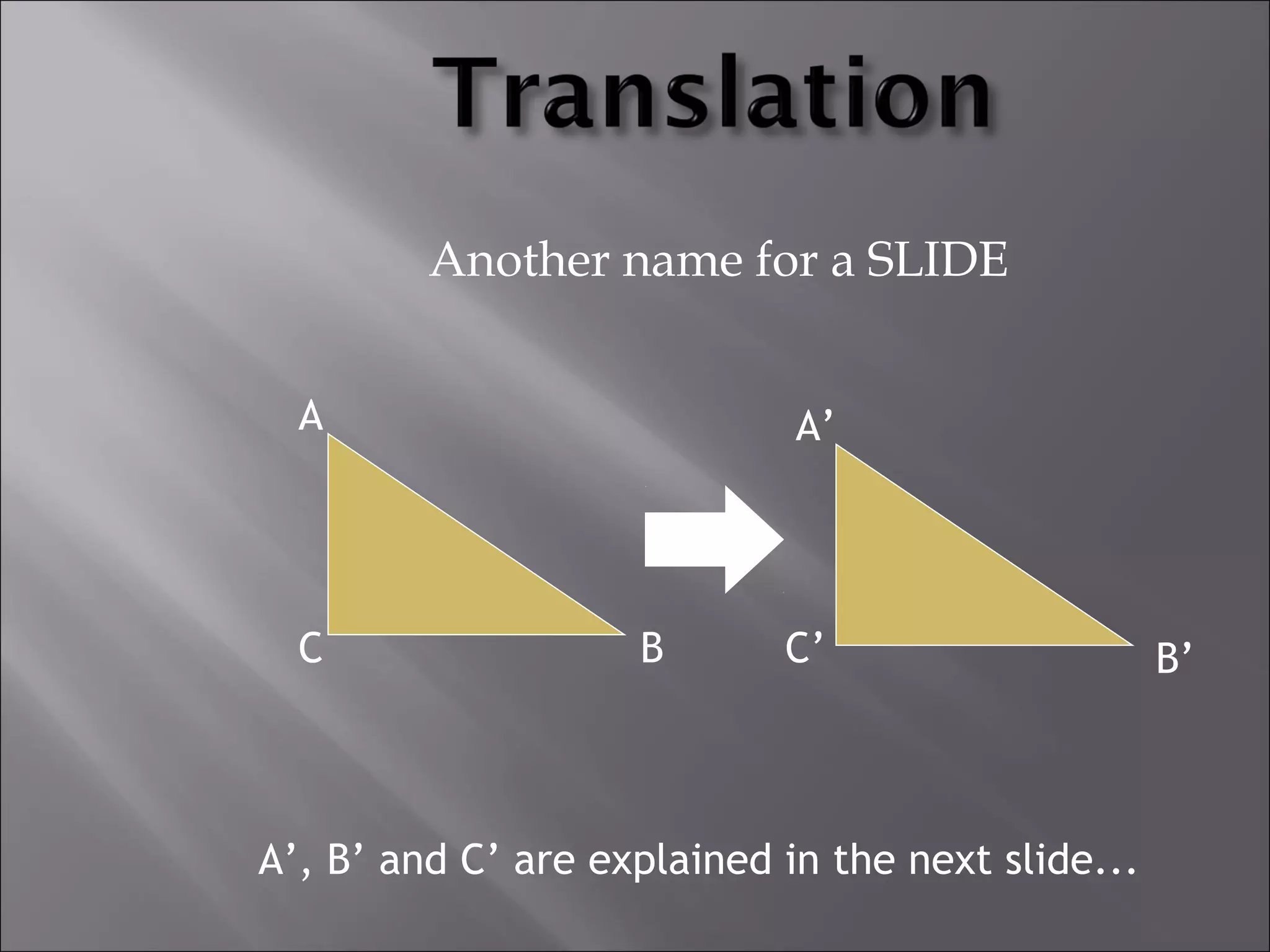
Another name for a SLIDE 
A 
C B 
A’ 
C’ B’ 
A’, B’ and C’ are explained in the next slide...
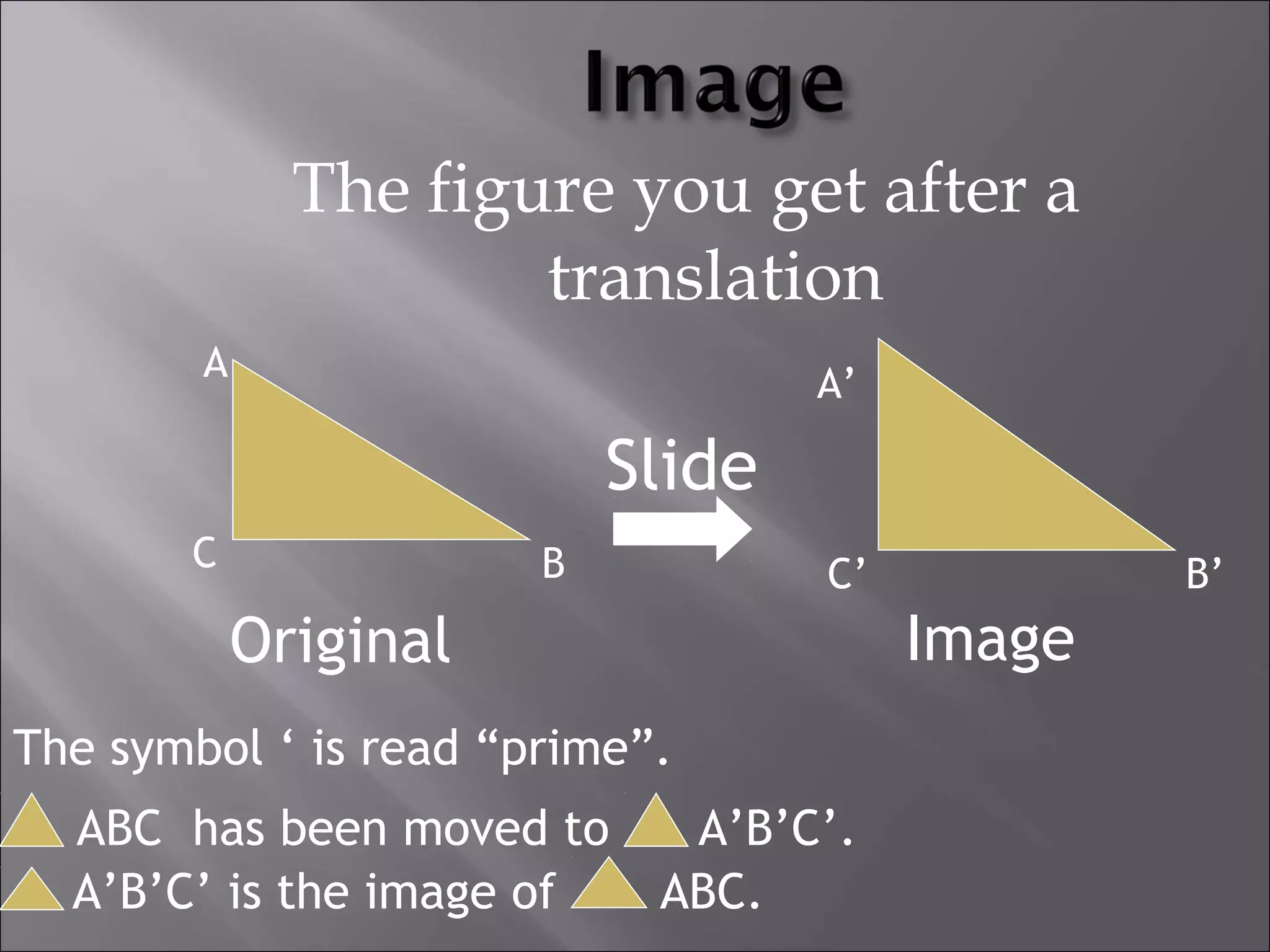
The figure you get after a 
translation 
A A’ 
Slide 
C B C’ B’ 
Original Image 
The symbol ‘ is read “prime”. 
ABC has been moved to A’B’C’. 
A’B’C’ is the image of ABC.
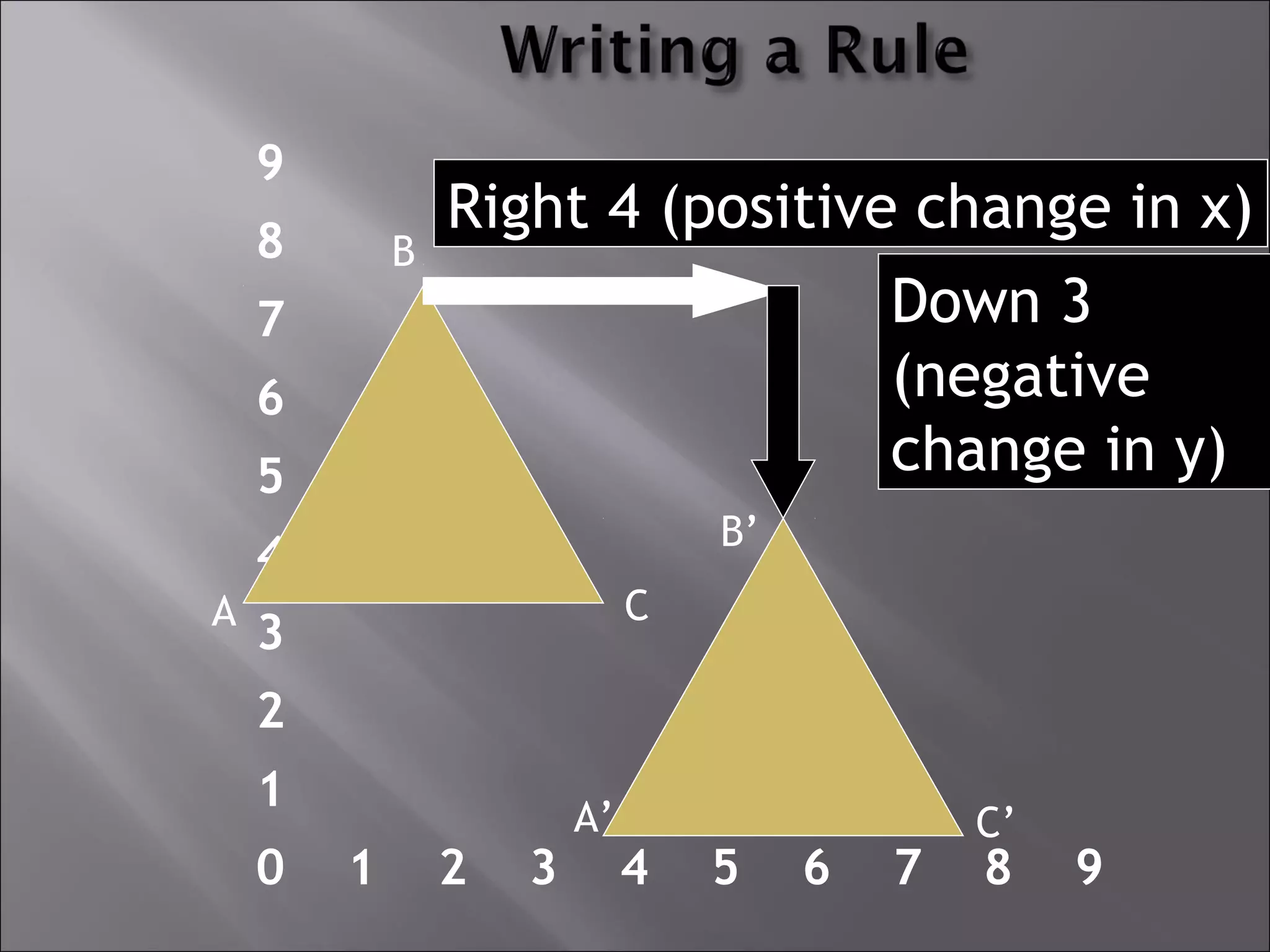
Finding the amount of 
movement LEFT and RIGHT 
and UP and DOWN
9 
8 
7 
6 
5 
4 
3 
2 
1 
0 1 2 3 4 5 6 7 8 9 
Right 4 (positive change in x) 
Down 3 
(negative 
change in y) 
A 
A’ 
B 
B’ 
C 
C’
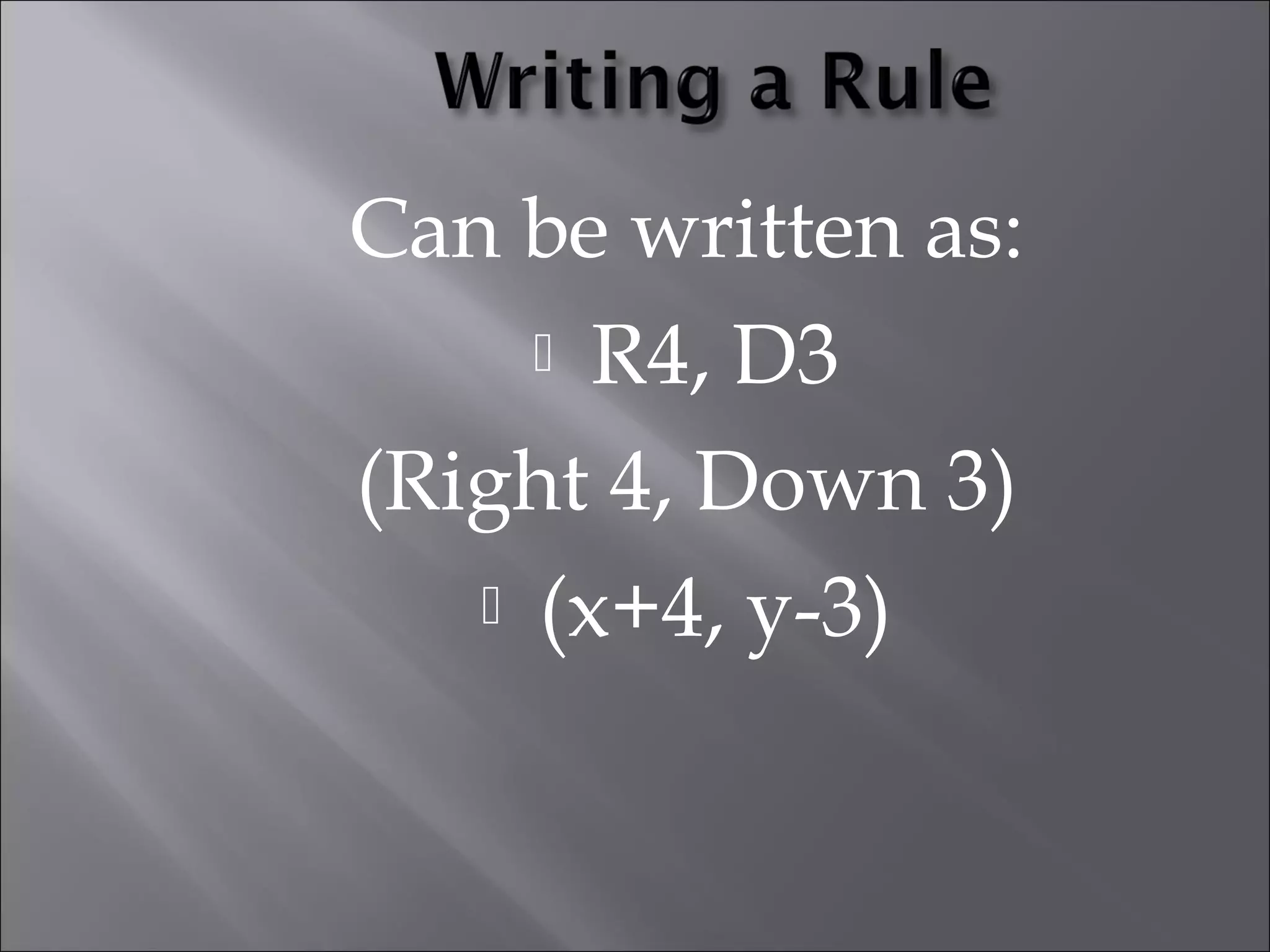
Can be written as: 
 R4, D3 
(Right 4, Down 3) 
 (x+4, y-3)
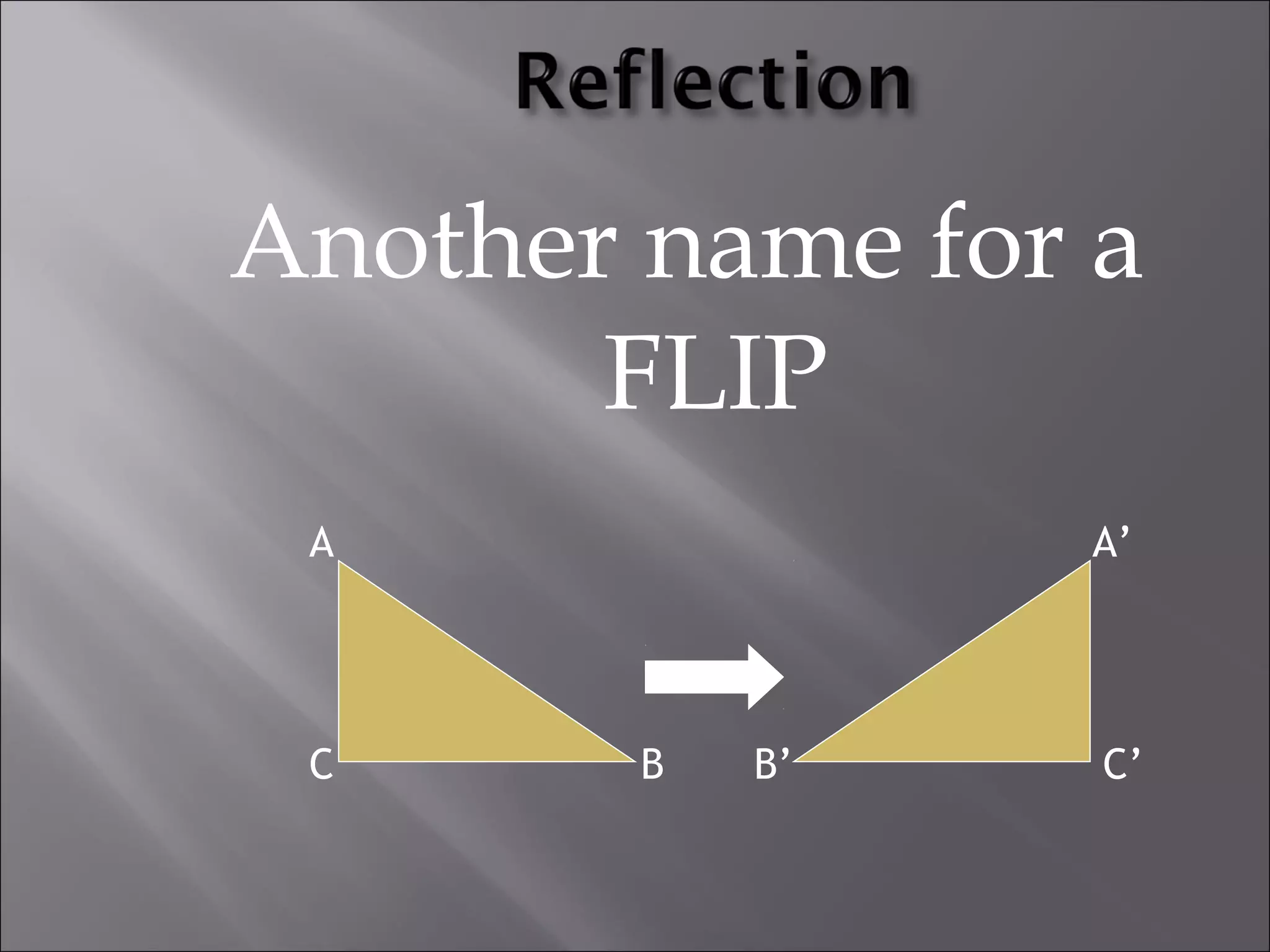
Another name for a 
FLIP 
A A’ 
C B B’ C’
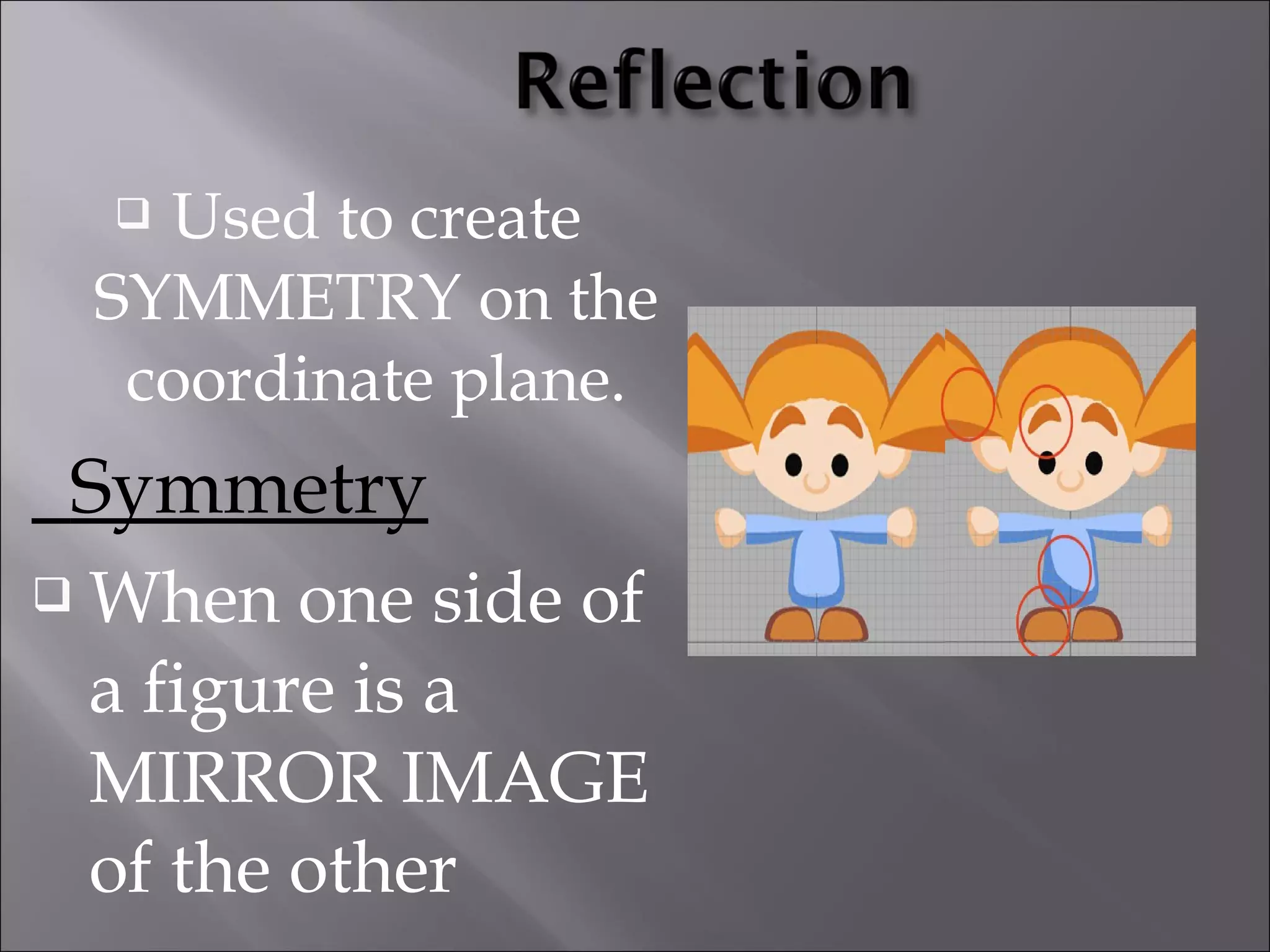
 Used to create 
SYMMETRY on the 
coordinate plane. 
Symmetry 
 When one side of 
a figure is a 
MIRROR IMAGE 
of the other
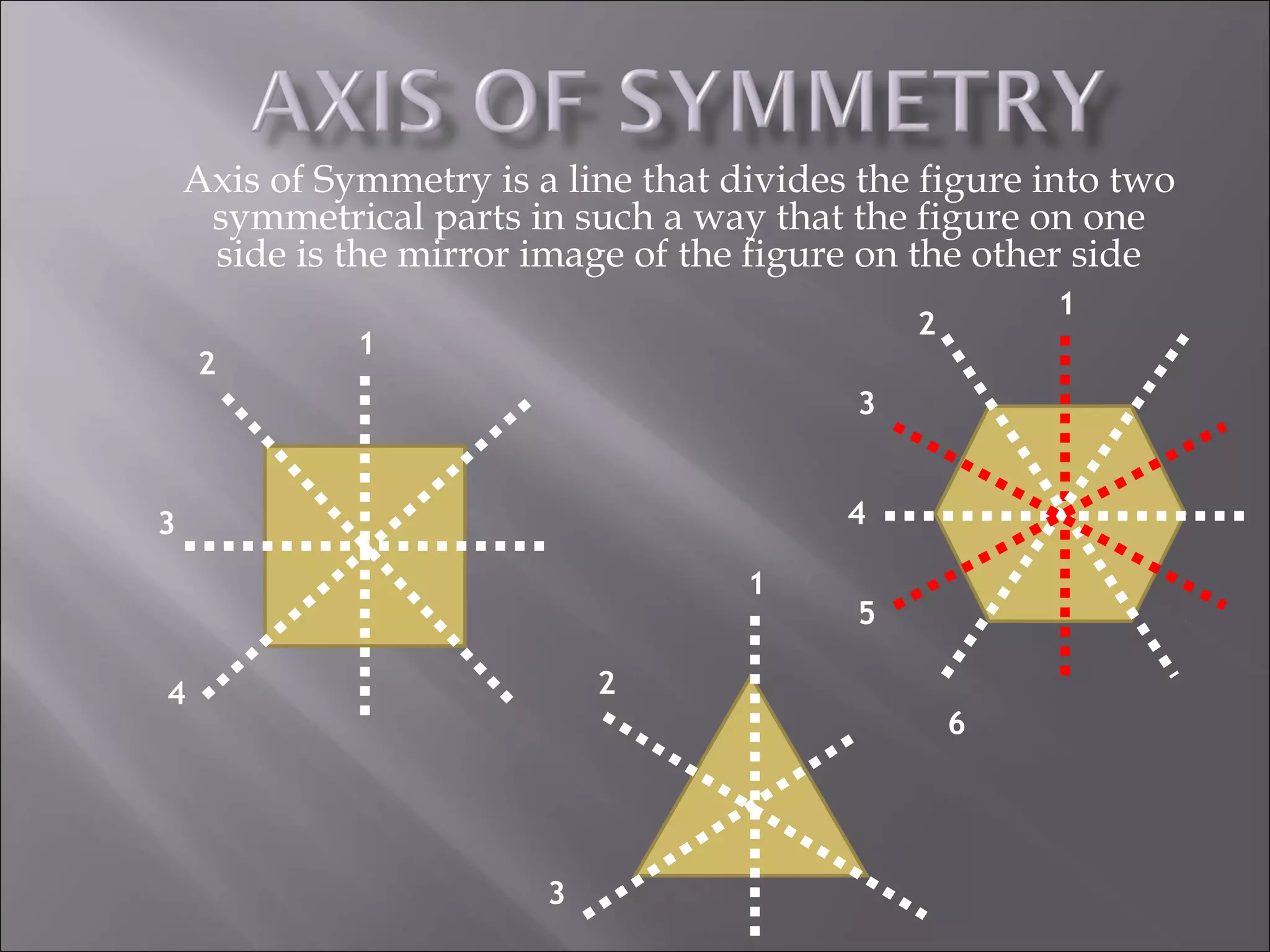
Axis of Symmetry is a line that divides the figure into two 
symmetrical parts in such a way that the figure on one 
side is the mirror image of the figure on the other side 
1 
2 
3 
4 
1 
2 
3 
4 
5 
6 
1 
2 
3
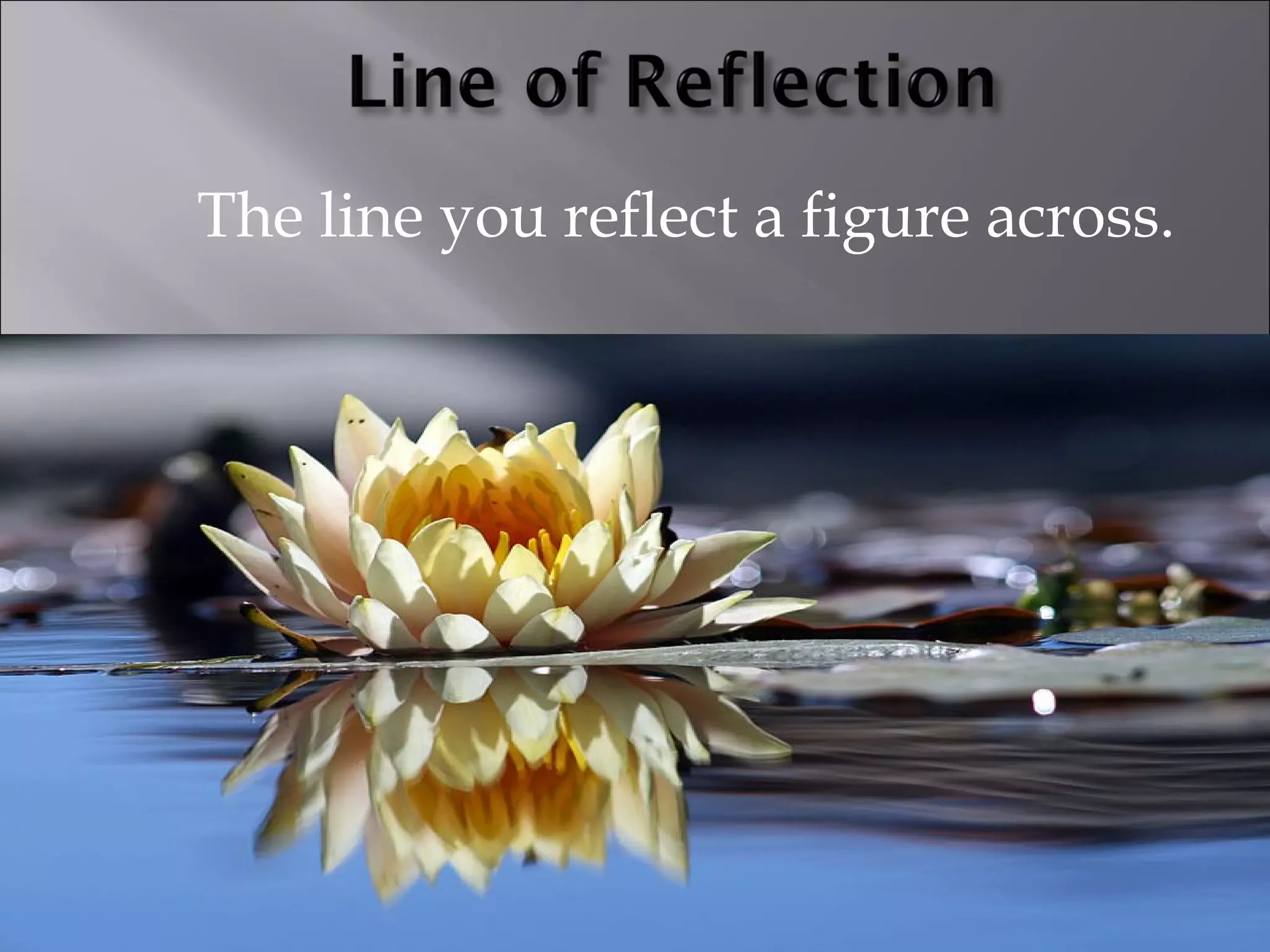
The line you reflect a figure across.
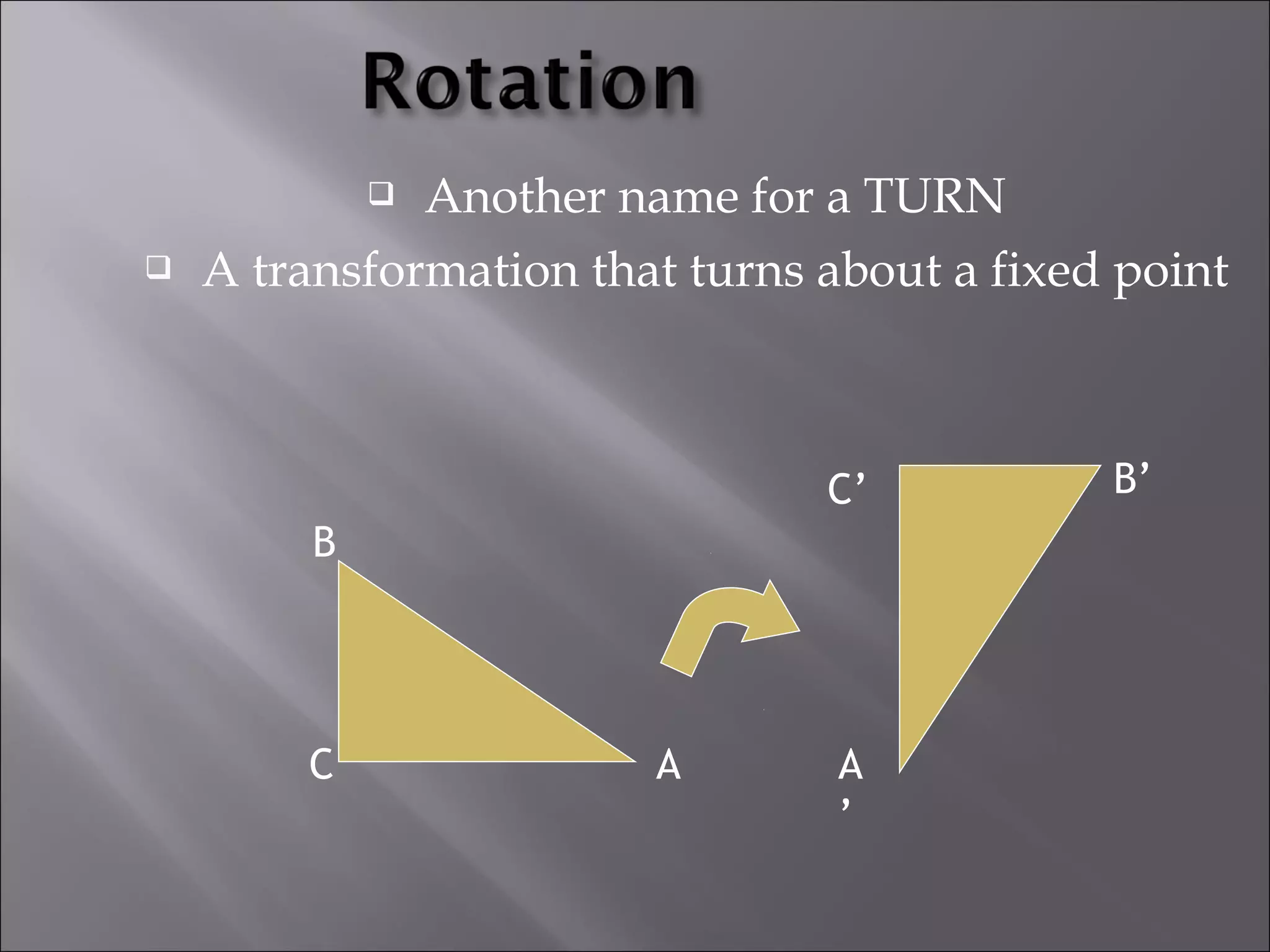
 Another name for a TURN 
 A transformation that turns about a fixed point 
B 
B’ 
C 
C’ 
A A’
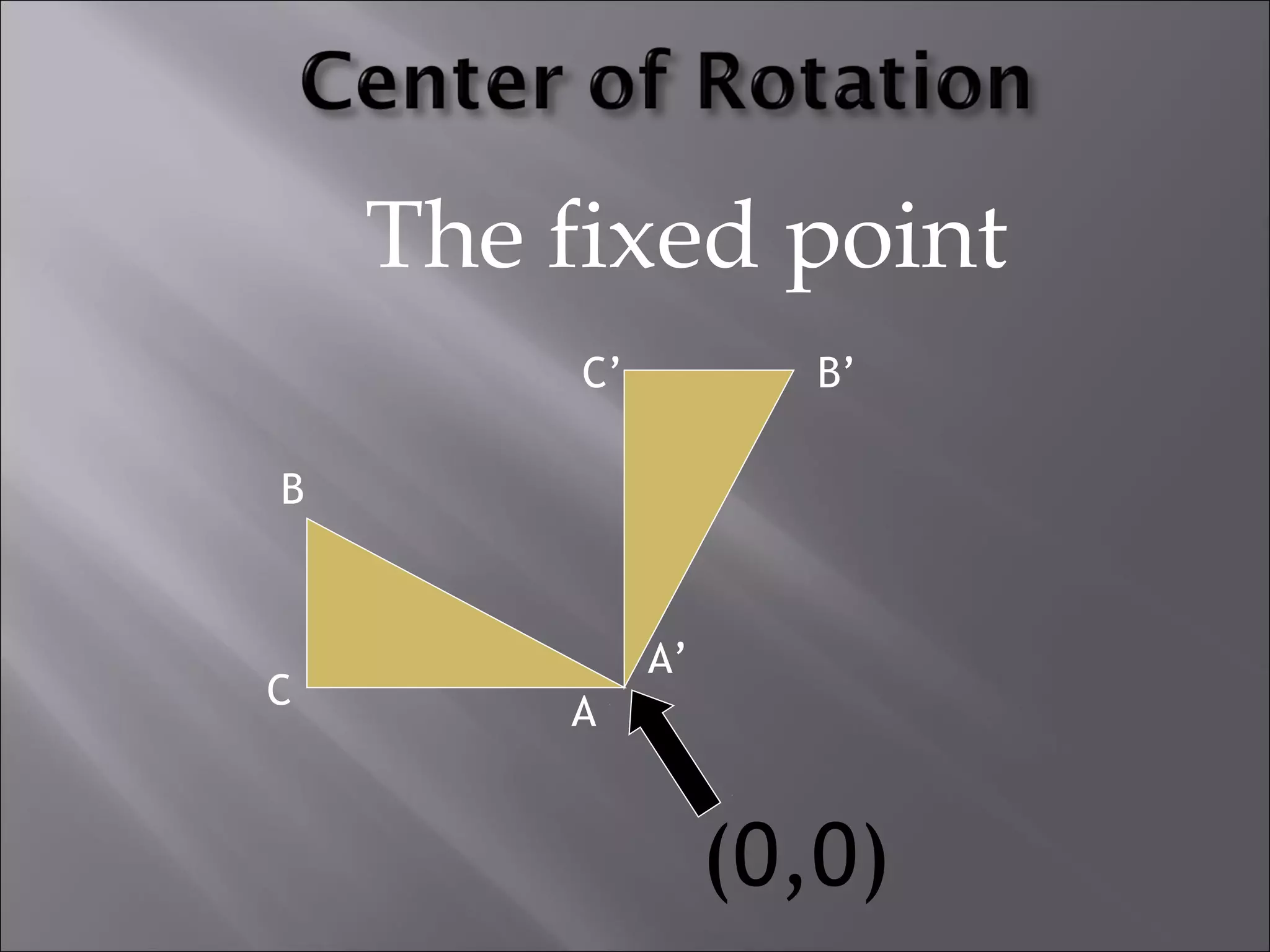
The fixed point 
(0,0) 
A 
A’ 
C 
C’ 
B 
B’
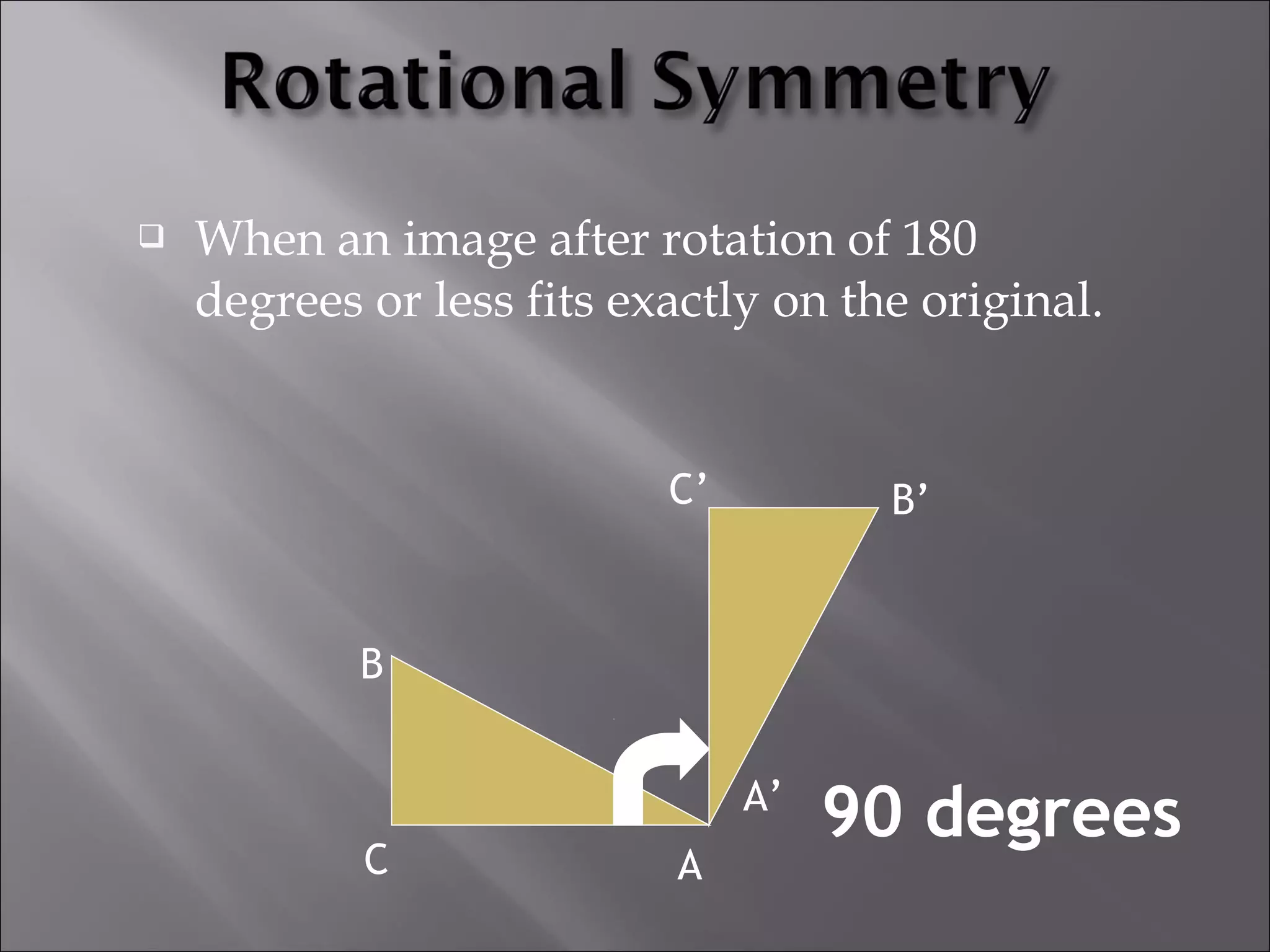
 When an image after rotation of 180 
degrees or less fits exactly on the original. 
90 degrees 
A 
A’ 
C 
C’ 
B 
B’
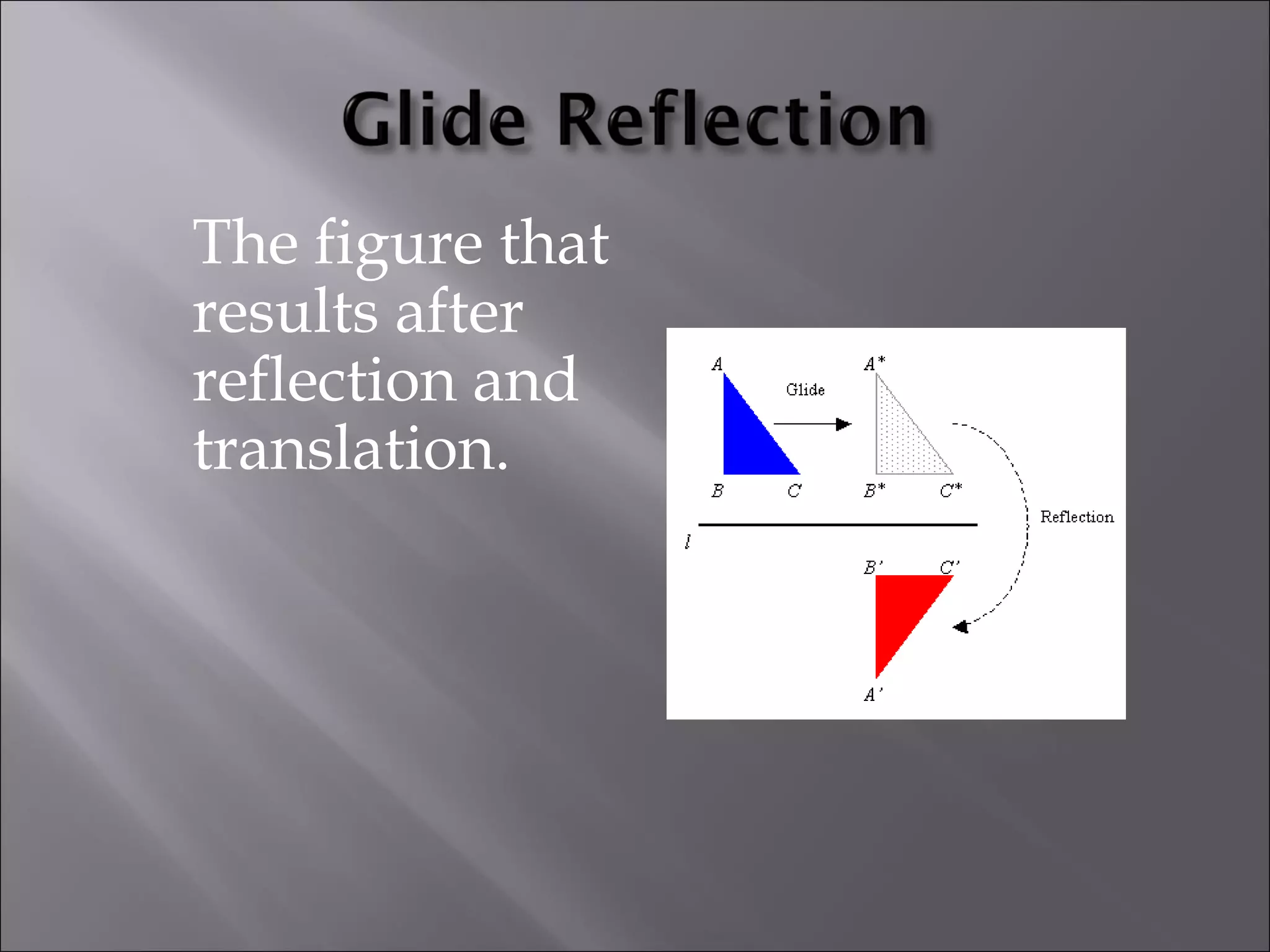
The figure that 
results after 
reflection and 
translation.
There are three main types of 
tessellations: 
 Regular 
 Semi-Regular 
 Demi-Regular
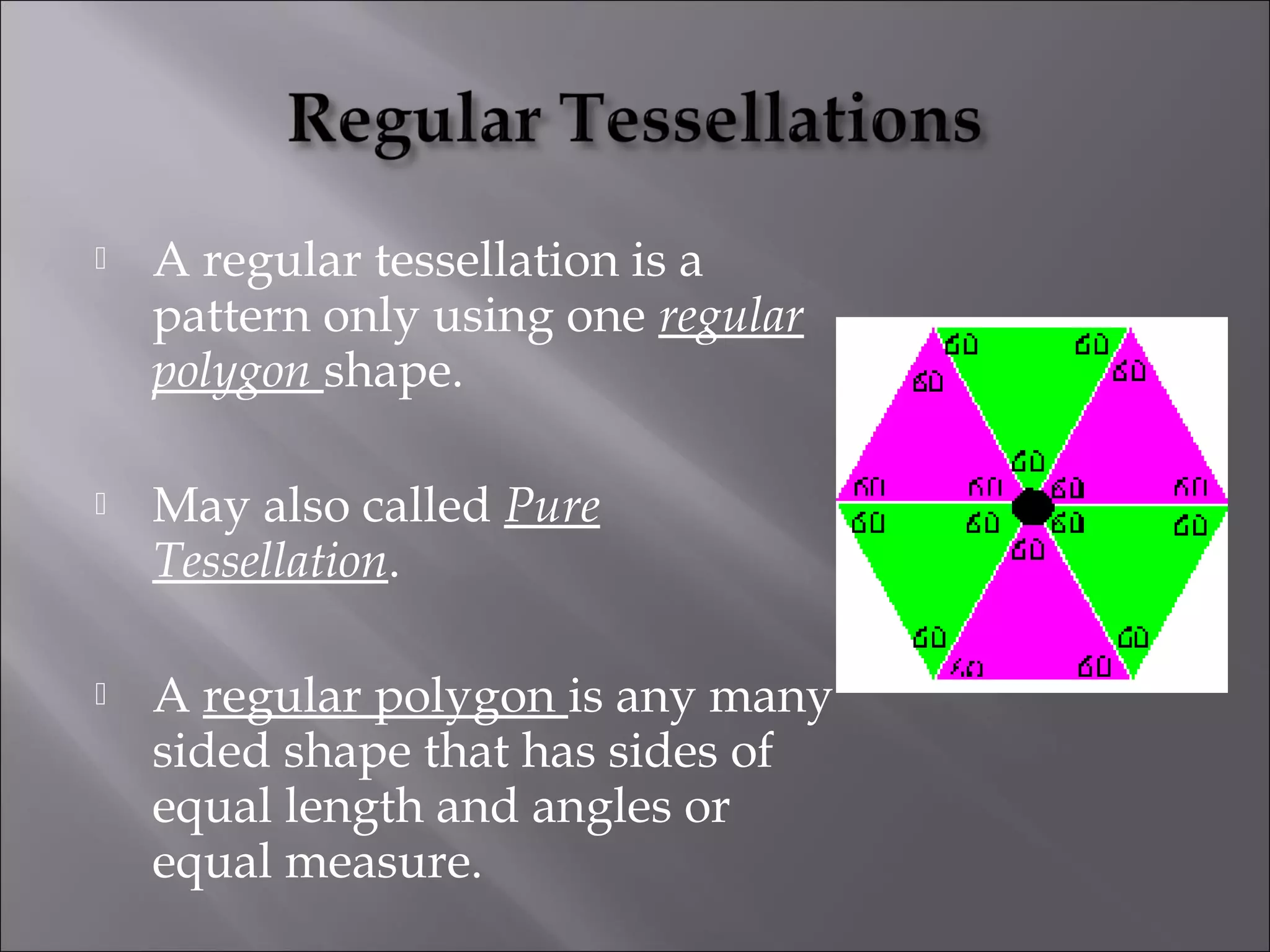
 A regular tessellation is a 
pattern only using one regular 
polygon shape. 
 May also called Pure 
Tessellation. 
 A regular polygon is any many 
sided shape that has sides of 
equal length and angles or 
equal measure.
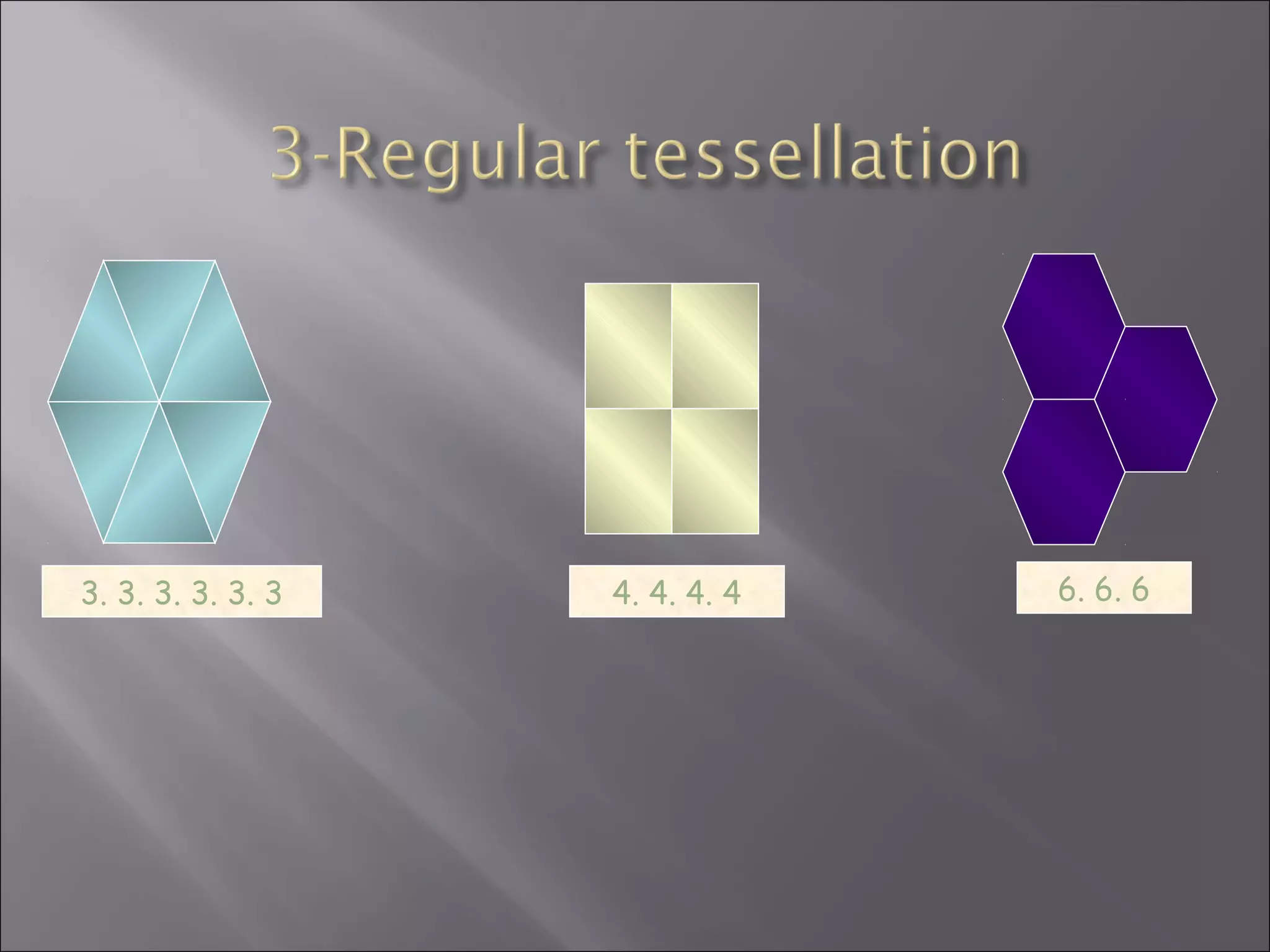
3. 3. 3. 3. 3. 3 4. 4. 4. 4 6. 6. 6
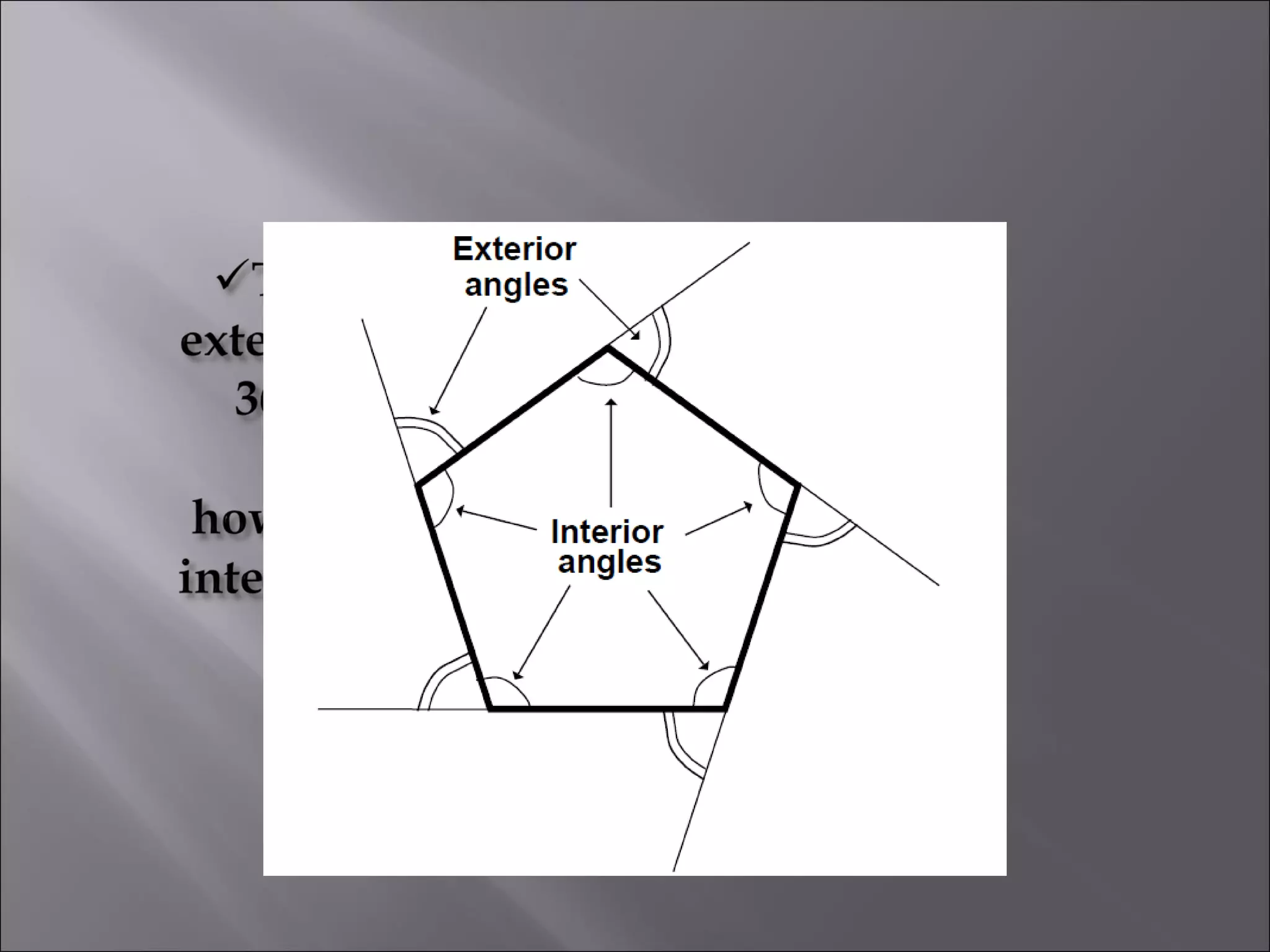
 Divide the whole turn (360⁰) by the number of 
exterior angle (= the number of sides) to find the 
size of one exterior angle. Then use the fact that 
the exterior angle + the corresponding interior angle 
=180⁰
 The sum of interior angles of a n-sided regular 
polygons { (n-2)⤬180⁰}. 
Then the size of one of the interior angle can be 
found by dividing by number of interior angle 
{=n}. 
∠ =(n-2)⤬180⁰ / n
Determine whether a regular 6-gon tessellates the plane. Explain? 
Let Ð1 represent one interior angle of a regular 4-gon. 
m∠1=180⁰(n-2) / n Interior angle theorem 
= 180⁰(6-2)/4 Substitution 
=180⁰ Simplify 
Answer: As 180⁰ is a factor of 360⁰ .so a 6-gon will 
tessellate the plane .
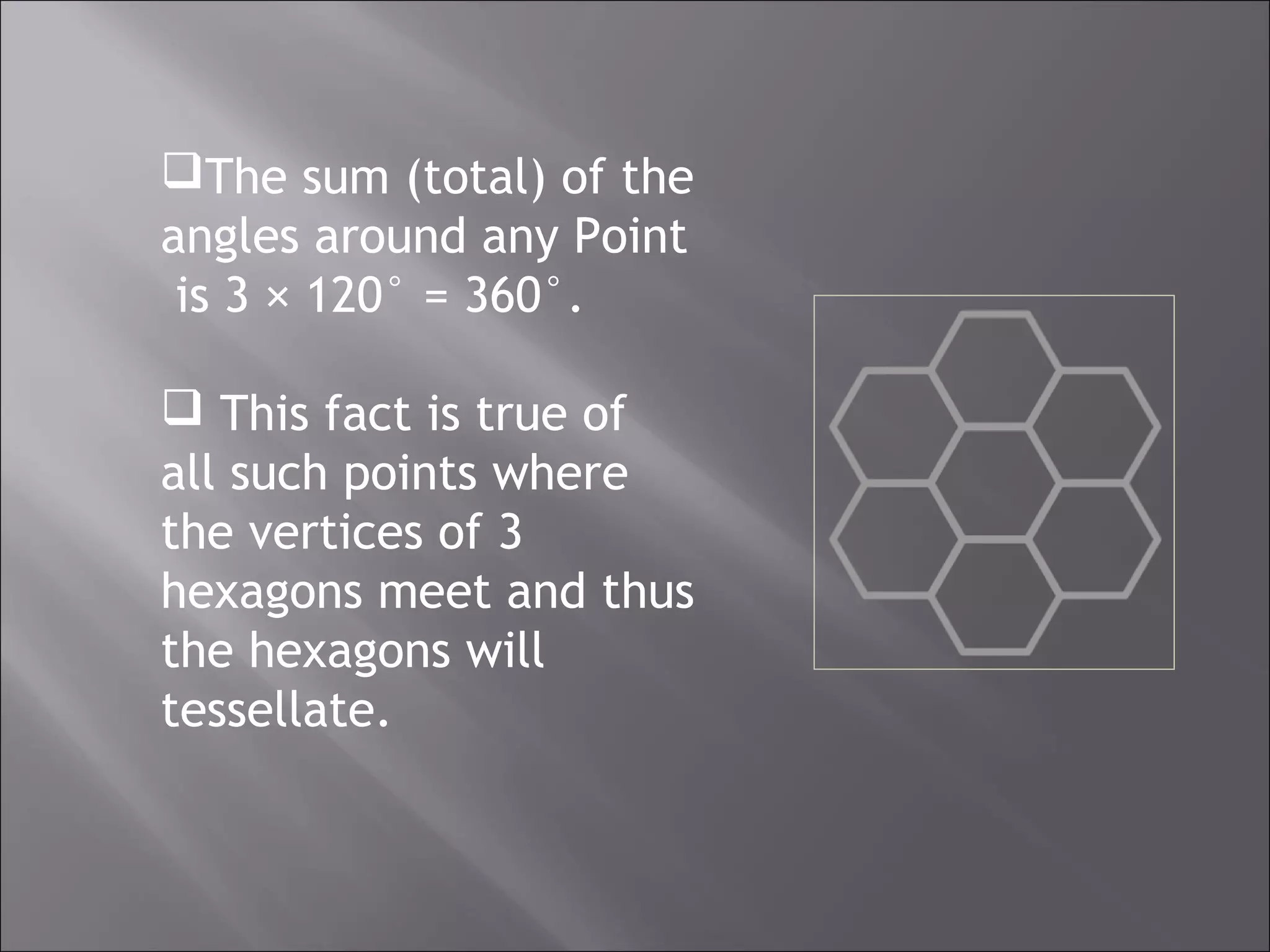
The sum (total) of the 
angles around any Point 
is 3 × 120° = 360°. 
 This fact is true of 
all such points where 
the vertices of 3 
hexagons meet and thus 
the hexagons will 
tessellate.
 This tessellation may be represented 
by the abbreviated notation 6^3 
(signifying that three six sided 
regular polygons meet at a common 
vertex).
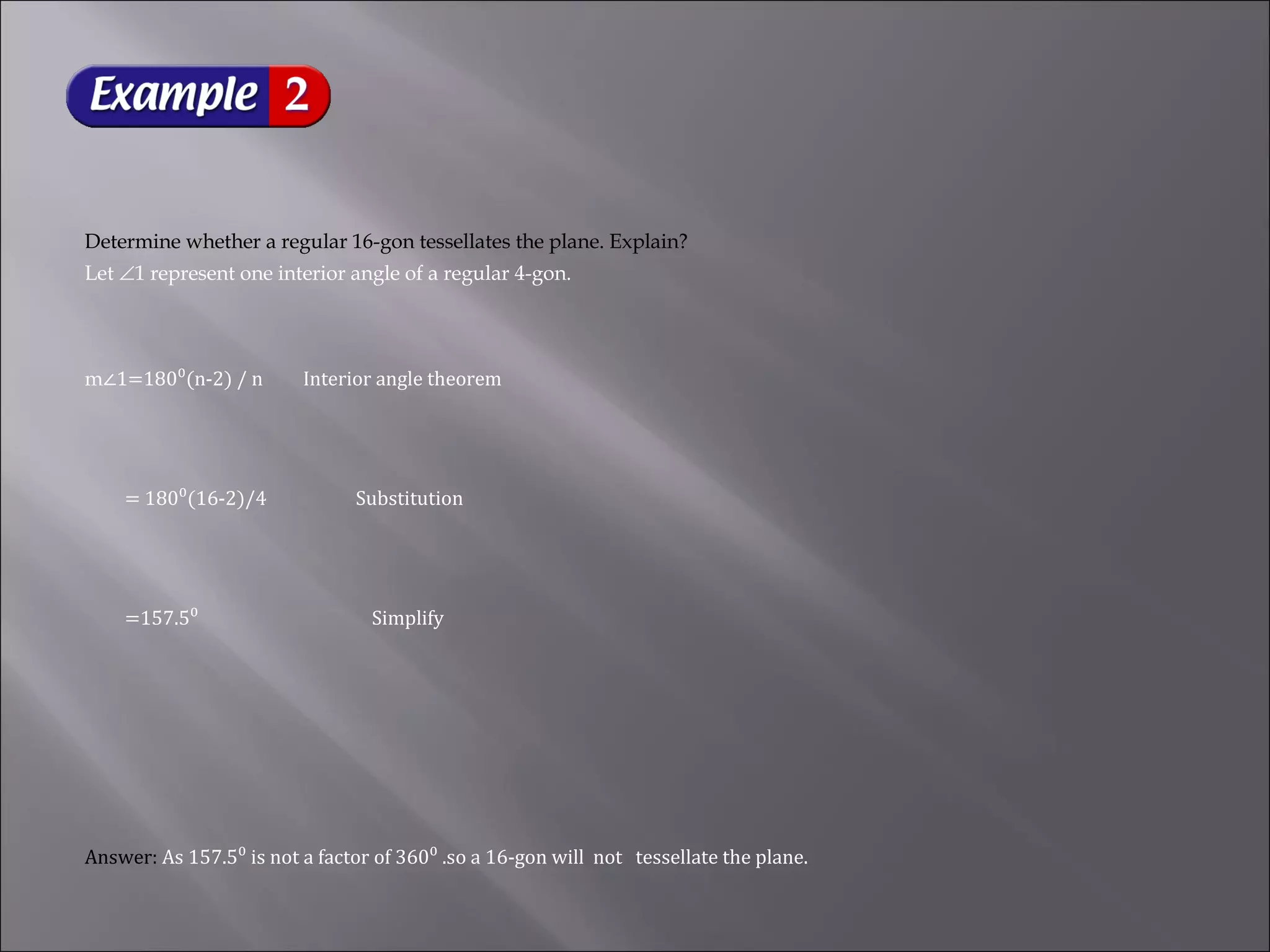
Determine whether a regular 16-gon tessellates the plane. Explain? 
Let Ð1 represent one interior angle of a regular 4-gon. 
m∠1=180⁰(n-2) / n Interior angle theorem 
= 180⁰(16-2)/4 Substitution 
=157.5⁰ Simplify 
Answer: As 157.5⁰ is not a factor of 360⁰ .so a 16-gon will not tessellate the plane.
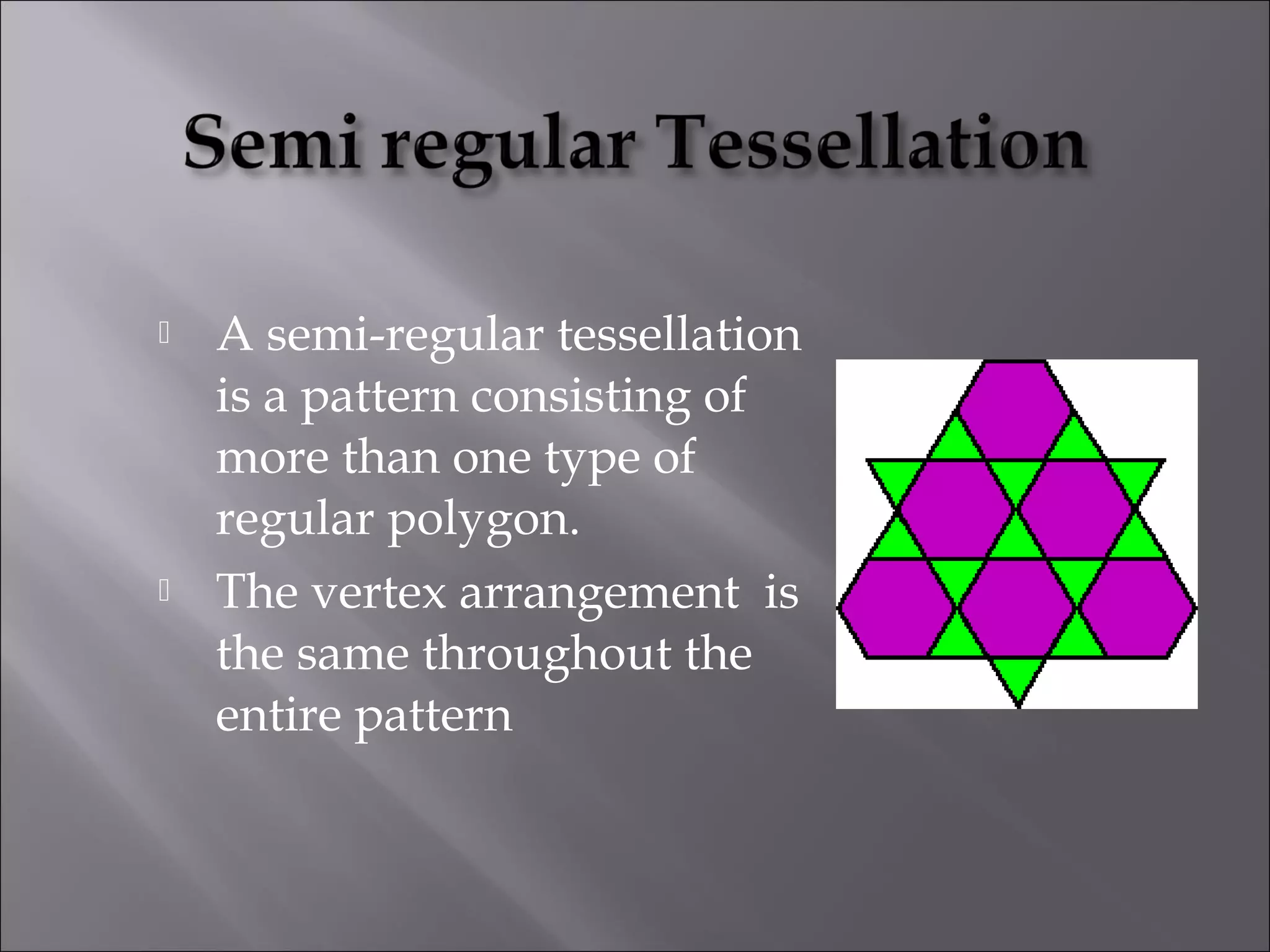
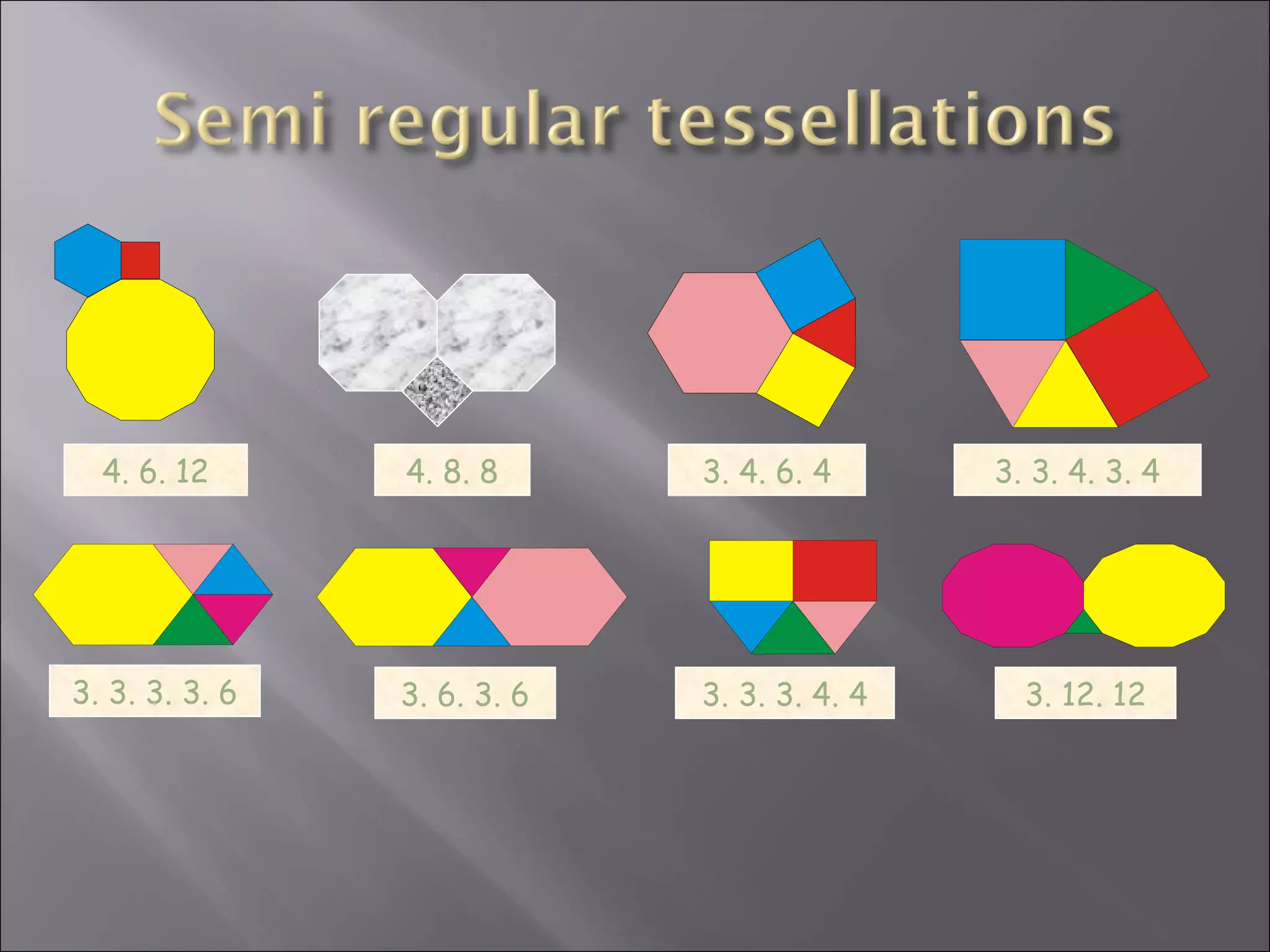
 A semi-regular tessellation 
is a pattern consisting of 
more than one type of 
regular polygon. 
 The vertex arrangement is 
the same throughout the 
entire pattern
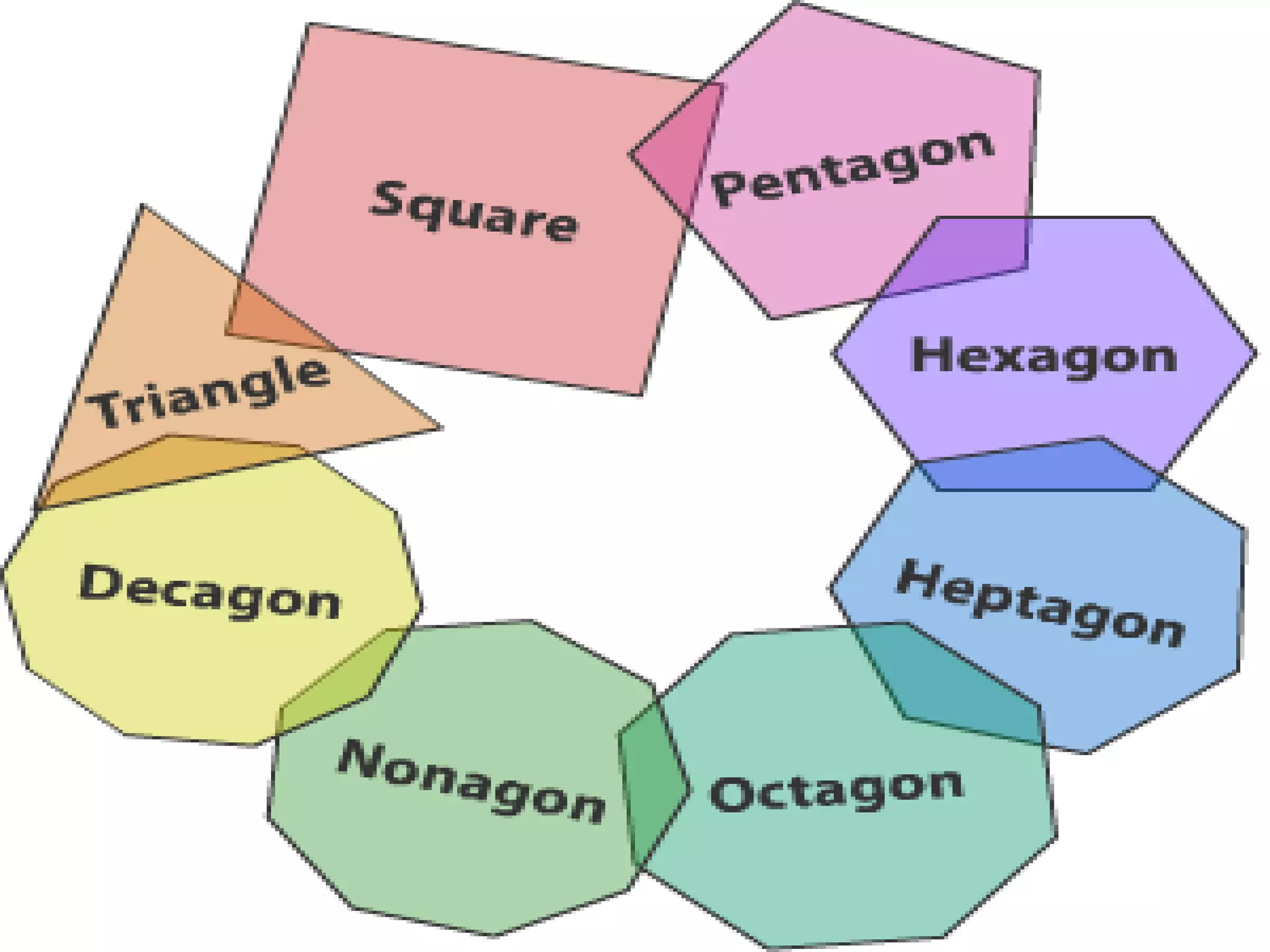
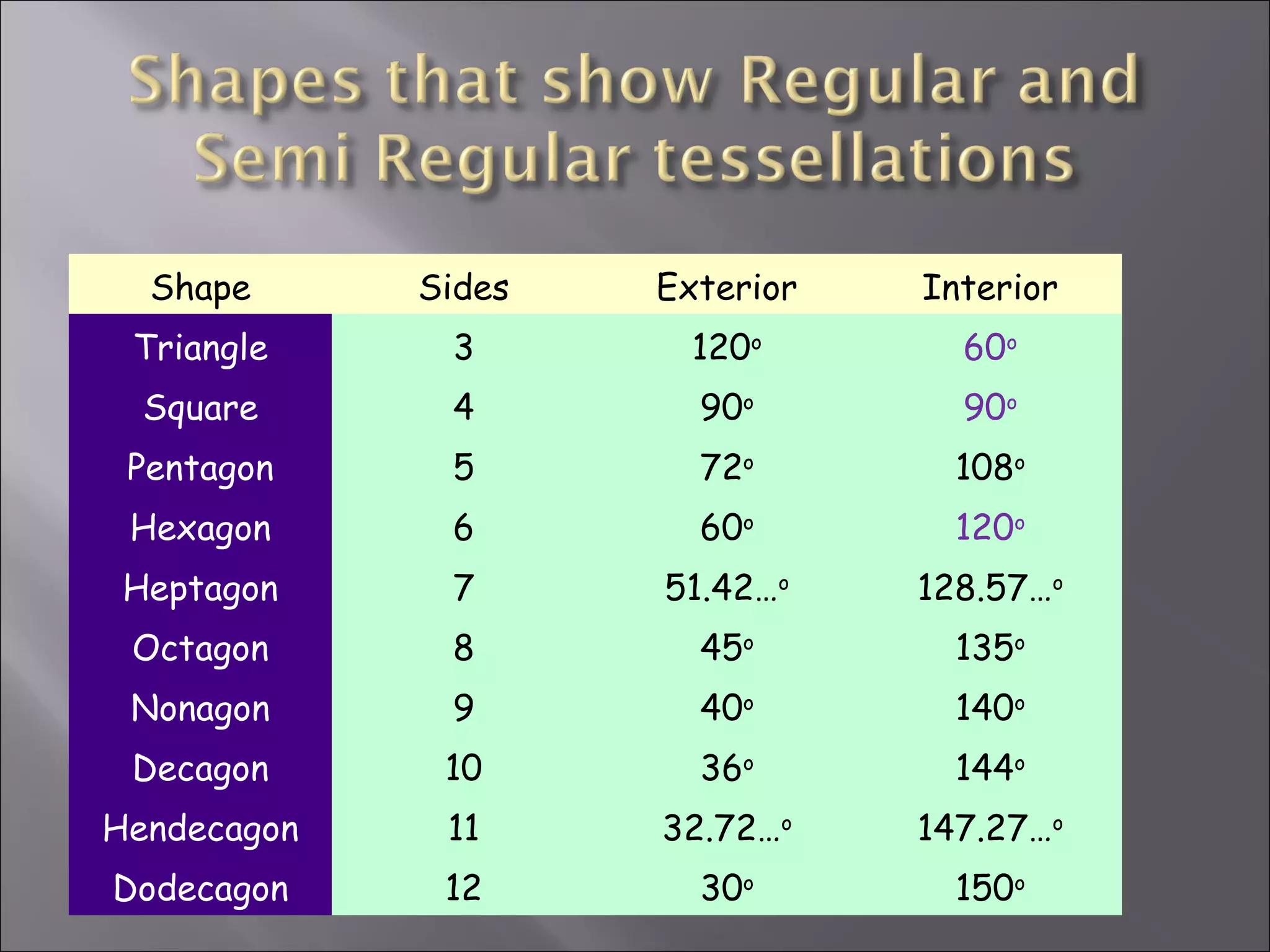
Shape Sides Exterior Interior 
Triangle 3 120o 60o 
Square 4 90o 90o 
Pentagon 5 72o 108o 
Hexagon 6 60o 120o 
Heptagon 7 51.42…o 128.57…o 
Octagon 8 45o 135o 
Nonagon 9 40o 140o 
Decagon 10 36o 144o 
Hendecagon 11 32.72…o 147.27…o 
Dodecagon 12 30o 150o
4. 6. 12 4. 8. 8 3. 4. 6. 4 3. 3. 4. 3. 4 
3. 3. 3. 3. 6 3. 6. 3. 6 3. 3. 3. 4. 4 3. 12. 12
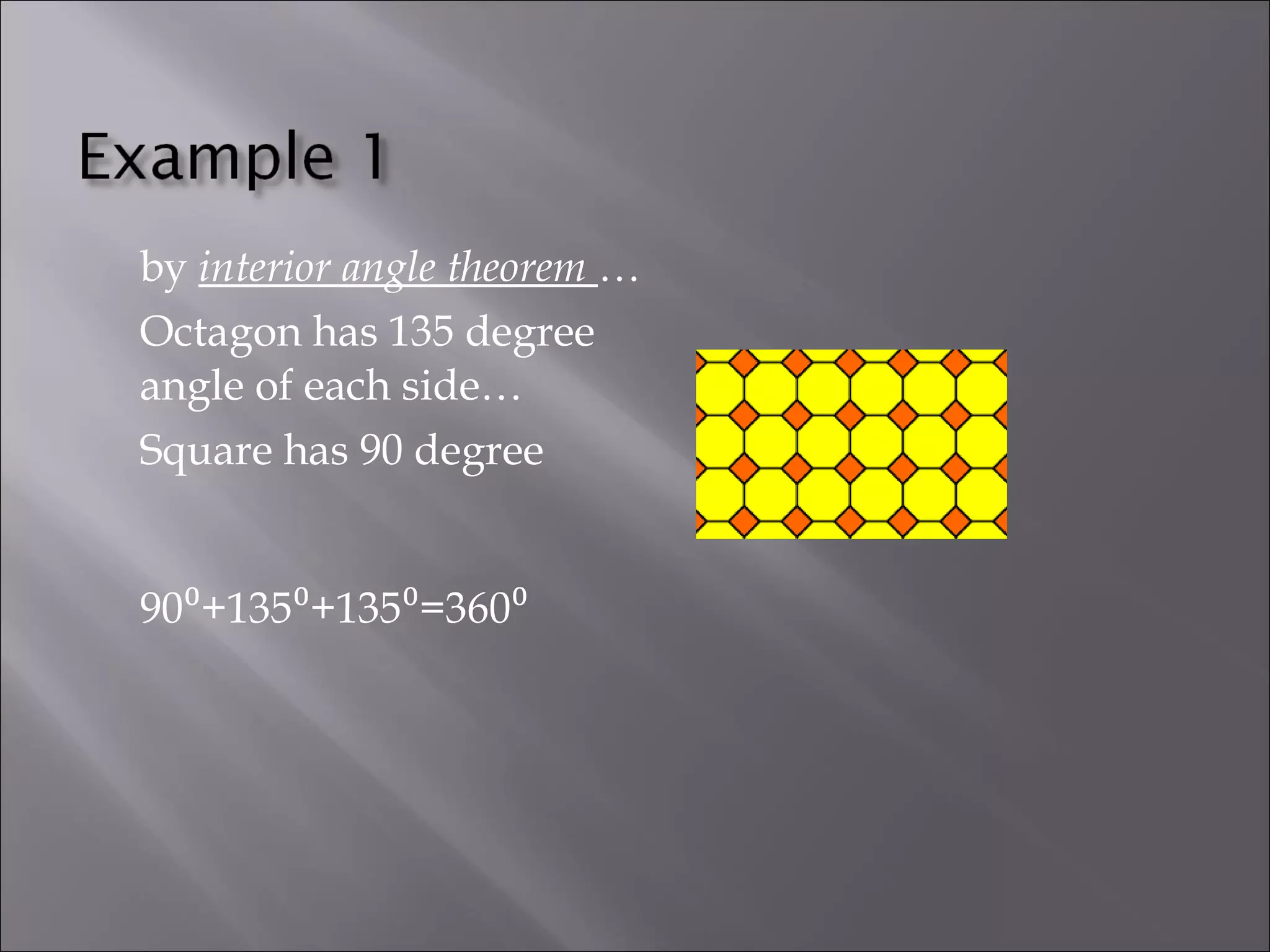
by interior angle theorem … 
Octagon has 135 degree 
angle of each side… 
Square has 90 degree 
90⁰+135⁰+135⁰=360⁰
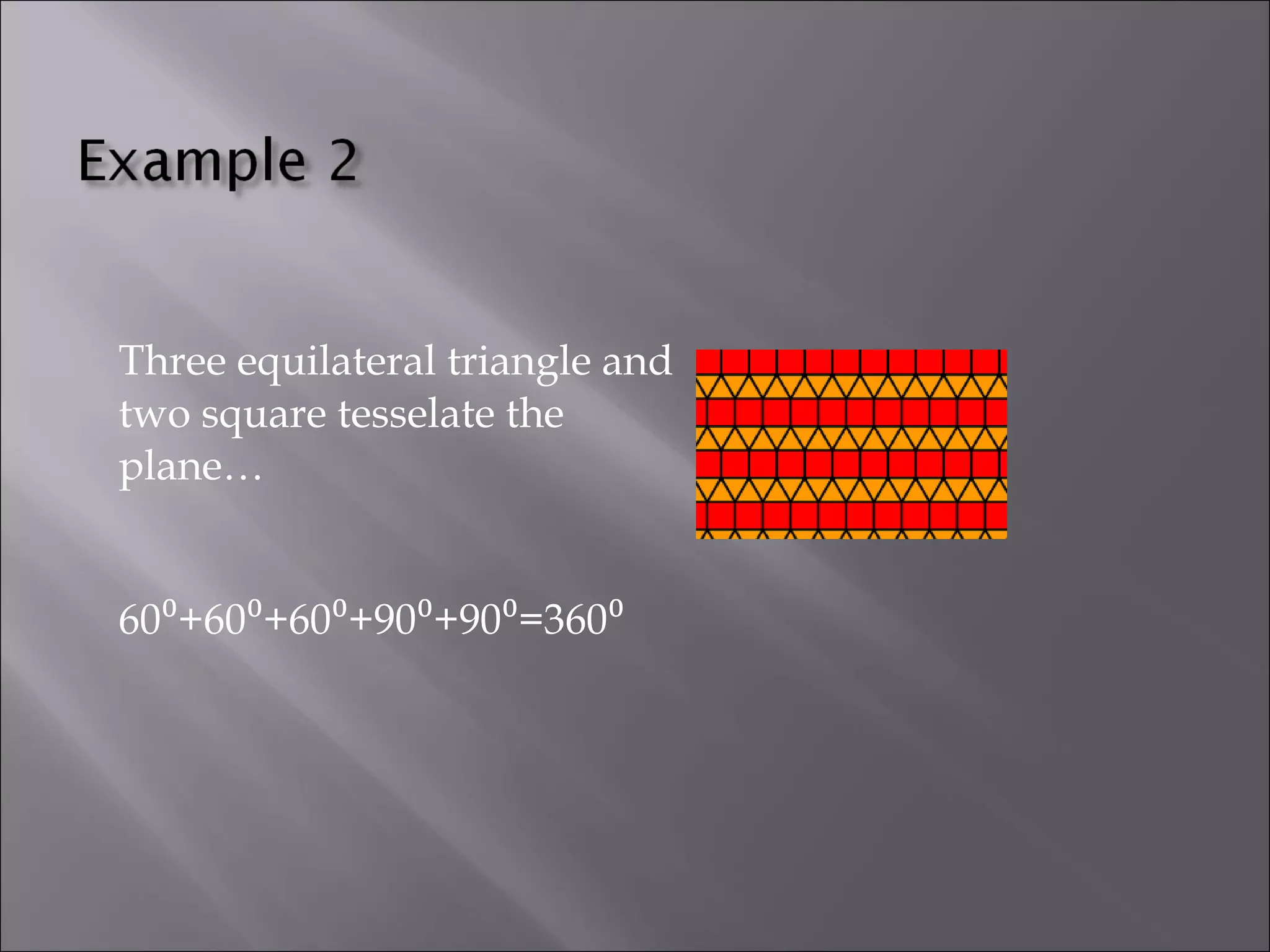
Three equilateral triangle and 
two square tesselate the 
plane… 
60⁰+60⁰+60⁰+90⁰+90⁰=360⁰
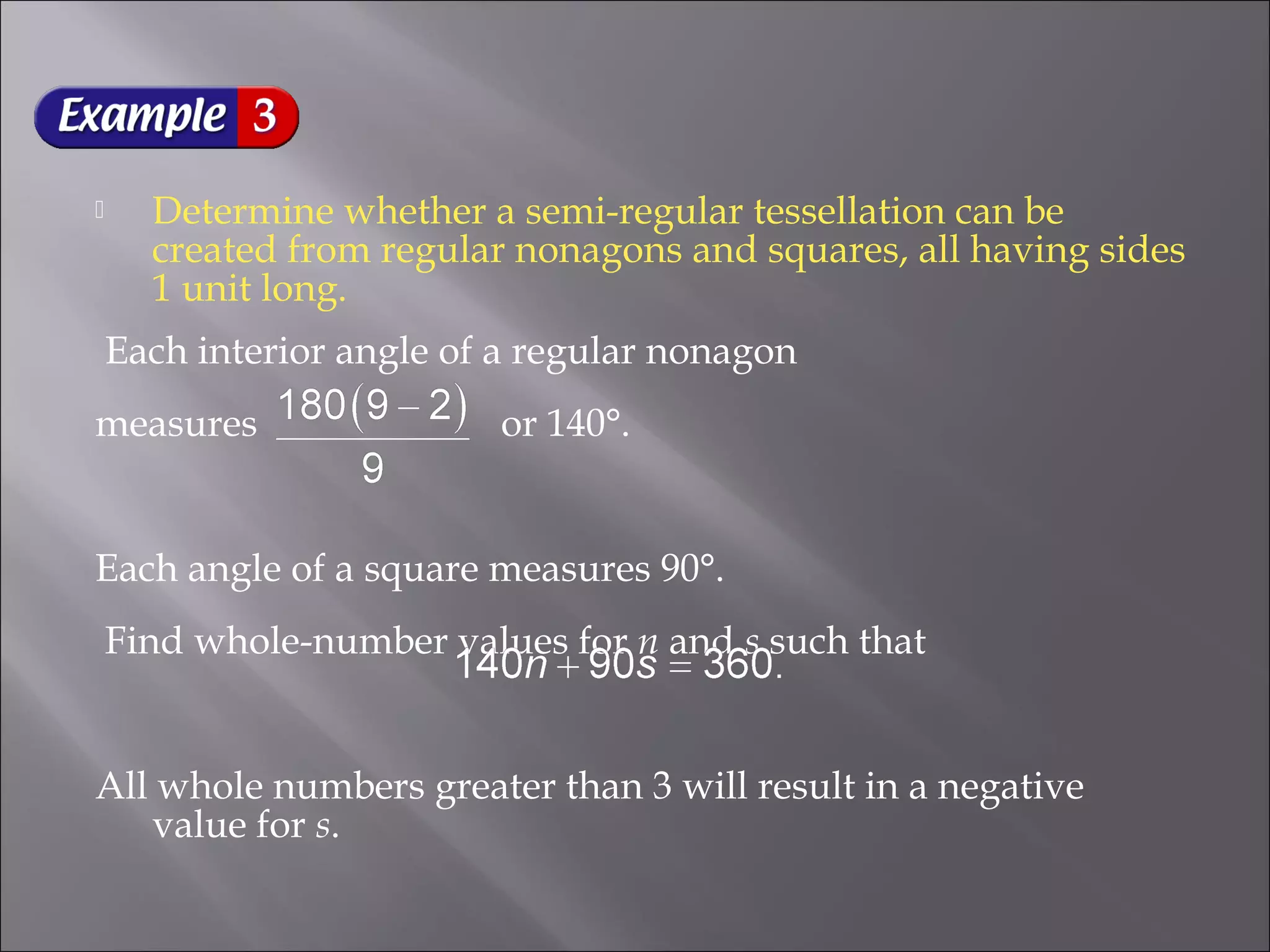
 Determine whether a semi-regular tessellation can be 
created from regular nonagons and squares, all having sides 
1 unit long. 
Each interior angle of a regular nonagon 
measures or 140°. 
Each angle of a square measures 90°. 
Find whole-number values for n and s such that 
All whole numbers greater than 3 will result in a negative 
value for s.
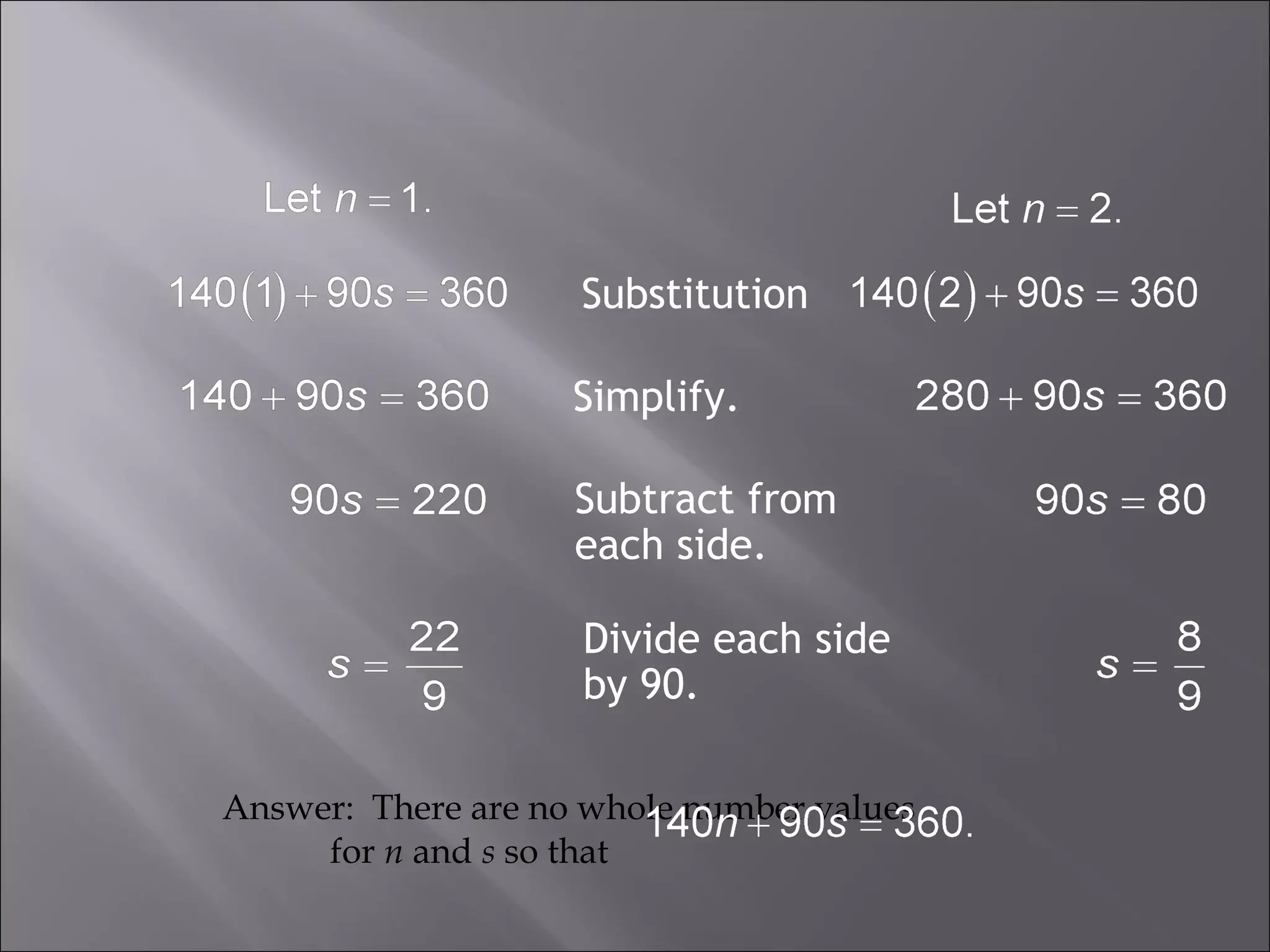
Substitution 
Simplify. 
Subtract from 
each side. 
Divide each side 
by 90. 
Answer: There are no whole number values 
for n and s so that
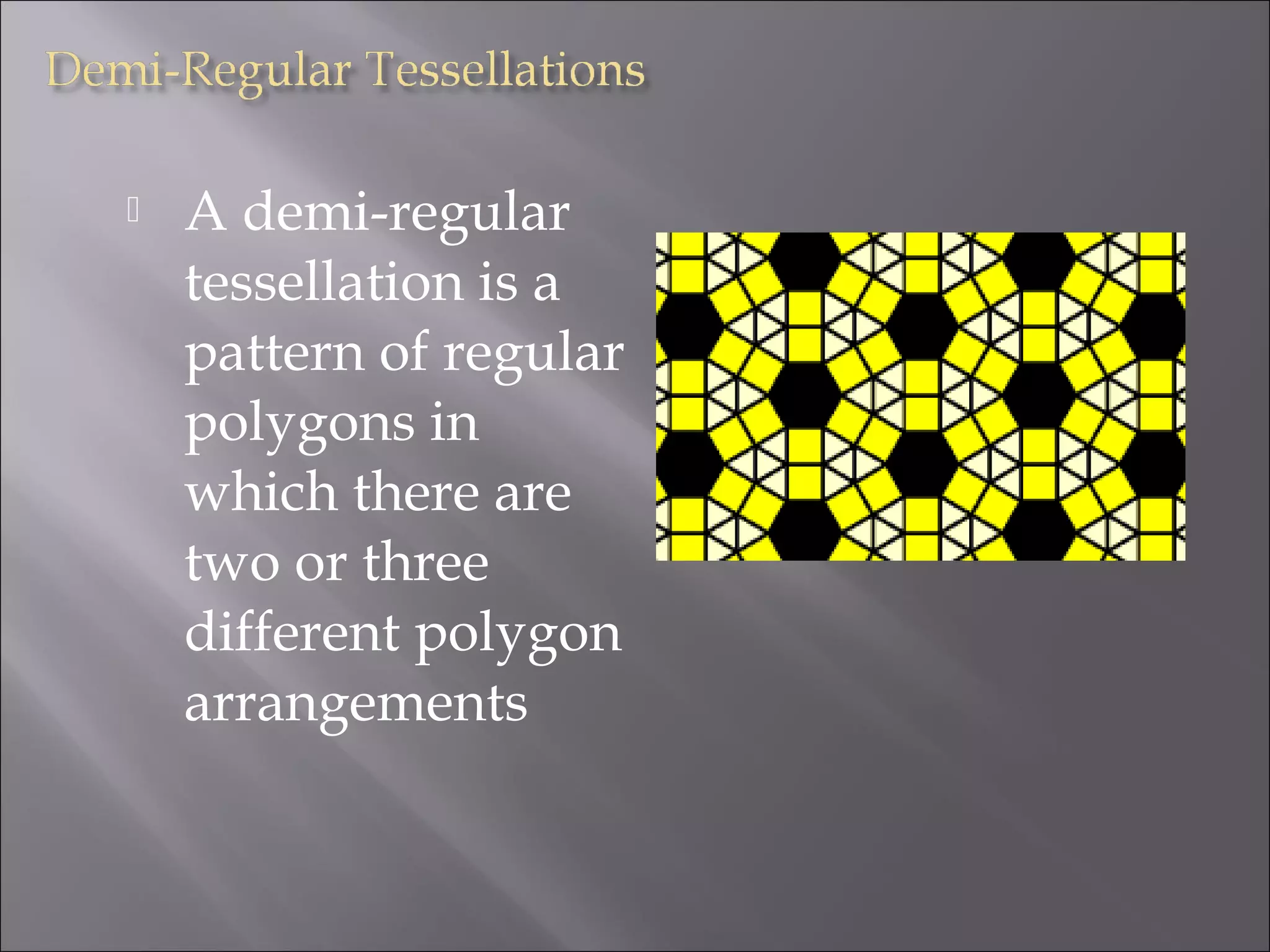
 A demi-regular 
tessellation is a 
pattern of regular 
polygons in 
which there are 
two or three 
different polygon 
arrangements
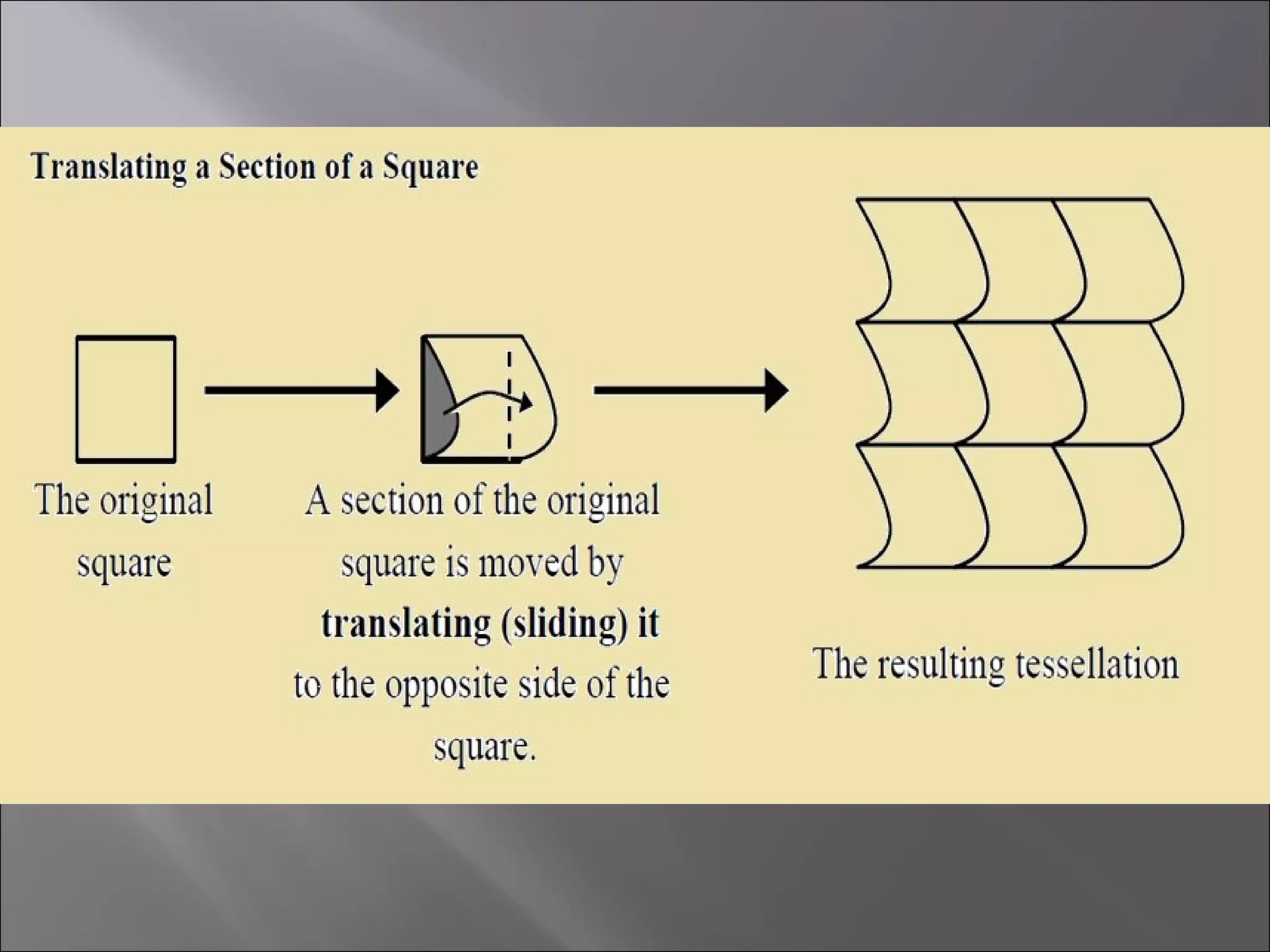
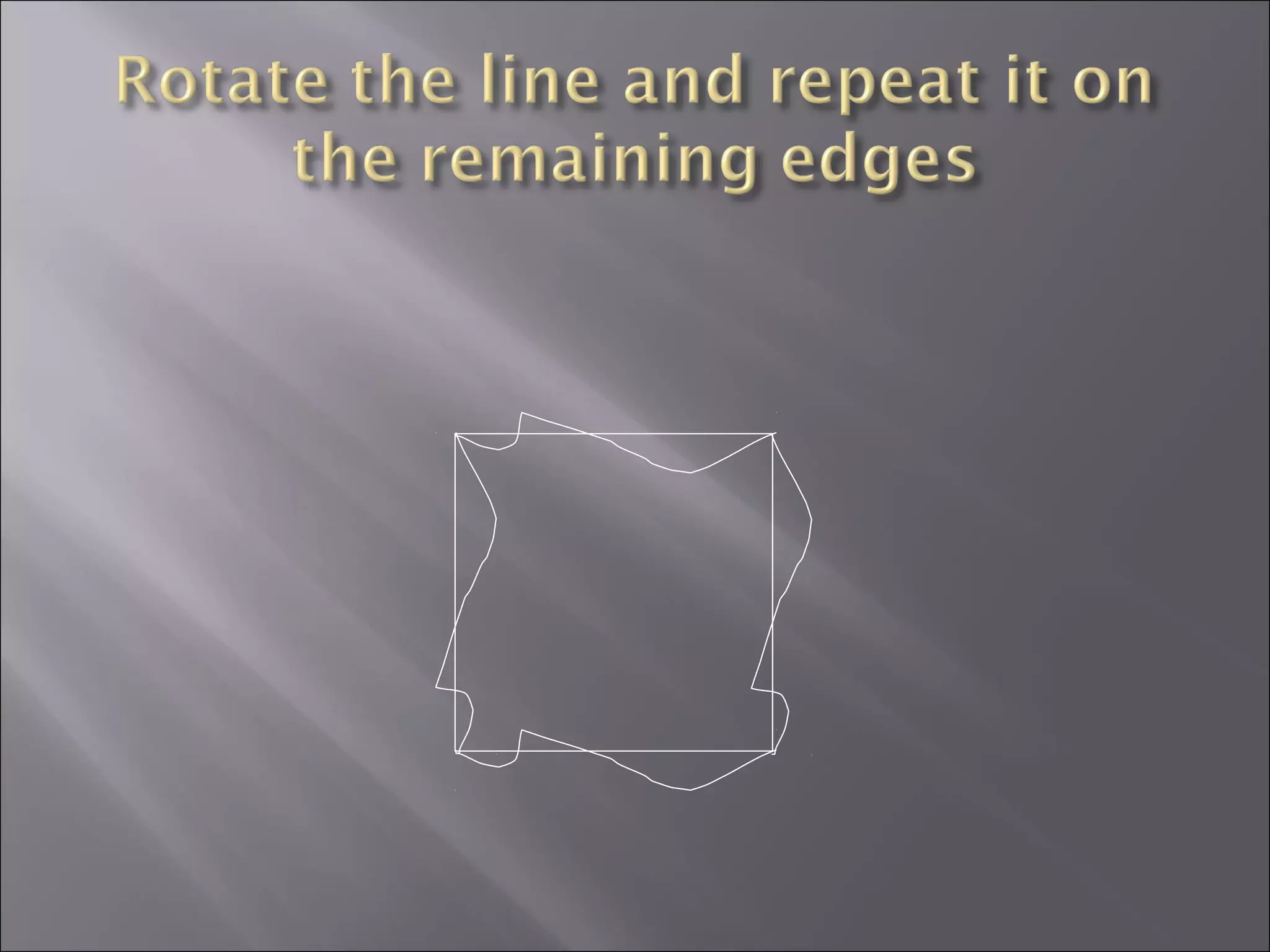
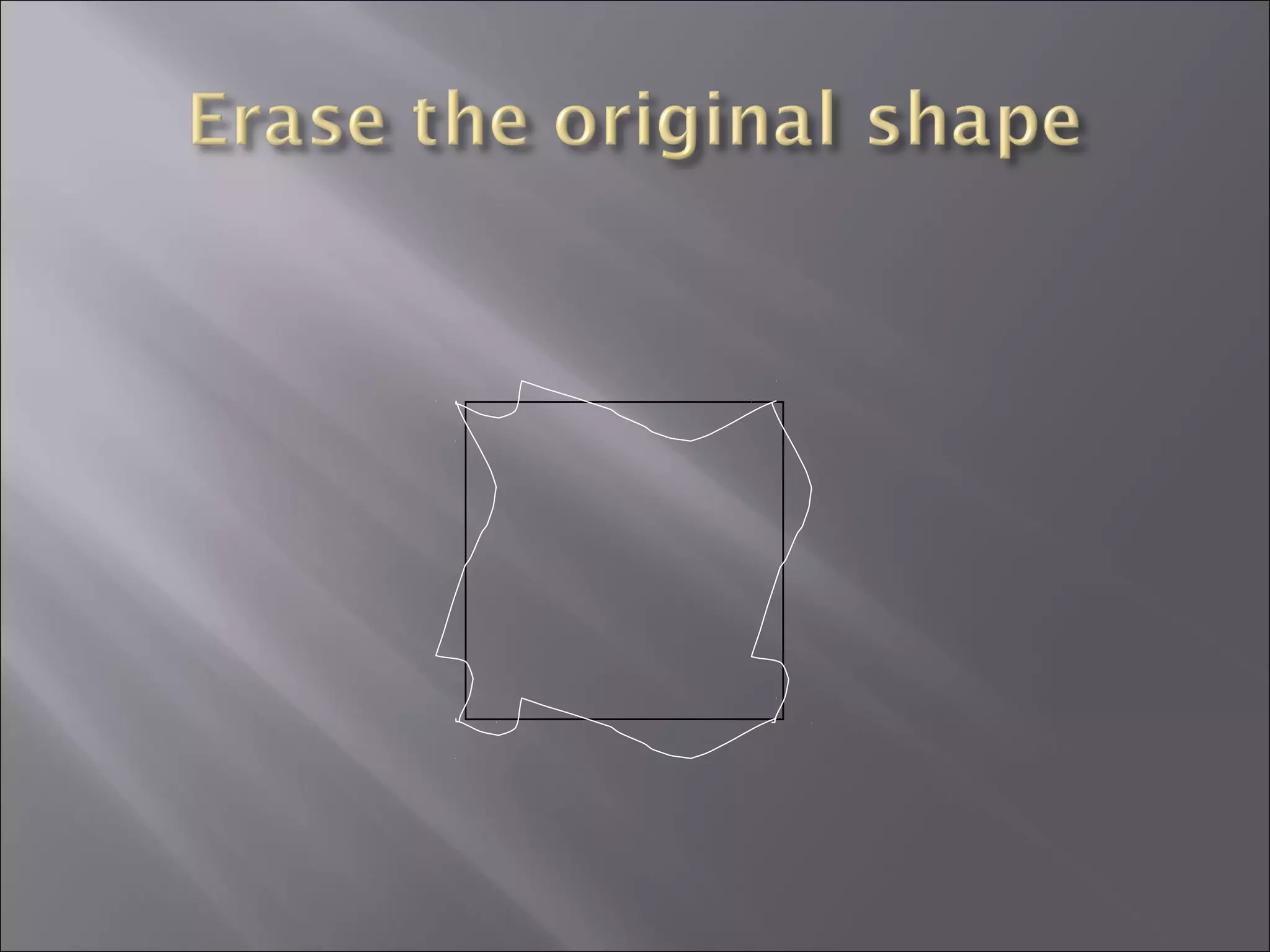
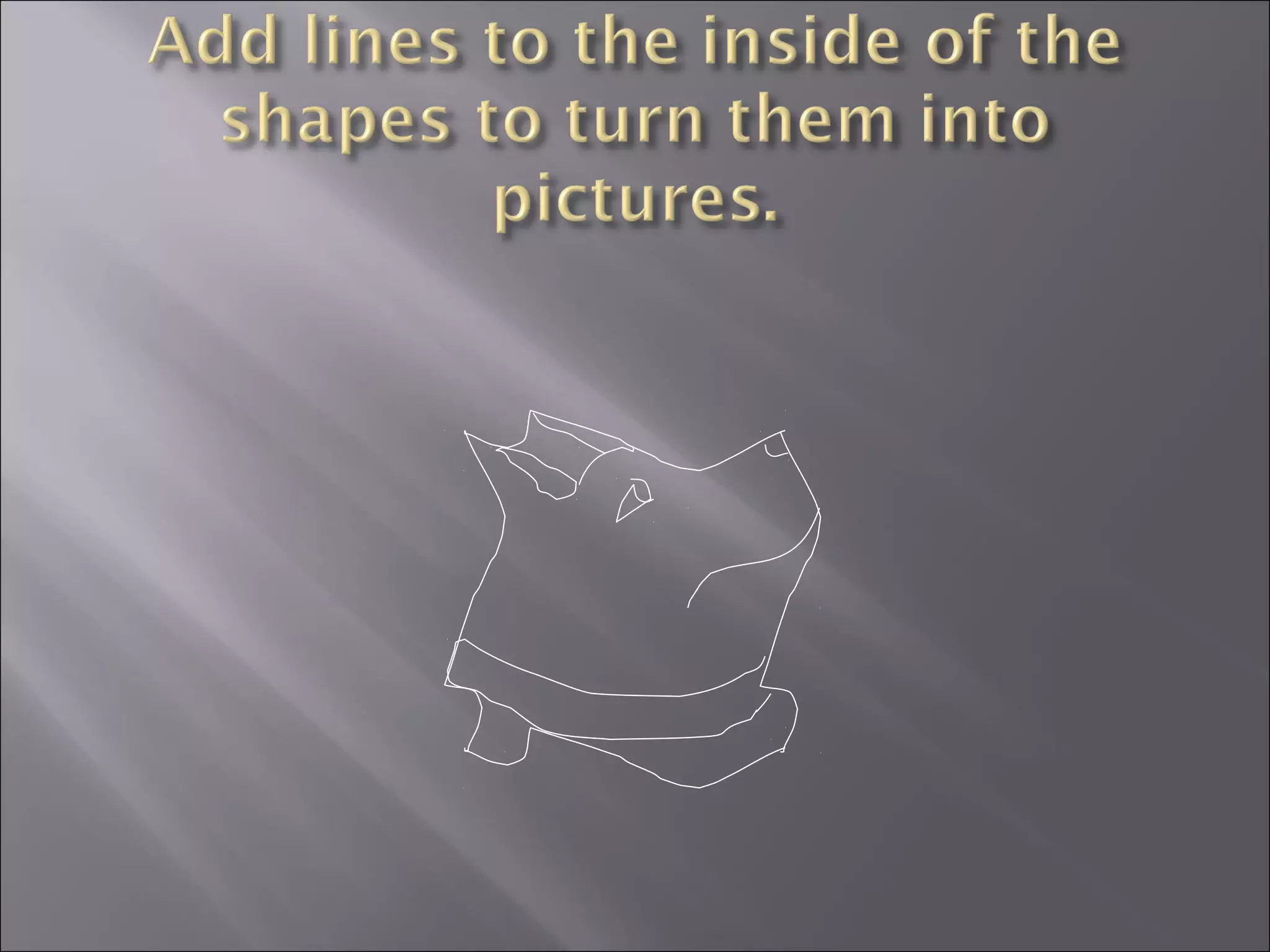
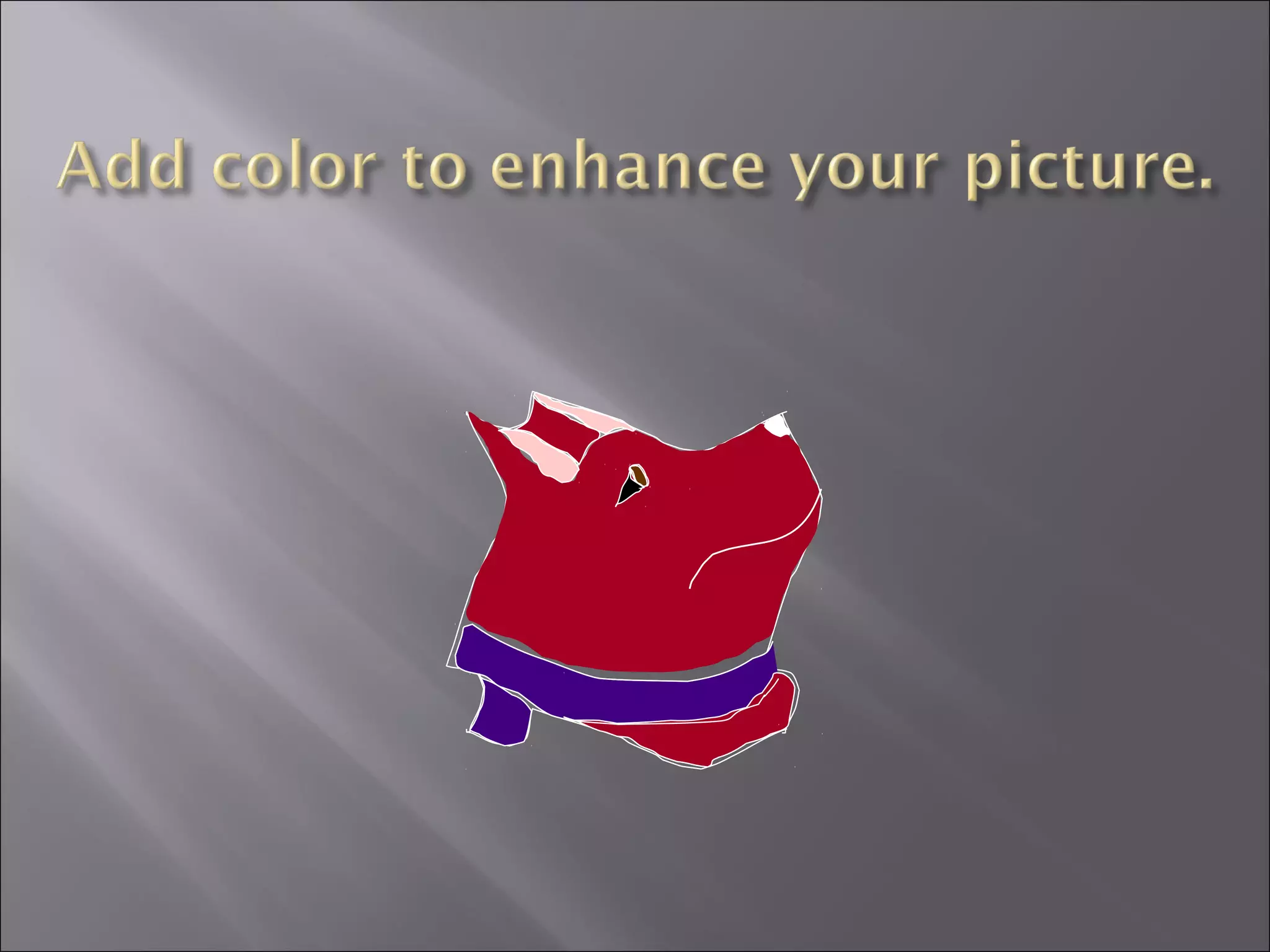
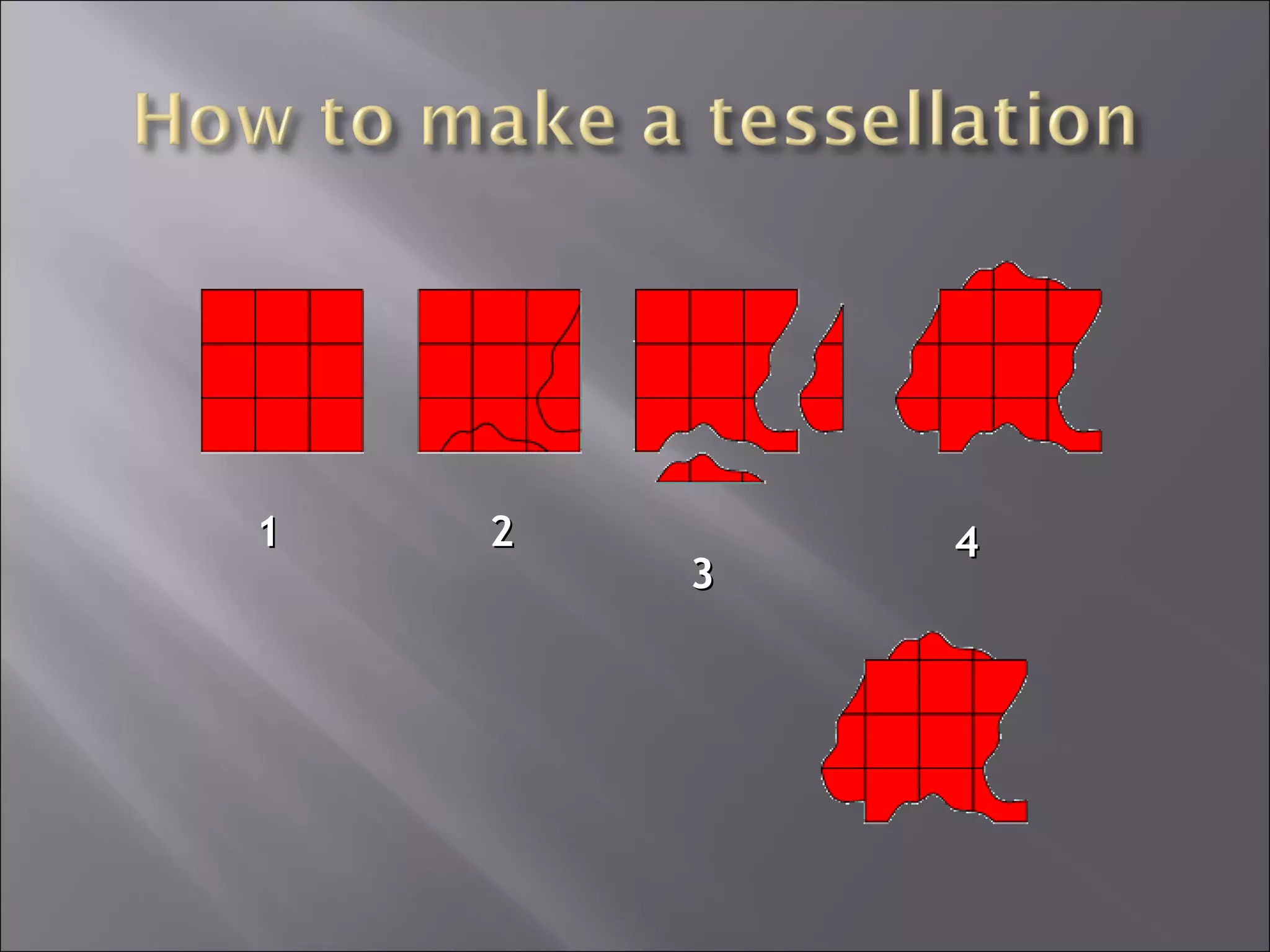
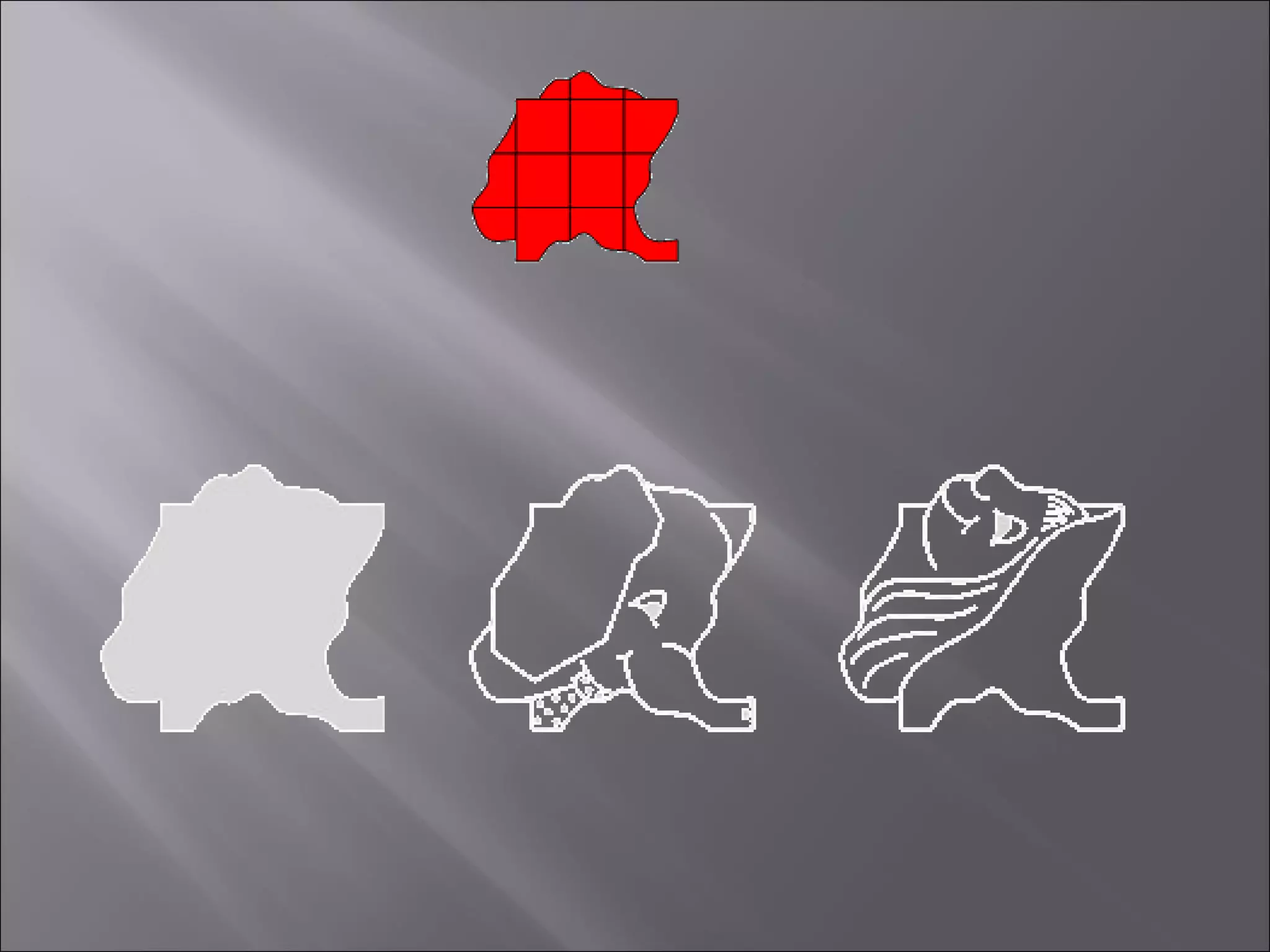
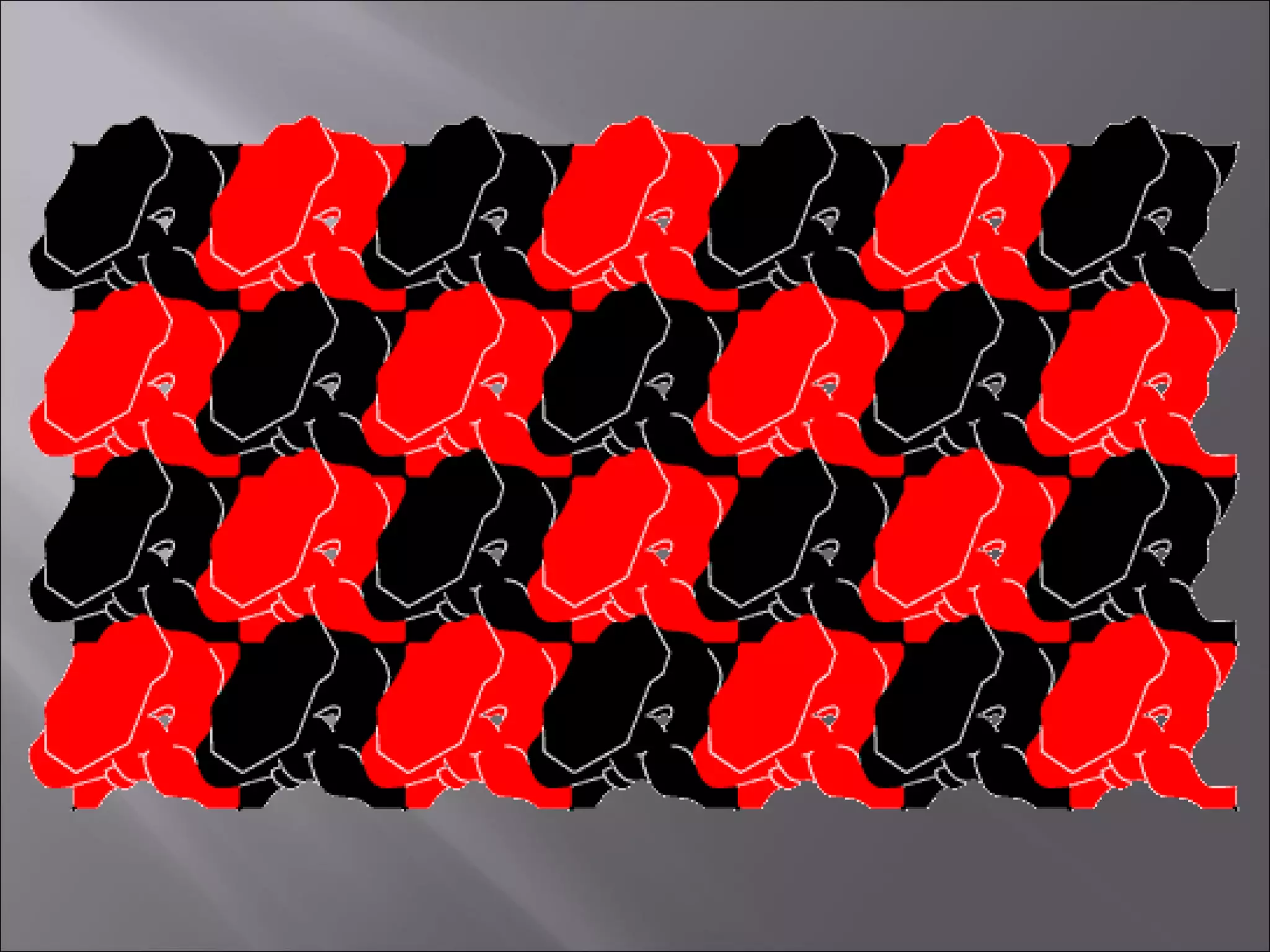
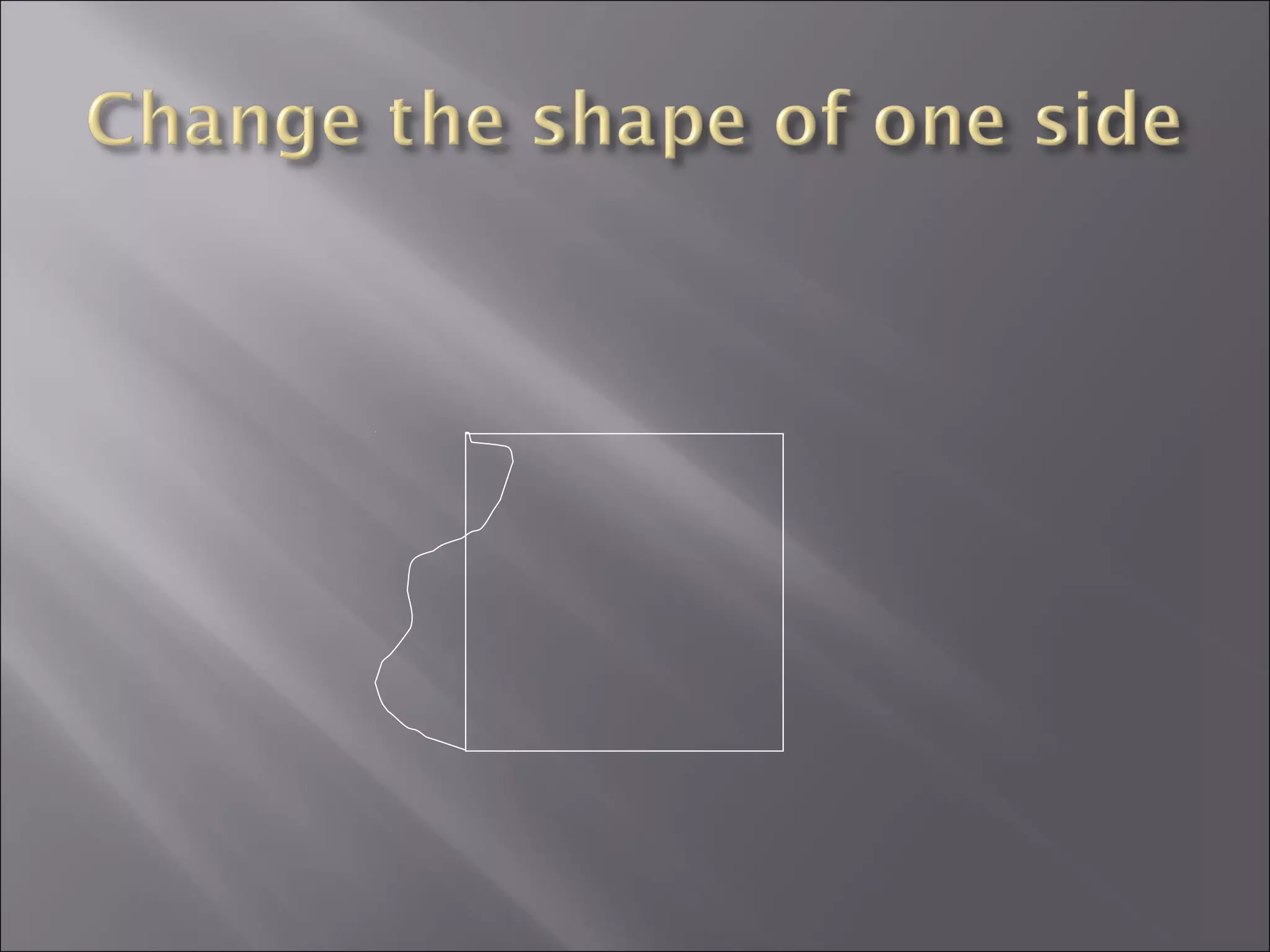
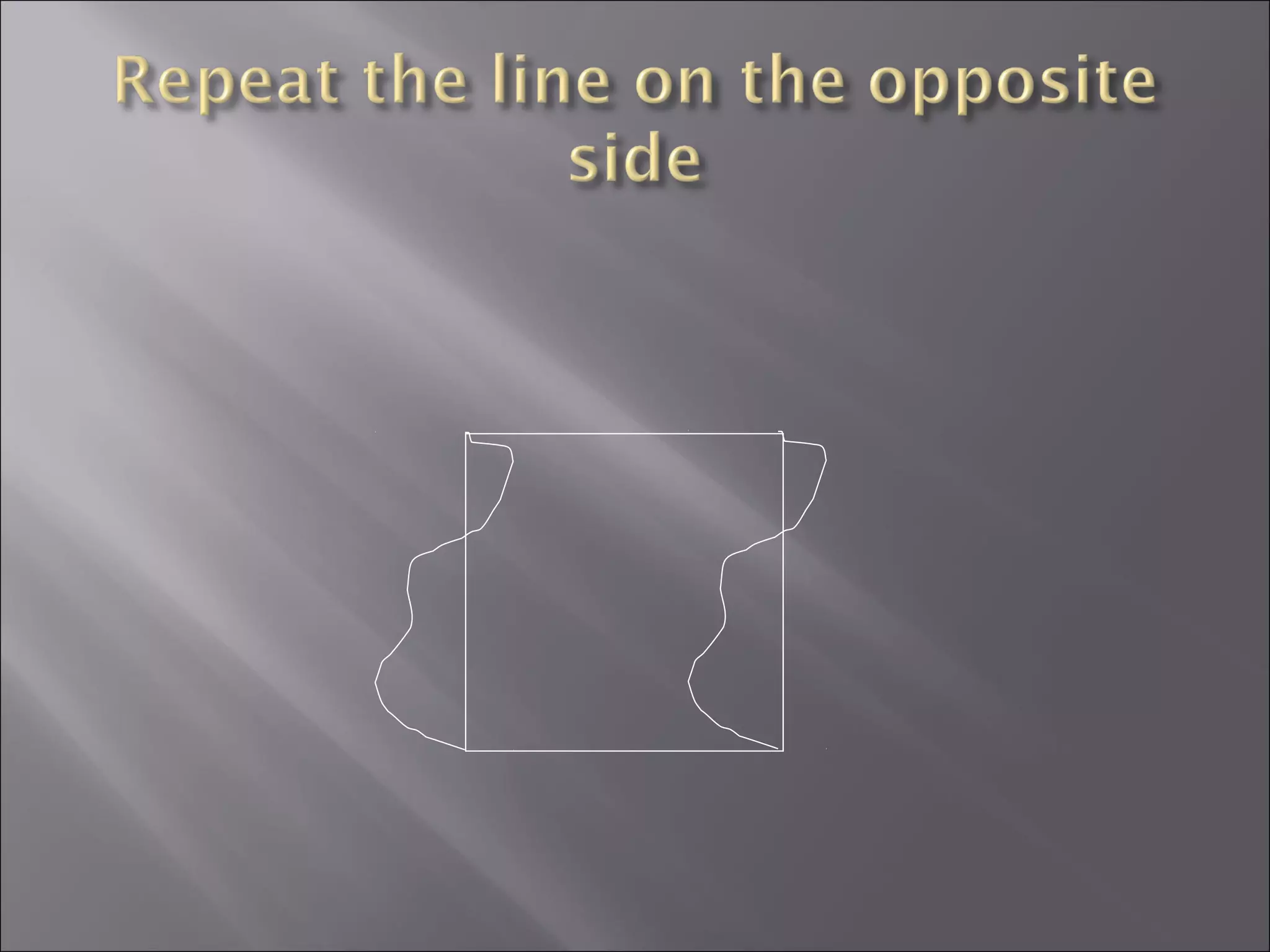
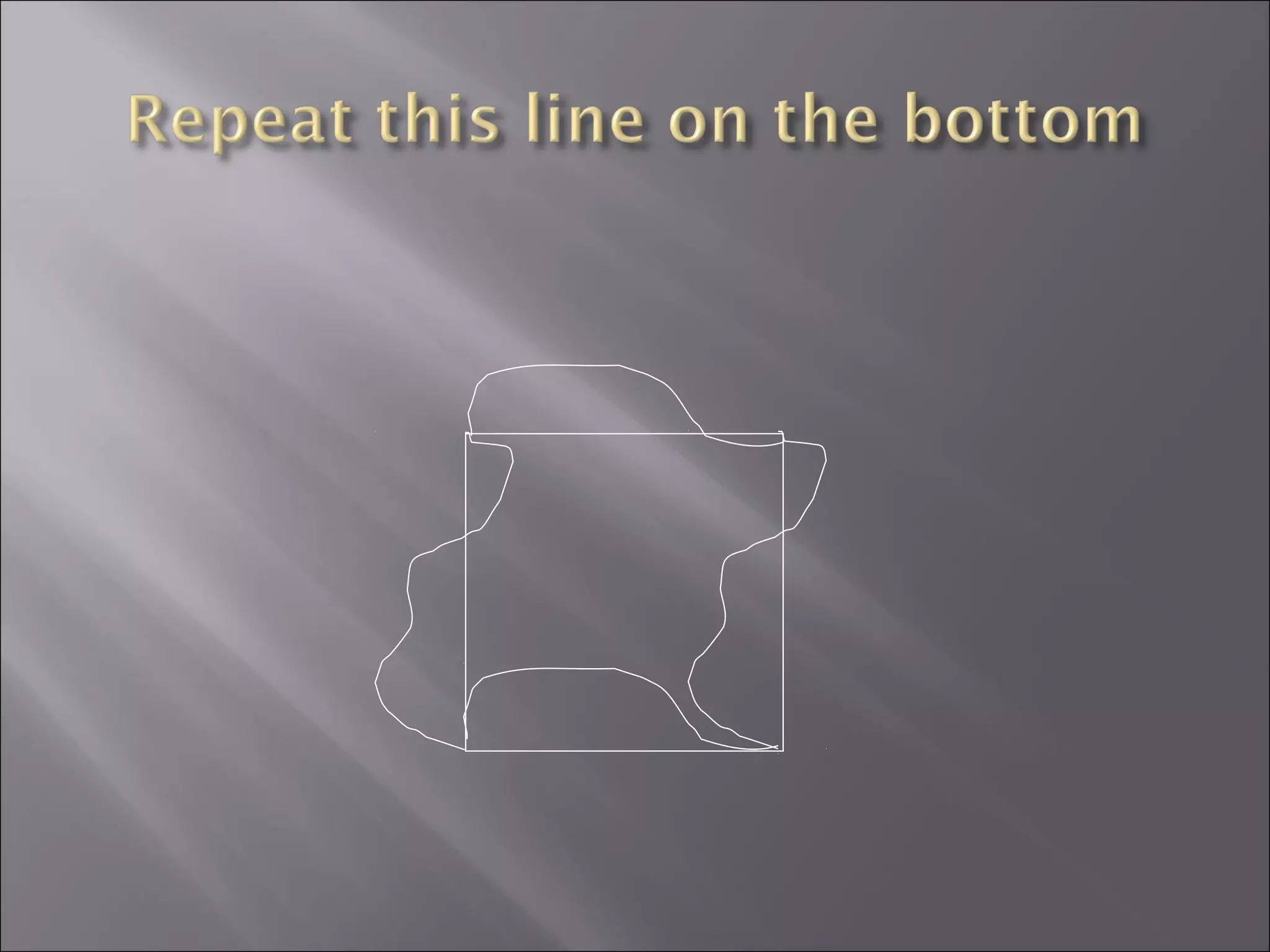
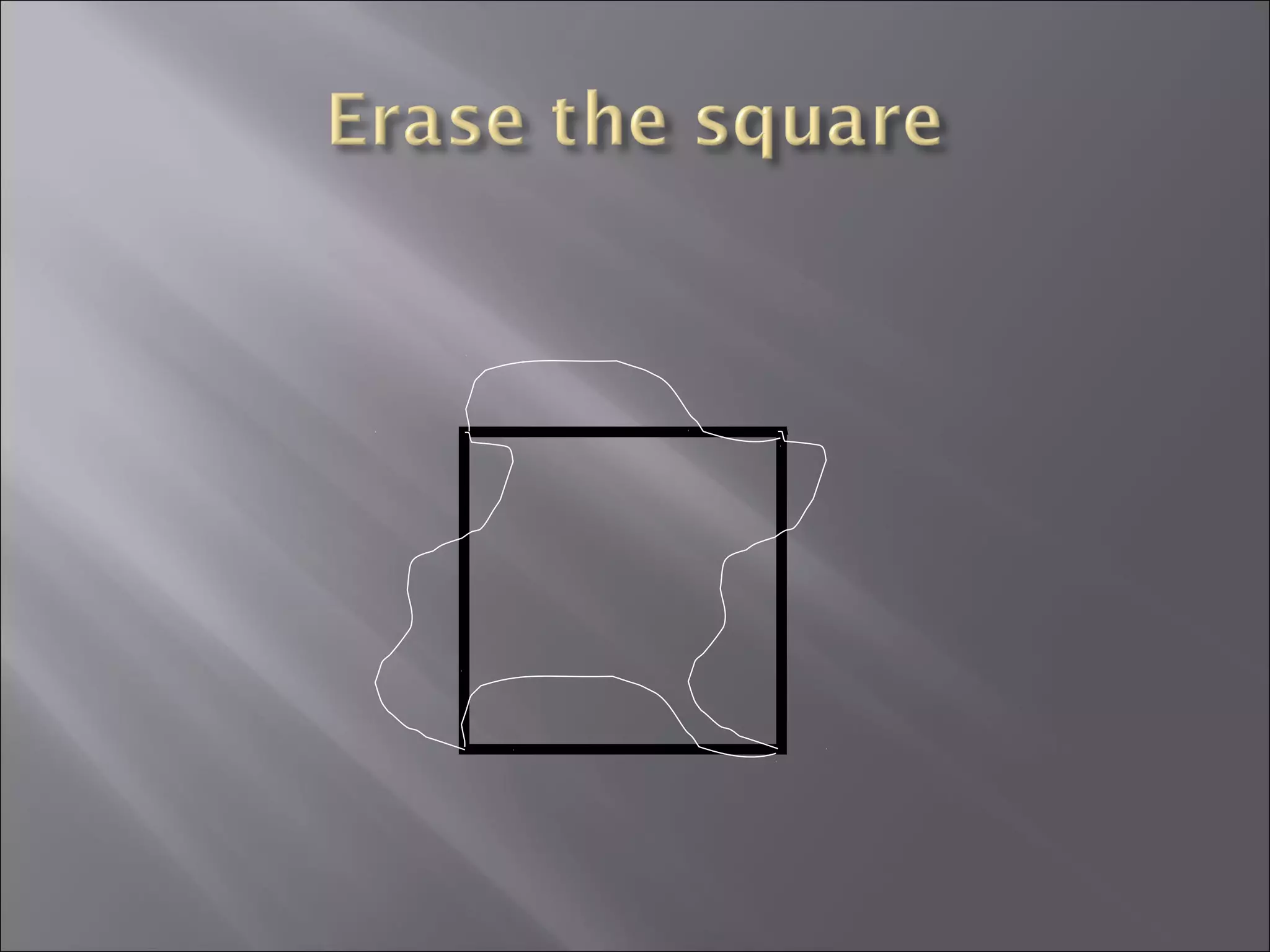
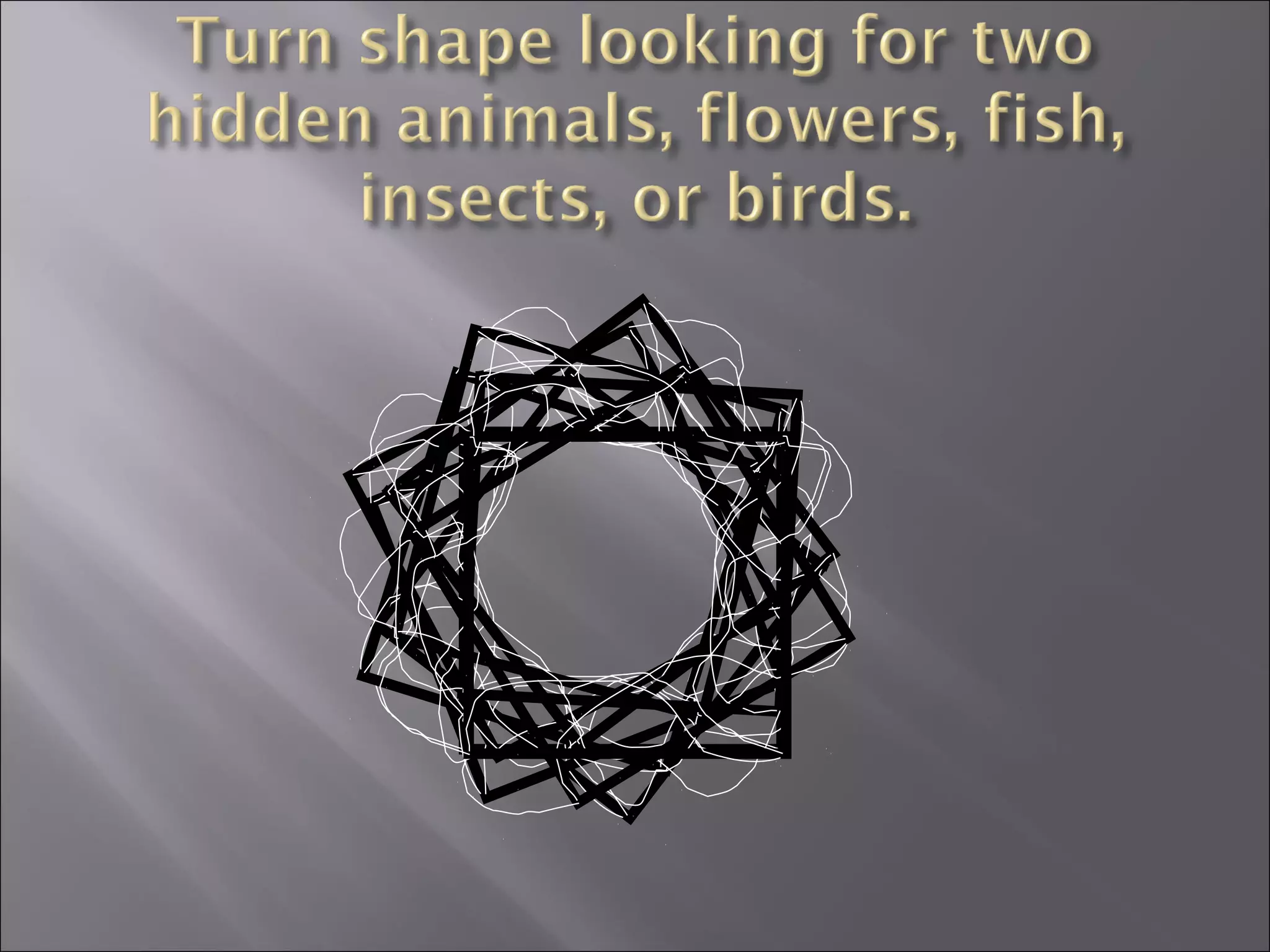
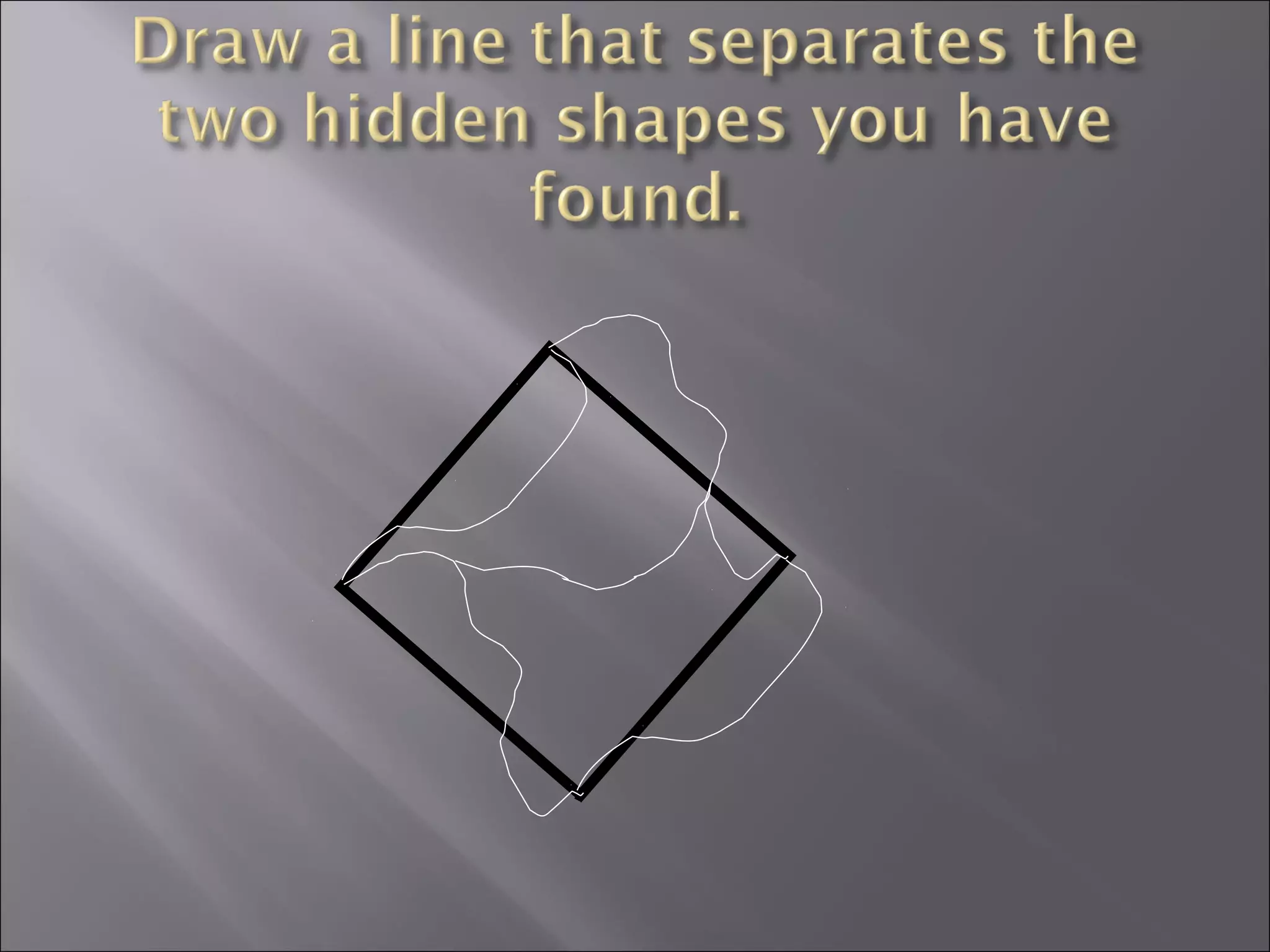
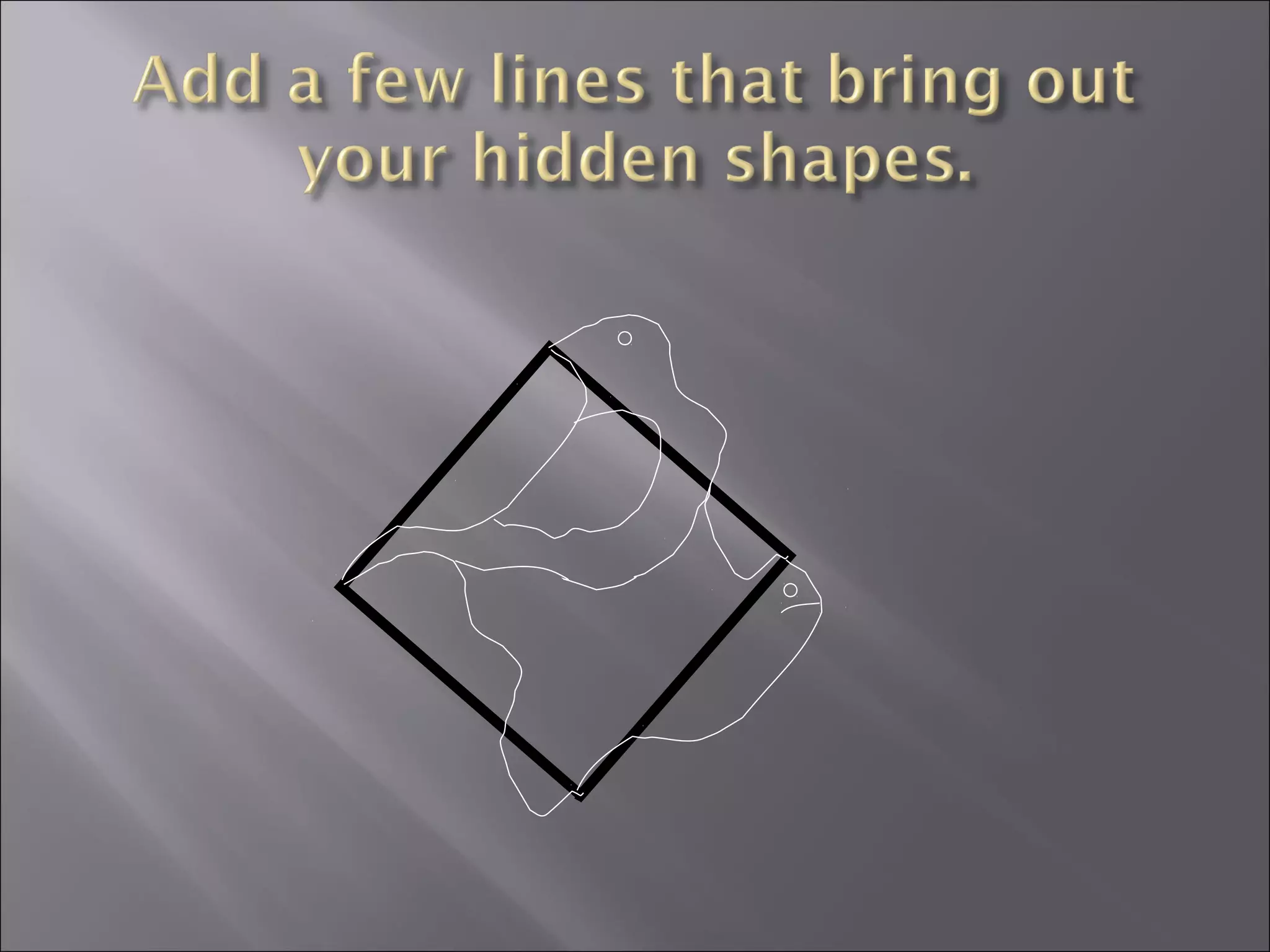
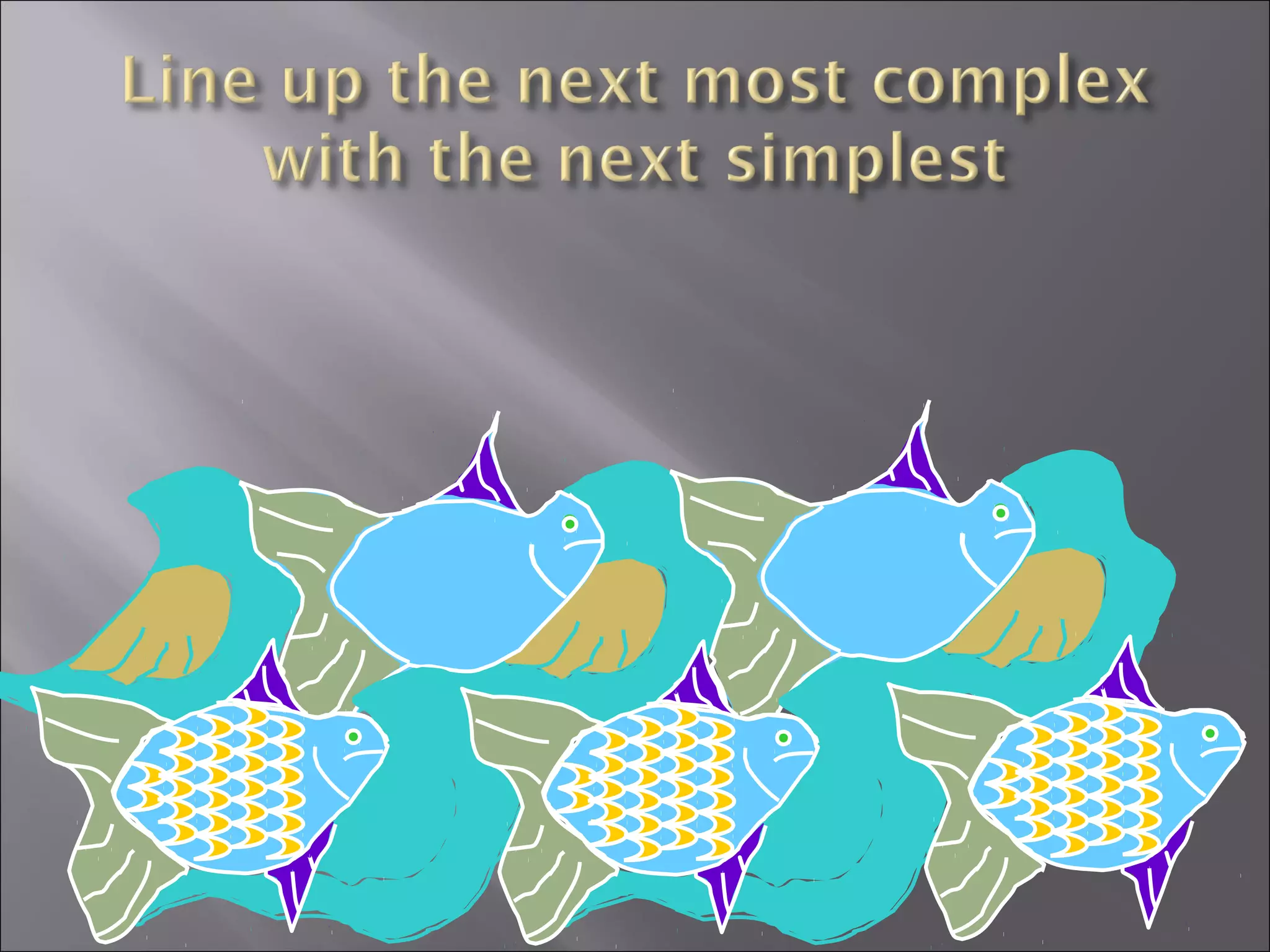
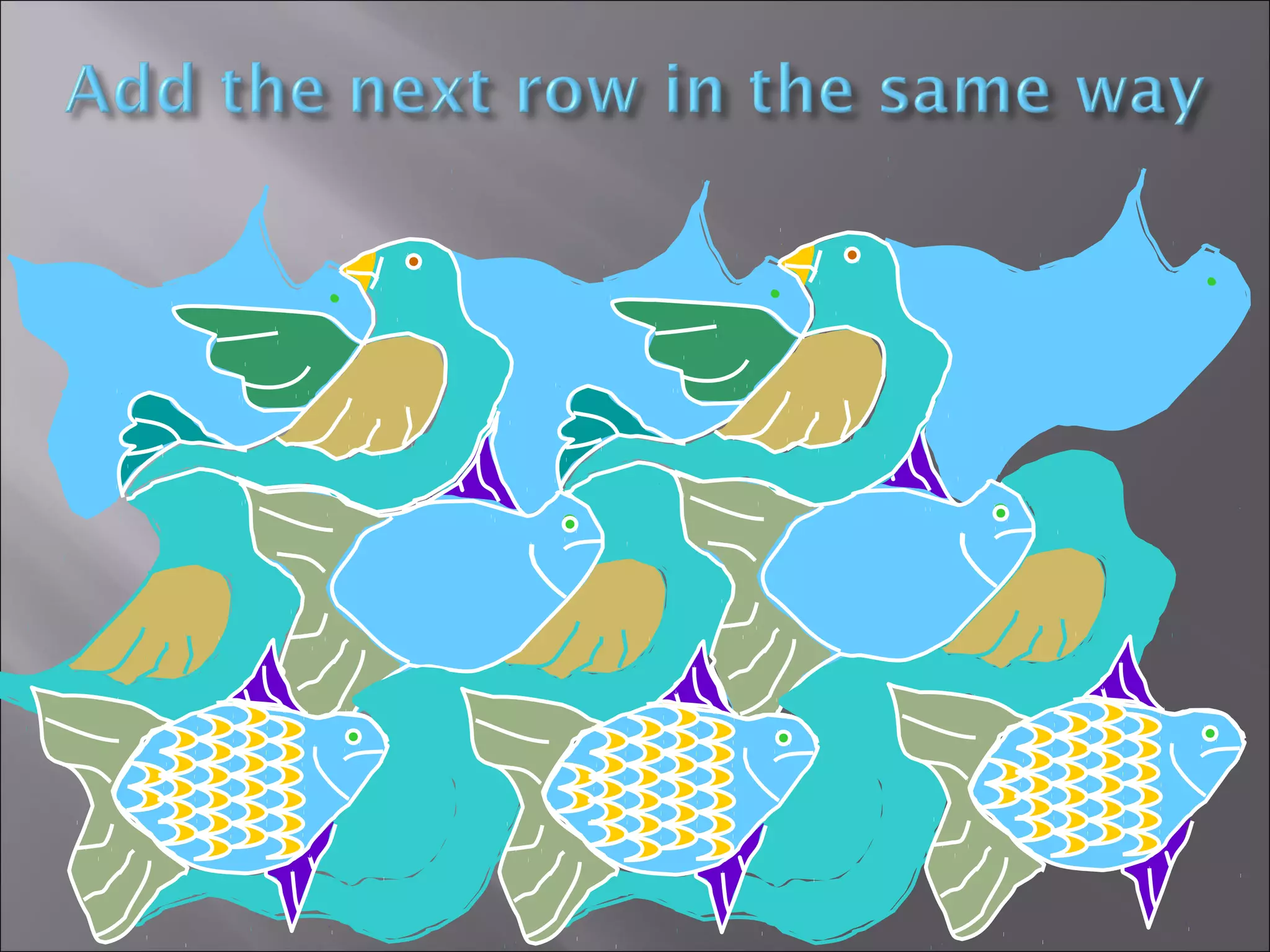
 Tessellation of an irregular shape can be 
obtained by Transformation of other 
Tessellating shapes. 
 Irregular shapes are those that does not have 
all sides and angle equal .
11 22 
33 
44
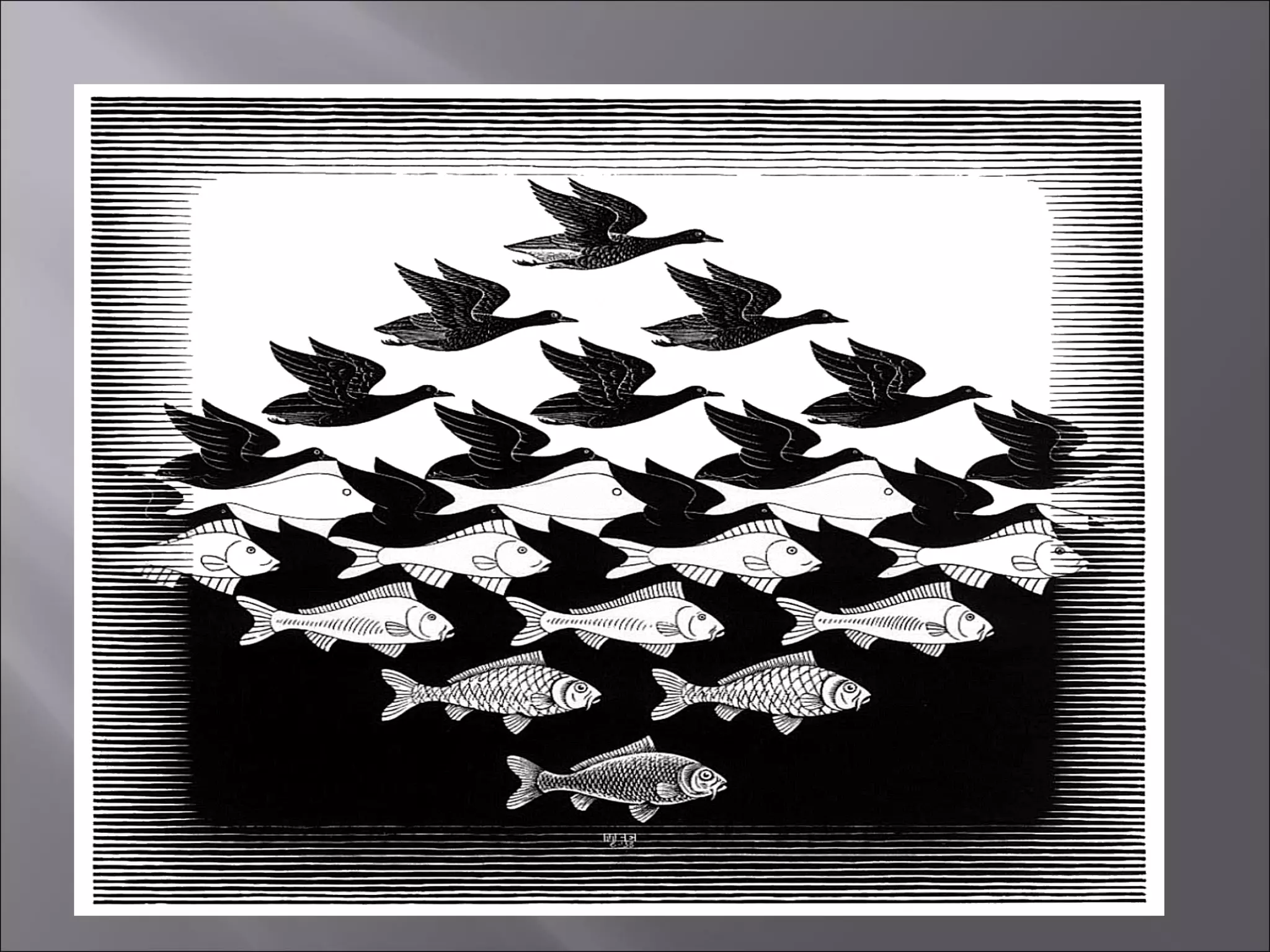
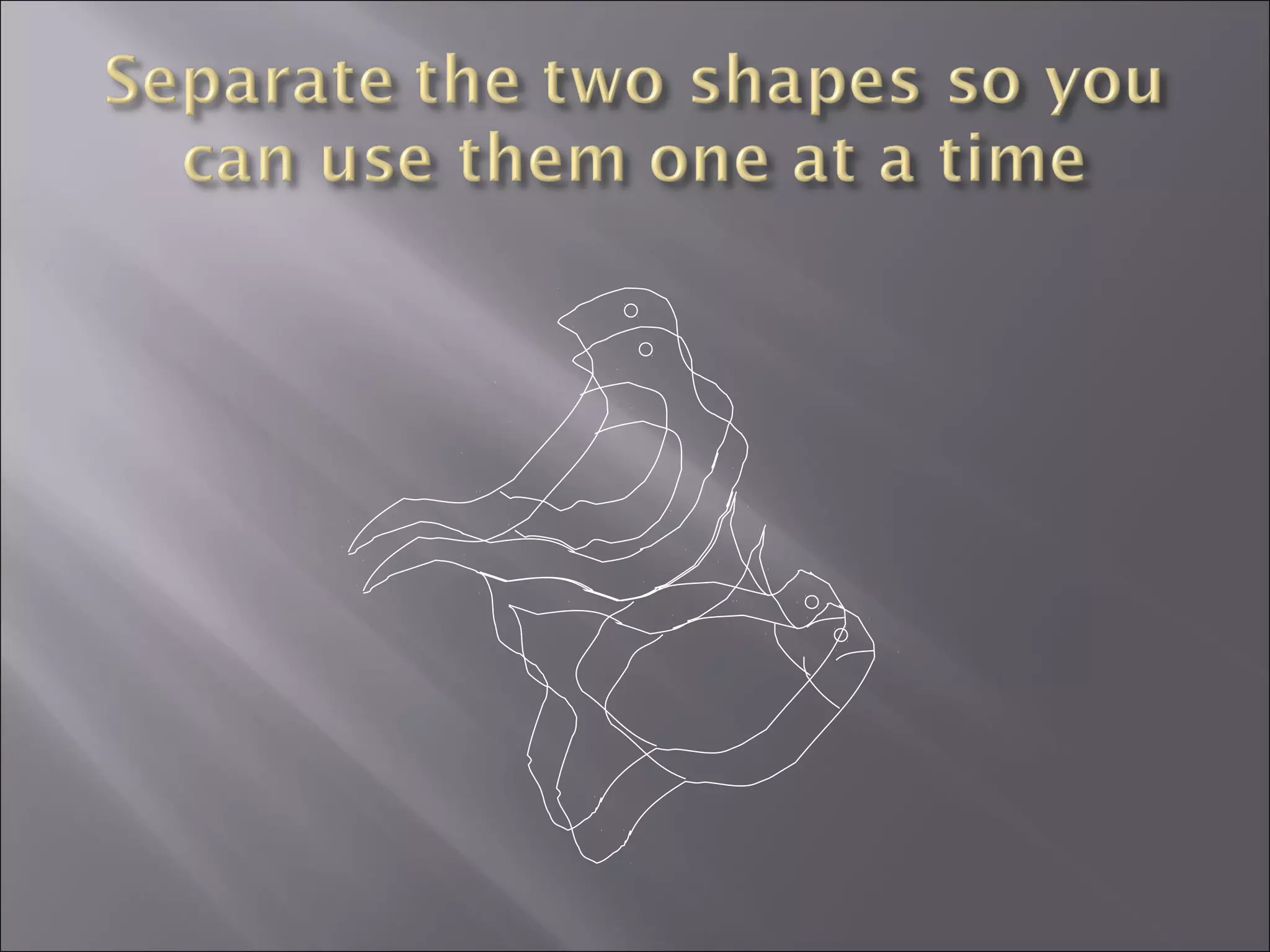
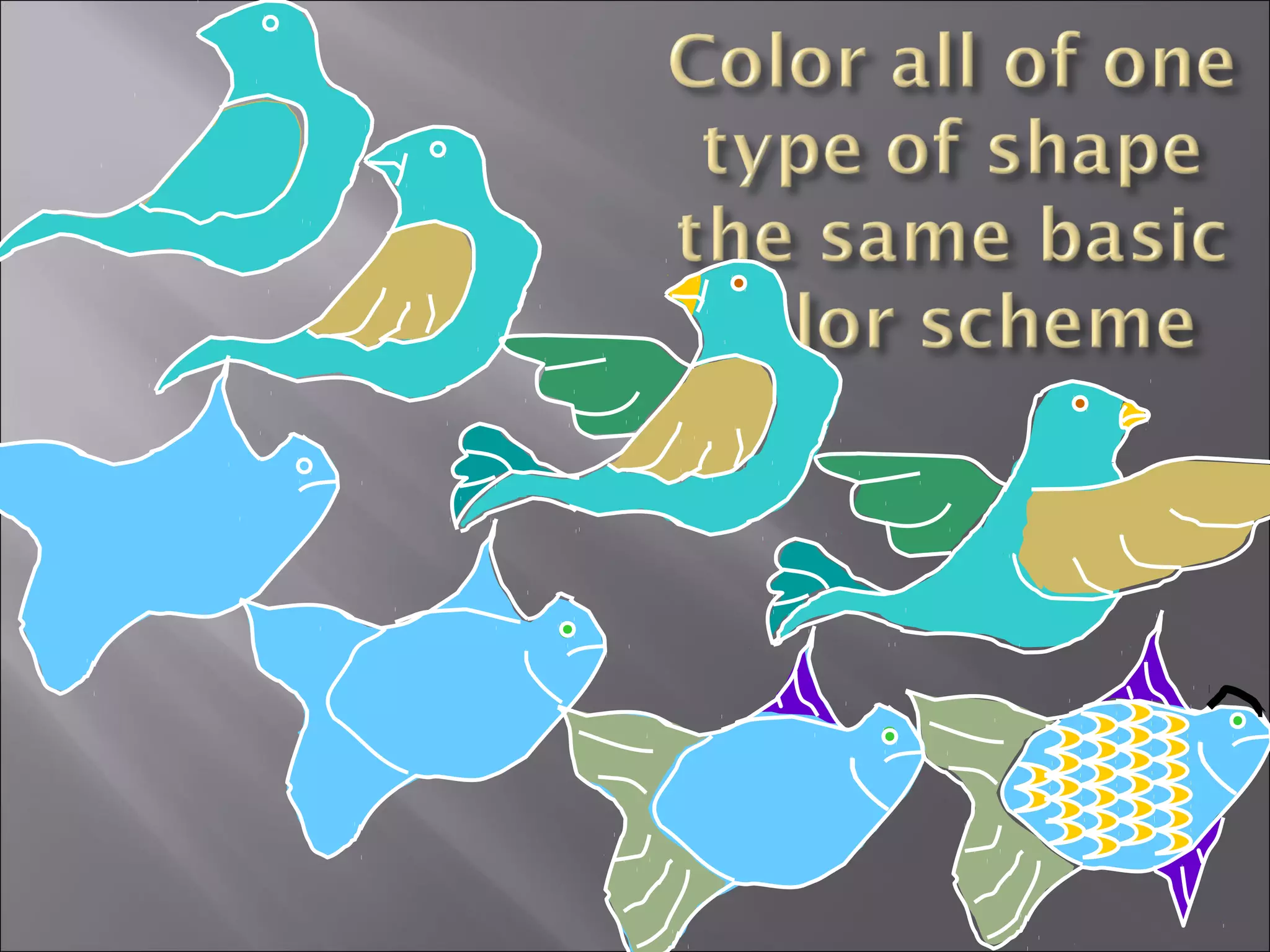
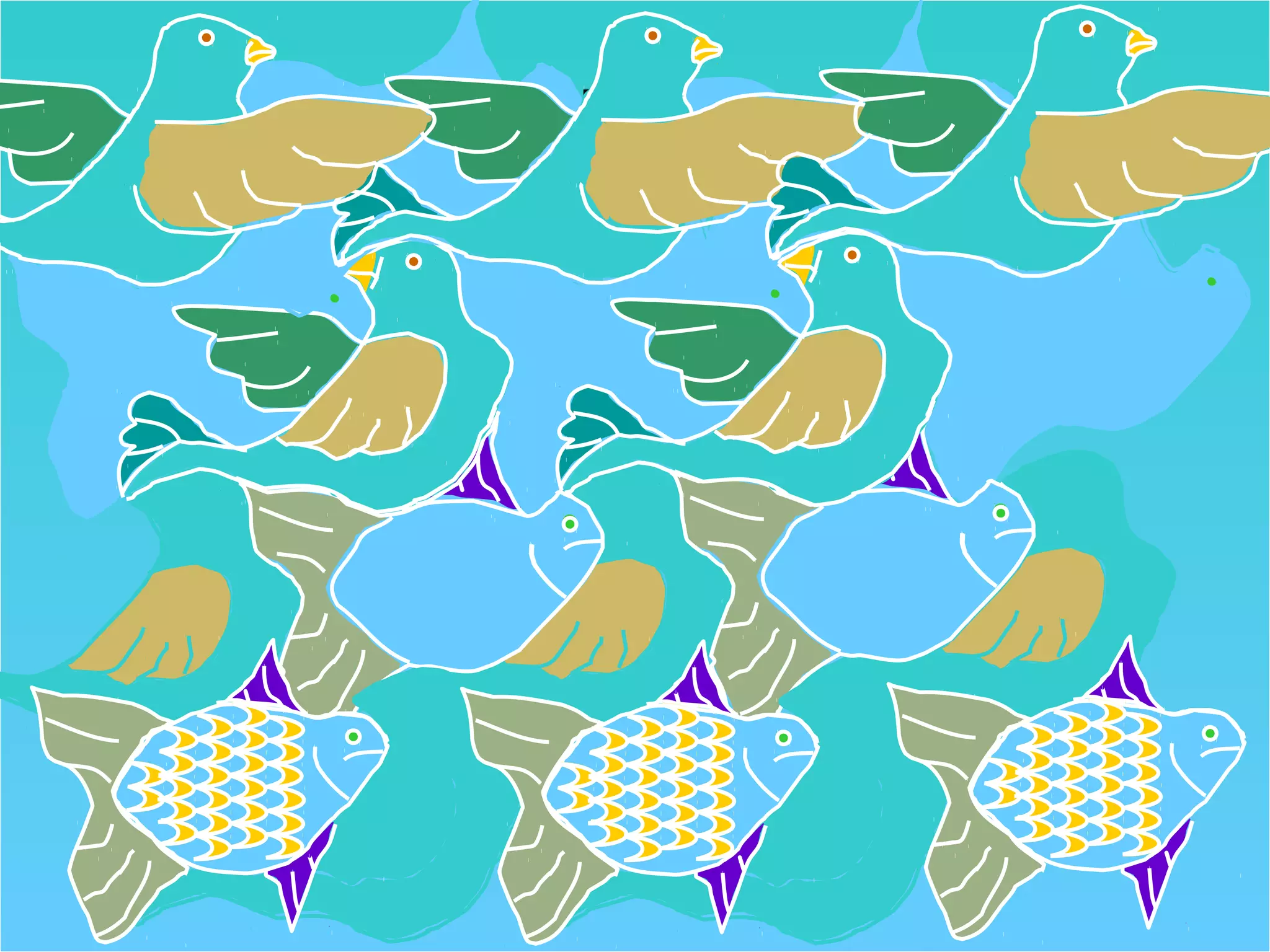
The metamorphoses consist of 
abstract shapes changing into 
sharply defined concrete forms, 
and then changing back again (a 
bird changing into a fish, a lizard 
into a honeycomb).
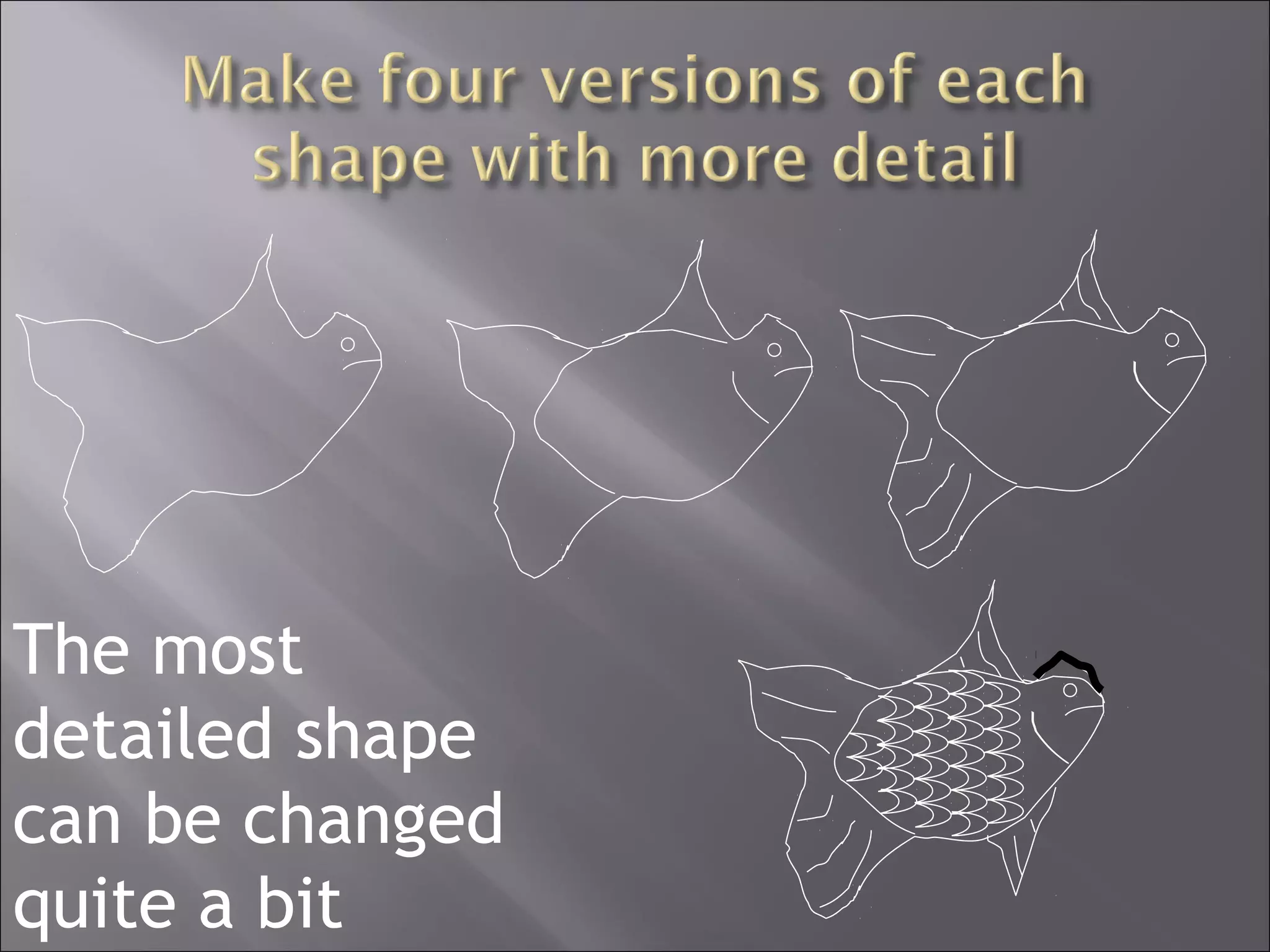
The most detailed 
shape can be 
changed quite a 
bit
The most 
detailed shape 
can be changed 
quite a bit
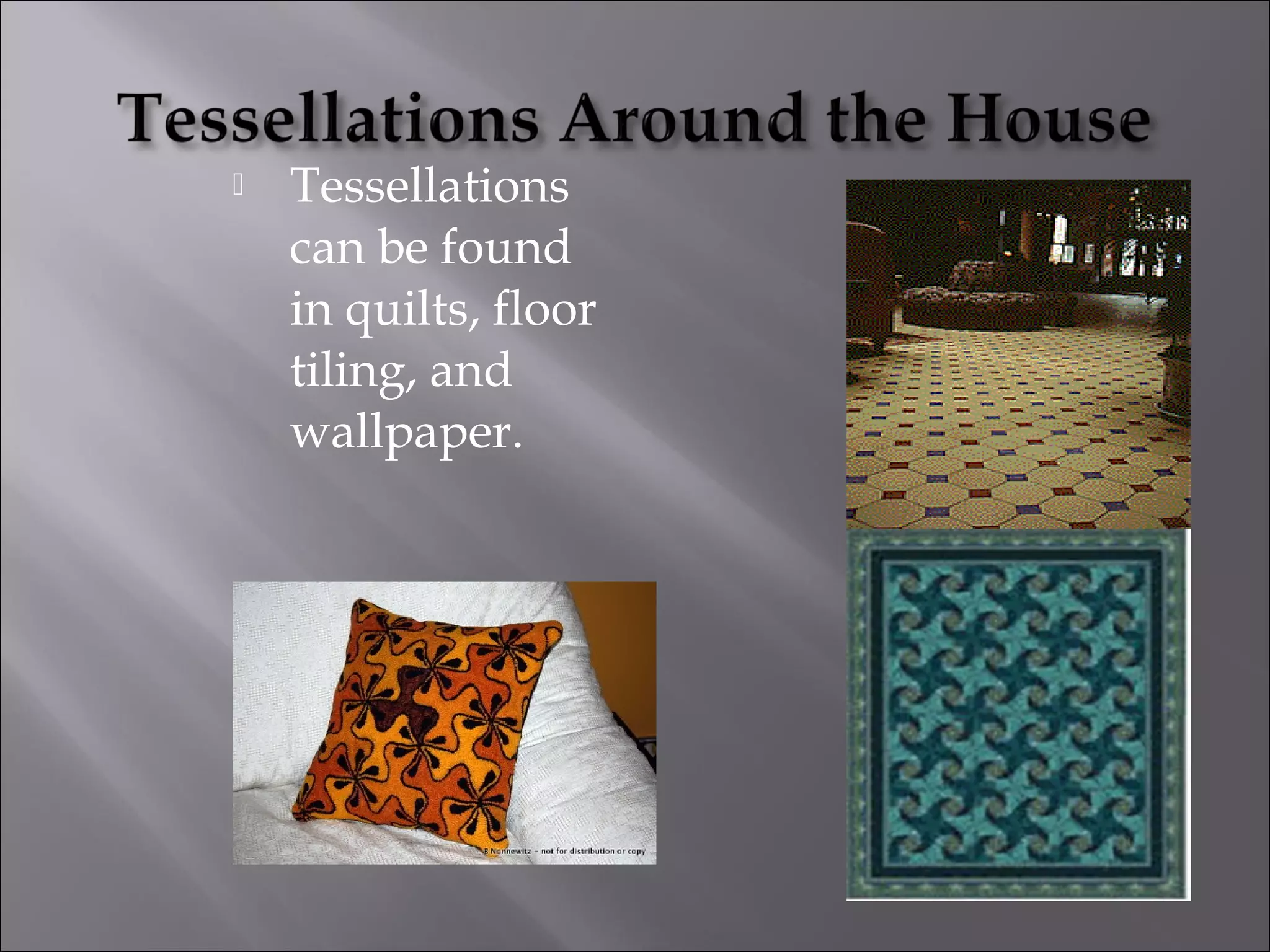
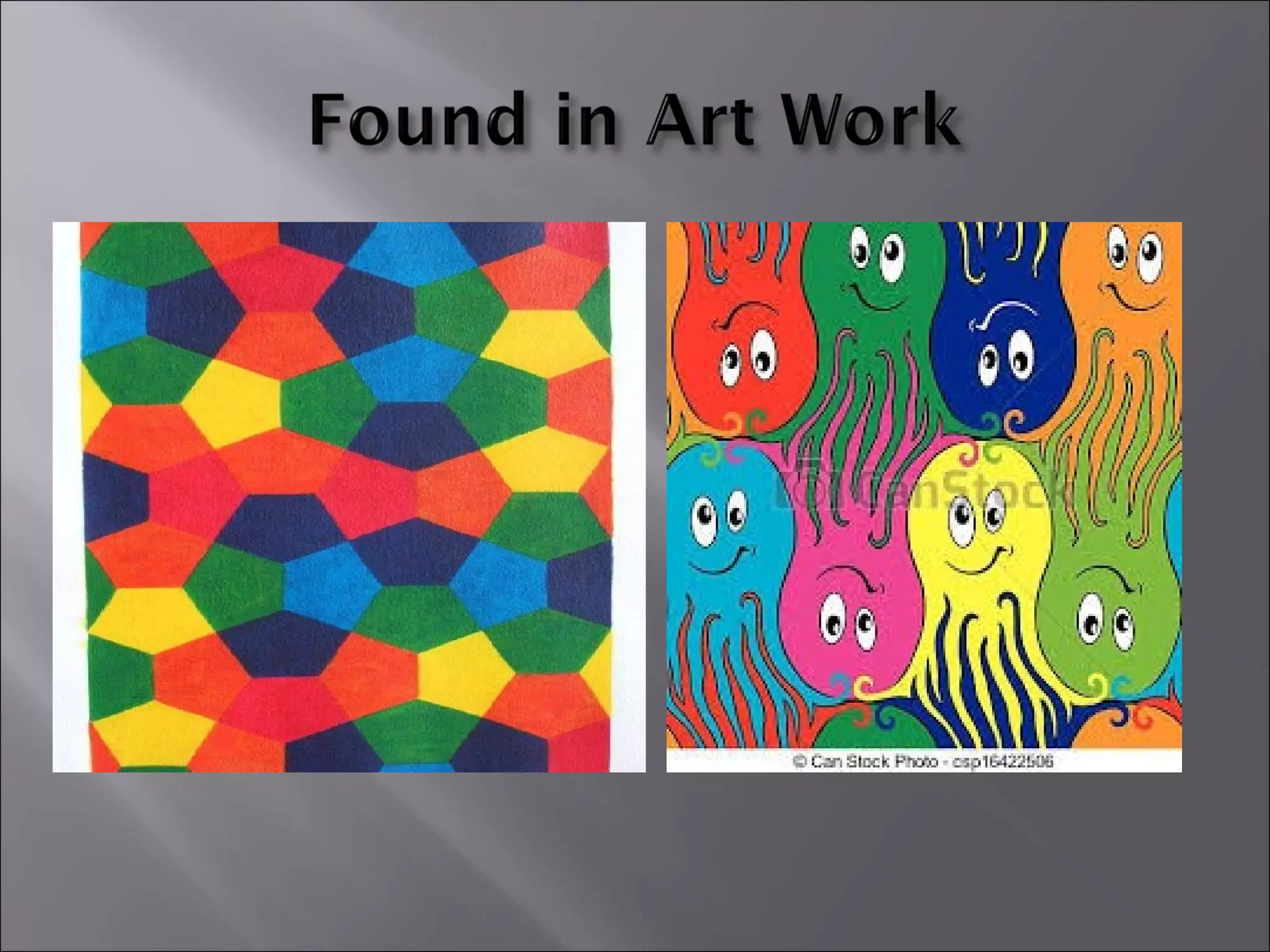
 Tessellations 
can be found 
in quilts, floor 
tiling, and 
wallpaper.
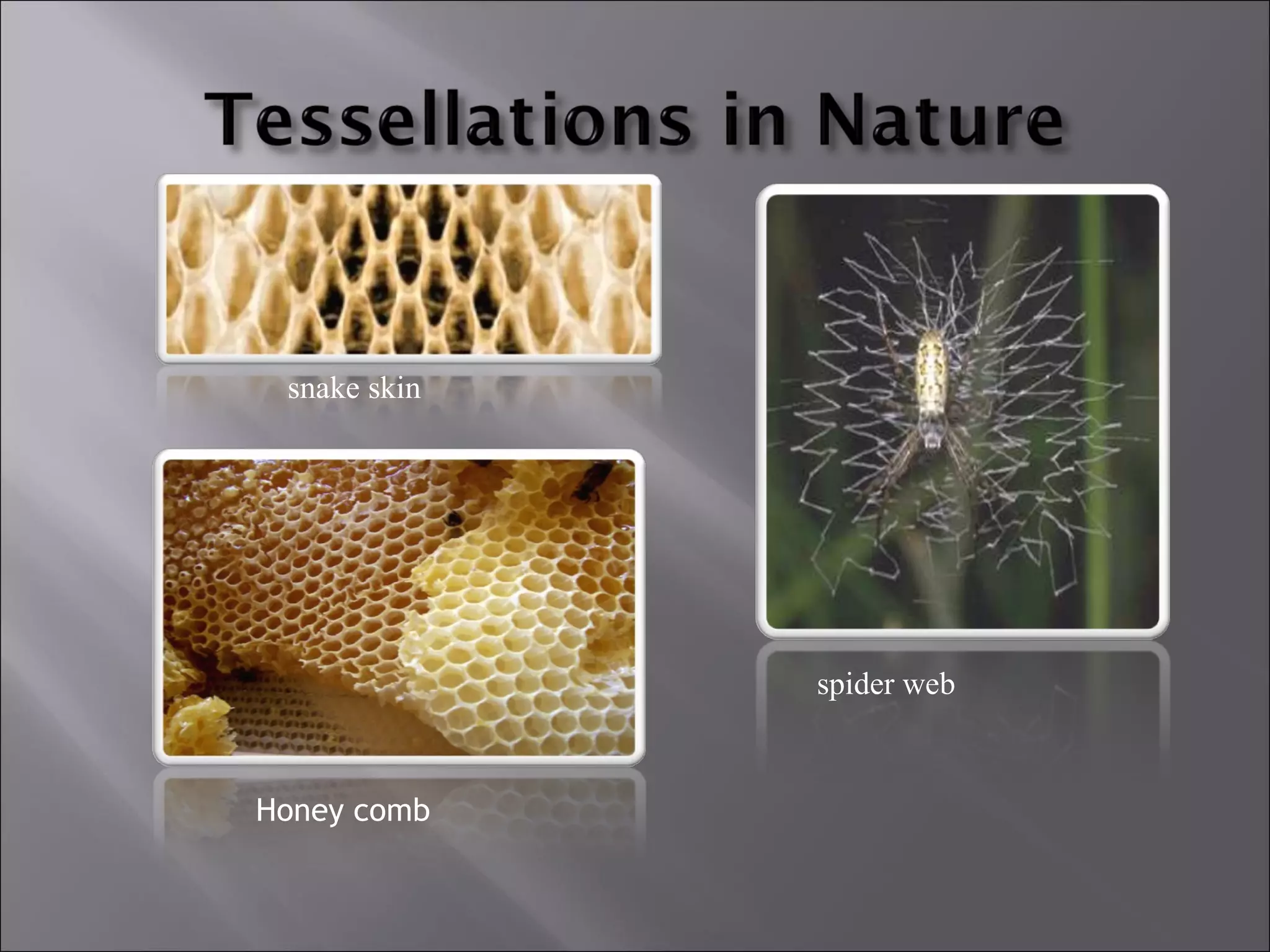
snake skin 
spider web 
Honey comb
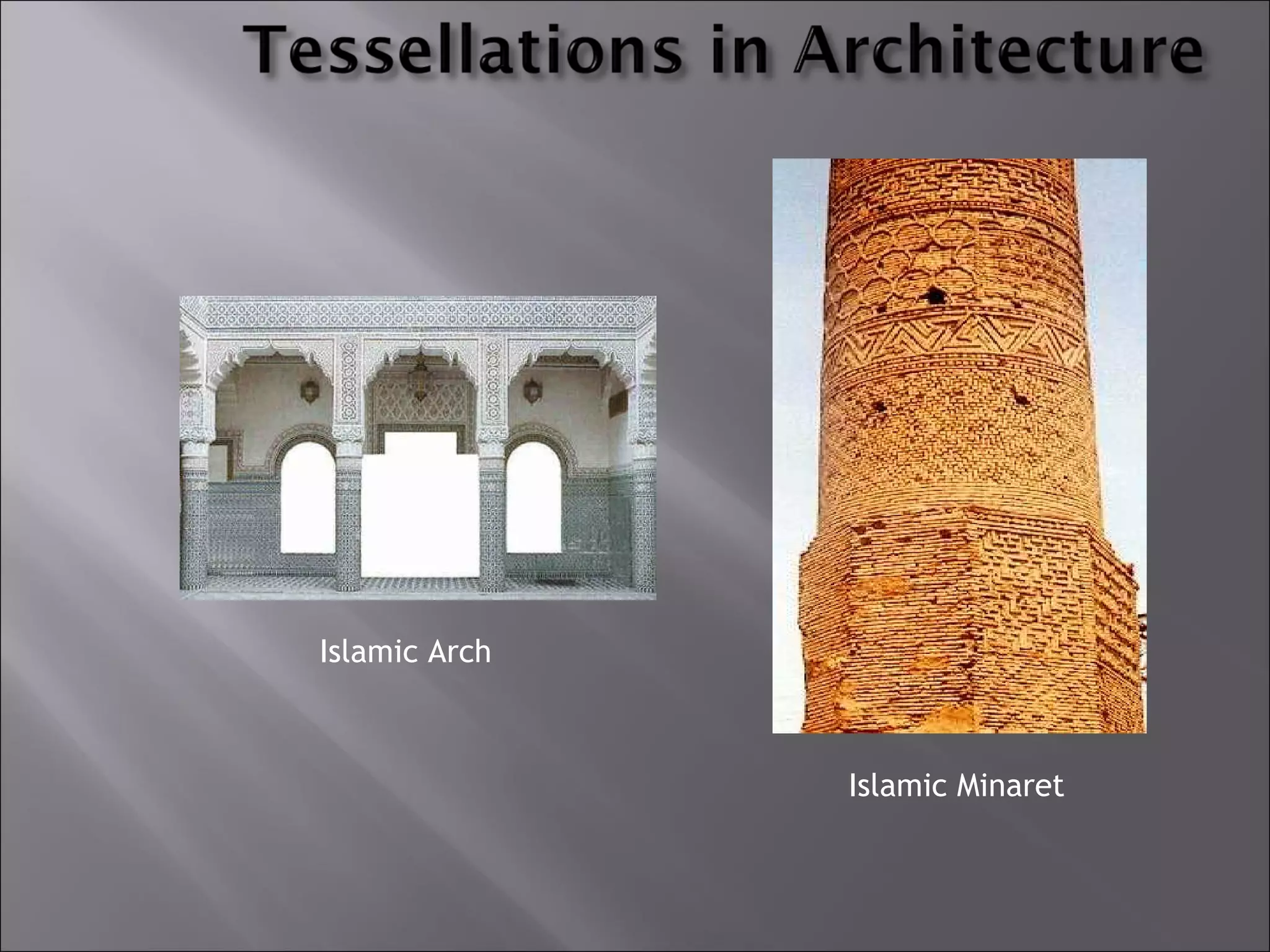
Islamic Arch 
Islamic Minaret
seminar on tessellation

seminar on tessellation

  • 2.
  • 4.
  • 5.
     Many ancientcultures have used tessellations.  Johannes Kepler conducted one of the first mathematical studies of tessellations.  E.S. Fedorov proved an aspect of tiling in 1891.  Historically, tessellations were used in Ancient Rome and in Islamic art such as in the decorative tiling of the Alhambra palace
  • 6.
    Islamic art doesnot usually use representations of living beings, but uses geometric patterns, especially symmetric (repeating) patterns.
  • 8.
     “I tryin my print to testify that we live in a beautiful and orderly world, not in a chaos without norms, even though that is how it sometimes appears. the nonsensicalness of some of what we take to be irrefutable certainties.”
  • 9.
     Most famouscreator of tessellations  Born in Holland in 1898 (died in 1972)  Originally studied architecture before becoming interested in woodcuts and printmaking  Did 137 tessellations in his lifetime
  • 10.
    House of Stairs R e p t i l e s
  • 11.
     Tessellations are arrangement of shapes that cover the picture without overlapping and without leaving spaces.  The word “tessellation” comes from the Latin word “tessera” which means “small stone cube”  Tiling is often another term used for tessellation patterns.
  • 12.
  • 13.
    Formed by TRANSFORMATION (combination of TRANSLATIONS, ROTATIONS REFLECTIONS And GLIDE REFLECTION)
  • 14.
    Movements of afigure in a plane May be a SLIDE, FLIP, or TURN
  • 15.
    Another name fora SLIDE A C B A’ C’ B’ A’, B’ and C’ are explained in the next slide...
  • 16.
    The figure youget after a translation A A’ Slide C B C’ B’ Original Image The symbol ‘ is read “prime”. ABC has been moved to A’B’C’. A’B’C’ is the image of ABC.
  • 17.
    Finding the amountof movement LEFT and RIGHT and UP and DOWN
  • 18.
    9 8 7 6 5 4 3 2 1 0 1 2 3 4 5 6 7 8 9 Right 4 (positive change in x) Down 3 (negative change in y) A A’ B B’ C C’
  • 19.
    Can be writtenas:  R4, D3 (Right 4, Down 3)  (x+4, y-3)
  • 20.
    Another name fora FLIP A A’ C B B’ C’
  • 21.
     Used tocreate SYMMETRY on the coordinate plane. Symmetry  When one side of a figure is a MIRROR IMAGE of the other
  • 22.
    Axis of Symmetryis a line that divides the figure into two symmetrical parts in such a way that the figure on one side is the mirror image of the figure on the other side 1 2 3 4 1 2 3 4 5 6 1 2 3
  • 23.
    The line youreflect a figure across.
  • 24.
     Another namefor a TURN  A transformation that turns about a fixed point B B’ C C’ A A’
  • 25.
    The fixed point (0,0) A A’ C C’ B B’
  • 26.
     When animage after rotation of 180 degrees or less fits exactly on the original. 90 degrees A A’ C C’ B B’
  • 27.
    The figure that results after reflection and translation.
  • 28.
    There are threemain types of tessellations:  Regular  Semi-Regular  Demi-Regular
  • 29.
     A regulartessellation is a pattern only using one regular polygon shape.  May also called Pure Tessellation.  A regular polygon is any many sided shape that has sides of equal length and angles or equal measure.
  • 30.
    3. 3. 3.3. 3. 3 4. 4. 4. 4 6. 6. 6
  • 33.
     Divide thewhole turn (360⁰) by the number of exterior angle (= the number of sides) to find the size of one exterior angle. Then use the fact that the exterior angle + the corresponding interior angle =180⁰
  • 34.
     The sumof interior angles of a n-sided regular polygons { (n-2)⤬180⁰}. Then the size of one of the interior angle can be found by dividing by number of interior angle {=n}. ∠ =(n-2)⤬180⁰ / n
  • 35.
    Determine whether aregular 6-gon tessellates the plane. Explain? Let Ð1 represent one interior angle of a regular 4-gon. m∠1=180⁰(n-2) / n Interior angle theorem = 180⁰(6-2)/4 Substitution =180⁰ Simplify Answer: As 180⁰ is a factor of 360⁰ .so a 6-gon will tessellate the plane .
  • 36.
    The sum (total)of the angles around any Point is 3 × 120° = 360°.  This fact is true of all such points where the vertices of 3 hexagons meet and thus the hexagons will tessellate.
  • 37.
     This tessellationmay be represented by the abbreviated notation 6^3 (signifying that three six sided regular polygons meet at a common vertex).
  • 38.
    Determine whether aregular 16-gon tessellates the plane. Explain? Let Ð1 represent one interior angle of a regular 4-gon. m∠1=180⁰(n-2) / n Interior angle theorem = 180⁰(16-2)/4 Substitution =157.5⁰ Simplify Answer: As 157.5⁰ is not a factor of 360⁰ .so a 16-gon will not tessellate the plane.
  • 39.
     A semi-regulartessellation is a pattern consisting of more than one type of regular polygon.  The vertex arrangement is the same throughout the entire pattern
  • 40.
    Shape Sides ExteriorInterior Triangle 3 120o 60o Square 4 90o 90o Pentagon 5 72o 108o Hexagon 6 60o 120o Heptagon 7 51.42…o 128.57…o Octagon 8 45o 135o Nonagon 9 40o 140o Decagon 10 36o 144o Hendecagon 11 32.72…o 147.27…o Dodecagon 12 30o 150o
  • 41.
    4. 6. 124. 8. 8 3. 4. 6. 4 3. 3. 4. 3. 4 3. 3. 3. 3. 6 3. 6. 3. 6 3. 3. 3. 4. 4 3. 12. 12
  • 42.
    by interior angletheorem … Octagon has 135 degree angle of each side… Square has 90 degree 90⁰+135⁰+135⁰=360⁰
  • 43.
    Three equilateral triangleand two square tesselate the plane… 60⁰+60⁰+60⁰+90⁰+90⁰=360⁰
  • 44.
     Determine whethera semi-regular tessellation can be created from regular nonagons and squares, all having sides 1 unit long. Each interior angle of a regular nonagon measures or 140°. Each angle of a square measures 90°. Find whole-number values for n and s such that All whole numbers greater than 3 will result in a negative value for s.
  • 45.
    Substitution Simplify. Subtractfrom each side. Divide each side by 90. Answer: There are no whole number values for n and s so that
  • 46.
     A demi-regular tessellation is a pattern of regular polygons in which there are two or three different polygon arrangements
  • 47.
     Tessellation ofan irregular shape can be obtained by Transformation of other Tessellating shapes.  Irregular shapes are those that does not have all sides and angle equal .
  • 58.
  • 61.
    The metamorphoses consistof abstract shapes changing into sharply defined concrete forms, and then changing back again (a bird changing into a fish, a lizard into a honeycomb).
  • 73.
    The most detailed shape can be changed quite a bit
  • 74.
    The most detailedshape can be changed quite a bit
  • 80.
     Tessellations canbe found in quilts, floor tiling, and wallpaper.
  • 81.
    snake skin spiderweb Honey comb
  • 83.