There are many ways to approach globalization.
We opted to approach it via political economy &
civilization approach.
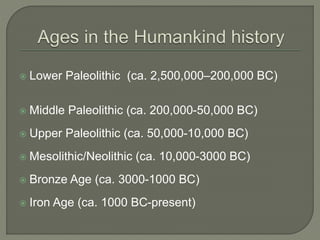
 Lower Paleolithic (ca. 2,500,000–200,000 BC)
 Middle Paleolithic (ca. 200,000-50,000 BC)
 Upper Paleolithic (ca. 50,000-10,000 BC)
 Mesolithic/Neolithic (ca. 10,000-3000 BC)
 Bronze Age (ca. 3000-1000 BC)
 Iron Age (ca. 1000 BC-present)
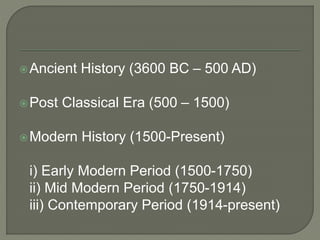
Ancient History (3600 BC – 500 AD)
Post Classical Era (500 – 1500)
Modern History (1500-Present)
i) Early Modern Period (1500-1750)
ii) Mid Modern Period (1750-1914)
iii) Contemporary Period (1914-present)
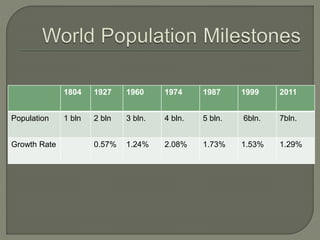
1804 1927 1960 1974 1987 1999 2011
Population 1 bln 2 bln 3 bln. 4 bln. 5 bln. 6bln. 7bln.
Growth Rate 0.57% 1.24% 2.08% 1.73% 1.53% 1.29%
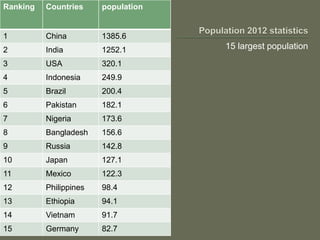
15 largest population
Ranking Countries population
1 China 1385.6
2 India 1252.1
3 USA 320.1
4 Indonesia 249.9
5 Brazil 200.4
6 Pakistan 182.1
7 Nigeria 173.6
8 Bangladesh 156.6
9 Russia 142.8
10 Japan 127.1
11 Mexico 122.3
12 Philippines 98.4
13 Ethiopia 94.1
14 Vietnam 91.7
15 Germany 82.7
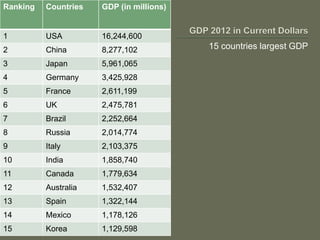
15 countries largest GDP
Ranking Countries GDP (in millions)
1 USA 16,244,600
2 China 8,277,102
3 Japan 5,961,065
4 Germany 3,425,928
5 France 2,611,199
6 UK 2,475,781
7 Brazil 2,252,664
8 Russia 2,014,774
9 Italy 2,103,375
10 India 1,858,740
11 Canada 1,779,634
12 Australia 1,532,407
13 Spain 1,322,144
14 Mexico 1,178,126
15 Korea 1,129,598
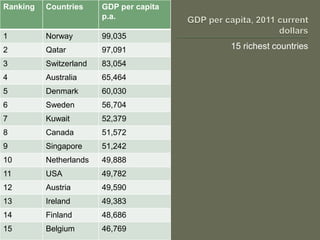
15 richest countries
Ranking Countries GDP per capita
p.a.
1 Norway 99,035
2 Qatar 97,091
3 Switzerland 83,054
4 Australia 65,464
5 Denmark 60,030
6 Sweden 56,704
7 Kuwait 52,379
8 Canada 51,572
9 Singapore 51,242
10 Netherlands 49,888
11 USA 49,782
12 Austria 49,590
13 Ireland 49,383
14 Finland 48,686
15 Belgium 46,769
 The Nile Valley Civilization
 The West Asian Civilization
 The Harappan Civilization
 The Ancient Chinese Civilization
 Ancient Civilizations in South and Central America
 Ancient Civilizations Around the Mediterranean Sea
 Civilizations In Transitions: 500 BC and After
Total known 07 Civilizations that existed.
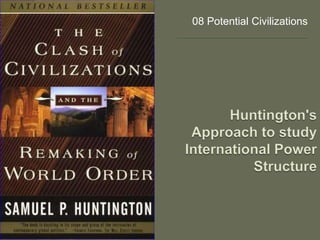
08 Potential Civilizations
21st century International Power Structure
 Sinic
 Japanese
 Hindu
 Islamic
 Orthodox
 Western
 Latin American
 African (possibly)
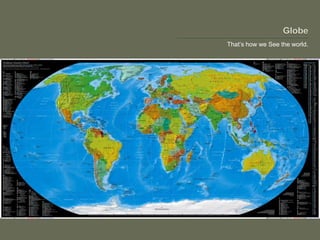
That’s how we See the world.
States, including small states
Total 234 states, includes 82 small states
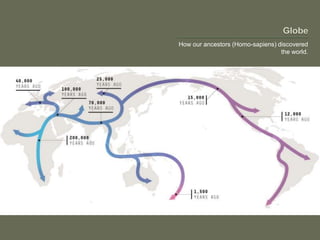
How our ancestors (Homo-sapiens) discovered
the world.
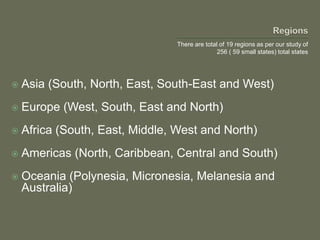
 Asia (South, North, East, South-East and West)
 Europe (West, South, East and North)
 Africa (South, East, Middle, West and North)
 Americas (North, Caribbean, Central and South)
 Oceania (Polynesia, Micronesia, Melanesia and
Australia)
There are total of 19 regions as per our study of
256 ( 59 small states) total states
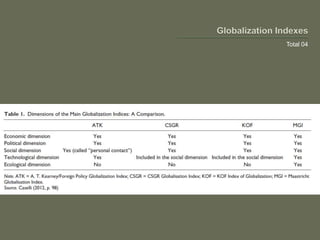
Total 04
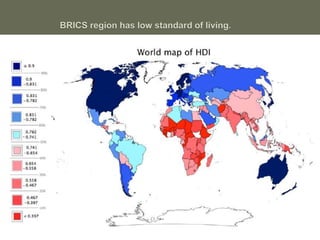
Breton wood vs. BRICS+
 Globalization and/or Regionalism
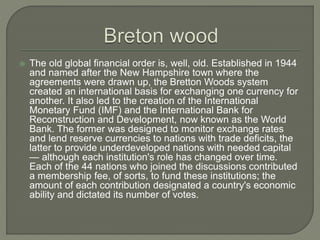
 The old global financial order is, well, old. Established in 1944
and named after the New Hampshire town where the
agreements were drawn up, the Bretton Woods system
created an international basis for exchanging one currency for
another. It also led to the creation of the International
Monetary Fund (IMF) and the International Bank for
Reconstruction and Development, now known as the World
Bank. The former was designed to monitor exchange rates
and lend reserve currencies to nations with trade deficits, the
latter to provide underdeveloped nations with needed capital
— although each institution's role has changed over time.
Each of the 44 nations who joined the discussions contributed
a membership fee, of sorts, to fund these institutions; the
amount of each contribution designated a country's economic
ability and dictated its number of votes.
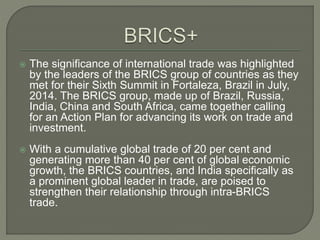
 The significance of international trade was highlighted
by the leaders of the BRICS group of countries as they
met for their Sixth Summit in Fortaleza, Brazil in July,
2014. The BRICS group, made up of Brazil, Russia,
India, China and South Africa, came together calling
for an Action Plan for advancing its work on trade and
investment.
 With a cumulative global trade of 20 per cent and
generating more than 40 per cent of global economic
growth, the BRICS countries, and India specifically as
a prominent global leader in trade, are poised to
strengthen their relationship through intra-BRICS
trade.
Farrukh Pitafi, “civilization is a stage of a
nation, not the nation itself”
Are we heading towards Cold War II /
WWIII ?
Who’s the Next Hitler? Three I’s!
ISIS or India or Israel?

Seminar in globalization course

  • 1.
    There are manyways to approach globalization. We opted to approach it via political economy & civilization approach.
  • 2.
     Lower Paleolithic(ca. 2,500,000–200,000 BC)  Middle Paleolithic (ca. 200,000-50,000 BC)  Upper Paleolithic (ca. 50,000-10,000 BC)  Mesolithic/Neolithic (ca. 10,000-3000 BC)  Bronze Age (ca. 3000-1000 BC)  Iron Age (ca. 1000 BC-present)
  • 3.
    Ancient History (3600BC – 500 AD) Post Classical Era (500 – 1500) Modern History (1500-Present) i) Early Modern Period (1500-1750) ii) Mid Modern Period (1750-1914) iii) Contemporary Period (1914-present)
  • 4.
    1804 1927 19601974 1987 1999 2011 Population 1 bln 2 bln 3 bln. 4 bln. 5 bln. 6bln. 7bln. Growth Rate 0.57% 1.24% 2.08% 1.73% 1.53% 1.29%
  • 5.
    15 largest population RankingCountries population 1 China 1385.6 2 India 1252.1 3 USA 320.1 4 Indonesia 249.9 5 Brazil 200.4 6 Pakistan 182.1 7 Nigeria 173.6 8 Bangladesh 156.6 9 Russia 142.8 10 Japan 127.1 11 Mexico 122.3 12 Philippines 98.4 13 Ethiopia 94.1 14 Vietnam 91.7 15 Germany 82.7
  • 6.
    15 countries largestGDP Ranking Countries GDP (in millions) 1 USA 16,244,600 2 China 8,277,102 3 Japan 5,961,065 4 Germany 3,425,928 5 France 2,611,199 6 UK 2,475,781 7 Brazil 2,252,664 8 Russia 2,014,774 9 Italy 2,103,375 10 India 1,858,740 11 Canada 1,779,634 12 Australia 1,532,407 13 Spain 1,322,144 14 Mexico 1,178,126 15 Korea 1,129,598
  • 7.
    15 richest countries RankingCountries GDP per capita p.a. 1 Norway 99,035 2 Qatar 97,091 3 Switzerland 83,054 4 Australia 65,464 5 Denmark 60,030 6 Sweden 56,704 7 Kuwait 52,379 8 Canada 51,572 9 Singapore 51,242 10 Netherlands 49,888 11 USA 49,782 12 Austria 49,590 13 Ireland 49,383 14 Finland 48,686 15 Belgium 46,769
  • 9.
     The NileValley Civilization  The West Asian Civilization  The Harappan Civilization  The Ancient Chinese Civilization  Ancient Civilizations in South and Central America  Ancient Civilizations Around the Mediterranean Sea  Civilizations In Transitions: 500 BC and After Total known 07 Civilizations that existed.
  • 10.
  • 11.
    21st century InternationalPower Structure  Sinic  Japanese  Hindu  Islamic  Orthodox  Western  Latin American  African (possibly)
  • 12.
    That’s how weSee the world.
  • 13.
    States, including smallstates Total 234 states, includes 82 small states
  • 14.
    How our ancestors(Homo-sapiens) discovered the world.
  • 15.
     Asia (South,North, East, South-East and West)  Europe (West, South, East and North)  Africa (South, East, Middle, West and North)  Americas (North, Caribbean, Central and South)  Oceania (Polynesia, Micronesia, Melanesia and Australia) There are total of 19 regions as per our study of 256 ( 59 small states) total states
  • 17.
  • 18.
    Breton wood vs.BRICS+  Globalization and/or Regionalism
  • 19.
     The oldglobal financial order is, well, old. Established in 1944 and named after the New Hampshire town where the agreements were drawn up, the Bretton Woods system created an international basis for exchanging one currency for another. It also led to the creation of the International Monetary Fund (IMF) and the International Bank for Reconstruction and Development, now known as the World Bank. The former was designed to monitor exchange rates and lend reserve currencies to nations with trade deficits, the latter to provide underdeveloped nations with needed capital — although each institution's role has changed over time. Each of the 44 nations who joined the discussions contributed a membership fee, of sorts, to fund these institutions; the amount of each contribution designated a country's economic ability and dictated its number of votes.
  • 20.
     The significanceof international trade was highlighted by the leaders of the BRICS group of countries as they met for their Sixth Summit in Fortaleza, Brazil in July, 2014. The BRICS group, made up of Brazil, Russia, India, China and South Africa, came together calling for an Action Plan for advancing its work on trade and investment.  With a cumulative global trade of 20 per cent and generating more than 40 per cent of global economic growth, the BRICS countries, and India specifically as a prominent global leader in trade, are poised to strengthen their relationship through intra-BRICS trade.
  • 21.
    Farrukh Pitafi, “civilizationis a stage of a nation, not the nation itself” Are we heading towards Cold War II / WWIII ? Who’s the Next Hitler? Three I’s! ISIS or India or Israel?