SEMANTIC
SIMILARITY
Semantic similarity is an important aspect
of Natural Language Processing and one of
the fundamental problems for many NLP
applications and related disciplines.
Semantic Textual Similarity can be
described as a measure used to a set of
documents with the goal of determining
their semantic similarity.
The similarities between the documents are
based on their direct and indirect linkages.
The existence of semantic relations among
them can be used to measure and recognize
these linkages.
MANY SEMANTIC WEB APPLICATIONS, SUCH
AS COMMUNITY EXTRACTION, ONTOLOGY
BUILDING, AND ENTITY IDENTIFICATION,
BENEFIT FROM SEMANTIC SIMILARITY. IT
IS ALSO BENEFICIAL FOR TWITTER
SEARCHES, WHERE THE ABILITY TO
RELIABLY QUANTIFY SEMANTIC
RELATEDNESS BETWEEN CONCEPTS OR
ENTITIES IS NECESSARY.
ONE OF THE PRIMARY DIFFICULTIES IN
INFORMATION RETRIEVAL IS RETRIEVING A
SET OF DOCUMENTS AND FINDING IMAGES
BY CAPTIONS THAT ARE SEMANTICALLY
CONNECTED TO A PARTICULAR USER QUERY
IN A WEB SEARCH.
Benefits of
Semantic
Similarity
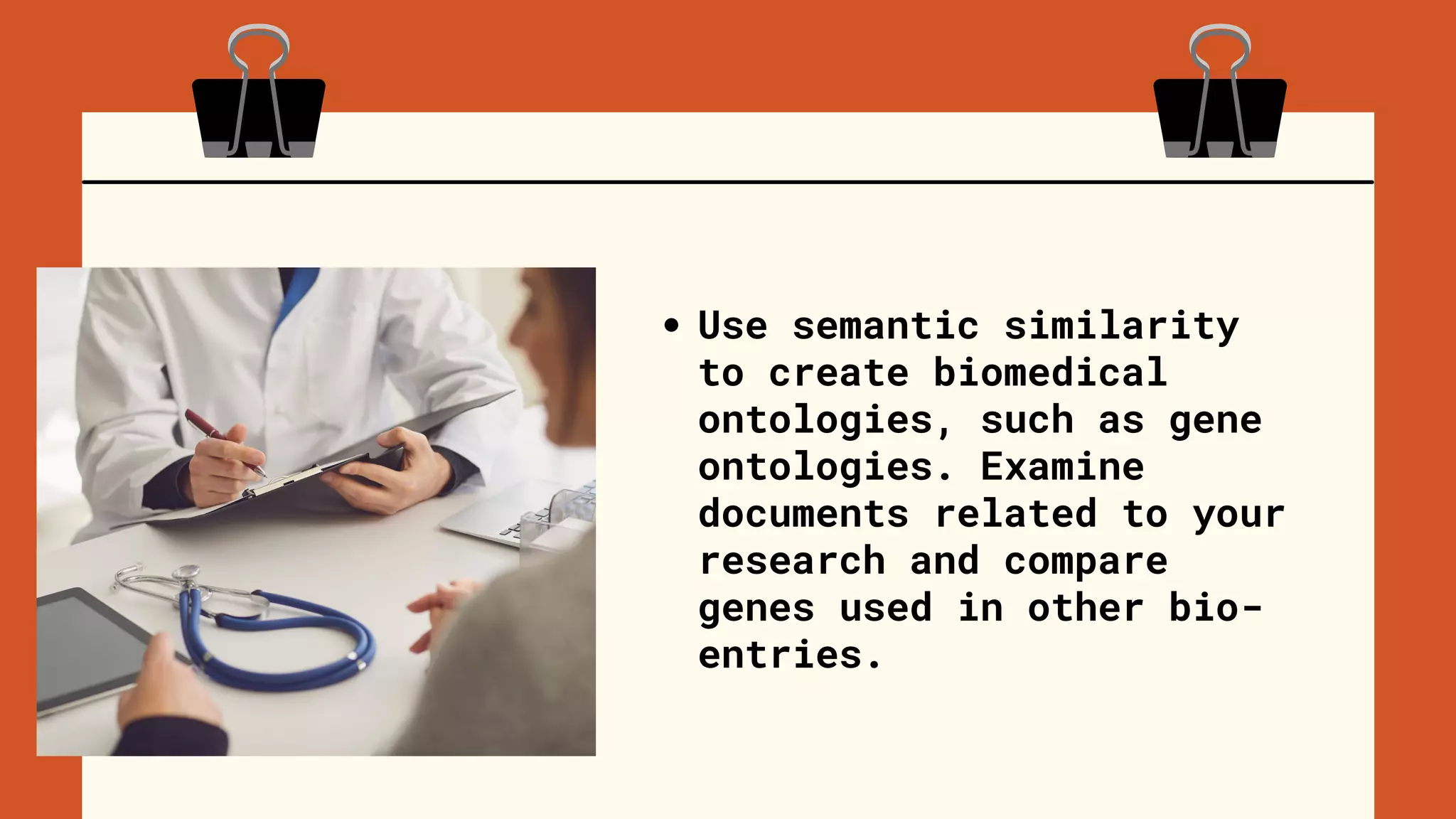
Use semantic similarity
to create biomedical
ontologies, such as gene
ontologies. Examine
documents related to your
research and compare
genes used in other bio-
entries.
It is also used to
compare the similarity of
geographical feature type
ontologies.
Sentiment analysis,
natural language
understanding, and
machine translation can
all benefit from semantic
similarity, either
directly or indirectly.
Using Semantic analysis,
you can quickly identify
similar company or
product names. Examine
the similarities between
the products and services
offered in the industry
by analyzing competitive
product features.
Detect duplicate
documents with ease,
reduce labor, and
increase efficiency. With
semantic analysis, you
can detect plagiarism
even when the
sentences/words are moved
and modified.
Bytesview’s advanced semantic similarity solution can
analyze large volumes of text data to detect similar
sentence structures.


Using their text analysis solutions, you can easily
collect text data from multiple sources and use it to
focus on improving your customer support services,
employee and customer response solutions, and so on.
Thank
You

Semantic Similarity

  • 1.
  • 2.
    Semantic similarity isan important aspect of Natural Language Processing and one of the fundamental problems for many NLP applications and related disciplines. Semantic Textual Similarity can be described as a measure used to a set of documents with the goal of determining their semantic similarity.
  • 3.
    The similarities betweenthe documents are based on their direct and indirect linkages. The existence of semantic relations among them can be used to measure and recognize these linkages.
  • 4.
    MANY SEMANTIC WEBAPPLICATIONS, SUCH AS COMMUNITY EXTRACTION, ONTOLOGY BUILDING, AND ENTITY IDENTIFICATION, BENEFIT FROM SEMANTIC SIMILARITY. IT IS ALSO BENEFICIAL FOR TWITTER SEARCHES, WHERE THE ABILITY TO RELIABLY QUANTIFY SEMANTIC RELATEDNESS BETWEEN CONCEPTS OR ENTITIES IS NECESSARY.
  • 5.
    ONE OF THEPRIMARY DIFFICULTIES IN INFORMATION RETRIEVAL IS RETRIEVING A SET OF DOCUMENTS AND FINDING IMAGES BY CAPTIONS THAT ARE SEMANTICALLY CONNECTED TO A PARTICULAR USER QUERY IN A WEB SEARCH.
  • 6.
  • 7.
    Use semantic similarity tocreate biomedical ontologies, such as gene ontologies. Examine documents related to your research and compare genes used in other bio- entries.
  • 8.
    It is alsoused to compare the similarity of geographical feature type ontologies.
  • 9.
    Sentiment analysis, natural language understanding,and machine translation can all benefit from semantic similarity, either directly or indirectly.
  • 10.
    Using Semantic analysis, youcan quickly identify similar company or product names. Examine the similarities between the products and services offered in the industry by analyzing competitive product features.
  • 11.
    Detect duplicate documents withease, reduce labor, and increase efficiency. With semantic analysis, you can detect plagiarism even when the sentences/words are moved and modified.
  • 12.
    Bytesview’s advanced semanticsimilarity solution can analyze large volumes of text data to detect similar sentence structures. Using their text analysis solutions, you can easily collect text data from multiple sources and use it to focus on improving your customer support services, employee and customer response solutions, and so on.
  • 13.