Text Analysis
in Food
Industry
THE FOOD SECTOR IS GRADUALLY
GROWING WORLDWIDE, WITH
OPERATORS AND MANUFACTURERS
ACCOUNTING FOR THE VAST
MAJORITY OF THE GLOBAL MARKET
SHARE
Food product developments, personalization, and
increased demand for healthy meals among target
groups are all effectively contributing to the expansion of
the foodservice space.
Restaurants are eager to
adopt new technologies in
order to deliver better, more
personalized service. One of
the most sought-after
options is text analytics.
4 tablespoons
water
1 teaspoon salt 3 large eggs
2 cups flour 4 tablespoons
olive oil
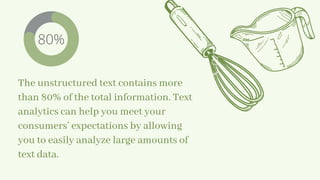
The unstructured text contains more
than 80% of the total information. Text
analytics can help you meet your
consumers’ expectations by allowing
you to easily analyze large amounts of
text data.
80%
The text analysis solution
assisted the foodservice client in
assessing customer views of the
brand. The client was also looking
for techniques to evaluate
customer sentiment using
scoring systems.
in order to better optimize the company’s products and services. The
interaction also assessed customer feedback and assisted the client in
doing social market research.


FURTHERMORE, THE FOODSERVICE
CUSTOMER WAS ABLE TO GATHER
INFORMATION FROM READILY AVAILABLE
SOURCES, SUCH AS INTERNET REVIEWS
AND SOCIAL MEDIA DEBATES,
Application of
Text Analysis in
the Food Industry
Quick and fun
demonstration
Presentations are communication tools that can
be used as demonstrations, lectures, speeches,
reports, and more.
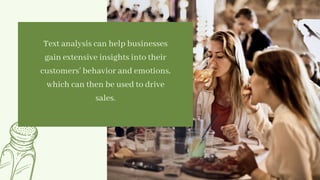
Text analysis can help businesses
gain extensive insights into their
customers’ behavior and emotions,
which can then be used to drive
sales.
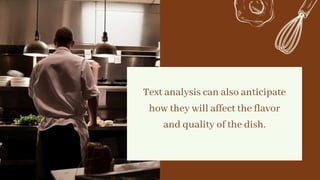
Text analysis can also anticipate
how they will affect the flavor
and quality of the dish.
The insights gathered from this
analysis will be used to identify
problem areas and suggest
improvement actions.
Target market surveys can benefit
any consumer activity, and text
analysis allows you to examine
open-ended questions.
Restaurants can swiftly
examine thousands of text-
heavy surveys and evaluations
to improve their services.
Some Common
Methods of
Analyzing Texts in
the Food Industry-
Intent Detection
ANALYZE SUPPORT DATA OR INCOMING TICKETS
AND IDENTIFY THE INTENT OF THE AUTHOR.
IDENTIFY PURCHASE INTENT, COMPLAINTS AS
WELL AS QUERIES AND PROVIDE SOLUTIONS WITH
GREATER EFFICIENCY.
ANALYZE CUSTOMER REVIEWS AND COMPLAINTS
TO IDENTIFY KEY ISSUES THAT YOUR PATIENTS
FACE. CLASSIFY AND PRIORITIZE ISSUES BASED
ON URGENCY.
Semantic Similarity


DISSECT AND INTERPRET LARGE VOLUMES OF
UNSTRUCTURED TEXT AND IDENTIFY THE
SIMILARITIES BETWEEN THE SERVICES OFFERED
IN THE INDUSTRY.
SEMANTIC SIMILARITIES CAN BE USED TO
EXTRACT SIMILAR AND RELATED KEYWORDS FROM
COMPLEX AND UNSTRUCTURED PIECES OF TEXT
AND INCREASE YOUR SEO AUTHORITY.
Feature Extraction


EXTRACT MARKET AND COMPETITIVE
INTELLIGENCE FROM UNSTRUCTURED TEXT.
ANALYZE REVIEWS TO UNDERSTAND CUSTOMER
EXPECTATIONS OR GET COMPETITIVE INSIGHTS
TO GROW YOUR BUSINESS.
Sentiment Analysis


CROWDSOURCE REVIEWS AND ANALYZE THEM
WITH TEXT ANALYTICS TO DISSECT THE
SENTIMENTS, OPINIONS, REVIEWS, AND
SUGGESTIONS OF YOUR CUSTOMERS.
EXTRACTING AND ANALYZING REVIEWS,
OPINIONS, SUGGESTIONS, AND SOCIAL MEDIA
POSTS TO EXAMINE SENTIMENTS.
Keyword Extraction


AUTOMATE EXTRACTION OF BUSINESS AND
COMPETITIVE INTELLIGENCE FROM
UNSTRUCTURED TEXT. ANALYZE FEEDBACK DATA
AND UNCOVER VALUABLE INSIGHTS.
YOU CAN SUMMARISE THE TEXTUAL DATA AND
KEY POINTS OF DISCUSSION FOR SOCIAL MEDIA
ANALYSIS.
BytesView’s advanced machine learning techniques can dissect and interpret
insights from large volumes of unstructured text. Analyze customer feedback
from various sources to identify strengths and areas of improvement.


Identify new trends, understand what your customers like, and what they
don’t. Evaluate the various aspects of a restaurant that enhance the overall
user experience.
Thank you!

Text Analysis in Food Industry

  • 1.
  • 2.
    THE FOOD SECTORIS GRADUALLY GROWING WORLDWIDE, WITH OPERATORS AND MANUFACTURERS ACCOUNTING FOR THE VAST MAJORITY OF THE GLOBAL MARKET SHARE Food product developments, personalization, and increased demand for healthy meals among target groups are all effectively contributing to the expansion of the foodservice space.
  • 3.
    Restaurants are eagerto adopt new technologies in order to deliver better, more personalized service. One of the most sought-after options is text analytics. 4 tablespoons water 1 teaspoon salt 3 large eggs 2 cups flour 4 tablespoons olive oil
  • 4.
    The unstructured textcontains more than 80% of the total information. Text analytics can help you meet your consumers’ expectations by allowing you to easily analyze large amounts of text data. 80%
  • 5.
    The text analysissolution assisted the foodservice client in assessing customer views of the brand. The client was also looking for techniques to evaluate customer sentiment using scoring systems.
  • 6.
    in order tobetter optimize the company’s products and services. The interaction also assessed customer feedback and assisted the client in doing social market research. FURTHERMORE, THE FOODSERVICE CUSTOMER WAS ABLE TO GATHER INFORMATION FROM READILY AVAILABLE SOURCES, SUCH AS INTERNET REVIEWS AND SOCIAL MEDIA DEBATES,
  • 7.
    Application of Text Analysisin the Food Industry
  • 8.
    Quick and fun demonstration Presentationsare communication tools that can be used as demonstrations, lectures, speeches, reports, and more.
  • 9.
    Text analysis canhelp businesses gain extensive insights into their customers’ behavior and emotions, which can then be used to drive sales.
  • 10.
    Text analysis canalso anticipate how they will affect the flavor and quality of the dish.
  • 11.
    The insights gatheredfrom this analysis will be used to identify problem areas and suggest improvement actions.
  • 12.
    Target market surveyscan benefit any consumer activity, and text analysis allows you to examine open-ended questions.
  • 13.
    Restaurants can swiftly examinethousands of text- heavy surveys and evaluations to improve their services.
  • 14.
    Some Common Methods of AnalyzingTexts in the Food Industry-
  • 15.
    Intent Detection ANALYZE SUPPORTDATA OR INCOMING TICKETS AND IDENTIFY THE INTENT OF THE AUTHOR. IDENTIFY PURCHASE INTENT, COMPLAINTS AS WELL AS QUERIES AND PROVIDE SOLUTIONS WITH GREATER EFFICIENCY. ANALYZE CUSTOMER REVIEWS AND COMPLAINTS TO IDENTIFY KEY ISSUES THAT YOUR PATIENTS FACE. CLASSIFY AND PRIORITIZE ISSUES BASED ON URGENCY.
  • 16.
    Semantic Similarity DISSECT ANDINTERPRET LARGE VOLUMES OF UNSTRUCTURED TEXT AND IDENTIFY THE SIMILARITIES BETWEEN THE SERVICES OFFERED IN THE INDUSTRY. SEMANTIC SIMILARITIES CAN BE USED TO EXTRACT SIMILAR AND RELATED KEYWORDS FROM COMPLEX AND UNSTRUCTURED PIECES OF TEXT AND INCREASE YOUR SEO AUTHORITY.
  • 17.
    Feature Extraction EXTRACT MARKETAND COMPETITIVE INTELLIGENCE FROM UNSTRUCTURED TEXT. ANALYZE REVIEWS TO UNDERSTAND CUSTOMER EXPECTATIONS OR GET COMPETITIVE INSIGHTS TO GROW YOUR BUSINESS.
  • 18.
    Sentiment Analysis CROWDSOURCE REVIEWSAND ANALYZE THEM WITH TEXT ANALYTICS TO DISSECT THE SENTIMENTS, OPINIONS, REVIEWS, AND SUGGESTIONS OF YOUR CUSTOMERS. EXTRACTING AND ANALYZING REVIEWS, OPINIONS, SUGGESTIONS, AND SOCIAL MEDIA POSTS TO EXAMINE SENTIMENTS.
  • 19.
    Keyword Extraction AUTOMATE EXTRACTIONOF BUSINESS AND COMPETITIVE INTELLIGENCE FROM UNSTRUCTURED TEXT. ANALYZE FEEDBACK DATA AND UNCOVER VALUABLE INSIGHTS. YOU CAN SUMMARISE THE TEXTUAL DATA AND KEY POINTS OF DISCUSSION FOR SOCIAL MEDIA ANALYSIS.
  • 20.
    BytesView’s advanced machinelearning techniques can dissect and interpret insights from large volumes of unstructured text. Analyze customer feedback from various sources to identify strengths and areas of improvement. Identify new trends, understand what your customers like, and what they don’t. Evaluate the various aspects of a restaurant that enhance the overall user experience.
  • 21.