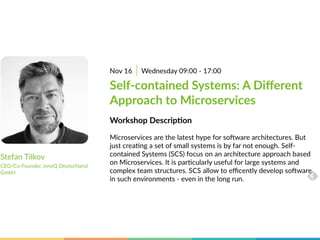
Self-contained
Systems: A Different
Approach to
Microservices
http://continuous-delivery-buch.de/
http://microservices-buch.de/ http://microservices-book.com/
http://microservices-book.com/primer.html
FREE!!!!
Microservice Definition
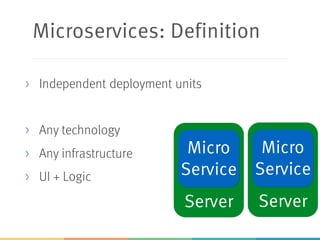
Server Server
Microservices: Definition
> Independent deployment units
> Any technology
> Any infrastructure
> UI + Logic
Micro
Service
Micro
Service
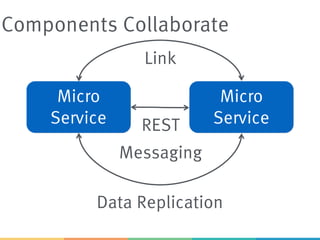
Components Collaborate
Micro
Service
Micro
Service
Link
Data Replication
REST
Messaging
Distributed System
Distributed System
Why??
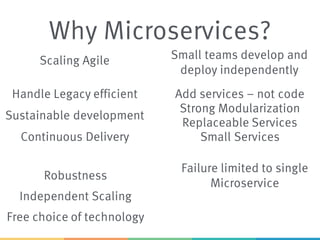
Why Microservices?
Strong Modularization
Scaling Agile
Sustainable development
Replaceable Services
Continuous Delivery
Free choice of technology
Handle Legacy efficient
Independent Scaling
Robustness
Small teams develop and
deploy independently
Add services – not code
Small Services
Failure limited to single
Microservice
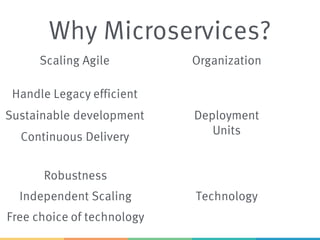
Why Microservices?
Scaling Agile
Sustainable development
Continuous Delivery
Free choice of technology
Handle Legacy efficient
Independent Scaling
Robustness
Organization
Deployment
Units
Technology
Single Developer
Scaling Agile
Sustainable development
Continuous Delivery
Free choice of technology
Handle Legacy efficient
Independent Scaling
Robustness
Organization
Deployment
Units
Technology
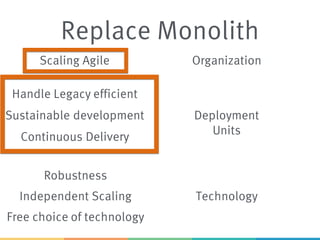
Replace Monolith
Scaling Agile
Sustainable development
Continuous Delivery
Free choice of technology
Handle Legacy efficient
Independent Scaling
Robustness
Organization
Deployment
Units
Technology
Layered
iOS Android Web
Order Search Catalog
BillingCustomer
Backend Backend Backend
Layered
> Reusable Backend Services
> Mobile client / Web App as frontend
> Backend for frontend (BFF): Custom
backend services
> ...to implement frontend specific logic
> E.g. Netflix
Layered: Benefits
> Good way to build an API
> E.g. for mobile
> Might be easier to migrate into
> …if existing architecture is similar
Layered: Issues
> BFF might contain the same logic –
same processes
> Processes are the most relevant logic
> Changing a business process cause
changes in many services – BFF, Frontend,
backend
> Lots of communication between teams and
components
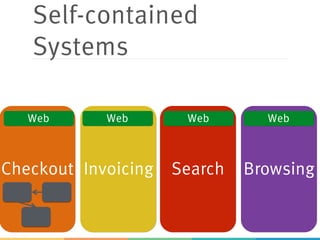
Self-contained
Systems
Checkout Search BrowsingInvoicing
Web Web Web Web
Self-contained
Systems (SCS)
> SCS: Autonomous web application
> Optional service API (e.g. for mobile clients)
> Includes data & logic
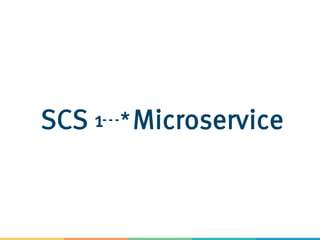
> Might contain several microservices
> No shared UI
> No shared business code
> E.g. Otto, Kaufhof, Kühne + Nagel ...
SCS: Benefits
> Business logic for one domain in one SCS
> Change usually local to one SCS
> Less communication between SCS
> I think this should be the goal
Self-Contained System
(SCS)
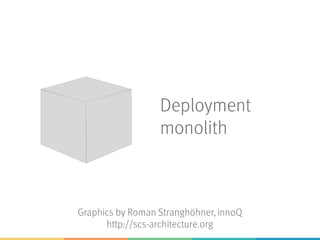
Deployment
monolith
Graphics by Roman Stranghöhner, innoQ
http://scs-architecture.org
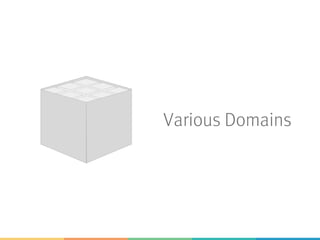
Various Domains
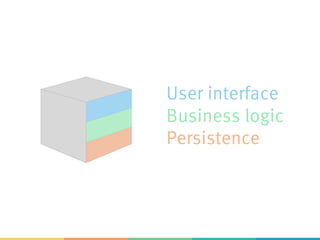
User interface
Business logic
Persistence
… a lot of modules,
components,
frameworks and
libraries
With all these
layers in one
place, a
monolith
tends to
grow.
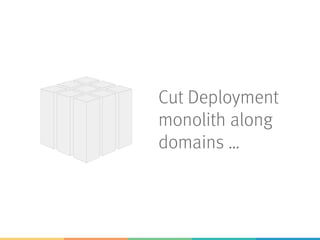
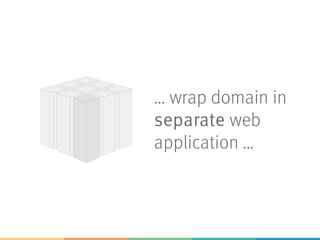
Cut Deployment
monolith along
domains …
… wrap domain in
separate web
application …
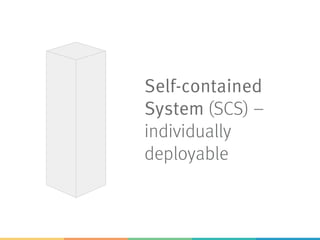
Self-contained
System (SCS) –
individually
deployable
Decentralized unit
communicating with
other systems via
RESTful HTTP or
lightweight
messaging.
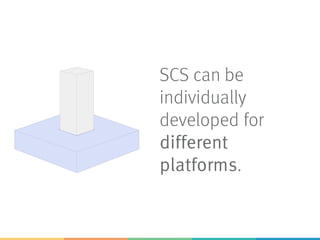
SCS can be
individually
developed for
different
platforms.
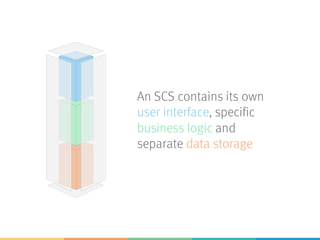
An SCS contains its own
user interface, specific
business logic and
separate data storage
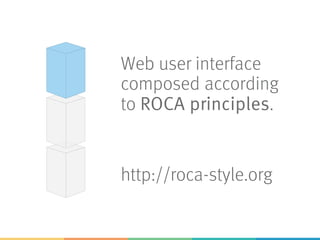
Web user interface
composed according
to ROCA principles.
http://roca-style.org
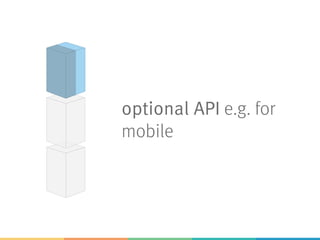
optional API e.g. for
mobile
Logic only shared over
a well defined
interface.
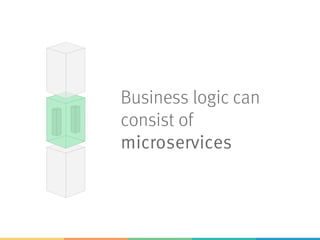
Business logic can
consist of
microservices
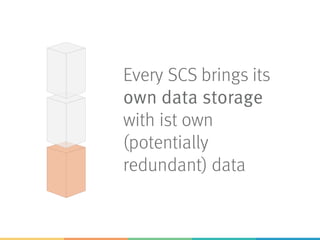
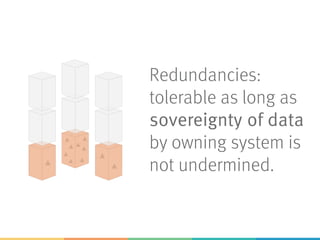
Every SCS brings its
own data storage
with ist own
(potentially
redundant) data
Redundancies:
tolerable as long as
sovereignty of data
by owning system is
not undermined.
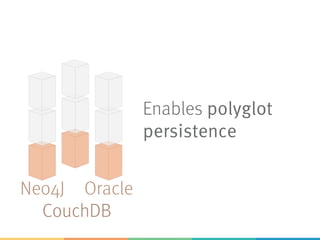
Enables polyglot
persistence
Neo4J
CouchDB
Oracle
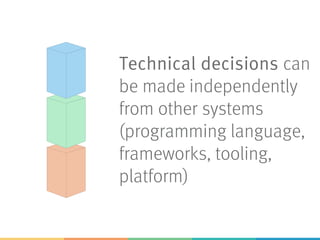
Technical decisions can
be made independently
from other systems
(programming language,
frameworks, tooling,
platform)
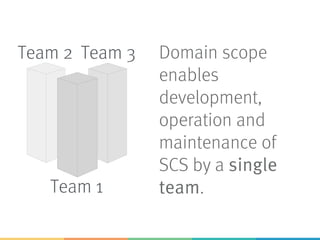
Domain scope
enables
development,
operation and
maintenance of
SCS by a single
team.Team 1
Team 2 Team 3
Self-contained
Systems
should be integrated
in the web interface
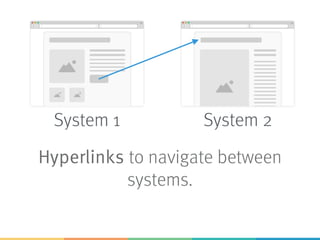
Hyperlinks to navigate between
systems.
System 1 System 2
System 1 System 2
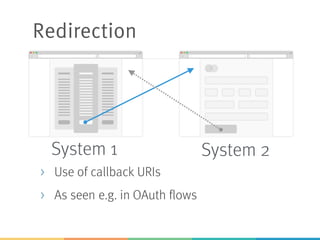
Redirection
> Use of callback URIs
> As seen e.g. in OAuth flows
Server-side integration
> Centralized aggregation
> Bottleneck (runtime/development time)
Browser
UI 1
UI 2
Frontend
Server
Backend 1
Backend 2
https://github.com/
ewolff/SCS-ESI
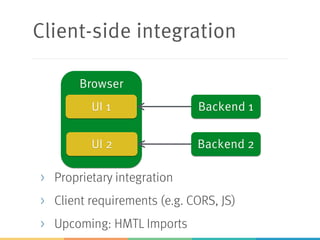
Client-side integration
> Proprietary integration
> Client requirements (e.g. CORS, JS)
> Upcoming: HMTL Imports
Browser
UI 1
UI 2
Backend 1
Backend 2
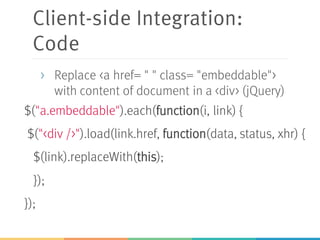
Client-side Integration:
Code
$("a.embeddable").each(function(i, link) {
$("<div />").load(link.href, function(data, status, xhr) {
$(link).replaceWith(this);
});
});
> Replace <a href= " " class= "embeddable">
with content of document in a <div> (jQuery)
https://github.com/
ewolff/SCS-jQuery
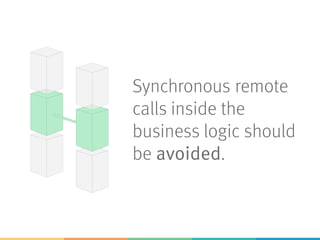
Synchronous remote
calls inside the
business logic should
be avoided.
Asynchronous Remote
calls reduce
dependencies and
prevent error
cascades.
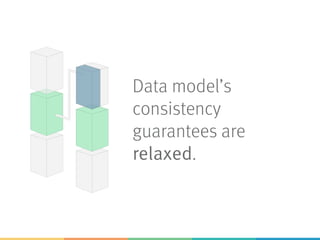
Data model’s
consistency
guarantees are
relaxed.
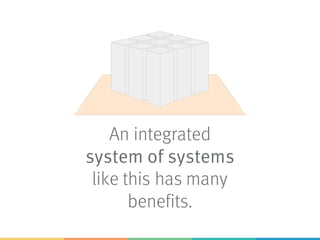
An integrated
system of systems
like this has many
benefits.
Resilience is improved
through loosely
coupled, replaceable
systems.
SCSs can be
individually
scaled to serve
varying demands.
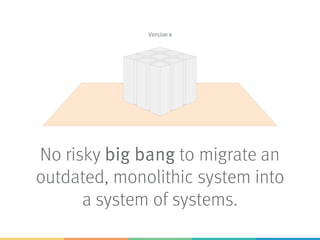
No risky big bang to migrate an
outdated, monolithic system into
a system of systems.
Version 1Version 2
Migration in small, manageable steps
which minimize risk of failure and lead to
an evolutionary modernization
of big and complex systems.
1 *MicroserviceSCS
Conclusion
> SCS: autonomouos web application
> Might consist of Microservices
> Focus on UI Integration
> Almost completet independence
> Coarse-grained architecture approach
Conclusion
> Self-contained systems are Microservices …
> that are not “micro”…
> and don’t have to be “services”
> Many are doing it already!
> http://scs-
architecture.org
> Creative commons
> Source on Github
> Slidedeck
Self-contained Systems: A Different Approach to Microservices

Self-contained Systems: A Different Approach to Microservices