Microservices:
Redundancy =
Maintainability!
Eberhard Wolff
@ewolff
Fellow
innoQ
http://continuous-delivery-buch.de/
http://microservices-buch.de/ http://microservices-book.com/
http://microservices-book.com/primer.html
FREE!!!!
Maintainablity
Redundant data
Redudant code
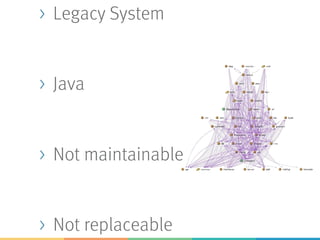
Legacy System
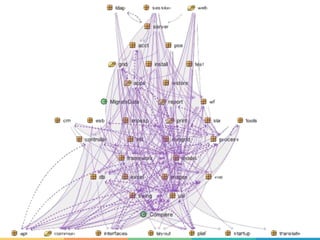
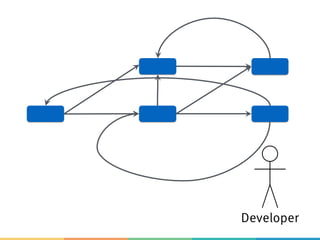
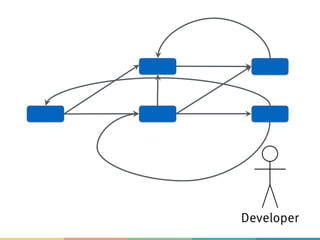
Too many dependencies
Cyclic dependencies
(dotted lines)
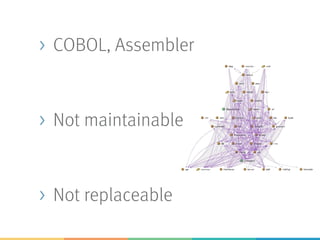
> COBOL, Assembler
> Not maintainable
> Not replaceable
L
> We will replace it!
> We will make it maintainable!
> It will be beautiful!
We will take good care
of the code!
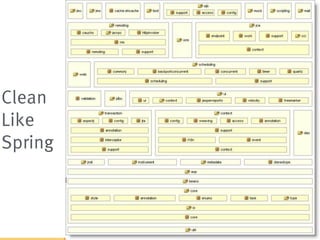
Clean
Like
Spring
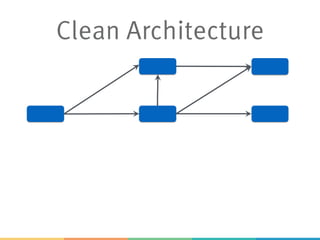
Clean Architecture
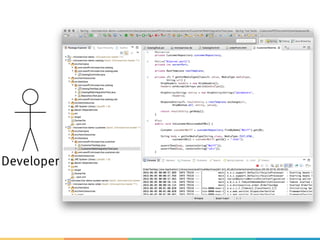
Developer
Developer
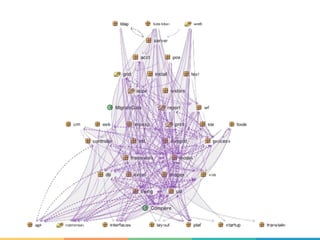
Result?
> Legacy System
> Java
> Not maintainable
> Not replaceable
L
> We didn’t try hard enough!
> We will replace it!
> We will make it maintainable!
> It will be beautiful!
LI need a new job.
While there are still
developers:
Replace the legacy system.
Repeat
Insanity:
Doing the same thing
over and over again
and expecting different
results.
Albert Einstein
We can achieve
maintainability with
clean architecture +
clean code.
We can achieve
maintainability with
clean architecture +
clean code.
Clean approach tried often.
Results?
Lots of Legacy Code
…and secure jobs.
We need a different
approach!
Parnas 1972
Modules
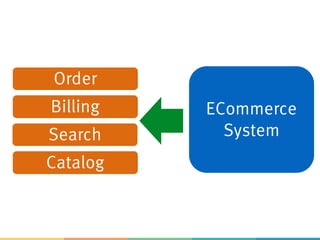
ECommerce
System
Order
Catalog
Billing
Search
Modules by Domain
> Each domain problem solved
in one module.
> New features easy to add
Modules
> Programming language feature
> Class, package, library …
> Rather weak modules
Developer
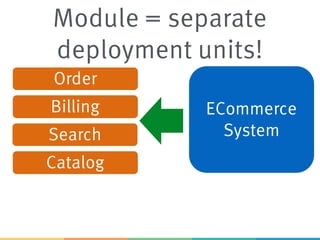
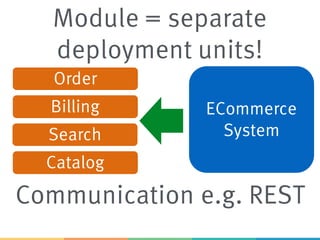
Microservices
> Modules
> Separate deployment units
> Separate VM / process
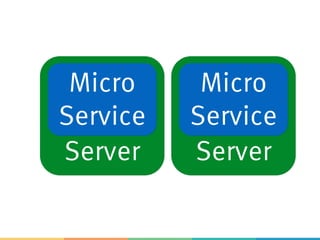
Server Server
Micro
Service
Micro
Service
ECommerce
System
Order
Catalog
Billing
Search
Module = separate
deployment units!
ECommerce
System
Order
Catalog
Billing
Search
Module = separate
deployment units!
Communication e.g. REST
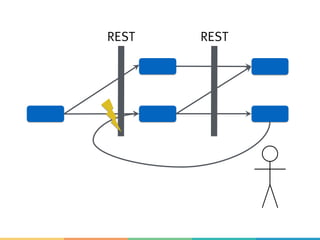
REST REST
ECommerce
System
Order
Catalog
Billing
Search
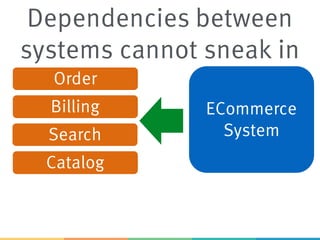
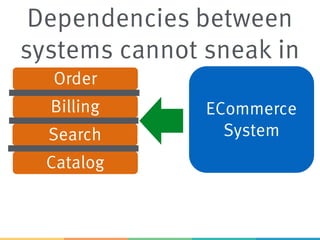
Dependencies between
systems cannot sneak in
ECommerce
System
Order
Catalog
Billing
Search
Dependencies between
systems cannot sneak in
ECommerce
System
Order
Catalog
Billing
Search
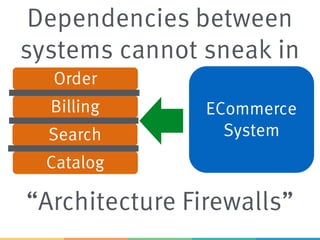
Dependencies between
systems cannot sneak in
“Architecture Firewalls”
“Architecture Firewall”
like REST
enforce the architecture
ECommerce
System
Order
Catalog
Billing
Search
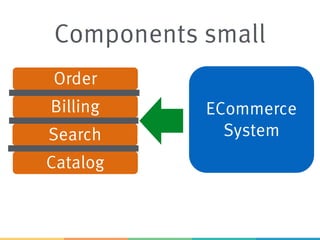
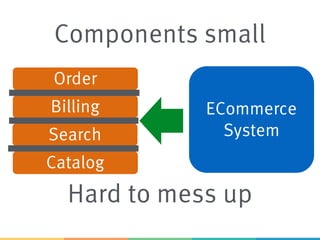
Components small
ECommerce
System
Order
Catalog
Billing
Search
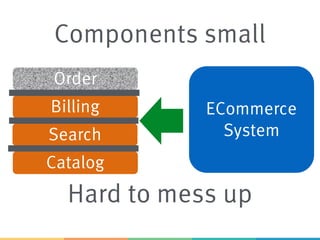
Components small
Hard to mess up
ECommerce
System
Order
Catalog
Billing
Search
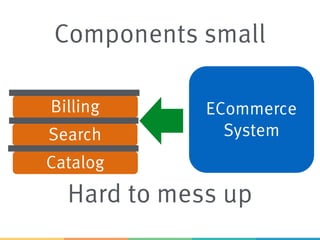
Components small
Hard to mess up
ECommerce
System
Catalog
Billing
Search
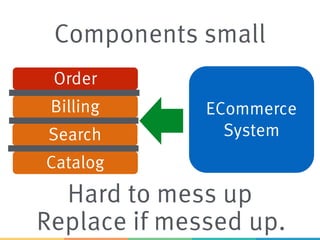
Components small
Hard to mess up
ECommerce
System
Order
Catalog
Billing
Search
Components small
Hard to mess up
Replace if messed up.
Small,
independent deployable
modules
are recyclable.
Recycle your
software!
!
How many people
are trying
to replace legacy
systems?
Replaceability
is usually no goal
for a software project.
Why??
We can achieve
maintainability with
clean architecture +
clean code
We can achieve
maintainability with
architecture firewalls +
recyclable modules
Maintainability
Redundancy
Redundancy
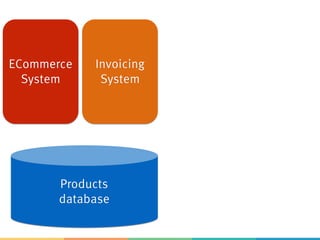
Redundant data
Every information
should be stored and
updated in one place.
No redundancy for
our product data!
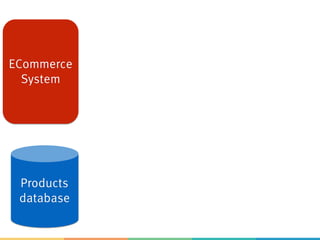
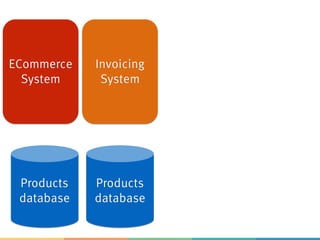
ECommerce
System
Products
database
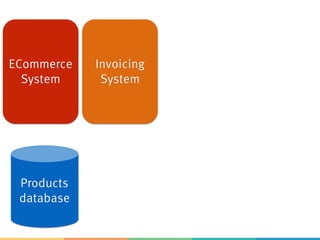
ECommerce
System
Invoicing
System
Products
database
ECommerce
System
Invoicing
System
Products
database
Products
database
ECommerce
System
Products
database
Invoicing
System
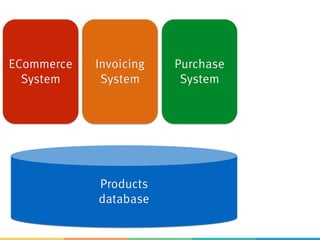
ECommerce
System
Products
database
Invoicing
System
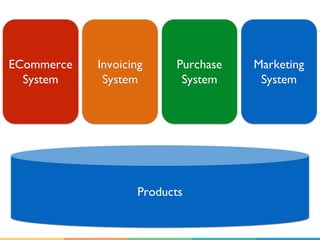
Purchase
System
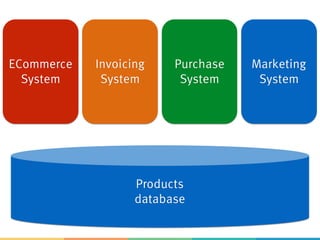
ECommerce
System
Products
database
Invoicing
System
Purchase
System
Marketing
System
Products
data model?
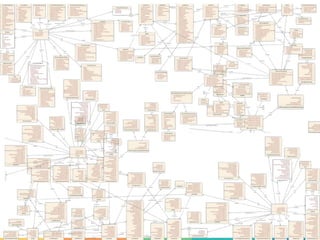
No redundancies
High complexity
Hard to change
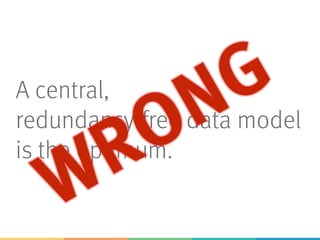
A central,
redundancy-free data model
is the optimum.
A central,
redundancy-free data model
is the optimum.
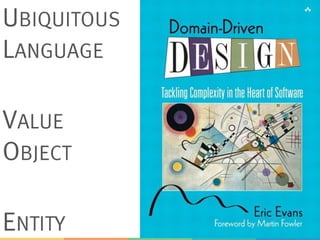
UBIQUITOUS
LANGUAGE
VALUE
OBJECT
ENTITY
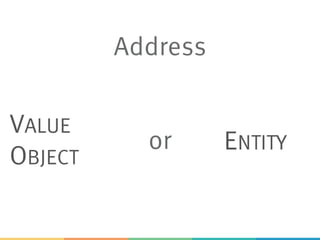
Address
VALUE
OBJECT
ENTITYor
529 pages
Part IV
Chapter 14
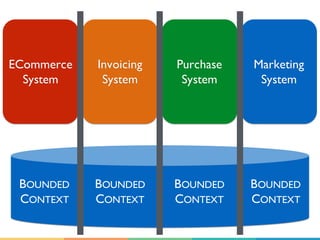
A domain model
is only useful
in a Bounded Context.
There is no
universal data model
in a large system.
Let me repeat:
There is no
universal data model
in a large system.
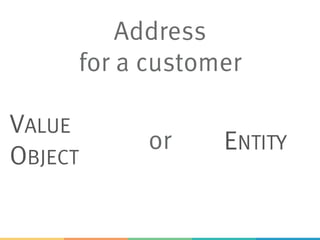
Address
for a customer
VALUE
OBJECT
ENTITYor
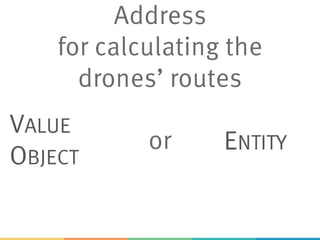
Address
for calculating the
drones’ routes
VALUE
OBJECT
ENTITYor
ECommerce
System
Products
Invoicing
System
Purchase
System
Marketing
System
ECommerce
System
Invoicing
System
Purchase
System
Marketing
System
BOUNDED
CONTEXT
BOUNDED
CONTEXT
BOUNDED
CONTEXT
BOUNDED
CONTEXT
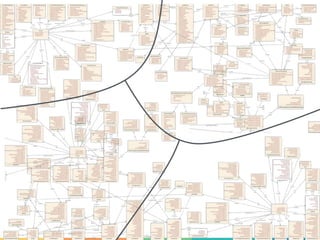
Create a model
for each BOUNDED CONTEXT.
Each BOUNDED CONTEXT
can be a Microservice
with its own database schema
Low complexity
Easy to change
i.e. easy to maintain
Few redundancies
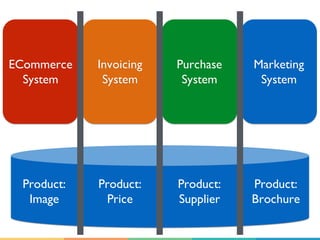
Separate facets
ECommerce
System
Invoicing
System
Purchase
System
Marketing
System
Product:
Image
Product:
Price
Product:
Supplier
Product:
Brochure
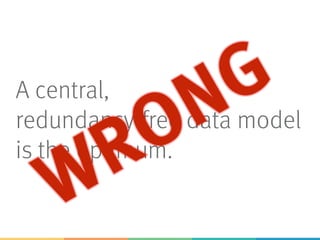
A central,
redundancy-free data model
is the optimum.
A central,
“redundancy-free”
data model
is often hard to maintain
and wrong.
Redundancy
Redundant data
Redundancy
Redundant code
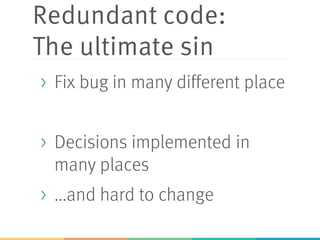
Redundant code:
The ultimate sin
> Fix bug in many different place
> Decisions implemented in
many places
> ...and hard to change
DRY
Don’t
Repeat
Yourself
DRY Systems?
Great!
DRY between systems?
DRY is a trade-off
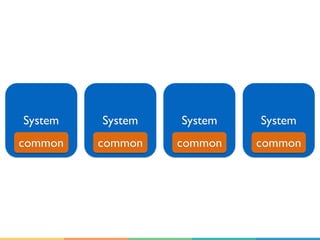
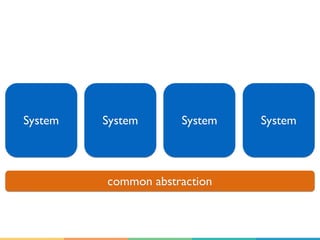
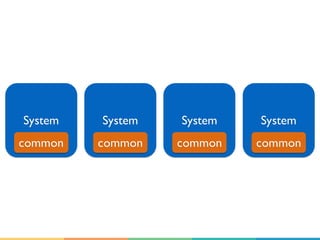
System System System System
common common common common
System System System System
common abstraction
Reuse:
The Holy Grail
of the nineties
So where are all the
reusable internal
frameworks?
Premature optimization,
that’s like a sneeze.
Premature abstraction
is like Ebola;
it makes my eyes bleed.
Christer Ericson
The entire history of
software engineering
is that of the
rise in levels of abstraction.
Grady Booch
Using code is hard.
Reusing code is almost
impossible.
But we are reusing Open
Source all the time!
Create an Open
Source project!
Open Source
> Good code quality
> Documentation
> Model to accept contributions
“But high quality Open Source is hard.
We just share code!”
“You only provide high quality as Open
Source…
...but for colleagues low quality is OK?”
Let’s assume it’s possible to reuse code.
Reuse is still a tradeoff.
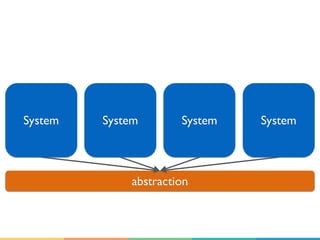
System System System System
common common common common
System System System System
abstraction
System System System System
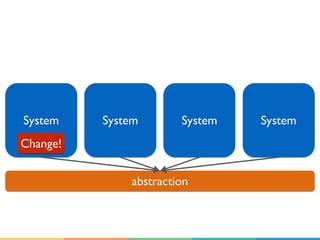
abstraction
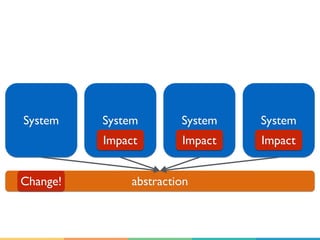
Change!
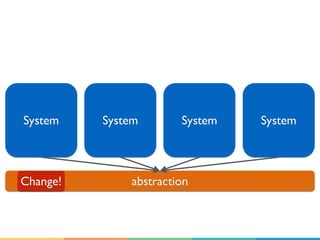
System System System System
abstractionChange!
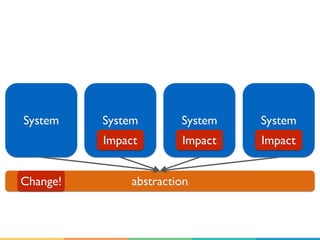
System System System System
abstractionChange!
Impact Impact Impact
System System System System
abstractionChange!
Impact Impact Impact
Now we have reuse
…and a dependency.
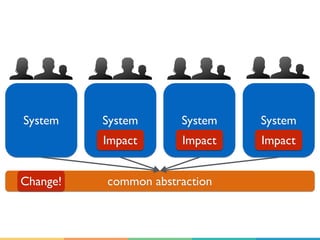
Dependency not just
in software!
System System System System
common abstractionChange!
Impact Impact Impact
Dependency between teams
Coordination
Meetings
Getting no real work done
L
Reuse is a tradeoff:
Reuse vs.
Independence
Independence=
Easy to change=
Maintainability
Independence is important
for self-organization.
Self-organization =
deciding yourself
Not meetings upon meetings
Deciding yourself
is only possible,
if teams and modules
are independent.
Redundancies between
systems must be avoided.
Redundancies between
systems must be avoided.
Reuse is a tradeoff:
Reuse vs.
Independence
Microservices focus
on independence
The Microservices
Manifesto ;-)
Microservices
Manifesto ;-)
We value:
Replaceability over
maintainability
Microservices
Manifesto ;-)
We value:
BOUNDED CONTEXT over
redundancy-free data
Microservices
Manifesto ;-)
We value:
Independence over
“Don’t Repeat Yourself!”
Replaceability over
maintainability
BOUNDED CONTEXT over
redundant-free data
Independence over DRY

Microservices: Redundancy=Maintainability