See people,
not patterns
2019 Consumer Pulse Survey
Accenture Interactive’s Consumer Pulse
Survey offers insight into how brands
are creating paths to success with
digital advertising.
2019 Consumer Pulse Survey
With data comes
respect and
responsibility
25 years since the first digital ad
banner*, digital advertising now plays a
bigger role in the cultural conversation
than ever before.
There is no longer patience for invasive
experiences – consumers expect brands
to see them for who they really are.
Copyright © 2019 Accenture. All rights reserved.
*Source: https://www.thedrum.com/news/2019/06/14/one-banner-ad-global-industry-digital-advertising-25-years
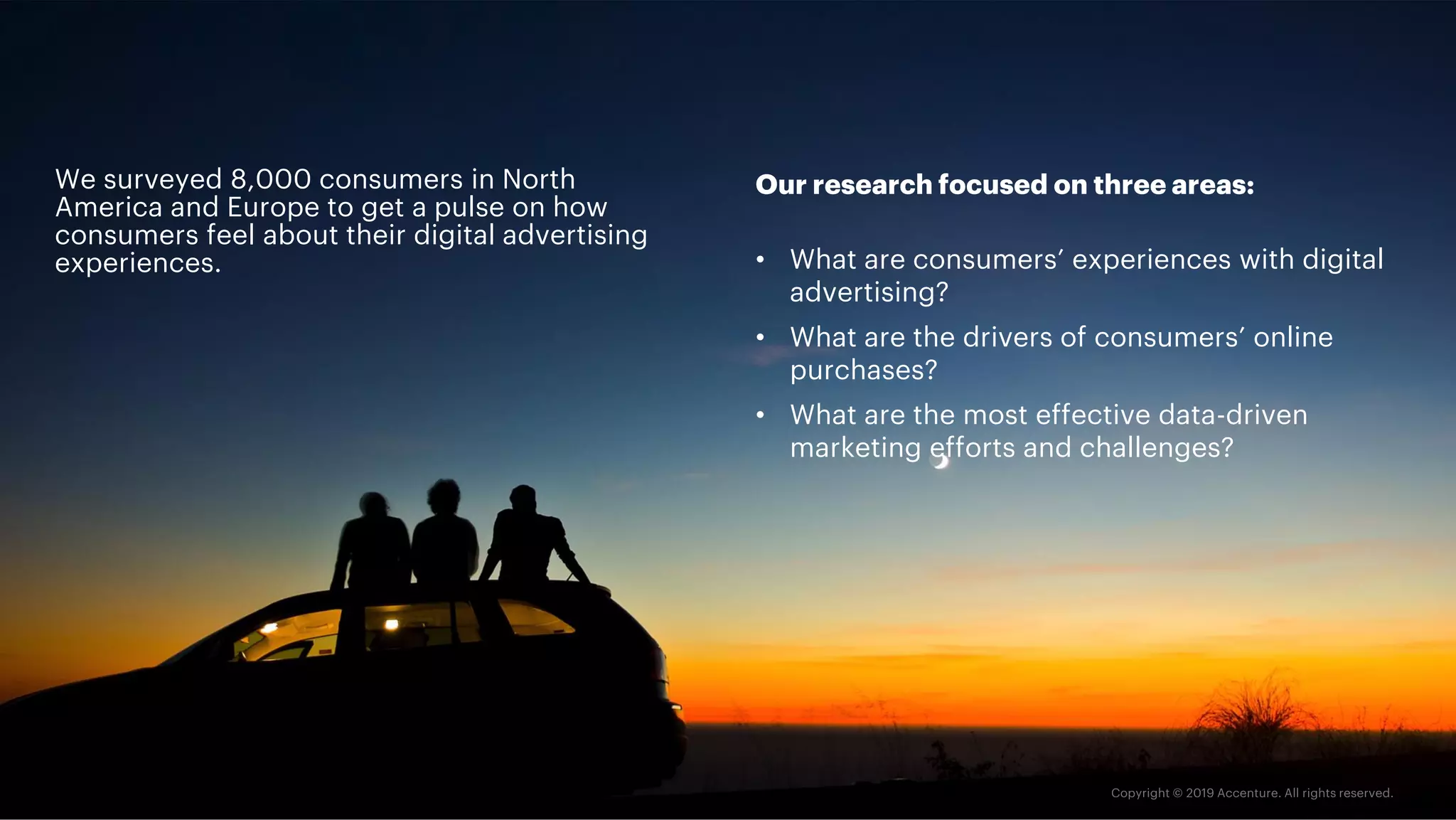
We surveyed 8,000 consumers in North
America and Europe to get a pulse on how
consumers feel about their digital advertising
experiences.
Our research focused on three areas:
• What are consumers’ experiences with digital
advertising?
• What are the drivers of consumers’ online
purchases?
• What are the most effective data-driven
marketing efforts and challenges?
Just because you
can doesn’t mean
you should.
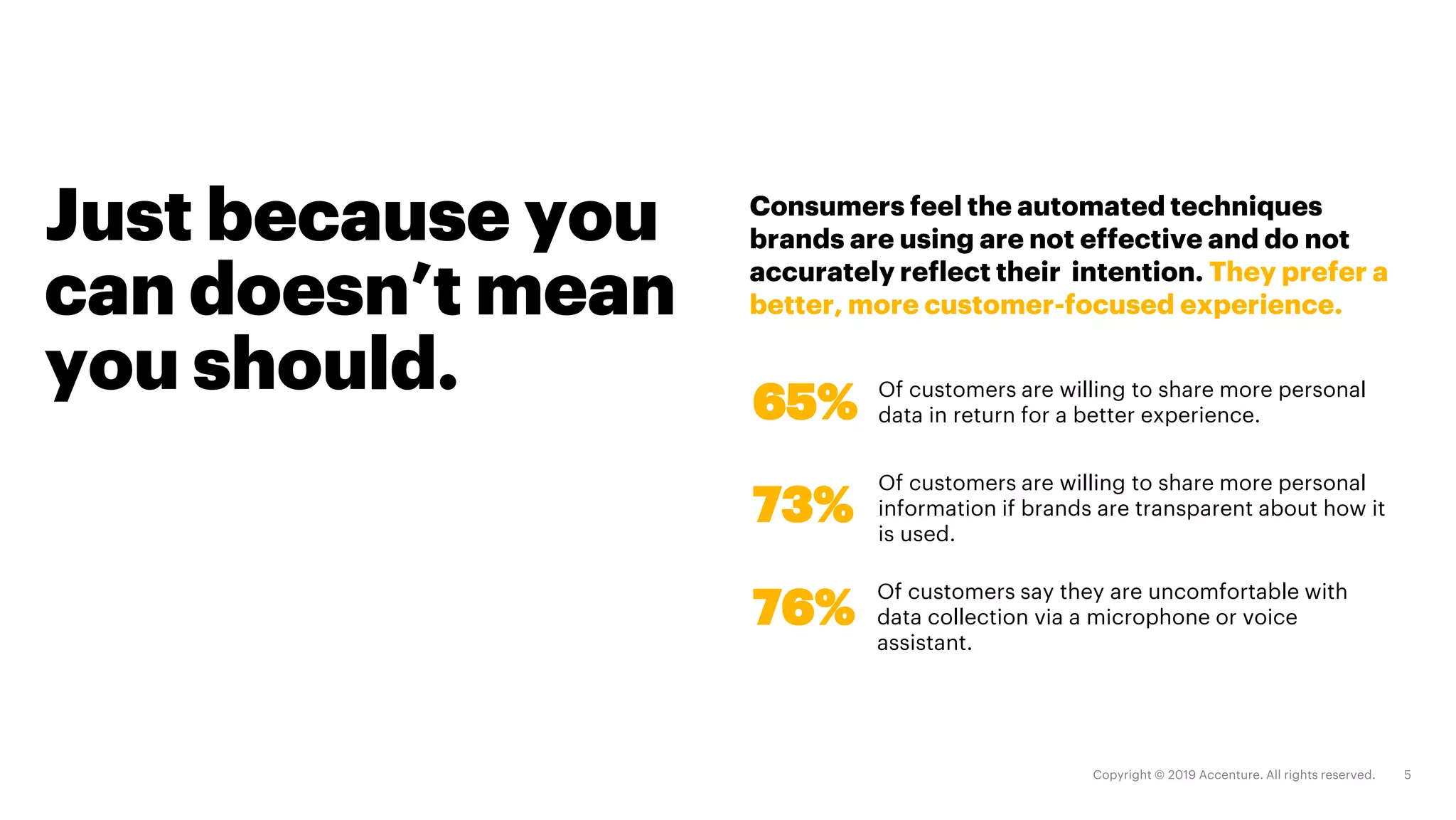
Consumers feel the automated techniques
brands are using are not effective and do not
accurately reflect their intention. They prefer a
better, more customer-focused experience.
65%
73%
76%
Of customers are willing to share more personal
data in return for a better experience.
Of customers are willing to share more personal
information if brands are transparent about how it
is used.
Of customers say they are uncomfortable with
data collection via a microphone or voice
assistant.
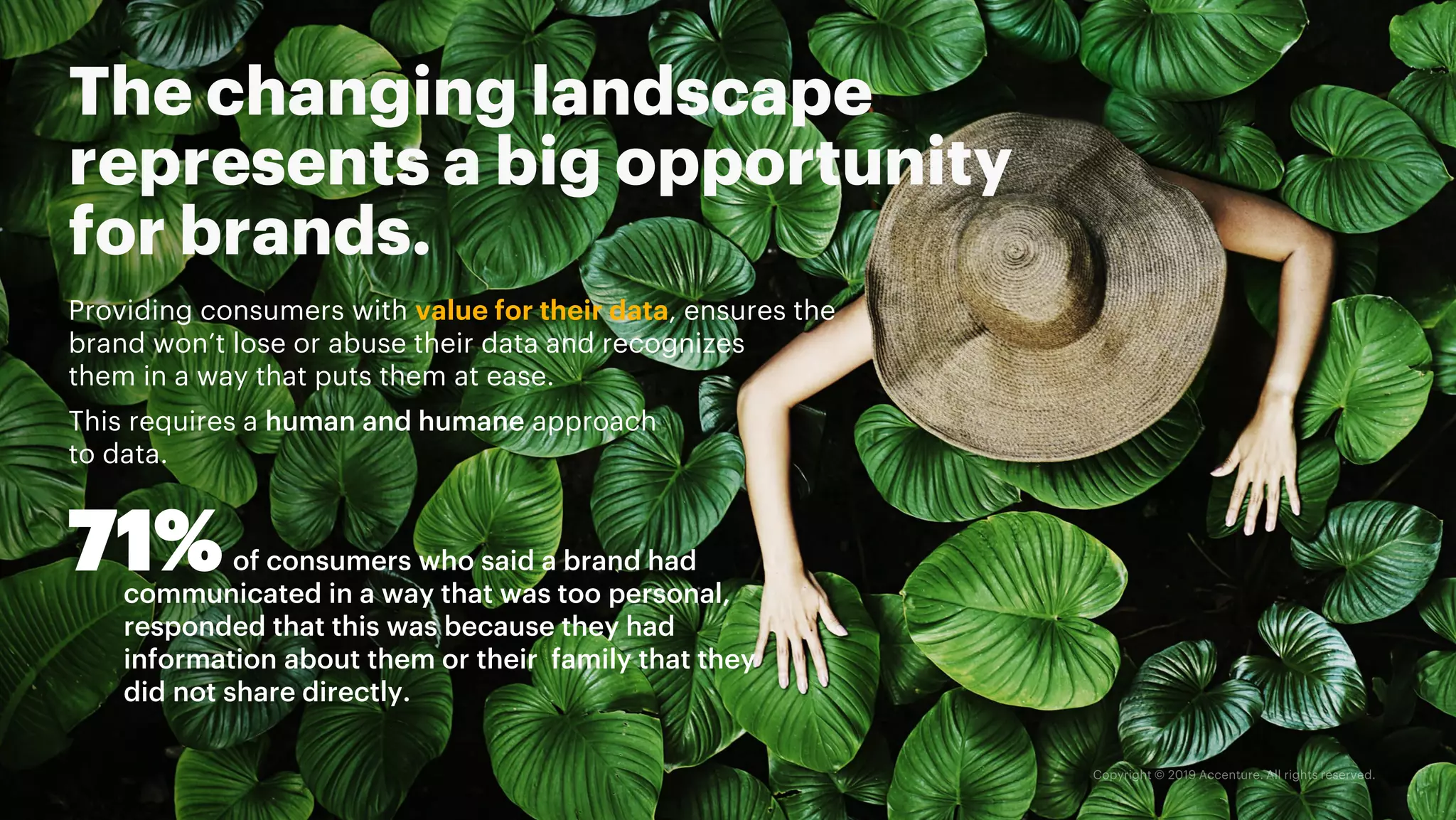
Providing consumers with value for their data, ensures the
brand won’t lose or abuse their data and recognizes
them in a way that puts them at ease.
This requires a human and humane approach
to data.
The changing landscape
represents a big opportunity
for brands.
of consumers who said a brand had
communicated in a way that was too personal,
responded that this was because they had
information about them or their family that they
did not share directly.
71%
Forward-thinking brands are
finding ways to behave in a
human and ethical way
(vs. creeping consumers out)
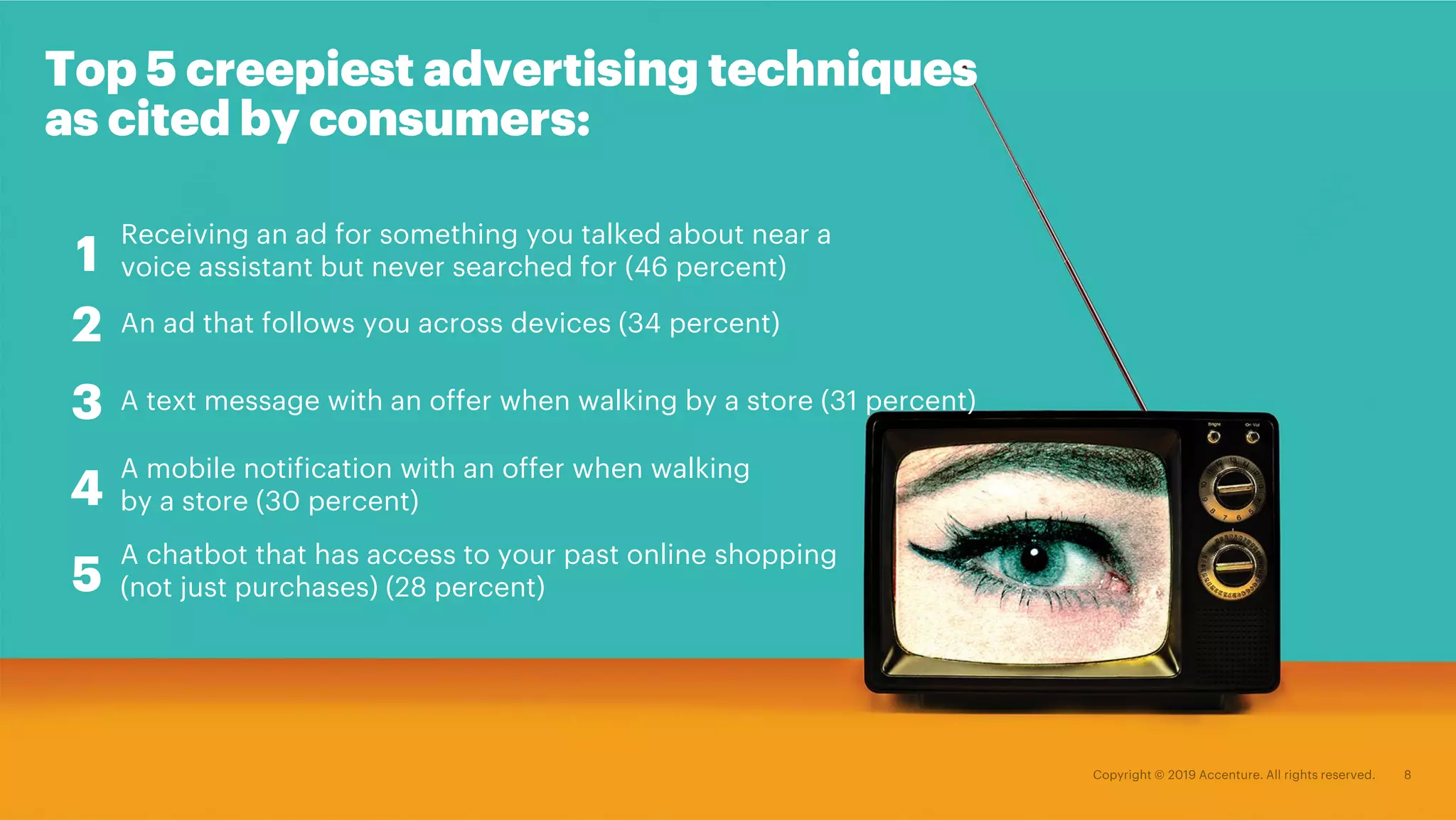
Receiving an ad for something you talked about near a
voice assistant but never searched for (46 percent)
Top 5 creepiest advertising techniques
as cited by consumers:
An ad that follows you across devices (34 percent)
A text message with an offer when walking by a store (31 percent)
A mobile notification with an offer when walking
by a store (30 percent)
A chatbot that has access to your past online shopping
(not just purchases) (28 percent)
1
2
3
4
5
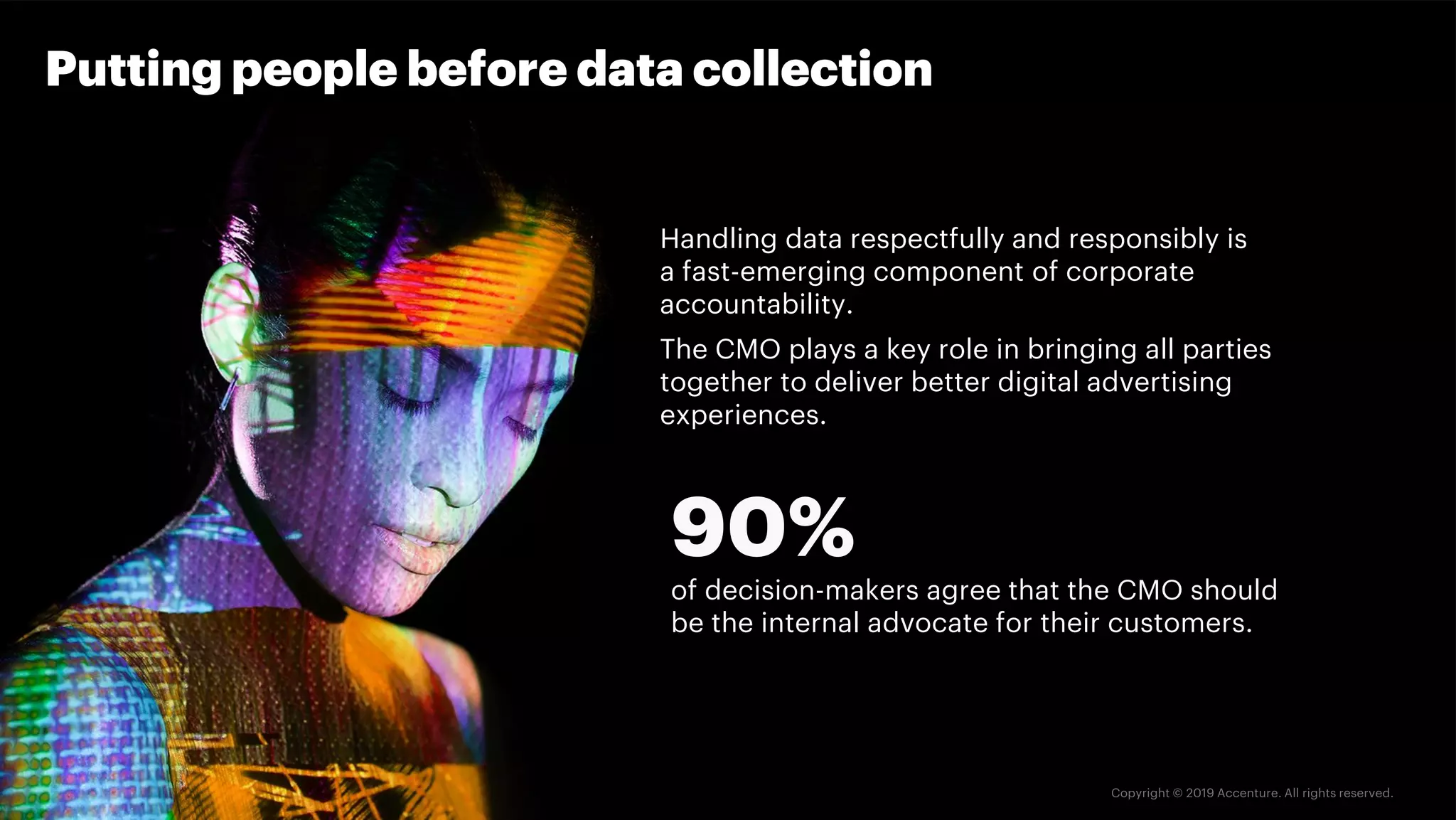
Handling data respectfully and responsibly is
a fast-emerging component of corporate
accountability.
The CMO plays a key role in bringing all parties
together to deliver better digital advertising
experiences.
Putting people before data collection
90%
of decision-makers agree that the CMO should
be the internal advocate for their customers.
Social
Intelligence.
Human touch
(automated.)
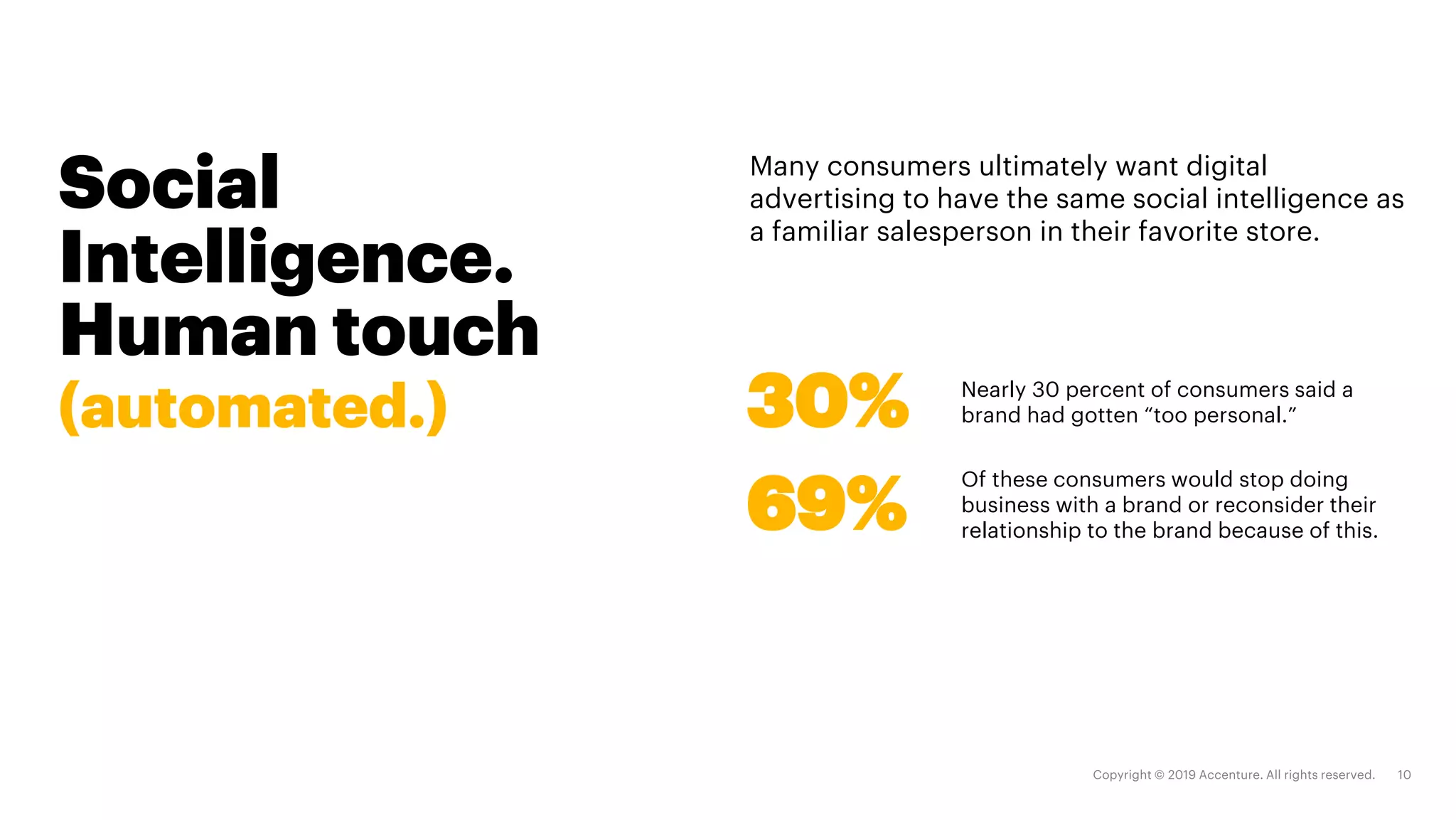
Many consumers ultimately want digital
advertising to have the same social intelligence as
a familiar salesperson in their favorite store.
30%
69%
Nearly 30 percent of consumers said a
brand had gotten “too personal.”
Of these consumers would stop doing
business with a brand or reconsider their
relationship to the brand because of this.
11
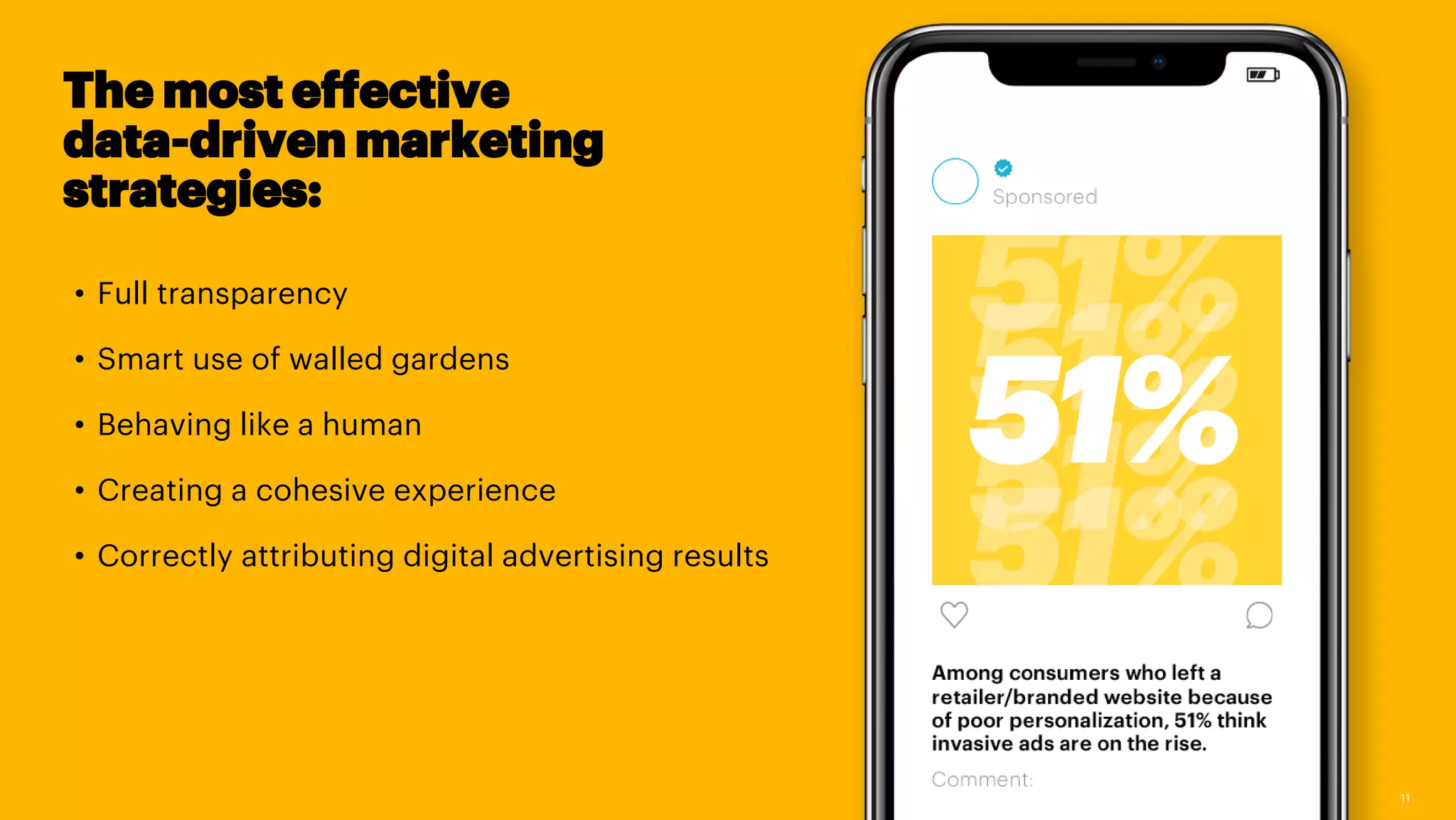
The most effective
data-driven marketing
strategies:
• Full transparency
• Smart use of walled gardens
• Behaving like a human
• Creating a cohesive experience
• Correctly attributing digital advertising results
Regulations take hold
What should and should not be done in the
current environment will be shaped by how
rights granted under these two laws are
interpreted.
• Build the data architecture of enterprise systems
in a way that reflects current registrations.
• Be respectful of the rights and access to
consumer data.
• Consider the ethical aspect on storming and
using data.
Brands pay close attention to the evolution of
privacy regulations, such as GDPR and CCPA.
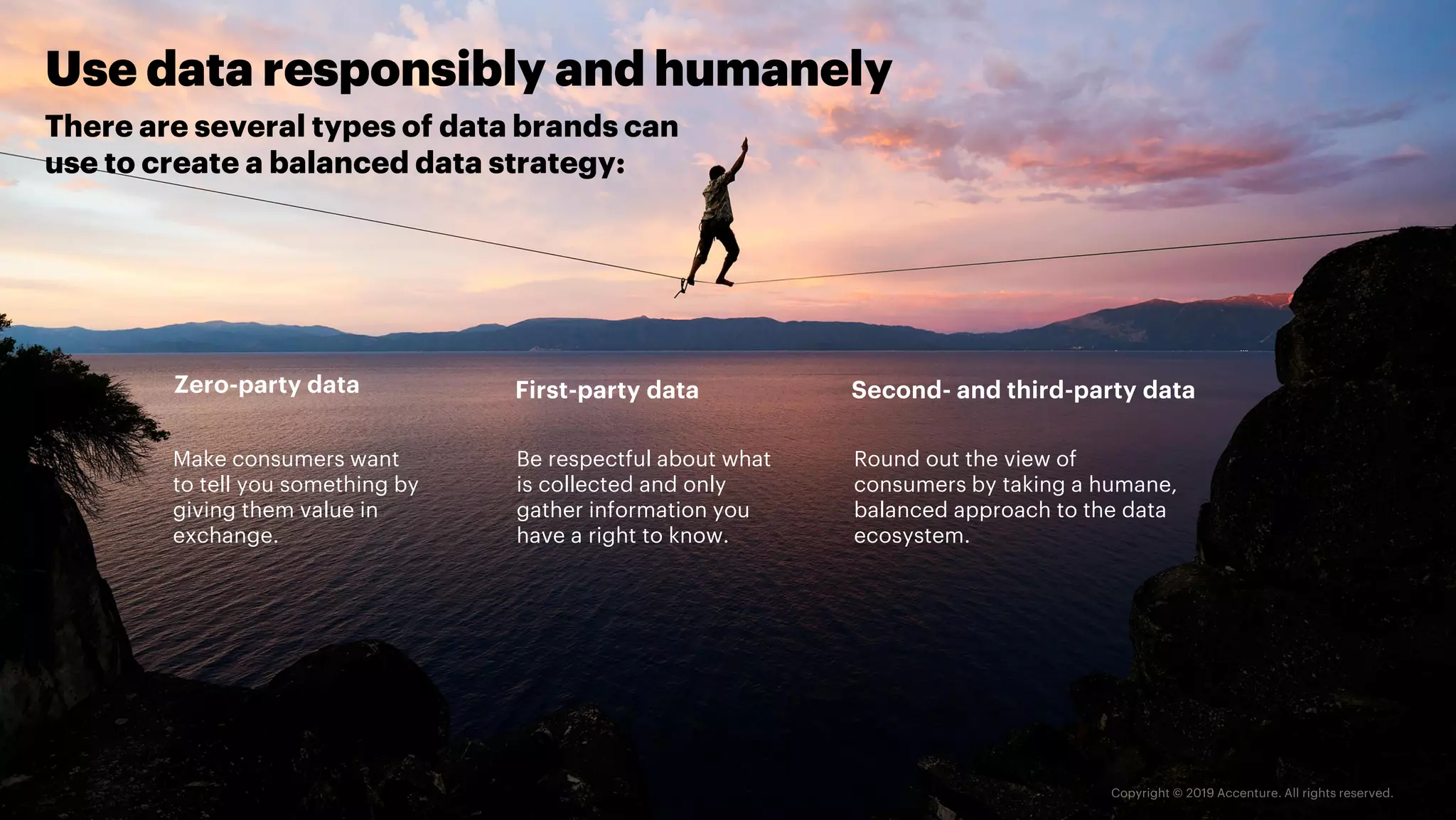
There are several types of data brands can
use to create a balanced data strategy:
Use data responsibly and humanely
Zero-party data First-party data
Make consumers want
to tell you something by
giving them value in
exchange.
Be respectful about what
is collected and only
gather information you
have a right to know.
Second- and third-party data
Round out the view of
consumers by taking a humane,
balanced approach to the data
ecosystem.
To create a great customer experience, build a respectful and empathetic
data- and audience-understanding strategy that uses the best
combination of rightfully, transparently available information.
Brands can benefit from:
• Using fresh opt-in alternatives
• Bringing ad-tech contracts in-house for full transparency
• Building data architecture aligned with regulations
The seamless experience
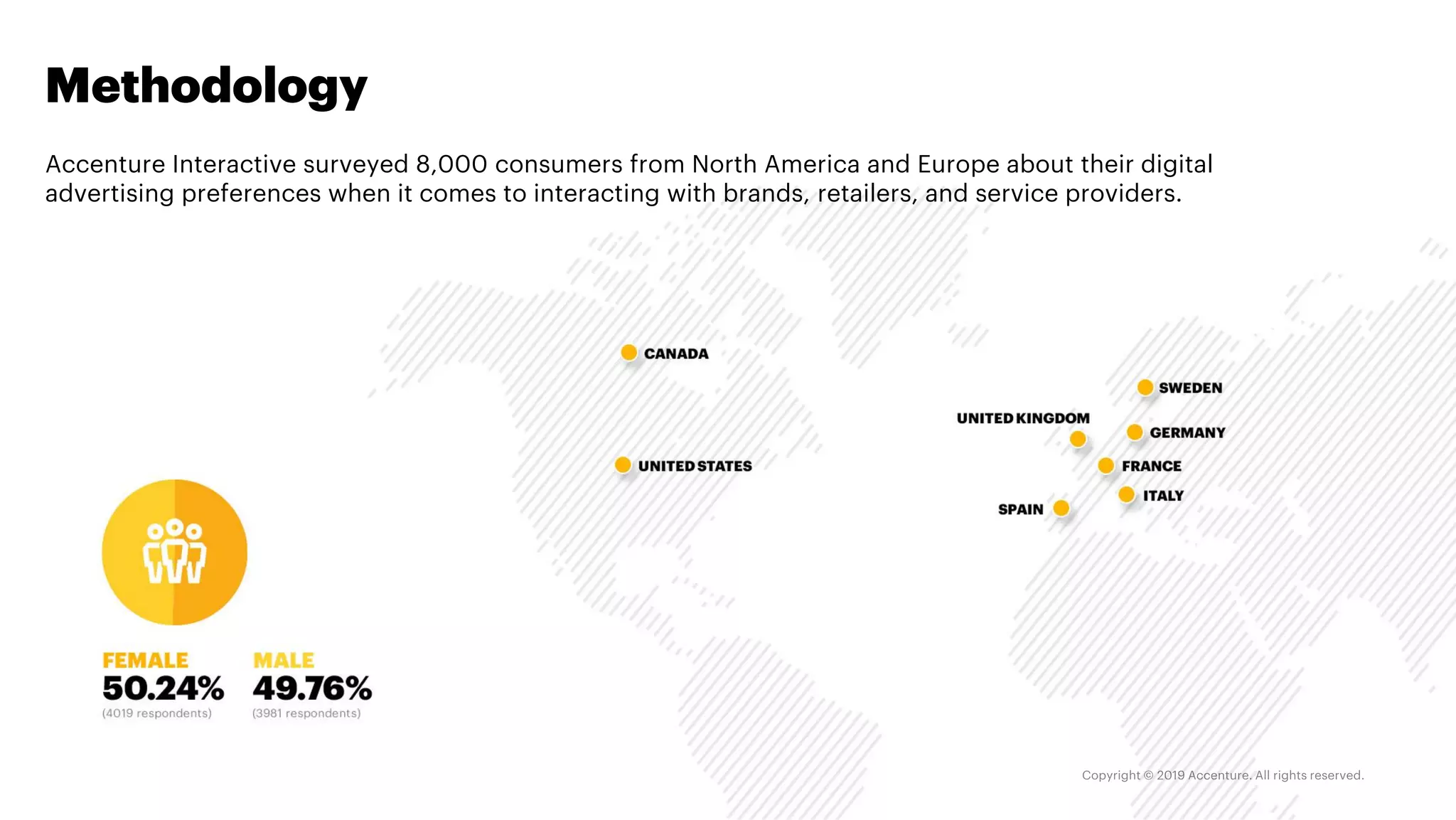
Accenture Interactive surveyed 8,000 consumers from North America and Europe about their digital
advertising preferences when it comes to interacting with brands, retailers, and service providers.
Methodology
To learn more about Accenture
Interactive Programmatic Services
contact:
JAVIER
PÉREZ MOIÑO
Programmatic Services and
Personalization European Lead,
Accenture Interactive
javier.perez.moino@Accenture.com
SCOTT
TIEMAN
Programmatic Services and
Personalization Global Lead,
Accenture Interactive
scott.w.tieman@Accenture.com

See People, Not Patterns: The 2019 Consumer Pulse Survey

  • 1.
    See people, not patterns 2019Consumer Pulse Survey Accenture Interactive’s Consumer Pulse Survey offers insight into how brands are creating paths to success with digital advertising.
  • 2.
  • 3.
    With data comes respectand responsibility 25 years since the first digital ad banner*, digital advertising now plays a bigger role in the cultural conversation than ever before. There is no longer patience for invasive experiences – consumers expect brands to see them for who they really are. Copyright © 2019 Accenture. All rights reserved. *Source: https://www.thedrum.com/news/2019/06/14/one-banner-ad-global-industry-digital-advertising-25-years
  • 4.
    We surveyed 8,000consumers in North America and Europe to get a pulse on how consumers feel about their digital advertising experiences. Our research focused on three areas: • What are consumers’ experiences with digital advertising? • What are the drivers of consumers’ online purchases? • What are the most effective data-driven marketing efforts and challenges?
  • 5.
    Just because you candoesn’t mean you should. Consumers feel the automated techniques brands are using are not effective and do not accurately reflect their intention. They prefer a better, more customer-focused experience. 65% 73% 76% Of customers are willing to share more personal data in return for a better experience. Of customers are willing to share more personal information if brands are transparent about how it is used. Of customers say they are uncomfortable with data collection via a microphone or voice assistant.
  • 6.
    Providing consumers withvalue for their data, ensures the brand won’t lose or abuse their data and recognizes them in a way that puts them at ease. This requires a human and humane approach to data. The changing landscape represents a big opportunity for brands. of consumers who said a brand had communicated in a way that was too personal, responded that this was because they had information about them or their family that they did not share directly. 71%
  • 7.
    Forward-thinking brands are findingways to behave in a human and ethical way (vs. creeping consumers out)
  • 8.
    Receiving an adfor something you talked about near a voice assistant but never searched for (46 percent) Top 5 creepiest advertising techniques as cited by consumers: An ad that follows you across devices (34 percent) A text message with an offer when walking by a store (31 percent) A mobile notification with an offer when walking by a store (30 percent) A chatbot that has access to your past online shopping (not just purchases) (28 percent) 1 2 3 4 5
  • 9.
    Handling data respectfullyand responsibly is a fast-emerging component of corporate accountability. The CMO plays a key role in bringing all parties together to deliver better digital advertising experiences. Putting people before data collection 90% of decision-makers agree that the CMO should be the internal advocate for their customers.
  • 10.
    Social Intelligence. Human touch (automated.) Many consumersultimately want digital advertising to have the same social intelligence as a familiar salesperson in their favorite store. 30% 69% Nearly 30 percent of consumers said a brand had gotten “too personal.” Of these consumers would stop doing business with a brand or reconsider their relationship to the brand because of this.
  • 11.
    11 The most effective data-drivenmarketing strategies: • Full transparency • Smart use of walled gardens • Behaving like a human • Creating a cohesive experience • Correctly attributing digital advertising results
  • 12.
    Regulations take hold Whatshould and should not be done in the current environment will be shaped by how rights granted under these two laws are interpreted. • Build the data architecture of enterprise systems in a way that reflects current registrations. • Be respectful of the rights and access to consumer data. • Consider the ethical aspect on storming and using data. Brands pay close attention to the evolution of privacy regulations, such as GDPR and CCPA.
  • 13.
    There are severaltypes of data brands can use to create a balanced data strategy: Use data responsibly and humanely Zero-party data First-party data Make consumers want to tell you something by giving them value in exchange. Be respectful about what is collected and only gather information you have a right to know. Second- and third-party data Round out the view of consumers by taking a humane, balanced approach to the data ecosystem.
  • 14.
    To create agreat customer experience, build a respectful and empathetic data- and audience-understanding strategy that uses the best combination of rightfully, transparently available information. Brands can benefit from: • Using fresh opt-in alternatives • Bringing ad-tech contracts in-house for full transparency • Building data architecture aligned with regulations The seamless experience
  • 15.
    Accenture Interactive surveyed8,000 consumers from North America and Europe about their digital advertising preferences when it comes to interacting with brands, retailers, and service providers. Methodology
  • 16.
    To learn moreabout Accenture Interactive Programmatic Services contact: JAVIER PÉREZ MOIÑO Programmatic Services and Personalization European Lead, Accenture Interactive javier.perez.moino@Accenture.com SCOTT TIEMAN Programmatic Services and Personalization Global Lead, Accenture Interactive scott.w.tieman@Accenture.com