Soft skills are interpersonal skills which are used to
describe your approach to life, work, and relationships
with other people. These are not professional job-specific
skills like accountancy, graphics designing, etc. Soft skills
are unique, which gives you a competitive edge over
others in the workplace and in life.
Other names given to soft skills are people skills,
interpersonal skills, and social skills.
The ability to do something well with determined result.
☻Communication
skills
☻Fire
☻Bomb threat
☻First aid & incident
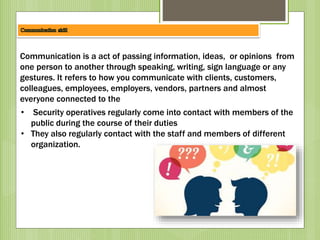
Communication is a act of passing information, ideas, or opinions from
one person to another through speaking, writing, sign language or any
gestures. It refers to how you communicate with clients, customers,
colleagues, employees, employers, vendors, partners and almost
everyone connected to the
• Security operatives regularly come into contact with members of the
public during the course of their duties
• They also regularly contact with the staff and members of different
organization.
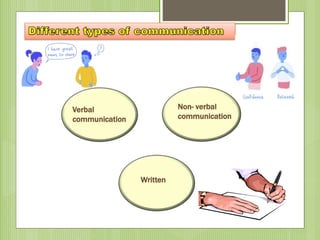
Verbal
communication
Non- verbal
communication
Written
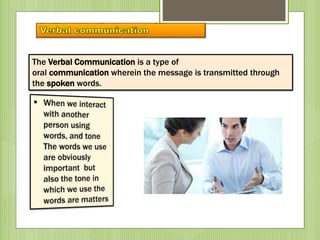
The Verbal Communication is a type of
oral communication wherein the message is transmitted through
the spoken words.
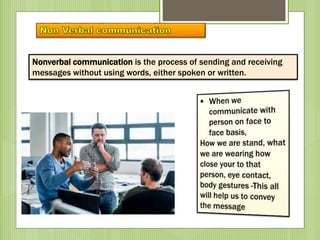
Nonverbal communication is the process of sending and receiving
messages without using words, either spoken or written.
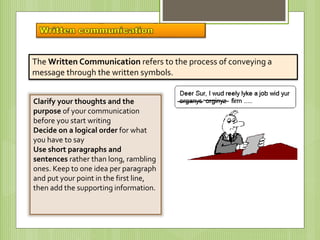
The Written Communication refers to the process of conveying a
message through the written symbols.
Clarify your thoughts and the
purpose of your communication
before you start writing
Decide on a logical order for what
you have to say
Use short paragraphs and
sentences rather than long, rambling
ones. Keep to one idea per paragraph
and put your point in the first line,
then add the supporting information.
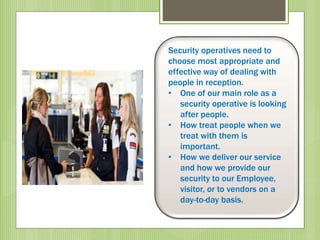
Security operatives need to
choose most appropriate and
effective way of dealing with
people in reception.
• One of our main role as a
security operative is looking
after people.
• How treat people when we
treat with them is
important.
• How we deliver our service
and how we provide our
security to our Employee,
visitor, or to vendors on a
day-to-day basis.
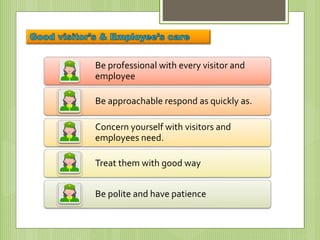
Be professional with every visitor and
employee
Be approachable respond as quickly as.
Concern yourself with visitors and
employees need.
Treat them with good way
Be polite and have patience
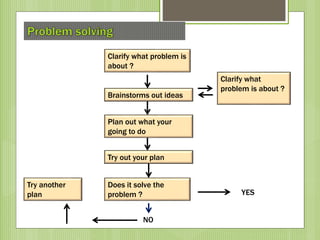
Clarify what problem is
about ?
Brainstorms out ideas
Plan out what your
going to do
Try out your plan
Does it solve the
problem ?
Clarify what
problem is about ?
Try another
plan YES
NO
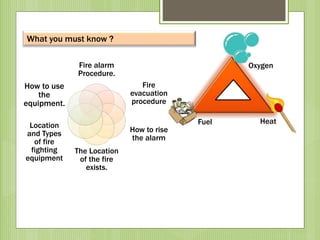
What you must know ?
Oxygen
Fuel Heat
Fire alarm
Procedure.
Fire
evacuation
procedure
How to rise
the alarm
The Location
of the fire
exists.
Location
and Types
of fire
fighting
equipment
How to use
the
equipment.
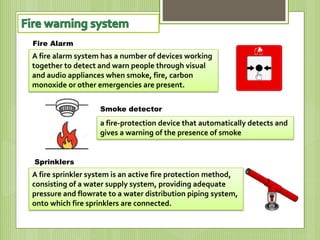
A fire alarm system has a number of devices working
together to detect and warn people through visual
and audio appliances when smoke, fire, carbon
monoxide or other emergencies are present.
a fire-protection device that automatically detects and
gives a warning of the presence of smoke
A fire sprinkler system is an active fire protection method,
consisting of a water supply system, providing adequate
pressure and flowrate to a water distribution piping system,
onto which fire sprinklers are connected.
Fire Alarm
Smoke detector
Sprinklers
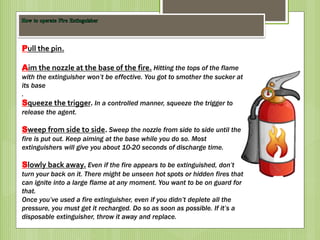
Pull the pin.
Aim the nozzle at the base of the fire. Hitting the tops of the flame
with the extinguisher won’t be effective. You got to smother the sucker at
its base
.
Squeeze the trigger. In a controlled manner, squeeze the trigger to
release the agent.
Sweep from side to side. Sweep the nozzle from side to side until the
fire is put out. Keep aiming at the base while you do so. Most
extinguishers will give you about 10-20 seconds of discharge time.
Slowly back away. Even if the fire appears to be extinguished, don’t
turn your back on it. There might be unseen hot spots or hidden fires that
can ignite into a large flame at any moment. You want to be on guard for
that.
Once you’ve used a fire extinguisher, even if you didn’t deplete all the
pressure, you must get it recharged. Do so as soon as possible. If it’s a
disposable extinguisher, throw it away and replace.
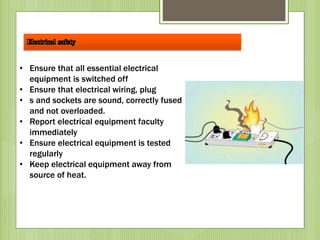
• Ensure that all essential electrical
equipment is switched off
• Ensure that electrical wiring, plug
• s and sockets are sound, correctly fused
and not overloaded.
• Report electrical equipment faculty
immediately
• Ensure electrical equipment is tested
regularly
• Keep electrical equipment away from
source of heat.
 Fire alarm / emergency
warning system
 Entry and exit point
 Emergency stair case
Alternative escape routes
 Operation of access control
doors
 Start process of evacuation as
per instructions of control
room
 Guide Employee to go to
desired staircase and proceed
to ground floor
 If its not possible to guide to
ground floor, guide to 6th or
10th floor refuge area
whichever is near
 Heck the floor with help of
rescue party.
 Check Restrooms, storerooms,
conference rooms etc.
 Retrieve all important
document if possible
 Take head count to ensure
that everybody is present.
Keep the caller on the line as long as possible. Be polite
and show interest to keep them talking.
DO NOT HANG UP, even if the caller does.
If possible, signal or pass a note to other staff to listen
and help notify authorities
Write down as much information as possible
• The time call is received note down the caller number
• Concentrate on exact words of the person making the
threat
• Listen to any background noises, such as traffic,
music, railway station or any loud music.
• Note down the gender of the caller and also
approximate age.
• Record the call, if possible
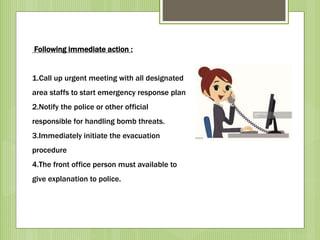
Following immediate action :
1.Call up urgent meeting with all designated
area staffs to start emergency response plan
2.Notify the police or other official
responsible for handling bomb threats.
3.Immediately initiate the evacuation
procedure
4.The front office person must available to
give explanation to police.
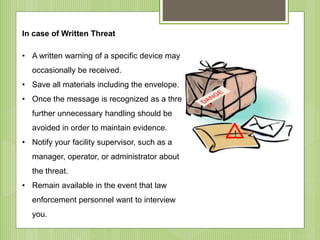
In case of Written Threat
• A written warning of a specific device may
occasionally be received.
• Save all materials including the envelope.
• Once the message is recognized as a threat,
further unnecessary handling should be
avoided in order to maintain evidence.
• Notify your facility supervisor, such as a
manager, operator, or administrator about
the threat.
• Remain available in the event that law
enforcement personnel want to interview
you.
!
Place of Origin - Check the delivery postmark to see if the place of origin is
familiar.
Foreign Packages - If the item is from another country ask yourself if it is
expected. Look for foreign writing, addresses and postage.
Unusual Addressing or Delivery Instructions - There are unusually restrictive
endorsements such as "Personal," "Private" and "Confidential" or has no return
address.
Packaging - Packaging wrapped in string are automatically suspicious, as
modern packaging materials have eliminated the need for twine or string.
Postage - Excess postage on small packages or letters indicate that the object
was not weighed by the Post Office. No postage or non-cancelled postage
should also be a warning.
Odour - The mail or package emits the smell of marzipan or almonds or any
other peculiar odour.
Appearance - Leaks, stains, protruding wires, string, tape or tinfoil are present.
Sound - Any package that emits a buzzing, ticking or other unusual noise should
be treated with caution.
Telephone Calls - Any packages or letters arriving before or after a phone call
from an unknown person asking if the item was received is suspect.
In case of Letter and package Bombs
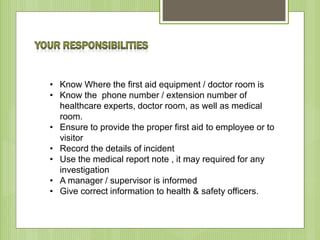
• Know Where the first aid equipment / doctor room is
• Know the phone number / extension number of
healthcare experts, doctor room, as well as medical
room.
• Ensure to provide the proper first aid to employee or to
visitor
• Record the details of incident
• Use the medical report note , it may required for any
investigation
• A manager / supervisor is informed
• Give correct information to health & safety officers.
Copyrights & Acknowledgement,
1.www.Infosecinstitute.com
2.www.feedough.com
3.Goole images,

Reception security soft skill

  • 1.
    Soft skills areinterpersonal skills which are used to describe your approach to life, work, and relationships with other people. These are not professional job-specific skills like accountancy, graphics designing, etc. Soft skills are unique, which gives you a competitive edge over others in the workplace and in life. Other names given to soft skills are people skills, interpersonal skills, and social skills. The ability to do something well with determined result.
  • 2.
  • 3.
    Communication is aact of passing information, ideas, or opinions from one person to another through speaking, writing, sign language or any gestures. It refers to how you communicate with clients, customers, colleagues, employees, employers, vendors, partners and almost everyone connected to the • Security operatives regularly come into contact with members of the public during the course of their duties • They also regularly contact with the staff and members of different organization.
  • 4.
  • 5.
    The Verbal Communicationis a type of oral communication wherein the message is transmitted through the spoken words.
  • 6.
    Nonverbal communication isthe process of sending and receiving messages without using words, either spoken or written.
  • 7.
    The Written Communicationrefers to the process of conveying a message through the written symbols. Clarify your thoughts and the purpose of your communication before you start writing Decide on a logical order for what you have to say Use short paragraphs and sentences rather than long, rambling ones. Keep to one idea per paragraph and put your point in the first line, then add the supporting information.
  • 8.
    Security operatives needto choose most appropriate and effective way of dealing with people in reception. • One of our main role as a security operative is looking after people. • How treat people when we treat with them is important. • How we deliver our service and how we provide our security to our Employee, visitor, or to vendors on a day-to-day basis.
  • 9.
    Be professional withevery visitor and employee Be approachable respond as quickly as. Concern yourself with visitors and employees need. Treat them with good way Be polite and have patience
  • 10.
    Clarify what problemis about ? Brainstorms out ideas Plan out what your going to do Try out your plan Does it solve the problem ? Clarify what problem is about ? Try another plan YES NO
  • 12.
    What you mustknow ? Oxygen Fuel Heat Fire alarm Procedure. Fire evacuation procedure How to rise the alarm The Location of the fire exists. Location and Types of fire fighting equipment How to use the equipment.
  • 14.
    A fire alarmsystem has a number of devices working together to detect and warn people through visual and audio appliances when smoke, fire, carbon monoxide or other emergencies are present. a fire-protection device that automatically detects and gives a warning of the presence of smoke A fire sprinkler system is an active fire protection method, consisting of a water supply system, providing adequate pressure and flowrate to a water distribution piping system, onto which fire sprinklers are connected. Fire Alarm Smoke detector Sprinklers
  • 15.
    Pull the pin. Aimthe nozzle at the base of the fire. Hitting the tops of the flame with the extinguisher won’t be effective. You got to smother the sucker at its base . Squeeze the trigger. In a controlled manner, squeeze the trigger to release the agent. Sweep from side to side. Sweep the nozzle from side to side until the fire is put out. Keep aiming at the base while you do so. Most extinguishers will give you about 10-20 seconds of discharge time. Slowly back away. Even if the fire appears to be extinguished, don’t turn your back on it. There might be unseen hot spots or hidden fires that can ignite into a large flame at any moment. You want to be on guard for that. Once you’ve used a fire extinguisher, even if you didn’t deplete all the pressure, you must get it recharged. Do so as soon as possible. If it’s a disposable extinguisher, throw it away and replace.
  • 16.
    • Ensure thatall essential electrical equipment is switched off • Ensure that electrical wiring, plug • s and sockets are sound, correctly fused and not overloaded. • Report electrical equipment faculty immediately • Ensure electrical equipment is tested regularly • Keep electrical equipment away from source of heat.
  • 17.
     Fire alarm/ emergency warning system  Entry and exit point  Emergency stair case Alternative escape routes  Operation of access control doors  Start process of evacuation as per instructions of control room  Guide Employee to go to desired staircase and proceed to ground floor  If its not possible to guide to ground floor, guide to 6th or 10th floor refuge area whichever is near  Heck the floor with help of rescue party.  Check Restrooms, storerooms, conference rooms etc.  Retrieve all important document if possible  Take head count to ensure that everybody is present.
  • 19.
    Keep the calleron the line as long as possible. Be polite and show interest to keep them talking. DO NOT HANG UP, even if the caller does. If possible, signal or pass a note to other staff to listen and help notify authorities Write down as much information as possible • The time call is received note down the caller number • Concentrate on exact words of the person making the threat • Listen to any background noises, such as traffic, music, railway station or any loud music. • Note down the gender of the caller and also approximate age. • Record the call, if possible
  • 20.
    Following immediate action: 1.Call up urgent meeting with all designated area staffs to start emergency response plan 2.Notify the police or other official responsible for handling bomb threats. 3.Immediately initiate the evacuation procedure 4.The front office person must available to give explanation to police.
  • 22.
    In case ofWritten Threat • A written warning of a specific device may occasionally be received. • Save all materials including the envelope. • Once the message is recognized as a threat, further unnecessary handling should be avoided in order to maintain evidence. • Notify your facility supervisor, such as a manager, operator, or administrator about the threat. • Remain available in the event that law enforcement personnel want to interview you. !
  • 23.
    Place of Origin- Check the delivery postmark to see if the place of origin is familiar. Foreign Packages - If the item is from another country ask yourself if it is expected. Look for foreign writing, addresses and postage. Unusual Addressing or Delivery Instructions - There are unusually restrictive endorsements such as "Personal," "Private" and "Confidential" or has no return address. Packaging - Packaging wrapped in string are automatically suspicious, as modern packaging materials have eliminated the need for twine or string. Postage - Excess postage on small packages or letters indicate that the object was not weighed by the Post Office. No postage or non-cancelled postage should also be a warning. Odour - The mail or package emits the smell of marzipan or almonds or any other peculiar odour. Appearance - Leaks, stains, protruding wires, string, tape or tinfoil are present. Sound - Any package that emits a buzzing, ticking or other unusual noise should be treated with caution. Telephone Calls - Any packages or letters arriving before or after a phone call from an unknown person asking if the item was received is suspect. In case of Letter and package Bombs
  • 25.
    • Know Wherethe first aid equipment / doctor room is • Know the phone number / extension number of healthcare experts, doctor room, as well as medical room. • Ensure to provide the proper first aid to employee or to visitor • Record the details of incident • Use the medical report note , it may required for any investigation • A manager / supervisor is informed • Give correct information to health & safety officers.
  • 26.