How to Market Where Online Consumers are SearchingResults of a new research studyTuesday, August 3, 2010 - 1 PM EDT Speakers:  Kim Rome, comScoreRob Murray, iProspectJohn Federman, Searchandise Commerce
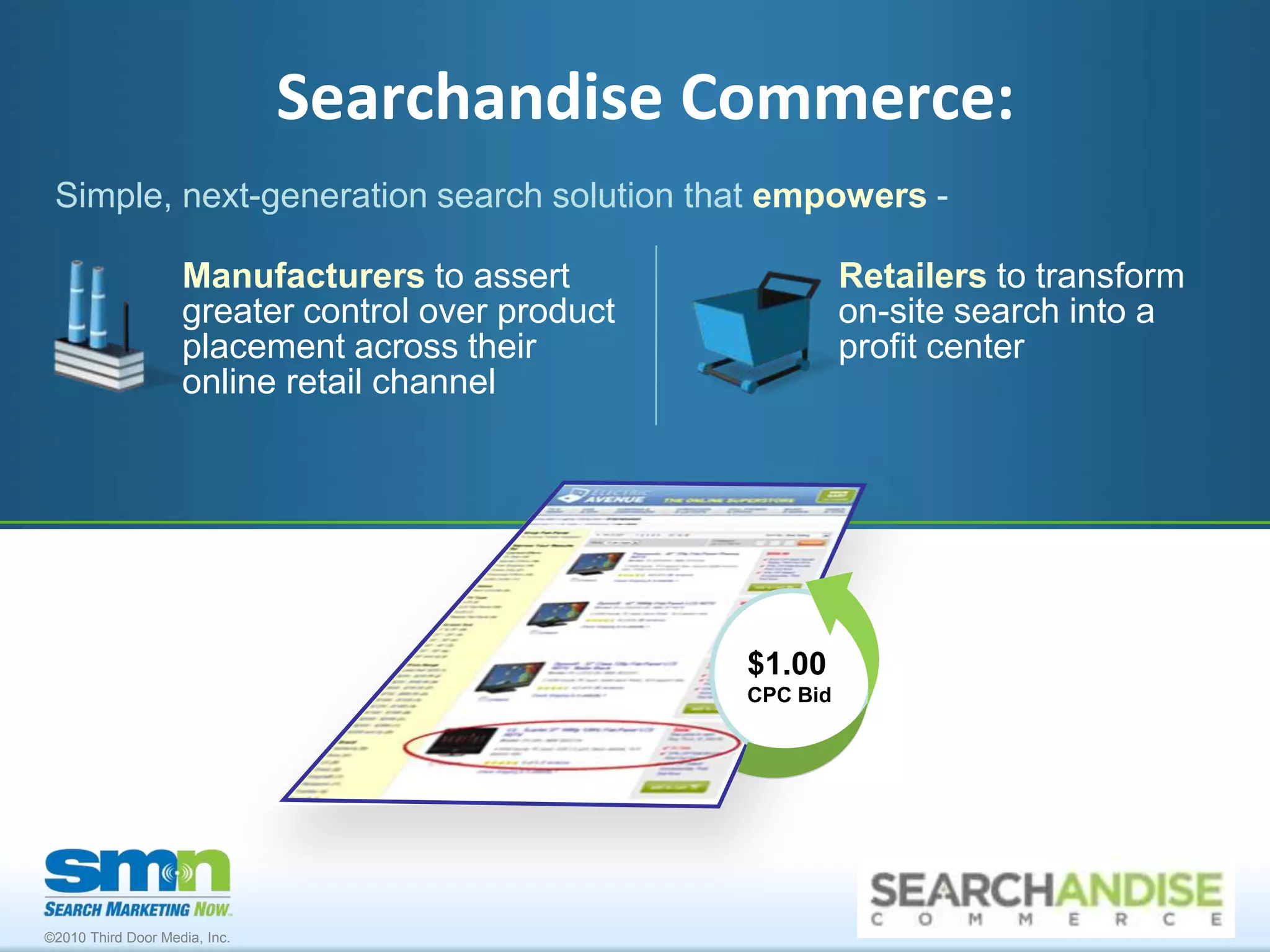
SearchandiseCommerce:Simple, next-generation search solution that empowers-Retailersto transform on-site search into a profit centerManufacturers to assert greater control over product placement across their online retail channel $1.00 CPC Bid
Kim Rome, Senior Director of Research, comScoreKim Rome is Senior Director of Research at comScore, heading  the custom survey team for the Retail and Travel division.  15 years of experience in consulting and market research designSpecializes in brand and competitive strategic assessment, customer satisfaction, advertising effectiveness and multi-channel & website optimization. 
Rob Murray, CEO, iProspectRobert J. Murray is Chief Executive Officer of iProspect. He is responsible for formulating the firm's corporate strategy as well as managing the company's operations.  20 years of strategic consulting and financial analysis expertise, He has served as the President of iProspect from 2000 to 2006 and CEO since 2007In the past two years, iProspect has opened offices worldwide
John Federman, President and CEO, Searchandise CommerceAs president and chief executive officer, John Federman is responsible for Searchandise Commerce's strategic direction, growth and corporate vision. Mr. Federman brings more than 20 years of experience with innovative information technology and media companies to Searchandise Commerce.How to Market Where Online Consumers are SearchingResults of a new research studyTuesday, August 3, 2010 - 1 PM EDT Speakers:  Kim Rome, comScoreRob Murray, iProspectJohn Federman, Searchandise Commerce
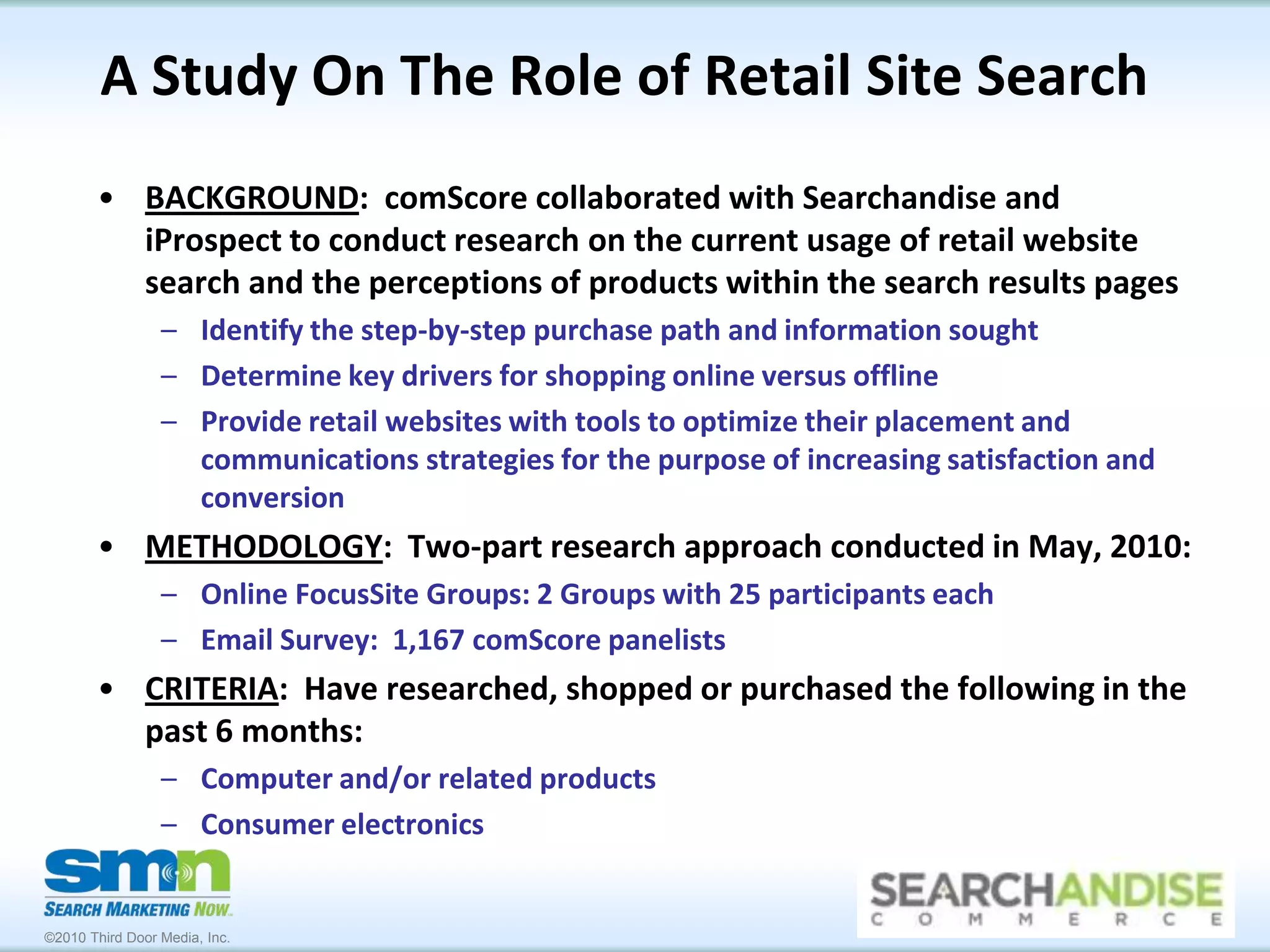
A Study On The Role of Retail Site SearchBACKGROUND:  comScore collaborated with Searchandise and iProspect to conduct research on the current usage of retail website search and the perceptions of products within the search results pagesIdentify the step-by-step purchase path and information soughtDetermine key drivers for shopping online versus offlineProvide retail websites with tools to optimize their placement and communications strategies for the purpose of increasing satisfaction and conversionMETHODOLOGY:  Two-part research approach conducted in May, 2010:Online FocusSite Groups: 2 Groups with 25 participants eachEmail Survey:  1,167 comScore panelistsCRITERIA:  Have researched, shopped or purchased the following in the past 6 months:Computer and/or related productsConsumer electronics
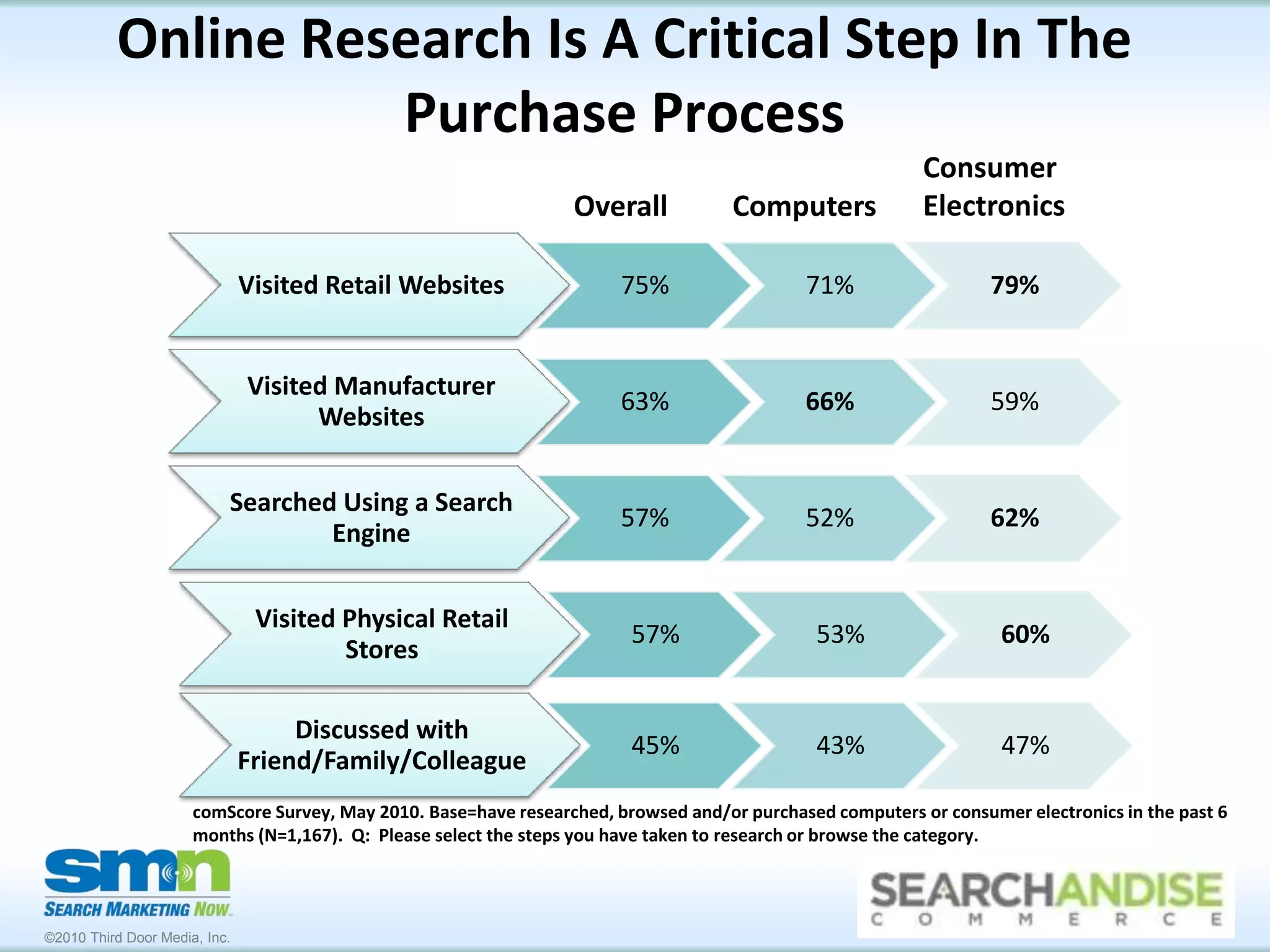
Online Research Is A Critical Step In The Purchase ProcessConsumer ElectronicsOverallComputerscomScore Survey, May 2010. Base=have researched, browsed and/or purchased computers or consumer electronics in the past 6 months (N=1,167).  Q:  Please select the steps you have taken to research or browse the category.
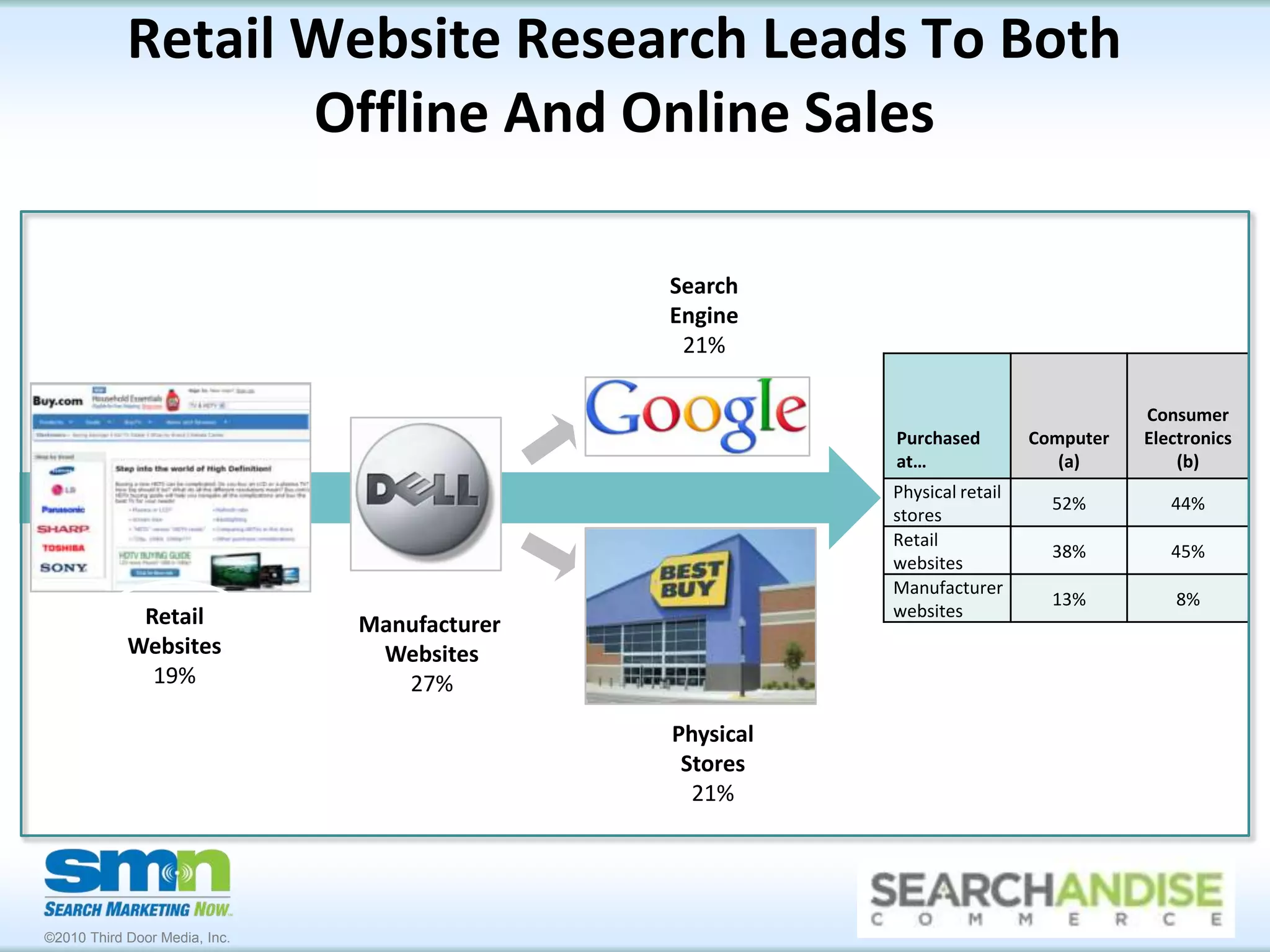
Retail Website Research Leads To Both Offline And Online SalesSearch Engine21%Retail Websites19%Manufacturer Websites27%Physical Stores21%
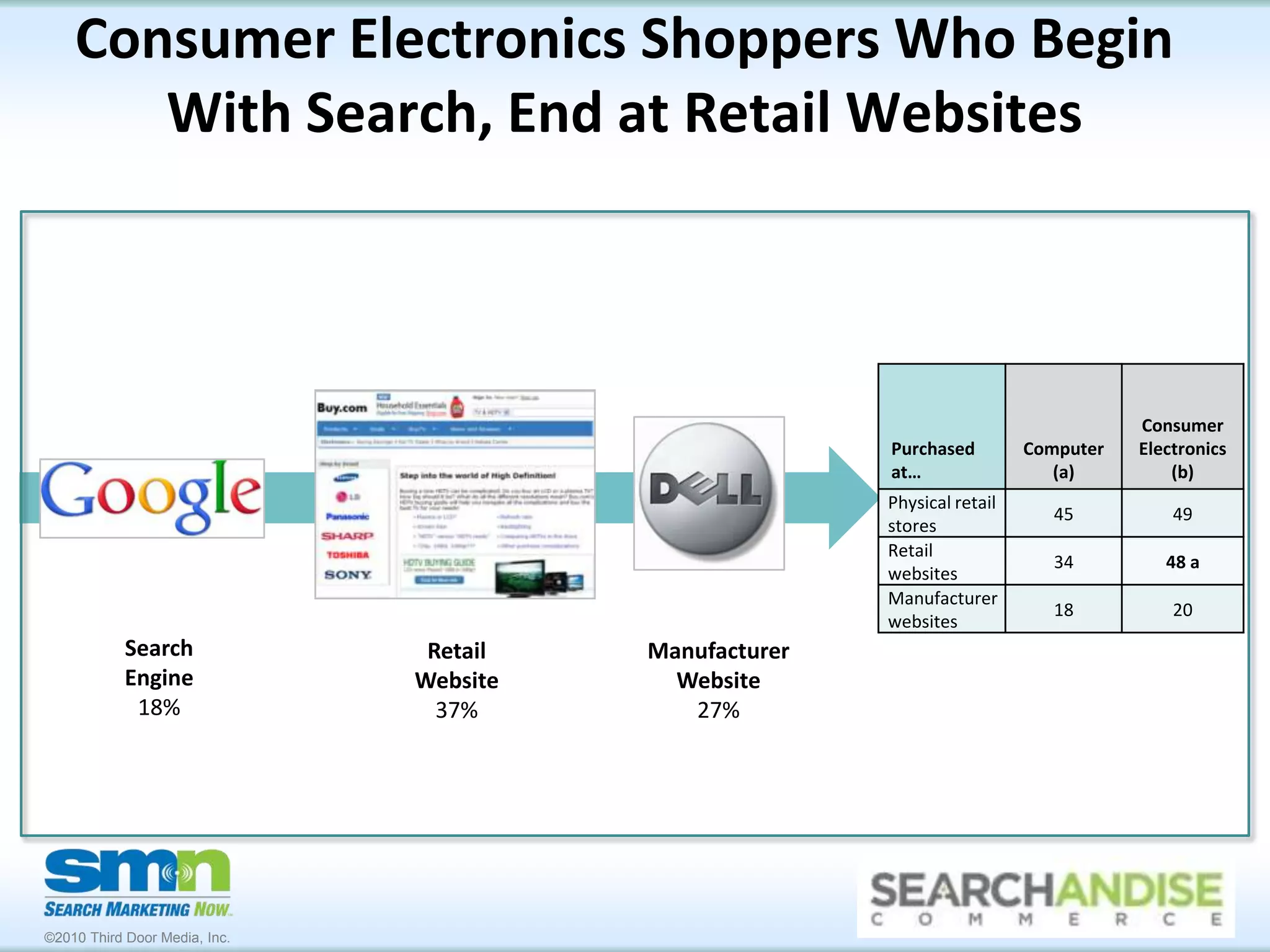
Consumer Electronics Shoppers Who Begin With Search, End at Retail WebsitesRetail Website37%Search Engine18%Manufacturer Website27%
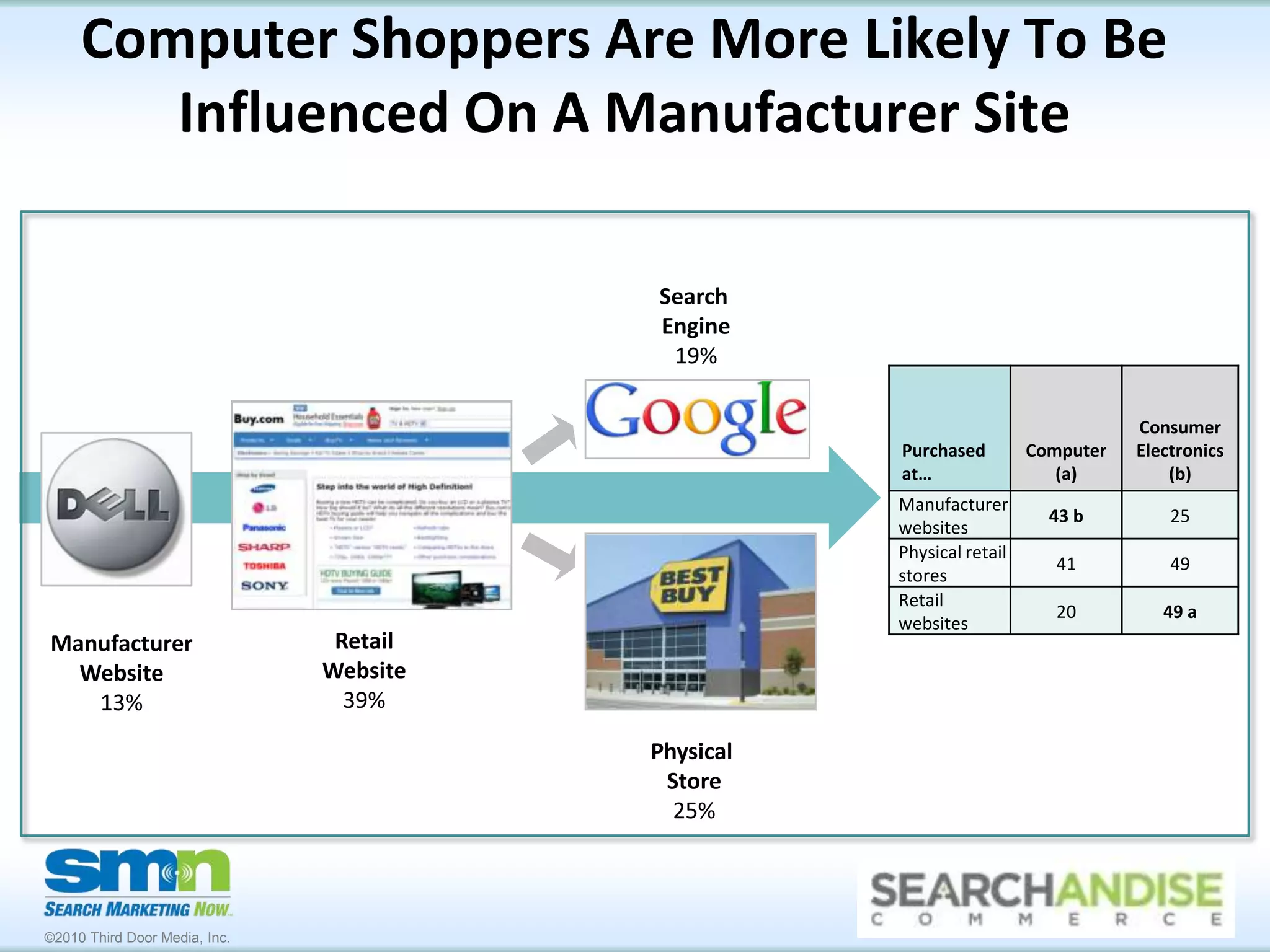
Computer Shoppers Are More Likely To Be Influenced On A Manufacturer SiteSearch Engine19%RetailWebsite39%Manufacturer Website13%Physical Store25%
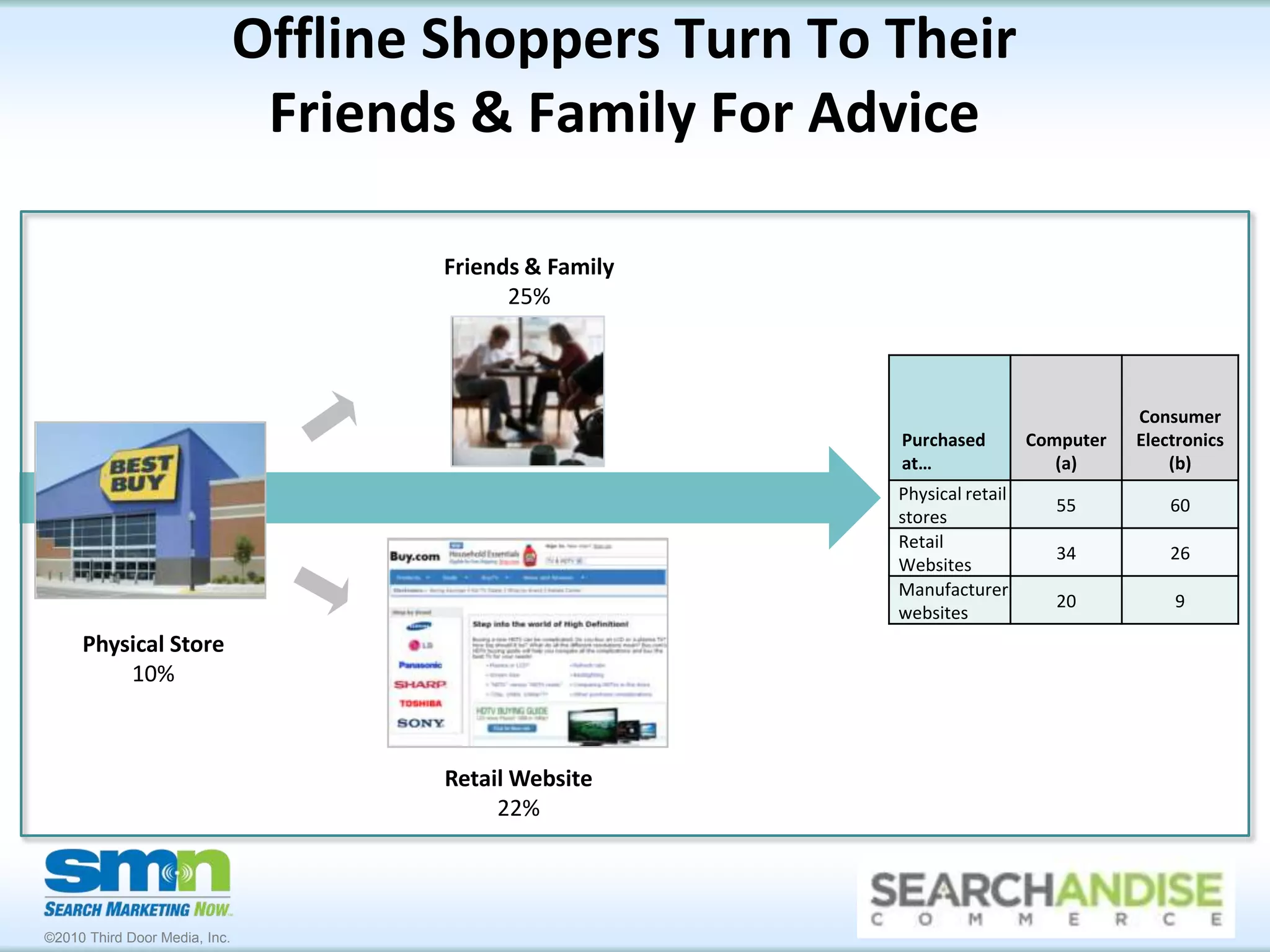
Offline Shoppers Turn To Their Friends & Family For AdviceFriends & Family25%Physical Store10%Retail Website22%
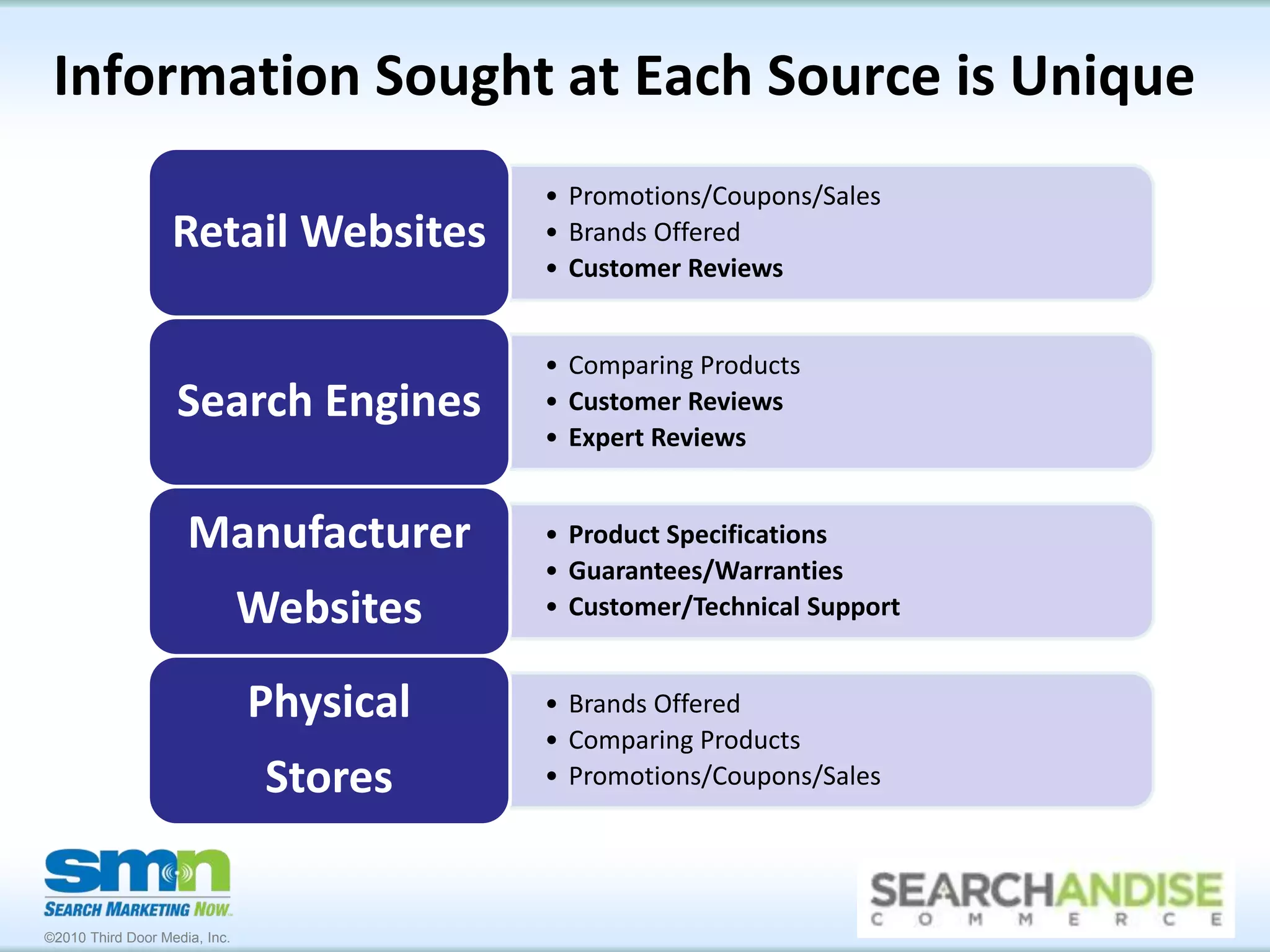
Information Sought at Each Source is Unique
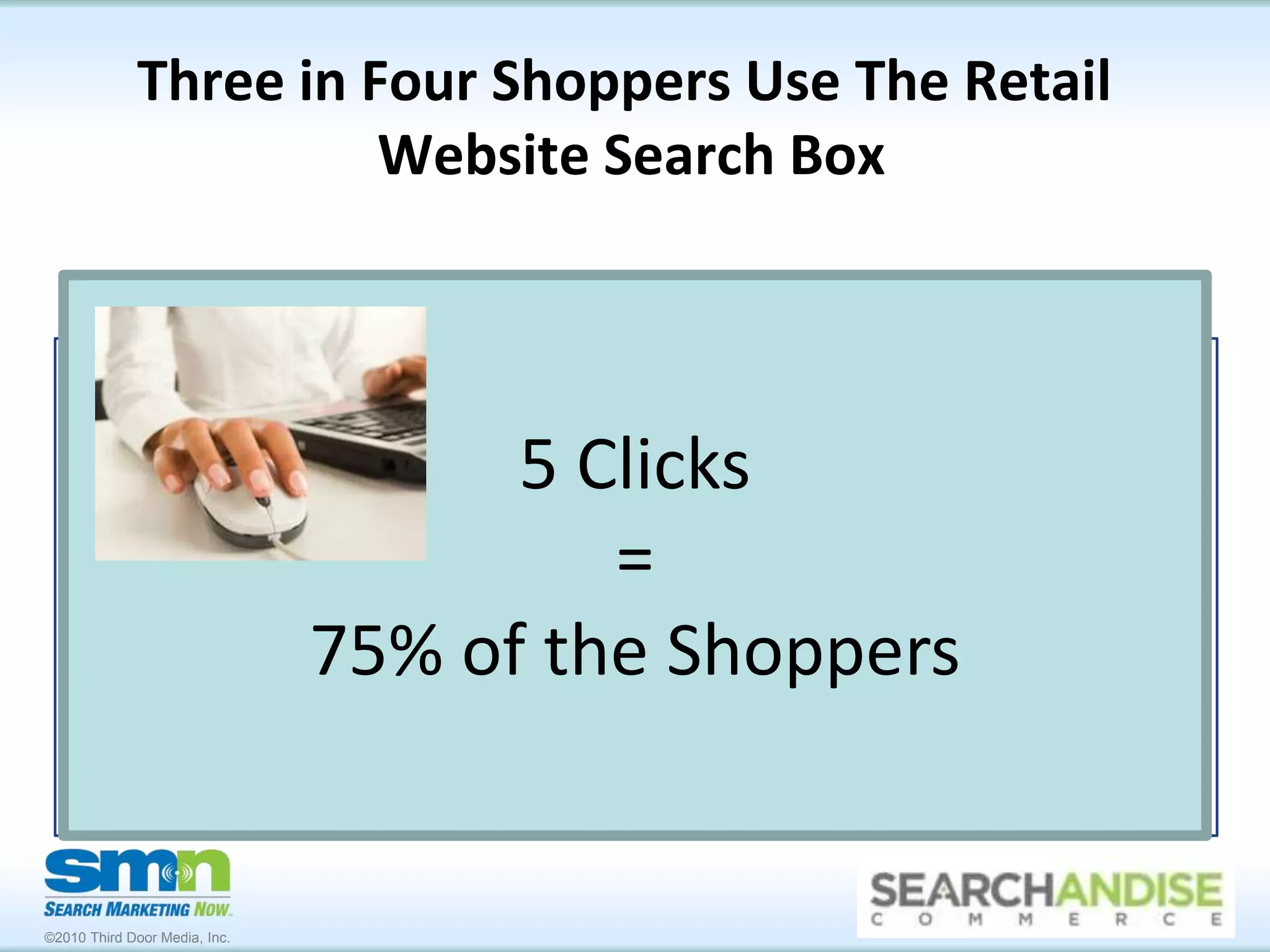
Three in Four Shoppers Use The Retail Website Search Box5 Clicks = 75% of the ShoppersRetail Website Activity
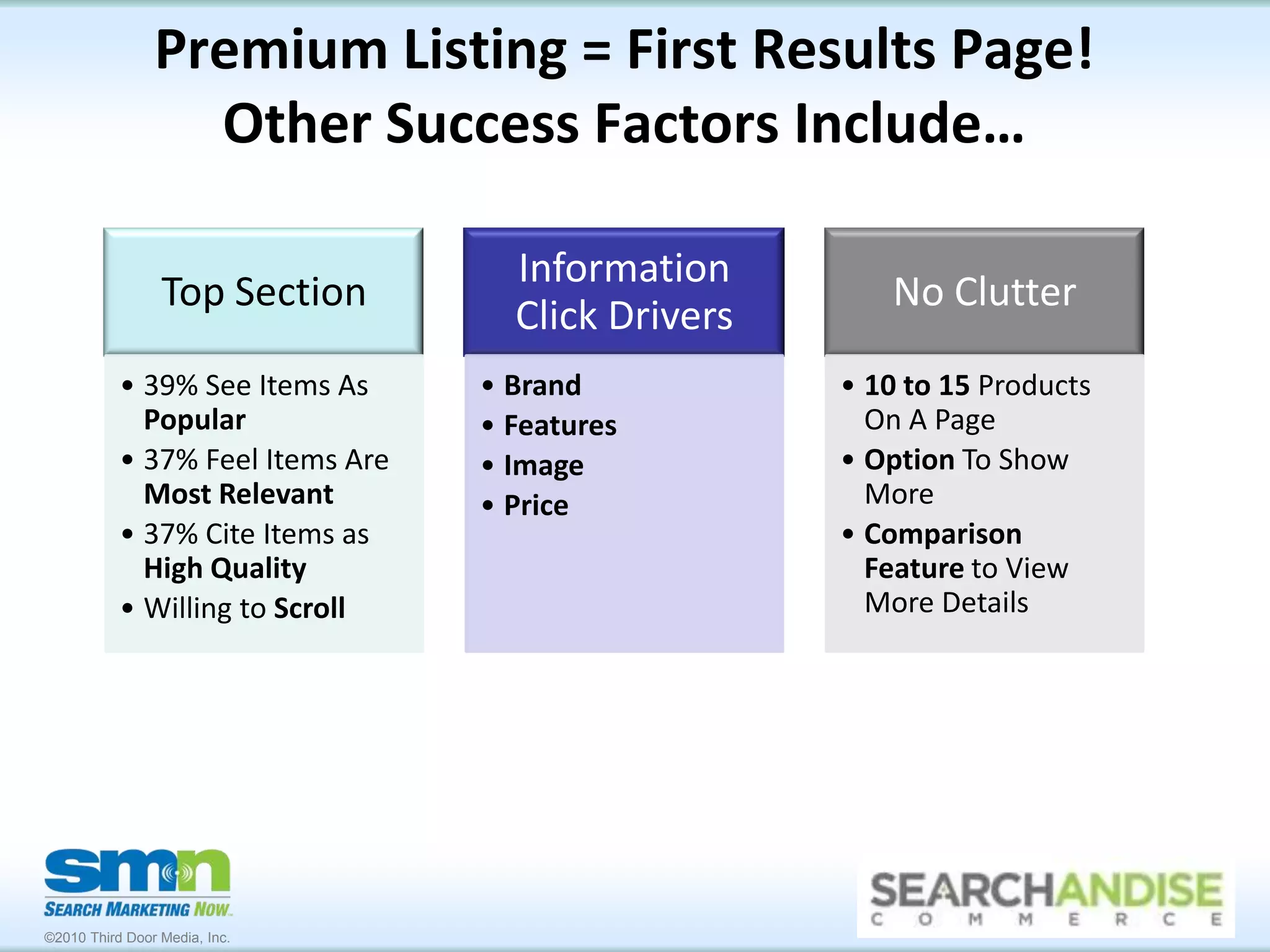
Premium Listing = First Results Page!  Other Success Factors Include…Top SectionInformation Click DriversNo Clutter39% See Items As Popular
37% Feel Items Are Most Relevant
37% Cite Items as High Quality
Willing to Scroll
Brand
Features
Image
Price
10 to 15 Products On A Page
Option To Show More
Comparison Feature to View More DetailsPolling Question 1If you are an Internet retailer, are search engine users delivered to landing pages on your website containing the specific brands and models of the products they seek?No, neverOnly sometimes, it’s usually a more generic pageTypically yes, it’s usually brand and model-specificYes, alwaysQuestion doesn’t apply to me
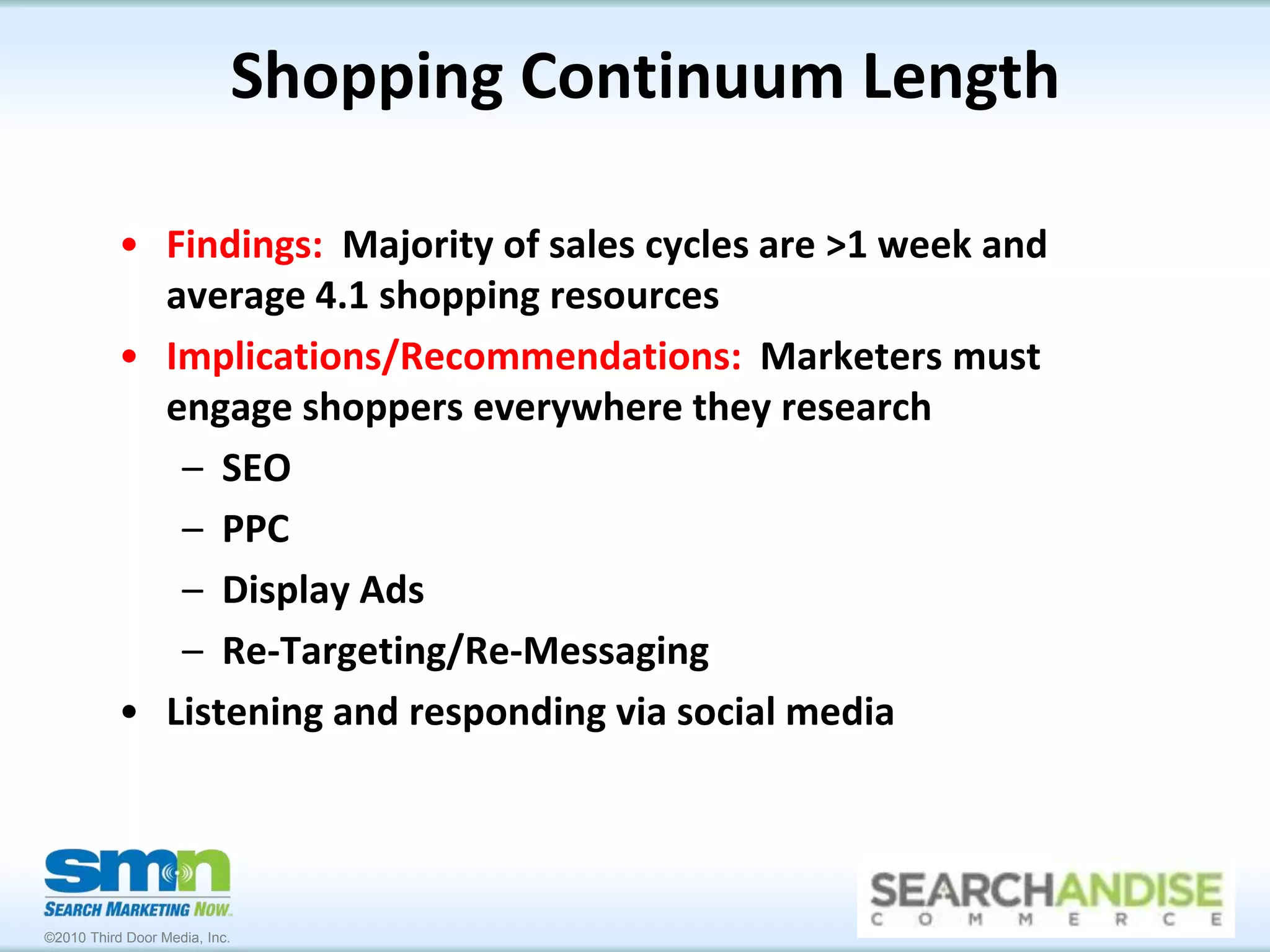
Shopping Continuum LengthFindings:  Majority of sales cycles are >1 week and average 4.1 shopping resourcesImplications/Recommendations:  Marketers must engage shoppers everywhere they researchSEOPPCDisplay AdsRe-Targeting/Re-MessagingListening and responding via social media
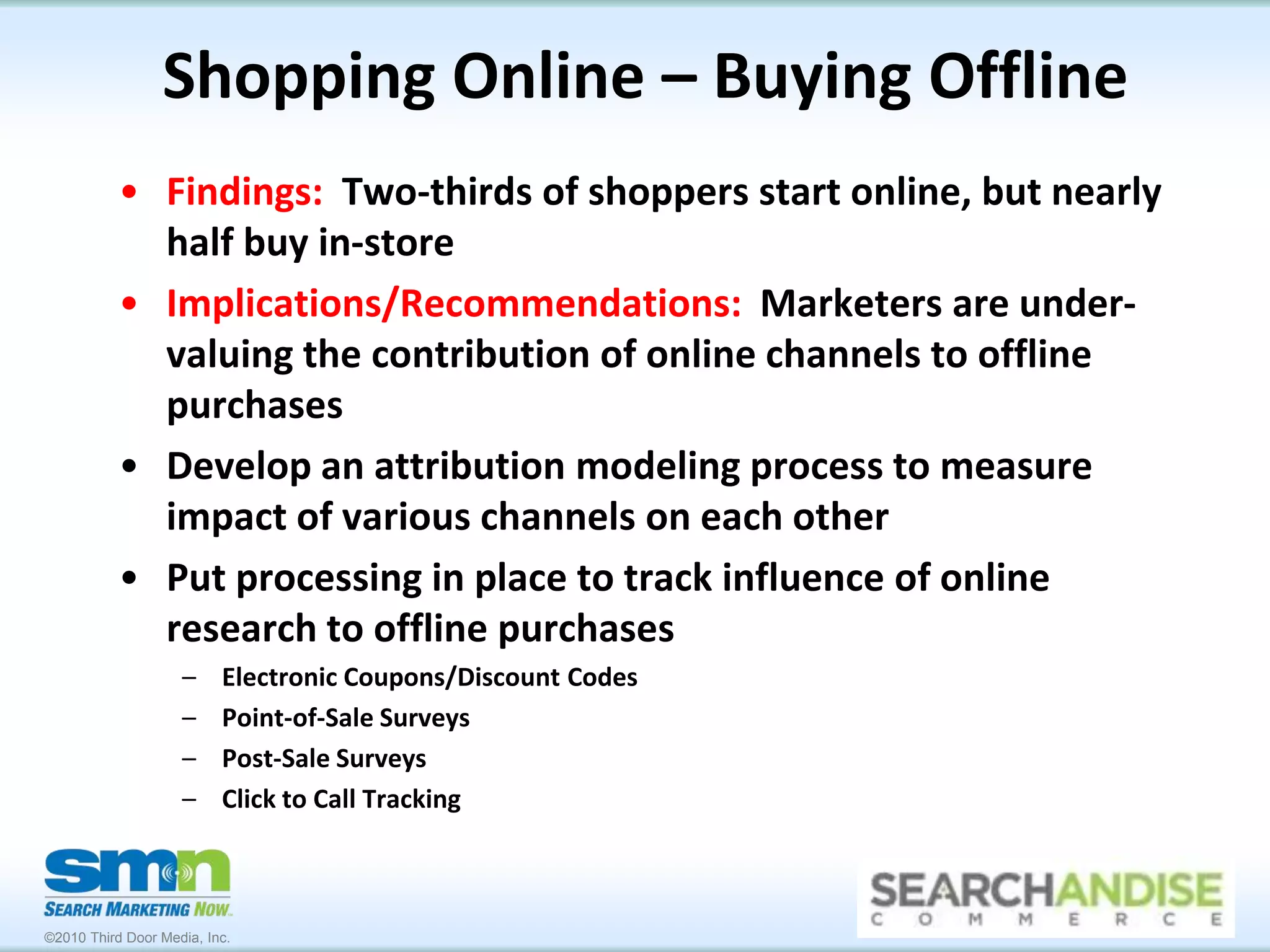
Shopping Online – Buying OfflineFindings:  Two-thirds of shoppers start online, but nearly half buy in-storeImplications/Recommendations:  Marketers are under-valuing the contribution of online channels to offline purchasesDevelop an attribution modeling process to measure impact of various channels on each otherPut processing in place to track influence of online research to offline purchasesElectronic Coupons/Discount CodesPoint-of-Sale SurveysPost-Sale SurveysClick to Call Tracking
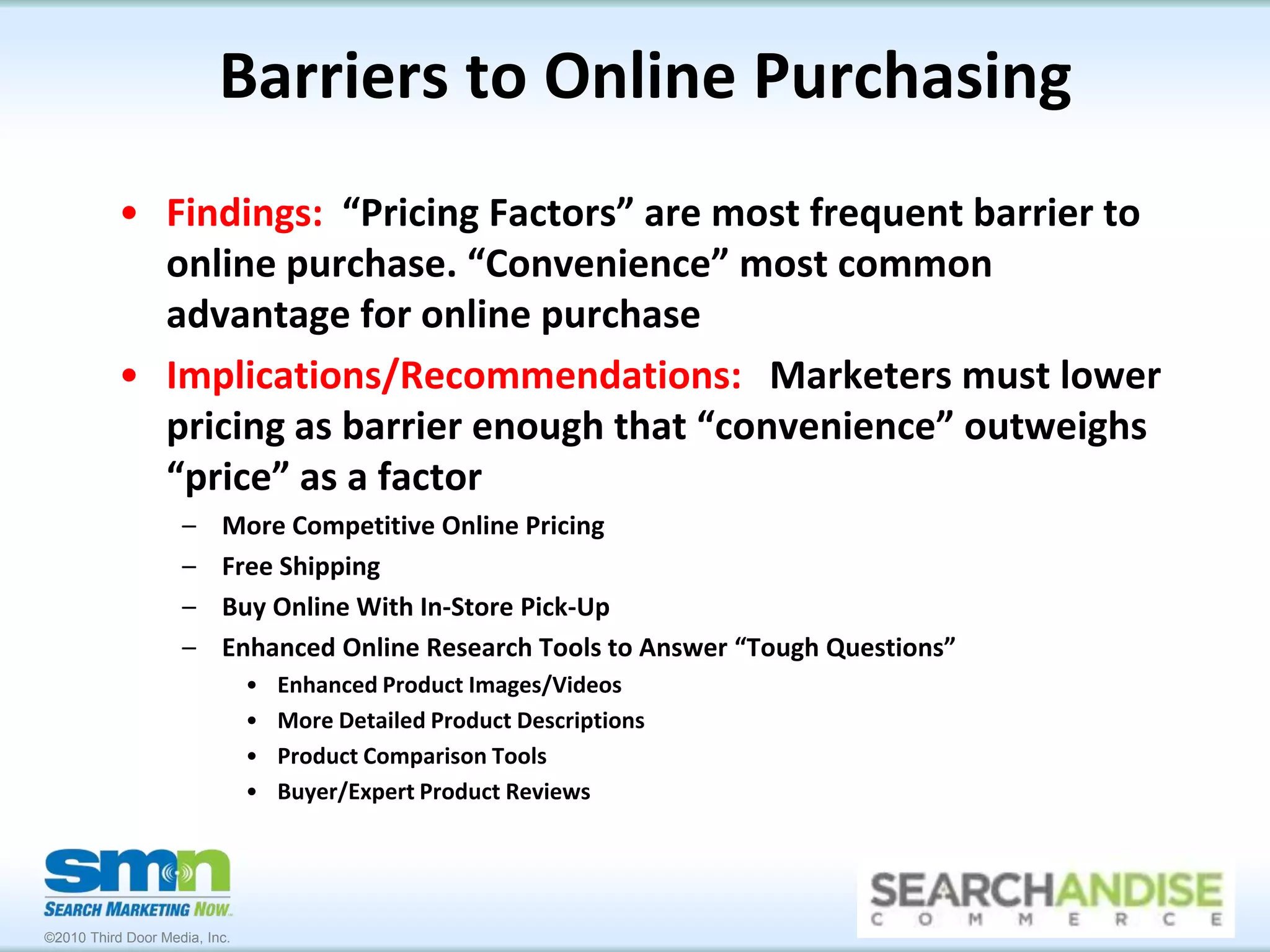
Barriers to Online PurchasingFindings:  “Pricing Factors” are most frequent barrier to online purchase. “Convenience” most common advantage for online purchaseImplications/Recommendations:   Marketers must lower pricing as barrier enough that “convenience” outweighs “price” as a factorMore Competitive Online PricingFree ShippingBuy Online With In-Store Pick-UpEnhanced Online Research Tools to Answer “Tough Questions”Enhanced Product Images/VideosMore Detailed Product DescriptionsProduct Comparison ToolsBuyer/Expert Product Reviews
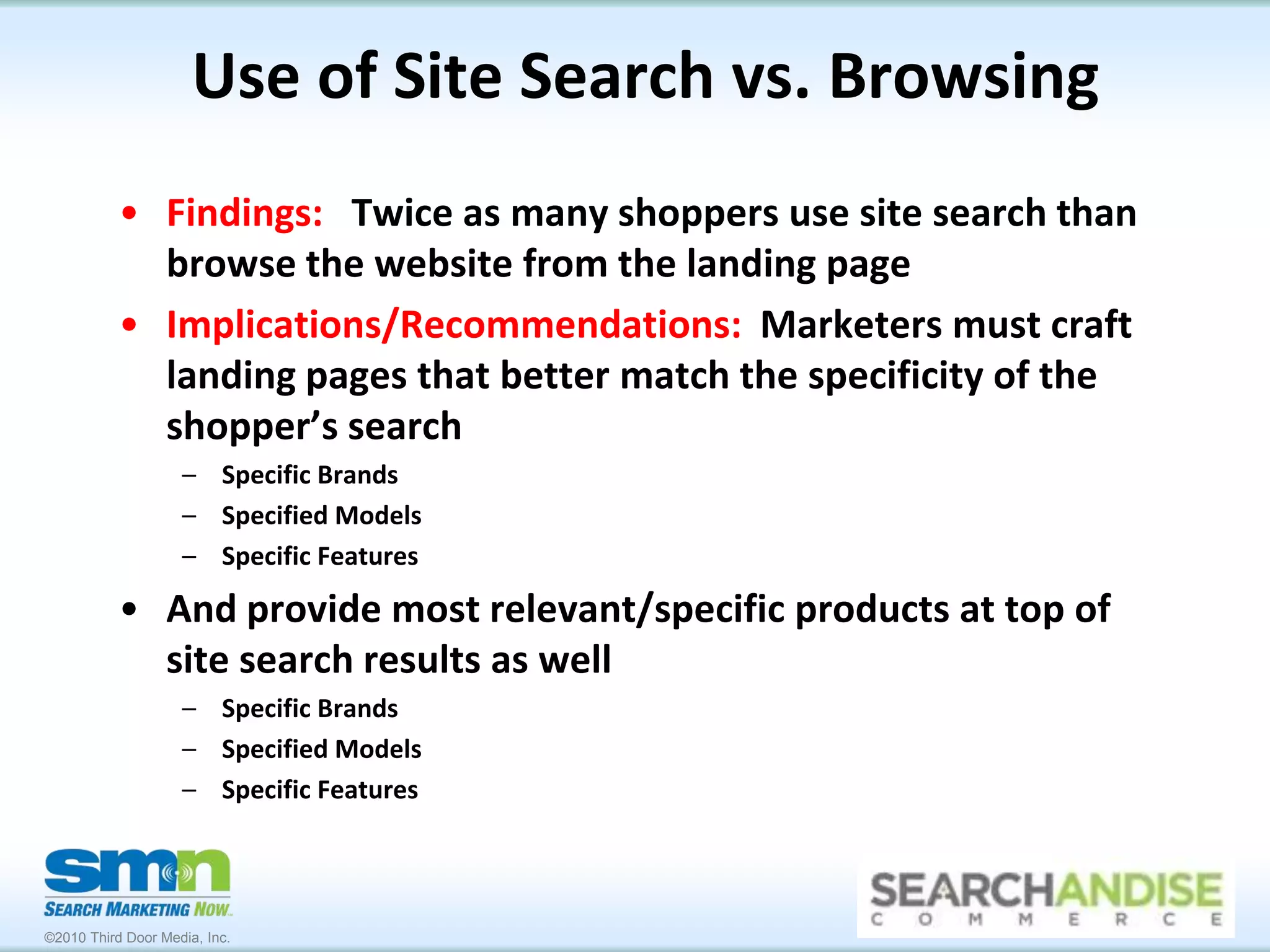
Use of Site Search vs. BrowsingFindings:   Twice as many shoppers use site search than browse the website from the landing pageImplications/Recommendations:  Marketers must craft landing pages that better match the specificity of the shopper’s searchSpecific BrandsSpecified ModelsSpecific FeaturesAnd provide most relevant/specific products at top of site search results as wellSpecific BrandsSpecified ModelsSpecific Features
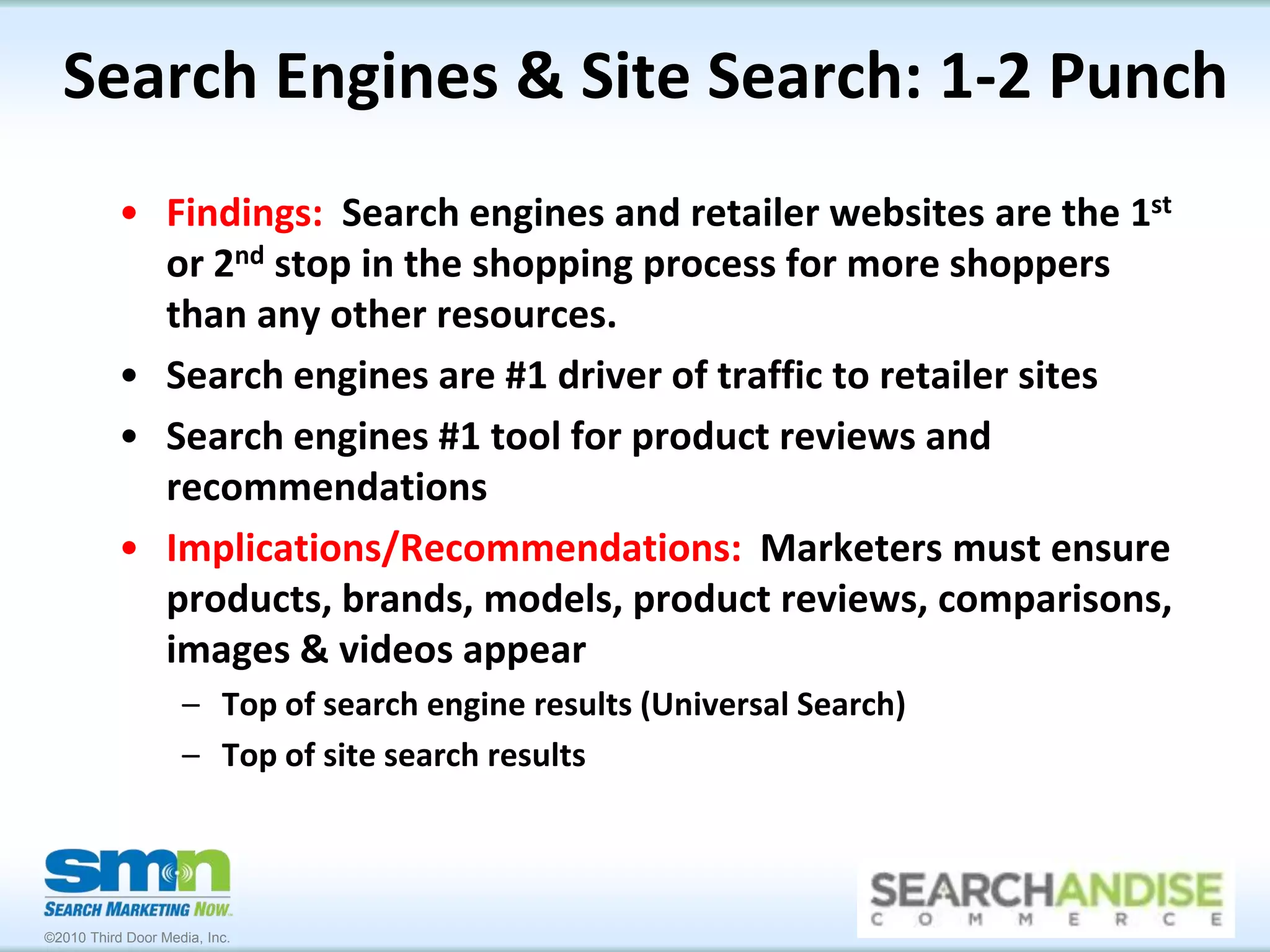
Search Engines & Site Search: 1-2 PunchFindings:  Search engines and retailer websites are the 1st or 2nd stop in the shopping process for more shoppers than any other resources.  Search engines are #1 driver of traffic to retailer sitesSearch engines #1 tool for product reviews and recommendationsImplications/Recommendations:  Marketers must ensure products, brands, models, product reviews, comparisons, images & videos appearTop of search engine results (Universal Search)Top of site search results
Polling Question 2If you are a product marketer, who allocates the budget earmarked for increasing visibility with your retail channel partners ? We don’t run any programs with our retailers.Product marketing.Corporate marketing.Digital/interactive marketing.Our ad/search/branding agency.Our internal co-op or MDF group.Question doesn’t apply to me
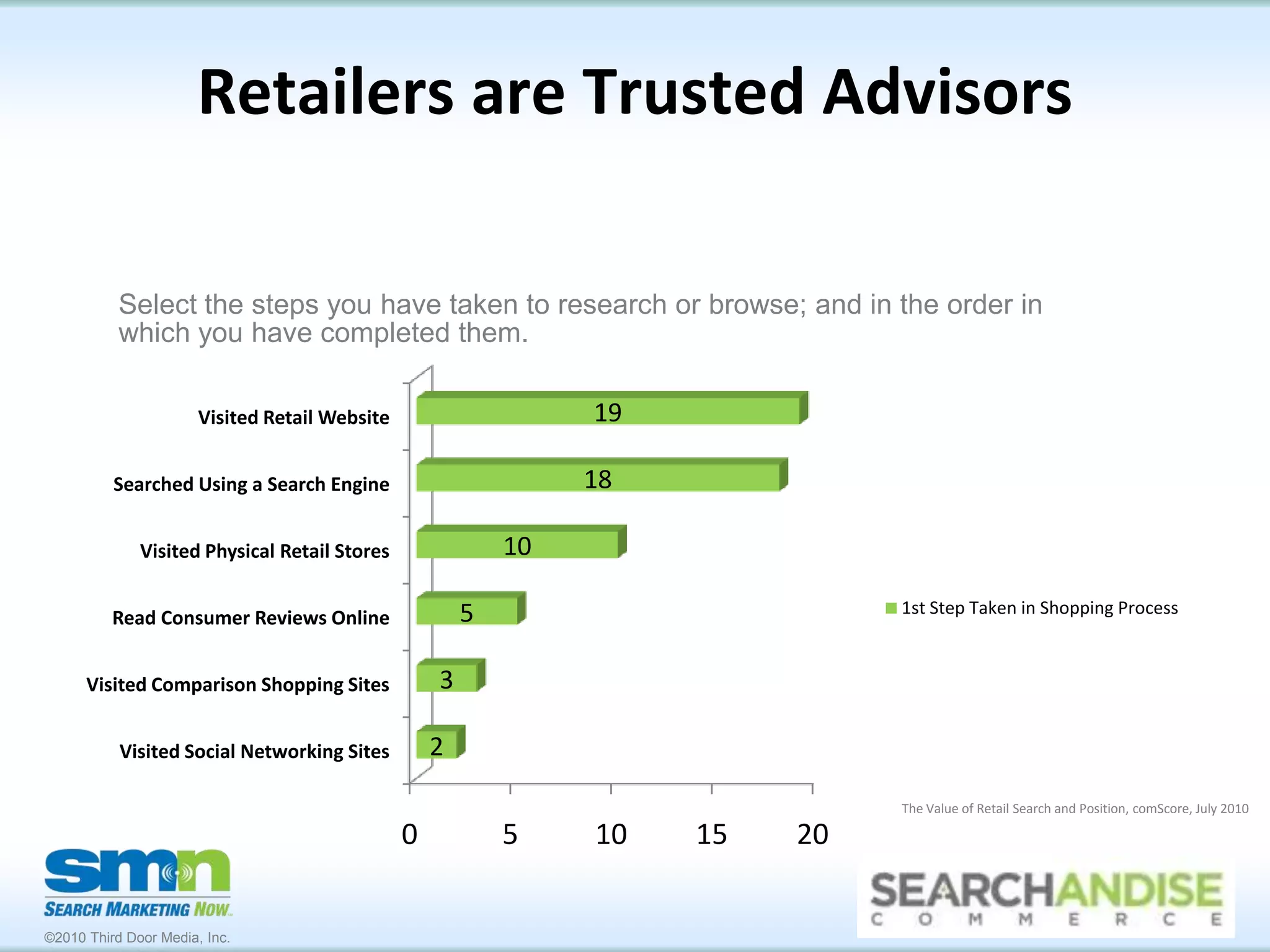
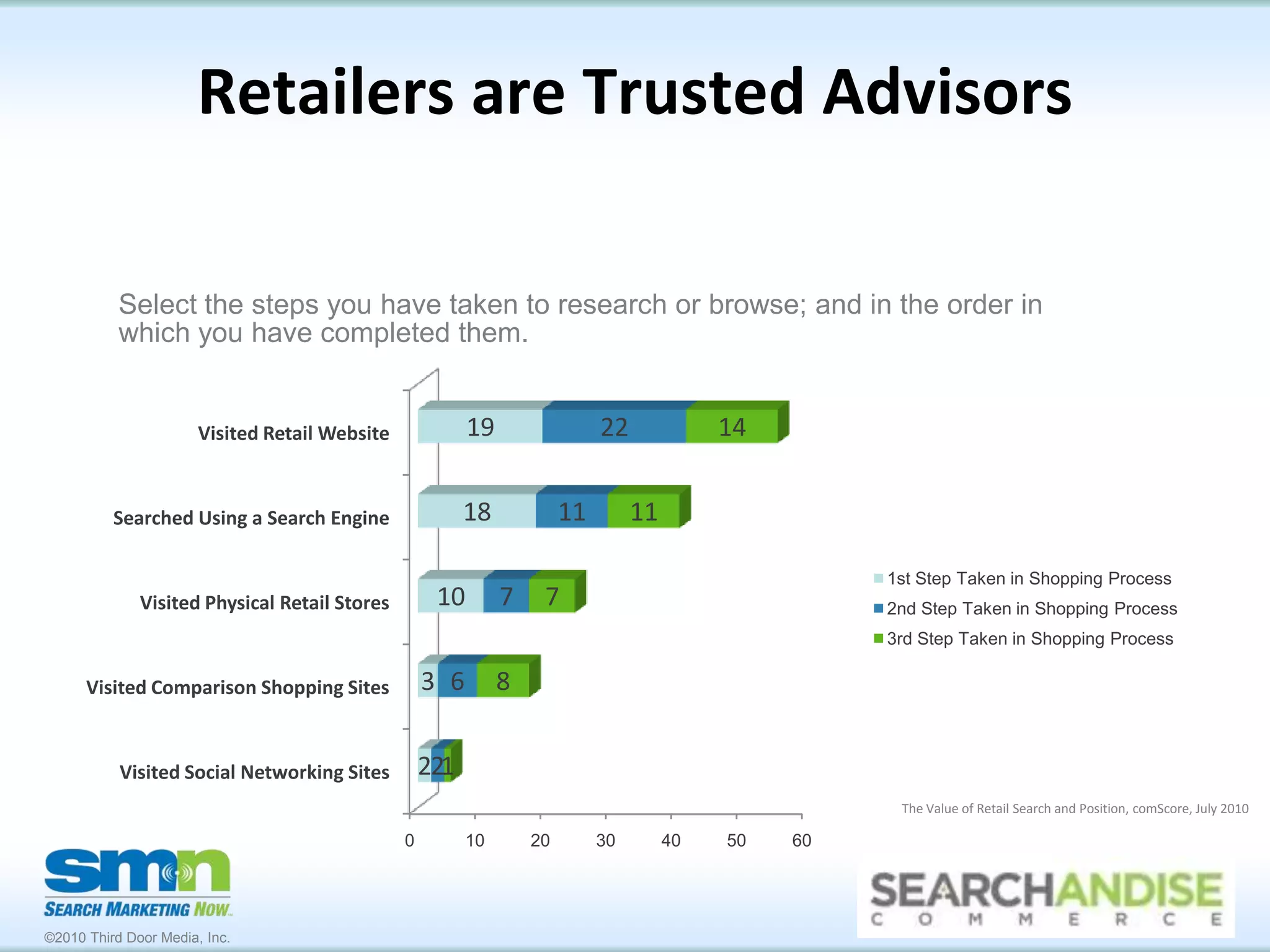
Retailers are Trusted AdvisorsSelect the steps you have taken to research or browse; and in the order in which you have completed them.The Value of Retail Search and Position, comScore, July 2010
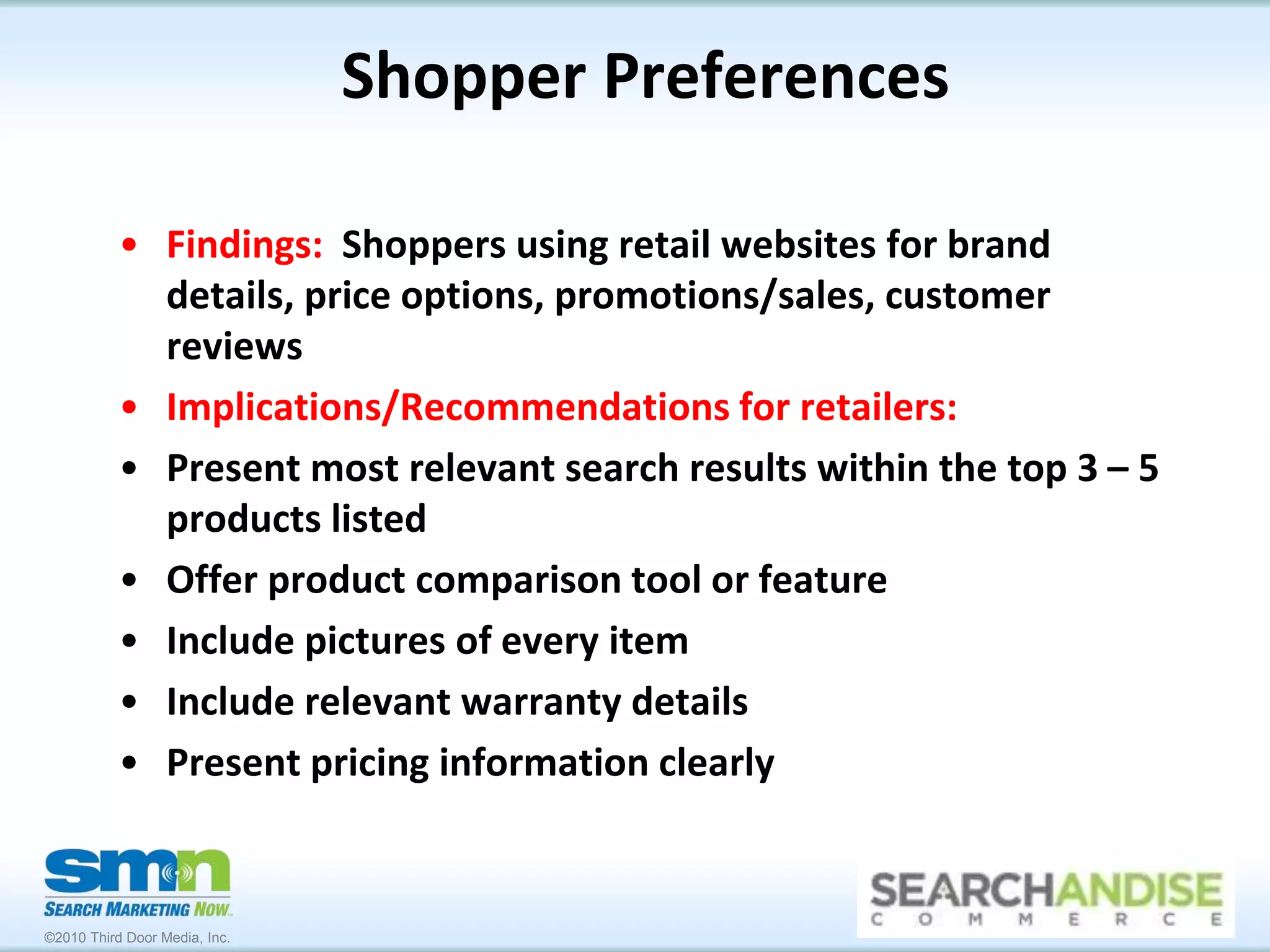
Shopper PreferencesFindings:  Shoppers using retail websites for brand details, price options, promotions/sales, customer reviews Implications/Recommendations for retailers:  Present most relevant search results within the top 3 – 5 products listedOffer product comparison tool or featureInclude pictures of every itemInclude relevant warranty detailsPresent pricing information clearly

How to Market Where Online Consumers are Shopping

  • 1.
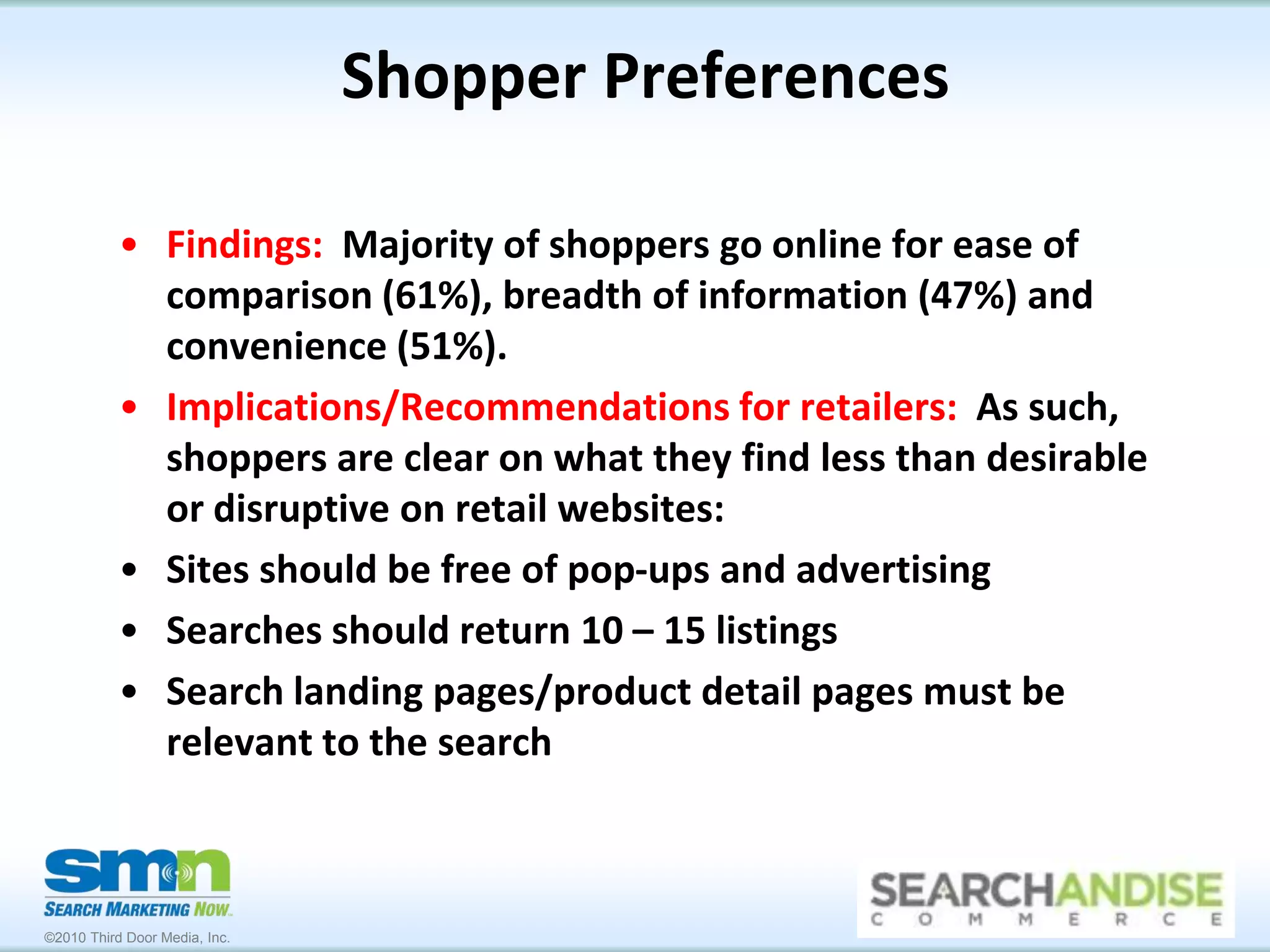
    How to MarketWhere Online Consumers are SearchingResults of a new research studyTuesday, August 3, 2010 - 1 PM EDT Speakers: Kim Rome, comScoreRob Murray, iProspectJohn Federman, Searchandise Commerce
  • 2.
    SearchandiseCommerce:Simple, next-generation searchsolution that empowers-Retailersto transform on-site search into a profit centerManufacturers to assert greater control over product placement across their online retail channel $1.00 CPC Bid
  • 3.
    Kim Rome, SeniorDirector of Research, comScoreKim Rome is Senior Director of Research at comScore, heading the custom survey team for the Retail and Travel division.  15 years of experience in consulting and market research designSpecializes in brand and competitive strategic assessment, customer satisfaction, advertising effectiveness and multi-channel & website optimization. 
  • 4.
    Rob Murray, CEO,iProspectRobert J. Murray is Chief Executive Officer of iProspect. He is responsible for formulating the firm's corporate strategy as well as managing the company's operations. 20 years of strategic consulting and financial analysis expertise, He has served as the President of iProspect from 2000 to 2006 and CEO since 2007In the past two years, iProspect has opened offices worldwide
  • 5.
    John Federman, Presidentand CEO, Searchandise CommerceAs president and chief executive officer, John Federman is responsible for Searchandise Commerce's strategic direction, growth and corporate vision. Mr. Federman brings more than 20 years of experience with innovative information technology and media companies to Searchandise Commerce.How to Market Where Online Consumers are SearchingResults of a new research studyTuesday, August 3, 2010 - 1 PM EDT Speakers: Kim Rome, comScoreRob Murray, iProspectJohn Federman, Searchandise Commerce
  • 6.
    A Study OnThe Role of Retail Site SearchBACKGROUND: comScore collaborated with Searchandise and iProspect to conduct research on the current usage of retail website search and the perceptions of products within the search results pagesIdentify the step-by-step purchase path and information soughtDetermine key drivers for shopping online versus offlineProvide retail websites with tools to optimize their placement and communications strategies for the purpose of increasing satisfaction and conversionMETHODOLOGY: Two-part research approach conducted in May, 2010:Online FocusSite Groups: 2 Groups with 25 participants eachEmail Survey: 1,167 comScore panelistsCRITERIA: Have researched, shopped or purchased the following in the past 6 months:Computer and/or related productsConsumer electronics
  • 7.
    Online Research IsA Critical Step In The Purchase ProcessConsumer ElectronicsOverallComputerscomScore Survey, May 2010. Base=have researched, browsed and/or purchased computers or consumer electronics in the past 6 months (N=1,167). Q: Please select the steps you have taken to research or browse the category.
  • 8.
    Retail Website ResearchLeads To Both Offline And Online SalesSearch Engine21%Retail Websites19%Manufacturer Websites27%Physical Stores21%
  • 9.
    Consumer Electronics ShoppersWho Begin With Search, End at Retail WebsitesRetail Website37%Search Engine18%Manufacturer Website27%
  • 10.
    Computer Shoppers AreMore Likely To Be Influenced On A Manufacturer SiteSearch Engine19%RetailWebsite39%Manufacturer Website13%Physical Store25%
  • 11.
    Offline Shoppers TurnTo Their Friends & Family For AdviceFriends & Family25%Physical Store10%Retail Website22%
  • 12.
    Information Sought atEach Source is Unique
  • 13.
    Three in FourShoppers Use The Retail Website Search Box5 Clicks = 75% of the ShoppersRetail Website Activity
  • 14.
    Premium Listing =First Results Page! Other Success Factors Include…Top SectionInformation Click DriversNo Clutter39% See Items As Popular
  • 15.
    37% Feel ItemsAre Most Relevant
  • 16.
    37% Cite Itemsas High Quality
  • 17.
  • 18.
  • 19.
  • 20.
  • 21.
  • 22.
    10 to 15Products On A Page
  • 23.
  • 24.
    Comparison Feature toView More DetailsPolling Question 1If you are an Internet retailer, are search engine users delivered to landing pages on your website containing the specific brands and models of the products they seek?No, neverOnly sometimes, it’s usually a more generic pageTypically yes, it’s usually brand and model-specificYes, alwaysQuestion doesn’t apply to me
  • 25.
    Shopping Continuum LengthFindings: Majority of sales cycles are >1 week and average 4.1 shopping resourcesImplications/Recommendations: Marketers must engage shoppers everywhere they researchSEOPPCDisplay AdsRe-Targeting/Re-MessagingListening and responding via social media
  • 26.
    Shopping Online –Buying OfflineFindings: Two-thirds of shoppers start online, but nearly half buy in-storeImplications/Recommendations: Marketers are under-valuing the contribution of online channels to offline purchasesDevelop an attribution modeling process to measure impact of various channels on each otherPut processing in place to track influence of online research to offline purchasesElectronic Coupons/Discount CodesPoint-of-Sale SurveysPost-Sale SurveysClick to Call Tracking
  • 27.
    Barriers to OnlinePurchasingFindings: “Pricing Factors” are most frequent barrier to online purchase. “Convenience” most common advantage for online purchaseImplications/Recommendations: Marketers must lower pricing as barrier enough that “convenience” outweighs “price” as a factorMore Competitive Online PricingFree ShippingBuy Online With In-Store Pick-UpEnhanced Online Research Tools to Answer “Tough Questions”Enhanced Product Images/VideosMore Detailed Product DescriptionsProduct Comparison ToolsBuyer/Expert Product Reviews
  • 28.
    Use of SiteSearch vs. BrowsingFindings: Twice as many shoppers use site search than browse the website from the landing pageImplications/Recommendations: Marketers must craft landing pages that better match the specificity of the shopper’s searchSpecific BrandsSpecified ModelsSpecific FeaturesAnd provide most relevant/specific products at top of site search results as wellSpecific BrandsSpecified ModelsSpecific Features
  • 29.
    Search Engines &Site Search: 1-2 PunchFindings: Search engines and retailer websites are the 1st or 2nd stop in the shopping process for more shoppers than any other resources. Search engines are #1 driver of traffic to retailer sitesSearch engines #1 tool for product reviews and recommendationsImplications/Recommendations: Marketers must ensure products, brands, models, product reviews, comparisons, images & videos appearTop of search engine results (Universal Search)Top of site search results
  • 30.
    Polling Question 2Ifyou are a product marketer, who allocates the budget earmarked for increasing visibility with your retail channel partners ? We don’t run any programs with our retailers.Product marketing.Corporate marketing.Digital/interactive marketing.Our ad/search/branding agency.Our internal co-op or MDF group.Question doesn’t apply to me
  • 31.
    Retailers are TrustedAdvisorsSelect the steps you have taken to research or browse; and in the order in which you have completed them.The Value of Retail Search and Position, comScore, July 2010
  • 32.
    Retailers are TrustedAdvisorsSelect the steps you have taken to research or browse; and in the order in which you have completed them.The Value of Retail Search and Position, comScore, July 2010
  • 33.
    Shopper PreferencesFindings: Shoppers using retail websites for brand details, price options, promotions/sales, customer reviews Implications/Recommendations for retailers: Present most relevant search results within the top 3 – 5 products listedOffer product comparison tool or featureInclude pictures of every itemInclude relevant warranty detailsPresent pricing information clearly
  • 34.
    Shopper PreferencesFindings: Majority of shoppers go online for ease of comparison (61%), breadth of information (47%) and convenience (51%). Implications/Recommendations for retailers: As such, shoppers are clear on what they find less than desirable or disruptive on retail websites:Sites should be free of pop-ups and advertisingSearches should return 10 – 15 listingsSearch landing pages/product detail pages must be relevant to the search
  • 35.
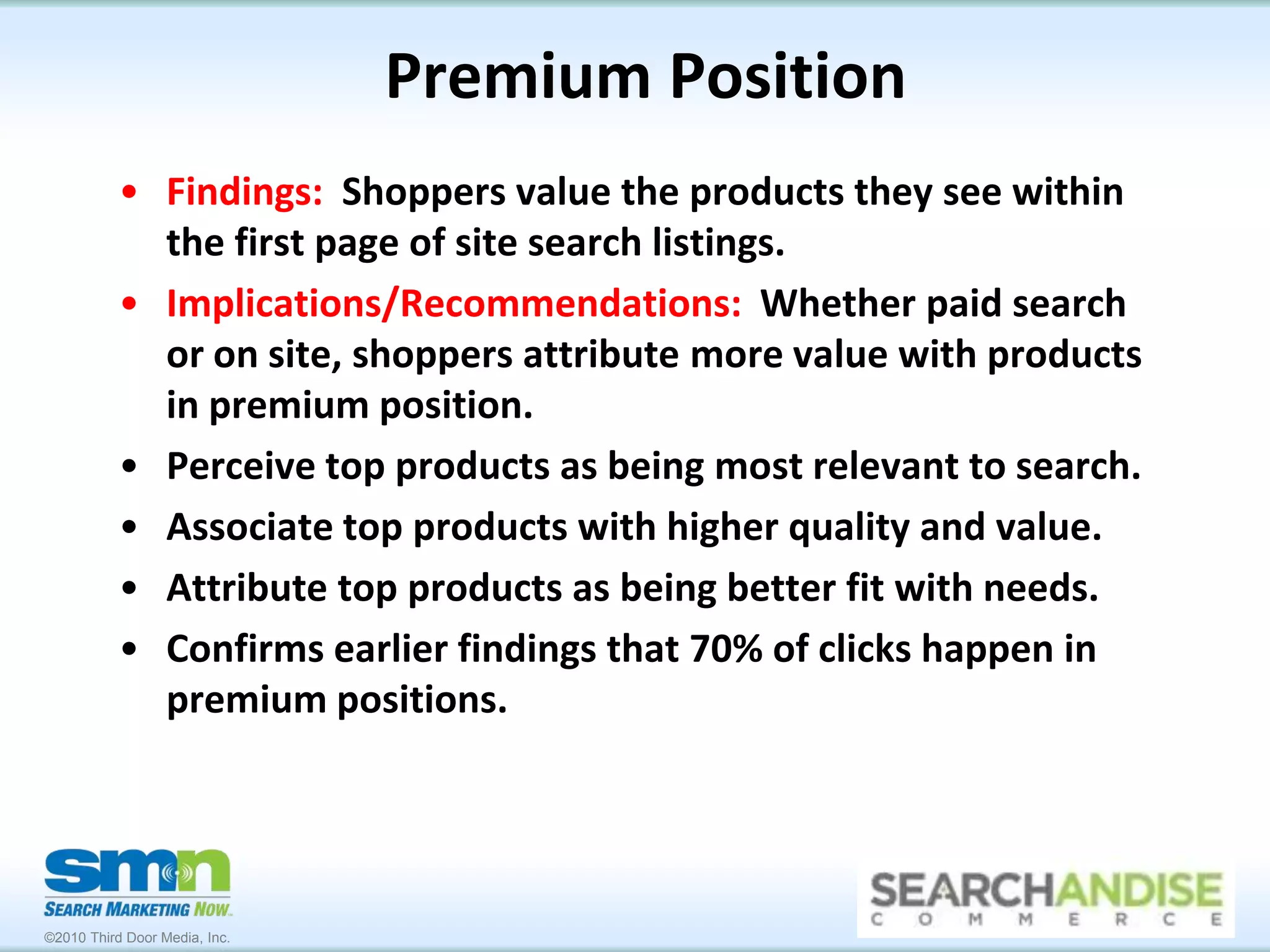
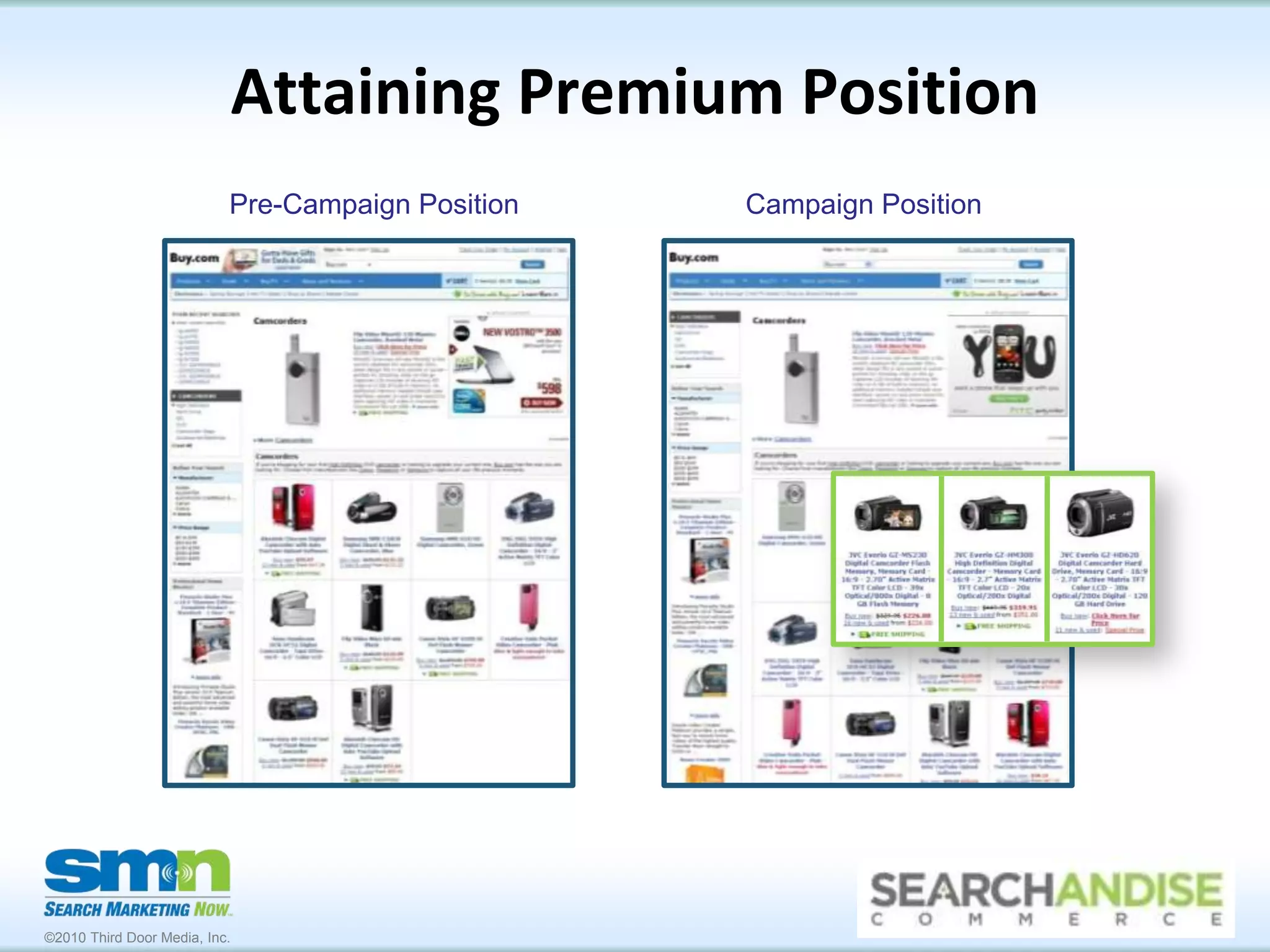
    Premium PositionFindings: Shoppers value the products they see within the first page of site search listings. Implications/Recommendations: Whether paid search or on site, shoppers attribute more value with products in premium position. Perceive top products as being most relevant to search.Associate top products with higher quality and value.Attribute top products as being better fit with needs.Confirms earlier findings that 70% of clicks happen in premium positions.
  • 36.
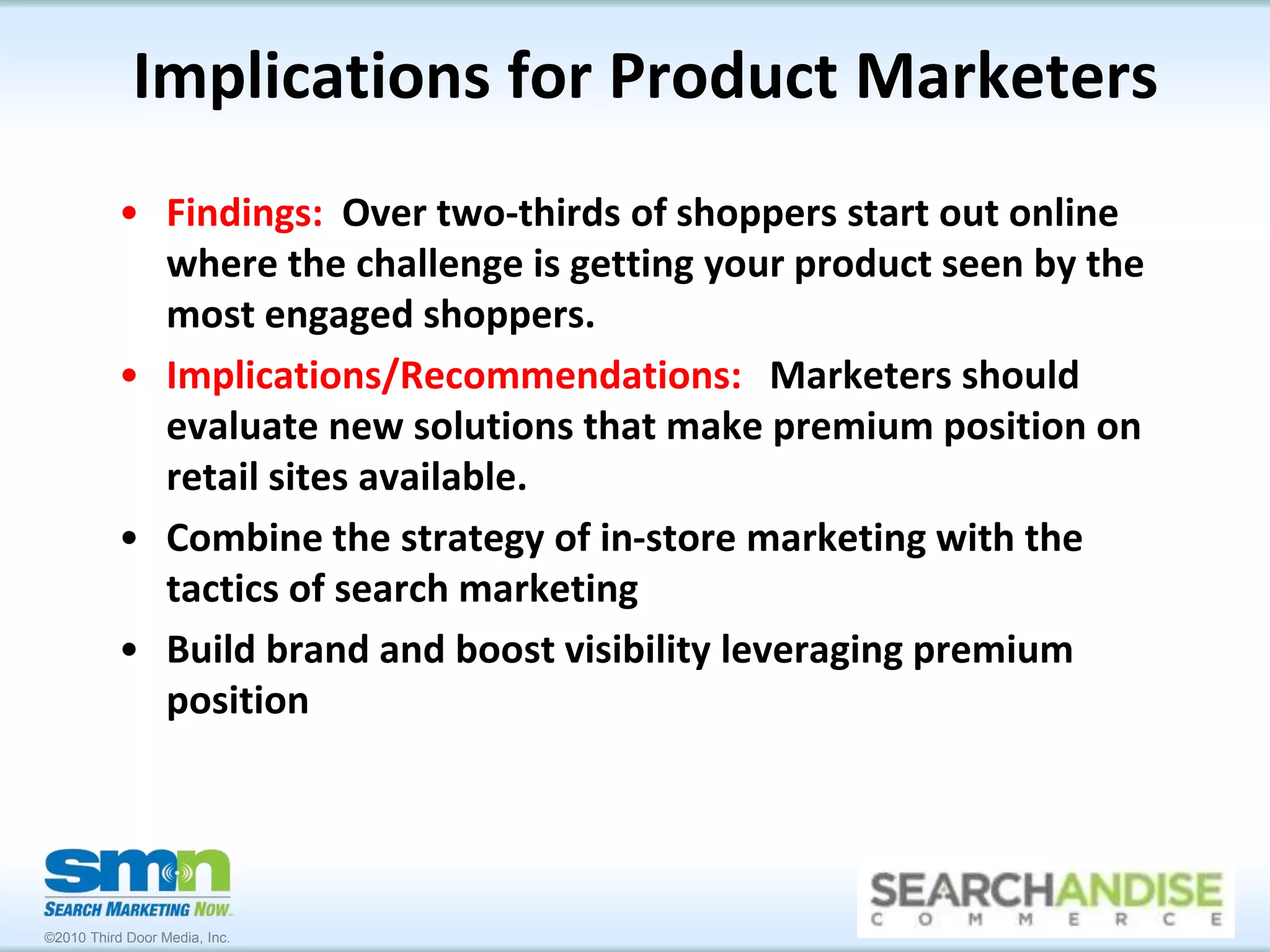
    Implications for ProductMarketersFindings: Over two-thirds of shoppers start out online where the challenge is getting your product seen by the most engaged shoppers.Implications/Recommendations: Marketers should evaluate new solutions that make premium position on retail sites available. Combine the strategy of in-store marketing with the tactics of search marketingBuild brand and boost visibility leveraging premium position
  • 37.
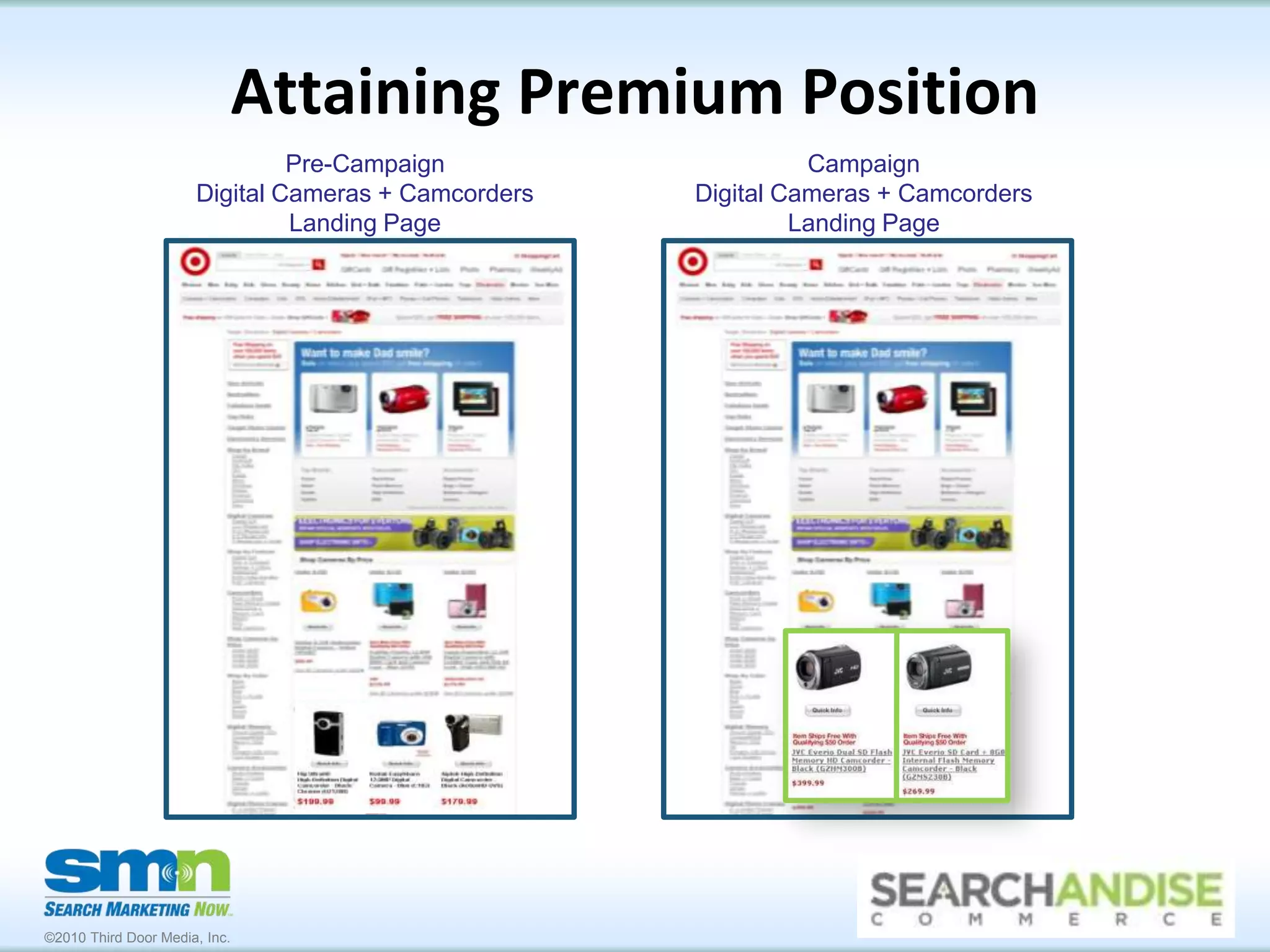
    Attaining Premium PositionCampaignDigitalCameras + Camcorders Landing PagePre-CampaignDigital Cameras + Camcorders Landing Page
  • 38.
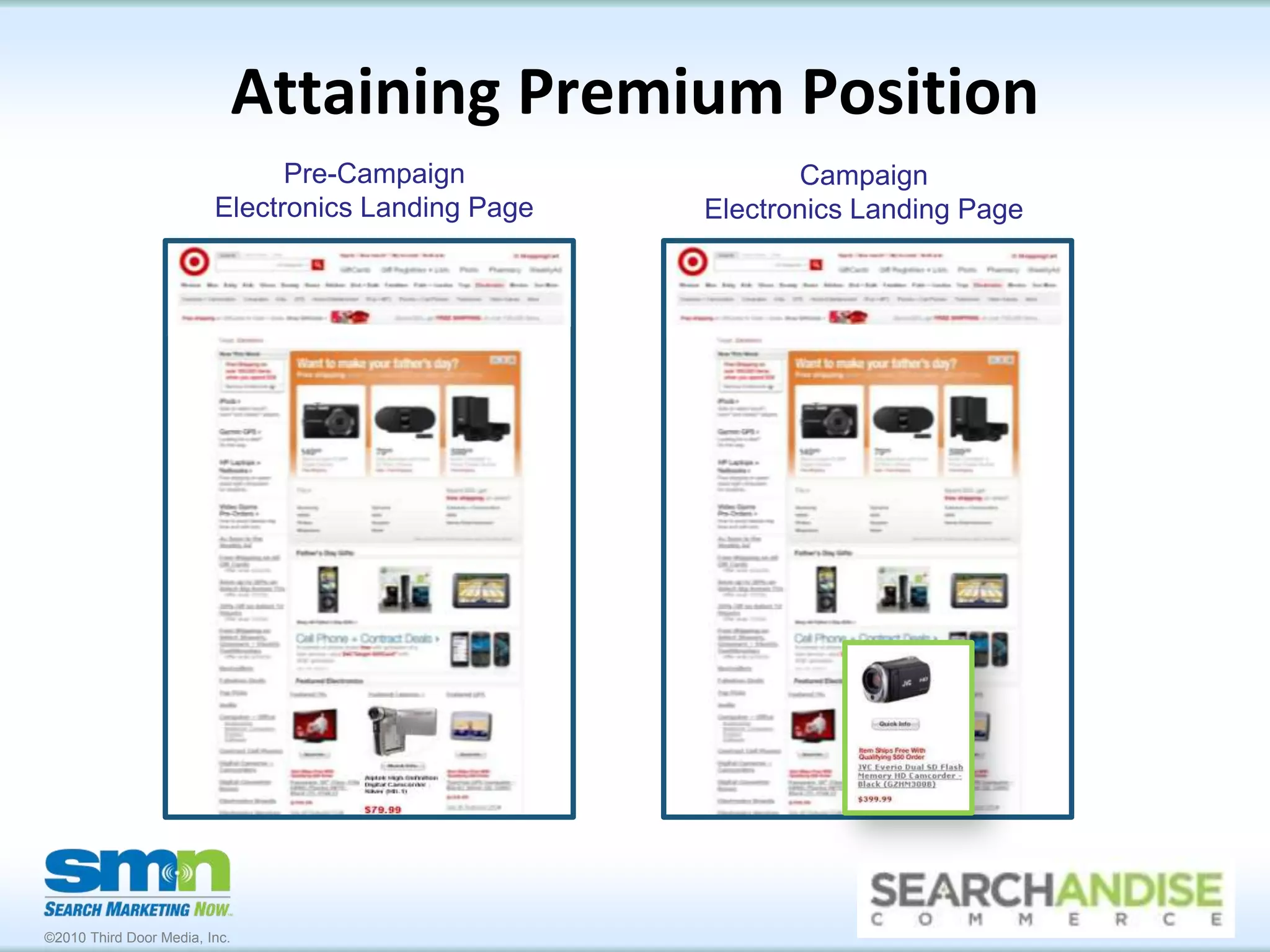
    Attaining Premium PositionPre-CampaignElectronics Landing PageCampaign Electronics Landing Page
  • 39.
  • 40.
    Search Engines andRetail SitesLessons Learned:Position mattersOne-two punch for reaching the most engaged buyers
  • 41.