

Shopper Typologies to
Drive Site Design and
Ecommerce Strategies


April 25, 2012
Who Am I?


                 Eric Paquette
              Senior Vice President

             Copernicus Marketing
            Consulting and Research

                   Aegis Media
ERIC PAQUETTE, SVP

    (617) 449-4189

      Eric.Paquette@copernicusmarketing.com
Background


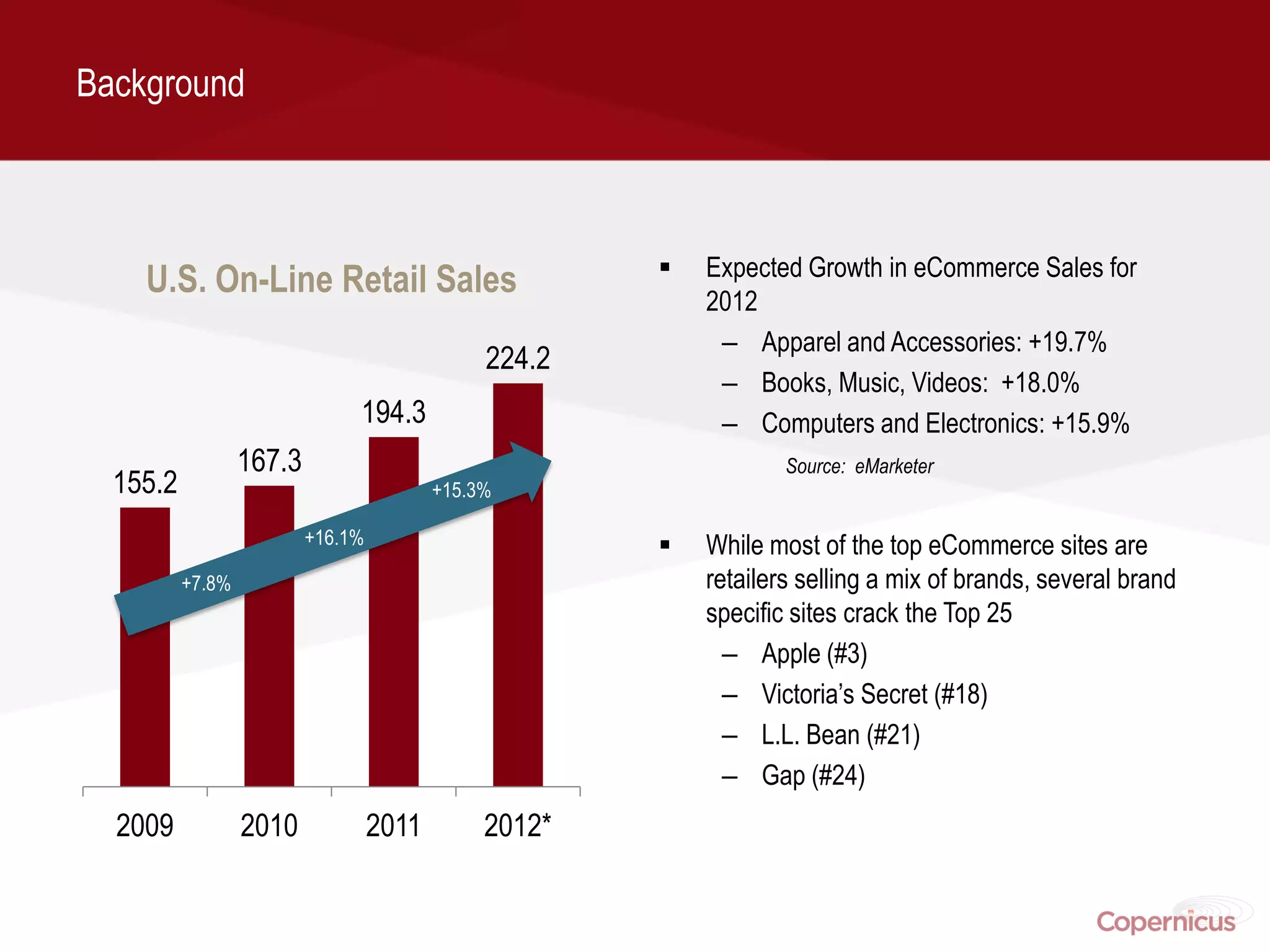
                                                          Expected Growth in eCommerce Sales for
    U.S. On-Line Retail Sales                              2012
                                                            – Apparel and Accessories: +19.7%
                                               224.2
                                                            – Books, Music, Videos: +18.0%
                               194.3                        – Computers and Electronics: +15.9%
                  167.3                                            Source: eMarketer
  155.2                                   +15.3%

                          +16.1%                          While most of the top eCommerce sites are
          +7.8%                                            retailers selling a mix of brands, several brand
                                                           specific sites crack the Top 25
                                                             – Apple (#3)
                                                             – Victoria’s Secret (#18)
                                                             – L.L. Bean (#21)
                                                             – Gap (#24)
  2009            2010             2011        2012*
Ecommerce is also growing for brands that use retailers for distribution


More and more brands are expanding their direct on-line presence.

     Significantly higher margins

     Providing significantly expanded reach for distribution

     Provides access to customer data

     Opportunities to develop customer insights

     More and more, consumers expect to be able to buy brands directly
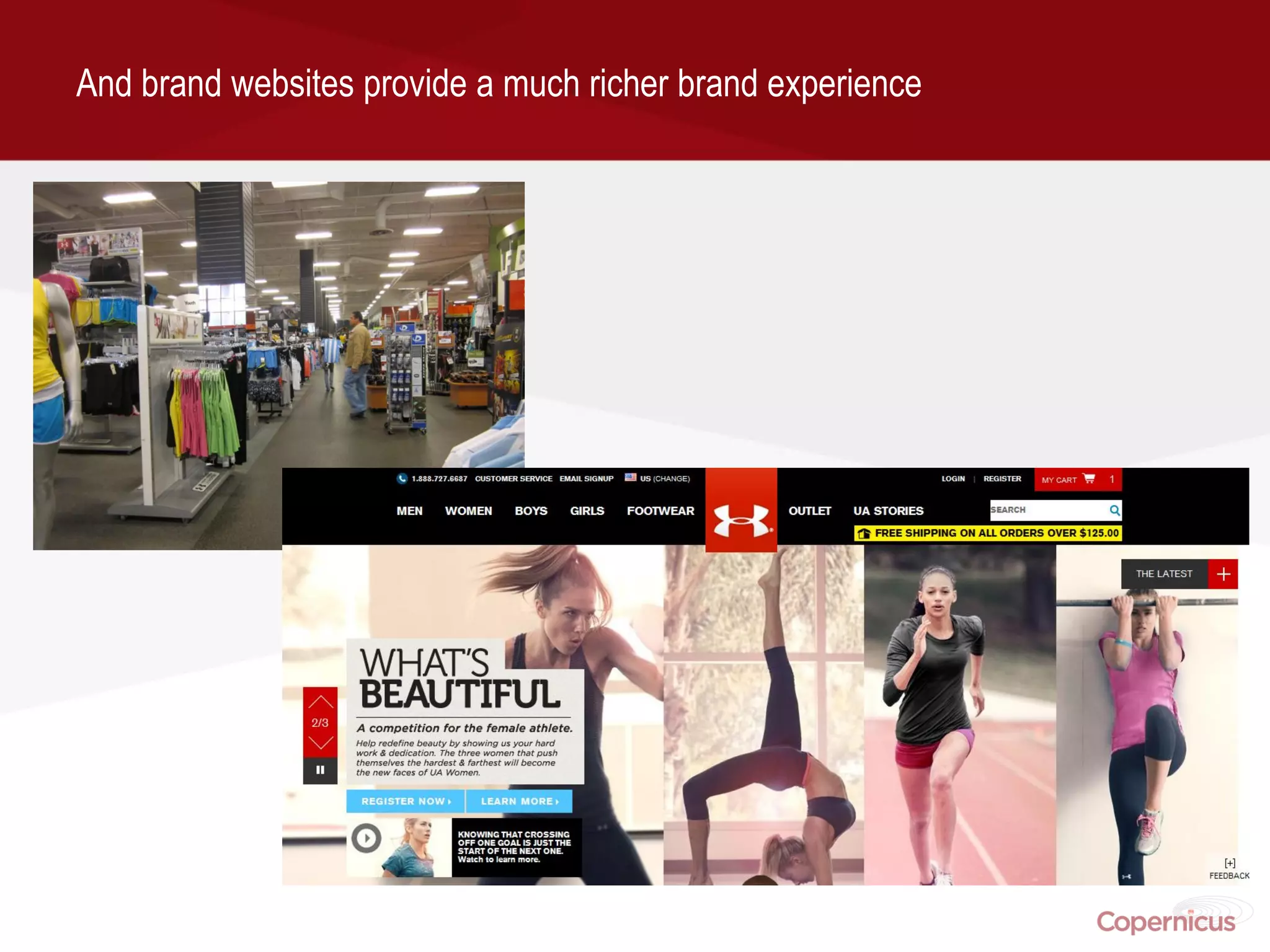
And brand websites provide a much richer brand experience
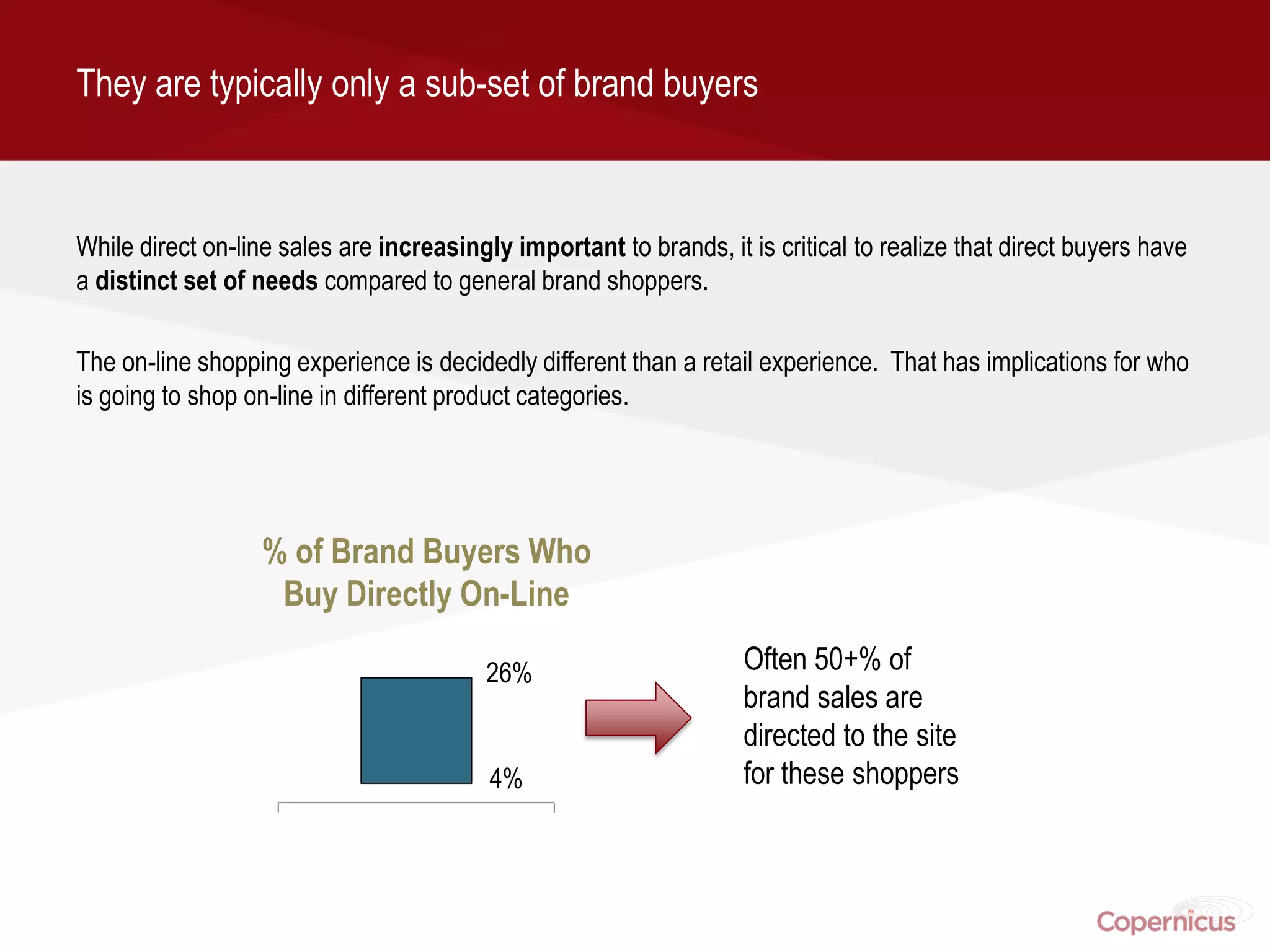
They are typically only a sub-set of brand buyers


While direct on-line sales are increasingly important to brands, it is critical to realize that direct buyers have
a distinct set of needs compared to general brand shoppers.

The on-line shopping experience is decidedly different than a retail experience. That has implications for who
is going to shop on-line in different product categories.


                   % of Brand Buyers Who
                    Buy Directly On-Line

                                          26%                       Often 50+% of
                                                                    brand sales are
                                                                    directed to the site
                                          4%                        for these shoppers
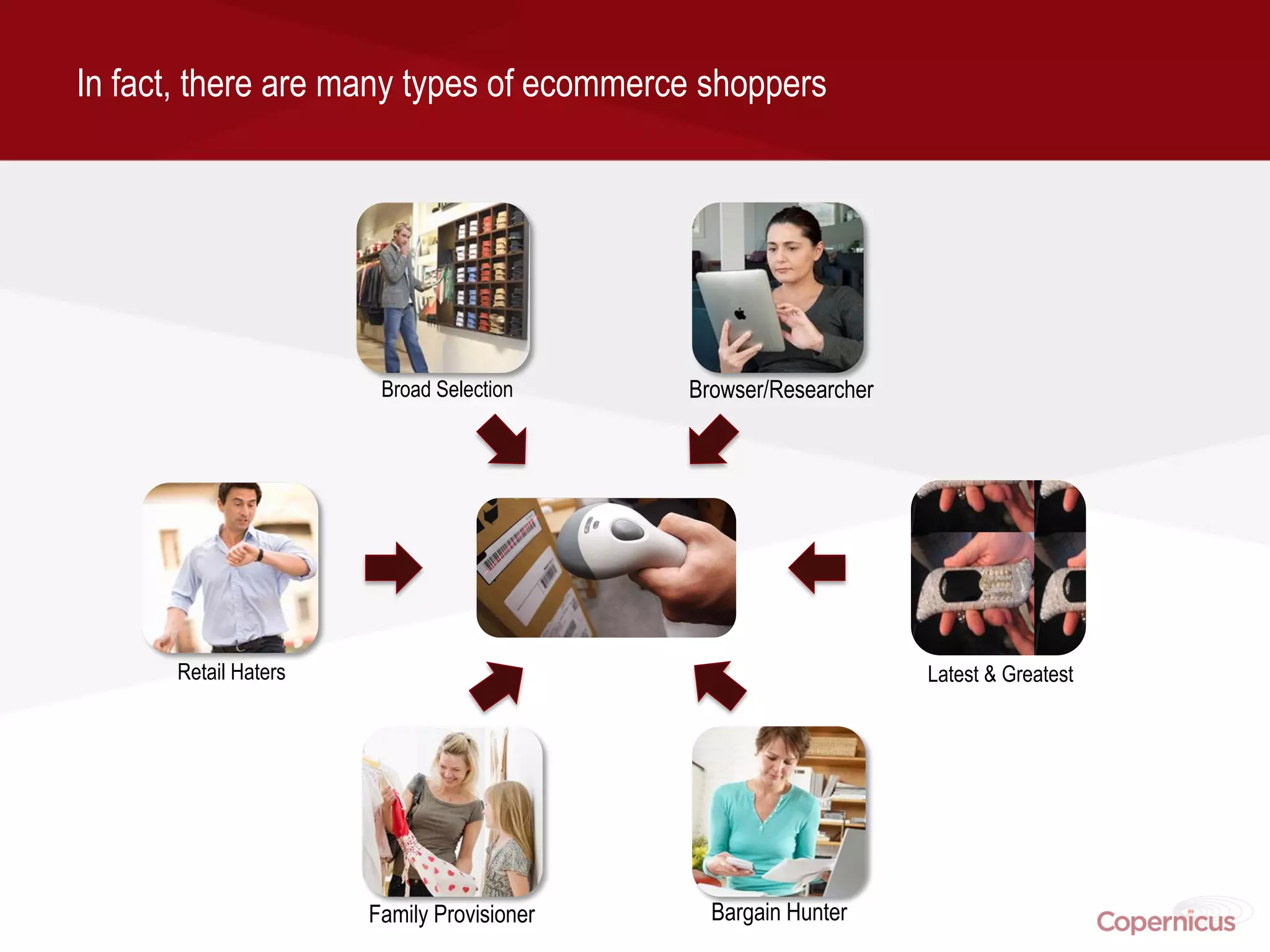
In fact, there are many types of ecommerce shoppers


                       Broad Selection     Browser/Researcher


      Retail Haters                                             Latest & Greatest


                      Family Provisioner     Bargain Hunter
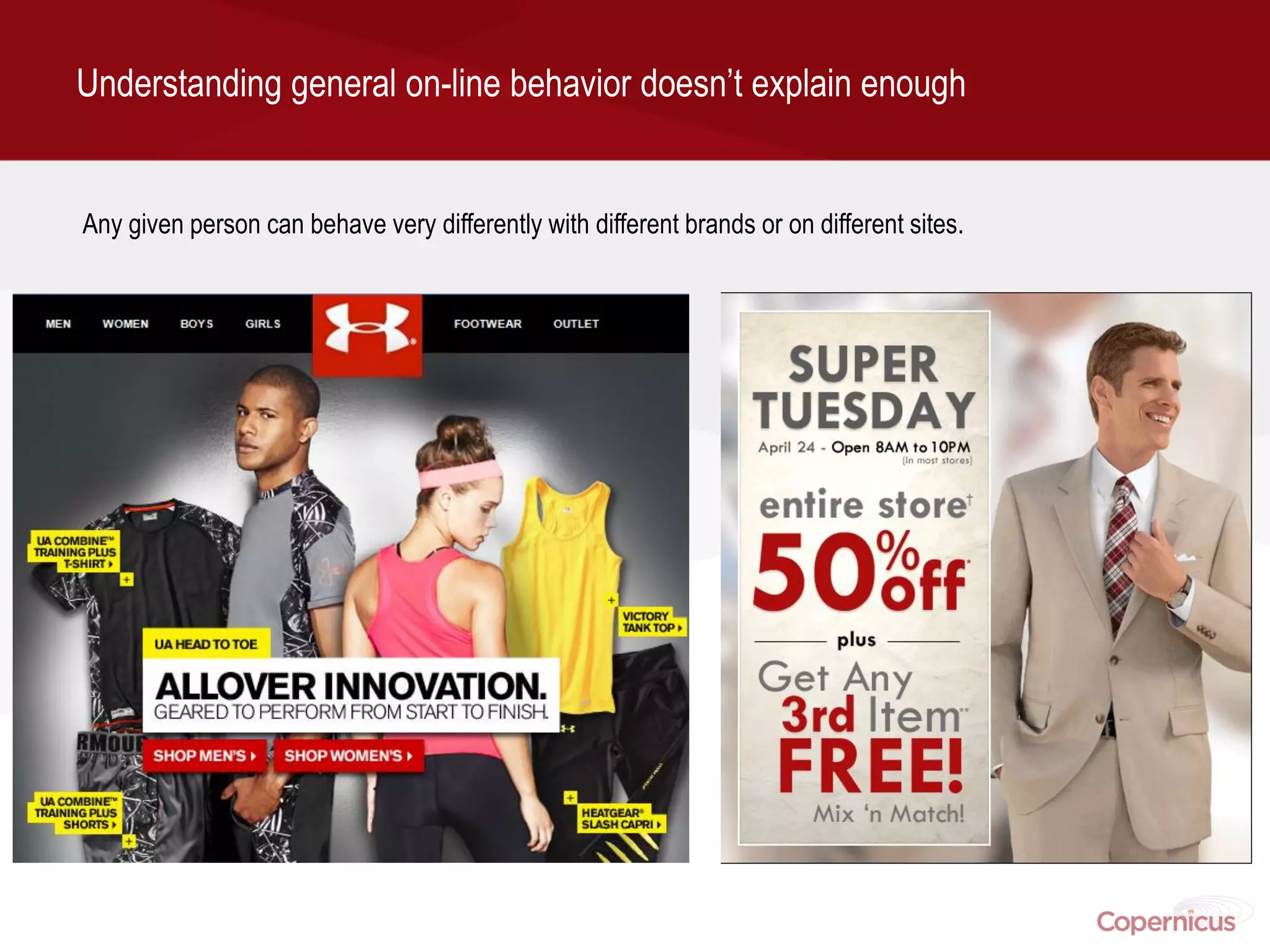
Understanding general on-line behavior doesn’t explain enough


Any given person can behave very differently with different brands or on different sites.
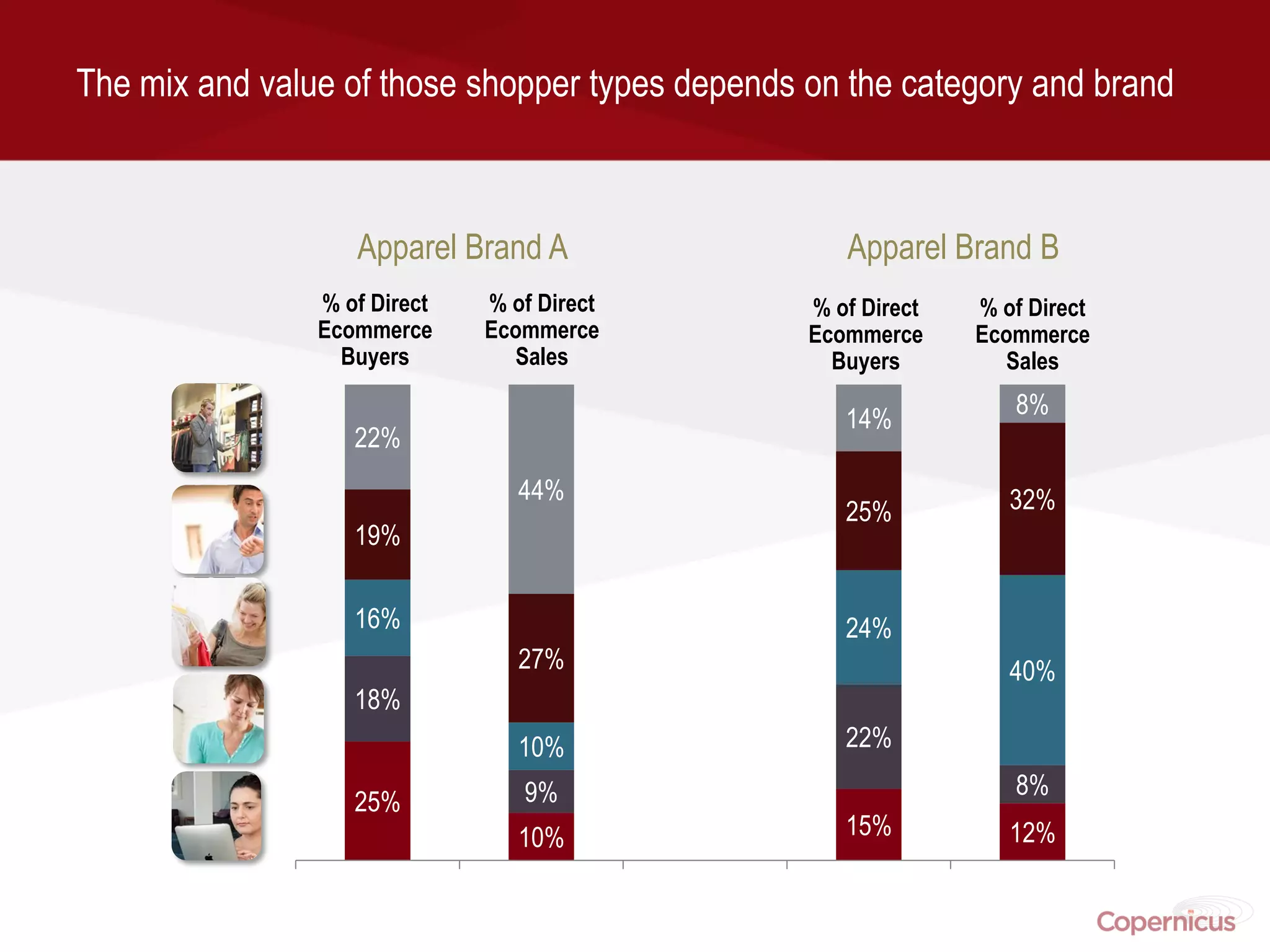
The mix and value of those shopper types depends on the category and brand


                   Apparel Brand A                  Apparel Brand B
                % of Direct   % of Direct        % of Direct   % of Direct
                Ecommerce     Ecommerce          Ecommerce     Ecommerce
                  Buyers        Sales              Buyers        Sales
                                                                  8%
                                                    14%
                   22%
                                 44%                              32%
                                                    25%
                   19%

                   16%                              24%
                                 27%                              40%
                   18%
                                 10%                22%
                                 9%                               8%
                   25%
                                 10%                15%           12%
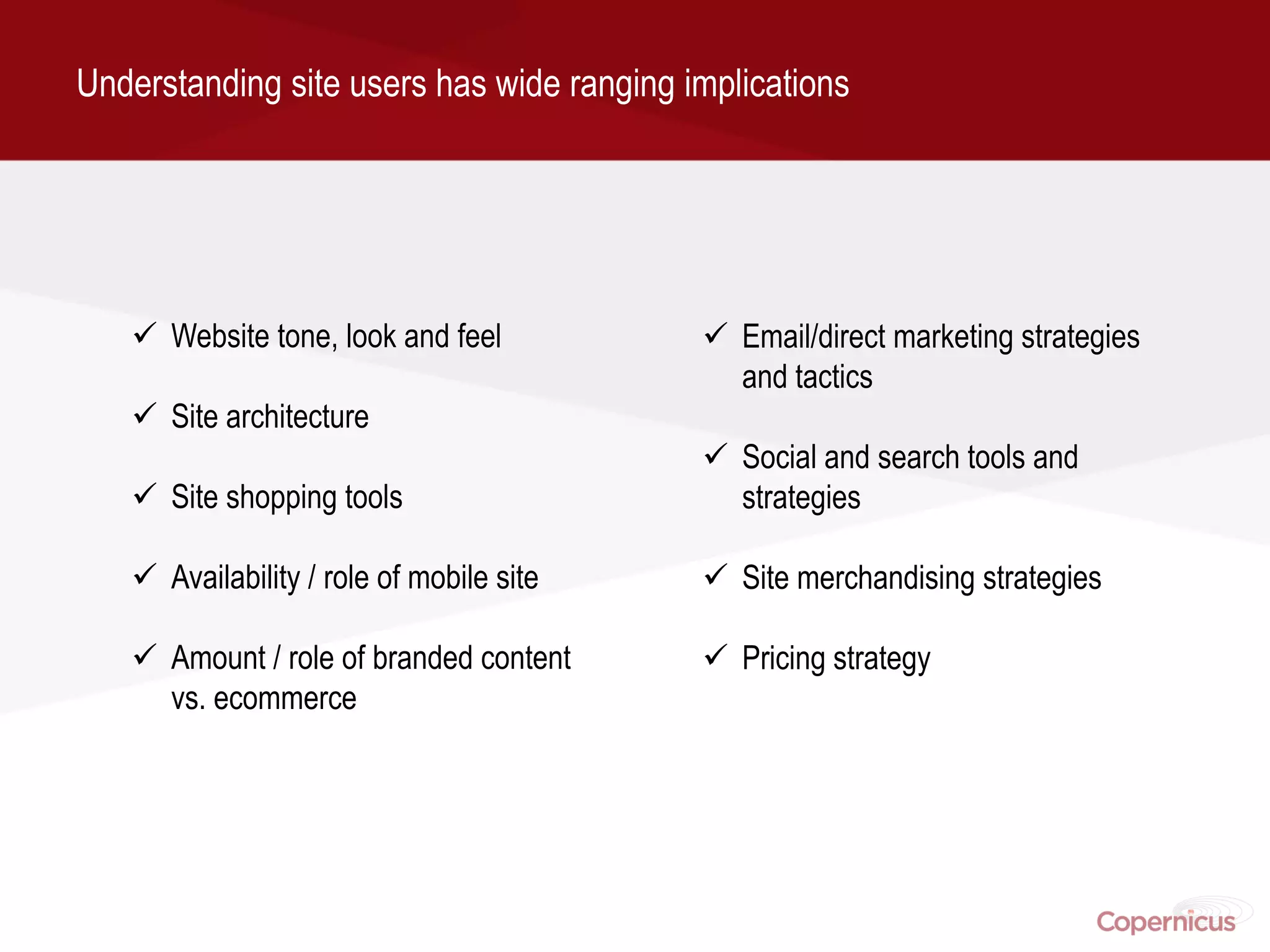
Understanding site users has wide ranging implications


    Website tone, look and feel            Email/direct marketing strategies
                                             and tactics
    Site architecture
                                            Social and search tools and
    Site shopping tools                     strategies

    Availability / role of mobile site     Site merchandising strategies

    Amount / role of branded content       Pricing strategy
     vs. ecommerce
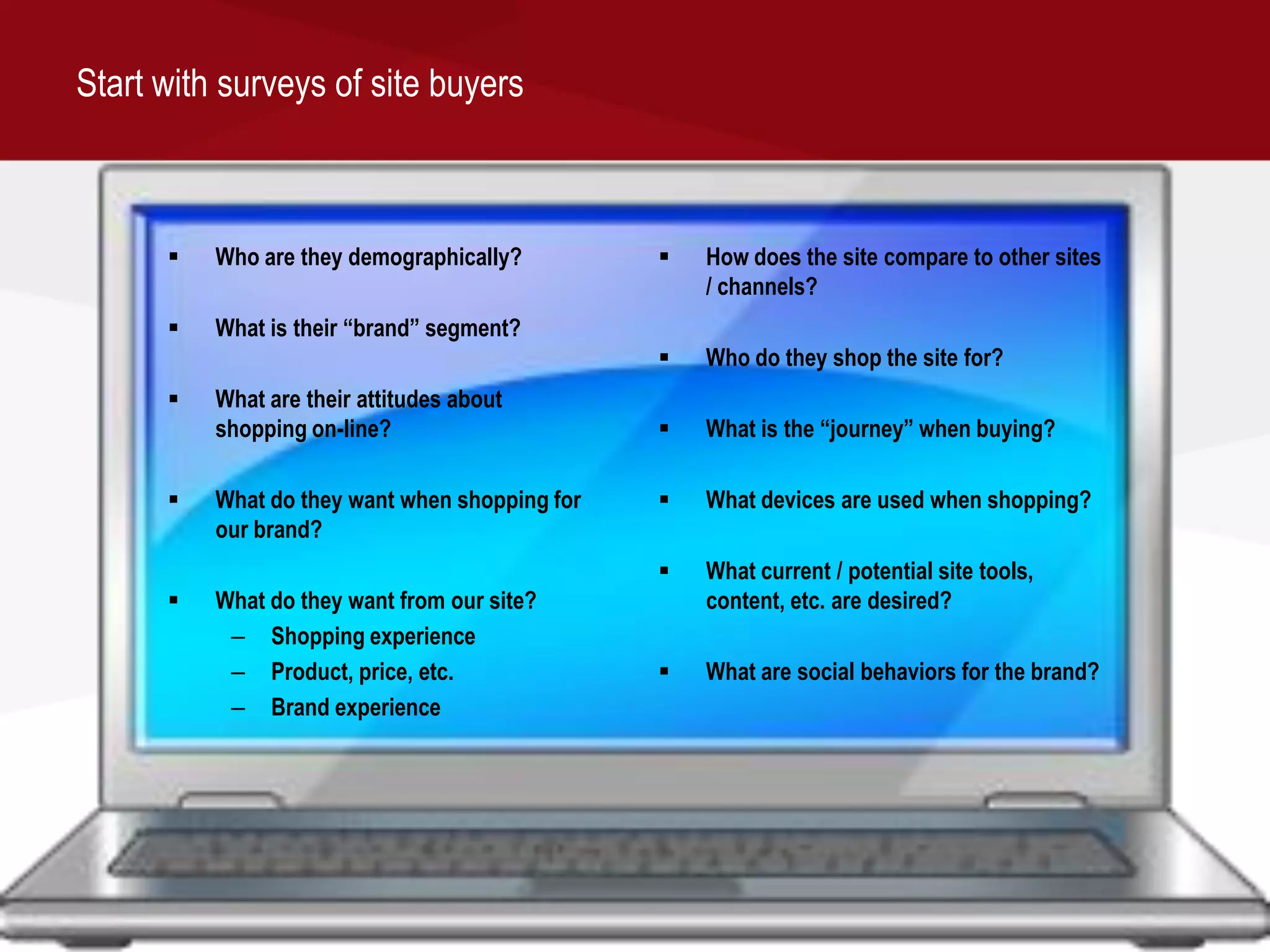
Start with surveys of site buyers


         Who are they demographically?            How does the site compare to other sites
                                                    / channels?
         What is their “brand” segment?
                                                   Who do they shop the site for?
         What are their attitudes about
          shopping on-line?                        What is the “journey” when buying?

         What do they want when shopping for      What devices are used when shopping?
          our brand?
                                                   What current / potential site tools,
         What do they want from our site?          content, etc. are desired?
           – Shopping experience
           – Product, price, etc.                  What are social behaviors for the brand?
           – Brand experience
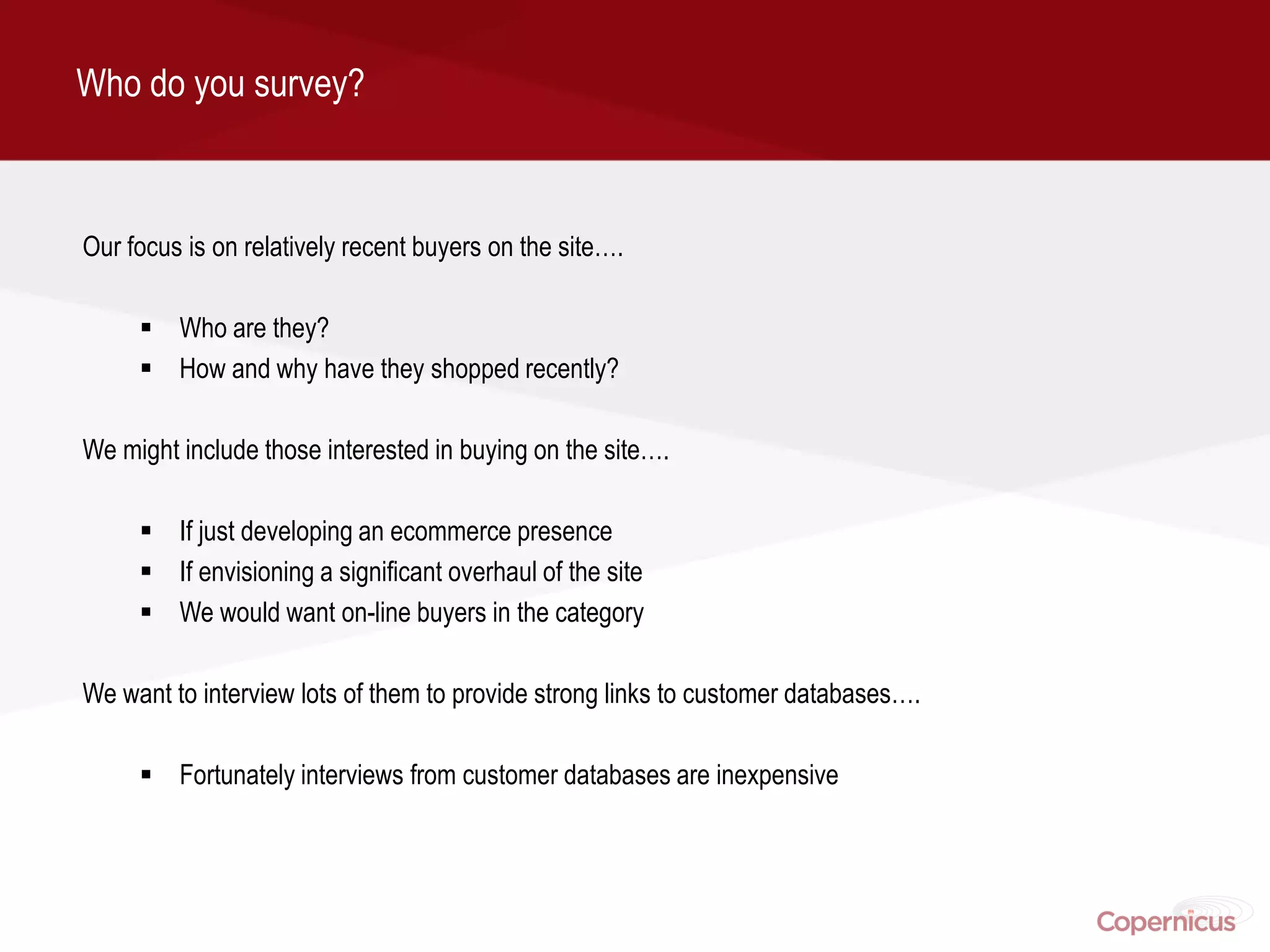
Who do you survey?


Our focus is on relatively recent buyers on the site….

      Who are they?
      How and why have they shopped recently?

We might include those interested in buying on the site….

      If just developing an ecommerce presence
      If envisioning a significant overhaul of the site
      We would want on-line buyers in the category

We want to interview lots of them to provide strong links to customer databases….

      Fortunately interviews from customer databases are inexpensive
Understand the basics of your on-line buyers is a first step


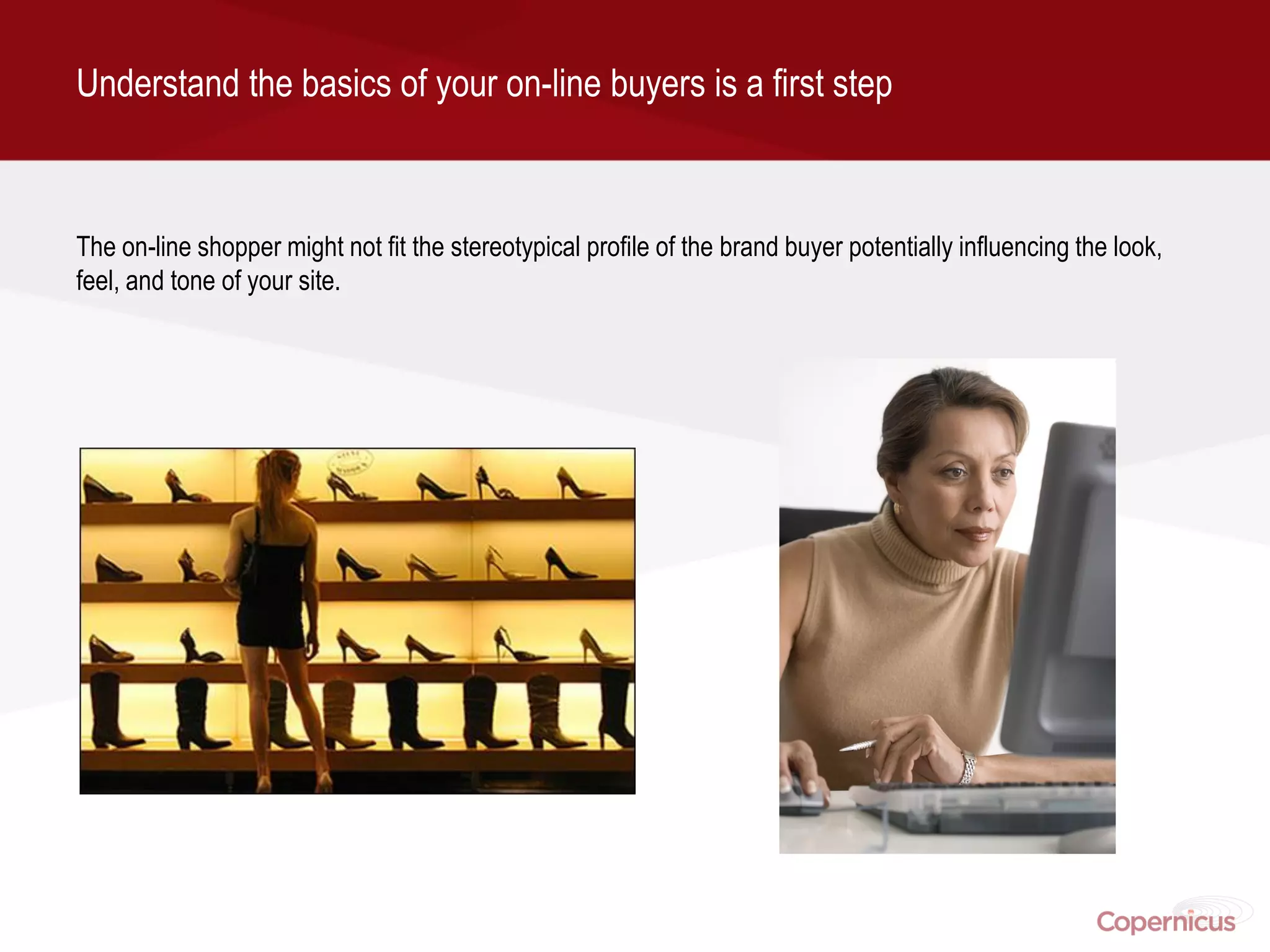
The on-line shopper might not fit the stereotypical profile of the brand buyer potentially influencing the look,
feel, and tone of your site.
Identify the segment that is most important to ecommerce sales


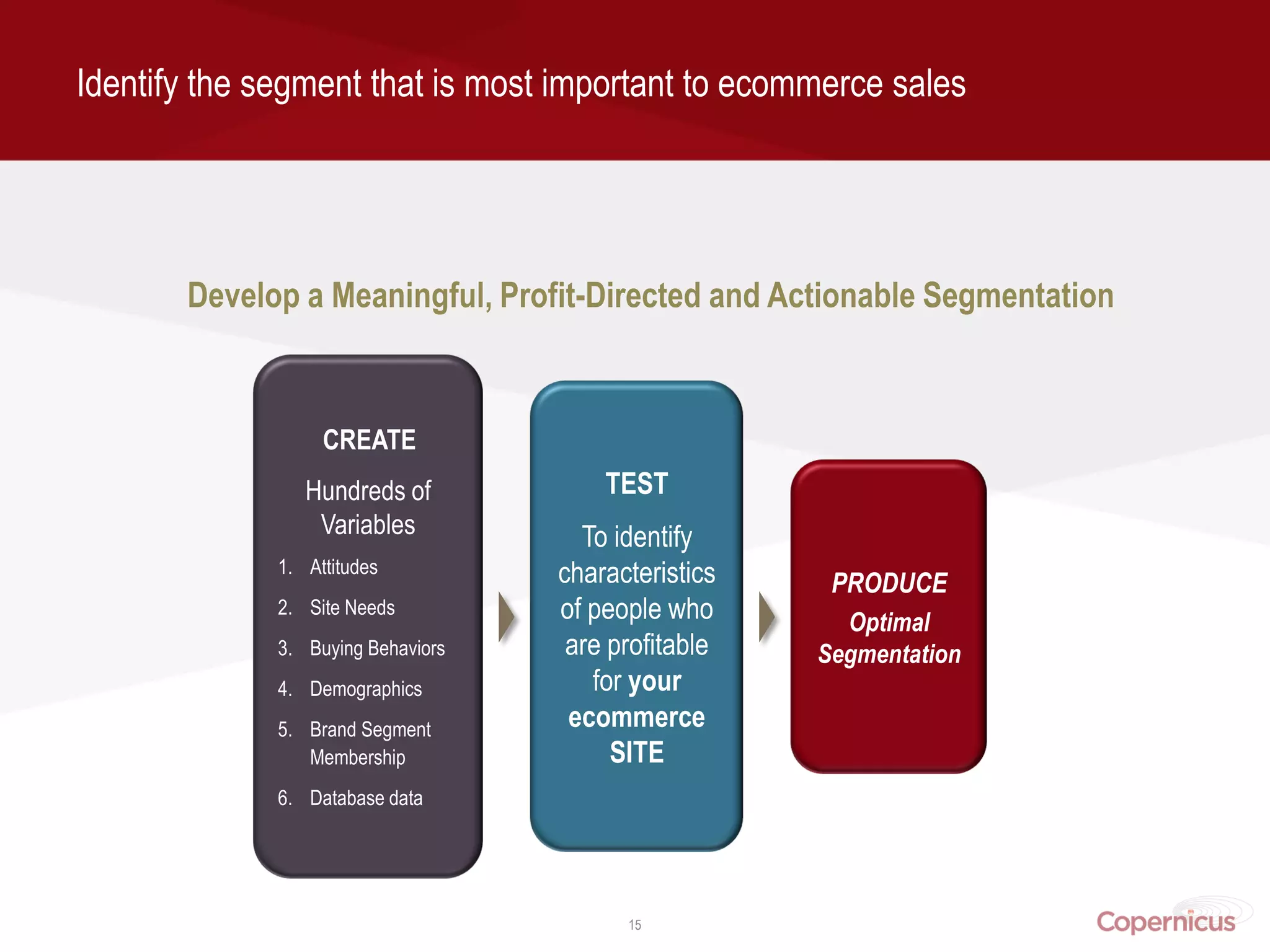
       Develop a Meaningful, Profit-Directed and Actionable Segmentation


                   CREATE
                 Hundreds of            TEST
                  Variables           To identify
              1. Attitudes          characteristics    PRODUCE
              2. Site Needs         of people who       Optimal
              3. Buying Behaviors    are profitable   Segmentation
              4. Demographics          for your
              5. Brand Segment       ecommerce
                 Membership              SITE
              6. Database data


                                          15
Who is Most Important?


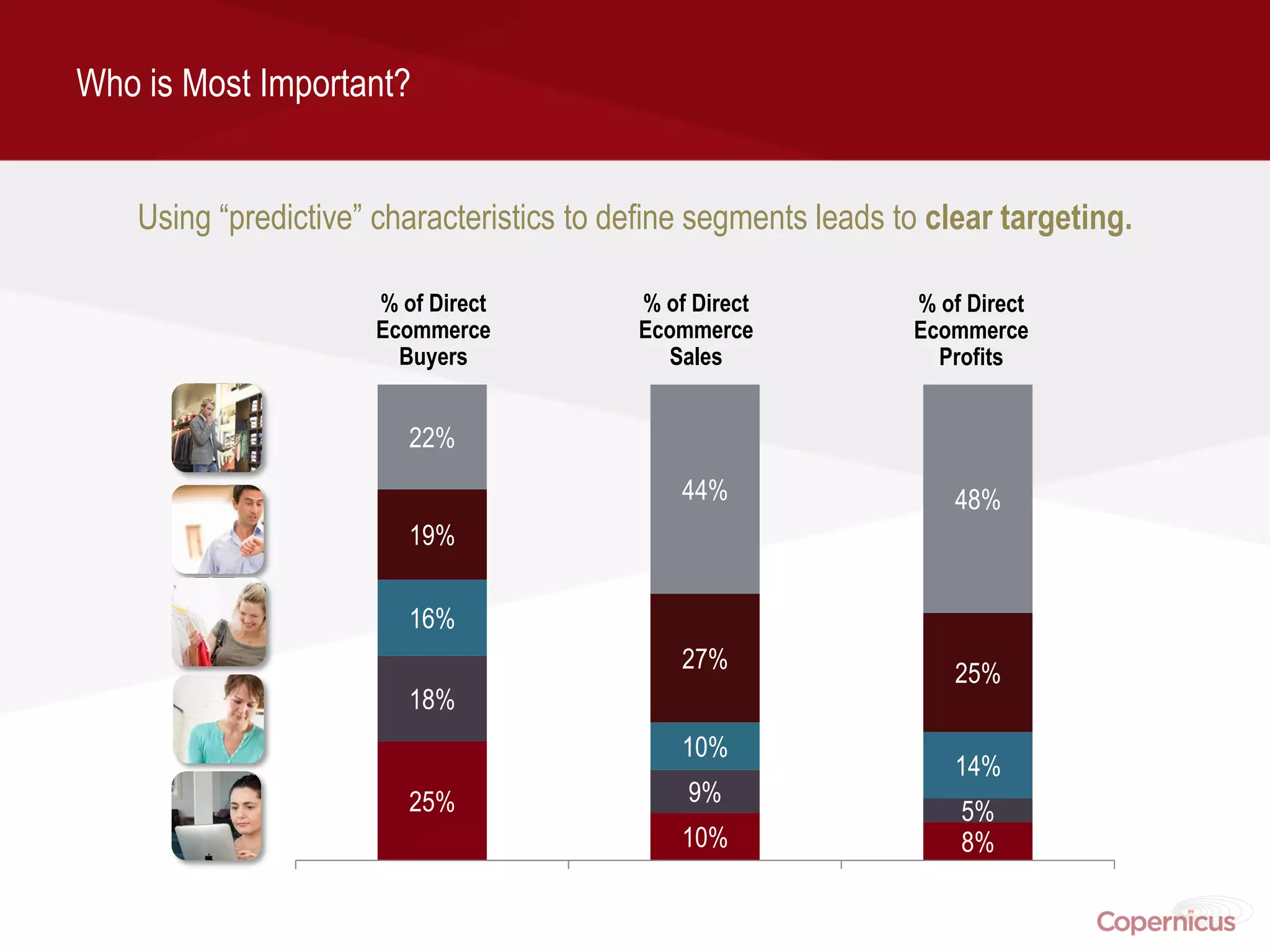
    Using “predictive” characteristics to define segments leads to clear targeting.

                      % of Direct          % of Direct           % of Direct
                      Ecommerce            Ecommerce             Ecommerce
                        Buyers               Sales                 Profits


                         22%
                                               44%                  48%
                         19%

                         16%
                                               27%
                                                                    25%
                         18%
                                               10%
                                                                    14%
                         25%                   9%
                                                                     5%
                                               10%                   8%
What about the overall brand targets?


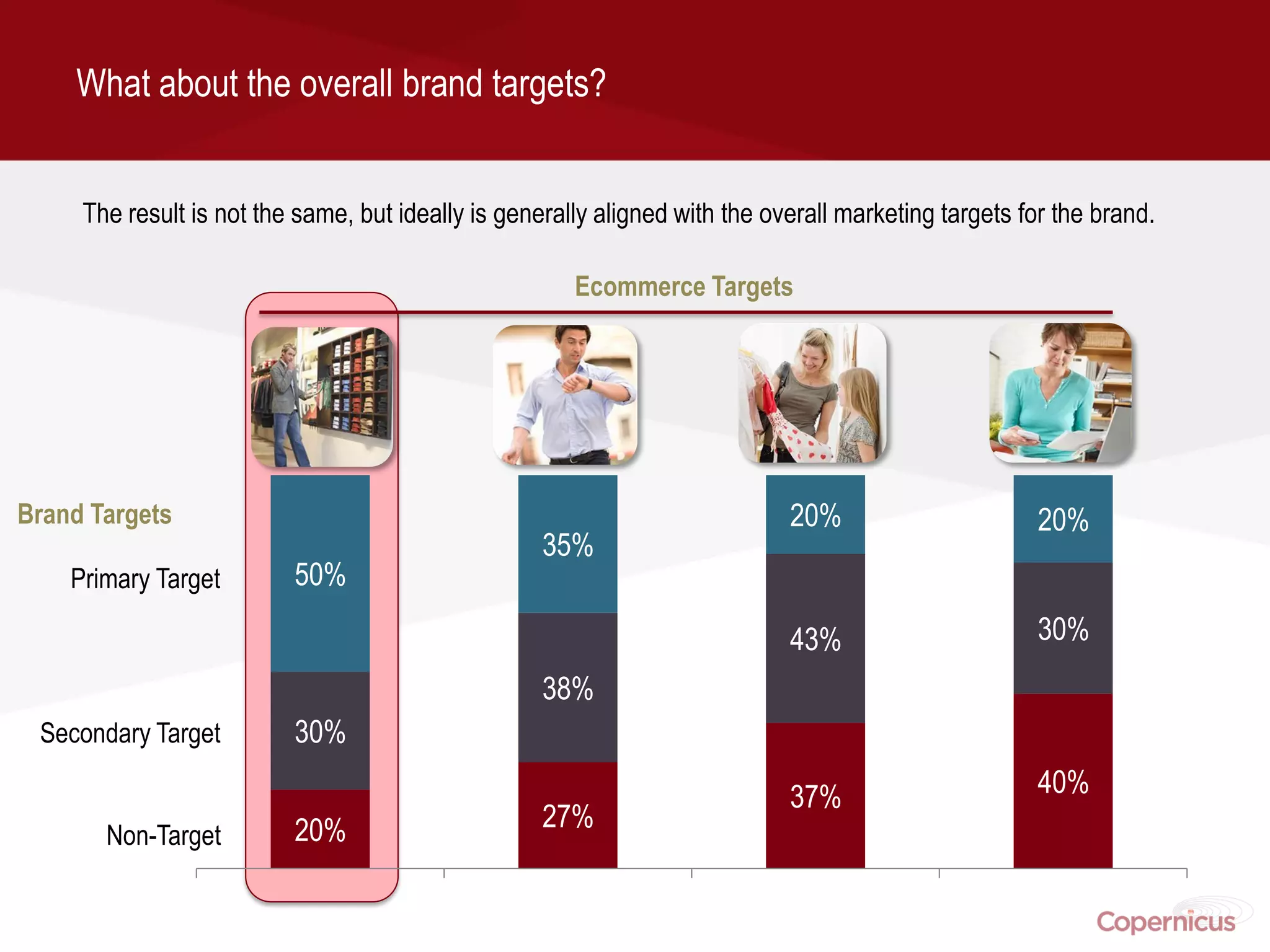
     The result is not the same, but ideally is generally aligned with the overall marketing targets for the brand.

                                                       Ecommerce Targets


Brand Targets                                                                20%                      20%
                                                    35%
    Primary Target        50%

                                                                             43%                      30%
                                                    38%
 Secondary Target         30%

                                                                             37%                      40%
                          20%                       27%
       Non-Target
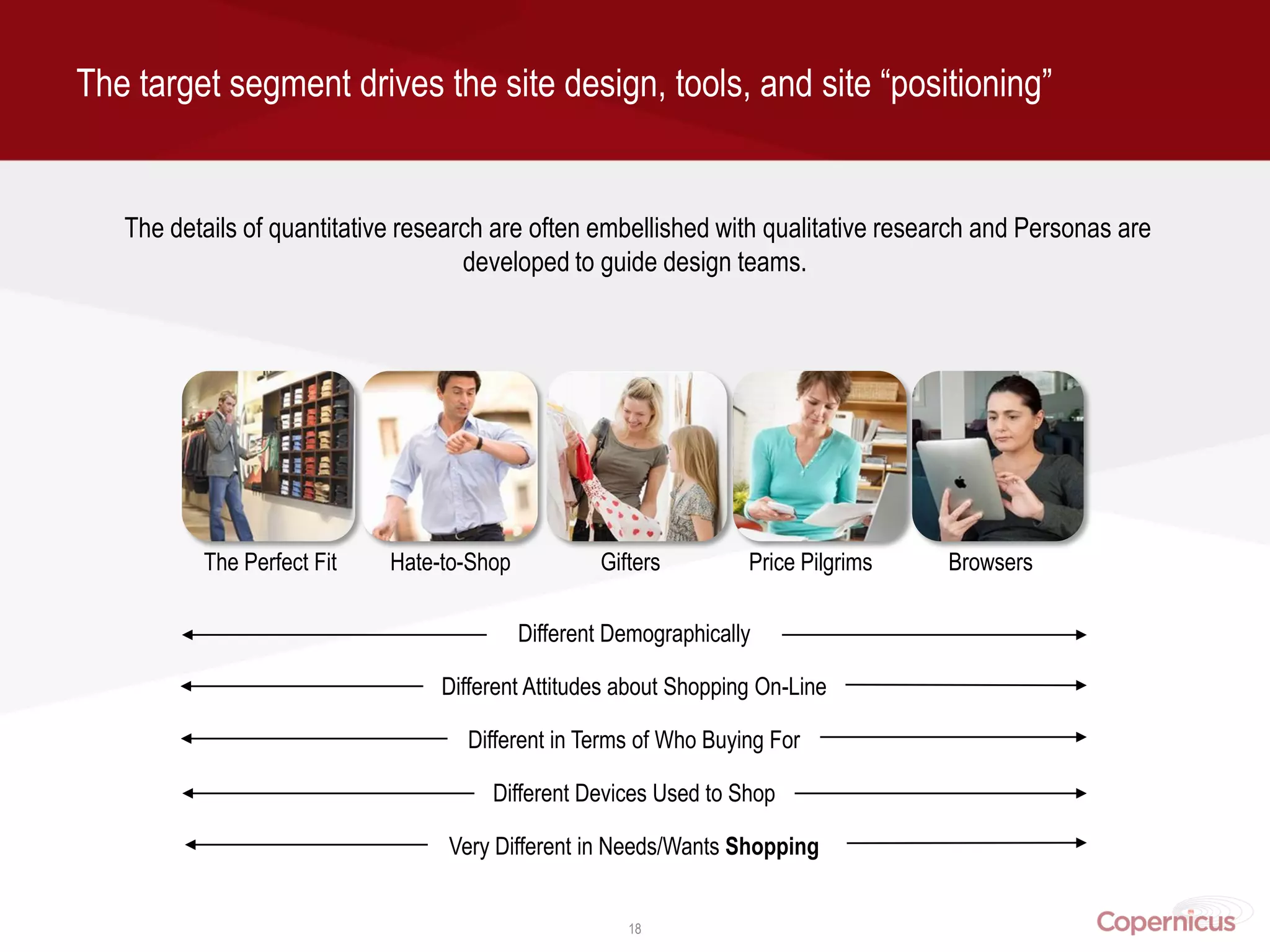
The target segment drives the site design, tools, and site “positioning”


   The details of quantitative research are often embellished with qualitative research and Personas are
                                     developed to guide design teams.


          The Perfect Fit    Hate-to-Shop           Gifters         Price Pilgrims   Browsers

                                            Different Demographically

                                  Different Attitudes about Shopping On-Line

                                    Different in Terms of Who Buying For

                                       Different Devices Used to Shop

                                  Very Different in Needs/Wants Shopping


                                                       18
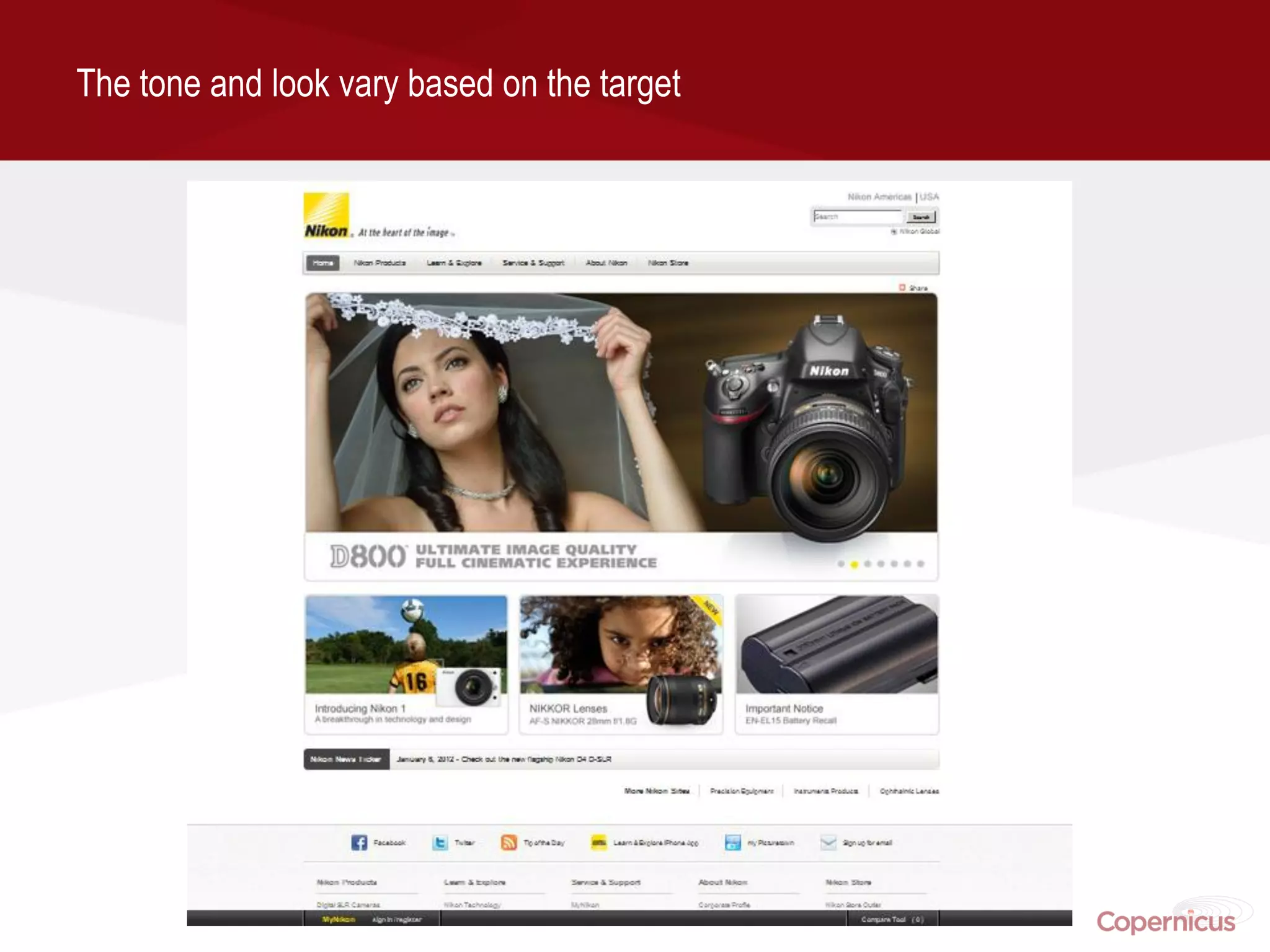
The tone and look vary based on the target
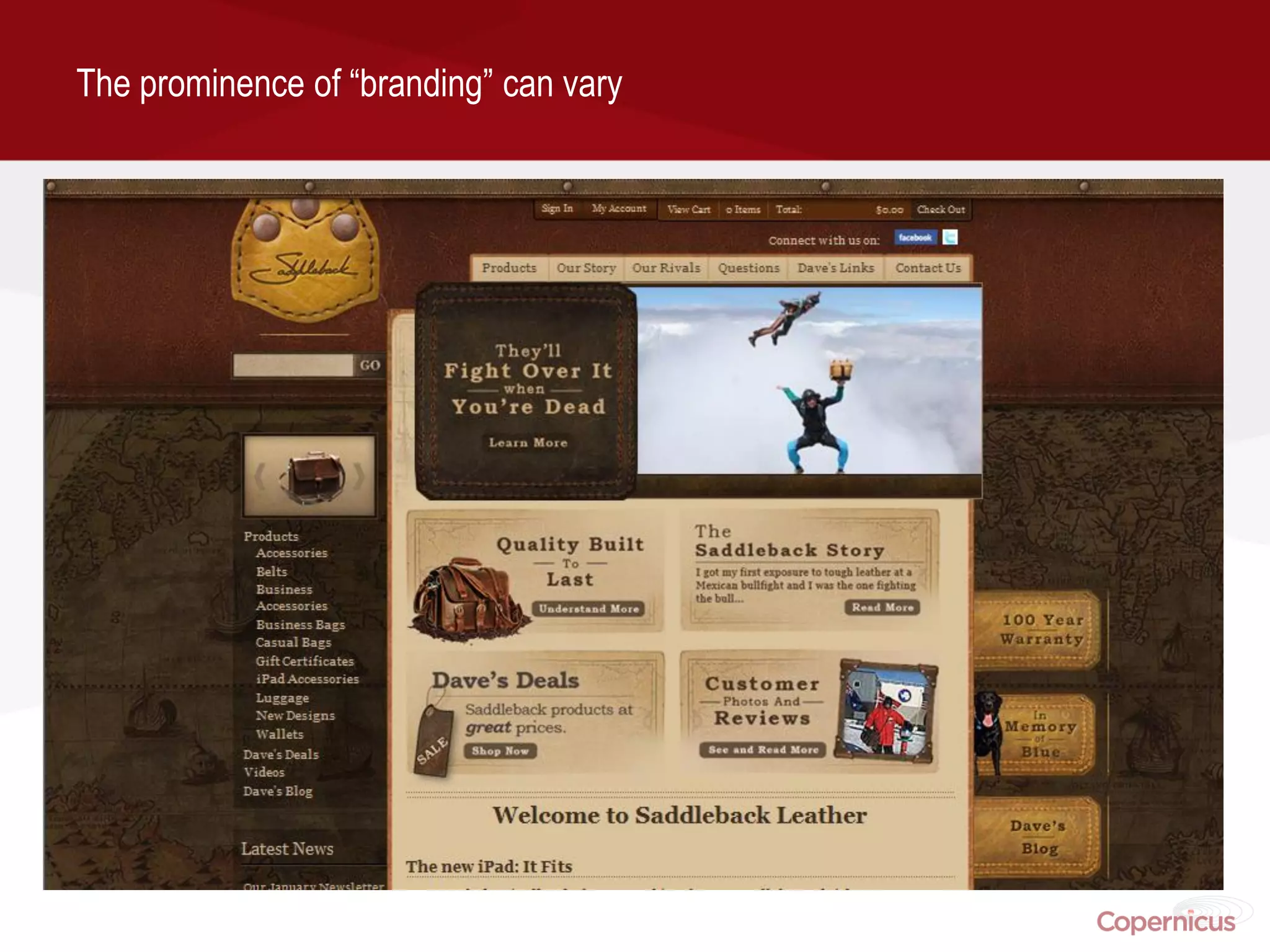
The prominence of “branding” can vary
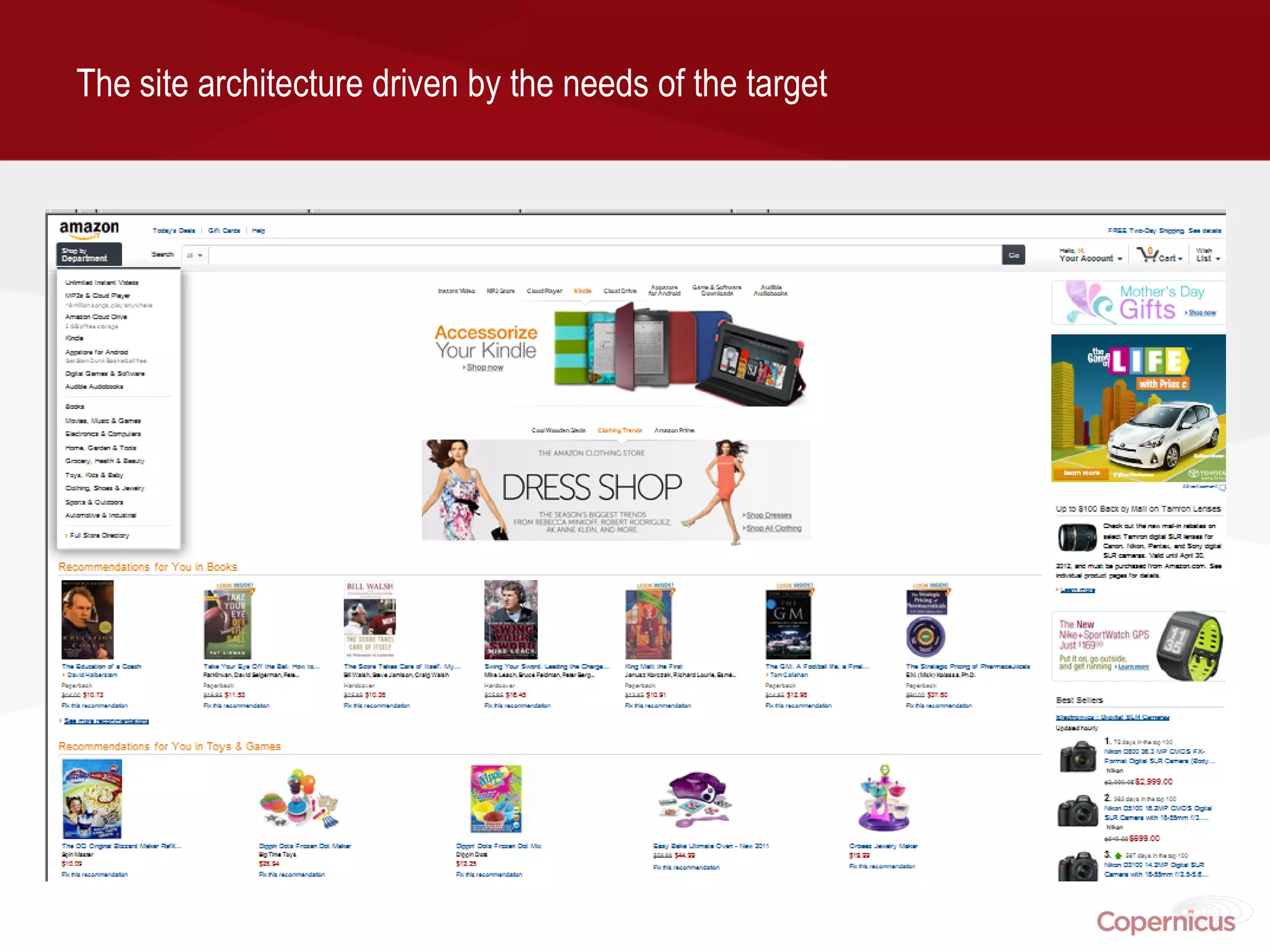
The site architecture driven by the needs of the target
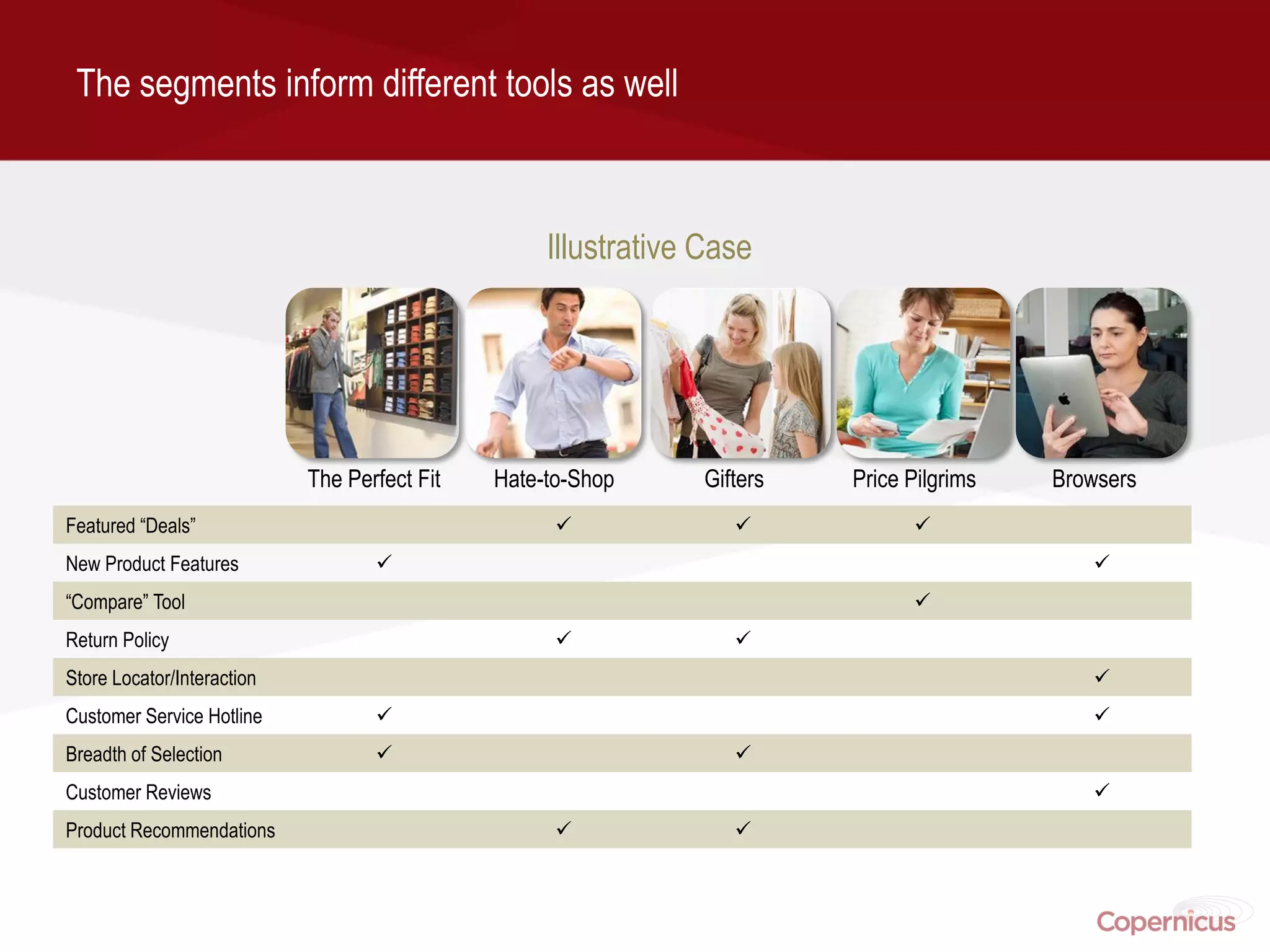
The segments inform different tools as well


                                                   Illustrative Case


                            The Perfect Fit   Hate-to-Shop      Gifters   Price Pilgrims   Browsers
Featured “Deals”                                                              
New Product Features                                                                         
“Compare” Tool                                                                  
Return Policy                                                     
Store Locator/Interaction                                                                     
Customer Service Hotline                                                                     
Breadth of Selection                                              
Customer Reviews                                                                              
Product Recommendations                                           
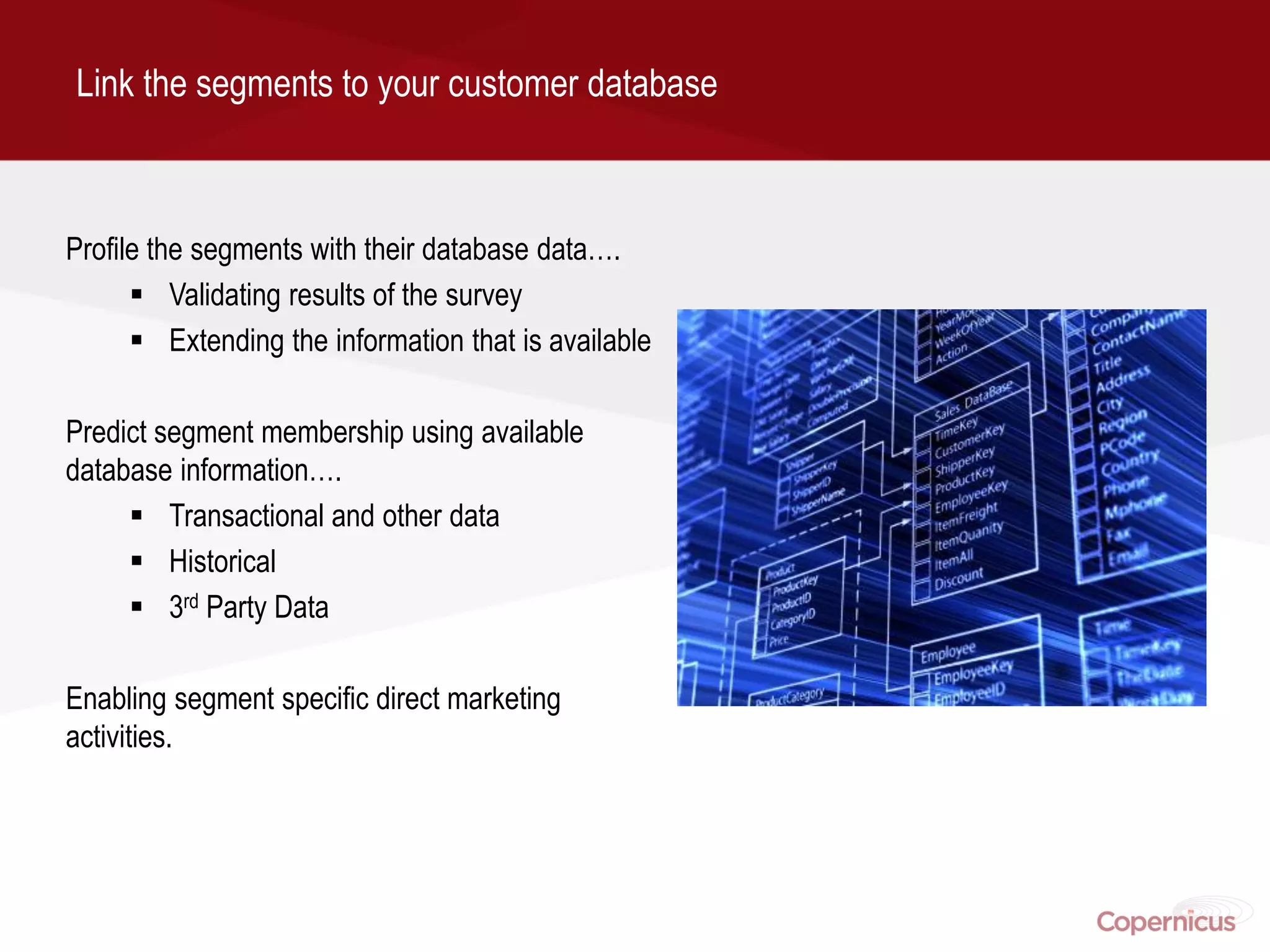
Link the segments to your customer database


Profile the segments with their database data….
       Validating results of the survey
       Extending the information that is available

Predict segment membership using available
database information….
      Transactional and other data
      Historical
      3rd Party Data

Enabling segment specific direct marketing
activities.
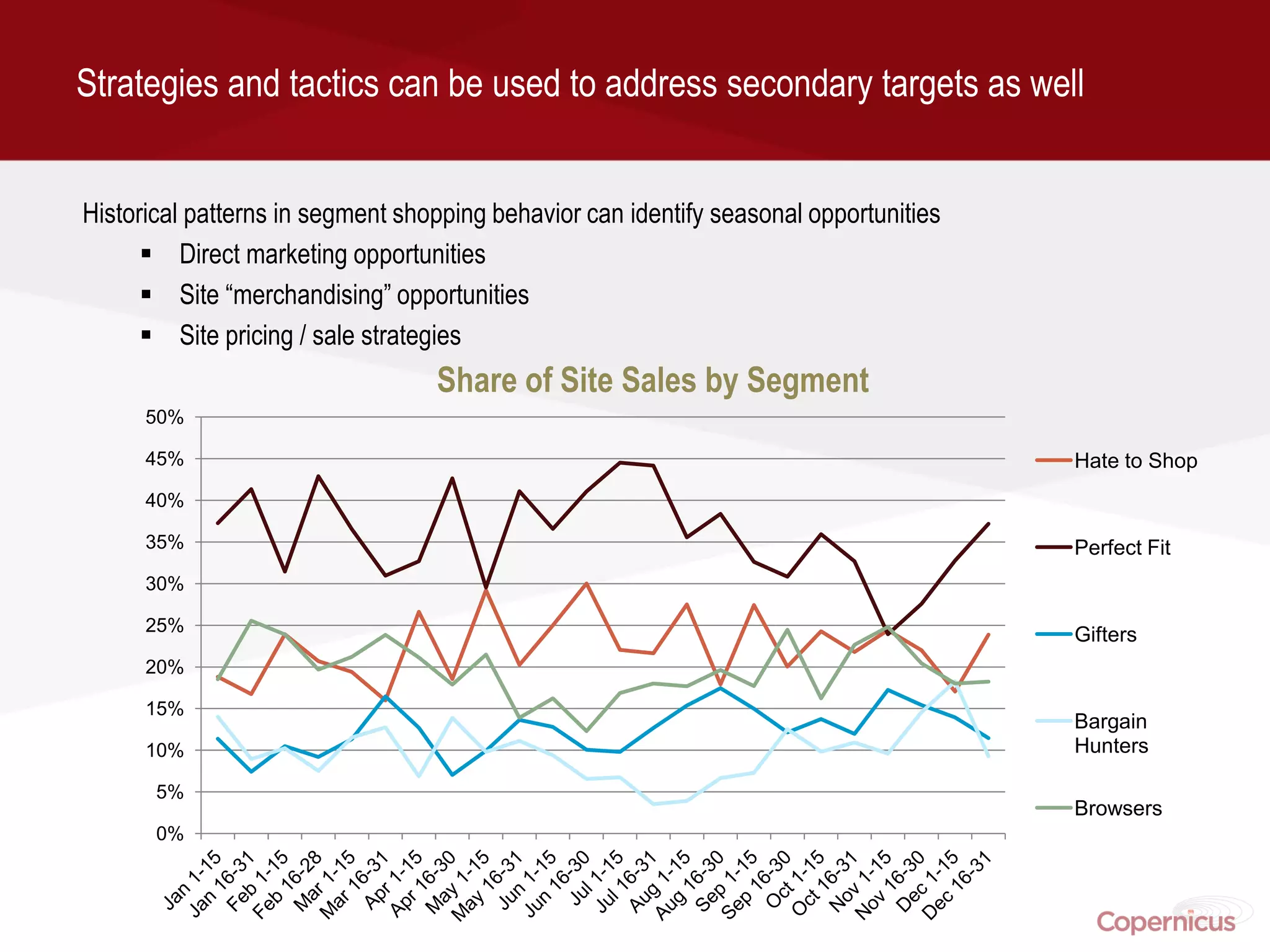
Strategies and tactics can be used to address secondary targets as well


Historical patterns in segment shopping behavior can identify seasonal opportunities
       Direct marketing opportunities
       Site “merchandising” opportunities
       Site pricing / sale strategies
                                  Share of Site Sales by Segment
      50%

      45%                                                                              Hate to Shop
      40%

      35%                                                                              Perfect Fit
      30%

      25%                                                                              Gifters
      20%

      15%
                                                                                       Bargain
      10%                                                                              Hunters

       5%
                                                                                       Browsers
       0%
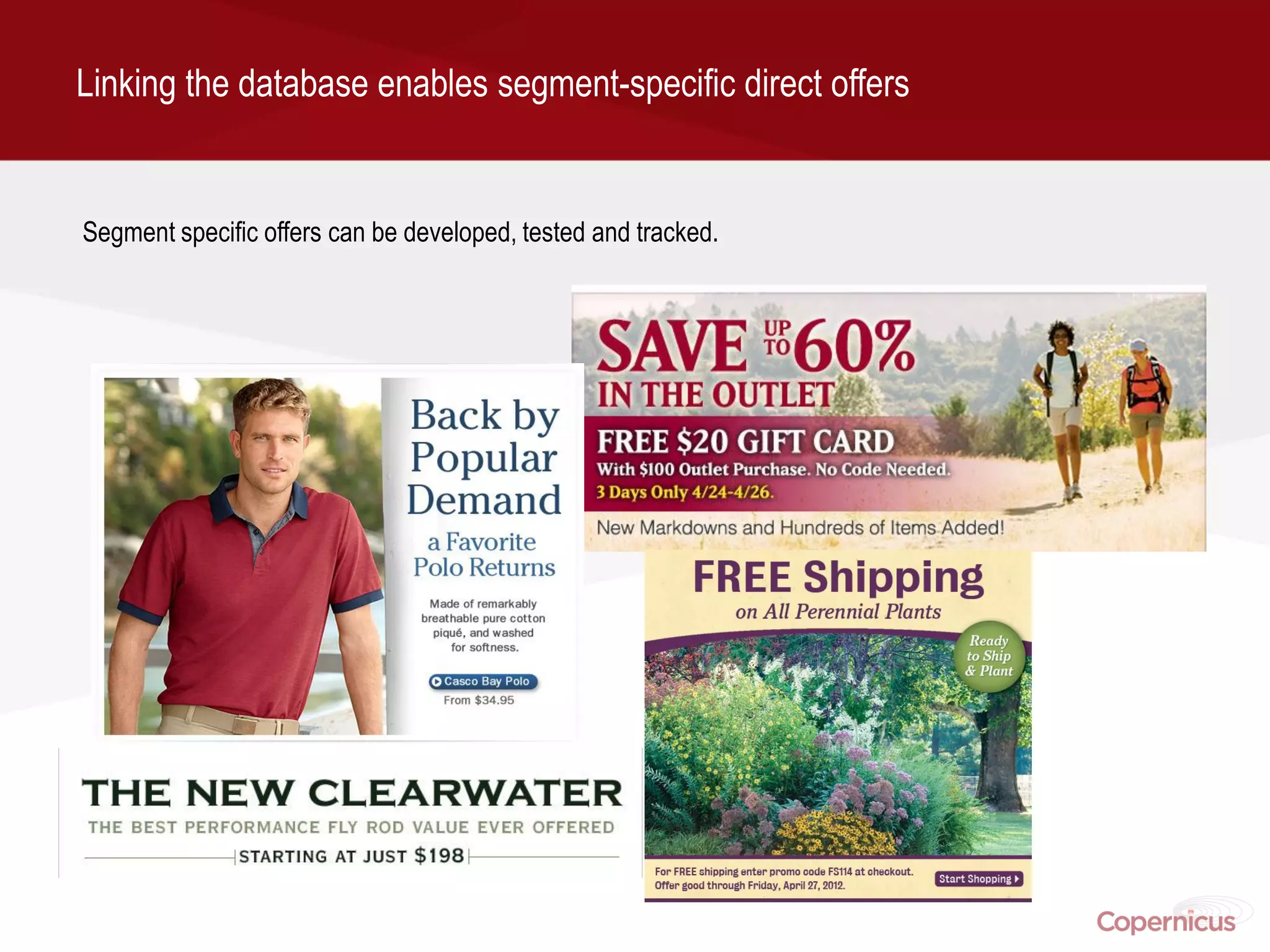
Linking the database enables segment-specific direct offers


Segment specific offers can be developed, tested and tracked.
Recap


    Your web buyers are generally not the same as your overall brand buyers.

    There are many different types of on-line shoppers on your site.

    These groups have different wants and needs from that on-line shopping
     experience.

    Importantly, they also they also provide very different levels of profit potential for
     your ecommerce channel.

    Understanding the segments, and your ecommerce target provides clear guidance
     for your site design, strategies and tactics.
Mark Your Calendars!
                                   Wednesday, May 23, 2012


                           Mission Impossible:
                   Profiling Shopping Occasions for
                     Retail and Channel Partners
Jeff Maloy
Senior Vice President
Copernicus Marketing Consulting and Research

Register Now: copernicusmarketing.com/webcasts

Wednesday, May 23, 2012
ERIC PAQUETTE, SVP

    (617) 449-4189

      Eric.Paquette@copernicusmarketing.com

Eommerce shopper-typologies-online

  • 1.
    Shopper Typologies to DriveSite Design and Ecommerce Strategies April 25, 2012
  • 2.
    Who Am I? Eric Paquette Senior Vice President Copernicus Marketing Consulting and Research Aegis Media
  • 3.
    ERIC PAQUETTE, SVP (617) 449-4189 Eric.Paquette@copernicusmarketing.com
  • 4.
    Background  Expected Growth in eCommerce Sales for U.S. On-Line Retail Sales 2012 – Apparel and Accessories: +19.7% 224.2 – Books, Music, Videos: +18.0% 194.3 – Computers and Electronics: +15.9% 167.3 Source: eMarketer 155.2 +15.3% +16.1%  While most of the top eCommerce sites are +7.8% retailers selling a mix of brands, several brand specific sites crack the Top 25 – Apple (#3) – Victoria’s Secret (#18) – L.L. Bean (#21) – Gap (#24) 2009 2010 2011 2012*
  • 5.
    Ecommerce is alsogrowing for brands that use retailers for distribution More and more brands are expanding their direct on-line presence.  Significantly higher margins  Providing significantly expanded reach for distribution  Provides access to customer data  Opportunities to develop customer insights  More and more, consumers expect to be able to buy brands directly
  • 6.
    And brand websitesprovide a much richer brand experience
  • 7.
    They are typicallyonly a sub-set of brand buyers While direct on-line sales are increasingly important to brands, it is critical to realize that direct buyers have a distinct set of needs compared to general brand shoppers. The on-line shopping experience is decidedly different than a retail experience. That has implications for who is going to shop on-line in different product categories. % of Brand Buyers Who Buy Directly On-Line 26% Often 50+% of brand sales are directed to the site 4% for these shoppers
  • 8.
    In fact, thereare many types of ecommerce shoppers Broad Selection Browser/Researcher Retail Haters Latest & Greatest Family Provisioner Bargain Hunter
  • 9.
    Understanding general on-linebehavior doesn’t explain enough Any given person can behave very differently with different brands or on different sites.
  • 10.
    The mix andvalue of those shopper types depends on the category and brand Apparel Brand A Apparel Brand B % of Direct % of Direct % of Direct % of Direct Ecommerce Ecommerce Ecommerce Ecommerce Buyers Sales Buyers Sales 8% 14% 22% 44% 32% 25% 19% 16% 24% 27% 40% 18% 10% 22% 9% 8% 25% 10% 15% 12%
  • 11.
    Understanding site usershas wide ranging implications  Website tone, look and feel  Email/direct marketing strategies and tactics  Site architecture  Social and search tools and  Site shopping tools strategies  Availability / role of mobile site  Site merchandising strategies  Amount / role of branded content  Pricing strategy vs. ecommerce
  • 12.
    Start with surveysof site buyers  Who are they demographically?  How does the site compare to other sites / channels?  What is their “brand” segment?  Who do they shop the site for?  What are their attitudes about shopping on-line?  What is the “journey” when buying?  What do they want when shopping for  What devices are used when shopping? our brand?  What current / potential site tools,  What do they want from our site? content, etc. are desired? – Shopping experience – Product, price, etc.  What are social behaviors for the brand? – Brand experience
  • 13.
    Who do yousurvey? Our focus is on relatively recent buyers on the site….  Who are they?  How and why have they shopped recently? We might include those interested in buying on the site….  If just developing an ecommerce presence  If envisioning a significant overhaul of the site  We would want on-line buyers in the category We want to interview lots of them to provide strong links to customer databases….  Fortunately interviews from customer databases are inexpensive
  • 14.
    Understand the basicsof your on-line buyers is a first step The on-line shopper might not fit the stereotypical profile of the brand buyer potentially influencing the look, feel, and tone of your site.
  • 15.
    Identify the segmentthat is most important to ecommerce sales Develop a Meaningful, Profit-Directed and Actionable Segmentation CREATE Hundreds of TEST Variables To identify 1. Attitudes characteristics PRODUCE 2. Site Needs of people who Optimal 3. Buying Behaviors are profitable Segmentation 4. Demographics for your 5. Brand Segment ecommerce Membership SITE 6. Database data 15
  • 16.
    Who is MostImportant? Using “predictive” characteristics to define segments leads to clear targeting. % of Direct % of Direct % of Direct Ecommerce Ecommerce Ecommerce Buyers Sales Profits 22% 44% 48% 19% 16% 27% 25% 18% 10% 14% 25% 9% 5% 10% 8%
  • 17.
    What about theoverall brand targets? The result is not the same, but ideally is generally aligned with the overall marketing targets for the brand. Ecommerce Targets Brand Targets 20% 20% 35% Primary Target 50% 43% 30% 38% Secondary Target 30% 37% 40% 20% 27% Non-Target
  • 18.
    The target segmentdrives the site design, tools, and site “positioning” The details of quantitative research are often embellished with qualitative research and Personas are developed to guide design teams. The Perfect Fit Hate-to-Shop Gifters Price Pilgrims Browsers Different Demographically Different Attitudes about Shopping On-Line Different in Terms of Who Buying For Different Devices Used to Shop Very Different in Needs/Wants Shopping 18
  • 19.
    The tone andlook vary based on the target
  • 20.
    The prominence of“branding” can vary
  • 21.
    The site architecturedriven by the needs of the target
  • 22.
    The segments informdifferent tools as well Illustrative Case The Perfect Fit Hate-to-Shop Gifters Price Pilgrims Browsers Featured “Deals”    New Product Features   “Compare” Tool  Return Policy   Store Locator/Interaction  Customer Service Hotline   Breadth of Selection   Customer Reviews  Product Recommendations  
  • 23.
    Link the segmentsto your customer database Profile the segments with their database data….  Validating results of the survey  Extending the information that is available Predict segment membership using available database information….  Transactional and other data  Historical  3rd Party Data Enabling segment specific direct marketing activities.
  • 24.
    Strategies and tacticscan be used to address secondary targets as well Historical patterns in segment shopping behavior can identify seasonal opportunities  Direct marketing opportunities  Site “merchandising” opportunities  Site pricing / sale strategies Share of Site Sales by Segment 50% 45% Hate to Shop 40% 35% Perfect Fit 30% 25% Gifters 20% 15% Bargain 10% Hunters 5% Browsers 0%
  • 25.
    Linking the databaseenables segment-specific direct offers Segment specific offers can be developed, tested and tracked.
  • 26.
    Recap  Your web buyers are generally not the same as your overall brand buyers.  There are many different types of on-line shoppers on your site.  These groups have different wants and needs from that on-line shopping experience.  Importantly, they also they also provide very different levels of profit potential for your ecommerce channel.  Understanding the segments, and your ecommerce target provides clear guidance for your site design, strategies and tactics.
  • 27.
    Mark Your Calendars! Wednesday, May 23, 2012 Mission Impossible: Profiling Shopping Occasions for Retail and Channel Partners Jeff Maloy Senior Vice President Copernicus Marketing Consulting and Research Register Now: copernicusmarketing.com/webcasts Wednesday, May 23, 2012
  • 28.
    ERIC PAQUETTE, SVP (617) 449-4189 Eric.Paquette@copernicusmarketing.com